Septic Emergency Dispatch Software: Respond Faster to Urgent Calls
By the SepticMind Editorial Team
Septic emergencies make up 18% of total service volume for the average company and represent 27% of annual revenue. That makes emergency response one of the most financially notable parts of your operation, and also the one where slow or disorganized dispatch causes the most damage.
TL;DR
- Septic Emergency Dispatch Software: Respond Faster to Urgent Calls is designed to address the specific workflow and compliance requirements of septic service operations.
- Purpose-built septic software handles permit tracking, state inspection report templates, and tank data management that generic platforms do not offer.
- Companies managing ATU contracts, multi-county permit portfolios, or real estate inspection volume need software designed around those workflows.
- Mobile access allows field technicians to complete and submit inspection reports before leaving a property.
- Cloud-based platforms ensure records are accessible from any device and backed up automatically.
- Switching costs from generic software are real, so evaluating septic-specific platforms early saves migration pain later.
Emergency calls routed manually take 12 minutes longer on average to assign than those handled by automated dispatch. That 12 minutes matters when sewage is backing up into a customer's home, when a failed system is a health hazard, or when a commercial property is unable to open because of a septic problem. The response time is the measure of your company's performance in the moment that matters most.
What Makes Emergency Dispatch Different
Standard scheduled dispatch has time on its side. You build routes the night before, make adjustments in the morning, and the day runs on a plan.
Emergency dispatch runs on zero time. A call comes in, a decision has to be made immediately, and the wrong decision costs money and customer relationships. The dispatcher needs to answer: which truck is closest to the site, does that truck have the right equipment for this job type, is the driver available, and what happens to the rest of that truck's route if it diverts?
Without software surfacing those answers in real time, dispatchers are working from memory and phone calls to drivers. The result is the 12-minute delay that the research documents, and sometimes it's worse.
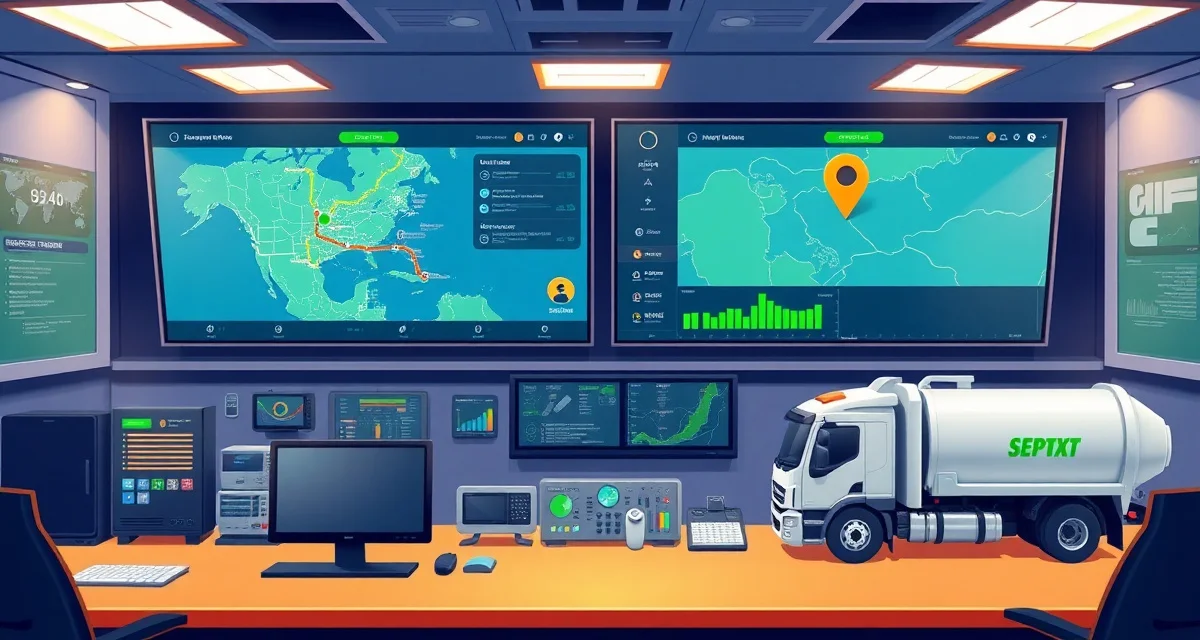
SepticMind's emergency job flag triggers automatic nearest-truck assignment and customer ETA notification. The dispatcher sees the situation, flags it as an emergency, and the system recommends the best available truck with a calculated ETA. One confirmation and the assignment is made.
Real-Time Truck Location for Emergency Assignment
Nearest-truck assignment requires knowing where your trucks actually are, not where they were supposed to be an hour ago. If dispatch is working from a static route plan, they might think Truck 4 is on the north side when it's actually finished early and is 10 minutes closer to the emergency site.
GPS tracking integrated with the dispatch system solves this. SepticMind's dispatch board shows live truck locations updated continuously. When an emergency comes in, the dispatcher sees the current position of every truck in the field, not an estimate based on the planned route.
SepticMind's technician tracking software provides real-time location visibility as part of the dispatch interface, so nearest-truck calculations use actual position data.
Customer ETA Notification
The worst part of a septic emergency for a homeowner or property manager isn't waiting. It's waiting and not knowing how long. Every passing minute without a status update makes the stress worse and the customer more likely to call a competitor or leave a poor review.
Automated ETA notification changes this completely. When a truck is assigned to an emergency job, an automated message goes to the customer with the estimated arrival time and the technician's name. The customer stops watching the clock and starts expecting a specific person at a specific time.
When the truck is en route, a "your technician is on the way" notification confirms the commitment and reduces the inbound "where are you?" calls that interrupt dispatch during high-volume emergency periods.
SepticMind's emergency dispatch integration includes automatic customer notification at assignment and en-route confirmation, eliminating a manual communication step that often gets skipped when dispatch is handling multiple emergencies simultaneously.
After-Hours Emergency Call Handling
Not every emergency call comes in at 9am on a Tuesday. Sewage backups happen at 11pm on Saturday. Failed systems don't respect business hours.
After-hours emergency protocols need to be built into your dispatch system so the on-call technician gets the call, gets the job details, and gets to the customer without requiring a full office staff to coordinate it.
SepticMind's after-hours configuration allows emergency jobs to route directly to the on-call technician's mobile app with all relevant job details: customer address, tank size, system type, access notes, and service history. The on-call tech gets everything they need to show up prepared, without a dispatcher making phone calls at midnight.
Customers calling your main number after hours can be directed to an emergency callback system that creates the job record automatically when the callback is confirmed, so the job is already in the system by the time the technician heads out.
Tank Data at the Emergency Job Level
Arriving at an emergency site unprepared is expensive. If the technician doesn't know the tank size, system type, or access conditions before pulling into the driveway, they might have the wrong pump truck, need equipment they didn't bring, or spend 20 minutes locating the access lid that a GPS pin could have shown them immediately.
SepticMind's tank database links all stored property information to emergency jobs the same way it does for scheduled jobs. When the emergency job is created at that address, the technician sees the tank specs, the pinned access location, the service history, and any prior notes from previous visits.
That information often makes the difference between a technician who arrives ready to solve the problem and one who spends the first 15 minutes figuring out what they're dealing with.
Emergency Job Revenue Capture
Emergency service calls carry a premium. Customers expect and accept higher pricing for emergency response. But capturing that revenue requires accurate invoicing from the field, before the customer's urgency subsides and price sensitivity returns.
SepticMind generates invoices from the field when the job is marked complete. For emergency jobs, the technician can apply the emergency service rate, add any materials used, and send the invoice while they're still at the site. Same-day invoicing for emergency jobs reduces payment disputes and shortens the payment cycle.
Managing Emergency Job Volume During Disasters
Storm events, flooding, and power outages can generate emergency call volume that overwhelms a normal dispatch system. During these periods, you might have 20 emergency calls that need to be handled simultaneously across a full fleet of trucks.
The companies that handle disaster-level emergency volume most effectively are those with software that can sort and prioritize a queue of emergency jobs, not just handle them one at a time.
SepticMind's dispatch board handles multiple simultaneous emergency jobs with priority queuing, truck proximity sorting, and real-time updates as situations evolve. Dispatchers can see all active emergencies, their priority status, and which trucks have been assigned versus which are still waiting for assignment.
SepticMind's dispatch management software provides the centralized view needed to manage high-volume emergency periods without losing track of any job in the queue.
Get Started with SepticMind
The right software for a septic company handles compliance and documentation alongside scheduling and billing, not just the basics. SepticMind is built specifically for septic operations, from county permit tracking to ATU maintenance management. Start a free trial to evaluate it against your workflow.
Frequently Asked Questions
How do I handle after-hours emergency septic calls in SepticMind?
SepticMind's after-hours configuration routes emergency job alerts directly to the on-call technician's mobile app with all relevant property and job details. Customer emergency calls can be directed to an automated system that creates the job record and triggers the on-call notification, ensuring the technician has everything they need before heading to the site without requiring a dispatcher to be on call.
Can SepticMind automatically notify the nearest available technician for emergencies?
Yes. When an emergency job is created, SepticMind identifies the nearest available truck based on real-time GPS location data, checks equipment suitability for the job type, and recommends the assignment with a calculated ETA. The dispatcher confirms the assignment and customer notification goes out automatically, eliminating the manual phone-around process that adds 12 or more minutes to emergency response time.
Does emergency dispatch integrate with customer notification for ETAs?
Yes. When a truck is assigned to an emergency job, SepticMind automatically sends the customer a message with the technician's estimated arrival time. A second notification goes out when the technician marks themselves en route. This eliminates the most common source of customer frustration during emergency service calls: uncertainty about when help is arriving.
What makes Septic Emergency Dispatch Software: Respond Faster to Urgent Calls different from general field service software?
The primary differences are septic-specific features: county permit databases, state inspection report templates formatted for regulatory submission, tank size and system type records that drive service interval calculations, and ATU maintenance contract management. General field service platforms can handle scheduling and invoicing but require manual workarounds for every compliance and documentation task that purpose-built septic software handles automatically.
Is there a free trial available to test the software?
SepticMind offers a free trial period so you can evaluate the platform with your actual workflow before committing. The trial includes access to the permit database, inspection report templates, and scheduling tools. Most companies complete their evaluation within two to three weeks and have a clear picture of how the platform fits their operation before the trial ends.
Try These Free Tools
Sources
- National Onsite Wastewater Recycling Association (NOWRA)
- US EPA Office of Wastewater Management
- National Environmental Services Center (NESC)
- Water Environment Federation
- Occupational Safety and Health Administration (OSHA)