How to hire a septic system contractor: the complete guide
By the SepticMind Editorial Team
TL;DR
- A qualified septic contractor holds a state-issued installer license, carries general liability and workers' comp insurance, and pulls the required permit before breaking ground.
- Expect $3,000 to $10,000 for a new conventional system and $300 to $600 for a routine pump-out.
- Verify the license number with your state board before you sign anything.
What does a septic system contractor actually do?
A septic contractor is the licensed tradesperson who designs, installs, repairs, or pumps out a residential or commercial onsite wastewater system. That sounds like one job. It really splits into several specialties depending on the state and the scope of work.
New installation contractors handle site evaluation, permit applications, excavation, tank placement, and drain field construction. Some also do the percolation or soil morphology testing the county health department requires, though in many states a licensed soil scientist or engineer has to do that part separately [1].
Pumping contractors (often called pumpers or haulers) empty tanks, check internal baffles and effluent levels, and haul waste to an approved treatment facility. Plenty of small operators do both installation and pumping. In bigger markets the trades split.
Repair contractors diagnose and fix failed parts: cracked tanks, broken distribution boxes, clogged or saturated leach fields, dead pump floats, and failing aerobic treatment units. Our guide to septic system repair breaks down what each repair type costs.
Some contractors hold every license category. Many hold just one. Knowing which type you need before you call saves everyone time.
What licenses and certifications should a septic contractor have?
Every state regulates onsite wastewater contractors differently, but the structure looks the same everywhere. There is a state-level license (or registration) for installers, a separate license for pumpers, and in some states an extra endorsement for advanced systems like aerobic treatment units or drip irrigation [2].
An unlicensed installer who skips the permit leaves your system with no inspection record. That surfaces badly during a home sale or an insurance claim. Verify credentials with the state or county health department before any work begins.
Here is what to check:
- State installer license: issued by the state health department or environmental agency. The number should appear on estimates and contracts.
- State pumping license: required in most states to transport septage to a treatment facility. Some states call this a septage hauler permit.
- Local permit: the contractor (or the homeowner, in a few states) pulls a permit from the county or municipality before installation or major repair. Ask to see the permit number before excavation starts.
- Insurance: general liability (a $1 million per occurrence minimum is standard) and workers' compensation. Ask for a certificate of insurance naming you as additional insured.
- Bond: many states require contractors to be bonded. A bond protects you if the contractor disappears mid-job.
You can verify most state licenses online. The National Onsite Wastewater Recycling Association (NOWRA) links to state licensing agencies at nowra.org, and many state environmental agencies publish real-time license lookup tools [4].
Don't trust a contractor who says the permit "isn't necessary for a repair" unless your state explicitly exempts minor repairs in its regulations. Most do not.
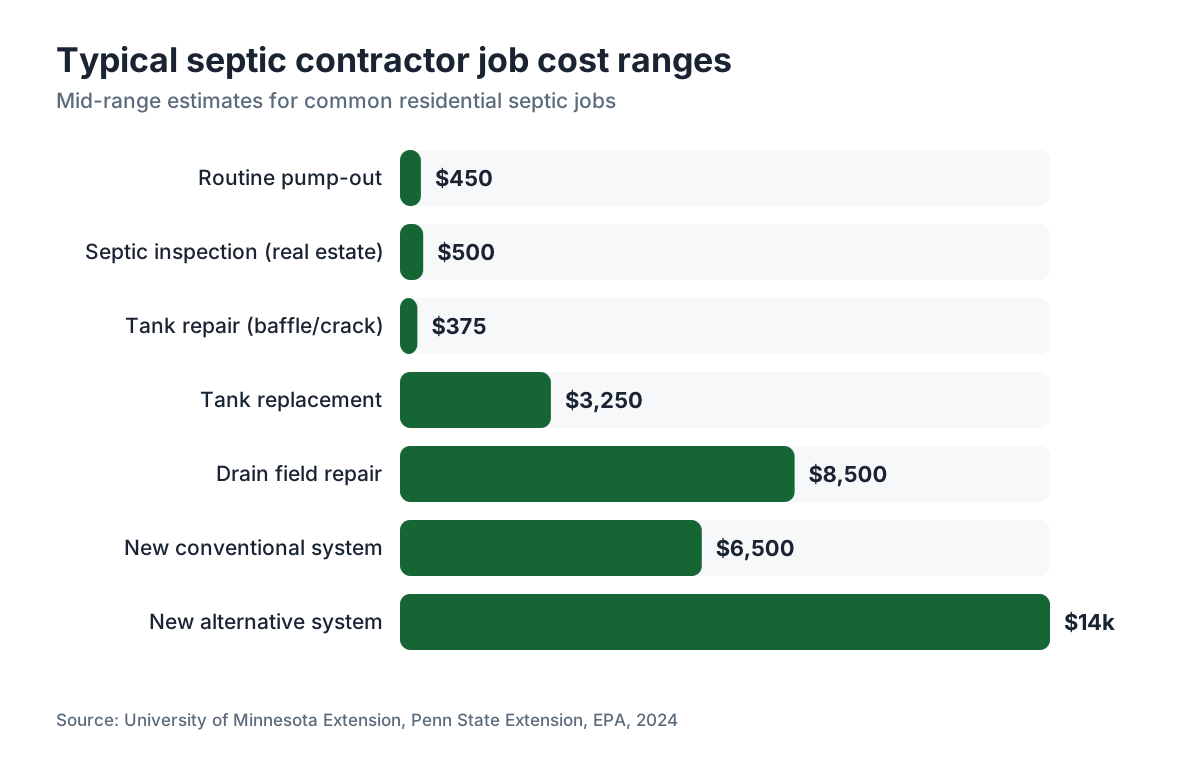
How much does a septic contractor charge for common jobs?
Prices swing with region, system type, soil, and whether you are on a well or public water. The ranges below come from contractor pricing surveys and state extension data, not made-up averages.
| Job Type | Typical Range | Notes |
|---|---|---|
| Septic pump-out (routine) | $300 to $600 | 1,000 to 1,500 gal tank; more for larger tanks [5] |
| Septic inspection (visual + pump) | $300 to $700 | Real estate inspections run at the high end |
| New conventional system (1,000 to 1,500 gal tank + gravity drain field) | $3,000 to $10,000 | Regional variation is huge [10] |
| New alternative system (aerobic, mound, drip) | $8,000 to $20,000+ | Depends on site limitations |
| Drain field repair or replacement | $2,000 to $15,000 | See leach field for failure types [7] |
| Tank repair (baffle replacement, crack sealing) | $150 to $600 | septic tank repair has the full cost table |
| Tank replacement | $1,500 to $5,000 | Excavation drives the range |
The single biggest cost driver is soil. If a site needs a mound system or drip irrigation because the soil fails a perc test, the contractor's materials and labor jump hard. On a flat lot with sandy loam, a conventional gravity system is easy. On a high water table lot with clay, nothing is easy.
For a full breakdown of new system costs, see cost to install septic system and cost to put in a septic tank.
Get three bids minimum. A bid that lands 40% below the others with no clear explanation earns hard questions, not automatic selection.
How do you find a reputable septic contractor in your area?
Start with your state's health department or environmental agency license lookup, not Google reviews. The license database tells you whether the contractor is currently licensed and whether any complaints or disciplinary actions sit on file. That takes five minutes and cuts out a real category of risk.
From there:
Ask your county sanitarian. The county health department inspector who approves permits sees which contractors submit complete applications, pass inspections the first time, and call in their finals properly. Sanitarians rarely name favorites, but they'll tell you who keeps showing up on problem jobs.
Check NOWRA's member directory. The National Onsite Wastewater Recycling Association lists members who agreed to a code of conduct. Membership isn't proof of quality, but it signals someone who takes the trade seriously [4].
Ask neighbors on the same soil type. If your neighbor got a new system four years ago with no trouble, their contractor understood your local geology. That beats a five-star review from three counties away.
Look up Better Business Bureau and state contractor board complaints. Pattern complaints (repeated "abandoned job" or "failed inspection" filings) matter more than one unhappy customer.
Avoid contractors who:
- Offer to skip the permit to save you money
- Can't produce a current insurance certificate on request
- Won't give a written, itemized bid
- Push you to decide same-day
For routine pumping, your county health department often publishes a list of licensed septage haulers. That list is free and reliable.
What should a septic contractor's estimate and contract include?
A written contract is not optional. Verbal deals on a job that involves excavating your yard and tying into your home's drain line are a bad idea for both sides.
A solid contract covers:
Scope of work. Exactly what the contractor will install or repair: tank size, tank material (concrete, fiberglass, polyethylene), drain field dimensions, pipe specs, and any site restoration (backfill, grading, seeding).
Permit responsibility. Who pulls the permit, who pays the fee, and what happens if the permit is delayed.
Payment schedule. A deposit of 10 to 30% at signing is normal. Full payment before the final inspection is a red flag. Tie the last payment to the health department's sign-off, not the contractor's say-so.
Timeline. Specific start and completion dates, with language about what happens if the contractor misses them.
Warranty. Most reputable installers warrant their labor for one year. Tank manufacturers warrant the tank itself for five to twenty years depending on material. Get both in writing.
Change order process. If they hit rock, find an unmarked underground structure, or run into a soil condition that forces a design change, how do they communicate and get approval for added costs before work continues?
Cleanup and restoration. Who removes excavated soil, hauls off the old tank, and restores the lawn?
If a contractor resists putting any of this in writing, that tells you something.
What questions should you ask a septic contractor before hiring?
You don't need to know everything about septic systems to ask good questions. You just need to know which answers separate serious contractors from the rest.
Ask these:
- "What is your state license number, and can I look it up?" A licensed contractor hands it over immediately.
- "Will you pull the permit, or do I need to?" In most states the contractor pulls it. Know your state's rule.
- "Who does the site evaluation and soil testing?" For new installs, find out whether the contractor does this or subs it to a soil scientist.
- "How many systems like mine have you installed in this county?" Local experience with local soils and local inspectors is worth real money.
- "Who performs the installation, your own crew or subcontractors?" Either is fine. You just want to know who's actually on your property.
- "What is your warranty on labor, and how do I make a claim?" Get the answer in writing in the contract.
- "Can you provide three references from jobs in the past twelve months?" Then call them. Ask whether the job passed inspection the first time.
- "What could go wrong on my specific site that would change the price?" A good contractor already thought about this. A vague answer is a warning.
For pumping contractors, also ask whether they hold a septage hauler permit and where they dispose of the waste. Proper disposal at a licensed treatment facility is required by state law in every state [2].
How do septic contractors handle permits and inspections?
The permit process for a new system or major repair usually runs like this:
- The contractor (or a licensed designer) submits a permit application to the county health department or environmental agency. It includes a site plan, soil evaluation results, and the proposed system design.
- The health department reviews and approves the design, usually within a few days to a few weeks depending on the jurisdiction.
- The contractor excavates and installs the system.
- The county inspector runs one or more inspections, often a "rough-in" before backfill and a final after completion.
- The health department issues a final approval or "certificate of completion" that becomes part of the property record.
That record matters. When you sell the house, the buyer's inspector or lender may ask for the permit history. A system installed without a permit has no inspection record, no design on file, and maybe no manufacturer warranty since the installation was never verified.
For routine septic tank pump-outs, no permit is typically required, but the pumping contractor still has to hold a septage hauler license and deliver waste to an approved facility.
Some states require inspections on a fixed schedule, more than at resale. Rhode Island, for example, requires an inspection every three to five years under its groundwater protection rules [8]. Know your state's rules.
SepticMind's service management platform helps operators track permit numbers, inspection dates, and maintenance schedules across their whole customer base, which cuts missed appointments and documentation gaps.
What are the signs you hired the wrong septic contractor?
Sometimes you don't know until it's too late. But some warning signs show up early.
Skipped the permit. No permit, no county inspection, and you have a problem waiting to happen. The contractor saved time. You absorbed all the risk.
Failed the final inspection. One failed inspection happens. It usually means a pipe slope was off or a setback was wrong, and it gets fixed. Multiple failed inspections on the same job mean the contractor doesn't know your local code.
The system backs up within the first year. Occasional start-up hiccups aren't unheard of. A system that backs up repeatedly points to a design or installation error. This is exactly what a labor warranty covers. If the contractor goes quiet, your recourse is the state contractor board and possibly small claims court.
Disposal documentation missing. A pumping contractor should hand you a service record with the date, volume pumped, and the disposal facility name. No record means no proof the waste was legally disposed of, which creates environmental liability that lands on you.
The price changed without a written change order. Verbal change orders on septic jobs turn into disputes. Every scope change should be documented before work continues.
The state contractor licensing board is your first call for any serious dispute. A formal complaint triggers an investigation and goes on the contractor's license record.
How often should a homeowner hire a septic contractor for maintenance?
The EPA recommends having a licensed professional inspect your septic system every three years and pump the tank every three to five years, depending on household size and tank capacity [1]. SepticSmart, EPA's homeowner program, puts the baseline plainly: "Have your septic system inspected by a licensed contractor at least every three years."
In practice, the right pumping interval depends on tank size and daily flow. A 1,000-gallon tank serving a family of four usually needs pumping every three to four years. A 500-gallon tank on the same property needs it closer to every one to two years [9]. See how often to pump septic tank for the full calculation.
Alternative systems (aerobic, mound, drip) carry extra maintenance. Most states require a maintenance contract with a licensed service provider for aerobic treatment units, usually covering quarterly or semi-annual inspections, effluent sampling, and mechanical checks [2].
For routine pumping, you don't always need the same contractor who installed the system. A licensed pumper with good documentation is what matters. See septic tank pumping and septic tank cleaning for what that service should include.
Skipping maintenance to save money is the most reliably expensive choice a homeowner makes. Drain field replacement runs $5,000 to $15,000 or more. Routine pumping runs $300 to $600. The math isn't complicated.
Do septic contractors need to be licensed differently for alternative systems?
Yes, and it matters more than most homeowners realize.
Conventional gravity systems are what most installer licenses cover by default. Alternative systems including aerobic treatment units (ATUs), drip irrigation, mounds, recirculating sand filters, and constructed wetlands often require an added endorsement or a separate license category [2].
In Texas, the Texas Commission on Environmental Quality (TCEQ) issues separate license classes for aerobic systems, and only licensed maintenance providers can service ATUs under a required maintenance agreement [6]. Other states run similar structures.
If your property needs an alternative system because of poor soil, high groundwater, or a nearby water body, confirm the contractor holds the specific endorsement for that system type. Ask to see the endorsement documentation, more than the base installer license.
This reaches ongoing maintenance too. Many alternative systems require effluent sampling reported to the state on a fixed schedule. If the contractor you hire for maintenance isn't licensed to file that reporting, you can be out of compliance even with a system running perfectly.
For a septic tank inspection on an alternative system, the inspector should hold the license for that system type, more than a general inspection credential.
How do you compare septic contractor bids fairly?
Three bids are the minimum. Five is better for a large installation. But comparing bids isn't as simple as picking the lowest number.
For bids to be comparable, they have to specify the same things:
- Tank size (gallons) and material (concrete, fiberglass, polyethylene)
- Drain field dimensions and pipe type
- Depth of excavation and any rock or groundwater risk language
- Whether permit fees are included or billed separately
- Whether site restoration (grading, seeding) is included
- Payment terms and warranty period
If one bid uses a 1,000-gallon concrete tank and another uses a 500-gallon polyethylene tank, you aren't comparing the same job. Ask every contractor to bid the same specification, or at least to itemize each component so you can compare like for like.
The lowest bid is often low for a reason. That reason might be fine (lower overhead, an owner-operator with no employee costs) or it might worry you (cheap materials, no permit planned, no workers' comp). Ask.
The highest bid isn't automatically the best. Some contractors price high because their schedule is full and they don't really want the job. Ask the high bidder what accounts for their number.
Mid-range bids from contractors with verifiable licenses, references, and clear contracts win most of the time. That's a real pattern, not a rule, but it's a reasonable starting point.
For large commercial installations, many operators now use service management software (SepticMind tracks bid histories and job costs per property) to benchmark contractor pricing over time and spot when it drifts outside market norms.
What are common septic contractor scams or mistakes to watch for?
The septic trade has honest contractors and bad actors, like every trade. Here are the patterns that come up again and again.
"Your drain field is failing" with no evidence. Some contractors call a drain field dead without a real inspection, then sell you a replacement you don't need. Before you agree to any drain field replacement, ask for a camera inspection of the distribution box and lateral pipes, an effluent level test in the tank, and a written explanation of why the field can't be remediated. A failing field has specific, documentable symptoms.
Additives pitched as a substitute for pumping. Bacterial additives and "septic treatments" are a real product category, but no additive ends the need for periodic pumping. EPA guidance is explicit that additives do not replace pumping [1]. A contractor who sells you additives instead of scheduling a pump-out isn't serving your interests.
Unlicensed installation to save money. The homeowner thinks they're dodging permit fees and inspection costs. What they're really doing is building an undocumented system that can fail at home sale, trigger county enforcement, and void homeowner's insurance for related claims.
Tank risers pushed as a mandatory same-day upsell. Risers are genuinely useful (they make future pump-outs faster and cheaper) but they're rarely urgent. A contractor who insists you need them installed today during a routine pump-out earns a second opinion.
Emergency pricing without an emergency. Sewage backing up into a basement is a real emergency. A slow drain or an occasional outdoor odor is not. Know the difference before you call and accept an "emergency surcharge."
For a closer look at what goes wrong and what fixes actually cost, the septic system repair and septic tank repair guides cover real scenarios and fair pricing.
Frequently asked questions
How do I verify that a septic contractor is licensed in my state?
Go directly to your state health department or environmental agency website and search their online license lookup by the contractor's name or license number. Most states keep a public database. NOWRA at nowra.org also links to state licensing agencies. Don't rely on a business card alone. If the license is expired or carries disciplinary actions, that shows in the database.
Do I need a septic contractor to pump my tank, or can I do it myself?
You cannot legally pump your own septic tank in any state unless you hold a septage hauler license and have access to an approved disposal facility. Septage is a regulated waste. A licensed pumping contractor handles removal, transport, and disposal under state environmental rules. Emptying a tank into your yard or a storm drain carries heavy legal penalties and environmental liability.
How long does a septic system installation typically take?
A conventional system on a straightforward lot usually takes two to four days of active work once the permit is approved. The permit approval itself runs anywhere from a few days to several weeks depending on the county. Alternative systems (mound, aerobic, drip) take longer, often one to two weeks of installation. Weather, site access, and inspection scheduling gaps add time.
What is the difference between a septic installer and a septic inspector?
An installer designs and builds the system. An inspector evaluates an existing system's condition, usually for a real estate sale or a required periodic inspection. In most states these are separate licenses. Some contractors hold both. For a home purchase, hire an inspector who didn't install the system and has no financial interest in recommending repairs.
Can a general contractor install a septic system, or does it require a specialist?
In every state, septic installation requires a specific state-issued onsite wastewater license, separate from a general contractor's license. A GC can manage the project and handle site work like grading, but they must subcontract the actual septic installation to a licensed installer. Confirm that the licensed installer's name, not the GC's, appears on the permit application.
What happens if a septic contractor does work without a permit?
Unpermitted septic work creates several serious problems. The county can require the system to be uncovered and inspected, or removed and reinstalled. It complicates or kills a sale since lenders and buyers want documented systems. It may void homeowner's insurance for related water or sewage damage. The contractor can face license suspension. The homeowner usually bears the cost of correcting it.
How much should I tip or pay upfront to a septic contractor?
Tipping isn't standard in the septic trades, though it's never wrong to tip a pump truck crew for a fast, clean job on a hard-access point. For deposits, 10 to 30% at contract signing is normal for installation. Avoid paying more than 50% before work begins, and tie the final payment to the county's inspection approval, not the contractor's completion claim.
What warranty should a septic contractor provide?
A reasonable installer warranty covers labor defects for one year from final inspection. The tank carries a manufacturer's warranty, typically five to twenty years depending on material (concrete, fiberglass, or polyethylene). Drain field media and pipe components may have separate warranties. Get every warranty term in writing in the contract. Ask specifically how to file a warranty claim and what response time to expect.
Are septic contractors required to carry insurance?
Most states require licensed septic contractors to carry general liability insurance and workers' compensation as conditions of licensure. Minimum liability limits vary but $1 million per occurrence is standard. Before any work starts, ask for a certificate of insurance naming you as additional insured for the length of the project. If the contractor can't produce one, don't let them start.
Can one contractor handle both my well and septic system?
Some contractors hold licenses in both well drilling and onsite wastewater, mostly in rural markets. Well drilling and septic installation are usually separate license categories, though, and combining them in one company is the exception. The bigger concern is that well and septic setback distances (usually 50 to 100 feet depending on state) get managed at the permit level, so both contractors need to coordinate on your site plan.
What should I do if a septic contractor damaged my property during installation or repair?
Document everything with photos and dated notes right away. Contact the contractor in writing (email creates a record) describing the damage and asking for a response within a specific window, typically five to ten business days. If they don't respond or dispute responsibility, file a complaint with the state contractor licensing board and contact your homeowner's insurance carrier. For large claims, consult an attorney before signing any release.
How do I find a septic contractor for an emergency sewage backup?
Your county health department's website often lists licensed septage haulers and emergency service contractors. NOWRA's member directory at nowra.org allows geographic searches. For a true backup emergency (raw sewage in living areas), call several contractors at once since emergency slots fill fast. Verify license and insurance even under pressure. A contractor willing to show up in an hour with no license check is a risk, not a solution.
Is a cheaper septic contractor always a worse choice?
Not always, but a price gap demands an explanation. A lower price might reflect an owner-operator with low overhead, a slow season, or a simpler site. It might also reflect unlicensed workers, no permit planned, or cheap materials. Get itemized bids and verify licenses regardless of price. The cheapest installation that fails a final inspection or needs a re-dig costs far more than the mid-range bid you passed on.
Sources
- EPA SepticSmart: Septic Systems (Onsite/Decentralized Systems): EPA recommends inspecting septic systems by a licensed professional at least every three years, pumping every three to five years, and states that additives do not replace the need for pumping.
- EPA: Onsite Wastewater Treatment Systems (Septic Systems) Overview: State licensing requirements for septic installers and pumpers, including septage hauler permits and alternative system endorsements.
- National Onsite Wastewater Recycling Association (NOWRA): NOWRA maintains links to state licensing agencies and a member contractor directory organized by geography.
- University of Minnesota Extension: Routine septic tank pump-out costs typically range from $300 to $600 for standard residential tanks.
- Texas Commission on Environmental Quality (TCEQ): Texas TCEQ requires separate license classes for aerobic system installers and maintenance providers, with required maintenance agreements for ATUs.
- North Carolina State University Extension: Drain field repair or replacement costs range from $2,000 to $15,000 depending on site conditions and system type.
- Rhode Island Department of Environmental Management: Rhode Island requires septic system inspections on a periodic schedule of every three to five years under state groundwater protection rules.
- Penn State Extension: A 1,000-gallon tank serving a family of four typically requires pumping every three to four years; smaller tanks on the same household size need pumping more frequently.
- EPA: Septic System Overview: New conventional septic system installation costs typically range from $3,000 to $10,000 depending on region, soil, and system size; alternative systems often exceed $10,000.
Last updated 2026-07-09