Septic system covers: types, costs, and what home warranties actually cover
By the SepticMind Editorial Team
TL;DR
- Septic system covers range from basic concrete lids to polyethylene riser caps and decorative fake rocks, costing $30 to $600 by material and size.
- Most home warranties exclude septic by default, though add-on riders run $50 to $150 a year.
- Codes in most states require covers to stay accessible and secure.
- A cracked or missing lid is a fall and gas hazard.
- Fix it now.
What is a septic system cover and why does it matter?
A septic system cover is the lid or panel that closes off the access opening on your tank. It might be the original concrete slab that shipped with the tank, a polyethylene riser cap added years later, or a fake rock designed to hide the whole thing. Whatever shape it takes, it does three jobs: keeps people and animals from falling in, blocks surface water and debris from getting into the tank, and gives your pumper a way inside when service day comes.
That last job gets forgotten constantly. A lid buried under two feet of soil looks tidy, sure. But your pumper will spend 30 to 60 minutes digging before any real work starts, and you pay for that time. Most licensed pumpers charge $50 to $100 an hour for hand-digging [1]. That math is what pushes a lot of homeowners toward a riser. Pay once, save on every service visit after.
Covers matter for safety too. The EPA's SepticSmart program warns that septic tanks hold toxic gases including hydrogen sulfide, and an unsecured or broken lid creates a real fall and gas-exposure hazard [2]. Kids and pets are the biggest concern. A cracked concrete lid or a cover with no locking hardware is not a cosmetic problem.
One more thing. Most state onsite wastewater codes require septic lids to stay structurally sound and accessible. If a cover fails an inspection, the repair isn't optional.
What are the main types of septic tank covers?
There are four broad categories, and they aren't mutually exclusive. Plenty of systems run more than one at once.
Concrete lids. These came with most tanks installed before the 1990s. They're heavy, 50 to 150 pounds per lid depending on tank size, tough in compression, but brittle through freeze-thaw cycles. Concrete soaks up moisture, the rebar inside corrodes, and the lid eventually cracks or crumbles. A replacement concrete lid runs $30 to $100 for the piece itself, though you often need equipment to move it.
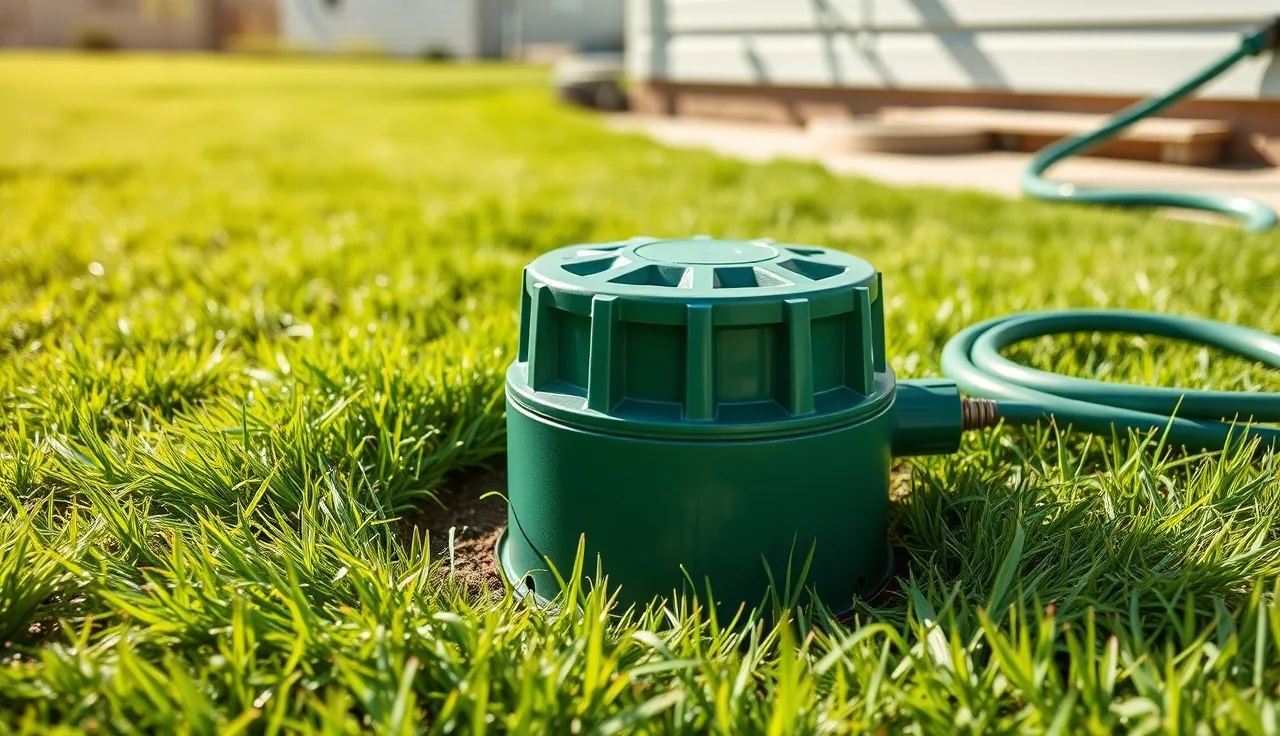
Polyethylene riser covers. When a contractor installs a plastic or concrete riser to bring the access point up to grade, a polyethylene cap snaps or bolts onto the top. These are light, won't corrode, and one person can lift them. The lids alone cost $20 to $60. The full riser kit (pipe sections plus lid) runs $100 to $400 depending on depth and diameter [3]. Green and black are the common colors because they hide in a lawn.
Fiberglass covers. Less common, still worth knowing. Fiberglass tanks show up in some coastal and high-water-table areas, and they usually come with fiberglass lids that beat concrete on weight and beat polyethylene on impact resistance. Replacement covers run $80 to $200.
Decorative covers. Fake rocks, artificial boulders, planter boxes, and stepping stones that sit over the riser cap. Purely cosmetic. They run from $40 for a basic plastic rock to $300 or more for a large cast stone look-alike. The functional lid is still underneath. The decorative piece only hides it. If you go this way, make sure it moves quickly without tools, because a pumper who can't reach your lid in under two minutes will bill you for the delay.
Most modern septic tanks have two access points: one over the inlet baffle, one over the outlet baffle. Both need covers. Don't assume your system has just one lid.
How much do septic system covers cost?
Here's an honest breakdown. Prices swing by region, tank size (24-inch and 20-inch openings are most common, but older tanks use odd sizes), and whether you buy retail or through a contractor.
| Cover type | DIY material cost | Installed cost (contractor) |
|---|---|---|
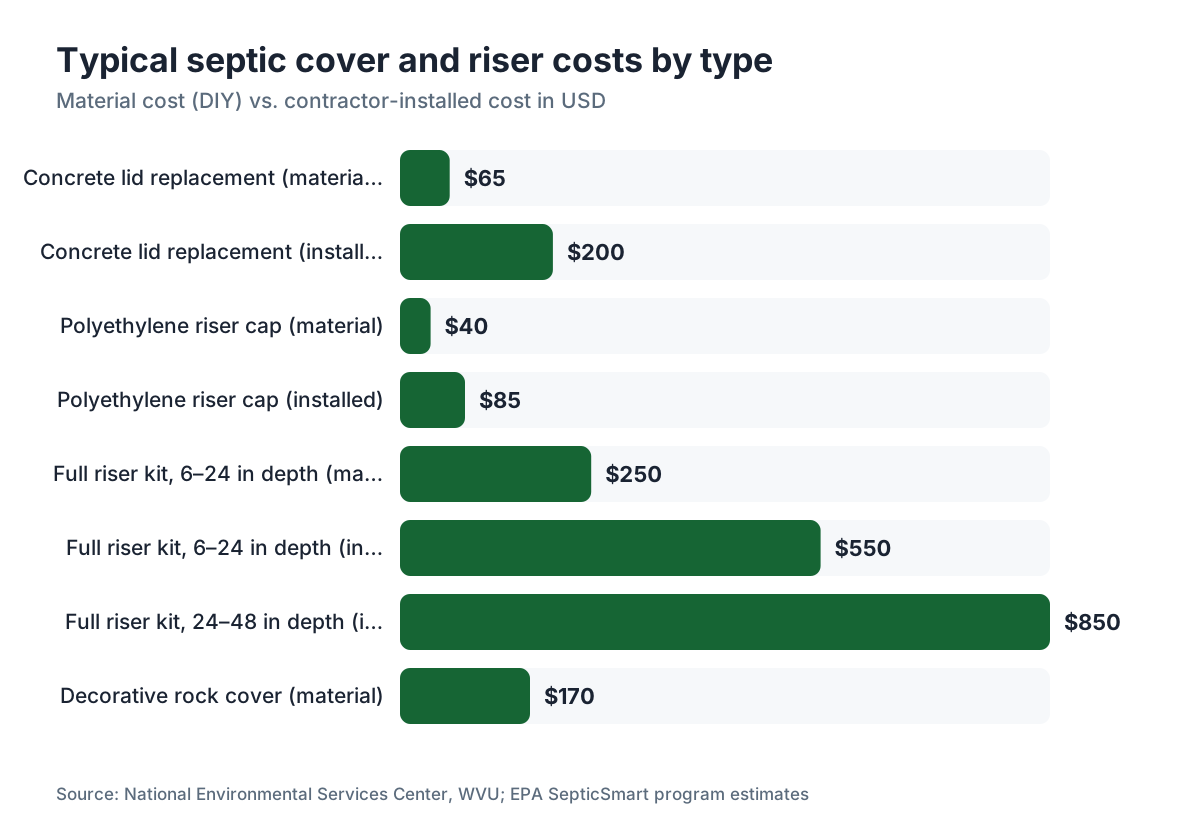
| Replacement concrete lid | $30 to $100 | $100 to $300 |
| Polyethylene riser cap only | $20 to $60 | $50 to $120 |
| Full riser kit (6 to 24 inches deep) | $100 to $400 | $300 to $800 |
| Full riser kit (24 to 48 inches deep) | $200 to $600 | $500 to $1,200 |
| Fiberglass replacement lid | $80 to $200 | $150 to $350 |
| Decorative rock/boulder cover | $40 to $300 | $60 to $400 |
Riser depth is the biggest cost variable. A lid 36 inches below grade needs more riser pipe sections, and labor climbs because the pumper hose has to reach farther. Get a quote that names the depth before you commit.
Replacing a cracked lid on an otherwise healthy tank is a cheap fix worth doing fast. If the tank itself needs work, read about septic tank repair before you decide whether a lid upgrade makes sense or whether a bigger job is coming anyway.
Installation labor runs $150 to $500 for a standard single-tank riser install, assuming the lid is reachable and the soil isn't rocky [3]. Adding a second riser for the second access port roughly doubles that. Do both at the same time. You pay the mobilization cost once, so splitting the job across two visits just wastes money.
What are riser covers and when should you upgrade to one?
A riser is a vertical pipe section, usually 12 to 24 inches across, that lifts the tank's access opening from wherever it sits underground up to ground level or just below. The riser cover (cap) sits on top. The point is turning every future septic tank pump out into a 10-minute job instead of a dig.
Upgrade to a riser if any of these are true.
Your pumper digs to find the lid on every visit. That digging costs you money and tears up your lawn again and again.
You can't find your tank lid at all without probing, and you've lived in the house for years. More common than people think.
You're already having septic tank cleaning done and the contractor will be on-site. Adding a riser while the hole is open is the cheapest possible time to do it.
You're planning to sell. A tank that's accessible to grade reads as a plus on a buyer's home inspection.
Riser systems need secure lids, either a bolt pattern or a childproof lock. Some states require it by code. Many have adopted language from EPA's onsite wastewater guidance that mandates secure covers on any access point a child could reach [4]. A riser with a loose cap is worse than no riser, because now the opening sits at grade in plain view.
How do you find a buried septic tank cover?
This is one of the most common questions homeowners ask, and the answer is less mysterious than it feels.
Start with your as-built drawing. Every permitted septic install is supposed to have one. If you don't have it, your county health department or building department keeps records. Call them, give your address and parcel number, and ask for the septic record card or as-built diagram. Many counties have these digitized back to the 1970s. Some don't, and if yours doesn't, you'll need another route.
With records in hand, the as-built shows the tank's distance from the house foundation and its orientation. Walk that distance from the house, probe the soil with a thin metal rod at 6-inch intervals, and you'll hit the concrete lid or riser within a few passes. Tanks usually sit 10 to 25 feet from the house, between the foundation and the start of the drain field.
No records? Look for a greener, lusher patch of grass over the tank in dry seasons, or a slightly sunken rectangular spot. A soil probe works, and so does a cheap metal detector if the tank has any steel in it.
Once you find it, mark it for good. A landscaping flag, a discreet stake, or a GPS waypoint in your phone all work. You'll thank yourself before the next septic tank pumping appointment.
For systems where the drain field runs to a leach field, the tank is almost always between the house and the leach field. That narrows the hunt a lot.
What makes a septic cover dangerous, and when do you need to replace it?
A bad cover is one of the highest-risk things on a residential property. The opening below it can be 4 to 8 feet deep and full of gases that can drop an adult in seconds.
Replace a cover right away if you see any of these.
Cracks running through the lid, especially ones that have moved (you'll see different surface staining on each side of the crack). A cracked concrete lid can hold weight one day and give out under a child the next.
The lid rocks or shifts when you push on it. It should sit firm with no play.
The lid is gone. This happens after flooding, frost heave, or vandalism. Cover the opening with heavy plywood and weight it down while you get a replacement, but treat it as an emergency.
Rust staining around a concrete lid's edges. That means the rebar inside is corroding and the structure is failing.
A riser cap that won't latch or has gone brittle and cracked. UV degrades polyethylene over 10 to 20 years.
The EPA recommends inspecting all septic system components at least once a year, cover condition included [2]. If a service provider does regular checks, ask them to note the lid condition in writing. That documentation matters if a warranty or insurance question comes up later.
Do home warranties cover septic systems?
The honest answer: usually not by default, sometimes yes with an add-on, and the fine print matters more than anything.
Standard home warranty contracts from the major providers (American Home Shield, Choice Home Warranty, First American Home Warranty, and others) typically leave septic out of the base plan. Base plans cover HVAC, indoor plumbing, electrical, and major appliances. Septic gets treated as an outdoor or site utility, which most base plans exclude flat out.
Most major providers do offer a septic add-on rider for another $50 to $150 a year. What those riders actually cover varies wildly. Common coverage includes the pump inside the tank (on a pumped or aerobic system), the tank itself in cases of sudden mechanical failure, and sometimes pumping costs. Common exclusions:
Drain field (leach field) failure. Nearly every warranty excludes this. Drain field repair or replacement costs $3,000 to $20,000 or more, and warranty companies treat it as a maintenance issue across the board.
Concrete or lid damage from normal aging or freeze-thaw cycles.
Failures from misuse (flushing non-biodegradables, dumping harsh cleaners).
Pre-existing conditions. If the system was already failing when the warranty started, no rider touches it.
The smartest move before buying a septic add-on is getting a septic tank inspection first. Inspectors document current condition, which sets your baseline. Skip that, and a warranty company can deny a claim by simply asserting the problem was pre-existing.
For operators managing multiple properties or service businesses tracking warranty-related calls, tools like SepticMind can flag which properties have active coverage and whether a service call might qualify for reimbursement. That cuts down on billing surprises.
Buying a home with a septic system? Some real estate transaction warranties (offered at closing) do cover septic to a degree. Those are separate from ongoing home warranty plans. Read the actual contract, not the marketing summary.
What do state and local codes require for septic covers?
Requirements vary by state and sometimes by county, but a few themes show up across the major onsite wastewater regulations.
Accessibility. Most modern codes require covers to be reachable for inspection and pumping without excavation. California, Florida, Texas, and much of the Northeast require risers on new installations. Older systems are often grandfathered, but a repair or tank replacement usually triggers the current code [5].
Structural integrity. Covers have to support the expected live load for their spot. A cover under a driveway must be rated for vehicle traffic (those are specifically engineered and cost more). A cover under a lawn just needs to handle foot traffic. The National Precast Concrete Association publishes load ratings for precast lids [6].
Secure fastening. Many states now require covers over access points to be secured against unauthorized entry. Usually that means a bolt-down lid or a proprietary locking cap. Check your state's environmental quality or health department for the exact language.
Depth to grade. Several states require lids no more than 6 to 12 inches below finished grade on new installs or repairs. If your lids sit 2 to 3 feet down, they likely predate that rule.
For specific code language, EPA's SepticSmart program links to state resources on its site [2]. Your county health department is the most reliable local source, since municipal rules sometimes go past state minimums.
Sizing up whether your system is up to code before selling or refinancing? A pre-inspection is the cleanest way to find out. See our guide on septic tank inspection for what inspectors actually check.
Can you install or replace a septic cover yourself?
For a riser cap replacement or a like-for-like polyethylene lid swap, yes, this is a DIY job. You're dealing with a bolted or friction-fit plastic cover, no heavy lifting, and no permit for a straight in-kind lid swap in most places.
A full riser system is more involved. You're excavating above the tank, cutting the concrete top or fitting the riser adapter to the existing opening, and working close to an active tank. The tank holds gases that can be dangerous even at the surface if you're in a confined area. Have a second person present, and don't lean directly over the open access point at any stage.
A few jobs genuinely need a licensed contractor.
Any work that cuts into or modifies the tank itself (beyond the lid) usually requires a permit and an installer's license in most states.
Installing a traffic-rated cover or any cover under a driveway needs engineering and usually a permit.
If the old lid has collapsed into the tank, that's a bigger excavation and likely some structural repair. Not a solo weekend project.
For a standard riser kit install, contractor cost typically runs $300 to $800. Labor is most of that, so the DIY saving on a simple riser cap swap is real. On a full riser install, the savings are real too, but so are the physical and safety demands.
How do decorative septic covers work, and are they worth buying?
Decorative covers sit over the functional riser cap and hide it. The most popular form is a faux rock or artificial boulder, made from polyethylene or fiberglass, hollow inside, that drops over the riser. From a few feet away it reads as a landscape rock.
They work aesthetically, and they shield the riser cap from UV and physical damage. The gotchas:
Size has to match. The decorative piece needs to clear the riser in width and sit without pressing on the lid in height. Measure your riser diameter and height before buying.
It has to move. A 30-pound decorative boulder an adult can lift and set aside is fine. A 200-pound concrete planter bolted to the riser is a problem the day the pumper shows up. Pumpers refuse to work or charge extra when they can't reach the lid fast.
Don't plant anything in or right next to a decorative planter over the tank. Root intrusion into the tank is a real risk, and you don't want septic system repair triggered by a planting decision.
For homes where yard aesthetics matter, a $50 to $150 faux rock is genuinely worth it. It protects the riser cap, hides the industrial-looking lid, and any decent landscaper or contractor can set it up in 20 minutes.
For a second opinion on costs before any septic project, SepticMind's service tracking tools help operators build estimates from real job data on similar systems, which is useful when you're checking whether a quote is reasonable.
What happens if you ignore a damaged or missing septic cover?
Nothing good, and the consequences stack fast.
Immediate safety risk. A missing or broken lid over an active tank is a fall hazard. The tank void runs 4 to 8 feet deep. Gases inside (mainly hydrogen sulfide and methane) can cause rapid incapacitation. OSHA classifies entry into a septic tank as a permit-required confined space [7], and even surface-level exposure near an open lid can be dangerous.
Surface water contamination. Rain and runoff entering the tank dilutes the contents and can push partially treated effluent out the outlet baffle before the bacteria have done their job. That's a direct path to leach field overload and eventual drain field failure, the most expensive septic repair there is.
Code enforcement liability. If an inspector finds an unsecured or missing lid, the homeowner can get a notice of violation with a mandatory repair timeline. Some jurisdictions require tanks with compromised covers to be pumped immediately and the system taken out of service until it's fixed.
Insurance denial. If a child or visitor falls into an open tank and you knew the cover was broken or gone, your homeowner's insurance may have grounds to deny the claim on negligent maintenance. That's a catastrophic outcome.
A lid replacement is one of the cheapest septic expenses there is. Delaying it is never the right call.
How often should you inspect your septic cover?
A visual check once a year is reasonable for most homeowners. Walk to your tank access points, confirm the cover is in place, doesn't rock, and shows no surface cracks or heaving. Five minutes.
A more thorough check every 3 to 5 years, timed with your septic tank pumping appointment, makes sense. The pumper removes the lid and can tell you on the spot if the concrete is deteriorating, if the riser cap has gone brittle, or if the locking mechanism needs attention.
EPA's SepticSmart guidance recommends inspecting the whole system every 3 years for conventional gravity systems, or annually for systems with mechanical parts [2]. Cover condition is part of that. The phrase EPA uses is to "have your septic system inspected and pumped regularly," with pumping recommended every 3 to 5 years for a typical household [2].
After a severe frost, flooding, or heavy vehicle traffic over the tank, check the cover sooner. Those events crack concrete lids and shove riser caps out of place more than anything else. A quick look after a hard winter is a habit worth building.
For a full picture of how often your specific system needs service based on household size and tank volume, see our guide on how often to pump septic tank.
Frequently asked questions
Do home warranties cover septic systems?
Not by default. Most standard home warranty plans exclude septic. Optional add-on riders run $50 to $150 a year from major providers, but they typically cover only the pump and tank mechanics, not the drain field or lid damage from aging. Get a septic inspection before activating any warranty to document baseline condition, or a pre-existing condition exclusion can block every future claim.
How do I find the lid on my septic tank?
Start with your county health department's permit records; most counties keep as-built drawings showing the tank's location relative to your house. If records aren't available, probe the soil with a metal rod 10 to 25 feet from your foundation in the direction of the drain field. A slight depression in the lawn, a greener patch in dry conditions, or a subtle rectangular outline in the grass are all clues.
What is the difference between a septic tank lid and a riser cover?
The lid is the original cover on the tank opening, usually concrete on older systems. A riser is a vertical pipe added to extend that opening up to or near ground level. The riser cover (cap) sits at the top of the riser. Many properties have both: the original tank lid still in place at depth, with a riser and cap added on top to make access reachable without digging.
Can a cracked septic tank lid be repaired instead of replaced?
Minor surface crazing on concrete can be sealed with hydraulic cement as a stopgap, but a structurally cracked lid (cracks through the full thickness, or ones that have shifted) should be replaced. Repair products won't restore structural integrity once the rebar starts corroding. A replacement concrete lid costs $30 to $100, so skipping it makes no sense. A lid that fails under weight is a serious hazard.
How much does it cost to add a riser to make my septic lid accessible?
A full riser kit for a lid 12 to 24 inches deep runs $100 to $400 in materials and $300 to $800 installed by a contractor. Deeper installs (24 to 48 inches) cost more: $200 to $600 in materials and $500 to $1,200 installed. Adding risers to both access ports at the same time saves on labor, since the mobilization cost is shared.
Are decorative septic tank covers (fake rocks) safe?
Yes, if the functional lid underneath is intact and the decorative piece moves quickly without tools. Decorative rocks and faux boulders costing $40 to $300 sit over the riser cap and hide it. The risk is covering a damaged or missing lid, or making the real lid inaccessible to service crews. Always confirm the functional lid is secure before adding any decorative element on top.
Do I need a permit to replace a septic tank cover?
For a simple like-for-like lid replacement, most jurisdictions don't require a permit. Installing a new riser system may or may not require one, depending on your state and county. Anything that cuts into or modifies the tank structure typically requires a permit and a licensed contractor. When in doubt, call your county health or environmental services department before starting work.
What kind of septic cover do I need if a vehicle drives over the tank?
You need a traffic-rated (H-10 or H-20 rated) cover engineered for wheel loads. Standard residential lids are not rated for vehicle traffic and can crack or collapse under a car or truck. Traffic-rated concrete lids and steel-reinforced covers are available but cost more and usually require professional installation. Never drive over a standard residential septic lid without verifying its load rating first.
How long do polyethylene septic riser covers last?
Most polyethylene riser caps last 10 to 20 years under normal conditions. UV exposure is the main degrading factor; a cap sitting in full sun goes brittle faster than one in partial shade. Signs of aging include fading, surface cracking, and brittleness when you press on the lid. Many manufacturers offer UV-stabilized formulations, worth the modest price premium for sun-exposed installs.
What does a septic inspection check about the cover?
A standard inspection checks that the lid is present, structurally intact, properly seated, and secure enough to prevent unauthorized entry. The inspector notes any cracks, heaving from frost, or missing hardware, and confirms the access point is reachable while documenting its depth from grade. In many states, an inspection finding of a compromised cover triggers a mandatory repair order before the system can pass.
My new home has no visible septic lid. What should I do?
Request the permit records and as-built drawing from your county health department. A deeply buried lid is normal for older systems; the lid exists, it's just below grade. Get a septic inspection done before or shortly after closing. The inspector locates the tank, probes to find the access points, and gives you a written report on cover condition. Budget for a riser install if the lid sits more than 12 inches down.
What gases are present in a septic tank, and how dangerous are they?
The main gases are hydrogen sulfide, methane, carbon dioxide, and ammonia. Hydrogen sulfide is the most acutely dangerous: above 100 ppm it can cause rapid loss of consciousness, and OSHA classifies entry into a septic tank as a permit-required confined space. Even at the surface near an open lid, brief high-concentration exposure is possible. Never lean directly over an open septic tank access point.
Does homeowner's insurance cover septic tank lid replacement?
Standard homeowner's insurance generally does not cover lid replacement from normal wear or aging, since that counts as maintenance. Sudden and accidental damage (say, a vehicle drives over the lid and breaks it) may be covered under the property damage section of some policies, subject to your deductible. Review your policy's language on underground utilities and outbuildings; coverage varies a lot by insurer and policy tier.
What size are most residential septic tank lids?
The two most common access opening diameters are 20 inches and 24 inches for modern tanks. Some older tanks have 12-inch to 16-inch openings, which makes pumping harder and sometimes needs special equipment. Most riser and cover systems sell in these standard sizes. Measure your opening before buying any replacement lid or cap to avoid a mismatch; non-standard sizes can be ordered but cost more and take longer to source.
Sources
- EPA SepticSmart Program, U.S. Environmental Protection Agency: Regular septic system inspection and pumping every 3 to 5 years recommended; system components including covers should be inspected for integrity
- EPA SepticSmart: Protect Your Investment, U.S. Environmental Protection Agency: EPA SepticSmart guidance states to 'have your septic system inspected and pumped regularly' and notes that septic tanks contain toxic gases including hydrogen sulfide that pose safety hazards
- National Environmental Services Center, West Virginia University, Septic System Owner's Guide: Riser installation costs and typical depth ranges for residential septic tank access risers
- EPA Onsite Wastewater Treatment Systems Manual, U.S. Environmental Protection Agency: Septic access covers must be secured to prevent unauthorized entry, particularly by children, per EPA onsite wastewater guidance
- California Water Boards, Onsite Wastewater Treatment System Policy: California and similar state regulations require risers on new septic installations to bring access points to grade
- National Precast Concrete Association: National Precast Concrete Association publishes load ratings for precast concrete septic tank lids including traffic-rated variants
- OSHA Confined Spaces, 29 CFR 1910.146, Occupational Safety and Health Administration: OSHA classifies entry into septic tanks as a permit-required confined space due to atmospheric hazards including hydrogen sulfide and methane
- University of Minnesota Extension, Septic System Owner's Guide: Septic tank covers and riser systems: types, costs, and maintenance guidance for homeowners
- Florida Department of Health, Onsite Sewage Program: Florida state code requirements for septic tank access, cover security, and inspection standards
Last updated 2026-07-09