Septic inspection in East Marion, NY: what to expect and what it costs
By the SepticMind Editorial Team

TL;DR
- Septic inspections in East Marion, NY cost roughly $300, $600 for a standard visual and operational check, rising to $800, $1,500 if a full pump-out and dye test are required.
- Suffolk County enforces its own Article 6 sanitary code on top of New York State rules.
- Inspections are mandatory at most real estate sales.
- Failing an inspection usually means tank repair or drain field work before closing.
Why does East Marion specifically have strict septic inspection rules?
East Marion sits at the far northeastern tip of the North Fork of Long Island, surrounded on three sides by Gardiners Bay, Orient Harbor, and the Long Island Sound. The groundwater here flows straight toward those surface waters with very little natural filtration distance. Suffolk County recognized this decades ago and built one of the more aggressive county-level sanitary codes in the Northeast as a result.
Suffolk County Sanitary Code Article 6 governs the design, installation, and inspection of all individual sewage disposal systems (ISDS) in the county. [1] East Marion, as an unincorporated hamlet within the Town of Southold, falls under that code entirely. The New York State Department of Health sets the floor, and Suffolk County's Department of Health Services (SCDHS) builds on top of it. [6]
The practical effect for homeowners is that almost nothing involving a septic system happens informally here. Selling a house? The system gets inspected. Adding a bedroom? You need a permit that involves a septic capacity review. Putting in a new tank? The county inspects the installation before backfill. This is not the kind of place where a handshake and a pump-out receipt gets you to closing.
What does a septic inspection in East Marion actually cover?
A standard septic inspection in East Marion runs through several distinct phases, and what you get depends heavily on who ordered it and why.
Visual and operational check. The inspector locates the tank lids, opens them, and looks at the liquid level, the scum layer, the sludge depth at the bottom, and the condition of the inlet and outlet baffles. They run water through the house while watching how the tank responds. This alone tells an experienced inspector quite a bit.
Dye test. Many lenders and buyers' attorneys in Suffolk County still require a dye test. The inspector flushes fluorescent dye through the system and watches the ground around the drain field for dye surfacing, which would point to a failing leach field. [2] It's an imperfect test (you can have a failing field that doesn't surface dye on the test day) but it's fast and cheap to add.
Pump-out inspection. Some inspectors and lenders require the tank to be pumped before inspection so the bottom and walls can be seen clearly. This is the most thorough option and the most expensive, because you're paying for the inspection and a septic tank pump out in the same visit.
Drain field assessment. On a thorough inspection, the inspector probes the soil around the leach field with a metal rod to feel for soft, saturated areas that suggest the field is failing. A working leach field has firm, well-drained soil around it. Probing takes maybe fifteen minutes and catches problems a dye test misses.
Records check. A good East Marion inspector pulls the system's permit record from SCDHS before they even arrive on site. The county keeps records of permitted systems, and knowing the original design (number of bedrooms it was permitted for, tank size, field layout) tells the inspector what to look for. If the house has had additions since the system went in and no upgrade permit was pulled, that's a red flag worth flagging.
How much does a septic inspection cost in East Marion, NY?
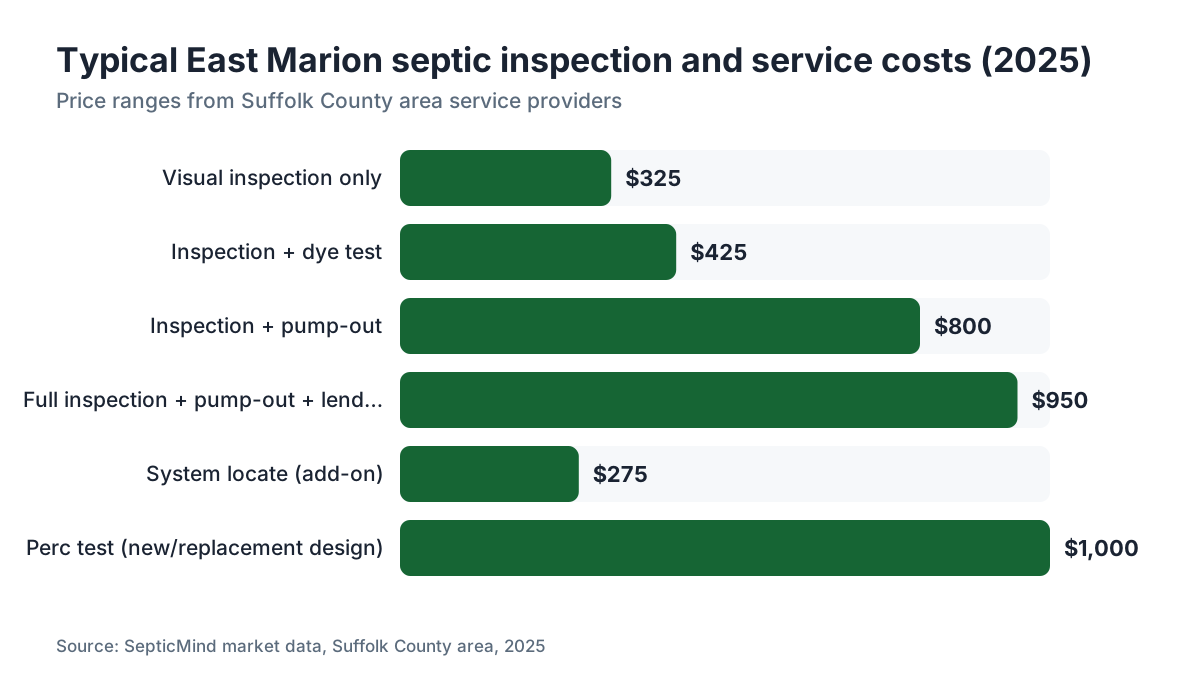
Prices in this part of the North Fork run higher than the national average for a few reasons: labor costs in Suffolk County are high, the drive time from most pumping companies is real, and demand from real estate transactions stays steady year-round.
Here's a realistic range for what you'll pay:
| Service | Typical cost range (East Marion area) |
|---|---|
| Basic visual/operational inspection only | $250, $400 |
| Inspection with dye test | $350, $500 |
| Inspection plus pump-out (most thorough) | $600, $1,000 |
| Inspection plus pump-out plus full written report for lender | $700, $1,200 |
| System locate/map (if as-built records missing) | $150, $400 add-on |
| Perc test (new system or replacement design) | $500, $1,500 |
These are 2025 price ranges based on market data from eastern Suffolk County service providers. Prices shift with fuel costs, seasonality, and how backed up the local pumpers are. Summer and early fall, when North Fork real estate closes at highest volume, often see scheduling windows 20 to 30% longer and occasional premium pricing.
If the system has no as-built record on file with SCDHS, locating the tank and field before inspection adds cost. The county's records coverage for older East Marion homes (pre-1980 construction) is incomplete, and many tanks went in before permits were required.
For comparison, a septic tank inspection in a rural inland county might run $150, $300. The East Marion premium is real and mostly reflects local labor rates and demand.
When is a septic inspection legally required in East Marion?
The clearest trigger is a real estate sale. Suffolk County requires that any property with an individual sewage disposal system that's being sold have the system inspected and the results disclosed to the buyer. [1] This has been standard practice for decades and is baked into most standard purchase contracts in the county.
Permit-related inspections are a second category. If you apply for a building permit for work that adds bedrooms, bathrooms, or otherwise increases the design flow of the house, SCDHS reviews whether the existing septic system can handle the new load. If it can't, a new or upgraded system is required before the permit closes out.
New system installations get a mandatory county inspection before backfill. The SCDHS inspector visits the site to verify the tank size, depth, materials, and leaching pool or field dimensions match the approved permit before the contractor covers anything. [1]
Beyond those legal triggers, a voluntary inspection makes sense in a few situations: you've bought a house in the last few years and never had the system checked, you're noticing slow drains or odors, or it's been more than three years since the last pump-out. The EPA's SepticSmart program recommends inspecting your septic system at least every three years. [2]
Lenders also sometimes independently require inspections for FHA or VA loans on properties with septic systems, regardless of what state or county law demands.
What do Suffolk County inspectors look for that others might miss?
Suffolk County's code has a few quirks worth knowing about.
Setback distances here are strict. Leaching pools and cesspools must meet minimum setbacks from property lines, wells, water bodies, and the foundation. [1] An inspector who knows SCDHS standards will actually measure or estimate these distances rather than eyeball them. A system installed correctly for its era might not meet current setback rules, and that matters at resale.
Cesspools get specific attention. Much of the older housing stock in East Marion, including many mid-century cottages, has cesspools rather than modern septic tanks with proper drain fields. A cesspool is a single buried concrete ring that receives both solids and liquid, with the liquid seeping out through the sidewalls. Suffolk County has been pushing to get cesspools upgraded, especially near surface water, and a county inspector will flag an active cesspool and note whether it meets minimum requirements for the structure's design flow.
Nitrogen loading is increasingly on the county's radar. The Long Island Nitrogen Action Plan (LINAP) is a state-level effort that Suffolk County takes part in, aimed at cutting nitrogen from septic systems that reaches coastal waters. [8] LINAP doesn't yet require a homeowner to replace a working conventional system, but an inspector may note whether the system sits near a water body where nitrogen reduction technology (like an I/A OWTS, an innovative/alternative on-site wastewater treatment system) might be required in the future or is eligible for a county subsidy.
How do you find a qualified septic inspector for East Marion?
New York State does not have a standalone septic inspector license, which creates some confusion. The people best qualified to inspect septic systems in East Marion fall into a few categories.
Licensed master plumbers with septic experience are one option. They can sign off on work and pull permits. A plumber without specific ISDS experience, though, isn't necessarily a good inspector.
Certified home inspectors who hold the American Society of Home Inspectors (ASHI) or International Association of Certified Home Inspectors (InterNACHI) credential and who specifically advertise septic system inspection experience are another option. [9] The key qualifier is that the inspector knows Suffolk County code specifically, more than generic septic systems.
Septic service companies licensed to operate in Suffolk County are often the most practical choice. They pump tanks regularly, know the local systems, and have staff who've seen hundreds of East Marion-area systems. Their limitation is that they have a financial interest in finding problems, since they can also sell you repairs. That's not a reason to avoid them, just a reason to get a second opinion on any major recommended work.
Ask any candidate inspector directly whether they pull SCDHS permit records before arriving, whether they probe the drain field, and what their dye test protocol is. An inspector who can't answer those questions fluently hasn't done enough of this in Suffolk County.
For operators managing inspection workflows across multiple properties or customers in the area, SepticMind provides job tracking and customer record tools that help septic service companies keep county permit data and inspection histories organized by address.
What happens if a septic system fails inspection in East Marion?
Failing an inspection doesn't automatically kill a real estate deal, but it changes the negotiation a lot. The buyer's attorney usually asks the seller to either repair the system or knock the repair cost off the purchase price. In a hot North Fork market, how this shakes out depends on how motivated both parties are.
Common failures and their typical remedies:
Cracked or deteriorated tank. A concrete tank with structural cracks needs repair or replacement. Septic tank repair on a standard 1,000-gallon tank might cost $500, $2,000 depending on what's cracked. Full septic tank installation for a replacement runs $3,000, $8,000 in this area for the tank alone.
Failed drain field. This is the expensive failure. A new leach field or set of leaching pools in Suffolk County, including design, permitting, and installation, typically costs $15,000, $40,000. On a constrained East Marion lot (many are small with setback issues), that number can climb higher if alternative designs are required. See the full breakdown at cost to install septic system.
Undersized system for current bedroom count. If the house added a bedroom since the system was permitted and no capacity upgrade was done, the county may require a new design before approving the sale. This is common in the North Fork, where vacation homes got converted to year-round use.
Active cesspool near water. If the property sits within a certain distance of tidal water and has a cesspool, the county may require replacement with a conforming system as a condition of transfer.
In any failure scenario, make sure you're talking to a septic system repair contractor with specific SCDHS experience before agreeing to any proposed scope of work.
How often should East Marion homeowners schedule septic maintenance?
The EPA's SepticSmart program states that "most septic systems need to be pumped every three to five years." [2] That's the national baseline. In East Marion, where systems often serve seasonal populations (the house sits empty for months, then gets full-house occupancy in summer), the math is a bit different.
A system that serves a two-person household year-round and a six-person household for ten summer weeks accumulates sludge unevenly. Some inspectors recommend pumping every two to three years for North Fork seasonal homes precisely because the burst loading during summer can build sludge faster than a strictly seasonal usage pattern would suggest.
The general how often to pump septic tank guidance is to measure sludge depth rather than follow a fixed calendar. If the sludge layer at the bottom of the tank is within 12 inches of the outlet baffle, pump regardless of when the last pump-out was. A good pumper will tell you this honestly.
Beyond pumping, East Marion homeowners should:
- Keep accurate records of every pump-out, inspection, and repair, with dates and the contractor's name.
- Avoid planting trees or shrubs within 20 feet of the leach field (roots are a slow killer of leaching pools).
- Never put grease, wipes (including "flushable" ones), or medications down drains.
- Divert roof drains and sump pumps away from the drain field area.
- Have the tank pumped before putting a house on the market rather than after an inspection finds problems.
For homeowners who want a simple maintenance checklist, the EPA's SepticSmart homeowner resources are a solid free reference. [2] Cornell Cooperative Extension of Suffolk County also publishes Long Island specific care guidance. [10]
What records should you gather before an East Marion septic inspection?
Good paperwork makes for a faster and cheaper inspection. Here's what to pull together before the inspector arrives.
SCDHS permit record. You can request this from the Suffolk County Department of Health Services, Division of Environmental Quality. The record shows the tank size, the number of leaching pools or field dimensions, the design flow (usually expressed in bedrooms), and the date of original installation. If the current owner doesn't have this, SCDHS can often provide it; the process takes a few days.
As-built diagram. This shows exactly where the tank and field sit on the lot. Without it, the inspector (and pumper) have to probe the ground to locate the tank, which adds time and cost.
Pump-out receipts. Any receipts from the last two or three pump-outs tell the inspector how often the system has been serviced and by whom. A system that hasn't been pumped in eight years raises concerns before the lid is even opened.
Repair records. Any previous repairs, especially to baffles, tank lids, distribution boxes, or the field, give the inspector a history to work from.
If these records simply don't exist, that's not unusual for East Marion homes built in the 1950s and 1960s. The inspector will work without them, but expect the inspection to take longer and cost a bit more.
Does East Marion have any septic system upgrade incentive programs?
Yes, and this is an area where East Marion homeowners have real money available to them.
Suffolk County administers a Septic Improvement Program (SIP) that provides grants and low-interest loans to help property owners replace cesspools and conventional septic systems with nitrogen-reducing innovative/alternative (I/A) OWTS systems. [4] The grant amounts and eligibility zones have shifted over time as county funding cycles, so check directly with SCDHS for current figures.
The Town of Southold, which governs East Marion, has also taken part in related water quality work tied to the Long Island Sound Study and the LINAP process. [8] Homeowners within certain proximity to tidal waters may be prioritized for assistance.
New York State's Environmental Facilities Corporation (EFC) has offered financing for ISDS upgrades as well, though program availability changes. [5]
The practical steps: contact the SCDHS Division of Environmental Quality, ask specifically about SIP eligibility for your parcel, and ask whether your location qualifies for any priority funding given proximity to Gardiners Bay or Orient Harbor. If you're replacing a failing system anyway, the incremental cost to go with an I/A OWTS rather than a conventional replacement is often covered partly or fully by grant money. That's a real benefit worth chasing before signing a cost to put in a septic tank contract for conventional replacement.
For operators in this market, tracking which customers sit in SIP-eligible zones and walking them through the application is a genuine service differentiator. SepticMind's customer management tools help service companies tag properties by program eligibility and follow up systematically.
What are the biggest mistakes East Marion homeowners make with septic inspections?
A few patterns show up over and over in the North Fork market.
Waiting until the buyer orders one. If you're selling a house, getting your own inspection six months before listing is smart. You find out about problems while you still control the timeline and the contractor selection. Scrambling to fix a failed leach field in the week before closing, with a contractor your buyer's attorney picked, is an expensive and stressful way to do it.
Hiring the cheapest inspector available. A $150 inspection from someone who doesn't know Suffolk County code is no bargain if they miss a cesspool that needs replacement or a distribution box that's collapsed. Pay for someone who knows SCDHS specifically.
Skipping the pump-out to save $400. If the last pump-out was more than two years ago, pay for the combined inspection and pump-out. Inspecting a tank with three feet of sludge in it tells you far less than inspecting a clean one. The septic tank pumping cost is minor next to what you'll spend if a problem gets missed.
Assuming the system was designed for the current bedroom count. Many East Marion cottages started as two-bedroom seasonal structures and have since been expanded. The septic system may still be permitted for the original design. Checking this before listing, not during buyer due diligence, avoids a nasty surprise.
Not asking about I/A OWTS subsidies before replacing. If you have a cesspool and you're replacing it anyway, skipping the SIP eligibility check before signing a replacement contract leaves money on the table.
Frequently asked questions
How long does a septic inspection take in East Marion?
A standard inspection without pumping takes one to two hours on site. If the inspector needs to locate the tank first because no as-built exists, add 30 to 60 minutes. An inspection that includes a full pump-out and dye test can run three to four hours. Budget a half-day if you're doing the most thorough version, especially if the pumper and inspector arrive from different companies.
Do I need a septic inspection to sell my house in East Marion?
Yes, as a practical matter. Suffolk County's sanitary code and standard North Fork purchase contracts both require disclosure and inspection of individual sewage disposal systems at point of sale. Technically the form and timing can vary by contract, but no experienced buyer's attorney is going to let a sale close in this county without a septic inspection. Plan for it from the start of your listing process.
Can I use my home inspector for the septic inspection in East Marion?
A general home inspector can note visible septic concerns, but a thorough East Marion inspection requires someone who knows Suffolk County's Article 6 code, can pull SCDHS permit records, and knows how to probe the drain field. Most general home inspectors don't carry that local expertise. Use a dedicated septic inspector or a licensed local septic service company for the septic portion of the inspection.
What is a cesspool and is it legal in East Marion?
A cesspool is a single concrete ring that receives all wastewater, with liquid seeping through the sidewall holes rather than through a proper drain field. Many older East Marion properties have them. They're not banned outright, but Suffolk County discourages them and requires replacement with conforming systems in certain circumstances, including proximity to water bodies and at property sale if they're found to be failing. Check with SCDHS for current rules on your specific parcel.
How do I find my septic tank location in East Marion if I don't have records?
Start by requesting your permit record from the Suffolk County Department of Health Services, Division of Environmental Quality. They may have an as-built diagram on file. If not, a septic service company can probe the ground to locate the tank, typically by following the sewer line from the house. Ground-penetrating radar is also sometimes used on difficult sites, though it adds cost. Expect to pay an additional $150 to $400 for a locate.
What is the Suffolk County Septic Improvement Program and do East Marion homeowners qualify?
The Suffolk County Septic Improvement Program (SIP) provides grants and low-interest loans to replace cesspools and conventional septic systems with nitrogen-reducing innovative/alternative systems. East Marion homeowners, particularly those near tidal waters like Gardiners Bay or Orient Harbor, may qualify and should contact the SCDHS Division of Environmental Quality directly. Grants can cover a significant portion of replacement costs, making I/A OWTS systems competitive with conventional replacement.
How much does it cost to replace a failed septic system in East Marion?
A full system replacement in East Marion typically runs $15,000 to $40,000 or more, depending on lot size, setback constraints, soil conditions, and whether an innovative/alternative system is required. Suffolk County permit fees and engineering costs add to that total. If you're replacing a cesspool with an I/A OWTS, ask about SIP grant eligibility before signing any contract, since county funds can meaningfully reduce your out-of-pocket cost.
What is a dye test and does it reliably detect a failing drain field?
A dye test involves flushing fluorescent dye through the system and watching the ground surface for dye to surface around the drain field. It's a reasonable screening tool but not definitive. A field can be failing without surfacing dye on the day of the test, particularly if the ground is dry or the failure is deep. A physical probe of the soil around the field, combined with visual inspection of the tank, gives a more complete picture than dye testing alone.
How often should I pump my septic tank if the house is only used seasonally?
Seasonal-use homes in East Marion that see heavy summer occupancy can build sludge faster than a simple seasonal pattern would suggest, because the burst loading during peak occupancy weeks is intense. A pump every two to three years is reasonable for a seasonal property. A better approach is to measure sludge depth at each pump-out: if the sludge is within 12 inches of the outlet baffle, pump regardless of the calendar.
What permits does SCDHS require for septic work in East Marion?
Any new ISDS installation, replacement, or significant repair in East Marion requires a permit from the Suffolk County Department of Health Services before work begins. SCDHS reviews the design against Article 6 standards and inspects the installation before backfill. Operating without a permit is a code violation and can create serious problems at resale. Minor repairs like lid replacement or baffle repairs may not need a permit, but confirm with SCDHS before any work starts.
Is a septic inspection required for refinancing a home in East Marion?
Standard rate-and-term refinancing typically does not require a new septic inspection. FHA and VA streamline refinances also generally don't trigger one. However, if the refinance involves a new appraisal and the appraiser notes concerns, or if it's a cash-out refinance with full underwriting, some lenders will require a current inspection for properties on septic. Check with your specific lender early in the process.
What is an I/A OWTS and does Suffolk County require one in East Marion?
An innovative/alternative on-site wastewater treatment system (I/A OWTS) is a septic system that reduces nitrogen in the effluent before it reaches the drain field, using aeration or other treatment stages. Suffolk County does not currently require all East Marion properties to upgrade, but new installations and replacements near sensitive water bodies may be required to use I/A technology. County and state subsidy programs make them more affordable, and some East Marion properties near tidal waters sit in priority areas.
Can a seller do a septic inspection before listing a home in East Marion?
Yes, and it's a smart move. A pre-listing inspection gives you time to fix problems on your schedule with your chosen contractor rather than scrambling during a buyer's contingency period. It also lets you disclose the system's condition accurately in the listing, which builds buyer confidence. Many experienced North Fork real estate attorneys recommend pre-listing inspections for this reason.
Sources
- Suffolk County Department of Health Services, Sanitary Code Article 6: Suffolk County Article 6 governs design, installation, and inspection of individual sewage disposal systems, including mandatory inspection at point of sale.
- U.S. EPA, SepticSmart Homeowner Resources: EPA SepticSmart recommends inspecting septic systems at least every three years and pumping most systems every three to five years.
- Suffolk County Department of Health Services, Septic Improvement Program: Suffolk County SIP provides grants and low-interest loans for replacing cesspools and conventional systems with nitrogen-reducing I/A OWTS.
- New York State Environmental Facilities Corporation, Water Infrastructure Programs: New York State EFC offers financing options for ISDS upgrades as part of broader water infrastructure programs.
- New York State Department of Health, Appendix 75-A: Wastewater Treatment Standards: New York State sets baseline standards for individual residential wastewater treatment systems that county codes like Suffolk's must meet or exceed.
- U.S. EPA, How Your Septic System Works: EPA describes standard septic system components including tanks, drain fields, and the role of inspection in system longevity.
- Long Island Sound Study, Nitrogen and Nutrient Reduction: Excess nitrogen from septic systems is identified as a leading cause of hypoxia and water quality impairment in Long Island Sound and adjacent embayments.
- American Society of Home Inspectors (ASHI), Standards of Practice: ASHI sets standards for home inspector qualifications including what a certified inspector should cover during a septic system evaluation.
- Cornell Cooperative Extension of Suffolk County, Septic System Care: Cornell Cooperative Extension provides guidance on septic system maintenance practices appropriate for Long Island homeowners.
Last updated 2026-07-09