Septic Inspections During Winter: Can They Be Done and What Changes
By the SepticMind Editorial Team
Twenty percent of real estate transactions involving septic systems close during winter months when inspection is most challenging. Those transactions need inspections. The snow on the ground and the frozen soil don't pause the real estate market.
TL;DR
- Septic inspections require state-specific report formats that must be completed correctly before they are accepted by regulators, lenders, or buyers.
- Photo documentation with timestamps and GPS coordinates is the minimum standard for defensible inspection reports.
- Real estate inspection reports in most states must be filed with the county health department within a specified timeframe.
- Inspector credentials must be current and visible on every submitted report; expired credentials are grounds for report rejection.
- Digital inspection tools reduce report completion time from hours to minutes and eliminate transcription errors.
- Consistent documentation quality across all technicians protects company reputation in the real estate inspection market.
Inspectors without winter protocols create liability exposure when they skip observable components due to conditions. The answer isn't to refuse winter inspections or to skip components because it's cold. The answer is to know exactly what you can assess in winter conditions, document what you can't assess, and produce a report that's honest about both.
What Septic Components Can Be Inspected During Winter
What septic components can be inspected during frozen ground conditions?
Most of a standard septic inspection is accessible in winter, even in cold climates:
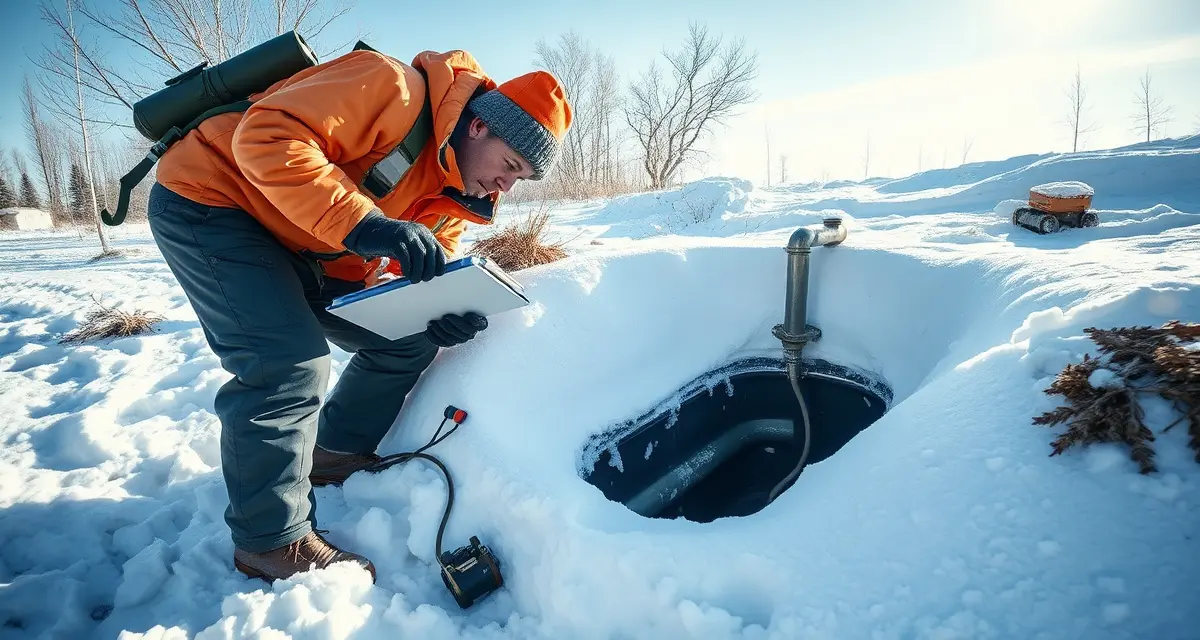
Tank access: If risers are installed, the tank is accessible regardless of ground conditions. If lids are buried, digging through frost or snow may be required. Factor this into scheduling time estimates.
Tank interior inspection: Once the lid is open, tank interior inspection proceeds normally. Baffle condition, liquid level, and structural condition are all observable. Tank pumping can proceed unless the disposal truck has weather limitations.
Distribution box (if accessible): Often at or near grade. May require excavation through frost, but accessible.
Pump chamber: Typically below frost depth and accessible through the riser.
Electrical components (ATU, pump systems): Accessible at the control panel, which is usually above ground. Electrical component testing proceeds normally.
Drainfield surface observation: Limited by snow cover, which is one of the primary winter inspection limitations. You can observe the surface if snow has melted or been cleared, but a foot of snow over the drainfield prevents the visual observations that are part of a complete inspection.
Vegetation patterns: Not observable when there's snow cover. This is another deferred component.
What Is Deferred in Winter Conditions
Honest documentation of deferred components is what separates a defensible winter inspection from a liability exposure.
Components commonly deferred in winter:
Drainfield surface observation: When snow or ice covers the drainfield area, surface saturation, vegetation patterns, and surface indicators cannot be observed. Document: "Drainfield surface inspection deferred due to [snow depth/ice cover] at time of inspection. Surface observation to be completed when conditions allow."
Ground probing: If frozen ground prevents drainfield probe observations that would otherwise be included, document the limitation.
Spray head observation (ATU dispersal): If the spray dispersal system is winterized or spray heads are buried in snow, their operation cannot be visually confirmed. Document the limitation.
Vegetation and surface drainage patterns: Observable only in non-snow conditions.
Conditional Reports in Winter
Do lenders accept conditional septic inspection reports completed during winter?
Yes, most lenders accept winter inspection reports with properly documented deferred components, provided the report clearly identifies what was and wasn't inspected and the rationale.
A conditional winter inspection report should specify:
- Which components were fully inspected
- Which components were deferred and why (specific conditions, not just "winter")
- What follow-up is recommended and by when
- Whether the observed components were passing, marginal, or failing
Lenders typically accept a conditional winter report with a follow-up inspection planned for spring, particularly when the transaction involves a property in a climate where ground-frozen conditions are common and expected.
Some lenders prefer to hold the transaction until a complete inspection can be completed in better conditions. Know your lender's standard before committing to a winter inspection timeline.
Documenting a Deferred Component
How do I document a deferred component in a winter septic inspection report?
Deferred component documentation should be specific and honest:
Too vague: "Drainfield not inspected."
Appropriately specific: "Drainfield surface inspection was not possible at time of inspection due to approximately 8 inches of snow cover across the entire drainfield area. No visible indicators of surface saturation or drainfield distress were observable through the snow cover. Recommend repeat drainfield observation when ground is clear and unfrozen, estimated [spring month] based on local climate. This component is designated 'Unable to Evaluate - Deferred' pending follow-up observation."
The specific documentation tells everyone reading the report exactly what was missed, why, and what should happen next. That's protective for the inspector, useful for the buyer and agent, and acceptable to most lenders.
SepticMind's winter inspection mode flags deferred components and generates the appropriate conditional report. When you select a component as "unable to evaluate" in the field app and note the reason, the report language generates accordingly. The report clearly identifies the conditional nature of the findings without requiring the inspector to write custom language from scratch.
Scheduling Winter Inspections
A few practical adjustments for winter inspection scheduling:
Add time for access. Buried lids in frozen ground take longer to excavate than in soft soil. Add 20-30 minutes to your standard scheduling estimate for likely access difficulties.
Confirm heating requirements. Some inspection protocols require the system to have been used within a certain period before inspection. Confirm this with your state requirements. A vacation property that's been unoccupied for three months may have a frozen or unpowered system.
Communicate conditions to ordering parties. When an agent or buyer orders a winter inspection, let them know upfront that a winter report may have deferred components and what that means for lender acceptance. Setting expectations before the inspection prevents unhappy surprises after.
Offer a follow-up inspection. For transactions where the lender requires a complete inspection, offer a spring follow-up for the deferred components as part of your winter inspection service. This keeps the transaction moving while managing lender requirements honestly.
Get Started with SepticMind
Inspection work is the highest-visibility service in the septic trade, and your documentation quality directly affects your reputation with real estate agents, lenders, and county officials. SepticMind generates state-formatted inspection reports in the field with photo documentation attached. See how it supports your inspection workflow.
Frequently Asked Questions
What septic components can be inspected during frozen ground conditions?
Most tank-related components remain fully accessible and inspectable in winter: tank access (through risers or excavation), tank interior condition including baffles and liquid level, distribution box (with possible excavation), pump chamber, and electrical systems including control panels and alarm testing. Components that are commonly limited in winter are drainfield surface observation (obscured by snow), vegetation patterns, and spray dispersal head observation for ATU systems. Tank pumping proceeds normally unless weather conditions affect the disposal truck's operations.
How do I document a deferred component in a winter septic inspection report?
Deferred component documentation should specify what was not inspected, the specific reason (not just "winter"), what a follow-up inspection should cover, and an estimated timeline for the follow-up. For example: "Drainfield surface inspection was not possible due to approximately 8 inches of snow cover at time of inspection. Recommend repeat surface observation when ground is clear and unfrozen. Designated 'Unable to Evaluate - Deferred' pending follow-up." Specific documentation protects the inspector from liability while giving lenders, buyers, and agents the information they need to manage the transaction appropriately.
Do lenders accept conditional septic inspection reports completed during winter?
Most lenders accept winter inspection reports with clearly documented deferred components when the report specifies what was and wasn't inspected, provides clear rationale for the deferred components, and includes a recommendation for follow-up timing. Some lenders prefer to wait for a complete inspection before closing, particularly if the deferred components include the drainfield, which is the most critical evaluation area. Confirm the specific lender's standard before committing to a winter inspection timeline on a transaction where the lender's requirements are specific.
What is the difference between a septic inspection and a septic pump-out?
A pump-out removes accumulated sludge and scum from the tank. An inspection evaluates the condition of all accessible system components: tank structure, baffles, distribution box, drainfield, and in some cases the outlet line. A real estate or regulatory inspection produces a written report in the state-required format with findings and a pass/conditional pass/fail determination. Many inspection visits include a pump-out as part of the service, but the pump-out alone is not the inspection.
Can inspection reports be submitted electronically to the county?
Yes, most counties and state agencies accept electronic inspection report submissions and many now prefer or require them. The report must be in the state-required format and include all required fields, the inspector's credentials, and any required signatures or attestations. Purpose-built inspection software generates the report in the correct state format and can submit it electronically directly from the field.
Try These Free Tools
Sources
- National Onsite Wastewater Recycling Association (NOWRA)
- US EPA Office of Wastewater Management
- NSF International
- American Society of Home Inspectors (ASHI)
- Water Environment Federation