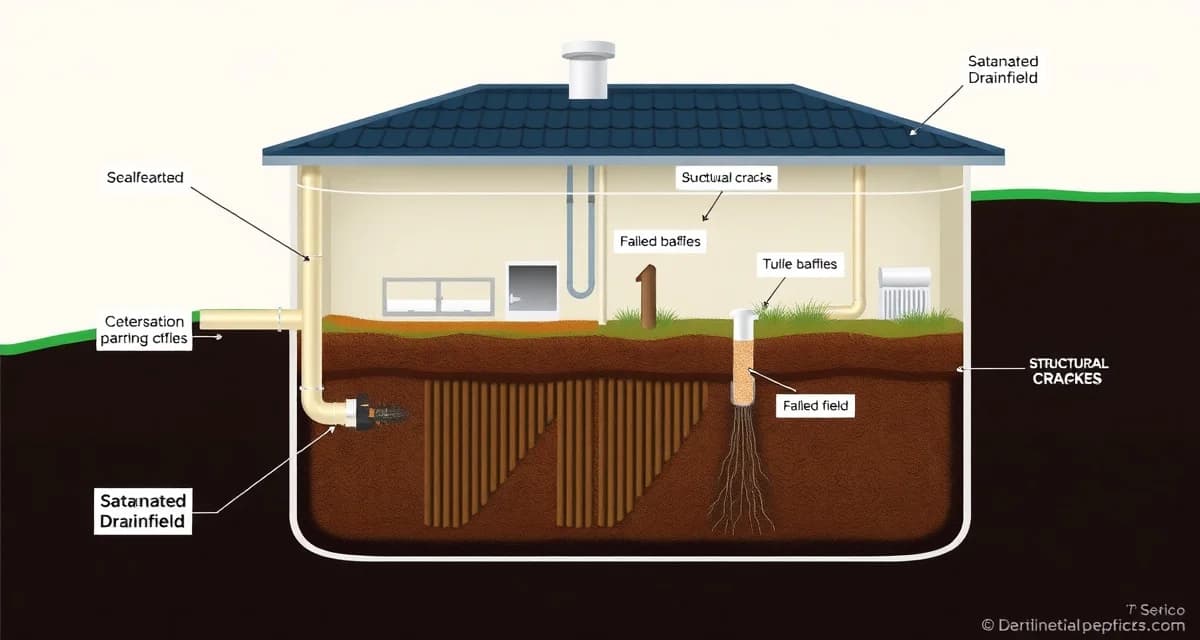
Common Causes of Septic Inspection Failures: A Field Guide
By the SepticMind Editorial Team
Inspectors who can't clearly explain failure causes create customer disputes and referral damage. The customer wants to understand what failed, why it failed, and what happens next. An inspector who can only say "it failed" without a clear explanation looks incompetent and leaves a frightened, confused homeowner with no direction.
TL;DR
- Septic inspections require state-specific report formats that must be completed correctly before they are accepted by regulators, lenders, or buyers.
- Photo documentation with timestamps and GPS coordinates is the minimum standard for defensible inspection reports.
- Real estate inspection reports in most states must be filed with the county health department within a specified timeframe.
- Inspector credentials must be current and visible on every submitted report; expired credentials are grounds for report rejection.
- Digital inspection tools reduce report completion time from hours to minutes and eliminate transcription errors.
- Consistent documentation quality across all technicians protects company reputation in the real estate inspection market.
Drainfield saturation is the leading cause of septic system failure, accounting for 62% of system failures. But there are five other common failure causes your team should know cold, document accurately, and explain clearly.
1. Drainfield Saturation and Hydraulic Failure
The most common. Drainfield failure occurs when the soil absorption area can no longer accept and treat effluent at the rate it's being applied. The drainfield becomes hydraulically overloaded.
What causes it:
- System has exceeded its design life
- Household water use has increased beyond what the system was sized for
- Soil conditions have changed (biomat buildup in soil pores)
- Physical damage to drainfield from vehicle traffic, tree roots, or construction
- Drainfield was undersized for the actual household from installation
What you observe:
- Surface saturation or ponding in the drainfield area
- Unusually lush, dark green grass over the drainfield
- Soggy ground that doesn't dry out after rain
- Surface odor in the drainfield area
- Backed-up drains or slow household drainage
- Effluent surfacing visibly
How to document: Describe exactly what was observed, where, and over what area. "Surface saturation was observed over approximately 200 square feet of the absorption area, extending from the distribution point to the eastern property border. Effluent odor was present at the surface." Specific is always better than vague.
What should I tell a homeowner? Tell them what you observed, that the system cannot continue to be used as-is because surface effluent is a public health concern, that they need to limit water use immediately and arrange for a licensed contractor to evaluate repair or replacement options, and that their county health department will likely need to be notified.
2. Failed or Missing Baffles
Baffle failure isn't a system failure in the traditional sense, but it's an inspection failure finding because a missing or failed baffle allows solids to enter the drainfield, which leads to drainfield failure over time.
What causes it:
- Deterioration of concrete baffles from hydrogen sulfide and organic acids
- Physical damage (impact during pumping, root intrusion)
- Missing entirely in older systems that were never properly installed
What you observe:
- Absence of baffle when you look into the tank at the inlet or outlet position
- Baffle present but crumbling, missing sections, or structurally compromised
- Evidence of bypass flow (floating solids visible at the outlet zone)
What to document: Baffle condition with a specific rating (present/intact, deteriorated-functional, deteriorated-not functional, missing). Photograph the inlet and outlet baffle positions.
What to tell the homeowner: A failed outlet baffle means solids are entering the drainfield, which will cause premature drainfield failure if not corrected. Baffle replacement is typically a moderate-cost repair. Recommend replacement before the next service visit.
3. Pump Failure (Mound and Pressure Dose Systems)
For systems with a pump chamber, pump failure is a complete system failure because effluent cannot move to the drainfield.
What causes it:
- Normal wear (pumps have a service life of 7-15 years typically)
- Electrical failure (burned motor, failed circuit)
- Float switch failure (pump runs continuously and burns out, or never runs because float doesn't trigger)
- Clogged inlet screen
- Freezing in systems with inadequate insulation
What you observe:
- Non-operational pump during test
- High liquid level in pump chamber (pump not keeping up)
- Alarm active at control panel
- Float switch not responding when manually tested
What to document: Pump operational status, test result, liquid level in pump chamber, float switch test result, alarm status.
What to tell the homeowner: The pump is not functioning, which means the system cannot treat and distribute effluent. The household should minimize water use until the pump is replaced. Pump replacement is a defined repair with a relatively predictable cost.
4. Structural Tank Failure
Tank structural failure is less common than drainfield or pump failure but is one of the more serious findings because it involves physical failure of the containment structure.
What causes it:
- Cracking from ground settling, frost heave, or soil pressure
- Corrosion of concrete over decades in highly acidic soil
- Physical impact (vehicle traffic over the tank, heavy equipment)
What you observe:
- Visible cracks in tank walls, floor, or lid underside
- Evidence of infiltration (groundwater entering the tank) or exfiltration (effluent seeping out through cracks)
- Structural deformation visible when viewing the interior
What to document: Location and nature of cracks, evidence of infiltration or exfiltration, any visible structural deformation.
What to tell the homeowner: Structural tank failure requires repair or replacement. This is a notable finding because a failed tank creates groundwater contamination risk. Regulatory notification may be required.
5. ATU Component Failure
For aerobic treatment units, failure can occur at multiple components. Common ATU failure types:
- Blower or air compressor failure (no aeration, treatment stops)
- Disinfection system failure (chlorine depleted, UV lamp failed)
- Pump failure on spray or drip dispersal systems
Does SepticMind include failure cause categories in its inspection report templates? Yes. SepticMind's inspection forms include failure cause classification fields for each component type, including ATU-specific failure categories. This ensures the failure documentation is specific enough to support regulatory reporting and customer communication.
6. Cesspool and Legacy System Failure
Properties with cesspools or older seepage pit systems have system types that are largely prohibited in new construction. When these fail, replacement is typically required because repair isn't practical or permitted.
What you observe: All the surface indication signs of drainfield failure, plus the potential for the cesspool or pit itself to be structurally compromised or at capacity.
Explaining Failures to Homeowners and Real Estate Parties
How should I explain a failed inspection to a homeowner or real estate buyer?
Be direct and clear. "The system has failed" is less useful than "The drainfield can no longer absorb effluent. We observed [specific evidence] during the inspection. This means the system cannot be used in its current state."
Tell them the immediate action: limit water use, notify the health department if required, arrange for a contractor assessment of repair or replacement options.
Don't give cost estimates. That's the installer's or engineer's role. Your role is accurate documentation of what you observed and clear communication of what it means.
Get Started with SepticMind
Inspection work is the highest-visibility service in the septic trade, and your documentation quality directly affects your reputation with real estate agents, lenders, and county officials. SepticMind generates state-formatted inspection reports in the field with photo documentation attached. See how it supports your inspection workflow.
Frequently Asked Questions
What is the most common reason a septic system fails an inspection?
Drainfield saturation and hydraulic failure is the leading cause, accounting for approximately 62% of system failures. This occurs when the soil absorption area can no longer accept effluent at the rate it's being applied, resulting in surface saturation, effluent surfacing, or hydraulic backing up into the tank. Other common failure causes include failed or missing baffles (allowing solids to reach the drainfield), pump failure in systems with pump chambers, structural tank failure, and ATU component failures.
How should I explain a failed inspection to a homeowner or real estate buyer?
Be direct and specific. Describe what you observed that constitutes the failure, using plain language: "The drainfield area shows surface saturation and effluent odor, indicating the system can no longer absorb the effluent it's receiving." Explain the immediate implications: the system should not be used normally until assessed, household water use should be limited, and county health notification may be required. Direct them to the next step (licensed installer assessment) without giving repair cost estimates, which is the installer's role. Clear, compassionate communication helps a frightened homeowner understand what happens next.
Does SepticMind include failure cause categories in its inspection report templates?
Yes. SepticMind's inspection templates include failure cause classification fields for each component type. When a component is rated as unsatisfactory or failed, the template prompts selection of the applicable failure cause category. For drainfield failures, this includes hydraulic overload, physical damage, or system age. For pump failures, it includes electrical failure, mechanical failure, or float switch failure. This structure produces failure documentation specific enough to support regulatory reporting requirements and clear enough for homeowners and lenders to understand the nature of the failure.
What is the difference between a septic inspection and a septic pump-out?
A pump-out removes accumulated sludge and scum from the tank. An inspection evaluates the condition of all accessible system components: tank structure, baffles, distribution box, drainfield, and in some cases the outlet line. A real estate or regulatory inspection produces a written report in the state-required format with findings and a pass/conditional pass/fail determination. Many inspection visits include a pump-out as part of the service, but the pump-out alone is not the inspection.
Can inspection reports be submitted electronically to the county?
Yes, most counties and state agencies accept electronic inspection report submissions and many now prefer or require them. The report must be in the state-required format and include all required fields, the inspector's credentials, and any required signatures or attestations. Purpose-built inspection software generates the report in the correct state format and can submit it electronically directly from the field.
Try These Free Tools
Sources
- National Onsite Wastewater Recycling Association (NOWRA)
- US EPA Office of Wastewater Management
- NSF International
- American Society of Home Inspectors (ASHI)
- Water Environment Federation