Septic system design: how it works, what affects it, and what it costs
By the SepticMind Editorial Team

TL;DR
- Septic system design starts with a site evaluation, a percolation or soil morphology test, and a licensed designer drawing a plan that matches your soil, lot size, water table depth, and daily flow.
- Most residential systems cost $3,000 to $15,000 to install.
- The design work itself runs $500 to $2,500, more on difficult sites.
What is a septic system and how does the basic design work?
A septic system is an on-site wastewater treatment setup that handles sewage when there's no municipal sewer line to tie into. About 21 percent of U.S. households run on one, according to the EPA's SepticSmart program [1]. The system takes wastewater from the house, separates solids from liquids, and disperses the clarified liquid into the soil, where natural biology finishes the job.
Every conventional system has three core pieces. First, the septic tank: a watertight buried container, usually 750 to 1,500 gallons, that holds wastewater long enough for solids to settle to the bottom as sludge and grease to float to the top as scum. The liquid layer in the middle, called effluent, exits through an outlet baffle. Second, the distribution network: pipes or a distribution box that spread effluent across the drain field evenly. Third, the septic drain field: perforated pipes in gravel-filled trenches (or chambers, or other media) where effluent soaks into native soil.
The soil does the real treatment work. As effluent moves down through the soil column, bacteria and physical filtration strip out pathogens, nutrients, and organic matter before the water reaches groundwater. That's why soil type governs every design decision. Sandy soil drains fast but may not treat well. Heavy clay barely accepts effluent at all. The sweet spot is a loamy or silty soil with a percolation rate between roughly 1 and 60 minutes per inch, the range most state codes accept for conventional trench systems [2].
What site conditions determine which septic design you need?
Four site conditions have to be measured on your actual property before a designer draws anything. Skip one and the design is guesswork.
Soil percolation rate or soil morphology. Most states now prefer soil morphology evaluation (examining soil color, texture, and structure in a test pit) over the old percolation test, because morphology predicts long-term performance better [3]. A licensed soil scientist or engineer digs test pits to 5 to 8 feet and describes the soil profile. Sandy loams and silts are ideal. Mottled or gray soil layers signal seasonal saturation, which forces the designer to raise the system or pick an alternative.
Seasonal high water table. Most states require at least 1 to 2 feet of unsaturated soil below the bottom of the drain field trenches. If your water table sits too high seasonally, a conventional in-ground system won't pass inspection [2].
Setback distances. Every state code lists minimum horizontal distances between system parts and wells, property lines, buildings, streams, and wetlands. EPA model guidelines suggest 50 feet from a well to a septic tank and 100 feet from a well to a drain field, though state rules vary a lot [1]. On small lots these setbacks can kill a conventional layout and force an alternative system.
Daily wastewater flow. Residential flow gets estimated at 75 to 100 gallons per bedroom per day, though some state codes use 150 gallons per bedroom for tank sizing. A three-bedroom house needs a tank handling roughly 225 to 450 gallons per day at minimum, and most codes require at least a 1,000-gallon tank no matter the bedroom count [2].
The designer takes all four numbers and works backward. Given this soil, this water table, these setbacks, and this flow, what system fits? On a well-drained rural lot with 2 acres, the answer is often a conventional gravity system. On a tight lot with clay soil and a high water table, it might be a mound, a drip system, or an aerobic treatment unit.
What are the main types of septic system designs?
There's no universal septic design. Each major type solves a specific site constraint.
Conventional gravity trench system. The most common and cheapest design. Effluent flows by gravity from the tank through perforated pipes in gravel-filled trenches 18 to 36 inches deep. It works only where soil percolation is moderate and the water table is deep enough. Installation typically runs $3,000 to $7,000 for the field alone, excluding the tank, though that range shifts hard by region [4].
Chamber system. Replaces the gravel trench with plastic arch chambers that create an open void. Effluent pools in the chamber and infiltrates from the bottom and sides of the trench. Infiltrator is the most widely used brand, and this design works well in sandy soils and places where trucking in gravel is expensive [12]. Cost is similar to a conventional trench.
Mound system. Used when the natural soil is too wet, too shallow over bedrock, or too slow-draining for a standard trench. A sand mound gets built above grade, the drain field goes inside the mound, and a pump doses effluent up to the field in timed cycles. More complex to build and pricier, usually $12,000 to $25,000 total depending on mound size and pump [4].
Aerobic treatment unit (ATU). An ATU injects air into the treatment tank to feed aerobic bacteria, producing much cleaner effluent than a plain septic tank. That cleaner effluent can go into smaller or shallower drain fields, which makes ATUs attractive on tight sites. They need electricity, mechanical maintenance, and usually a service contract. Installed cost commonly runs $12,000 to $25,000 [4].
Drip irrigation system. Pairs an ATU or advanced pretreatment with pressure-dosed drip emitters just a few inches below the surface. Handles slopes, poor soils, and small lots. Needs steady maintenance. More common in the south and west where lots are small or soils are thin.
Constructed wetland or recirculating media filter. Used in very sensitive areas near surface water. Effluent passes through engineered media or wetland plants before dispersal. Rare on residential lots, but required in some shoreline or karst areas.
State rules dictate which of these a designer can propose. The designer's job is picking the cheapest system that passes code and handles the site.
How is drain field size calculated in a septic design?
Drain field sizing comes down to two numbers: daily flow in gallons per day, and the soil's long-term acceptance rate (LTAR) in gallons per square foot per day. Divide flow by LTAR and you have the minimum bottom infiltrative area.
The LTAR comes from either a perc test result or the soil morphology report. A soil with a perc rate of 30 minutes per inch has an LTAR around 0.4 to 0.5 gallons per square foot per day under a common state formula.
Here's the math in practice. A three-bedroom house generating 300 gallons per day, in soil with an LTAR of 0.5 gpd per square foot, needs 600 square feet of infiltrative bottom area. Most state codes then add a safety factor, set a trench width (often 2 to 3 feet), and require minimum trench lengths. The result might be four trenches, each 75 feet long, spaced at least 6 feet apart.
Designers also have to fit a reserve field, typically 100 percent of the primary field, on the same lot. The reserve is undisturbed land held for a replacement drain field if the primary fails. Plenty of homeowners don't know this land is off-limits. You can't build a shed or pool over it. Losing the reserve to construction is one of the more common design headaches on older developed lots [2].
For systems that use pressure dosing, the pump and timer specs are part of the design package too. The designer sizes the pump to deliver a set dose volume at a set pressure, calculated from the pipe network's total dynamic head.
What does the septic system design process actually look like, step by step?
The process changes by state but follows a predictable order.
Step 1: Site evaluation. A soil scientist or licensed designer walks the lot, locates the proposed house footprint, digs test pits (usually 2 to 4 per lot), and identifies setback constraints. This takes one to two site visits and is the part most likely to stall a project if the soil evaluator is booked out.
Step 2: Perc testing or morphology report. Depending on your state, the evaluator runs a formal perc test or writes a soil morphology report. The report documents seasonal high water table, soil texture, limiting layers, and the LTAR used for design. Some states require a licensed professional engineer to sign it. Others accept a certified soil evaluator or sanitarian.
Step 3: Design drawing. The designer produces a site plan showing tank location, distribution system, drain field layout with dimensions and elevations, any pumps or controls, and setback distances to every regulated feature. This plan goes to the local health department or state environmental agency for permit review.
Step 4: Permit issuance. Review runs from a few days in rural counties to several months in busy suburban jurisdictions. Some states require a public comment period for certain alternative systems. You cannot legally install a system without a permit in virtually every U.S. jurisdiction.
Step 5: Installation and inspection. A licensed installer (required in most states) builds the system to the permitted plan. The health department inspector usually does at least one inspection before backfill, often two. Any deviation from the approved design needs a plan amendment.
Step 6: As-built record. After approval, the installer submits an as-built drawing showing exact component locations. This document matters for future pumping, repairs, and property sales. Keep it.
Start to finish, a straightforward system commonly takes 4 to 12 weeks from site evaluation to final approval. Complex or contested sites can take 6 to 18 months.
Operators running multiple design and install projects often use field management tools to track permit timelines and inspection scheduling. SepticMind's operations software is built for this workflow, letting service companies track site evaluation status, permit stages, and installation jobs in one place.
How much does septic system design cost?
Design fees are separate from installation, and homeowners are often surprised they're real money. A basic site evaluation and perc test runs $300 to $800 in most states. The design drawing and permit application prep from a licensed engineer or designer adds another $500 to $1,500 for a conventional system.
On a difficult site that needs an alternative system, engineering for the design alone can reach $2,500 to $5,000. The calculations get more involved, the permit package is bigger, and the engineer's liability is higher [5].
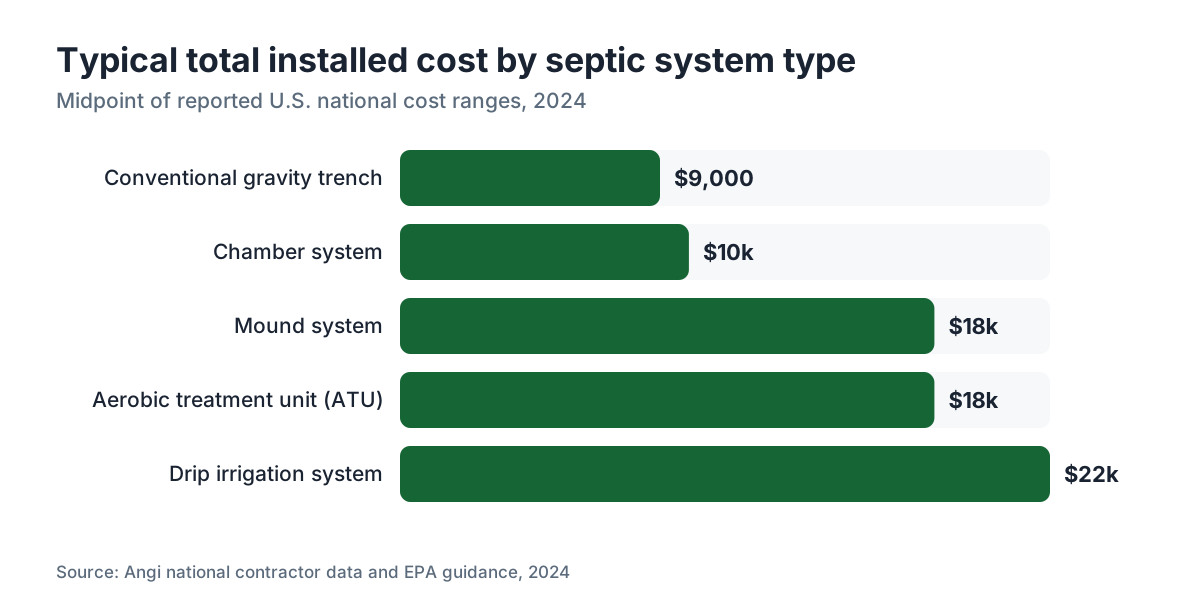
Installation costs sit on top of design fees. The table below breaks it down by system type. Full detail lives in the cost to install septic system guide, but roughly: plan on $6,000 to $12,000 for a conventional system all-in, and $15,000 to $30,000 for a mound or ATU in most U.S. regions [4].
Permit fees vary by jurisdiction from under $100 to over $1,000. Some counties fold permit fees into one combined review fee. Others charge separately for the soil evaluation, the design review, and each inspection visit.
The cheapest design quote is not always the safest choice. A designer who cuts corners on the soil evaluation or undersizes the drain field is saving you money today and building a failed system for 10 years from now. That failure costs more than the original system to fix. See septic system repair for what those numbers look like.
| System Type | Typical Total Installed Cost (U.S.) | Design/Engineering Fee |
|---|---|---|
| Conventional gravity trench | $6,000 to $12,000 | $800 to $1,500 |
| Chamber system | $7,000 to $13,000 | $800 to $1,500 |
| Mound system | $12,000 to $25,000 | $1,500 to $4,000 |
| Aerobic treatment unit (ATU) | $12,000 to $25,000 | $1,500 to $4,000 |
| Drip irrigation system | $15,000 to $30,000 | $2,000 to $5,000 |
Sources: EPA, state extension programs, national contractor surveys [1][4][5]
What regulations govern septic system design in the United States?
There's no single federal septic design code. The federal government, mainly through the EPA, publishes guidance and funds research, but authority rests with states and, in many cases, with county health departments [1].
The EPA's Onsite Wastewater Treatment Systems Manual (2002) is the closest thing to a national reference standard, and many state codes are modeled on it [2]. The EPA describes its SepticSmart role as helping homeowners and officials "understand how septic systems work and how to take care of them," but the permit-granting authority belongs to state agencies [1].
Every state has its own onsite wastewater code. Common titles include "Individual Sewage Disposal Systems Regulations" and "Onsite Wastewater Treatment Rules." A few states, including North Carolina, Oregon, and Minnesota, run detailed, frequently updated rules that push technical requirements past federal guidance [10][11]. Others defer heavily to county sanitarians.
In most states the designer must hold a specific license: licensed professional engineer, registered sanitarian, certified onsite wastewater professional (often through NOWRA or a state credential), or some combination [6]. Homeowners can legally design and install their own system on their own property in some states, but getting it permitted without a licensed professional's stamp is hard in practice.
The regulatory documents to pull for your project:
- Your state's onsite wastewater regulations (search your state environmental or health agency website)
- Your county's local addendum if one exists
- Any shoreline or sensitive-area overlay rules if you're near water
Ignoring the approved design is a code violation, and practically speaking it voids your inspection approval. Never let an installer stray from the permitted plan without an approved amendment first.
What mistakes in septic design cause systems to fail early?
Most early failures trace back to a handful of design errors, not bad luck.
Undersized drain field. The most common one. The designer used an optimistic LTAR, or the perc test ran in dry season when soil drains faster than it does year-round. The field gets hydraulically overloaded, biomat builds up faster than normal, and the system backs up within 10 to 15 years instead of 25 to 30.
Wrong system type for the soil. A conventional trench in slowly permeable soil with seasonal wetness is a slow failure waiting to happen. A site that needed a mound got a conventional system because the designer or contractor wanted to cut costs. The soil can't take the effluent, it saturates, and sewage surfaces.
No reserve field. The original design used every usable square foot for the primary field. When that field fails (and all fields eventually need replacement), there's nowhere to put a new one. The homeowner faces the expensive alternatives: importing fill, installing an ATU to shrink the required field, or connecting to a sewer if one has since come through.
Bad water table setback. If a soil evaluator misreads the seasonal high water table (a real risk on properties checked in dry years), the trench bottom ends up in seasonally saturated soil. Treatment fails, and so does the system. That's why some states now require water table monitoring across multiple seasons for problem soils.
Tank too small for garbage disposal use. Homes with a disposal generate a lot more solids, and the tank fills faster. Some state codes require a larger tank or more frequent pumping when a disposal is in play [2]. Designers who ignore this leave you with a tank that fills every year instead of every three.
Regular septic tank pumping won't fix a design error, but it buys time and keeps solids from washing into the drain field and killing it early. See how often to pump your septic tank for the right interval based on household size and tank volume.
How do septic system designs differ for challenging sites?
Not every lot is a flat, sandy, generous rural property. Designers earn their fees on the hard ones.
High water table lots. The fix is elevation. A mound system raises the drain field above the natural soil using imported sand fill. The tricky part is blending the mound into the landscape and keeping the pump reliable, because the field gets no effluent at all if the pump quits. Redundant pumps with alarms are standard for mounds.
Steep slopes. Slopes above 15 to 20 percent often need engineered pressure-dosed systems to spread effluent evenly. Gravity flow on a steep slope dumps everything at the high end of the trench. Drip irrigation handles steep ground well because the emitter network follows contour lines precisely [9].
Small or narrow lots. Setbacks from property lines, wells, and structures eat usable area fast. Alternative systems with smaller footprints, like ATUs paired with drip, are often the only option. Some states allow community systems where a shared drain field serves multiple lots, solving a problem individual-lot design can't.
Bedrock close to surface. Less than 4 feet of soil over bedrock rules out most conventional systems. Designers turn to imported fill, engineered fill systems, or recirculating media filters. Costs climb quickly on bedrock sites.
Tight clay soils. Very slow perc rates (above 60 minutes per inch) are usually unacceptable for conventional systems under most state codes [2]. Designers may propose an alternative system, recommend soil replacement in the trench area, or find a portion of the lot with better-draining soil.
On complex sites, the quality of the initial site evaluation is everything. Spending an extra $500 to $1,000 on a thorough evaluation by an experienced scientist is cheaper than building the wrong system.
What should homeowners know about maintaining a properly designed system?
A well-designed system still needs basic maintenance to reach its expected 25 to 40-year lifespan. The single most important task is regular pumping. The EPA recommends pumping every 3 to 5 years for most households, though the right interval depends on tank size and occupancy [1].
A 1,000-gallon tank in a four-person household should be pumped closer to every 3 years. Skip pumps and sludge builds until it overflows into the drain field, clogging the infiltrative surface for good. See our septic tank pump out guide for what that service covers.
Water conservation directly protects the design. Every gallon you save is a gallon the drain field doesn't have to treat. High-efficiency toilets, fixing leaky faucets, and spreading laundry across the week instead of seven loads on Saturday all reduce hydraulic stress. The EPA notes that "household water use affects how a septic system functions," and calls excess water a leading cause of drain field failure [1].
What goes in matters too. Fats, oils, grease, and non-biodegradable stuff (wipes, dental floss, medications) disrupt the microbes in the tank, damage the infiltrative surface, or pass through to the field untreated. Harsh chemical drain cleaners and heavy antibacterial use can kill the bacteria doing the treatment.
For alternative systems with pumps, alarms, or aerobic units, check operation monthly and respond to alarms right away. An ATU that runs without air for a few days flips from aerobic to anaerobic, effluent quality drops sharply, and the drain field can take the hit.
Adding a septic tank riser makes inspection and pumping easier without digging up the lid every time. It's a low-cost add that pays for itself in reduced pump-out labor over the system's life.
SepticMind's homeowner maintenance tools track pump intervals, set reminders, and keep the as-built records and maintenance history in one place, which is genuinely useful when you sell the home and need documentation for the buyer's inspection.
When do you need a new septic design versus a repair?
This comes up in three situations: a failing existing system, a renovation that adds bedrooms or a large addition, and buying a property with no known system record.
A failing system doesn't automatically need a full redesign. A cracked baffle or a broken outlet pipe is a repair job. See septic tank repair for those. If the drain field is saturated and sewage is surfacing, the cause decides the path. A hydraulic overload from a broken pump or clogged distribution box may fix with component replacement. If the field's infiltrative surface is permanently biomatted and the soil has reached capacity, the field needs replacement, and that means a new design and permit.
A bedroom addition or an ADU changes the design flow numbers. Most state codes require a system evaluation and possibly an upgrade when bedroom count goes up, because the original system was sized for the original flow. Your county health department can tell you whether your planned addition triggers a re-evaluation.
Buying a property with a septic system of unknown age and condition is a real risk. Get a pre-purchase inspection by a licensed inspector, with the tank pumped and the outlet and distribution system checked. If no as-built record exists, the county may have it on file. If not, the system has to be probed and located before any work happens. The septic tank installation guide covers what a new install entails if the old system can't be saved.
One honest caveat: nobody has great national data on how often failing systems need full replacement versus component repair. The EPA cites an estimate that 10 to 20 percent of onsite systems are failing or malfunctioning at any given time, but failure-type data is thin [7]. A local, experienced inspector is your best source of site-specific judgment.
How do you find a qualified septic system designer?
In most states the designer must hold a state-issued license, and you can verify credentials through the state environmental or health agency's license lookup tool. Look for one of these depending on your state: licensed professional engineer with onsite wastewater experience, registered environmental health specialist or sanitarian, or a state-certified onsite wastewater practitioner.
National certifications from NOWRA (National Onsite Wastewater Recycling Association) and NAWT (National Association of Wastewater Technicians) are meaningful supplements, but state licensure is the floor [6][8]. A NOWRA-certified professional has passed a national exam covering system design, soil science, and regulations.
Ask any candidate three things: how many systems they've designed in your county or municipality (local code familiarity matters more than you'd expect), whether they've designed the specific system type your site likely needs, and whether they handle the permit application or hand it back to you.
Your county health department usually keeps a list of approved or registered designers. That's the most reliable starting point. Steer clear of designers who promise a fast design without doing their own soil evaluation. They're using someone else's data or skipping the step.
For a sense of total project cost before you start, the cost to put in a septic tank guide walks through how tank size, depth, and access conditions shape the installation part of your budget.
Frequently asked questions
How long does a septic system design take from start to permitted approval?
Expect 4 to 12 weeks for a straightforward conventional system on a suitable lot: one to two weeks for the soil evaluation, one to two weeks for the design drawing, and two to eight weeks for permit review depending on your county's workload. Difficult sites needing alternative systems, or jurisdictions with long review queues, can stretch to 6 to 18 months. Start this before you need it.
Can I design my own septic system to save money?
In some states homeowners can design and install a system on their own property, but getting it permitted without a licensed professional's signature is difficult or impossible in most jurisdictions. The design needs soil testing, engineering calculations, and a site plan drawn to specific standards. The risk of an undersized or mismatched design outweighs the fee savings, which typically run $800 to $2,500 for a conventional system.
What is the minimum lot size needed for a septic system?
There's no universal minimum. Lot requirements depend on state and county rules, soil conditions, and setback distances. Some states allow systems on lots as small as half an acre with suitable soils; others require one to two acres. The real constraint is whether a soil evaluation area, drain field, reserve field, and all required setbacks from wells, buildings, and property lines fit in the available space.
What is a percolation test and does my site need one?
A percolation test measures how fast water soaks into native soil in a standardized hole, reported in minutes per inch. Many states have moved toward soil morphology evaluations instead, which examine soil color and texture to infer permeability and are considered more reliable. Check your state's onsite wastewater regulations. Some require perc tests, some require morphology reports, and some accept either.
How big does my septic tank need to be for a 3-bedroom house?
Most state codes require a minimum 1,000-gallon tank for a three-bedroom house, regardless of calculated daily flow. Some states require 1,250 gallons. The rule of thumb is 150 gallons of tank capacity per bedroom, but the 1,000-gallon floor applies almost everywhere. If the home has a garbage disposal, several state codes require a larger tank or more frequent pumping because solids loads jump.
Does a septic system design include the drain field layout?
Yes. A complete permitted design package includes the tank location, the distribution system (box or manifold), the drain field trench layout with dimensions and elevations, any pump specifications, and the reserve field area. Each component gets drawn to scale on a site plan showing all setback distances. Some states also require a cross-section detail drawing of the trench construction.
What soil types can't support a conventional septic system?
Soils with perc rates slower than 60 minutes per inch, soils with a seasonal high water table within 2 feet of the proposed trench bottom, and soils with bedrock within 4 feet of the surface typically can't support a conventional gravity trench under most state codes. Clay-heavy soils, poorly drained floodplain soils, and hardpan soils fall here. Mounds or ATUs with drip irrigation are the usual solution.
How much does it cost to redesign a failing septic system?
If the drain field needs full replacement, you need a new permit, which means a new soil evaluation ($300 to $800) and a new design drawing ($800 to $2,500 for engineering). Then add installation: $6,000 to $15,000 for a conventional replacement field, or $15,000 to $30,000 if an alternative system is required. Total for a full replacement commonly runs $10,000 to $30,000 depending on system type and site.
What is a reserve drainfield area and why does it matter?
The reserve field is undisturbed land, usually equal to the primary drain field size, held on the property for a future replacement field. Most state codes require it shown on the design and protected from any construction, grading, or compaction. Build over the reserve and you lose your legal replacement site. When primary fields fail, having a reserve is the difference between a $10,000 repair and a $30,000 alternative system.
Are septic system designs transferable when you sell a home?
The permitted design and as-built records transfer with the property, not the owner. When you sell, give the buyer the as-built drawing, the original permit, and all maintenance records. Most buyers' inspectors ask for these. Some counties record them with the deed; others keep them only in their own files. Request a copy from your health department if you've lost the originals.
How does an aerobic treatment unit differ from a conventional septic system in design?
An aerobic treatment unit adds an aeration chamber to the process, producing cleaner effluent with lower biological oxygen demand and pathogen counts than a plain septic tank. Because the effluent is cleaner, state codes often allow smaller or shallower drain fields, which makes ATUs valuable on tight sites. The tradeoff is higher cost ($12,000 to $25,000 installed), electricity use, and a required maintenance contract in most states.
What happens if a contractor installs a system that doesn't match the permitted design?
The inspector will fail the installation and require corrections before final approval. Depending on the deviation, that may mean excavating completed work to verify compliance. In serious cases the county can require full removal and reinstallation. The contractor is liable for the cost, not you, provided your contract references the permitted design. Never backfill the system before the required inspection happens.
Does adding a bedroom require a new septic design?
In most states, yes. You need at least a system evaluation and possibly an upgrade permit when adding a bedroom, because septic sizing is tied to bedroom count and therefore estimated daily flow. Contact your county health department before starting any addition that raises the bedroom count. Some jurisdictions allow an evaluation showing the existing system is adequate; others require automatic upgrades.
What is the expected lifespan of a well-designed septic system?
A properly designed and maintained conventional system typically lasts 25 to 40 years, with the drain field being the limiting part. Tank lifespan depends on material: concrete tanks can last 40 or more years if not damaged by corrosion, and fiberglass and polyethylene tanks are similarly durable. Systems that get irregular pumping, hydraulic overloads, or improper waste disposal fail much sooner, often within 10 to 15 years.
Sources
- U.S. EPA SepticSmart Program: About 21 percent of U.S. households rely on septic systems; EPA recommends pumping every 3 to 5 years; excess water is a leading cause of drain field failure
- U.S. EPA, Onsite Wastewater Treatment Systems Manual (EPA/625/R-00/008): Percolation rate range of 1 to 60 minutes per inch for conventional trench systems; seasonal high water table setback requirements; reserve field requirements; garbage disposal tank sizing
- University of Minnesota Extension, Soil and septic system evaluation guidance: Soil morphology evaluation preferred over perc test because it better predicts long-term performance of drain field soils
- Angi national contractor cost data for septic system installation: Typical installed cost ranges: conventional $6,000 to $12,000; mound $12,000 to $25,000; ATU $12,000 to $25,000; drip irrigation $15,000 to $30,000
- North Carolina State University Extension (NC State Extension): Design and engineering fees for conventional systems typically $800 to $1,500; alternative systems $1,500 to $4,000
- National Onsite Wastewater Recycling Association (NOWRA): NOWRA national certification for onsite wastewater professionals covering system design, soil science, and regulations
- U.S. EPA, decentralized wastewater treatment program: EPA estimate that 10 to 20 percent of onsite systems are failing or malfunctioning at any given time
- National Association of Wastewater Technicians (NAWT): NAWT national certification for onsite wastewater inspection and maintenance professionals
- University of Florida IFAS Extension (EDIS): Design solutions for high water table lots, steep slopes, and clay soils including mound and drip irrigation systems
- Oregon DEQ, Onsite Wastewater Management Program (OAR 340-071): State-level onsite wastewater code example showing detailed technical requirements beyond federal EPA guidance
- Minnesota Pollution Control Agency, Subsurface Sewage Treatment Systems: State SSTS rules illustrating seasonal high water table monitoring and soil evaluation requirements
- Infiltrator Water Technologies: Plastic arch chamber systems used as gravel trench alternative; works well in sandy soils
Last updated 2026-07-09