Infiltrator septic tank lid replacement for 29.5-inch openings
By the SepticMind Editorial Team
TL;DR
- Infiltrator Water Technologies makes a direct-fit lid for tanks with a 29.5-inch (750 mm) access opening, sold as a riser lid for the IM-1060, IM-1530, and related IM-Series tanks.
- The lid runs $30 to $80 at supply houses.
- Swapping one takes about 30 minutes with no special tools.
- Measure your opening before you order.
What lid fits a 29.5-inch Infiltrator septic tank opening?
The 29.5-inch figure is the inside diameter of the riser or access opening, not the outer flange of the lid. Infiltrator Water Technologies, the biggest U.S. maker of thermoplastic septic tanks, uses this opening on several IM-Series models, including the IM-1060, IM-1530, and some versions of the IM-540. [1]
Infiltrator lists this replacement lid in its catalog as a "24-inch riser lid" or "750mm lid," which trips people up because manufacturers sometimes name a lid by its own outer diameter instead of the opening it covers. The outer flange sits on top of the riser collar and measures close to 30 inches across. The part that drops into the 29.5-inch opening is slightly smaller so it seats snug. Measure your opening with a tape before you order anything.
If your tank has a risered access port instead of a flat-top opening, you need a riser lid, not a flat tank cover. Infiltrator sells those separately. Part numbers commonly tied to the 29.5-inch opening include the IM-COVER-30 and its variants, but Infiltrator changes numbers as it updates the product line, so confirm with a local septic supply house or the Infiltrator distributor finder before you buy. [1]
How do I know my Infiltrator tank opening is actually 29.5 inches?
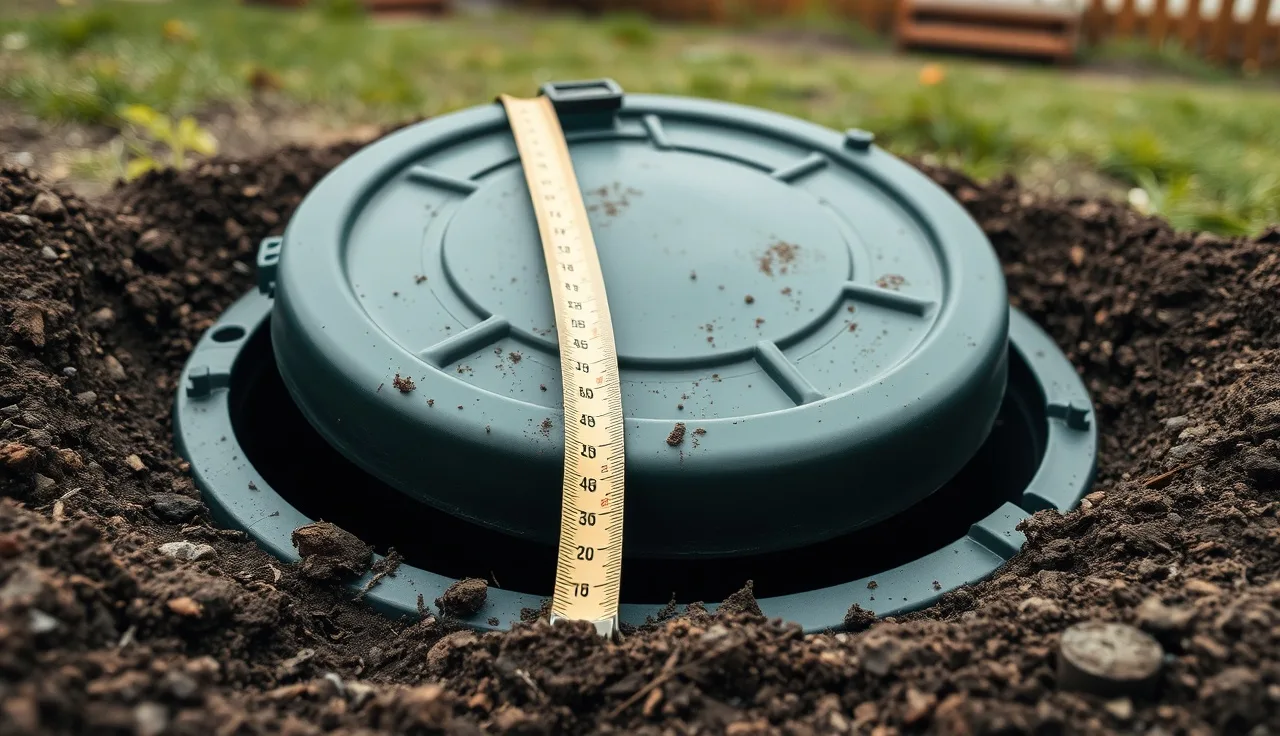
Drop a tape measure across the inside of the opening at its widest point. Measure twice, at 90 degrees to each other, because plastic risers can warp a little after years underground. If both readings land within a quarter inch of 29.5 inches, that's your size.
Infiltrator tanks are black or dark green polyethylene. The model is usually molded into the plastic near the inlet or outlet port, and sometimes on the riser collar itself. Look for markings like "IM-1060" or "IM-1530" followed by a serial string. Read the model number, then cross-reference it against Infiltrator's installation manuals, which are posted as free PDFs on their site, to confirm the opening diameter. [1]
A 29.5-inch opening is not the same as the older 20-inch or 24-inch risers on concrete tanks, and it's nothing like Infiltrator's small 8-inch inspection ports. Don't mix up the inspection ports with the main access opening. The main opening is wide enough to lower a pump hose into during a septic tank pump out, which is how most people find out they need a new lid in the first place.
Can't read the model number because the tank is buried? A septic contractor can usually identify it from pump-out records or the tank's dimensions at the surface.
What does an Infiltrator 29.5-inch replacement lid cost?
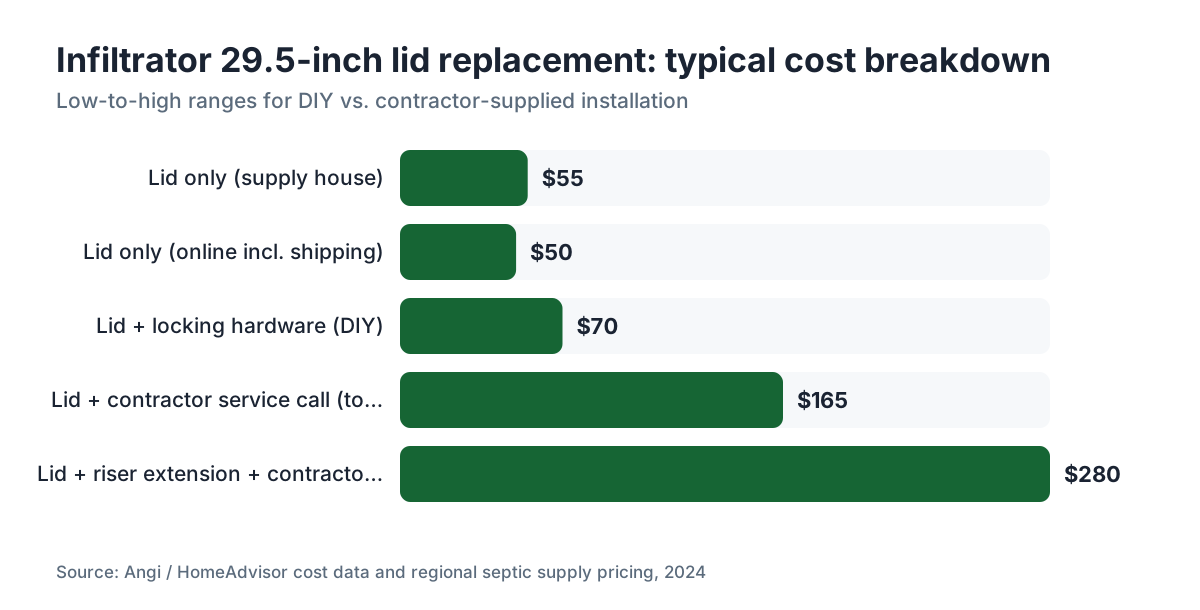
At a local septic supply house, an Infiltrator lid for a 29.5-inch opening runs $30 to $80, depending on your region and whether you buy direct from a distributor or through a contractor who marks it up. Online listings sometimes show $25 to $60, but shipping a large plastic lid adds $15 to $30 and eats most of the savings.
Hire a contractor to supply and install it, and you'll pay a service call on top of the lid. Most shops have a minimum fee of $75 to $150 even for small jobs. All in, a professionally handled swap runs $100 to $230. That's small money next to a septic tank repair or a septic tank inspection triggered by a damaged or missing lid.
Lid prices have stayed flat for a while because polyethylene raw material cost is steady. The bigger swing is regional distributor pricing. Infiltrator moves product through a network of septic supply wholesalers, so what you pay depends on your market. In a rural area with few suppliers, expect the top of that range.
A lid with a built-in childproof or tamper-resistant lock costs about $10 to $20 more. Some states require one for any access opening within a set distance of a structure. Check your local code before you assume a plain lid passes.
Is a broken or missing septic tank lid actually dangerous?
Yes. A septic tank makes hydrogen sulfide gas, methane, and carbon dioxide. Those gases build up in the tank headspace and can kill in minutes at confined concentrations. An open or broken lid is more than an odor problem. It's a safety hazard. [2]
The EPA's SepticSmart program flags open access ports as a leading cause of accidental falls and toxic gas exposure on residential property. [3] Kids and pets are most at risk, because a 29.5-inch opening is wide enough to fall into whole.
A missing lid also wrecks the tank's performance. Rain and surface runoff pour through the open port, dilute the bacterial treatment, and can hydraulically overload the system. In freezing climates, an open lid raises the odds the tank contents freeze. The inlet and outlet baffles both depend on a stable liquid level that a flooded tank can't hold.
Replace a broken or missing lid the same week you find it. Don't defer this one.
How do you replace an Infiltrator septic tank lid?
The swap is genuinely simple for most homeowners. Here's the process.
First, find the lid. If the tank is buried, you may have to dig down to the access opening. Infiltrator tanks often sit with the lid just 6 to 12 inches below grade, though some installs bury them deeper with an extension riser. If your opening has a riser stack, you may need to pull the riser extension to expose the lid collar, or you may just be replacing the cap at the top of the riser.
Second, remove the old lid. Infiltrator's standard lids snap or friction-fit onto the riser collar. Older lids may have one or two stainless screws holding them down. Pry the lid up at the edge with a flat bar or a stiff putty knife. Don't stand over the opening while you pry. Lean to one side so any gas release moves past you, not into you.
Third, inspect the riser collar. Check for cracks, warping, or debris on the seating surface. Wipe it clean with a rag. If the collar itself is cracked, you're into a septic system repair, more than a lid swap.
Fourth, set the new lid. Drop it onto the collar and press down firmly until it seats. If it takes screws, use stainless steel so they don't corrode.
Fifth, backfill or replace the soil if you dug down. Compact it lightly around the access area.
A straightforward surface-level lid takes 20 to 40 minutes. Add time for excavation and backfill if you had to dig.
Can I use a non-Infiltrator lid on an Infiltrator tank?
Maybe, but it's riskier than it sounds. Infiltrator's riser collar has a specific profile and outside dimension. A generic lid sold as "30-inch" may not seat right, because the outer diameter of Infiltrator's 29.5-inch collar differs from concrete riser collars of nominally the same size.
A poorly fitting lid beats no lid, but it loses to a snug original in every way. It rocks under foot traffic and lets water in and gas out. It won't hold the same load if driven over (some Infiltrator lids are rated for light vehicular traffic when installed correctly). And if a lid unseats during a routine septic tank pumping and a contractor gets hurt, the liability lands on you.
Third-party lids built to fit Infiltrator risers do exist, and some seat well. Polylok makes lids marketed as compatible with several thermoplastic tank brands, with cross-reference part numbers on their product sheets. The original Infiltrator part is still the cleanest fix if you can get it.
Never put a concrete lid on a thermoplastic riser collar. The weight alone deforms the collar over time.
What other Infiltrator lid and riser parts might you need at the same time?
While the lid is off and the opening is open, take 60 seconds to check a few related parts.
The riser collar gasket, if your model has one, degrades over years of temperature cycling. It's a cheap rubber or foam ring that keeps the lid-to-collar joint watertight. Replacement gaskets cost $5 to $15. If yours looks flattened or cracked, swap it while you're in there.
Riser extensions add height to bring the access port closer to grade. If your tank sits deep enough that you dug 18 inches or more to reach the lid, a riser extension is a smart one-time project that saves you the shovel at every future pump-out. Infiltrator sells compatible 6-inch and 12-inch sections. A typical extension plus lid runs $40 to $120 in parts. A contractor can install both in under an hour. [1]
The inlet and outlet baffles sit inside the tank, out of sight without a light and a look-in. If the tank is open for a pump-out anyway, have the contractor check them. Baffle failure is one of the more common reasons a leach field fails early.
If your septic tank cleaning is overdue, an open lid is a good prompt to schedule it.
How does the 29.5-inch Infiltrator lid compare to other common septic lid sizes?
Septic access openings come in a handful of standard sizes, and mixing them up is a frustrating, expensive mistake. Here's how the 29.5-inch Infiltrator opening stacks up against the sizes you're likely to run into.
| Opening size | Common tank types | Notes |
|---|---|---|
| 8 inch | Infiltrator inspection port | Not a pump-out port; inspection only |
| 20 inch | Older concrete tanks | Too small for modern pump equipment |
| 24 inch | Concrete, some plastic | Common on tanks installed before 2000 |
| 29.5 inch (750 mm) | Infiltrator IM-Series | Dominant size on Infiltrator thermoplastic tanks |
| 30 inch | Some concrete risers | Nominally similar but collar profile differs |
| 36 inch | Large concrete tanks | Commercial or older large residential |
The 29.5-inch size is the Infiltrator standard. If you have an Infiltrator tank installed in the last 20 years, this is almost certainly your opening. If you measure something closer to 24 inches, you may have a smaller Infiltrator model or an older concrete system with a riser.
Measure before any lid purchase. A half inch separates a nominal "29-inch" lid from a proper 29.5-inch opening, and that half inch decides whether it seats.
Do local codes require anything special for a replacement septic lid?
Yes, and it varies by state. Most state onsite wastewater rules require every septic tank access opening to have a structurally sound lid that blocks accidental entry and stays secured against unauthorized removal. Some states go further and require childproof or tamper-resistant locks for any opening larger than a set diameter, often 8 inches. Others require vehicle load ratings for lids in driveways or wherever equipment travels. [4]
California's onsite wastewater policy and similar codes in Florida, Minnesota, and Washington all require access openings be secured. Minnesota's rules for individual sewage treatment systems (Minnesota Rules Chapter 7080) set specific performance requirements for access covers, including structural load standards. [5]
Replacing a lid with an identical or equivalent part from the same manufacturer generally needs no permit in most places, because you're swapping a component, not modifying the system. Add a riser extension to bring the opening to grade, though, and some counties treat that as a system modification that needs an inspection. Call your county environmental health office if you're unsure. A five-minute call beats a violation notice.
The EPA's SepticSmart initiative recommends regular inspection of access covers as part of annual homeowner maintenance. [3] Replacing a broken lid is exactly the kind of step that protects both the system and the property value.
How long do Infiltrator polyethylene lids last, and when should you replace one?
Infiltrator's polyethylene lids are UV-stabilized and carry a long service life, but "long" depends on where the lid sits. A lid buried under 6 inches of soil with no UV exposure can last 20 to 30 years without structural decline. A lid at grade in full sun turns brittle and cracks within 10 to 15 years in most climates, faster in high-UV regions like the Southwest.
Replace the lid when you see any of these: cracks running more than an inch, a lid that rocks or won't stay seated, a lid that flexes under light foot pressure, or a lid struck by mowing equipment. Also replace any lid that's been driven over if it wasn't rated for vehicle loads, since the seating surface may be deformed even when the lid looks fine.
Discoloration by itself is no reason to replace. Fading, staining, and surface chalking are cosmetic on a buried lid. Structural integrity is what counts.
For context, a polyethylene septic tank in good condition can last 20 to 40 years according to the EPA. [6] The lid shouldn't be the weak link in that run.
Operators tracking maintenance across many properties can use tools like SepticMind to log lid condition during pump-outs, so there's a searchable record when a client calls asking why their lid looks different than it did three years ago.
Where can you buy an Infiltrator 29.5-inch replacement lid?
Call a local septic supply house or plumbing distributor that carries Infiltrator products first. Infiltrator keeps a distributor locator on its website. Supply houses usually have the part on the shelf or can get it in a day or two, and you skip the shipping headache.
Contractors who work on Infiltrator systems often stock common lids in the truck and will sell one at a modest markup, which is worth it if you also want them to install it.
Online, reputable sources include Ferguson Enterprises, Septic Solutions, and general plumbing supply retailers. Confirm the part number before you order. The correct Infiltrator part for the 29.5-inch opening sits in their catalog under "riser lids" or "tank access covers" and specifies "750mm" or "30-inch collar" compatibility. [1]
Skip unverified resellers on general marketplaces where the listing photos don't clearly show the part number. Generic lids carry inconsistent sizing labels, and a lid that doesn't fit means a return shipment and a delay.
If you run a septic service business managing multiple residential accounts, tracking which customers have aging or non-locking lids as a recurring maintenance item adds real value to your service. SepticMind's service record tools let operators log lid type and condition per property, so nothing gets missed at the next scheduled pump-out.
What should you do if the riser collar, more than the lid, is damaged?
A cracked or deformed riser collar is a bigger job than a lid swap. It means replacing the riser section, or in bad cases, digging down to the tank itself.
Infiltrator's riser systems are modular. You can cut out and replace individual riser sections if the collar at the top is the only damaged piece. Sections connect with a friction-fit plus butyl rubber sealant or a factory-applied adhesive strip, depending on the model. A capable DIYer or a contractor can replace the top riser section without touching the tank body.
If the tank lid ring or the tank's integral access port is cracked (on models with no separate riser), you're into more serious territory. Infiltrator doesn't sell individual tank body components as replacement parts, so a cracked tank usually means tank replacement. That drops you into septic tank installation territory, at costs of $1,500 to $6,000 depending on tank size and labor market. [7]
For a leaking riser joint rather than a cracked collar, the fix is usually digging down to the joint, cleaning the surfaces, and applying a compatible sealant. Infiltrator names its own approved sealants in its installation guides.
Document any structural repair to the tank or risers beyond a straight lid replacement. If you ever sell the home, septic tank inspection reports show repair history, and buyers' inspectors will ask about it.
Frequently asked questions
What is the Infiltrator part number for a 29.5-inch replacement lid?
Infiltrator sells lids for the 29.5-inch (750mm) opening under part numbers that shift by tank series and catalog year, commonly listed as IM-COVER or as the riser lid for the IM-1060/1530 series. Because numbers update, verify the current one with an Infiltrator distributor or the product catalog on Infiltrator's website before ordering. Bring your tank model number when you call.
Can I replace an Infiltrator septic tank lid myself, or do I need a contractor?
Most homeowners can replace a standard Infiltrator lid solo. You need a tape measure, a pry bar or flat putty knife, and the correct replacement lid. The job takes 20 to 40 minutes. If the tank is buried deep and needs excavation, or the riser collar is cracked, call a contractor. Never lean directly over an open tank opening, because of the gas hazard.
How much does it cost to replace an Infiltrator 29.5-inch lid?
The lid alone costs $30 to $80 at a septic supply house. Hire a contractor to supply and install it, and you'll pay $100 to $230 total, including a minimum service call fee. Buying online can save $10 to $20 on the part, but shipping a large plastic lid often erases that. Prices are stable nationally with modest regional variation.
Is a 29.5-inch Infiltrator lid the same as a 30-inch lid?
Not exactly. The 29.5-inch measurement is the inside diameter of the opening. The lid's outer flange is slightly larger, close to 30 inches, so it rests on the riser collar. A generic lid sold as "30-inch" may have a different profile and won't seat right on an Infiltrator collar. Measure your specific opening and match it to the Infiltrator part or a confirmed-compatible third-party lid.
What happens if I leave a broken septic tank lid in place?
A cracked or unsecured lid is a safety hazard. Septic tanks hold hydrogen sulfide and methane at concentrations that can kill. Children and pets can fall through an opening this size. Rain entering the tank dilutes the bacterial treatment and can hydraulically overload the drain field. In cold climates, an open lid raises freezing risk. Replace a broken lid the same week you find it.
Do I need a permit to replace a septic tank lid?
In most places, replacing a lid with an equivalent part needs no permit, because it's a component swap, not a system change. Adding a riser extension to bring the opening to grade may need a permit in some counties. Call your local environmental health office to confirm. Rules vary a lot by state and even county, so a quick check is worth the time.
How do I find the model number on my Infiltrator tank?
The model number is usually molded into the polyethylene near the inlet or outlet port, or on the riser collar. Look for markings like IM-1060 or IM-1530 followed by a serial number. If the tank is buried and out of reach, check past pump-out records, which often list the make and model. Your county health department may also have the original installation permit on file.
What is the difference between an Infiltrator inspection port lid and the main access lid?
Infiltrator tanks have two opening types. The small inspection ports, usually 8 inches across, allow a visual look but are too small for pump equipment. The main access opening, 29.5 inches on most IM-Series tanks, is where the pump hose enters during a pump-out. These use completely different lids. An 8-inch port cap and a 29.5-inch riser lid don't interchange in any way.
How long do Infiltrator polyethylene septic tank lids last?
A buried lid with no UV exposure typically lasts 20 to 30 years. A lid at grade in sunlight may turn brittle in 10 to 15 years, faster in high-UV climates. Replace it when you see structural cracks longer than an inch, a rocking fit, or flex under foot pressure. Surface discoloration and fading are cosmetic and don't call for replacement on their own.
Can a Polylok lid fit an Infiltrator 29.5-inch opening?
Some Polylok lids are marketed as compatible with Infiltrator risers, and Polylok publishes cross-reference part numbers for it. Fit quality varies. If you go this route, confirm the specific Polylok part number is documented as compatible with the Infiltrator IM-Series 750mm collar, more than nominally "30-inch." The original Infiltrator part is the safest choice when you can get it.
Should I add a locking mechanism to my replacement lid?
Yes, if there's any chance children reach the yard, or if local code requires it. Locking or childproof lids for 29.5-inch Infiltrator openings cost $10 to $20 more than plain ones. Some states require tamper-resistant covers on all openings above a set diameter. Even where it's optional, a locking lid is a reasonable safety buy on an opening large enough for a child to fall into.
My Infiltrator tank lid is at grade and keeps getting hit by the lawnmower. What should I do?
If the lid sits flush with or just above grade, the fix is a protective ring around it, a clear marker for the mowing crew, or accepting minor surface scuffs as normal wear. Infiltrator lids handle foot traffic, and a glancing mower strike rarely does structural damage unless it cracks the lid. Inspect after each hit. If the lid shows cracks, replace it promptly.
What is the correct sealant to use when reinstalling an Infiltrator riser lid?
A standard Infiltrator lid replacement uses no sealant; the lid friction-fits or snaps onto the collar. Sealant goes at riser-to-tank joints and riser-to-riser connections, where Infiltrator recommends a compatible butyl rubber sealant or its own adhesive product per the installation manual. The wrong sealant can block disassembly for future pump-outs. Check the Infiltrator installation guide for your specific tank model.
How often should I have my Infiltrator septic tank pumped?
The EPA recommends pumping most residential septic tanks every 3 to 5 years, though the real interval depends on household size and tank volume. A 1,000-gallon tank serving four people typically needs pumping every 3 to 4 years. Infiltrator's IM-Series tanks follow the same general guidance. See our article on how often to pump a septic tank for a full breakdown by household size.
Sources
- Infiltrator Water Technologies, IM-Series Septic Tank Installation Manual: Infiltrator IM-Series tank models including IM-1060 and IM-1530 use a 29.5-inch (750mm) diameter access opening and have compatible replacement riser lids available through their distributor network
- OSHA, Confined Spaces in Construction: Toxic Atmospheres: Septic tanks produce hydrogen sulfide, methane, and carbon dioxide gases that can reach lethal concentrations in the tank headspace and at open access openings
- U.S. EPA, SepticSmart Program: The EPA SepticSmart program identifies open or damaged access covers as a safety hazard and recommends annual inspection of septic system components including access covers
- U.S. EPA, Septic System Owner's Guide: State and local codes require septic tank access openings to be covered with structurally sound, secured lids that prevent accidental entry
- Minnesota Pollution Control Agency, Minnesota Rules Chapter 7080: Individual Sewage Treatment Systems: Minnesota Rules Chapter 7080 specifies performance and structural requirements for septic system access covers including load standards
- U.S. EPA, How Your Septic System Works: Polyethylene septic tanks in good condition can last 20 to 40 years according to EPA guidance on septic system lifespan
- Angi, Septic Tank Installation Cost Guide: Septic tank replacement costs range from approximately $1,500 to $6,000 depending on tank size and regional labor rates
- NSF International, Standards for Plumbing and Water System Components: Third-party testing standards apply to septic system plastic components for structural and chemical compatibility requirements
- California State Water Resources Control Board, Onsite Wastewater Treatment Systems Policy: California's onsite wastewater regulations require septic tank access openings be secured to prevent unauthorized entry
Last updated 2026-07-09