Septic Tank Pumping Process Explained: What Customers Want to Know
By the SepticMind Editorial Team
Customers who understand the pumping process complain less and rate companies higher after service. That's not surprising when you think about it. People are more comfortable with experiences they understand, even when the experience involves things they'd rather not think about.
TL;DR
- A professional pump-out should fully empty both liquid and solids, not just remove the liquid layer; technicians who skim the liquid leave most of the sludge.
- The outlet baffle and inlet baffle should be inspected at every pump-out as a standard procedure, not an add-on.
- Effluent filter cleaning (for tanks equipped with filters) is part of a complete pump-out service and should be included or offered as a specific add-on.
- The volume pumped should be documented at every service visit; comparing volumes across visits reveals accumulation rate trends.
- Septage disposal must be at a licensed receiving facility; confirm disposal site availability before building the day's route.
- Pump-out time at the tank (excluding drive and dump) typically runs 30-40 minutes for a standard residential system with good access.
Companies that explain the process before service arrives see 28% higher customer satisfaction scores. And you're building trust before the job starts, which means when the tech knocks on the door, the customer is already on your side.
Here's a plain-language explanation of septic pumping that you can use in customer emails, on your website, or as part of your booking confirmation.
What Happens During a Septic Tank Pumping Service?
When your technician arrives, they'll locate the tank access ports on your property. If your system has risers (plastic extensions that bring the access points up to ground level), no digging is required. If the lids are below grade, the tech may need to probe for the location and dig down a few inches to expose them.
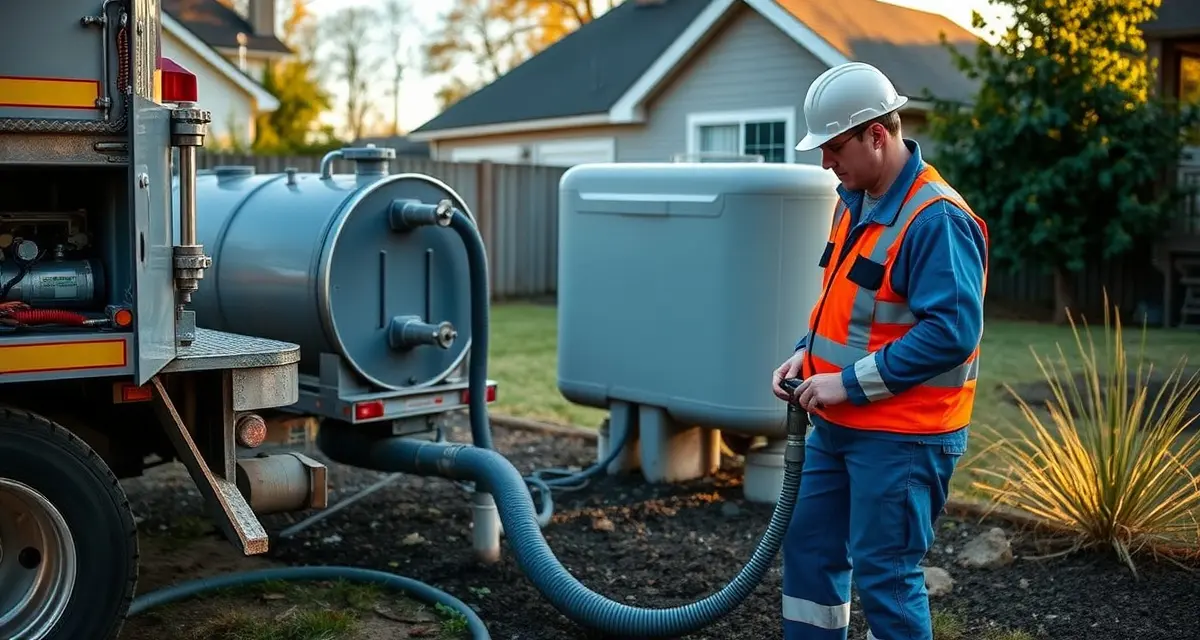
Once access is open, the technician connects the pump truck's hose to the tank and begins removing the accumulated solids and liquids. A full residential tank typically takes 5-15 minutes to empty, depending on tank size and the material inside.
While pumping, a good technician will also inspect what they can see: the inlet and outlet baffles, the interior walls of the tank, the liquid level before pumping began, and the condition of the access lids. Any findings worth noting, a deteriorating baffle, a cracked lid, or an unusually high liquid level, will be shared with you.
After pumping, the technician closes and replaces the access lids, removes the hose, and restores the area around the access ports. The truck carries the waste to a licensed disposal facility for processing.
How Long Does Septic Tank Pumping Take?
A standard residential septic pumping appointment takes about 30-60 minutes from truck arrival to departure. This covers:
- Locating and opening access ports (5-10 minutes if at grade, longer if excavation is needed)
- Pumping the tank (5-15 minutes for a standard residential tank)
- Visual inspection of observable components (5-10 minutes)
- Replacing lids and cleanup (5 minutes)
- Any conversation with you about findings or questions
If your system is particularly difficult to access, has multiple tanks, or has a component that needs closer attention, the visit may run longer. Your technician will let you know if they discover something that changes the scope.
Will Pumping Service Disrupt Normal Household Water Use?
Yes, briefly. During the pumping itself, avoid running water, flushing toilets, or using any household drain. This is typically a 15-30 minute window while the pump truck is actively working.
After pumping is complete, normal household water use can resume immediately. The tank will begin refilling with water from routine household use, which is completely normal. A freshly pumped tank isn't empty for long.
A few things to know:
- You don't need to reduce water use leading up to your appointment
- You don't need to add any bacterial treatments or additives after pumping (beneficial bacteria in your system repopulate on their own)
- There may be a brief period of slightly different drain sounds as the system normalizes, which is normal
What the Technician Might Tell You
Your technician may share observations from the tank. Here are some common findings and what they typically mean:
"Your outlet baffle shows some deterioration." The baffle that protects your drainfield from solids is worn. It's still functional but may need replacement soon. This is a common finding in tanks over 15 years old.
"Your liquid level was higher than expected." This can indicate slow drainfield absorption, which warrants monitoring. The tech will likely recommend re-evaluating at the next service visit.
"You're due sooner than you thought." If the tank filled faster than expected, your pumping interval may need to be shortened. Household size, new appliances, or system age can all affect this.
"I recommend a riser installation." If the tech had to dig to access your tank, they may suggest risers to make future service quicker and less expensive.
Keeping Records of Service
SepticMind lets companies add job completion notes visible in the customer portal after every visit. This means you can see a record of what was found at your last service appointment, when it happened, and what was recommended. That history is useful for tracking whether any observed conditions are changing over time.
For routine maintenance scheduling, the guide on how often to pump your septic tank covers the typical intervals by household size and system capacity.
Get Started with SepticMind
SepticMind is designed around the actual workflows of septic service companies, from county permit tracking to automated maintenance reminders. Whether you are managing a single truck or a multi-county fleet, the platform scales with your operation. See how it works for your business.
Frequently Asked Questions
What happens during a septic tank pumping service?
The technician locates and opens your tank access ports, connects the pump truck hose, and removes accumulated solids and liquids from the tank. While pumping, they inspect observable components including the inlet and outlet baffles, tank walls, and liquid level. After pumping is complete, they replace the lids, remove the hose, and restore the site. The pumped material is transported to a licensed disposal facility. Any findings worth noting are communicated to you before the tech leaves.
How long does a septic tank pumping appointment typically take?
A standard residential pumping appointment takes 30-60 minutes from arrival to departure. This includes locating and opening access ports, pumping the tank (typically 5-15 minutes for a standard residential tank), a visual inspection of observable components, and replacing lids and cleaning up. Appointments may run longer if excavation is needed to reach buried lids, if multiple tanks are present, or if the technician discovers something that requires closer attention.
Will a septic pumping service disrupt normal household water use?
Yes, briefly. During the active pumping phase (typically 15-30 minutes), avoid running water, flushing toilets, or using any household drain. After pumping is complete, normal household water use can resume immediately. You don't need to reduce water use leading up to your appointment, and no special treatments or additives are needed after pumping. The tank will begin refilling from routine household use right away, which is completely normal.
What is the difference between pumping 'liquid only' versus a complete pump-out?
A complete pump-out removes all contents of the tank, including the liquid layer (effluent), the scum layer on top, and the sludge layer at the bottom. Pumping 'liquid only' removes the liquid but leaves most of the sludge and scum in place. This does not provide the maintenance benefit of a full pump-out because the accumulated solids remain in the tank and continue to build toward the outlet baffle. Customers should ask specifically whether the pump-out will fully empty the tank; some budget operators do liquid-only pumping and charge full pump-out prices. Volume pumped (the gallons on the receipt) should be approximately equal to the tank's full liquid capacity if the pump-out was complete.
How should a technician handle a tank that is overfull at the time of service?
When arriving at a tank that is at or above the inlet pipe level, confirm with the customer whether any water has been used in the house since the system started backing up. Pump the tank fully before performing any inspection of the components; inspecting baffles in an overfull tank is difficult and potentially dangerous due to gas accumulation. After pumping, inspect the outlet baffle, distribution box if accessible, and check for evidence that solids have reached the drainfield (dark staining in the distribution box, elevated liquid level in the D-box). Document the overfull condition, the volume pumped, and any evidence of drainfield loading in the service record.
Try These Free Tools
Sources
- National Onsite Wastewater Recycling Association (NOWRA)
- US EPA Office of Wastewater Management
- NSF International
- Water Environment Federation
- National Environmental Services Center (NESC)