Septic tank replacement cost: what to expect in 2025
By the SepticMind Editorial Team
TL;DR
- Replacing a septic tank runs $3,000 to $10,000, and most homeowners pay $4,000 to $7,500 once you add excavation, the tank, and permit fees.
- A concrete tank for a 3-bedroom home lands around $4,500 to $6,000 installed.
- Plastic and fiberglass cost less upfront but may not pass code where concrete is required.
- Big tanks, hard sites, or drain field work at the same time push totals past $10,000.
What does septic tank replacement actually cost?
The honest range for a full tank replacement is $3,000 to $10,000, and that spread is not lazy hedging. It tracks real variables: tank size, material, soil, local permit fees, and whether your contractor has to dig out a collapsed concrete tank buried six feet down or swap a poly tank sitting near the surface.
Most single-family homes land in the $4,500 to $7,500 range. A 1,000-gallon concrete tank for a 3-bedroom house, installed with standard excavation and a new outlet baffle, runs $4,500 to $6,000 across the Midwest and Southeast. The Northeast, California, and the Pacific Northwest run 20 to 40 percent higher because labor and permitting cost more there.
The tank is often not the biggest line item. Excavation and backfill can run $1,000 to $3,000 depending on depth and soil. Permit fees range from $150 in rural counties to over $1,000 in states with strict onsite wastewater programs [1]. If your old tank is concrete and has caved in, disposal alone can add $300 to $800.
Replacing the drain field at the same time is a separate project, $5,000 to $20,000 and up. Keep the two costs apart in your head. A tank failure does not automatically condemn the drain field, and a decent inspector can tell you which is which before you commit to anything.
What factors drive septic tank replacement costs up or down?
Tank size is the single biggest lever on the tank price itself. A 500-gallon tank (rare, mostly seasonal cabins) costs $700 to $1,200 for the unit. A standard 1,000-gallon runs $900 to $1,800. A 1,500-gallon for a 4-5 bedroom home costs $1,200 to $2,500. A 2,500-gallon tank for a large home or small commercial property can top $4,000 for the tank alone [2].
Material changes both the cost and how long the thing lasts:
| Tank material | Typical installed cost | Expected lifespan | Notes |
|---|---|---|---|
| Concrete | $4,000, $7,500 | 40+ years | Heavy; needs a crane or big equipment; most jurisdictions accept it |
| Fiberglass | $3,500, $6,500 | 30 to 40 years | Lighter; resists corrosion; can float in high water table areas |
| Polyethylene (plastic) | $3,000, $5,500 | 30 to 40 years | Cheapest upfront; some states restrict it; check local code |
| Steel | Not recommended | 15 to 25 years | Rusts out; rarely installed new; many jurisdictions ban it |
Site access is the multiplier that catches people off guard. If the tank sits under a deck, a mature tree's root system, or more than five feet deep, expect the dig to double. Rocky soil or clay that needs blasting or special equipment adds $500 to $2,000.
Local rules matter more than most homeowners expect. Some state programs make you hire an engineer to design the replacement and sign off on the install [1]. Florida requires a county health department permit for any tank replacement, and many Florida counties want a licensed contractor, more than a pumper [3]. Your county extension office or state environmental agency site is the fastest way to find out what applies to you.
Labor rates are geographic. A septic contractor in rural Tennessee charges $60 to $90 an hour. The same work in suburban Connecticut or the San Francisco Bay Area runs $110 to $175 an hour. That gap compounds across a 12 to 20 hour job.
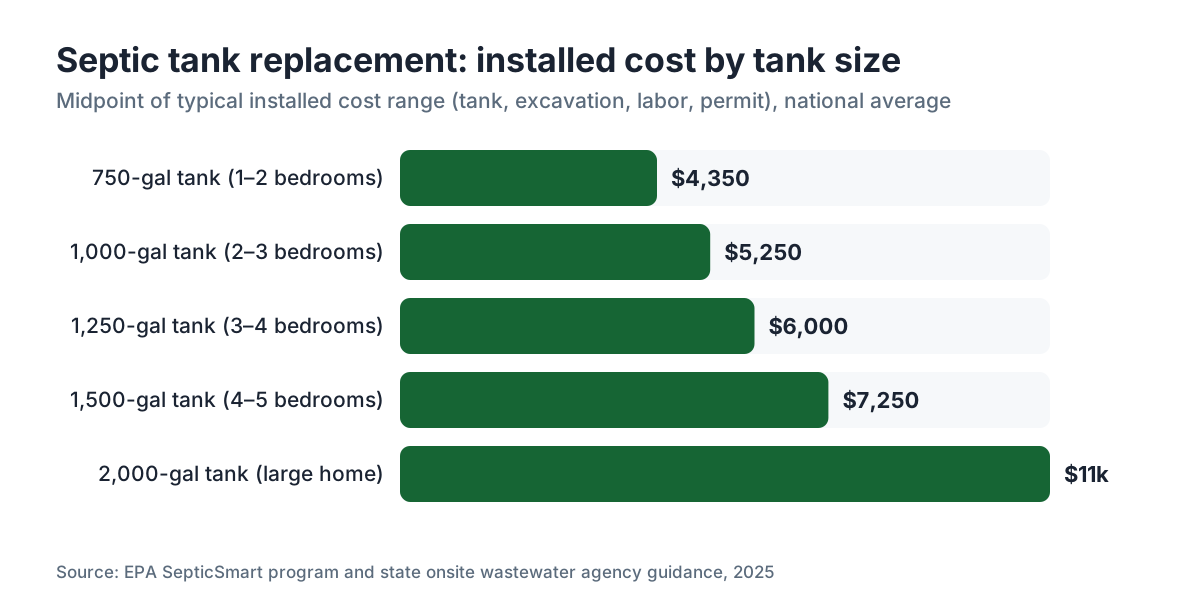
How much does septic tank replacement cost by tank size?
Here are fully installed costs (tank, excavation, labor, backfill, and standard permit) by common tank size. These are national mid-range numbers, and regional variation applies.
| Tank size | Typical home size | Installed cost range |
|---|---|---|
| 750 gallons | 1 to 2 bedrooms | $3,200, $5,500 |
| 1,000 gallons | 2 to 3 bedrooms | $4,000, $6,500 |
| 1,250 gallons | 3 to 4 bedrooms | $4,500, $7,500 |
| 1,500 gallons | 4 to 5 bedrooms | $5,500, $9,000 |
| 2,000+ gallons | Large homes, small commercial | $7,000, $15,000+ |
These assume reasonably accessible ground, no bedrock, no tree removal, and a standard two-compartment tank. Add $500 to $1,500 for an effluent filter on the outlet, which most health departments now recommend or require on new installs [4].
Many contractors price a flat bid rather than time and materials. Get at least three. The spread between the lowest and highest quote on the same job is often 30 to 50 percent, and the cheapest bid isn't always the worst contractor. Sometimes it just reflects lower overhead.
When should you replace a septic tank instead of repairing it?
This is the question that actually matters, and the answer is often "don't replace it."
Repair beats replacement in plenty of cases: a cracked inlet or outlet baffle ($150 to $400 to fix), a broken or missing lid ($200 to $600 for a septic tank lid replacement), a minor wall crack that seals fine, or a failed effluent filter. Those are maintenance items, not structural failures. Our guide on septic tank repair breaks down what's actually fixable.
Replacement is the right call when:
The tank has structural failure. Collapsed walls, a caved-in top, or root intrusion bad enough to break the tank's watertight seal. Concrete tanks past 40 years are candidates for this.
The tank is steel and has rusted through. Steel tanks rot from the inside out. By the time you see symptoms, the bottom is usually gone.
Your household grew and the tank is undersized. If a normally occupied home needs pumping more than once every 2 years, the tank is likely too small or the baffle has failed [5].
A regulator requires an upgrade at sale or after a violation. Some states mandate a point-of-sale inspection, and a failed one can force a full replacement.
A good rule of thumb: if repair would cost more than 50 percent of replacement, replace. You're spending the money anyway, so buy something that lasts.
One thing worth flagging. Some contractors push replacement when a repair would do. If you get a replacement pitch on a 15-year-old concrete tank with a cracked baffle, get a second opinion. That tank probably has 25 good years left once the baffle is swapped.
What does septic tank lid replacement cost?
A concrete lid replacement runs $100 to $350 installed. Plastic lids run $75 to $200. Those are the two numbers people usually want, and the confusion comes from mixing up lids with risers. A lid is the concrete or plastic cover over the access port. A riser is the vertical extension that brings that port up to ground level.
If the lid has sunken into the ground and you can't reach it, your contractor has to locate and dig it out, which adds $150 to $400.
Here's the smarter move if you keep paying to excavate a deep-buried lid every few years. Add a septic tank riser. Risers bring the access port to grade and save $100 to $300 every single pump-out. A concrete riser and lid kit runs $200 to $500 installed; a poly kit runs $150 to $350. Most contractors will quote both the lid and a riser at one visit so you pay for a single dig.
The EPA SepticSmart program points out that accessible lids and risers make routine maintenance easier and cut the odds a homeowner skips pump-outs because access costs too much [4]. That's a real benefit. A tank that's cheap to open gets pumped on schedule.
How much does replacing a septic tank cost compared to the full system?
Replacing the tank is not the same as replacing the system, and the costs split hard.
Tank only: $3,000 to $10,000, as covered above.
Tank plus drain field: $8,000 to $30,000 for a conventional gravity system. Mound systems, drip irrigation, or systems on tough sites run $15,000 to $50,000 or more [2].
Full system from scratch (tank, distribution box, drain field, all piping): $10,000 to $30,000 for a standard build, with outliers both directions. Our detailed guide on cost to install a septic system covers breakdowns by system type.
The drain field is almost always the pricier half. If your tank fails at year 25 and the field is aging too, have the contractor assess the field before you commit. Dropping a new tank into a dying drain field is a money pit.
If you're in that spot, a soil evaluation by a licensed soil scientist or engineer ($300 to $700) before any work starts is money well spent. It tells you whether this is a tank-only job or a whole-system replacement. The septic drain field guide covers how to read field condition.
What are the signs you need a septic tank replacement?
Some signs are obvious. Others get misread as something else.
Sewage odors in the yard, near the tank, or backing up into the house. This can mean a full tank (pump it first before you assume the worst) or a structural problem.
Wet, spongy ground over the tank or field, especially with no rain. If the wet spot sits right over the tank, the tank is the likely culprit. Over the field, the field is failing.
Gurgling drains or slow drains across the whole house. One slow fixture usually means a localized clog. Multiple fixtures point at the system.
Pumping needed more than once every 1 to 2 years despite normal use. That often means the tank is undersized or the outlet baffle failed and solids are running out to the field.
Any of these earns a professional inspection before you spend a dime. A camera inspection of the inlet and outlet pipes, plus a physical look at the tank interior after pumping, takes 1 to 2 hours and costs $150 to $400 [6]. That money can save you from replacing a tank that just needed a baffle.
If you're managing several properties or tracking pump-out history across accounts, SepticMind lets you log inspection findings and flag tanks nearing end-of-life, which cuts down on emergency replacements.
Do septic tank replacement costs vary by state?
Yes, meaningfully. State and county rules set permit requirements, acceptable tank materials, minimum sizes, and whether you need an engineer's sign-off. All of it moves the price.
Florida requires county health department permits and sets setbacks from water bodies under Rule 64E-6, Florida Administrative Code [3]. Engineering sign-off is required for replacement in some floodplain zones, adding $400 to $1,200.
California's Regional Water Quality Control Boards keep tightening rules in coastal and groundwater-sensitive zones. Some Bay Area counties require advanced treatment systems instead of conventional tanks on replacement, which can push installed costs above $15,000.
Texas regulates septic through the Texas Commission on Environmental Quality (TCEQ) under 30 TAC Chapter 285 [7]. Texas permit fees run low ($50 to $250 in many counties), but contractor licensing does keep unqualified installers off your job.
New England, Massachusetts and Connecticut especially, has some of the strictest rules in the country. Massachusetts Title 5 (310 CMR 15.000) requires system inspection at point of sale and on failure, and replacement systems often need engineered designs [8]. Installed costs in Massachusetts average $6,000 to $12,000 for a tank-only replacement.
The EPA's SepticSmart resources confirm that state and local regulations vary widely and send homeowners to their state environmental agency for local specifics [4]. That's the right first step before you collect bids.
Can you get financial assistance for septic tank replacement?
There are real programs, and a lot of homeowners have no idea they exist.
USDA Rural Development offers grants and loans through the Section 504 Home Repair program for very-low-income rural homeowners, and it can cover septic work [9]. Income limits apply and vary by county.
USDA's Water and Waste Disposal Loan and Grant Program (Section 306C) can fund septic improvements in persistent poverty counties [9].
State revolving fund programs run through state environmental agencies sometimes include low-interest loans for septic repair and replacement. Virginia's Department of Health runs a repair loan program built specifically for failing systems [10].
Some counties run their own assistance programs, especially in areas with documented nitrate contamination in groundwater where failing septics are a known source. Ask your county health department.
Property-assessed clean energy (PACE) financing covers septic upgrades in some states, letting you pay the cost back through your property tax bill over time.
Don't skip your homeowner's insurance. Most standard policies treat septic failure as wear and tear and exclude it, but some umbrella policies or add-on riders cover sudden and accidental collapse. Read your policy before you assume you're on your own.
How do you find and hire a qualified septic contractor?
Septic work is licensed state by state. In most states, a contractor has to hold an onsite wastewater treatment system installer's license from the state environmental agency or health department. Some states issue separate licenses for pumping, installation, and design.
The fastest check is your state agency's online license lookup. In Texas it's the TCEQ database. In Florida it's the Department of Health. In most states you can verify a license number off a contractor's estimate in about 60 seconds.
Get three written bids. Each should spell out tank size, material, permit procurement, excavation depth, backfill material, and what happens to the old tank (abandon in place, pumped and crushed, or hauled off). Vague bids are a warning sign.
Ask directly: will you be on-site for the install, or subcontract the dig? Plenty of licensed contractors sub out excavation, which is fine, but you want to know who owns quality control.
Check your county health department's list of approved contractors. Some counties keep their own lists separate from state licensing. Being on that list usually means the contractor has a working relationship with local inspectors, which smooths the permit and inspection process.
For ongoing maintenance, the how often to pump septic tank guide plus your pump-out records tell you whether a tank is actually failing or just overdue for a routine septic tank pump out.
What are the hidden costs people miss in septic tank replacement?
Permit delays cost money nobody budgets for. In some jurisdictions approval takes 2 to 6 weeks. If your system is failing meanwhile, you may be pumping the tank every few days at $200 to $400 a pop, or renting portable toilets.
Soil or percolation tests are sometimes required before a permit issues, especially if the design changes. A perc test runs $300 to $700 and takes a day.
Old tank disposal is often left out of base bids. If the old tank is concrete, a contractor may pump it, fill it with sand, and abandon it in place (cheaper, often permitted) or haul it out. Removing a buried concrete tank adds $500 to $1,500. Ask upfront.
Landscaping restoration is never included. After the excavator leaves, your yard is torn up. Seeding or sodding a typical dig runs $200 to $800. If the dig crosses a driveway, repair adds $500 to $3,000 depending on material.
System upgrades triggered by the permit. In many states, pulling a replacement permit triggers a review of the whole system. If your drain field misses current setbacks or your distribution box is failing, the health department can require you to fix those before it issues the permit. This is the biggest hidden cost and the hardest to predict. Ask your contractor what the local health department typically demands during replacement permitting in your specific county.
For comparison, a routine septic tank cleaning or septic tank pumping costs $300 to $600 and should be the first step before any replacement talk. A clean tank inspects much more accurately.
How can you reduce septic tank replacement costs?
A handful of moves actually change the number.
Schedule off-season. Contractors are slammed in spring and summer, when the ground has thawed and real estate deals peak. Booking in October or November can get you a 5 to 15 percent discount, or at least a faster start.
Combine work. If the tank's coming out, add the risers while the hole is open. Risers during a replacement cost $300 to $600. Done later as a standalone job, they cost $600 to $1,200.
Pull the permit yourself if your jurisdiction allows it. In some counties the homeowner can pull the permit while the contractor handles the install. The fee is the same, but you skip the contractor's markup on permit management, often $150 to $300.
Match the tank material to your conditions. Plastic and fiberglass are meaningfully cheaper upfront where they're allowed and where the soil doesn't demand concrete. If your code and soil support it, a polyethylene tank can save $500 to $1,500 versus concrete.
Maintain what you have. A concrete tank pumped every 3 to 5 years with a working outlet baffle will outlast the 40-year estimate. The EPA SepticSmart program states that "a properly maintained septic system can last for decades," and routine pumping is the one maintenance task that matters most [4]. Prevention here genuinely beats replacement. The septic tank emptying guide covers how to set a schedule.
SepticMind's maintenance tracking helps service operators keep homeowners on a pumping schedule and flag aging tanks before they turn into emergency replacements, which is cheaper for everyone.
Frequently asked questions
How long does a septic tank last before it needs to be replaced?
Concrete tanks typically last 40 to 60 years with proper maintenance. Fiberglass and polyethylene last 30 to 40 years. Steel is the outlier at 15 to 25 years and rusts through. The single biggest factor in longevity is regular pumping every 3 to 5 years. A neglected tank can fail in 15 to 20 years regardless of material.
Is it worth repairing a septic tank or should you replace it?
Repair is usually right for baffle failure, cracked lids, minor sealing issues, or a damaged distribution pipe. These fixes cost $150 to $800. If the tank structure has collapsed, rusted through, or leaks significantly into soil or groundwater, replacement is the only real option. Rule of thumb: if repair exceeds 50 percent of replacement cost, replace and get something that lasts.
Can you replace a septic tank without replacing the drain field?
Yes, and it's common. The tank and drain field are separate components that fail independently. A failed tank does not mean the field is shot. A qualified inspector can assess field condition during or after the tank replacement. If the field shows no saturation or biomat buildup, replacing only the tank is the right move.
How much does it cost to replace a 1,000-gallon septic tank?
A fully installed 1,000-gallon tank (tank, excavation, labor, permit) costs $4,000 to $6,500 in most of the country. Concrete runs toward the high end; polyethylene toward the low. Regional differences push this up 20 to 40 percent in high-cost states like California, Massachusetts, or New York.
How much does septic tank lid replacement cost?
A single concrete lid costs $100 to $350 installed. Plastic lids run $75 to $200. If the buried lid needs excavation to locate and reach, add $150 to $400. Many contractors recommend adding a riser at the same visit, which costs $200 to $500 and kills excavation costs on every future pump-out.
Does homeowners insurance cover septic tank replacement?
Most standard policies exclude septic failure because they treat it as wear and tear. Some policies cover sudden and accidental collapse or damage from a covered peril, like a tree falling on the tank. Check your specific policy and endorsements. Separate sewer and septic backup riders exist but usually cover cleanup, not full system replacement.
Do you need a permit to replace a septic tank?
In nearly every U.S. jurisdiction, yes. Replacement requires a permit from the county health department, state environmental agency, or both. Permit fees run $150 to over $1,000 depending on the state. Some states also require an engineer's design approval and a post-installation inspection. Working without a permit can bring fines and forced removal of the unpermitted work.
How long does septic tank replacement take?
The physical install takes 1 to 3 days once you have a permit and equipment scheduled. The bottleneck is almost always permitting, which runs 2 to 6 weeks depending on your jurisdiction. In some rural counties with streamlined health departments, permits come in days. Budget 3 to 8 weeks total from picking a contractor to a finished install.
What size septic tank do I need for my house?
Minimum tank size is set by state or county code and based on bedroom count, not actual occupancy. The common standard is 1,000 gallons for a 3-bedroom home, 1,250 for 4 bedrooms, and 1,500 for 5 bedrooms. Some states use daily flow calculations instead. Your local health department or a licensed septic designer can confirm the required size for your property.
How do I know if my septic tank needs to be replaced vs. just pumped?
Pump first. Many apparent failures are just an overfull tank. If symptoms (odors, slow drains, wet spots) clear within a few days of pumping, the tank works. If problems return fast or a post-pump inspection shows structural damage, root intrusion, or a failed outlet baffle that can't be repaired, replacement is warranted. A camera inspection after pumping costs $150 to $400 and gives a clear answer.
Are there financial assistance programs for septic tank replacement?
Yes. The USDA Section 504 Home Repair program offers grants and loans to rural low-income homeowners for septic work. Some state environmental agencies run low-interest repair loan programs. County health departments in groundwater-sensitive areas sometimes offer targeted help. Contact your county health department and state rural development office to see what fits your location and income.
What is the difference between a septic tank replacement and a new septic system installation?
Tank replacement swaps out the existing tank while reusing the drain field, distribution box, and connecting pipes if they're in acceptable shape. A full new installation means designing and building the entire system from scratch, including field design, soil testing, and all components. Tank replacement costs $3,000 to $10,000. A full new system typically costs $10,000 to $30,000 for a conventional gravity system.
Sources
- U.S. Environmental Protection Agency, SepticSmart homeowner resources: State and local regulations vary widely for septic system permits and requirements; accessible risers and lids make routine maintenance easier and reduce neglect.
- U.S. Environmental Protection Agency, Septic System Costs overview: Conventional septic system installation costs and tank size cost ranges referenced.
- Florida Department of Health, Onsite Sewage Treatment and Disposal Systems (Rule 64E-6): Florida requires county health department permits for septic tank replacement and has specific setback and floodplain zone requirements.
- U.S. Environmental Protection Agency, SepticSmart: Protect Your Investment: "A properly maintained septic system can last for decades" and routine pumping is the most important maintenance task; effluent filters recommended on new installations.
- Penn State Extension, Homeowner's Guide to Septic Systems: Pumping more than once every 1 to 2 years for a normally occupied home may indicate an undersized tank or baffle failure.
- University of Minnesota Extension, Septic System Inspections: Camera inspection of inlet and outlet pipes plus physical inspection after pumping takes 1 to 2 hours and helps determine whether repair or replacement is warranted.
- Texas Commission on Environmental Quality, On-Site Sewage Facilities (30 TAC Chapter 285): Texas regulates septic systems under 30 TAC Chapter 285; permit fees generally $50 to $250 in many counties; contractor licensing required.
- Massachusetts Department of Environmental Protection, Title 5 Septic Regulations (310 CMR 15.000): Massachusetts Title 5 mandates system inspection at point of sale and on failure; replacement systems often require engineered designs; installed costs average $6,000 to $12,000 for tank-only replacement.
- USDA Rural Development, Section 504 Home Repair Loans and Grants: USDA Section 504 and Section 306C programs offer grants and loans to rural low-income homeowners for septic system repair and replacement.
- Virginia Department of Health, Sewage Handling and Disposal Regulations: Virginia's Department of Health operates a repair loan program for failing septic systems as an example of state financial assistance.
Last updated 2026-07-09