Earthworm septic tank treatment: does it actually work?
By the SepticMind Editorial Team

TL;DR
- Earthworm-brand septic treatment uses live microorganism cultures and enzyme blends to support the bacterial digestion already happening in your tank.
- Independent evidence that it meaningfully changes system performance is thin.
- The EPA's SepticSmart program says a properly functioning septic system generally doesn't need additives.
- Regular pumping every 3-5 years does more than any additive.
What is Earthworm septic tank treatment and what's in it?
Earthworm Family Products makes a line of drain and septic treatments sold in grocery stores and online. The septic-specific product is marketed as a monthly maintenance flush: you pour a packet or liquid dose down the toilet and it supposedly boosts the microbial ecosystem in your tank.
The active ingredients are a blend of naturally occurring bacteria strains (typically Bacillus species) and enzymes, including protease, amylase, and lipase. These are the same classes of biology already living in a healthy septic tank. The Earthworm product is also marketed as plant-derived and non-toxic, which is true in the sense that the bacterial cultures and enzyme carriers are food-safe, not caustic.
The brand avoids the harsh surfactants and solvents found in older chemical tank "openers." That's a better starting point than products that dump acids or bleach derivatives into a tank. Being non-harmful is not the same as being beneficial.
Earthworm positions itself partly as an eco-friendly brand, and the formula is free of phosphates and artificial fragrances. Those choices matter for household drain use. For a septic tank specifically, the real question is whether adding more bacteria and enzymes to a system that already contains billions of them does anything you can measure.
How does a septic tank actually break down waste without additives?
Your septic tank works because of anaerobic bacteria that colonize the tank naturally from the first flush. Within days to weeks of a new installation or pump-out, those populations reestablish from the organic matter in household wastewater. No seeding required.
The process runs in two main stages. First, solids settle to the bottom and form sludge while lighter fats and oils float to form scum. The liquid layer in the middle, called the effluent, flows out to your drain field. Second, anaerobic microbes digest the sludge, converting organic solids into gases (methane, carbon dioxide) and a stable residue. They can't eliminate everything. That leftover residue is why tanks need pumping.
The bacteria doing this work are generalists. They're not picky about brand. What they need is a stable environment: relatively constant temperature, pH roughly between 6 and 8, and freedom from large doses of antibacterial products, bleach, or harsh cleaners that can knock the population back [1].
Enzymes in products like Earthworm's formula break large organic molecules into smaller pieces, which bacteria can then consume. The catch is simple. Healthy tank bacteria already produce those same enzymes themselves. You're adding a supply of something the system manufactures on its own.
Does the research support using septic tank additives?
Here's the honest answer, and it's uncomfortable for anyone who's been buying these products monthly.
The EPA reviewed the published literature on septic additives and concluded that "biological additives introduce microorganisms or enzymes to the septic system" but that evidence supporting their effectiveness is not strong [2]. A frequently cited 2000 study from the University of Minnesota Extension found no statistically significant difference in tank performance, sludge accumulation rates, or drain field health between tanks using additives and control tanks that received none [3].
Septic tanks are slow systems, and that makes them hard to study. Changes in sludge accumulation take years to show up, and getting access to a large controlled sample of tanks is a logistical headache. So nobody has perfectly clean, large-scale trial data. The closest studies we have consistently find no measurable benefit.
Biological additives that use only natural bacteria and enzymes are at least classified by the EPA as unlikely to harm a functioning system, unlike some solvent-based products that can liquefy sludge and push solids into the drain field, causing field failure [2]. So Earthworm's formulation is probably not hurting anything. That's a lower bar than the marketing copy implies.
A few state agencies have gone further. South Carolina maintains guidance stating that septic additives are generally unnecessary and that homeowners should be cautious of marketing claims [4]. Washington State University Extension reviewed additive studies and found no evidence that biological additives reduce pumping frequency or improve effluent quality [5].
What does the EPA SepticSmart program say about additives?
The EPA's SepticSmart program is the federal government's main public-facing resource for septic homeowner education. Its guidance is direct: "There is little scientific evidence that additives improve the performance of a well-maintained septic system." [2]
SepticSmart's core maintenance recommendations don't mention additives at all. The program focuses on four practices: pump the tank on schedule (every 3-5 years for a typical household), have the system inspected, protect the drain field from damage and overloading, and watch what goes down the drains.
The program does note that some additives, particularly those containing organic solvents, can damage a system. Biological enzyme products like Earthworm's fall into the "unlikely to harm" category rather than the "avoid" category. But the framing is clear. These are not a substitute for physical pumping and inspection, and a healthy system doesn't need them.
If you're in a state with adopted EPA guidelines or a state-specific onsite wastewater code, check your local rules too. Some states (notably Massachusetts with Title 5, and Maryland with COMAR 26.04.02) have detailed homeowner maintenance requirements that include pumping schedules but say nothing about additive requirements [6][7].
What situations might make a bacterial additive worth trying?
There's a narrow set of circumstances where adding bacteria to a tank might make sense, even if the evidence is soft.
After a long vacancy. If a vacation home or rental has been empty for months, the bacterial population in the tank can decline from lack of feedstock. Dosing the system before regular use resumes might help reestablish populations faster than waiting for natural seeding. This is low-cost and low-risk.
After heavy antibiotic use in the household. Antibiotics pass through the body and into the wastewater stream. A course of broad-spectrum antibiotics can affect tank biology. There's no strong controlled data on the size of this effect for residential systems, but the biology is plausible, and a single additive dose costs a few dollars.
After a significant cleaning event. If you've used large amounts of bleach, drain cleaners, or disinfectants, a bacterial dose shortly after makes logical sense, even if the evidence it helps is largely anecdotal.
What it won't do: fix a failing drain field, compensate for a full tank that needs pumping, or substitute for the physical removal of accumulated sludge. If your toilets are draining slowly or you smell sewage outside, no amount of Earthworm treatment is going to address those problems. That's a job for septic tank pumping or, if there's structural damage, septic tank repair.
How does Earthworm compare to other septic additives?
The septic additive market is crowded. Products range from live bacterial cultures to enzyme concentrates to yeast-based tablets to the old-school approach of flushing a packet of baker's yeast down the toilet (which costs a fraction of any commercial product and has roughly the same evidence base).
| Product type | Key ingredients | EPA classification | Likely to help? | Likely to harm? |
|---|---|---|---|---|
| Earthworm septic treatment | Bacillus bacteria + enzymes | Biological | Unlikely for healthy tanks | Unlikely |
| RID-X | Bacillus + cellulase enzymes | Biological | Unlikely for healthy tanks | Unlikely |
| Green Gobbler | Enzyme blend, no live bacteria | Biological (enzyme only) | Unlikely for healthy tanks | Unlikely |
| Chemical solvents (older products) | Organic solvents, degreasers | Chemical | May liquefy sludge short-term | Yes, can cause field failure |
| Baker's yeast (DIY) | Saccharomyces cerevisiae | Biological | Unlikely for healthy tanks | Very unlikely |
Earthworm sets itself apart mainly on packaging and brand positioning (non-toxic, plant-derived, eco-focused) rather than on any ingredient that's absent from competing biological products. RID-X, the category leader by sales, uses a nearly identical mechanism. Neither has peer-reviewed evidence showing it extends pump intervals or measurably improves effluent quality [3].
If you're going to use any additive, Earthworm's formulation is as safe a choice as any. The category as a whole just doesn't have strong support.
How often should you use Earthworm septic treatment if you decide to use it?
Earthworm's label recommends monthly application: one dose flushed down the toilet each month as routine maintenance. Some competing products suggest the same cadence.
From a biological standpoint, monthly dosing is probably unnecessary for a healthy system. The bacteria in your tank reproduce continuously as long as organic material flows through. You're not maintaining a population that dies off between doses. You're adding to one that already has billions of members.
If you want to use the product and feel it's giving you value, a quarterly or semi-annual dose costs less and makes about as much biological sense as monthly. Some homeowners use it only after events that might stress the tank (a big party with heavy drain use, a course of antibiotics, returning to a seasonal home).
Here's the one thing you absolutely should not do: use a monthly additive dose as an excuse to stretch pumping intervals past what your tank actually needs. Sludge accumulates regardless of what biology you add, because bacterial digestion is not complete. When sludge reaches roughly 25-33% of tank volume, the tank needs to be pumped. Adding bacteria doesn't change that math [1]. For most households, that's every 3-5 years, though a large family in a small tank might need pump-outs more often.
What are the real risks of using a product like Earthworm in your septic tank?
For this specific product category, biological enzyme-and-bacteria treatments, the risks are genuinely low. The EPA and most state agencies consider them non-damaging to functioning systems [2].
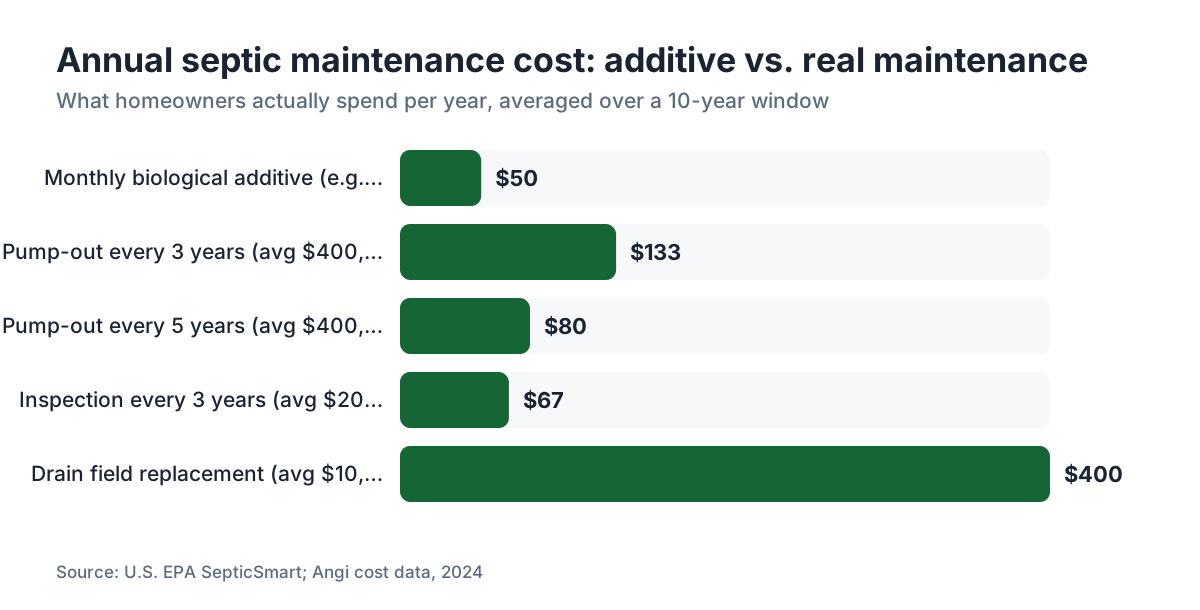
The bigger risk is financial and behavioral, not chemical. Monthly additive purchases add up. A box of Earthworm septic treatments runs roughly $10-20 for a multi-month supply, depending on the retailer. Over five years that's $120-$400 spent on a product with no demonstrated maintenance benefit. That money could go toward the one maintenance action with solid evidence behind it: regular pumping.
Then there's the false-confidence problem. Homeowners who believe an additive is "treating" their system may delay inspections or pumping. A septic tank that hasn't been inspected in a decade can fail expensively. Drain field replacement runs $5,000-$20,000 or more depending on soil, site, and local labor [8]. No additive prevents that. A septic tank inspection every 3-5 years does.
If you're shopping for a septic cleaner because something is wrong with the system, stop and call a licensed septic contractor. Additives don't diagnose or fix problems. They don't clear blockages, repair cracked baffles, or restore a saturated drain field.
What actually works for maintaining a septic system long-term?
The practices that genuinely extend septic system life and prevent failures are well-documented and consistent across EPA guidance, state extension programs, and industry association recommendations.
Pump on schedule. For a typical 3-4 person household with a 1,000-gallon tank, that's every 3-5 years. The EPA SepticSmart program uses this range [2], and your actual interval depends on household size and tank capacity. A licensed pumper can measure your sludge and scum layers and tell you where you stand. See how often to pump a septic tank for a detailed breakdown.
Protect the drain field. Don't park on it. Don't plant trees or shrubs with deep root systems near it. Divert surface water away from it. A saturated or root-invaded field is one of the most expensive septic failures you can have.
Watch what goes down the drain. Flushing wipes (even "flushable" ones), feminine hygiene products, grease, and medications stresses the system and speeds up sludge accumulation. The EPA specifically calls out these items as problematic [1].
Get it inspected. A full inspection every 3-5 years, combined with pumping, catches problems like cracked baffles, damaged risers, or early drain field saturation before they become emergencies requiring septic system repair.
For operators managing multiple properties or service routes, tracking pump schedules and inspection records across dozens of systems is where digital tools earn their keep. SepticMind is built for exactly this: giving service operators a clean record of every tank's history, service dates, and inspection notes so nothing falls through the cracks.
Use household products sensibly. You don't need to eliminate all cleaning products. Occasional use of bleach or antibacterial soap in normal household quantities doesn't destroy a tank. What matters is chronic overuse or dumping large quantities of chemicals at once.
If you're curious what septic tank cleaning looks like as a full service versus a simple pump-out, or want to understand the cost side of maintenance and replacement, those topics are worth reading before you need them urgently.
Is Earthworm septic treatment safe for all septic system types?
Earthworm's treatment is designed for conventional gravity-fed septic systems, which account for the large majority of residential systems in the U.S. For those systems, the biological formula poses no known compatibility issues.
For advanced treatment units (ATUs), aerobic treatment units, or systems with UV disinfection, the calculus is slightly different. These systems already use mechanical aeration or other processes to enhance bacterial activity, and some manufacturers specify what additives, if any, are acceptable. If you have an ATU, check your system manual or ask your service provider before adding any third-party biological product.
Mound systems and drip irrigation systems are still biologically conventional at the tank level, so Earthworm's formula should be fine at the tank end. The concern in any advanced system is that disturbing the bacterial balance in the tank could send inconsistent effluent to downstream components.
For conventional systems, the short answer is: safe, just probably unnecessary. The product is not going to damage your tank, baffles, or leach field. That's worth knowing if you've already been using it and were worried.
How much does Earthworm septic treatment cost and is it worth the money?
A typical package of Earthworm septic treatment runs $8-$18 for a 2-6 month supply, depending on retailer and package size. At monthly use as directed, annual cost is roughly $25-$75.
Compare that to the cost of a professional pump-out, which averages $300-$600 nationally, with higher costs in areas with limited service providers or difficult access [8]. Inspection services typically run $100-$300 on top of pumping.
Do the math over a 10-year window. A homeowner spending $40 a year on monthly additives spends $400 on something with no demonstrated maintenance benefit, while still needing 2-3 pump-outs at $300-$600 each. The additive budget doesn't reduce the pumping budget.
That said, $40 a year is not a ruinous sum. If you find value in the ritual, the eco-friendly brand values, or the peace of mind, you're not being reckless. Just don't let it substitute for the maintenance that actually matters.
Frequently asked questions
Does Earthworm septic treatment really work?
For a healthy, properly maintained septic tank, peer-reviewed evidence doesn't support meaningful performance improvements from biological additives like Earthworm. The EPA states there is little scientific evidence additives improve a well-maintained septic system. The product is unlikely to harm your tank, but it also doesn't replace pumping, which remains the single most effective maintenance action.
Can I use Earthworm septic treatment every month?
The label recommends monthly use, and that schedule is safe for a conventional septic system. Biologically, monthly dosing probably isn't necessary since tank bacteria reproduce continuously. A quarterly application after high-stress events (antibiotic use, heavy drain loads, returning to a seasonal home) is a reasonable middle ground if you want to use the product at all.
Is Earthworm safe for septic tanks with aerobic or advanced treatment units?
For conventional gravity septic tanks, yes, it's considered safe. For aerobic treatment units or systems with UV disinfection, check your manufacturer's documentation first. Some ATU manufacturers specify acceptable additives, and using unapproved products could affect system performance or void service warranties.
Will Earthworm septic treatment reduce how often I need to pump my tank?
No evidence supports this claim. Sludge accumulates because bacterial digestion in a septic tank is not complete, and no biological additive changes that fundamental limitation. When sludge reaches roughly 25-33% of tank volume, pumping is needed. That's typically every 3-5 years for a standard household, regardless of additive use.
What's the difference between Earthworm septic treatment and RID-X?
Both use Bacillus bacteria strains and enzyme blends (protease, amylase, lipase) to support organic digestion in the tank. Earthworm differentiates on branding: plant-derived ingredients, no phosphates, eco-focused packaging. The mechanism is nearly identical. Neither has peer-reviewed evidence showing it meaningfully extends pump intervals or improves effluent quality.
What happens if you never use any septic tank treatment?
Nothing harmful, assuming you're pumping on schedule and maintaining good drain habits. Healthy tanks seed their own bacterial populations from incoming wastewater within days of a pump-out. The EPA SepticSmart program doesn't recommend routine additive use for well-maintained systems. Your tank will function normally without any purchased treatment product.
Can Earthworm or similar products fix a slow-draining septic system?
No. Slow drains connected to a septic system typically signal a full tank, a clogged inlet or outlet baffle, or a failing drain field. Those are physical problems that need pumping, baffle replacement, or field assessment by a licensed contractor. Adding biological treatment to a system with a real problem delays the diagnosis and can make the situation worse.
Are there any septic additives that are actually proven to work?
No additive category has strong peer-reviewed evidence of improving septic performance in controlled studies. Biological enzyme and bacteria products are at least non-damaging. Solvent-based products can actually cause harm by liquefying sludge and pushing solids into the drain field. University of Minnesota Extension and EPA reviews consistently find insufficient evidence for any additive type.
Is Earthworm septic treatment safe for the environment and groundwater?
The bacteria and enzyme carriers in Earthworm's formula are classified as non-toxic, phosphate-free, and biodegradable. They're unlikely to present groundwater risk beyond what normal septic effluent already carries. For households near drinking water wells, the bigger environmental concern is proper tank maintenance, not additive choice.
How should I use Earthworm septic treatment correctly?
Flush the recommended dose directly down the toilet. Avoid using bleach-heavy cleaners or running the dishwasher on hot cycles in the hours immediately after dosing, since those can kill the bacterial cultures before they reach the tank. Follow the package dosing instructions and don't exceed recommended amounts, though there's no strong reason to expect more product produces more benefit.
What do state environmental agencies say about septic additives?
Most state guidance mirrors the EPA: additives are generally unnecessary for well-maintained systems, and homeowners should be cautious of marketing claims. South Carolina and Washington State both have published extension guidance finding no evidence of benefit from biological additives. Massachusetts Title 5 and Maryland's COMAR 26.04.02 specify maintenance requirements centered on pumping and inspection, not additives.
Can Earthworm septic treatment help after heavy antibiotic use in the household?
The biology is plausible. Antibiotics pass through the body into wastewater and can affect tank microbial populations. A single additive dose after a course of antibiotics is low-cost and low-risk. Hard evidence is limited, but this is one of the more reasonable use cases for a biological additive, unlike using it as routine monthly maintenance.
How does bacterial septic treatment compare to just flushing baker's yeast?
Baker's yeast (Saccharomyces cerevisiae) has been used as a folk remedy for septic maintenance for decades. It adds live microorganisms to the tank, similar in concept to commercial biological additives. The evidence base for yeast is as thin as for commercial products, but a packet of baker's yeast costs pennies versus $10-18 for branded treatments. The mechanism is comparable.
Sources
- U.S. EPA, SepticSmart: How to Care for Your Septic System: EPA guidance on septic maintenance practices including pump schedule and what not to flush
- U.S. EPA, SepticSmart: Septic System Additives: EPA states there is little scientific evidence that additives improve the performance of a well-maintained septic system and classifies biological additives as unlikely to harm
- University of Minnesota Extension, Septic System Owner's Guide: Extension review found no statistically significant difference in tank performance between tanks using additives and control tanks
- South Carolina Department of Environmental Services, Onsite Wastewater Systems: South Carolina guidance states septic additives are generally unnecessary and homeowners should be cautious of marketing claims
- Washington State University Extension, On-Site Sewage System Care and Maintenance: WSU Extension review of additive studies found no evidence biological additives reduce pumping frequency or improve effluent quality
- Massachusetts Title 5 Septic Regulations, 310 CMR 15.000: Massachusetts Title 5 specifies homeowner maintenance requirements centered on inspection and pumping schedules
- Maryland Code of Maryland Regulations (COMAR) 26.04.02, Individual Sewage Disposal: Maryland COMAR 26.04.02 specifies onsite wastewater maintenance requirements including pumping without mention of additive requirements
- HomeAdvisor / Angi, Septic Tank Pumping and Drain Field Cost Data: National average cost for septic pump-out is $300-$600; drain field replacement costs $5,000-$20,000 depending on site conditions
- U.S. EPA, Septic Systems Overview: EPA overview of septic system components, function of anaerobic bacteria, and typical maintenance intervals of 3-5 years
- National Environmental Services Center (NESC), West Virginia University, Septic System Additives: NESC review of additive research categories including biological, chemical, and inorganic types and their risk profiles
Last updated 2026-07-09