Septic tank pumping companies: how to find, vet, and hire one
By the SepticMind Editorial Team
TL;DR
- Most licensed septic tank pumping companies charge $250 to $600 for a standard residential pump-out.
- Price depends on tank size, access difficulty, and region.
- The right company holds a state wastewater contractor license, dumps waste at an approved treatment facility, and hands you a written service report.
- This guide covers costs, vetting, scheduling, and the red flags that tell you to walk.
What does a septic tank pumping company actually do?
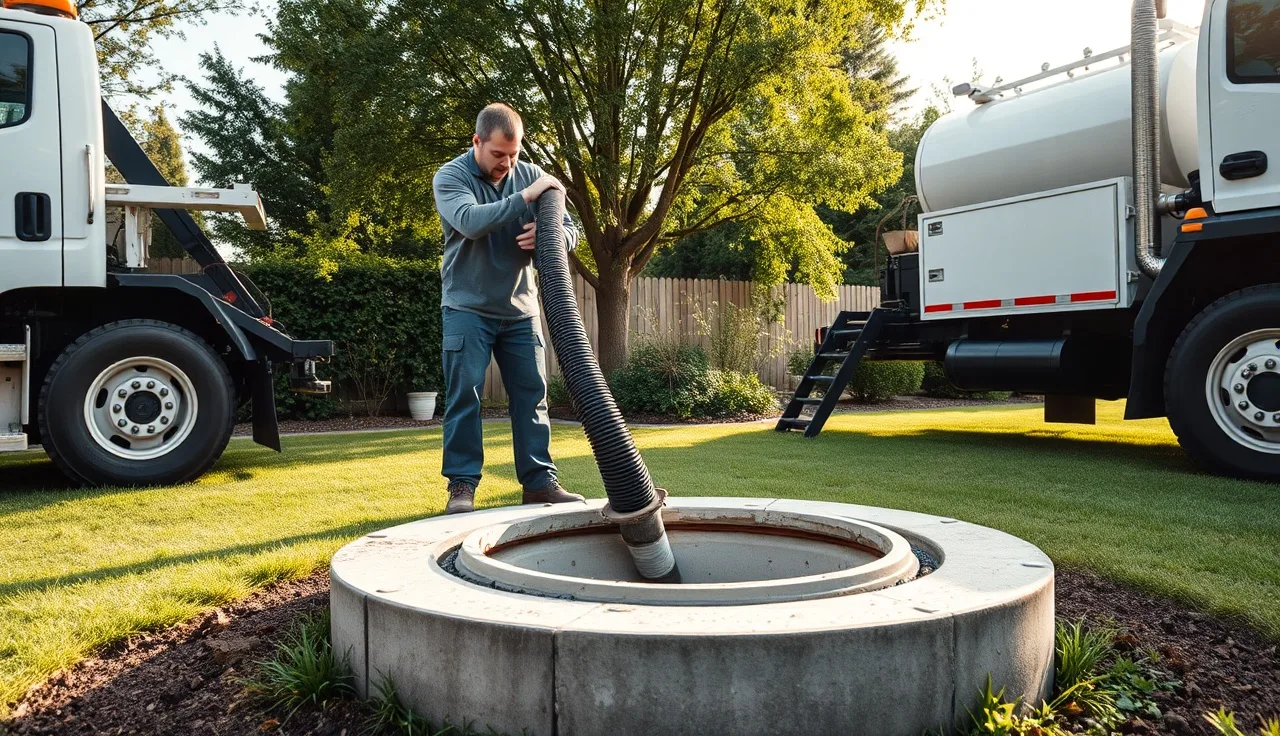
A septic tank pumping company sends a licensed technician and a vacuum truck to your property, opens the tank's access lid, and uses a large suction hose to pull the sludge off the bottom and the scum layer off the top. The liquid middle layer, called effluent, normally flows on to the drain field. A good pump-out removes everything.
After pulling the waste, a decent technician rinses the tank walls with effluent or clean water, inspects the inlet and outlet baffles, checks the concrete or fiberglass walls, and notes anything that needs repair. You should get a written service report. If you don't, ask for one.
The truck then hauls the waste to a permitted receiving facility, usually a municipal wastewater treatment plant or a licensed biosolid processing site. This step is regulated. Most states require the hauler to carry a manifest showing where the waste went. If a company can't tell you where they dump the waste, walk away. [1]
Pumping is different from septic tank cleaning, which sometimes means a more thorough rinse-and-inspect service, and from septic tank emptying, which is mostly a synonym. The core job is the same vacuum truck work.
How much do septic tank pumping companies charge?
Most single-family homes in the contiguous United States pay $250 to $600, with the national average around $400 to $450. [2] Regional variation is real. Rural parts of the South and Midwest run cheaper, $200 to $350. Dense metros in the Northeast and Pacific Northwest regularly hit $500 to $700.
Tank size drives cost more than anything else. A 1,000-gallon tank, standard for a three-bedroom home, costs less to pump than a 1,500- or 2,000-gallon tank. Most companies price by the gallon, roughly $0.20 to $0.40 per gallon of tank capacity, though many quote a flat rate for common sizes. [3]
Access is the second biggest factor. A buried lid with no riser means the technician has to dig, and many companies charge $50 to $150 for that extra labor. A septic tank riser installed after your first pump-out pays for itself by cutting future access fees and pump time. It's one of the few upsells that actually makes sense.
Other cost variables:
| Factor | Typical added cost |
|---|---|
| Tank over 1,500 gallons | $75 to $200 extra |
| Buried lid, requires digging | $50 to $150 extra |
| Two-compartment tank | $50 to $100 extra |
| Emergency/after-hours call | $100 to $300 extra |
| Sludge judge depth measurement | Usually included |
| Written inspection report | Usually included |
| Filter cleaning (if present) | $50 to $100 extra |
Add-on work like jetting drain field lines, adding bacteria treatments, or replacing baffles goes on separate work orders. Some companies quote these at the truck, which is fine, but get any repair estimate in writing before they start. septic tank repair costs swing widely depending on what broke.
How often should you schedule a pump-out?
The EPA's SepticSmart program recommends pumping every three to five years for a typical household. [4] That's a wide range on purpose. The real interval depends on tank size and household size together, not one or the other.
Here's the pattern the EPA guidance points to. A 1,000-gallon tank with two people in the house might go nine or ten years between pump-outs. Add two more people and that same tank needs service roughly every four years. A family of five or six on a 1,000-gallon tank probably needs it every two to three years. [4]
For a tighter schedule, see how often to pump septic tank, which works through the EPA's sizing tables.
The technical trigger is this: pump when the sludge layer reaches one-third of the tank's liquid depth, or the scum layer comes within three to six inches of the outlet baffle. A technician measures this with a sludge judge on the first visit and tells you exactly where you stand. After that, you have a baseline instead of a guess.
What licenses and certifications should a pumping company have?
All 50 states regulate septic waste hauling in some form. Most require the company to hold a septage hauler or liquid waste transporter permit issued by the state environmental agency. In many states, individual technicians also need an operator certification from the state wastewater program. [5]
Before hiring anyone, ask for the company's state hauler permit number and look it up. Most state environmental or health department websites have a searchable database of permitted haulers. If the company can't produce a permit number, that's a hard stop.
Liability insurance matters too. A vacuum truck accident, a spill on your lawn, or a cracked tank lid put back wrong can turn into a real expense. Ask for a certificate of general liability insurance. Any legitimate company has one and hands it over without hesitation.
BBB accreditation, Google reviews, and Angi ratings are useful but secondary. A five-star review doesn't mean a company is licensed. The permit lookup does. Lead with that.
Some technicians also hold certifications from the National Association of Wastewater Technicians (NAWT), which sets training standards for pumping and inspection. [6] That's a positive signal, though not universal.
How do you find reputable septic tank companies in your area?
Start with your state's environmental or health department website. Most keep a list of permitted septage haulers by county or zip code. That list is the cleanest starting point because every company on it cleared the minimum regulatory bar.
From there, neighborhood referrals beat everything else. Ask on your local community Facebook group or Nextdoor. People who've had a good or a miserable pump-out remember it vividly, and you'll get honest opinions fast.
Operators building a service business in this space can find credentialed members through directories from the Water Environment Federation [7] and state onsite wastewater associations. Homeowners can use those same lists to check credentials.
Once you have two or three candidates, call them and pay attention to how they answer basic questions. A good company tells you their permit number unprompted, names their disposal site, describes what the technician does during the visit, and gives you a firm price over the phone for your tank size. Vague answers on any of those are a flag.
Get at least two quotes if your tank is larger than 1,500 gallons, or if you haven't pumped in more than seven years. A tank that's gone untouched for a decade may have compacted sludge that takes extra time and muscle.
What red flags should you watch for when hiring?
The most dangerous red flag is a company that pumps your tank and then immediately pushes expensive drain field work. Drain field problems are real, but they get diagnosed with a proper inspection, not from the back of a vacuum truck in twenty minutes. [8] If a technician tells you your drain field is failing and quotes $3,000 to $15,000 of work on the same visit, get a second opinion before you sign anything.
Other flags to take seriously:
No written estimate before starting. Any reputable company gives you a price before the truck opens its valve.
Can't tell you where they dump the waste. Licensed haulers have a destination. Unlicensed ones sometimes dump illegally, which can land the liability on your property.
Pushes unnecessary additives. The EPA is clear that biological additives, enzymes, and septic treatments don't replace pumping and have no proven benefit for a system that's working. [4] Companies that hawk $40 bacteria packets at every visit are padding the bill.
Skips the baffle and tank inspection after pumping. That takes five minutes and is standard practice. Skipping it means you got a drive-by.
Quotes an unusually low price without seeing your property. A lowball number can climb fast once the truck arrives. Get the full price, digging fee included, confirmed before you schedule.
What happens during the pump-out visit?
The technician arrives in a vacuum truck, which typically holds 2,000 to 5,000 gallons. They locate your tank access lids, which sit at or near grade if you have risers. Without risers, they may probe the lawn or pull a diagram from your county health records to find buried lids.
Once open, they drop in the suction hose and remove the waste. A standard 1,000-gallon residential tank that's been pumped on schedule takes about 20 to 30 minutes. An overdue tank with hard-packed sludge can take 45 minutes to an hour.
After pumping, the technician should run a visual inspection. Check that inlet and outlet baffles are intact (cracked or missing baffles are common and fixable), look at the tank walls for cracks, and note the condition of the effluent filter if one is installed. A sludge judge reading before pumping tells you how full the tank was, which helps you set the next interval.
You'll get a service receipt. Ask that it include the tank size, gallons removed, the technician's name and license number, the disposal facility, and any notes on tank condition. That document helps your property records and may be required during a home sale.
A full septic tank pump out covers all of this. Skip the inspection steps and you're paying for removal only.
How does pumping relate to the rest of your septic system?
Pumping removes solids from the tank. It does nothing for the septic drain field, a separate component that handles the liquid effluent leaving the tank. A healthy pump schedule protects the drain field by keeping solids from carrying over into the leach lines. It won't fix a drain field that's already failing.
The tank and the drain field are different problems with different fixes and very different price tags. Pumping a tank costs $250 to $600. Replacing a drain field costs $3,000 to $25,000 or more depending on system type and soil. [9] Regular pumping is the cheapest maintenance decision you make on a septic system, and it isn't close.
If a pump-out turns up cracked concrete, a broken baffle, or a deteriorating tank, that's a septic tank repair job. If the diagnosis points at the pipes, distribution box, or leach field, that's septic system repair. Know which problem you're actually paying to fix.
The EPA's SepticSmart program lists four parts of proper septic care: inspection, pumping, efficiency, and proper waste disposal. [4] Pumping is the one most homeowners put off too long. That three-to-five-year interval gets ignored constantly, and plenty of tanks go seven to ten years between service calls.
Should you sign an annual maintenance contract with a septic company?
Some septic tank companies offer annual or multi-year maintenance contracts that bundle inspections, priority scheduling, and discounted pump-outs. For most homeowners, these are unnecessary. A three-to-five-year pump schedule and one good inspection don't need a subscription.
Two situations change that. First, if you have a complex system with an aerobic treatment unit, a pump chamber, or an alarm, annual inspections are required by most state codes, and a service contract with the installing company is often the simplest way to stay compliant. [10] Second, if you have an older system you want checked regularly, the peace of mind has real value.
For a standard gravity-fed system with no alarms or pumps, a one-time relationship with a local licensed hauler who gives you a written report each visit covers everything. Call them every three to five years, or when your last sludge measurement says you're due.
Operators managing dozens of customer accounts, reminder schedules, and service histories are exactly where software earns its keep. SepticMind is built for that workflow: tracking service intervals, generating reports, and keeping hauler records organized across a customer base. It won't replace good fieldwork, but it closes the scheduling gaps that let tanks run too long.
What questions should you ask before you book?
Here's a short list worth asking any septic tank company before you book. The answers tell you a lot fast.
"What's your state hauler permit number?" A licensed company answers without hesitation.
"Where do you dispose of the waste?" The answer should be a named facility, usually a local wastewater treatment plant.
"What does your pump-out include?" You want to hear: pumping, baffle inspection, tank condition check, and a written report.
"Do you charge extra if my lid is buried?" Get this answer before the truck arrives.
"How will you let me know if you find a problem?" Good companies take photos and document findings, then explain what they saw in plain language instead of alarming jargon.
"Any add-ons I should know about?" This lets you hear the upsell pitch upfront and decide on your own terms.
You don't need all six answers perfect. You're looking for competence and straight talk. A company that gets defensive or vague on the permit question is worth skipping no matter the price.
What's the connection between pumping and a home sale?
A home sale is one of the most common moments a homeowner discovers the tank hasn't been pumped in a decade. Many states and most buyers' lenders require a septic inspection before closing. Some states, Massachusetts being the clearest example, require the system to pass a Title 5 inspection and be pumped as part of that inspection before a property can transfer. [11]
Even in states without mandatory inspection laws, buyers routinely request a septic inspection as a contingency. A tank that's 80% full of sludge when the inspector shows up can trigger a required pump-out before closing, and you'll pay for it under deadline pressure. Pumping before you list puts you in control of the cost and the timeline.
A service report from a pump-out in the last two to three years is a positive disclosure item. It signals a maintained system, cuts buyer anxiety, and keeps the issue from becoming a negotiating chip.
If the inspection turns up actual system problems, that's a different conversation. See septic system repair and cost to install septic system for what those repairs and replacements really run.
How do septic tank pumping prices compare to other system costs?
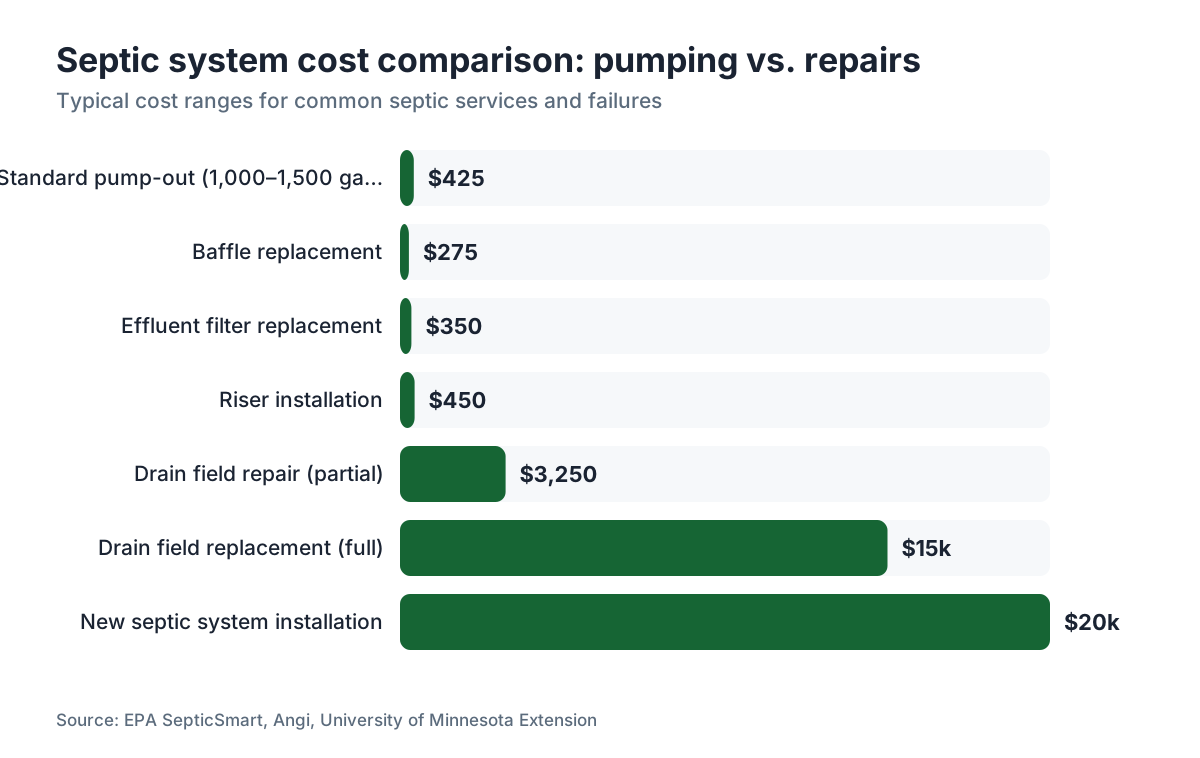
Pumping is the cheapest recurring cost in the life of a septic system, and it isn't close. Here's an honest comparison to put a $400 pump-out in context.
| Service or failure | Typical cost range |
|---|---|
| Standard pump-out (1,000 to 1,500 gal tank) | $250 to $600 |
| Baffle replacement | $150 to $400 |
| Effluent filter replacement | $200 to $500 |
| Riser installation | $300 to $600 |
| Drain field repair (partial) | $1,500 to $5,000 |
| Drain field replacement (full) | $5,000 to $25,000 |
| New septic system installation | $10,000 to $30,000+ |
Sources: EPA SepticSmart [4], Angi cost data [2], and state extension programs. [3]
The math is simple. A homeowner who pumps every four years spends roughly $4,000 over 40 years on pump-outs. A homeowner who skips pumping until solids reach the drain field and destroy it spends $5,000 to $25,000 on a replacement. Pump-outs are the insurance policy, and they're cheap. That's the whole argument for staying on schedule.
Frequently asked questions
How much does it cost to have a septic tank pumped?
For a standard 1,000- to 1,500-gallon residential tank, most licensed septic tank companies charge $250 to $600. The national average is around $400. Larger tanks, buried lids, and urban markets push prices higher. Emergency or after-hours calls add $100 to $300. Always get a firm quote that includes any digging fee before the truck arrives.
How do I find a licensed septic pumping company near me?
Start with your state environmental or health department website, which lists permitted septage haulers by county. That's the most reliable filter because every company on it cleared state licensing. From there, neighbor referrals on Nextdoor or local Facebook groups are the next best source. Confirm any candidate's hauler permit number before booking.
How often do septic tanks need to be pumped?
The EPA recommends every three to five years for a typical household. The real interval depends on tank size and number of residents. A 1,000-gallon tank serving two people may go eight to ten years; the same tank serving a family of five may need service every two to three years. A sludge measurement at your first pump-out gives you a real baseline.
What should a septic pump-out service include?
A proper pump-out removes all sludge and scum, rinses the tank, inspects inlet and outlet baffles, checks tank wall condition, cleans the effluent filter if present, and provides a written service report with gallons removed, disposal site, and any observed issues. If the technician just pumps and leaves without an inspection, you're getting a partial service.
Is there a difference between septic pumping and septic cleaning?
Mostly in name. Both involve a vacuum truck removing waste from the tank. "Cleaning" sometimes implies a more thorough rinse-down of the tank interior after pumping. In practice, many companies use the terms interchangeably. Ask what's specifically included regardless of what a company calls the service.
Can a septic company pump a full or overflowing tank?
Yes. Pumping an overflowing or backed-up tank is an emergency service most licensed haulers handle, often same-day or next-day at a premium rate. The added cost is typically $100 to $300 above the standard pump-out price. If the tank is overflowing, stop all water use in the house immediately and call a licensed company, not a handyman.
Do I need to be home when the septic tank is pumped?
Ideally yes, at least for the first pump-out with a new company. Being present lets you confirm they inspect the baffles, ask questions about tank condition, and verify the service report. If you can't be there, make sure you have an accurate tank diagram to share, and ask the company to call you with findings before leaving the property.
What's the price difference between a 1,000-gallon and 1,500-gallon tank pump-out?
Typically $75 to $150 more for the larger tank. Many companies price by the gallon at roughly $0.20 to $0.40 per gallon of capacity, though flat-rate pricing for common sizes is also common. Some charge the same flat rate for both if they're in the same ballpark. Confirm your tank size before getting quotes so you're comparing apples to apples.
Are septic tank additives worth buying from the pumping company?
No, for most systems. The EPA states that biological additives and septic treatments don't substitute for pumping and have no demonstrated benefit for a normally functioning system. A company pushing enzyme packets or bacteria treatments at every visit is generating extra revenue, not protecting your system. Skip the additives and spend that money on a pump-out on schedule.
What happens if I don't pump my septic tank for many years?
Sludge builds until it reaches the outlet baffle and starts flowing into the drain field. Solids clog the soil pores in the leach lines, and the drain field fails. Drain field failure costs $5,000 to $25,000 to repair or replace, against $250 to $600 for a pump-out. In severe cases, raw sewage surfaces in the yard or backs up into the house.
Do septic companies need to be licensed to pump tanks?
Yes. Every state regulates septic waste hauling. Companies need a septage hauler or liquid waste transporter permit from the state environmental or health agency. Individual technicians may also need operator certification. Ask for the permit number and verify it on your state's public database before hiring. Unlicensed haulers sometimes dump waste illegally, which creates environmental and legal risk.
How do I know if my septic tank needs pumping before the scheduled date?
Warning signs include slow drains throughout the house (more than one fixture), gurgling in drains, sewage odors indoors or in the yard, and wet or unusually green patches over the drain field. Any of these warrant an immediate call to a licensed septic company for inspection more than a pump-out, since some symptoms point to problems beyond a full tank.
What records should I keep after a septic pump-out?
Keep the written service report showing the date, tank size, gallons removed, disposal facility, technician's license number, and any notes on tank or baffle condition. Store it with your home records. This document is often requested during a real estate inspection or sale, and it helps you and future technicians track service history and set the right interval for the next pump-out.
Is a septic inspection the same as a pump-out?
No. A pump-out removes waste from the tank. An inspection assesses the condition of the entire system, including the tank, baffles, distribution box, and drain field, often using a probe, dye test, or camera. Many companies offer both together. For a real estate transaction or a first look at an older system, you want an inspection in addition to the pump-out, not instead of it.
Sources
- EPA, "Septic Systems Overview": Septage haulers are required to transport waste to permitted receiving facilities such as municipal wastewater treatment plants.
- Angi, "How Much Does It Cost to Pump a Septic Tank?": National average septic tank pump-out cost ranges from approximately $250 to $600 for most residential tanks.
- University of Minnesota Extension, Septic System Owner's Guide: Septic pump-out pricing commonly scales with tank capacity, and larger tanks cost more to service.
- EPA SepticSmart, "Homeowners": The EPA recommends pumping every three to five years and states that additives do not substitute for regular pumping.
- EPA, "Septic Systems Overview": Septic waste hauling is regulated at the state level, typically requiring a septage hauler or liquid waste transporter permit.
- National Association of Wastewater Technicians (NAWT): NAWT offers professional training and certification standards for septic pumping and inspection technicians.
- Water Environment Federation: Industry directory and technical resources for wastewater service professionals.
- EPA, "How to Care for Your Septic System": Proper diagnosis of drain field problems requires formal inspection, not visual assessment alone; the EPA guidance outlines four-component maintenance.
- University of Minnesota Extension, Septic System Owner's Guide: Drain field repair and replacement costs run several thousand to tens of thousands of dollars depending on system type and soil conditions.
- EPA, "Types of Septic Systems": Aerobic treatment units and other advanced systems typically require more frequent inspection and maintenance than standard gravity systems.
- Massachusetts Department of Environmental Protection, Title 5: Massachusetts Title 5 requires a septic inspection and pump-out as part of property transfer in most circumstances.
Last updated 2026-07-09