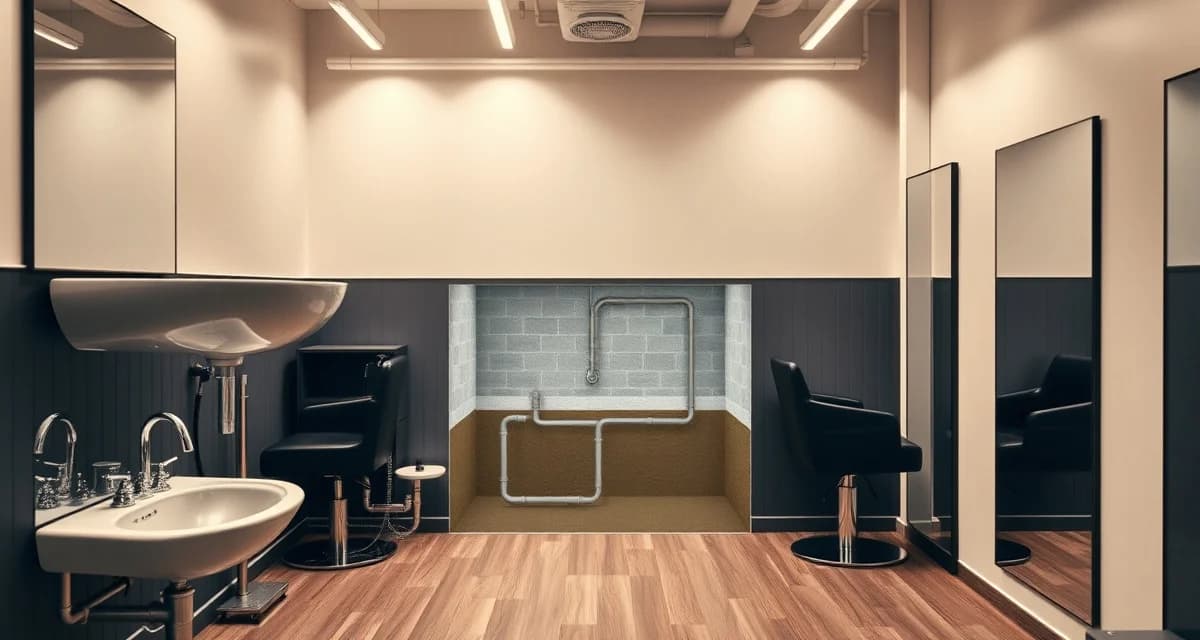
Septic Service for Hair Salons and Beauty Shops
By the SepticMind Editorial Team
Running a hair salon on private septic is manageable, but you're not dealing with ordinary gray water. Color treatments, chemical relaxers, bleach applications, and perm solutions all go down your sinks. Those chemicals don't disappear before they reach your tank. Health departments regulate beauty salon sanitation including wastewater disposal in many states, which means your septic system is a compliance issue, not just a maintenance one.
TL;DR
- Hair Salons facilities have distinct wastewater loading patterns that affect septic system sizing, service frequency, and permit requirements.
- Commercial and institutional properties like hair salons typically require more frequent pumping than residential systems due to higher daily usage.
- Some hair salons operations generate waste streams (grease, chemicals, or high-volume flow) that require pre-treatment before reaching the septic system.
- Service contracts for hair salons provide predictable recurring revenue and are easier to manage with a platform that tracks commercial account schedules.
- Health department inspections for hair salons properties may require septic system condition documentation as part of facility licensing.
- Septic companies specializing in hair salons service build referral networks with property managers, architects, and health inspectors in that niche.
The core problem with salon wastewater is bacterial disruption. Your septic tank relies on bacteria to break down organic waste. Hair color developers contain peroxide. Relaxers contain sodium hydroxide. These chemicals can reduce bacterial activity in the tank, which means solids build up faster and your system needs service more frequently than a comparable office space would. Getting the service interval wrong is the most common mistake salon operators make.
How Salon Chemicals Affect Your Septic System
Standard gray water from a home bathroom contains soap, shampoo, and body waste. Hair salon gray water contains all of that plus a rotating menu of professional chemical products. Let's be specific about what goes down the drain in a busy salon.
Hydrogen peroxide from color developers is bactericidal in high concentrations. A busy salon using multiple color applications per day sends repeated doses of peroxide into the tank. Ammonia from color products adds to the load. Sodium hydroxide from relaxers is highly alkaline and disrupts the pH balance that septic bacteria need to function.
None of this means your septic system will fail immediately. But it does mean the bacterial population in your tank is working under stress. The practical result is that solids accumulate more quickly, and the interval between pump-outs needs to reflect that higher load.
How Often Should a Salon Get Septic Service?
A general rule of thumb for a busy hair salon: plan for service at least twice as often as a residential property with comparable tank size. A residential home on a 1,000-gallon tank might go 3-5 years between pump-outs. A busy hair salon on the same tank may need service every 12-18 months.
The variables that matter most are chair count, daily chemical service volume, and tank size. A two-chair rural salon doing mostly cuts and blowouts has a different load than a ten-chair color-focused salon doing 30+ applications per day. Your service provider should help you calculate the right interval based on your actual business volume.
If you're not sure what interval is appropriate for your salon, have your tank inspected and pumped now, document the condition, and then follow up at 12 months to see how quickly it's refilling. Two data points let you establish a reliable schedule.
Compliance Obligations for Beauty Salons
State cosmetology boards focus primarily on sanitation at the chair and basin level. They care about clean towels, disinfected tools, and sanitary conditions for clients. Wastewater disposal falls to your county health or environmental department under local onsite wastewater rules.
In many states, commercial beauty salon facilities are required to have a functioning onsite wastewater system that meets commercial standards. This may mean a larger-than-residential tank, a grease interceptor if you have a snack area, or mandatory inspection records on file with the county.
Check with your county health department to confirm what documentation they require for salon facilities on private septic. Some counties require an annual certification that your system is being maintained. Others conduct periodic commercial facility inspections that include septic review.
Grease Traps for Salons
Most hair salons don't need a grease trap. Grease interceptors are typically required when food service creates significant fats, oils, and grease in the wastewater stream. Hair product residue is a concern for bacterial disruption, but it doesn't typically require grease trap pretreatment.
If your salon also includes a café, juice bar, or any food prep, that changes the calculus. Food service combined with chemical salon waste is a more complex situation that may require grease pretreatment before the wastewater reaches your septic tank.
Managing Service Records for Your Salon
Many salon operators run lean on administrative tasks. But septic service records matter when a county inspector shows up or when you're renewing a commercial facility permit. Not being able to produce basic pump-out history is an easy way to end up on the wrong side of a compliance review.
SepticMind's salon account type adjusts service intervals for chemical wastewater loads from beauty services. Your account documents the types of chemical services performed, which helps justify a more frequent service schedule and provides context when reviewing your tank's condition over time. Connect your service history with your septic service agreement management records and you have a complete picture.
For salons that also want to compare their service intervals against what other commercial accounts in their category look like, the platform makes that easy. You can see what interval was recommended, when service was performed, and what the technician noted about tank condition at each visit.
What to Tell Your Septic Service Provider
When you call to schedule service, be specific about what type of salon you run. Telling them you're a "hair salon" isn't always enough. Let them know your approximate chair count, how many chemical services you perform per week, and what products you primarily use. A provider who understands your load can give you a better service recommendation and flag if your current tank size is appropriate for your business volume.
If your salon has grown since you first had the septic system installed or inspected, it's worth having a reassessment. A system sized for a two-chair startup may be undersized for a ten-chair full-service salon with a color bar.
Internal Links Worth Knowing
Salons that also handle restaurant-style food service face compounded wastewater loads. And if you're managing service agreements for multiple salon locations, the septic service agreement management module in SepticMind keeps everything organized across accounts.
Get Started with SepticMind
Managing service contracts for hair salons properties is easier with a platform built for the septic trade. SepticMind tracks commercial service schedules, documents every inspection visit, and keeps your compliance records organized by property. See how it handles your commercial account portfolio.
Frequently Asked Questions
What septic service intervals are appropriate for a busy hair salon?
A busy hair salon doing multiple color treatments daily should plan for pump-outs every 12 to 24 months, depending on tank size and total chemical service volume. This is roughly twice as frequent as a comparable residential property because salon chemical products, particularly peroxide-based developers and alkaline relaxers, reduce bacterial activity in the tank and cause solids to accumulate faster. A small salon doing mostly cuts with limited chemical services can stretch intervals longer, but should still not go more than 3 years without inspection. Have your system assessed annually and schedule service when the inspection shows it's needed.
Do hair coloring chemicals damage a septic system?
They can impair it over time without proper maintenance. Hydrogen peroxide from color developers, ammonia from color formulas, and sodium hydroxide from relaxers all affect the bacterial population inside your septic tank. These bacteria are what break down organic solids, so when they're disrupted, solids accumulate faster and the tank fills more quickly. The damage isn't typically catastrophic from a single application, but cumulative chemical exposure over years without adequate service intervals leads to premature system stress, odor problems, and potential drainfield issues. More frequent pump-outs and occasional bacterial additive treatments can help manage this.
Does SepticMind adjust service intervals for salons based on chemical wastewater load?
Yes. SepticMind's salon account type captures the type of chemical services your salon performs and uses that information in service interval recommendations. A salon doing heavy chemical processing gets a more aggressive service reminder schedule than a salon doing primarily cuts and styling. The account also documents product categories used, which gives your service provider context when they inspect the system. This makes it easier to justify your service frequency to a county health department and ensures you're not using a residential service interval for a commercial chemical load.
How often should a septic system serving a hair salons property be inspected?
Septic systems at hair salons properties should be inspected at least annually and pumped more frequently than residential systems, since commercial-scale daily water usage accelerates sludge and grease accumulation. The exact frequency depends on the specific activities at the facility, peak occupancy, any food service or chemical use on-site, and local regulatory requirements. A service provider familiar with hair salons operations can recommend an appropriate inspection and pumping schedule based on the system's actual usage profile.
What septic system issues are most common at hair salons properties?
The most common septic problems at hair salons properties are rapid sludge accumulation from high occupancy, grease trap failure if food service is involved, hydraulic overloading during peak-use periods, and non-biodegradable waste disposal from cleaning or maintenance activities. Regular inspection and a service contract with clear maintenance intervals are the most effective ways to catch these problems before they cause system failure or regulatory violations.
Try These Free Tools
Sources
- National Onsite Wastewater Recycling Association (NOWRA)
- US EPA Office of Wastewater Management
- NSF International
- Water Environment Federation
- National Environmental Services Center (NESC)