How a septic tank treats wastewater: the complete guide
By the SepticMind Editorial Team
TL;DR
- A septic tank separates solids from household wastewater, holds them while anaerobic bacteria break down organic matter, then releases clarified liquid to a drain field where soil finishes the treatment.
- A tank sized to code and pumped every 3 to 5 years protects groundwater and lasts 20 to 40 years.
- Skip the pumping and the whole system fails within a few years.
What does a septic tank actually do to wastewater?
A septic tank does two jobs: it separates solids from liquid, and it holds those solids while bacteria digest them. Everything else the system does happens in the soil after the liquid leaves the tank.
Every time you flush a toilet, run the dishwasher, or drain a sink, that wastewater flows into your tank through a single inlet pipe. Inside, three things happen in order: settling, biological digestion, and liquid release.
Heavy solids sink to the bottom and form sludge. Fats, oils, and grease float to the top and form scum. In between sits a layer of partially clarified liquid called effluent. That middle layer is the only thing that leaves the tank during normal operation, and it exits through a baffle or tee fitting on the outlet end.
The sludge and scum layers are where biology takes over. Anaerobic bacteria (organisms that work without oxygen) colonize the sludge and slowly digest organic material, shrinking its volume over time. They can't process everything, though. Inorganic solids, synthetic fibers, and excess grease pile up, which is exactly why septic tank pumping exists.
Once effluent exits the tank, it travels to a leach field, also called a drain field or soil absorption system. There the soil does the final treatment: filtering particles and letting soil bacteria neutralize pathogens. The EPA describes this two-stage process as the core of conventional onsite wastewater treatment [1].
The whole system is passive. No electricity, no moving parts in a basic tank. That simplicity is also its weak point. When one component gets overwhelmed, the others follow fast.
What are the main types of septic tanks used for wastewater treatment?
Not every property gets the same tank. Soil type, lot size, water table depth, and local code decide which system gets approved. Here's how the main types differ.
Conventional concrete or plastic single-compartment tanks are the most common. They range from 750 to 1,500 gallons for residential use, sometimes larger for commercial sites. Concrete tanks last 40 years or more if the concrete doesn't crack or corrode. Plastic and fiberglass tanks resist corrosion but can shift in high water-table soils [2].
Two-compartment tanks give the effluent a second settling stage before it reaches the drain field. The first compartment handles the bulk of settling; the second polishes the effluent further. They produce measurably cleaner effluent than single-compartment designs, which matters on sensitive lots near water.
Aerobic treatment units (ATUs) inject air into the tank to feed aerobic bacteria, which process waste faster and more completely than anaerobic digestion alone. ATUs can hit 90 to 95 percent reduction in biochemical oxygen demand (BOD), against roughly 30 to 40 percent in a conventional tank [3]. They cost more upfront (roughly $10,000 to $20,000 installed) and require a service contract in most states.
Mound systems and drip irrigation systems pair a conventional or ATU tank with an engineered drain field for sites with shallow bedrock, high water tables, or slow-draining soils.
Holding tanks don't treat anything. They store raw sewage until a pump truck removes it. They go on sites where a drain field literally can't be built. Operating cost is high because you pay to haul away every gallon.
For RVs and campers, purpose-built camper septic tank treatment products (enzyme and bacterial additives sold in cassette or holding-tank formulas) cut odor and break down solids inside the holding tank before disposal at a dump station. These aren't substitutes for a permanent system. They're holding-tank maintenance aids.
See the cost to install a septic system for a full breakdown of what different system types run in 2024 and 2025.
How big does a septic tank need to be for a typical home?
Tank size follows bedroom count, not the number of people living there. More bedrooms means more potential occupants, which means more water use. The industry sizes for the house, not the current family.
The EPA's guidance and most state codes follow sizing tables that look roughly like this [1]:
| Bedrooms | Minimum tank size (gallons) |
|----------|-----------------------------|
| 1-2 | 750-1,000 |
| 3 | 1,000-1,200 |
| 4 | 1,200-1,500 |
| 5-6 | 1,500-2,000 |
These are minimums. Many designers size up by 20 to 25 percent to cover heavy water use, garbage disposals, or home offices. A garbage disposal adds enough solids that some states require a larger tank or more frequent pumping. Check your local code.
Flow rate matters as much as daily volume. Dump a large amount of water in a short window (multiple showers, laundry, and the dishwasher all at once), and a hydraulic surge can push unsettled solids into the outlet before they've had time to drop out. Spreading water use across the day cuts that risk a lot.
Commercial and multi-family jobs use different formulas, usually gallons per day (GPD) based on fixture counts or occupant load. A small restaurant might need a 1,500 to 3,000-gallon tank. A larger facility may need multiple tanks in series.
What is the wastewater treatment process inside a septic tank, step by step?
Wastewater moves through the tank in five stages: it enters, it separates by density, bacteria digest the sludge, clarified liquid exits, and soil finishes the job. Walk through it in the order it actually happens.
Step 1: Wastewater enters. Raw household sewage comes in through the inlet baffle, which slows the incoming flow so it doesn't stir up the settled sludge.
Step 2: Separation by density. Within 24 to 72 hours, solids separate. Sludge settles out at roughly 1.3 to 1.5 times the density of water. Grease and oils, lighter than water, rise. The middle zone clears.
Step 3: Anaerobic digestion. Bacteria in the sludge break down organic compounds, giving off methane, carbon dioxide, and water. This is slow work. A household's sludge might take weeks to months to fully process, and not all of it ever does. Non-biodegradable solids stay put permanently.
Step 4: Effluent exits. The liquid zone between sludge and scum is the only material that leaves, through the outlet baffle into the drain field distribution system. Even good effluent still carries suspended solids, nitrogen (mostly as ammonia), phosphorus, and pathogens. It is not clean water by drinking-water standards.
Step 5: Soil treatment. The drain field's soil filters the remaining particles, and biofilm communities on the soil (the biomat) knock down pathogens and nutrients through adsorption and biological uptake [4]. This final stage turns septic effluent into something that can safely recharge groundwater.
The EPA's SepticSmart program puts it plainly: a well-maintained conventional system "provides a cost-effective method for treating wastewater when properly designed, installed, and maintained." [1]
How does a septic tank compare to municipal wastewater treatment?
Municipal plants treat wastewater more completely, but they aren't available everywhere, and a well-maintained septic system does a perfectly adequate job for most household waste. That's the honest short answer.
| Factor | Conventional septic | Municipal plant |
|--------|--------------------|-----------------|
| BOD removal | 30-40% in tank, 90%+ after soil | 85-95% in secondary treatment |
| Pathogen removal | Significant in soil, not guaranteed | Near-complete after chlorination/UV |
| Nitrogen removal | Low (10-20%) unless ATU or specialized drain field | High in advanced plants |
| Phosphorus removal | Low unless soil adsorbs it | Moderate to high |
| Cost to homeowner | Installation + pumping costs | Monthly utility bill |
| Infrastructure needed | None beyond the lot | Sewer mains, treatment plant |
| Failure risk | Individual system fails alone | Centralized; one failure affects many |
About 21 million U.S. homes rely on septic or other onsite systems, roughly one in five households [1]. Municipal sewer just doesn't reach those areas, and extending it often runs $10,000 to $30,000 or more per property for the connection alone.
The environmental tradeoff is real. Poorly maintained septic systems leak nitrogen and pathogens into groundwater and surface water. The U.S. Geological Survey has documented elevated nitrate in groundwater beneath areas thick with older septic systems [5]. That's the public health case behind mandatory maintenance programs, which more states and counties now require.
How often should a septic tank be pumped to keep treating wastewater properly?
Pump every three to five years for a typical residential system. That's a range, not a fixed date. The real driver is how fast sludge and scum build up relative to tank capacity [6].
When the combined sludge and scum layers fill more than a third of the tank's liquid depth, there isn't enough retention time for solids to settle before effluent exits. Solids ride out into the drain field and clog the soil pores, and eventually the system fails.
A few things shorten the pumping interval:
- Garbage disposal use (adds a heavy solids load)
- High occupancy relative to bedroom count
- Frequent guests or short-term rentals
- Medications or antibiotics that suppress tank bacteria
- Large doses of cleaners or disinfectants
Things that stretch it out:
- Very low water use
- A larger tank relative to household size
- No garbage disposal
Nobody has clean population-level data comparing average pumping intervals to failure rates. The closest numbers come from state inspection programs. Wisconsin's well-documented septic management program found that systems with no pumping history failed far more often than maintained ones, though the exact percentage shifts with soil type and system age.
For a deeper look at scheduling, see how often to pump a septic tank, or get quotes and records through a septic tank pump out service.
What can damage a septic tank's ability to treat wastewater?
Most septic failures trace back to a short list of causes, and almost all of them are habits, not equipment defects. Here's what actually kills tanks.
Flushing the wrong things. Wipes (even the ones labeled flushable), feminine products, paper towels, dental floss, and medications don't break down in the tank. They pile up in the sludge or clog the inlet. The EPA's SepticSmart program is blunt: "Only flush the 3 Ps: pee, poop, and (toilet) paper." [1]
Too much water at once. Hydraulic overload is one of the more common causes of early failure. Running several loads of laundry in a day, filling a large hot tub, or hosting guests who double the flow pushes untreated effluent into the drain field before it settles.
Grease and oils. A scum layer is inevitable. Pouring cooking grease down the sink builds it much faster. Thick scum can block the outlet baffle and send grease-laden effluent to the drain field, where it seals soil pores far faster than normal biomat.
Driving or building over the tank or drain field. Compacting the soil over a drain field cuts its permeability. Parking a car there once might be fine; parking there regularly will close the pore spaces that let effluent percolate. Don't plant trees near the field either. Roots find pipe joints and cracks.
Harsh chemicals. A little household cleaner won't wipe out the tank's bacteria. Regular large doses of bleach, drain cleaners, or antibacterial products will cut the microbial activity that makes the tank work.
Deferred maintenance. This is the big one. A septic tank inspection every three to five years catches problems before they turn into drain field failures. Once a drain field is saturated and failing, repair costs jump hard. See septic system repair for what you're looking at when things go wrong.
How long does a septic tank last, and what are signs it's failing?
A properly installed concrete tank lasts 30 to 40 years. The drain field, not the tank, usually sets the system's real lifespan. Steel tanks (common before the 1980s) corrode and should be inspected carefully; many are past their service life. Fiberglass and plastic tanks can match concrete for longevity and resist corrosion, but they're more prone to damage during installation or in expansive soils.
A drain field kept safe from hydraulic overload and solids carryover can run 25 to 30 years or longer. One fed solids-laden effluent for years can fail in under a decade.
Warning signs the system is struggling:
- Slow drains throughout the house (more than one fixture; a single slow drain usually just means a clog in that line)
- Sewage odors indoors or near the drain field
- Wet, spongy ground over the drain field, often with grass growing faster and greener there
- Sewage backing up into the lowest fixtures in the house
- High nitrate in a nearby well (a water test catches this)
Any of those signs earns an immediate septic tank inspection. Catching a failing system early sometimes means a repair instead of a full replacement. A full replacement can run $15,000 to $50,000 or more depending on system type and soil.
For concrete tanks, check for cracks, concrete corrosion from hydrogen sulfide gas (a byproduct of anaerobic digestion), and the condition of the inlet and outlet baffles. Baffles break down over time and need replacement. It's a cheap fix if caught early and an expensive one if the baffles are gone and solids have been leaving the tank for years.
Do septic tank additives improve wastewater treatment?
No, not for a functioning residential tank. Additives are one of the most heavily marketed products in the septic industry, and the evidence behind them is thin.
Biological additives (bacterial and enzyme products) claim to boost the tank's microbial population and improve digestion. The EPA's position is direct: "Most septic professionals agree that you do not need to add bacteria or other materials to a properly functioning system." [1] A healthy tank already has plenty of bacteria matched to your waste stream.
Chemical additives are worse than useless. Products with organic solvents or acids can damage the tank's microbial community, corrode components, and push contaminated liquid into the drain field.
The one exception is camper septic tank treatment. RV and camper holding tanks have no soil absorption system doing downstream treatment. Enzyme and bacterial products built for holding tanks control odor and liquefy solids so the tank empties cleanly at a dump station. They make sense there. Using the same product in a residential septic tank and expecting it to replace pumping is a waste of money.
Want to protect your tank's biology? Spread laundry loads across the week, skip large doses of bleach, fix leaky faucets and running toilets (constant low-level flow dilutes the tank and disrupts settling), and pump on schedule. Those moves beat any additive.
What regulations govern septic tanks used for wastewater treatment?
Septic systems fall mostly under state and local rules, not federal law. The EPA sets guidance and supports state programs but doesn't directly license or permit individual systems in most cases [1].
At the state level, your environmental or health agency issues permits for new installations, sets minimum design standards (tank size, soil evaluation, setbacks from wells and property lines), and in many states runs inspection programs. The National Onsite Wastewater Recycling Association (NOWRA) tracks state codes. As of 2023, more than 30 states had mandatory maintenance or inspection programs for onsite systems [7].
At the local level, county health departments or sanitation districts usually handle permits and inspections. Many counties require a septic inspection when a property sells. Some require periodic inspections every three to five years regardless of sale.
Key federal touchpoints:
- The Clean Water Act (33 U.S.C. § 1251 et seq.) protects navigable waters from pollutants, which sets the downstream legal context for why failing septic systems matter [8].
- The Safe Drinking Water Act (42 U.S.C. § 300f et seq.) protects groundwater used for drinking, and septic systems near private wells fall under its umbrella [9].
- EPA's SepticSmart initiative provides educational guidance and works through states and local health departments [1].
Buying a property with a septic system? Get a full inspection and ask the seller for pumping and maintenance records. Many state disclosure laws require sellers to disclose known defects, but the requirements for septic systems vary widely. Don't count on the listing agent to know the system's history.
Septic operators managing many systems across a territory often use scheduling and compliance software to stay ahead of maintenance intervals and state reporting. SepticMind is one platform built for that operations problem.
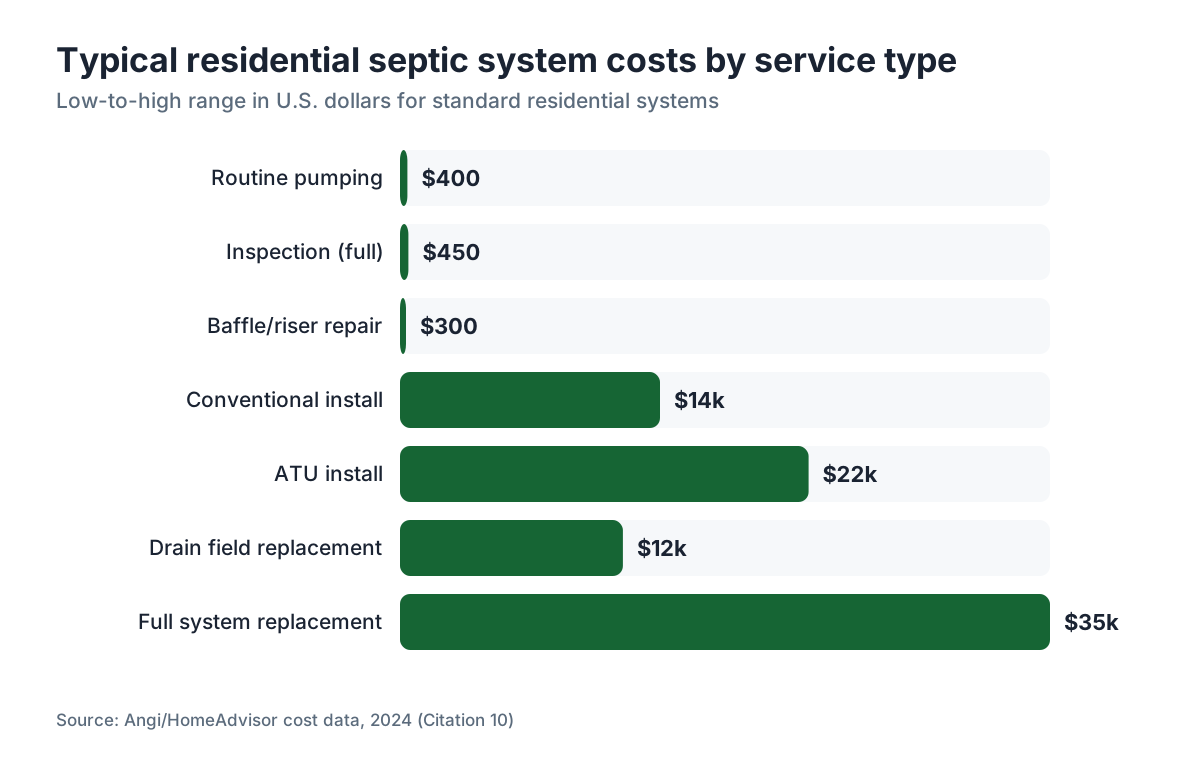
How much does it cost to install and maintain a septic tank for wastewater treatment?
Installation runs roughly $3,000 to $25,000, and routine pumping costs $250 to $600 every few years. National averages hide a lot, so here are the honest ranges the industry consistently reports.
Installation: A conventional gravity-fed system (tank plus drain field, all permits and labor) runs roughly $3,000 to $10,000 in low-cost rural areas and $10,000 to $25,000 in higher-cost regions or tough soil. An ATU adds $5,000 to $15,000. Mound systems on hard sites can push totals to $20,000 to $40,000 or more [10]. See the full breakdown at cost to put in a septic tank and septic tank installation.
Pumping: Professional septic tank pumping typically costs $250 to $600 for a standard residential tank, depending on tank size, access, and local labor rates. At an interval of every three to five years, that's a lifetime maintenance cost that's easy to swallow compared to the repair and replacement bills that follow skipped pumping.
Inspection: A basic inspection runs $100 to $300. A full inspection with a camera run through the lines and load testing runs $300 to $600 or more.
Repair: Replacing a broken baffle or riser costs $100 to $500. Replacing a failed drain field is where costs jump: $5,000 to $20,000 depending on size and system type. Full system replacement can reach $30,000 to $50,000 on hard sites.
The math is simple. Pump every four years at $400 and you spend roughly $5,000 over 50 years. Skip pumping for 15 years and destroy the drain field, and you spend $10,000 to $30,000 on replacement, usually with no warning and a torn-up yard.
How do you maintain a septic system to keep wastewater treatment working long-term?
The maintenance list is short. The hard part is doing it consistently over decades. Five habits carry almost all the load.
Pump on schedule. Every three to five years for most households. Track the date, keep the receipt, save the records. Some counties want proof of pumping at sale.
Protect the drain field. No vehicles, no structures, no deep-rooted plantings over the field or tank. Shallow-rooted grass is fine and actually helps with evapotranspiration.
Conserve water. Fix leaks fast. A running toilet can waste 200 gallons a day, which constantly dilutes the tank and blocks proper settling. High-efficiency toilets and fixtures cut the hydraulic load.
Watch what goes in. The rule: if it isn't human waste or toilet paper, it doesn't get flushed. Keep a waste basket in every bathroom.
Know your system. Find your tank and drain field, mark the lids, keep a site diagram. You'll need all of that for every service call.
Get inspections. A professional inspection every three to five years (often timed with pumping) catches baffle deterioration, inlet pipe damage, and early drain field stress before they snowball into expensive failures. The full septic tank cleaning and septic tank emptying processes are laid out in those linked guides.
Homeowners who want to track pumping dates, inspection records, and system details digitally can use SepticMind's homeowner tools to store service history and get reminders when maintenance is due.
The single most protective thing you can do is know your system and refuse to ignore it for years. Most catastrophic septic failures didn't happen overnight. They built up quietly while the owner assumed everything was fine.
Frequently asked questions
How does a septic tank treat wastewater differently from a municipal treatment plant?
A septic tank handles primary treatment (settling and anaerobic digestion) and hands secondary treatment to the soil. Municipal plants add mechanical aeration, chemical treatment, clarifiers, and disinfection stages. A well-maintained septic system reaches comparable pathogen removal through soil filtration for a single household, but removes far less nitrogen and phosphorus than an advanced municipal plant.
Can a septic tank treat all types of household wastewater, including greywater?
Yes. In a conventional system, all household wastewater (blackwater from toilets plus greywater from sinks, showers, and appliances) flows to the septic tank together. Some states allow greywater to be diverted to a separate, simpler system. Those systems are permitted on their own and aren't appropriate for toilet waste. Check your state code before installing any greywater diversion.
What happens to the wastewater after it leaves the septic tank?
Effluent flows by gravity (or by pump in a pressure-dosed system) to the drain field, where it spreads through perforated pipes into gravel and then into native soil. Soil particles filter suspended solids, and soil bacteria process the remaining pathogens and nutrients. Treated water eventually percolates into groundwater. The quality of that final effluent depends heavily on soil type and the condition of the tank.
How do I know if my septic tank is still treating wastewater properly?
Signs of proper function: all drains flow freely, no sewage odors indoors or near the drain field, no wet spots over the field, and clear water test results if you have a nearby well. Signs of trouble: slow drains throughout the house, soggy ground over the drain field, and sewage backup in lower fixtures. A professional inspection and water test every few years gives you objective data.
Do septic tanks work in cold climates, or does freezing stop the wastewater treatment process?
Septic tanks work in cold climates, including Minnesota, Maine, and Canada. The soil and the liquid volume inside the tank provide insulation, and a properly sized, regularly used system rarely freezes. Risk factors: low water use during cold snaps (vacation homes), thin soil cover over pipes, and new installs before the ground insulates. Snow cover over the drain field actually helps insulate it.
Is a septic tank safe near a private well?
Yes, with proper setbacks. Most state codes require a minimum 50 to 100 feet between a septic tank and a drinking water well, with greater distances for drain fields. The exact requirement depends on soil permeability and local geology. Test your well water for nitrate and coliform bacteria every one to two years. Nitrate above 10 mg/L in your well can signal septic influence on groundwater.
What is the difference between a septic tank and an aerobic treatment unit for wastewater treatment?
A conventional septic tank uses anaerobic bacteria (no oxygen) and removes roughly 30 to 40 percent of BOD. An aerobic treatment unit (ATU) injects air, feeding faster aerobic bacteria that remove 90 to 95 percent of BOD before effluent reaches the drain field. ATUs cost more to install and maintain but are required on hard sites and produce much cleaner effluent.
Can a septic tank be too big for wastewater treatment to work correctly?
Oversizing can cause problems. If a tank is much larger than the household generates, wastewater sits so long it goes fully septic (anaerobic throughout) and settled sludge can resuspend. More often, very low flow leaves too little warm water in the tank in cold climates, which slows biological activity. For most households, sizing to code and slightly above is the right call. Extreme oversizing rarely pays off.
What septic tank treatments are safe to use without disrupting the wastewater treatment process?
The EPA recommends against adding biological or chemical additives to a properly functioning tank; the existing bacterial community handles the work. For RV and camper holding tanks, enzyme-based camper septic tank treatment products are reasonable for odor control and solids breakdown before dumping. In a residential septic tank, the best treatment is pumping on schedule and keeping harmful inputs out.
How much of the U.S. population depends on septic tanks for wastewater treatment?
About 21 million U.S. households rely on septic or other onsite wastewater systems, roughly one in five homes nationwide according to the EPA's SepticSmart program. The concentration is highest in rural and suburban areas where municipal sewer doesn't reach. That works out to roughly 60 to 70 million people depending on onsite systems for their wastewater treatment.
Do septic tanks need to be inspected when selling a home?
Requirements vary by state and county. Many jurisdictions require a septic inspection as a condition of sale or title transfer. Even where it isn't legally required, a buyer's lender or home inspector will likely flag it. Failing to disclose known septic problems is a common source of post-sale litigation. Budget $300 to $600 for a thorough pre-sale inspection and fix deficiencies before listing.
What is the maximum slope or depth at which a septic tank can still treat wastewater by gravity?
Most gravity systems need a minimum slope of 1/8 inch per foot from the house to the tank, and 1/16 to 1/8 inch per foot from the tank to the drain field. Tanks usually sit 18 inches to 4 feet deep depending on frost line and site grade. When the topography blocks gravity flow, a pump chamber and dosing pump replace gravity with a pressure-dosed system.
How does rainfall or flooding affect a septic tank's wastewater treatment performance?
Saturated soil can't absorb effluent, so heavy rain or flooding can temporarily stop drain field absorption and cause backups. Floodwater can also enter the tank through damaged lids or risers, diluting the tank's biology and sending untreated wastewater toward the drain field. After a major flood, have the system inspected before use, and pump if floodwater got into the tank.
Sources
- U.S. EPA, SepticSmart Program: Roughly one in five U.S. households uses a septic or onsite wastewater system; EPA guidance on proper use, maintenance, and system components including the statement to only flush the 3 Ps.
- U.S. EPA, Onsite Wastewater Treatment Systems Technology Fact Sheet: Aerobic Treatment: Aerobic treatment units achieve 90 to 95 percent BOD removal, compared to approximately 30 to 40 percent in conventional anaerobic tanks.
- U.S. Geological Survey, Water Resources Mission Area: Elevated nitrate levels in groundwater have been documented beneath areas with high densities of older septic systems.
- U.S. EPA, How to Care for Your Septic System: Pumping every three to five years is the standard maintenance recommendation for residential septic systems.
- National Onsite Wastewater Recycling Association (NOWRA): More than 30 states had mandatory maintenance or inspection programs for onsite wastewater systems as of 2023.
- U.S. EPA, Summary of the Clean Water Act: The Clean Water Act (33 U.S.C. § 1251 et seq.) protects navigable waters from pollutants and provides the legal framework for regulating wastewater discharges.
- U.S. EPA, Safe Drinking Water Act: The Safe Drinking Water Act (42 U.S.C. § 300f et seq.) protects groundwater used for drinking water, relevant to septic systems near private wells.
- Angi, Septic System Installation Cost Data: Conventional septic system installation ranges from roughly $3,000 to $25,000 depending on region and site conditions; mound systems on challenging sites can exceed $40,000.
Last updated 2026-07-09