Septic vs sewer home value: what the research actually shows
By the SepticMind Editorial Team

TL;DR
- Homes on public sewer typically sell for 2 to 11 percent more than comparable septic homes, but the gap shrinks in rural markets where sewer access doesn't exist.
- The penalty is mostly buyer psychology and ongoing maintenance costs, not system failure.
- A well-maintained septic system on a large lot in a rural or suburban area rarely hurts value at all.
Does a septic system hurt your home's value compared to sewer?
Sometimes, and by less than most sellers fear.
Several studies have measured the gap. A widely cited analysis of Massachusetts real estate transactions found that homes connected to public sewer sold for roughly 2 to 11 percent more than otherwise comparable homes on septic, depending on the market and the specific property characteristics [1]. A similar study from Connecticut found price discounts of around 4 to 6 percent for septic homes in suburban markets where sewer was available nearby but not connected [2].
Context is everything here. In rural areas where no sewer line exists within a reasonable distance, buyers simply accept septic as the norm. There's no apples-to-apples comparison to make, and no meaningful price penalty in the data. The discount only shows up consistently when a buyer has a real choice between the two on otherwise similar properties.
The factor that matters more than most sellers realize is system condition. A failing or aging system that shows up in an inspection report knocks far more off a sale price than the mere fact of having septic. A newer system with records of regular septic tank pumping and clean inspections? Buyers price that close to neutral.
What do studies and appraisers say about the actual price difference?
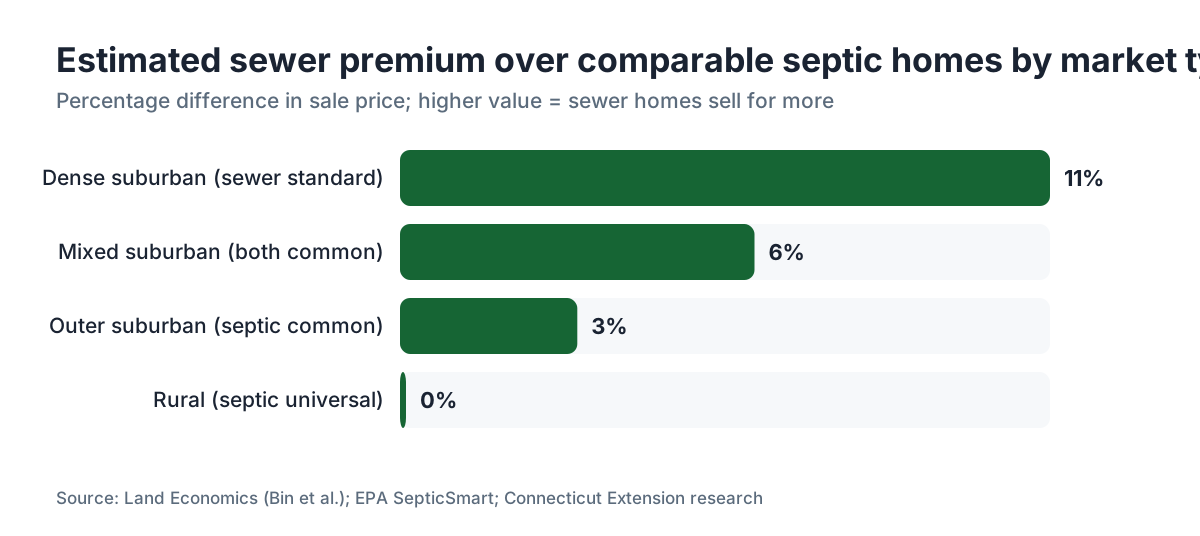
The strongest evidence comes from hedonic pricing studies, which isolate individual property characteristics and assign a dollar value to each. The Massachusetts study by Bin and colleagues, published in the journal Land Economics, estimated the sewer premium at 2 to 11 percent depending on local density and market conditions [1]. The higher end of that range showed up in denser suburban zones where sewer was the default expectation.
Appraisers handle it one of two ways. In markets where both options exist, they look for matched sales pairs and adjust accordingly. In rural markets, they often apply no adjustment at all because there are no comps to justify one.
Here's a detail most people miss. The Uniform Standards of Professional Appraisal Practice (USPAP) don't prescribe a specific line-item adjustment for septic vs sewer [10]. The actual number is appraiser judgment, and it varies a lot. If this question matters to your appraisal, ask the appraiser directly how they're handling it and whether they have local comp data behind the adjustment.
The National Association of Realtors doesn't publish a single national figure, and nobody should trust one anyway. A two-acre lot in rural Vermont and a half-acre lot in northern Virginia are not the same problem.
Does sewer vs septic affect your home's value differently by location?
Yes, and location is probably the single biggest variable.
In dense suburban and urban fringe markets, public sewer is the expectation. Buyers see septic as an anomaly and worry about future costs even when the system is in perfect shape. The price gap in these markets tends to sit toward the higher end of the research range, 6 to 11 percent in some estimates [1].
In rural markets, the dynamic flips. Buyers expect septic. Many grew up with it or already own a rural property. The absence of sewer infrastructure isn't a defect. Studies consistently find little to no measurable price penalty in these markets.
There's a third category that trips people up: areas where municipal sewer is physically available but the homeowner hasn't connected. Some jurisdictions require connection when sewer becomes available within a certain distance, and the cost to connect (often $5,000 to $30,000 or more depending on how far the line runs) can become a negotiating point in a sale [3]. Buyers and their agents know to check for that.
State regulations matter too. Some states trigger mandatory inspection and possible upgrade requirements at a property sale. Those rules can push septic to the front of a transaction. Check your state's onsite wastewater code for specifics; the EPA maintains a directory of state programs [4].
How does maintenance cost factor into the home value comparison?
Buyers who've done their homework think about long-term operating costs, more than purchase price. That's where sewer vs septic gets interesting.
Septic owners avoid monthly sewer bills, which in many municipalities run $40 to $100 per month, often $500 to $1,200 per year [5]. Against that, they pay for a septic tank pump out every 3 to 5 years (typically $300 to $600) plus periodic septic tank inspection costs. The EPA's SepticSmart program notes that a well-maintained septic system can last 25 to 30 years and that regular pumping is the single most cost-effective maintenance step [4].
The math often favors septic on an annual basis, especially in markets with high sewer rates. The risk picture is different though. Sewer users almost never face a $10,000 to $30,000 system replacement bill. Septic owners can. Drain field failures are the expensive failure mode, and they're not rare in systems older than 25 to 30 years. See our leach field guide for what goes wrong and what it costs to fix.
Sharp buyers account for this asymmetry. They're not necessarily scared of septic, but they want to know the system's age, when it was last pumped, and whether a recent inspection turned up anything. A seller who can hand over 10 years of service records is in a far stronger position than one who shrugs and says "I think it's fine."
For operators managing multiple client properties, tracking service history across a portfolio is exactly the kind of task where software like SepticMind pays for itself quickly. Different conversation, though.
How much does it cost to connect a septic home to public sewer?
This is one of the most common follow-up questions buyers ask, and the range is genuinely wide.
A straightforward connection where the sewer main runs right in front of the property and the house plumbing doesn't need major rerouting can cost $5,000 to $10,000. That's the best case. If the property is set back from the road, has difficult terrain, or needs a grinder pump for a below-grade connection, costs can reach $20,000 to $30,000 or higher [3].
Many municipalities also charge a one-time connection fee or tap fee on top of the physical work. That fee ranges from a few hundred dollars to several thousand, and it varies dramatically by jurisdiction.
A buyer looking at a septic home in a sewer-available area needs three numbers: Is connection required now or within a set time frame? What's the current tap fee? And what's the estimated physical connection cost given the specific property layout? Together those three answers decide whether connection is a near-term budget item or a distant concern.
For reference, the cost to install a new septic system from scratch typically runs $10,000 to $30,000 depending on system type and soil conditions. So maintaining and eventually replacing a septic system is sometimes competitive in total lifetime cost with paying connection fees plus ongoing sewer bills.
Does a failing or old septic system hurt home value more than just having septic?
Dramatically more. This is the distinction that decides an actual transaction.
A system in good condition, recently pumped and inspected, with documentation, barely moves the needle in most markets. A system that shows obvious signs of failure, or one where the septic tank inspection reveals cracks, a failing leach field, or a tank that hasn't been pumped in 15 years, can kill a deal or force a $10,000 to $30,000 price concession.
Most states require or strongly encourage a septic inspection during a real estate transaction. Some mandate it. If you're selling and haven't serviced the system in several years, getting a septic tank pump out and inspection before listing is almost always worth the $400 to $800 it costs. Buyers who find problems during their own inspection use them as a bargaining chip. Sellers who disclose a freshly serviced, clean system take that chip off the table.
Age matters too. A conventional system installed in the 1970s or 1980s is near the end of its expected service life, and buyers and agents know it. A system from the early 2000s or newer, properly maintained, is much less of a concern. If you're buying an older property, ask specifically about the installation date and the most recent septic tank inspection. If the seller can't answer both questions, budget for a professional inspection before you close.
Septic vs sewer: a direct cost and value comparison
The table below compares the two utility types across the factors that matter most in a home purchase or sale. Ranges reflect real variation across U.S. markets. No single number applies everywhere.
| Factor | Public sewer | Septic system |
|---|---|---|
| Typical annual utility cost | $500 to $1,200/yr [5] | $0 (no monthly bill) |
| Routine maintenance cost | None (utility responsibility) | $75 to $150/yr amortized pumping [4] |
| Major repair/replacement risk | Very low (utility handles mains) | $10,000 to $30,000 drain field or system [6] |
| Required inspections at sale | Rarely | Often required or expected [4] |
| Sale price premium vs comparable | Baseline | 2 to 11% lower in suburban markets [1] |
| Connection cost if switching | N/A | $5,000 to $30,000+ [3] |
| System lifespan (maintained) | Infrastructure dependent | 25 to 30+ years [4] |
| Rural market price impact | N/A | Minimal to none |
No table fully captures this. The real calculation depends on local sewer rates, local real estate norms, system age, and how long you plan to own. A buyer staying 3 years sees this very differently from one staying 20 years.
Can you use a septic vs public sewer property value estimator?
Several real estate platforms and appraisal tools try to quantify the sewer vs septic value difference. Zillow's automated valuation model (AVM) factors in utility type as one input among many, though Zillow hasn't published the specific coefficient it uses. HomeLight and similar buyer-agent platforms often cite the 2 to 11 percent range from academic literature without further refinement.
Here's the honest answer: no online calculator gives you a reliable dollar figure for your specific property. The academic studies are good evidence that a gap exists and roughly how big it is, but they're population-level estimates. Your property's location, the age and condition of the system, local market conditions, and how much sewer infrastructure sits nearby all matter more than any average.
For a real estimate, you want a local appraiser who has run recent comparable sales in your area. A good buyer's agent or listing agent with years of local experience is also useful. Ask them one question: in the last 12 months, have septic homes sold at a consistent discount to sewer homes in this neighborhood? That answer beats any estimator.
SepticMind's resource library includes maintenance and inspection record tools to help you document your system's history, which is the one thing that concretely moves the needle when you sell.
Do mortgage lenders and FHA/VA loans treat septic differently than sewer?
Yes, and buyers sometimes get caught off guard by it.
FHA loans carry specific property condition requirements that include the septic system. The FHA requires that the system be adequate to serve the property and not create a nuisance or health hazard, and it may require an inspection if there are visible signs of problems or if the local health authority requires one [7]. A system that fails inspection can make the property ineligible for FHA financing until repairs are done.
VA loans set similar rules. The VA Lender's Handbook specifies that the wastewater system must comply with local regulations and that the appraiser must note any evidence of failure or inadequate capacity [8].
Conventional loans under Fannie Mae and Freddie Mac guidelines are somewhat more flexible but still require the appraiser to note if the septic system appears inadequate or failing.
For sellers, this means a problem system doesn't just affect what a cash buyer might pay. It affects whether financed buyers can purchase at all. A system that fails an FHA inspection requirement can wipe out a large share of the buyer pool unless the seller fixes it first. Septic system repair before listing, rather than after a failed inspection, gives sellers much more control over both the outcome and the cost.
What should home buyers ask about a septic system before making an offer?
If you're buying a home with septic, ask these questions before you make an offer, or at minimum before you waive your inspection contingency.
First: When was the system installed, and do you have the permit and as-built diagram? The as-built shows where the tank and drain field sit, which matters for any future addition or landscaping.
Second: When was it last pumped, and do you have the service record? A system that hasn't been pumped in 10 years is a yellow flag. One with no records at all is a red flag. See our guide on how often to pump a septic tank for standard intervals.
Third: When was the last inspection, and what were the findings? A clean report from the past year or two is genuinely reassuring.
Fourth: Any history of backups, slow drains, or wet spots over the drain field? Sellers are typically required to disclose known defects in most states.
Fifth: Is connection to public sewer required or anticipated? Some municipalities run active extension programs or mandatory connection ordinances that could add cost for a future owner.
Then hire your own licensed inspector or engineer to inspect the system independently. Don't rely on the seller's records alone. A full inspection including a pump-out and visual check typically costs $300 to $600, which is cheap insurance on a $400,000 asset [4].
Should you connect to sewer if you have the option?
This is a genuinely close call for many homeowners, and the right answer depends on a few things.
If your septic system is aging or has had problems and sewer is available, connection is worth serious thought. You're swapping a depreciating, potentially expensive asset for a utility relationship. You eliminate the risk of a $15,000 drain field repair, and you may make the property easier to sell in certain markets.
If your system is newer, in good condition, and well maintained, the math is less favorable. You'd pay $5,000 to $30,000 in connection costs plus start monthly sewer bills to retire a system that isn't costing you much. The lifetime comparison often doesn't favor connecting in that scenario.
Market expectations matter too. In a neighborhood where nearly every other home is on sewer and buyers expect it, connection may genuinely affect your sale price and buyer pool. On a large rural lot where septic is universal, there's no selling advantage to connecting even if a line is theoretically available.
One thing to check: some jurisdictions offer low-interest loan programs for septic-to-sewer conversion, especially in areas with water quality concerns around aging systems. The EPA and state environmental agencies sometimes administer these. Worth a call to your local health department or environmental agency before assuming you're paying full cost out of pocket [9].
How does the EPA's SepticSmart program describe the value of proper septic maintenance?
The EPA's SepticSmart initiative, run through the Office of Water, frames septic maintenance mainly as an environmental and public health issue, but the financial angle is real. The program states that regular septic system maintenance can save homeowners thousands of dollars in repair costs over the life of a system, and that a well-maintained system can last 25 to 30 years [4].
The EPA recommends four core practices: inspect and pump regularly (every 3 to 5 years for most household sizes), use water efficiently to avoid overloading the system, dispose of waste properly by keeping harmful items out of the drains, and protect the drain field by not driving over it or planting trees near it [4].
Those aren't suggestions that only apply to environmentalists. They're the same practices that keep a system out of inspection reports, out of buyer negotiations, and out of the expensive failure category. A homeowner who follows them consistently for 20 years almost never faces the dramatic price penalty that a neglected system creates.
For a full picture of what proper care looks like year to year, our septic tank cleaning and how often to pump a septic tank guides cover the practical schedule in detail.
Frequently asked questions
How much does septic vs sewer affect home resale value on average?
Research from Massachusetts and Connecticut real estate markets puts the sewer premium at roughly 2 to 11 percent in suburban areas where both options exist. In rural markets where septic is universal, the measured gap is close to zero. System condition matters as much as the utility type itself: a well-maintained system with inspection records prices near-neutral in most markets.
Will having a septic system make my house harder to sell?
In most markets, no. Septic is normal and expected in rural and many suburban areas. Septic creates real friction in three situations: when the system is old or has visible problems, when neighboring comparable homes are all on sewer, or when FHA or VA buyers hit a system that fails the lender's condition requirements. A recent pump-out and clean inspection report removes most of that friction.
Do buyers pay less for homes with septic tanks?
Sometimes. Hedonic pricing studies find a 2 to 11 percent discount in suburban markets where sewer is available and septic is the exception. In rural markets, no consistent discount appears in the data. The discount is largest when the system is old, uninspected, or in a market where buyers have easy sewer-connected alternatives to compare.
Is it worth connecting to public sewer to increase home value?
Only in specific situations. If your system is aging or has had problems and sewer is available at reasonable connection cost ($5,000 to $15,000), connection may improve marketability and remove a buyer concern. If your system is newer and well maintained, the connection cost plus future sewer bills rarely pencil out as a value-add. A local agent with recent comp data is the right person to answer this for your neighborhood.
How do appraisers value a home with a septic system vs sewer?
Appraisers use matched comparable sales to estimate any adjustment. In suburban markets with mixed utility types, they can usually find comps and assign a dollar adjustment. In rural markets where all comps are on septic, they make no adjustment because there's no basis for one. The adjustment is appraiser judgment, not a fixed formula, so it varies meaningfully between appraisers in the same market.
Can you get an FHA loan on a home with a septic system?
Yes. FHA does not prohibit septic homes. It does require that the system be functional and not pose a health hazard. If the appraiser observes signs of failure or the local health authority requires inspection, FHA may condition the loan on a passing septic inspection. A seller with a known problem system should repair it before listing to avoid losing FHA-eligible buyers.
Does septic tank age affect home value?
Yes, meaningfully. A system from the 1970s or 1980s is near or past its expected service life of 25 to 30 years and raises legitimate concerns for buyers. A system installed in the 2000s or later with maintenance records is much less of a worry. Age alone doesn't determine condition, but buyers and agents treat an older system as a risk factor that warrants a fresh inspection before closing.
What is the typical cost to connect a septic home to public sewer?
Costs vary widely. A simple connection with the sewer main at the curb and straightforward plumbing runs $5,000 to $10,000. Properties with long runs, difficult terrain, or below-grade drainage requiring a grinder pump can reach $20,000 to $30,000 or more. Municipal tap fees add several hundred to several thousand dollars on top of the physical connection cost, depending on the jurisdiction.
Are there rural vs suburban differences in how septic affects property value?
Yes, and this is probably the most important variable. In suburban markets where sewer is standard and nearby comps are all connected, the septic discount is measurable and real. In rural markets where septic is universal, there are no sewer-connected comps to compare against, and studies find little to no consistent price penalty. The discount is a function of buyer expectations and alternatives, not the technology itself.
Do real estate agents disclose septic system issues during a sale?
Sellers and their agents are generally required to disclose known material defects, and a failing or recently failed septic system clearly qualifies. What varies by state is whether a septic inspection is required at sale and whether the seller must provide documentation of system condition. Some states mandate inspection; others leave it to buyer due diligence. Check your state's onsite wastewater regulations and disclosure requirements.
How can I find out if my area requires connecting to sewer when it becomes available?
Call your local municipal utility or county health department and ask directly. Many municipalities have connection ordinances that require hookup within a set period (often 1 to 3 years) after a sewer main is installed within a certain distance of the property. Your state's environmental or health agency website may also have this information. Worth checking before buying in an area with active sewer expansion.
How does a septic system inspection affect a home sale?
A clean inspection report is a genuine asset. It removes the biggest concern buyers have, which is unknown future cost. A failing inspection creates a negotiation, a price reduction, or a repair requirement before closing. Getting an inspection done before listing, rather than during the buyer's due diligence period, gives the seller control over timing and cost. An inspection typically runs $300 to $600 including a pump-out.
Sources
- Land Economics, Bin et al., 'Septic Systems and Residential Property Values': Homes connected to public sewer sold for roughly 2 to 11 percent more than comparable septic homes in Massachusetts real estate markets
- University of Connecticut Extension, Onsite Wastewater Property Value Research: Connecticut studies found price discounts of approximately 4 to 6 percent for septic homes in suburban markets where sewer was available nearby
- U.S. Environmental Protection Agency, Septic Systems Overview: Costs to connect a septic property to public sewer range widely depending on property distance from the main and local tap fees
- U.S. EPA, SepticSmart Program: The EPA SepticSmart program states a well-maintained septic system can last 25 to 30 years and that regular maintenance can save homeowners thousands in repair costs
- Water Environment Federation, Household Wastewater Costs: Municipal sewer bills typically run $40 to $100 per month in U.S. markets, or $500 to $1,200 per year
- U.S. EPA, Septic Systems Overview: Drain field or full system replacement for a failed septic system typically costs $10,000 to $30,000
- U.S. Department of Housing and Urban Development, FHA Single Family Housing Policy Handbook 4000.1: FHA requires that the septic system be adequate to serve the property and not create a nuisance or health hazard; a failing system can make the property ineligible for FHA financing
- U.S. Department of Veterans Affairs, VA Lenders Handbook (VA Pamphlet 26-7): VA loan requirements specify that the wastewater system must comply with local regulations and that appraisers must note any evidence of failure or inadequate capacity
- U.S. EPA, Clean Water State Revolving Fund: The EPA and state environmental agencies administer low-interest loan programs for septic-to-sewer conversion in areas with water quality concerns
- National Association of Realtors, Uniform Standards of Professional Appraisal Practice reference: USPAP does not prescribe a specific appraisal adjustment for septic vs sewer; the adjustment is appraiser judgment based on local comparable sales
Last updated 2026-07-10