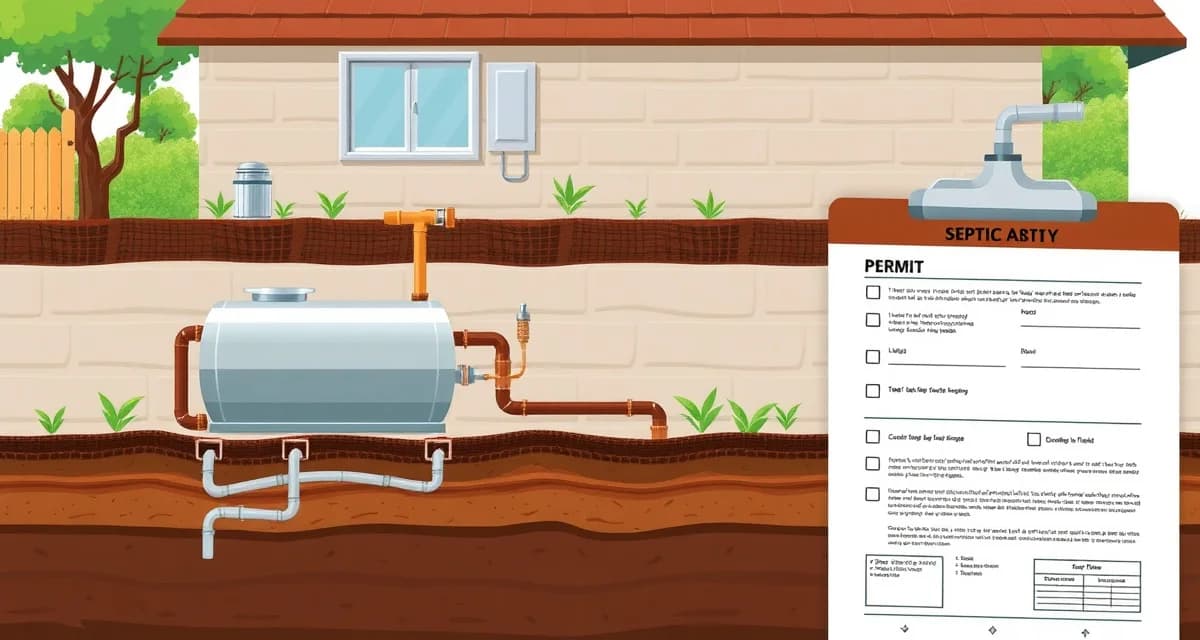
Septic Permit Requirements in Orange County California
By the SepticMind Editorial Team
Orange County has approximately 45,000 private septic systems in unincorporated areas, and the county's coastal and watershed protection areas have additional OWTS setback requirements beyond standard California minimums. For property owners and contractors working on onsite wastewater treatment systems in unincorporated Orange County, the Orange County Health Care Agency's Environmental Health Division manages the OWTS permit program.
TL;DR
- Septic Permit Requirements In Orange County septic permit requirements include specific application forms, fee schedules, and review timelines that differ from neighboring counties.
- Installation, repair, and inspection permits in Septic Permit Requirements In Orange County are administered by the county health or environmental department.
- Site evaluation or soil testing is typically required before a Septic Permit Requirements In Orange County installation permit is issued.
- Permit fees and review timelines in Septic Permit Requirements In Orange County are best confirmed directly with the county office, as they change more frequently than state regulations.
- Operating without a required county permit can result in stop-work orders, fines, and mandatory removal of unpermitted work.
- Tracking Septic Permit Requirements In Orange County permit applications, status, and expirations is easier with a purpose-built permit management platform.
California OWTS Policy and Orange County's LAMP
California's State Water Resources Control Board OWTS Policy, adopted in 2013, established statewide minimum standards for the siting, design, operation, and maintenance of onsite wastewater treatment systems. Counties implement this policy through Local Agency Management Programs (LAMPs) that meet or exceed state requirements.
Orange County's LAMP, administered by the Health Care Agency, establishes the specific requirements for OWTS in unincorporated Orange County. The LAMP reflects Orange County's particular water quality concerns, including the county's proximity to the Pacific Ocean, sensitive coastal watersheds, and groundwater basins that serve municipal water supplies.
SepticMind maps Orange County Health Care Agency OWTS permit requirements and coastal protection rules within the California OWTS Policy framework.
Water Quality Sensitivity in Orange County
Orange County's unincorporated areas include parts of the Santa Ana Mountains, Canyons, and coastal foothills that drain to sensitive water bodies. Several factors make water quality protection particularly significant in Orange County OWTS permitting:
Coastal proximity: Orange County's coastal watersheds drain to beaches and nearshore ocean areas used for recreation. Septic failures in areas draining to these watersheds can affect coastal water quality and trigger beach advisories.
Groundwater basins: Much of Orange County's municipal water supply comes from the Orange County Groundwater Basin. OWTS in recharge areas of this basin are subject to heightened scrutiny to protect groundwater quality.
Santa Ana Regional Water Quality Control Board: The Santa Ana RWQCB has jurisdiction over most of inland and coastal Orange County and may impose additional requirements for OWTS in areas of water quality concern.
Malibu/Coastal Commission areas: Properties in the coastal zone may also face California Coastal Commission review requirements for OWTS.
OWTS Permit Requirements in Orange County
New Installation Permit: Required for all new OWTS on unincorporated Orange County properties without municipal sewer access. The application process includes a site investigation, soil evaluation or percolation testing, engineering review for many system types, and Health Care Agency permit issuance.
Repair and Modification Permits: Required for significant repairs or modifications to existing systems.
Septic System Abandonment: When connecting to sewer, proper OWTS abandonment and permit closure is required.
Site Investigation and Design Requirements
Orange County's OWTS permit process requires a thorough site investigation before permit approval:
- Soil evaluation to assess texture, structure, drainage, and depth to limiting conditions
- Depth to seasonal high groundwater or restrictive layers
- Setback compliance from wells, water bodies, property lines, and structures
- Assessment of system area requirements for the proposed use
For many Orange County sites, particularly in the hillside and canyon areas, engineering design is required and may include involvement of a registered civil or environmental engineer.
Common System Types
The varied terrain of Orange County's unincorporated areas includes canyon properties, hillside locations, and valley floor sites with different soil and drainage characteristics:
Conventional systems: For sites with adequate soils, setbacks, and depth to groundwater.
Alternative and engineered systems: Mound systems, pressure distribution, and other approaches for sites where conventional installation isn't feasible.
ATUs with enhanced dispersal: In water quality sensitive areas, aerobic treatment units providing higher treatment quality before dispersal may be required.
Holding tanks: For sites where no dispersal system can be permitted, typically in very sensitive locations.
Get Started with SepticMind
County-level septic permits have specific requirements and timelines that differ from state baseline rules. SepticMind tracks county permit data with forms, fee schedules, and review timelines so you can prepare the right documents before you apply. See how permit tracking works.
Frequently Asked Questions
What does Orange County require for OWTS permits in unincorporated areas?
Orange County Health Care Agency requires an OWTS permit for all new installations and significant repairs or modifications to existing systems in unincorporated county areas. Applications require a site investigation report covering soil evaluation results, percolation testing where applicable, setback measurements, and a system design appropriate for the site conditions. Many Orange County sites require engineering-level design prepared by a registered civil or environmental engineer. The Health Care Agency reviews the application under Orange County's LAMP and the California OWTS Policy. After approval, installation must be performed by a licensed contractor, and HCA inspects the completed system. Additional requirements may apply in water quality sensitive areas near coastal watersheds or groundwater recharge zones.
Are there additional OWTS requirements for Orange County properties near the coast?
Yes. Properties in Orange County that drain to coastal watersheds, are within the California Coastal Zone, or are near water bodies monitored by the Santa Ana RWQCB may face additional requirements beyond the standard LAMP. Coastal zone properties may require California Coastal Commission review as part of the permitting process. Properties near sensitive water bodies may be required to use higher-treatment systems like ATUs rather than conventional septic. Setback requirements from surface water and drainage courses may be more stringent in these areas. Identify your property's location relative to coastal zone boundaries, RWQCB sensitive area designations, and watershed protection areas early in the permit planning process.
Does SepticMind include Orange County HCA OWTS documentation requirements?
Yes. SepticMind maps Orange County Health Care Agency OWTS requirements within the California OWTS Policy framework. Orange County property owners and licensed professionals can track permits, system type, maintenance schedules, and compliance history in SepticMind. For properties with ATUs or systems under Santa Ana RWQCB monitoring conditions, SepticMind tracks required maintenance and reporting obligations. The platform generates service reminders aligned with Orange County LAMP maintenance standards. For professionals managing multiple OWTS properties across Orange County's diverse unincorporated areas, all permits and compliance records are organized under one account with current status visible for each property.
What is required to apply for a septic installation permit in Septic Permit Requirements In Orange County?
A Septic Permit Requirements In Orange County septic installation permit application typically requires the property address, parcel information, a site plan showing the proposed system location relative to the house and property lines, soil evaluation results, and the contractor's license number. Some counties require the site plan to be prepared by a licensed engineer or soil scientist. Confirm the specific requirements with the Septic Permit Requirements In Orange County health or environmental department before submitting, as incomplete applications are a common cause of review delays.
How long does permit review take in Septic Permit Requirements In Orange County?
Permit review timelines in Septic Permit Requirements In Orange County vary depending on application volume and whether additional documentation or site visits are required. Simple repair permits may be approved within days; new installation permits requiring soil evaluation and engineering review can take four to eight weeks or longer. Real estate transactions with permit requirements should allow adequate lead time. Contact the Septic Permit Requirements In Orange County permitting office directly for current processing times before committing to a project timeline or closing date.
Try These Free Tools
Sources
- National Onsite Wastewater Recycling Association (NOWRA)
- US EPA Office of Wastewater Management
- NSF International
- Water Environment Federation
- National Environmental Services Center (NESC)