Septic vs sewer: which system costs less and works better for you
By the SepticMind Editorial Team
TL;DR
- A septic system treats wastewater on your own property with a tank and drain field.
- Public sewer pipes it to a city plant.
- Septic costs less upfront in rural areas ($3,000 to $15,000 installed) but needs pumping every 3 to 5 years.
- Sewer runs $10,000 to $30,000+ to connect, then monthly fees forever.
- Location, lot size, and soil type usually decide for you.
How do septic systems and public sewer actually work?
A septic system is self-contained. Wastewater leaves your house and flows into a buried tank, usually 1,000 to 1,500 gallons for a three-bedroom home, where solids settle to the bottom as sludge and lighter material floats up as scum. The clarified liquid in the middle, called effluent, drains out to a leach field, a network of perforated pipes buried in gravel trenches. Soil bacteria do the final treatment before the water reaches the groundwater table [1].
Public sewer is a network of pipes, usually gravity-fed with pump stations where the terrain demands them, carrying wastewater from a whole neighborhood to one treatment plant. The plant does everything: solids removal, biological treatment, disinfection, and discharge to a waterway or reuse program. You hand the responsibility to the city and pay a monthly fee for it [2].
The core difference is control. Septic owners own the infrastructure. Sewer customers buy a service. That one distinction drives almost every cost and maintenance difference that follows.
What does it cost to install a septic system vs connect to sewer?
Installation costs swing hard on soil type, system complexity, local permit fees, and contractor rates. Real ranges still exist.
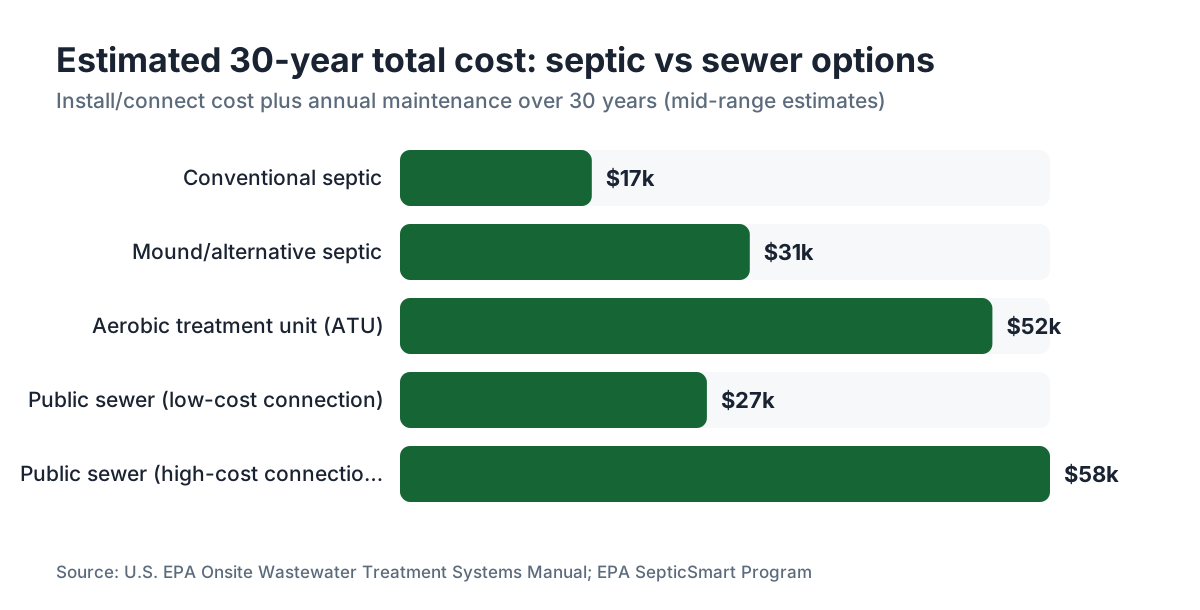
A conventional gravity-fed septic system runs $3,000 to $15,000 installed, with the national average around $7,000 to $9,000 depending on tank size and drain field length [3]. Alternative systems, like mound systems used when soil is too shallow or clay-heavy, run $10,000 to $20,000. Aerobic treatment units (ATUs), required in some states with poor soil or sensitive waterways, can reach $15,000 to $30,000.
Connecting to a public sewer line is a different animal. If the city is extending a new main down your street, you may face a special assessment or connection fee of $10,000 to $30,000 or more, and that's before you pay a plumber to run the lateral from your house to the main. EPA guidance notes that rural sewer extension projects routinely exceed $20,000 per household once you count the lateral and the assessment [2]. Monthly sewer bills then add $30 to $100+ depending on the utility and your water use.
See the cost to install septic system and cost to put in a septic tank pages for region-specific breakdowns.
| System | Typical install or connect cost | Ongoing annual cost |
|---|---|---|
| Conventional septic | $3,000, $15,000 | $150, $400 (pumping amortized) |
| Mound/alternative septic | $10,000, $25,000 | $200, $600 |
| Aerobic treatment unit | $15,000, $30,000 | $400, $1,200 (service contract) |
| Public sewer hookup | $10,000, $30,000+ | $360, $1,200 (monthly fees) |
Here's what people miss. The septic costs above are one-time capital expenses spread over a 25 to 40 year life. Sewer fees compound every single year forever. Over 30 years at $60 a month, sewer fees alone total $21,600, and that ignores rate increases.
What are the ongoing maintenance costs for septic vs sewer?
Sewer maintenance from the homeowner's side is almost nothing. You pay the bill. You call the city if a main backs up. The lateral line from your house to the main is your responsibility in most places, and root intrusion or a pipe collapse in that stretch can cost $3,000 to $10,000 to fix, but day to day it's invisible.
Septic maintenance is real and non-optional. The EPA's SepticSmart program is blunt: "Have your septic system inspected every 3 years by a licensed professional and pumped every 3 to 5 years" [1]. A 1,000-gallon tank serving a family of four hits that mark roughly every 3 years in practice. Pumping costs $250 to $600 depending on your area and access.
Alternative and aerobic systems ask for more. Their mechanical parts (air compressors, pumps, float switches) need annual or semi-annual service, and those contracts run $150 to $500 a year. Skip them and a failed aerobic system can mean a $5,000 to $15,000 repair bill.
The honest summary: a well-maintained conventional septic system costs about $200 to $400 a year averaged over its life. A sewer hookup costs $40 to $100 a month just in base fees. For most rural homeowners, septic wins on recurring cost, often by a wide margin.
For more on pumping schedules, see how often to pump septic tank.
Does a septic system or public sewer affect home resale value more?
It depends almost entirely on the market. In suburban and urban markets where every neighbor is on sewer, a septic system can be a friction point during a sale. Buyers worry about inspection findings and future pump-out costs. Some lenders require a septic inspection before approving a mortgage.
In rural markets, septic is normal and nobody blinks. A working, recently pumped system with paperwork is a selling point, not a liability. Buyers out there know sewer isn't available and wouldn't pay extra for it.
The research is thin and contradictory. A University of Georgia extension analysis found no consistent premium or discount tied to septic vs sewer in rural counties, while some Northeast suburban studies found modest discounts of 2 to 5 percent for septic homes against sewer-connected ones [4]. Nobody has cracked this cleanly.
One thing is clear. A failing or undisclosed septic system is a serious liability. A documented, working system in a rural area is neutral to slightly positive. If you plan to sell, get the septic tank inspection done before listing so you control the story.
Which system is better for the environment: septic or sewer?
Neither is universally cleaner. Both can fail badly under the wrong conditions.
A properly working septic system with good soil contact does excellent tertiary treatment. Soil particles and bacteria strip out pathogens and nutrients before the effluent reaches groundwater. The EPA says "well-sited and maintained septic systems can be protective of public health and water quality" [1]. The catch is those two words, well-maintained. The EPA estimates about one in five septic systems in the U.S. is failing or running at reduced capacity, which feeds groundwater contamination, nutrient loading in waterways, and surface seepage [1].
Municipal sewer treatment is more consistent and regulated under the Clean Water Act, with plants required to meet effluent standards before discharge [10]. But plants aren't perfect. Combined sewer overflows (CSOs) dump raw or partly treated sewage into waterways during heavy rain in older cities. The EPA's 2022 Clean Watersheds Needs Survey flagged CSOs as a continuing source of water quality impairment in urban areas [5].
In rural areas with low density and decent soil, maintained septic systems often carry a smaller footprint than building miles of new sewer pipe. Dense suburbs are a different story. Concentrated failing septic systems near water bodies can cause measurable nutrient loading, which is why many Chesapeake Bay counties have mandated sewer connections [6].
Environmental fit comes down to density, soil, distance to water, and system condition. There's no universal winner.
Can you switch from septic to sewer, or sewer to septic?
Switching from septic to sewer is possible when a municipal line sits within a reasonable distance, often 200 feet of the property line, though that varies by jurisdiction. You apply for a connection permit, pay the connection fee (which can be steep, see the cost table above), hire a plumber to run the lateral, and usually must abandon the old tank properly by pumping it out and crushing or filling it per state code [7].
Some cities require you to connect within a set number of years once sewer becomes available. Maryland, for example, has provisions in its Chesapeake Bay Critical Area law that require abandoning septic systems in certain sensitive areas [6]. Montana sits at the other end. Sewer infrastructure is sparse, so mandated conversions are rare; the Montana DEQ regulates onsite wastewater systems under ARM Title 17, Chapter 38, and leans on proper maintenance rather than forced connection [8].
Going the other way, sewer to septic, almost never happens. Most jurisdictions won't permit it unless sewer service is being discontinued, which is unusual. You'd have to install a full new system, pull permits, pass a perc test, and find room for a drain field, all on a lot that was likely built without any of that in mind.
If you're facing a mandated conversion, run the real 30-year numbers before you assume sewer is the obvious financial move.
What are the biggest risks of owning a septic system?
The biggest risk is drain field failure, and it's not a cheap fix. When the soil in a leach field gets biomat-clogged, hydraulically overloaded, or wrecked by roots or compaction, effluent can surface in the yard or back up into the house. A new drain field costs $3,000 to $15,000 depending on system type and lot conditions. In states with poor soils, a replacement field may require an alternative system running $20,000 or more [3].
The other real risks:
Groundwater contamination if a tank cracks or the drain field fails near a drinking water well. The standard minimum separation between a septic system and a private well is 50 to 100 feet depending on state code, but older systems went in without that discipline.
Backups from a full or failing tank. Neglected tanks fill with solids until there's no room left for effluent, and sewage climbs back up through the drains. Regular septic tank pumping prevents this entirely.
Tree root intrusion in the lateral or the tank inlet baffle, which causes backups and structural damage and often means septic tank repair.
None of this is inevitable. The EPA's data is clear that failed systems are overwhelmingly the ones that never got pumped or inspected. Maintenance genuinely heads off the big failures.
For a closer look at what goes wrong and how to fix it, see septic system repair.
What are the biggest risks of being on a public sewer?
The main risk is that you have no control. If the municipal main backs up, sewage can push back through your lateral into your basement. Backwater valves help but aren't required in most older homes. Rate increases are the other real risk. Sewer rates have outpaced inflation in many cities, with some utilities raising them 50 to 80 percent over the past decade.
Then there's the lateral liability. Most homeowners don't realize they own the pipe from their house to the main, usually from the property line in (rules vary). When that pipe corrodes, cracks from roots, or collapses, the bill lands on you, not the city. Cast iron and clay laterals in homes built before 1980 are reaching the end of their life across a lot of neighborhoods right now.
Sewer-connected homes also can't draw on their own treatment capacity during an emergency or an off-grid stretch. That's a small point for most people, but it matters for rural homeowners who ride out long power outages.
Day to day, sewer is lower-friction. Over the long haul, the risks are different, not zero.
How does soil type and lot size affect the septic vs sewer decision?
Soil is the quiet variable that decides this for millions of homeowners before they ever open a calculator.
A septic system needs permeable soil so effluent can percolate without surfacing or reaching groundwater. A percolation test (perc test) measures how fast water moves through the soil. Clay-heavy soils fail or force expensive engineered alternatives. Rocky shallow soils need mound systems. Sandy soils perc fast but treat less, which sometimes means a higher-spec system near water.
Lot size matters too. A conventional drain field for a three-bedroom home might need 2,000 to 4,000 square feet of usable area, plus a reserve field, and most state codes require 100 percent redundancy on that reserve. On a small, urban, or fully developed lot, there may simply be no room. That's why septic is almost entirely a rural and suburban-rural technology.
Minimum lot size for septic varies wildly by state. Some set a floor of one acre for new systems; others allow smaller lots with engineered designs. Montana DEQ's standards tie minimum lot sizes to system type and distance to water rather than one statewide number [8]. Your state's department of environmental quality or health department is the right place to check current minimums.
No soil, no space, no septic. That's the end of it.
Septic vs sewer in rural states like Montana: what's different?
Rural states with long distances between homes and little municipal infrastructure play by their own rules. In Montana, roughly 38 percent of residents rely on onsite wastewater systems, meaning septic, against a national average near 21 percent [8][9]. Public sewer just isn't economical across most of the state. Building and maintaining a main to serve ten homes spread across five miles of mountain terrain costs more than anyone will pay.
Montana DEQ regulates onsite systems under the Montana Sanitation in Subdivisions Act and its administrative rules. Those require licensed installers, site evaluations, and permits for new or substantially replaced systems [8]. The state has no universal mandate to connect to sewer when it shows up, unlike some eastern states.
For Montana homeowners, septic vs public sewer is usually a hypothetical. Septic is what you've got. The practical questions are how to maintain it, when to pump it, and what to do when it fails on a minus-20 degree January night.
Operators running large volumes of rural service calls in states like Montana lean on scheduling and routing tools to keep the maintenance cycle from slipping. SepticMind is built for exactly that kind of operational work, letting service companies track customer pump histories, fire off reminders, and dispatch efficiently across long rural routes.
See septic tank cleaning and septic tank emptying for practical guidance on the pumping side.
Which is better for a new home build: septic or sewer?
For most new rural builds, septic is the only option. If sewer isn't within reach, the real question is which type of septic system and how to size it. Get a site evaluation and perc test early, before you lock the house footprint, because the drain field location limits where you can put driveways, pools, and additions.
If both are available, run the numbers straight. Where sewer connection fees are $5,000 to $8,000 and monthly fees are $40 to $60, sewer may be the lower-friction long-term pick if you'd rather not think about maintenance. Where connection fees hit $25,000 and monthly fees run $90, a well-designed septic system almost certainly wins over 20 to 30 years.
Think about what you're building, too. A small two-bedroom cabin used a few weekends a year loads a system very differently than a four-bedroom primary home. Seasonal properties often see their drain fields last much longer thanks to lower hydraulic loading, and vacation homes can sometimes stretch between pump-outs, though the every-3-to-5-year guideline stays a safe baseline.
Worth saying plainly: a properly designed and installed septic system from a licensed contractor is reliable for 25 to 40 years. The horror stories almost always trace back to undersized systems, cut corners on soil analysis, or years of zero maintenance.
How do I know if my property already has septic or sewer?
If you just bought or are buying a property, this is a fair thing to be unsure about. A few ways to find out:
Check your utility bills. A sewer line item from a municipality or utility district means you're on sewer. No such charge usually means septic, though some HOAs bundle the fee.
Pull the county health or building department records. Permitted septic systems have installation records on file, searchable online in most states now. The record shows tank size, drain field location, and install date.
Ask the previous owner or read the property disclosure documents. In most states, sellers must disclose the wastewater system type.
Still not sure? A septic tank inspection will either find the tank or confirm there isn't one.
Knowing which system you have matters a lot for budgeting and maintenance. If you're on septic and it's never been pumped, that's the first call to make.
Frequently asked questions
Is it cheaper to own a home on septic or sewer long-term?
In most rural settings, septic is cheaper long-term. A conventional system costs $3,000 to $15,000 to install and $200 to $400 a year to maintain. Sewer connection fees run $10,000 to $30,000 plus $40 to $100 a month forever. Over 30 years at $60 a month, sewer fees alone total $21,600 before rate increases. The math favors septic in low-density areas.
Can a septic system fail and contaminate a well?
Yes, and it's a documented public health risk. A failing septic system can push pathogens and nitrates into groundwater that feeds a nearby private well. State codes set minimum separation distances, typically 50 to 100 feet, for exactly this reason. Regular inspections and pumping prevent the failures that lead to contamination. If you suspect a problem, test your well water right away.
Do septic systems smell worse than sewer connections?
A properly working septic system has no noticeable odor at ground level. Occasional outdoor smells near the tank or drain field can happen after heavy rain or when wind pushes vent gases back down. Persistent odor usually signals a problem: a full tank, a cracked baffle, or a failing drain field. Sewer-connected homes can also get sewer gas backup through dry P-traps.
How long does a septic system last compared to a sewer connection?
A well-maintained conventional septic tank lasts 25 to 40 years, and concrete tanks can go longer. Drain fields last 20 to 30 years depending on soil, loading, and maintenance. Sewer laterals in older homes (clay or cast iron) last 50 to 100 years but cost a lot to repair when they fail. The municipal infrastructure is the utility's problem. Neither system has a clear lifespan edge when both are maintained.
What happens if you flush things you shouldn't into a septic system?
Wipes, feminine products, medications, harsh chemicals, and heavy garbage disposal use all damage a septic system. Non-biodegradable solids fill the tank faster and can clog the inlet baffle or reach the drain field. Antibacterial products and bleach kill the bacteria that break down waste in the tank. EPA SepticSmart guidance specifically advises flushing nothing but human waste and toilet paper.
Can you add a bathroom or bedroom if you're on septic?
Maybe, but it takes a permit and a system evaluation. Most jurisdictions size the septic system to the number of bedrooms, not actual usage. Adding a bedroom can trigger a requirement to upgrade the tank or drain field for the higher theoretical load. Check with your county health department before any addition. Skipping the permit and then selling can create big problems at inspection.
Is a septic system or sewer better for a vacation or seasonal property?
Septic is usually the only option for rural vacation properties, and it works well for them. Lower seasonal use means less hydraulic loading, which extends drain field life. The main risk is leaving the system for months: freezing in cold climates, or missing early signs of failure. Have it inspected and pumped before a long seasonal shutdown.
Do I have to connect to city sewer if it becomes available on my street?
In many jurisdictions, yes, eventually. Some cities give homeowners 2 to 5 years after a main extension to connect. Others require connection only if the existing septic system fails. Chesapeake Bay states have stricter mandates in critical areas. Montana generally does not require connection. Check your county or municipal code for the specific rule where you live.
How much does it cost to pump a septic tank?
Pumping a standard 1,000 to 1,500 gallon septic tank costs $250 to $600 in most U.S. markets, with rural areas sometimes higher due to travel time. Tanks should be pumped every 3 to 5 years depending on household size and use. Skipping it lets solids reach the drain field, which can cause a field failure costing $3,000 to $15,000 or more. See our guide on septic tank pumping for detail.
What is a perc test and do I need one for septic?
A percolation test (perc test) measures how fast water drains through your soil, which decides whether a conventional drain field will work and how big it needs to be. You almost certainly need one for any new septic install or major replacement. A licensed engineer or soil scientist runs it. Results set the system type, and some soils fail outright, forcing an alternative system or ruling out onsite treatment.
Are there septic systems for properties where a traditional drain field won't work?
Yes. Mound systems raise the drain field above native soil when the seasonal high water table sits too close to the surface. Aerobic treatment units inject oxygen to produce cleaner effluent for slow-draining soils. Drip irrigation systems spread effluent across a wider area in tiny doses. These alternatives cost a lot more, $10,000 to $30,000 against $3,000 to $15,000 for conventional, but they make onsite treatment possible where it otherwise isn't.
Does a septic system affect what I can do with my yard?
Yes, with real restrictions. Never park vehicles or build structures over a drain field; the compaction destroys the soil structure that makes treatment work. Don't plant trees or large shrubs near the field, because roots invade the pipes. Grass over a drain field is fine and actually helps. Know and mark the tank location and field area so you don't dig into them by accident.
Is it hard to get a mortgage on a home with a septic system?
No, but some lenders require a passing septic inspection before they fund. FHA and USDA loans in particular often mandate one. If the inspection turns up problems, the seller may need to repair before closing. That's why having a recent inspection and pump-out record on hand before listing or buying is genuinely useful, more than a formality.
Sources
- U.S. EPA, SepticSmart Program: EPA recommends septic inspection every 3 years and pumping every 3-5 years; estimates one in five U.S. septic systems is failing or underperforming
- U.S. EPA, Septic Systems and Decentralized Wastewater Program: Rural sewer extension projects routinely exceed $20,000 per household including lateral and assessment; municipal sewer service billed as monthly fee
- U.S. EPA, Onsite Wastewater Treatment Systems Manual: Conventional septic install ranges and alternative/replacement system cost tiers
- University of Georgia Cooperative Extension: No consistent premium or discount attributable to septic vs sewer in rural county property value studies
- U.S. EPA, 2022 Clean Watersheds Needs Survey: Combined sewer overflows identified as continuing source of water quality impairment in urban areas
- Maryland Department of the Environment, Chesapeake Bay Critical Area Program: Maryland has provisions requiring abandonment of septic systems in certain Chesapeake Bay Critical Area zones
- U.S. EPA, How to Care for Your Septic System: Proper septic tank abandonment requires pumping and filling or crushing per state code when connecting to sewer
- Montana Department of Environmental Quality: Montana regulates onsite wastewater under ARM Title 17, Chapter 38; approximately 38 percent of Montana residents use onsite systems
- U.S. Census Bureau, American Housing Survey: Approximately 21 percent of U.S. households rely on septic or other onsite wastewater systems nationally
- U.S. EPA, Summary of the Clean Water Act: Municipal treatment plants required to meet effluent standards before discharge under Clean Water Act
Last updated 2026-07-09