Septic systems installed: costs, process, and what to expect
By the SepticMind Editorial Team
TL;DR
- A new conventional septic system costs $3,500 to $15,000 installed, with most homes landing between $6,000 and $12,000.
- Difficult sites needing mound or aerobic systems can pass $30,000.
- Price rides on tank size, soil, system type, permit fees, and local labor.
- Plan 2 to 8 weeks from permit to final inspection.
- Pump every 3 to 5 years after that.
What does it cost to have a septic system installed?
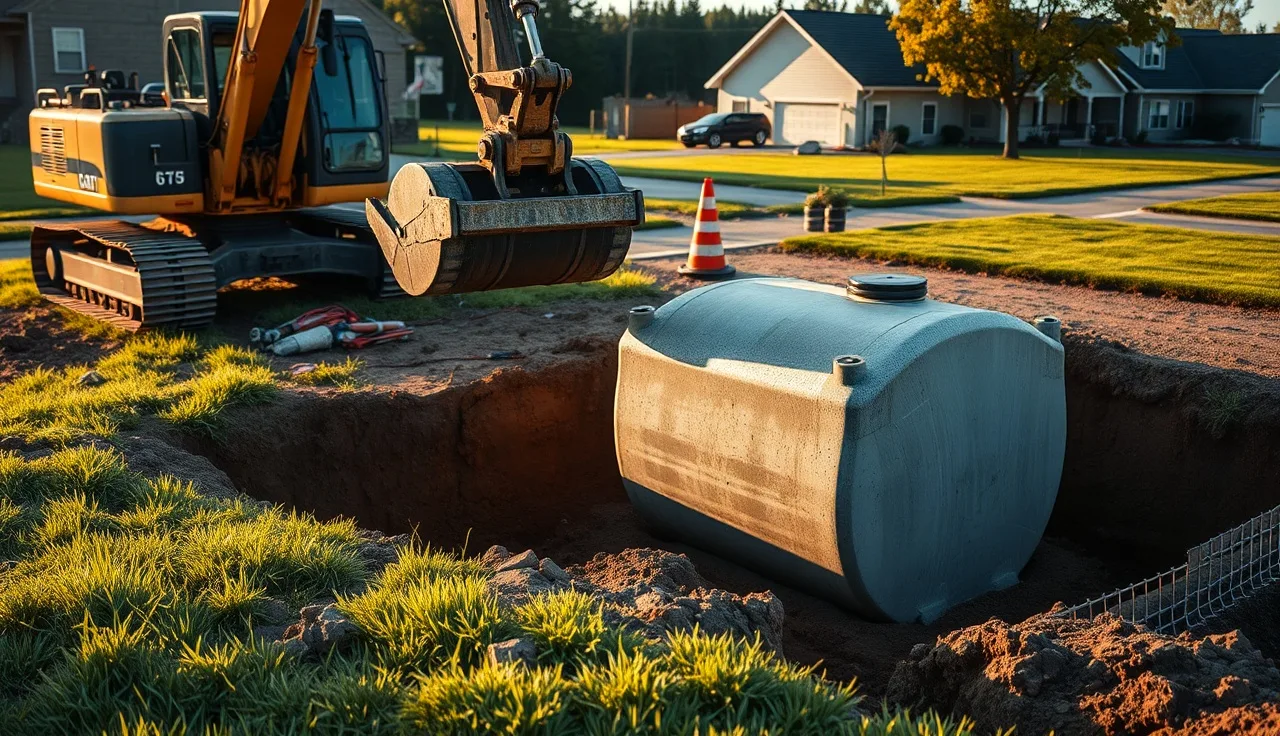
The honest national range for a conventional septic system is $3,500 to $15,000 installed, with most single-family homes between $6,000 and $12,000 [1]. That covers the tank, distribution box or manifold, drain field trenching, labor, and the soil evaluation. Permit fees add $200 to $1,500 on top, depending on your county [2].
Those numbers hide a lot of variation. A gravity-fed system on sandy, well-drained soil in a rural county hits the low end. A pressure-dosed mound on a high water table lot in New England clears $20,000. An aerobic treatment unit (ATU) with a spray field in Texas or Florida can reach $25,000 to $30,000 or more [3].
For a clean cost-to-install breakdown by system type, see cost to install septic system and cost to put in a septic tank.
Soil is the biggest variable you can't control. If the perc test or soil morphology evaluation comes back marginal, the county requires a pricier alternative system, and there's no arguing your way out. The health department sets the rules, and those rules run straight through the state onsite wastewater code [2].
What are the main types of septic systems and how do prices differ?
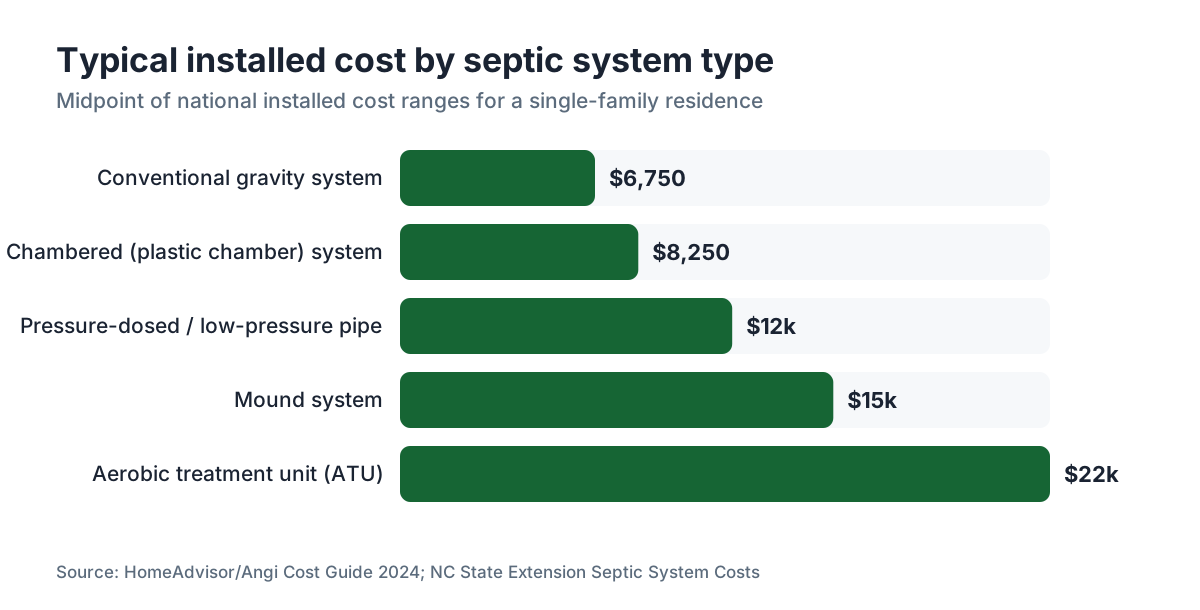
System type is the second biggest cost driver after soil. Here's how the common options stack up:
| System type | Typical installed cost | Best for |
|---|---|---|
| Conventional gravity | $3,500 to $10,000 | Deep, well-drained soil; flat lots |
| Pressure-dosed (drip or low-pressure pipe) | $8,000 to $15,000 | Moderate soil limitations |
| Mound system | $10,000 to $20,000 | High water table or shallow restrictive layers |
| Aerobic treatment unit (ATU) | $15,000 to $30,000 | Poor soil, small lots, near water bodies |
| Constructed wetland | $10,000 to $25,000 | Very limited sites; needs maintenance agreement |
| Chambered system (Infiltrator-style) | $4,500 to $12,000 | Similar sites as conventional; less excavation |
Conventional gravity systems are cheapest because effluent moves passively. No pump, no controller, no service contract. A chambered system uses plastic leach chambers instead of gravel trenches. Materials cost about the same to slightly more, but you often save on labor and aggregate hauling, especially where gravel runs expensive [4].
ATUs need an annual service contract in most states, commonly $150 to $400 a year, because they have mechanical parts and produce a higher-quality effluent that regulators want inspected [2]. That's real money over 20 years. Factor it into your true lifetime cost.
Read up on leach field options before you sign a bid: leach field.
What factors drive the installation price up or down?
Soil comes first. Sandy loam passes a perc test easily; clay or rock forces expensive alternatives. Bring in a licensed soil scientist or certified evaluator if the site looks marginal. A $500 to $800 evaluation fee is cheap next to learning mid-permit that you need a $20,000 mound system.
Lot size and setbacks matter next. Every state code sets minimum distances from wells, property lines, foundations, and water bodies [2]. Tight lots shrink your options and sometimes push engineered systems onto sites that would otherwise qualify for conventional.
Tank size scales with bedroom count and daily flow. Most codes size tanks by daily design flow, typically 75 to 150 gallons per person per day [7]. A 1,000-gallon tank handles a 3-bedroom home in most states; a 1,500-gallon tank is common for 4 to 5 bedrooms. Precast concrete tanks run $700 to $2,000. Fiberglass and plastic tanks run $1,000 to $2,500 but slide into tight-access spots more easily [3].
Excavation conditions surprise most homeowners. Rocky soil, high groundwater, or limited equipment access can add $1,000 to $5,000 to digging alone. If the installer has to blast or truck in fill, get that in writing before you sign.
Labor markets are real. Installer day rates in suburban coastal markets run 30 to 60 percent higher than rural Midwest markets for identical work [1].
What is the step-by-step process for getting a septic system installed?
This is more regulated than most homeowners expect. You can't hire a contractor and start digging Monday. Here's the usual sequence:
- Site evaluation. A licensed evaluator (soil scientist, engineer, or sanitarian, depending on the state) tests the soil. Perc tests measure the absorption rate in minutes per inch; morphology evaluations read soil texture, color, and mottling to find seasonal water tables [2]. Budget 1 to 3 weeks to schedule this.
- System design. Using the evaluation and your home's daily flow, a designer produces a site plan showing tank location, distribution lines, and drain field layout. Many counties require PE-stamped drawings for alternative systems.
- Permit application. You or your installer submits the design to the county health department or state environmental agency. Review takes 1 to 6 weeks depending on backlog. Some counties charge a flat fee; others charge per bedroom or per gallon of daily flow [2].
- Installer selection and contract. Get at least three bids. Verify the installer's license with your state board. A licensed installer is not optional. Unpermitted septic work is illegal in every state and becomes a liability when you sell.
- Installation. A conventional system takes 1 to 3 days on-site. The crew excavates, sets the tank, lays distribution lines, places the drain field media, and backfills. Inspection happens before the final backfill so the inspector can actually see the work.
- Final inspection and record filing. The county inspector signs off. Most states require the as-built drawing filed with the health department. Keep a copy. You'll need it for any real estate sale.
From permit application to final inspection, plan 2 to 8 weeks. Soil issues or design variances can stretch that to 3 to 6 months.
How do I know what size septic tank I need?
Tank sizing is set by your state's onsite wastewater code, so the real answer is always "check your local rules first." The most common basis is bedroom count, used as a proxy for occupancy and daily flow.
EPA guidance treats a 1,000-gallon tank as the practical minimum for most residences, and it handles homes up to 3 bedrooms under standard occupancy assumptions [5]. Many state codes then require 1,250 gallons for 4 bedrooms and 1,500 gallons for 5 or more.
Some states size by actual daily flow instead: typically 75 to 150 gallons per person per day [7]. If your household has unusual water use (a big family, a home-based food business, a water softener discharging to the tank), tell your designer. An undersized tank cuts sludge retention time and speeds up drain field failure.
Commercial installations follow state-specific commercial wastewater flow tables, and treatment components are certified to standards like NSF/ANSI 40 [11].
What permits and regulations govern septic installation?
Septic systems are regulated at the state level, not federally, through onsite wastewater treatment codes. Every state has one. They set minimum tank sizes, setback distances, soil evaluation methods, acceptable system types, and installer licensing [2].
The EPA does not directly permit septic installations, but its SepticSmart program notes that "improper installation, siting, operation, or maintenance of a septic system can allow disease-causing pathogens and other contaminants to enter the environment" [5]. State rules are the layer that actually gets enforced.
County health departments usually administer permits under state authority. In Texas, the Texas Commission on Environmental Quality delegates to county regulators. In Florida, the state Department of Health runs county offices directly [7].
A few things hold across nearly every state: you must get a permit before breaking ground, a licensed installer must do the work, and a final inspection is required before covering the system. Skip any of these and you create legal exposure that can void homeowner's insurance coverage for sewage losses.
Buying a property with an existing system? A pre-purchase septic tank inspection is the right move. Many states require one at sale.
How long does septic system installation take from start to finish?
The physical work is fast. A two-person crew can set a concrete tank, run lines, and build a conventional drain field in one to three days. Mound systems take longer because of fill staging, often three to five days of active work.
Permitting is what eats the calendar. Soil evaluators are frequently booked 2 to 4 weeks out in busy spring and summer months. County permit review adds another 1 to 6 weeks. Inspectors get scheduled mid-job, and they don't always show up the day you call.
Realistic total calendar time: 4 weeks minimum on a simple lot with no backlog, 8 to 12 weeks more often, and 3 to 6 months if you need a variance or an alternative system design.
Building a new home? Plan around this. Septic permitting delays are one of the top reasons new construction slips. Get the site evaluation done before you finalize your building permit application.
How much does it cost to have a septic system pumped after installation?
Pumping a residential tank costs $250 to $600 nationally, with most homeowners paying $300 to $500 [1]. Price rides on tank size, local market, and how full the tank is. Some companies charge a flat rate for a 1,000-gallon tank and add $50 to $100 per additional 500 gallons. A few rural markets run as low as $150; urban and coastal markets can push $700.
For a full breakdown of what moves the price and what to expect during service, see septic tank pumping and septic tank pump out.
The EPA recommends pumping every 3 to 5 years for most households [5]. The honest answer is that the right interval depends on your tank size and household size. A 1,000-gallon tank serving 4 people fills faster than the same tank serving 2. See how often to pump septic tank for the household-specific math.
One thing new owners miss: in the first few years, a new system is still building its bacterial population. Don't pump early just because the system is new. Wait until the tank is one-third to one-half full of solids and scum combined, which your pumper can measure on the visit.
What can go wrong during or after installation, and what does it cost to fix?
Installation problems fall into three buckets: undersized systems, sloppy installation, and owner misuse.
Undersized systems show up fast. If the designer underestimated daily flow, or the soil evaluation was too optimistic about absorption, you'll see slow drains and surface breakout within a few years. Fixing it usually means expanding the drain field or converting to a more capable system, which can add $5,000 to $15,000 to what you already spent [3].
Sloppy installation includes crushed distribution pipes, poorly set tank baffles, thin cover depth, and fields built in wet seasons when soil compaction is worst. These often stay hidden until the system runs under full load. A proper final inspection cuts this risk but doesn't erase it.
Owner misuse is the most common post-installation failure. Flushing wipes, hard use of a garbage disposal, grease down the drain, and vehicles parked over the field all shorten system life. The drain field is the priciest component to replace, often $3,000 to $10,000 for a conventional field [3].
For repair cost specifics, see septic system repair and septic tank repair.
Operators tracking many installations and maintenance histories can use a platform like SepticMind to log soil reports, permit dates, and pumping intervals in one place. That's how you catch a service gap before it turns into an expensive field call.
How do I choose a septic installer and avoid getting overcharged?
Verify the license first. Every state licenses septic contractors separately from general contractors. Search your state's contractor licensing board online; the lookup is usually free. An unlicensed installer is a serious red flag.
Get three written bids for the same scope. Make each one spell out tank size, tank material, drain field linear footage, trench depth, pipe type, and what happens if rock or groundwater turns up during excavation. Vague bids hide the surprises.
Ask about their relationship with the county inspector. Good installers know the local inspectors and know what they check. They schedule inspections early, not in a panic.
Be wary of bids that skip the soil evaluation or claim they "know the area." Soil varies within a single lot. An installer cutting the formal evaluation to save time is cutting the corner that fails a system.
Don't pick on price alone. A $1,000 gap between the middle and lowest bid deserves a hard look. Ask what the low bidder left out. Usually it's gravel quality, inspection scheduling, or the right tank size.
For a sense of what septic tank installation involves and reasonable benchmarks, pull regional permit records if your county publishes them. Many do. That data shows what your neighbors actually paid.
Does homeowner's insurance cover septic system installation or repairs?
Standard homeowner's insurance does not cover septic installation. It's a capital improvement, not a covered loss.
Repairs are a different question. Most standard HO-3 policies exclude gradual damage and specifically exclude septic failures caused by lack of maintenance. A sudden, accidental backup from a collapsed pipe hit by external force might get some coverage depending on the policy, but sewage backup endorsements are sold separately and cap out at $5,000 to $25,000 in most cases.
Some home warranty programs cover septic pumping or repairs up to a dollar limit. Read those contracts closely. They often exclude the drain field, which is the most expensive component.
Buying a home with an existing system? Ask your real estate attorney whether the seller must disclose the system's age, last service date, and known issues. Many states require disclosure. A pre-purchase inspection is cheap next to inheriting a failing system. Details on what inspectors look for are at septic tank inspection.
How do I maintain a newly installed septic system?
The basics haven't changed in decades. The EPA's SepticSmart program puts it plainly: "Have your system inspected (generally every three years) by a septic service professional and have your tank pumped when necessary (generally every three to five years)" [5]. That's the floor, not the ceiling.
For the first year, watch water use. Low-flow fixtures reduce hydraulic loading on the new field while it establishes. Skip the garbage disposal for the first year; the solids load from food waste slows tank performance a lot.
Keep the drain field clear. No vehicles, no structures, no deep-rooted trees within 10 feet of the lines [5]. Root intrusion and compaction are the two fastest ways to wreck a field that's otherwise fine.
Keep records. File your permit, the as-built drawing, and every service receipt. You'll want them when you sell, when you need a repair permit, or if the county audits the system. Some owners use a cloud folder; some use apps. SepticMind offers homeowner maintenance tracking if you want a structured option.
For cleaning versus pumping specifics, see septic tank cleaning and septic tank emptying.
Frequently asked questions
How much does it cost to have a septic system installed on a typical residential lot?
Most single-family homes pay $6,000 to $12,000 for a conventional septic system, including tank, drain field, labor, and permits. Simple lots with good soil can come in around $3,500 to $5,000. Sites with poor drainage, high water tables, or limited space often need alternative systems costing $15,000 to $30,000 or more. Get at least three bids from licensed installers before committing.
How much does it cost to have a septic system pumped?
Pumping a residential tank costs $250 to $600 in most markets, with the national average around $300 to $500. Price depends on tank size, how full it is, and local labor rates. Some companies charge flat rates for standard 1,000-gallon tanks and add fees for larger ones. Pumping every 3 to 5 years is the standard EPA recommendation for most households.
How long does it take to get a septic system installed?
Physical installation takes 1 to 5 days depending on system type. Start to finish, including soil evaluation, design, permit review, and final inspection, the process usually takes 4 to 12 weeks. Sites needing variances or alternative designs can take 3 to 6 months. Permitting backlog in busy spring and summer seasons is the most common delay.
Can I install my own septic system?
In most states, no. Septic installation requires a licensed contractor, a county permit, and a formal inspection. Some rural states let landowners install their own systems on their own property with a permit, but even those states require the design to come from a licensed evaluator or engineer. Unpermitted work creates serious legal and financial liability when you sell or refinance.
What is the lifespan of a newly installed septic system?
A well-built concrete tank lasts 40 years or more with proper care. The drain field is the limiting component; a conventional gravel-and-pipe field typically lasts 25 to 40 years if never overloaded and properly pumped. Poor soil prep, infrequent pumping, or heavy solids loading can cut field life to 10 to 15 years. The EPA recommends pumping every 3 to 5 years as the main longevity measure.
What is the difference between a septic tank and a septic system?
The septic tank is one component: a buried watertight container that separates solids from liquid waste. The full septic system includes the tank plus the drain field (leach field), distribution pipes, and sometimes a pump chamber or treatment unit. When people ask about installation cost, the full system price is what matters; the tank alone is only $700 to $2,500 of the total.
Do I need a perc test before installing a septic system?
Almost always, yes. Most states require a percolation test, a soil morphology evaluation, or both before issuing a septic permit. Perc tests measure how fast water absorbs into the soil in minutes per inch. Some states have moved primarily to morphology evaluations, which read soil texture, structure, and color to find seasonal high water tables without a test-hole pour.
What size septic tank do I need for a 3-bedroom house?
A 1,000-gallon tank is the minimum required for a 3-bedroom home in most states. The EPA treats this size as the practical minimum for standard residential flows. If your household has more than 6 people, or you use a garbage disposal regularly, upgrading to 1,250 gallons is worth the modest extra cost. Always confirm with your county code, since some states set higher minimums.
How close can a septic system be to a well or a property line?
State codes vary, but common minimums are 50 to 100 feet from a water well, 10 to 25 feet from a property line, and 10 to 20 feet from the foundation. Some states set stricter distances near surface water. Your site evaluator checks these setbacks as part of the design. Tight lots sometimes make a conventional system impossible, forcing a more expensive engineered alternative.
Does a new home need a septic system or can it connect to sewer?
That depends on whether public sewer lines run near your property. If a municipal sewer is available and within a reasonable connection distance (often 200 to 300 feet, though this varies by jurisdiction), many counties require connection rather than allowing a new septic system. Rural and suburban properties beyond sewer reach rely on onsite septic. Your local health department or utility district tells you what applies to your lot.
What maintenance does a new septic system need in the first year?
Keep water use moderate to let the drain field establish. Skip the garbage disposal for the first 6 to 12 months. Never flush wipes, grease, or non-biodegradable materials. Keep vehicles off the drain field. There's no need to add bacteria starters or additives; the system colonizes naturally from household wastewater. Schedule your first pumping check at 3 to 5 years unless you have a large household.
What happens if you don't get a permit for a septic system?
Unpermitted septic work is illegal in every U.S. state. Consequences include fines (often $500 to $5,000 or more), a mandatory order to decommission and rebuild the system correctly, and serious complications when selling. Title companies and lenders flag unpermitted systems, and buyers' attorneys routinely require proof of a valid permit and final inspection before closing.
Are there financial assistance programs for septic system installation?
Yes. USDA Rural Development's Section 504 program offers grants and loans for low-income rural homeowners to repair or replace septic systems. Some states run their own assistance through environmental agencies or community development offices. The EPA's SepticSmart program lists resources. Income thresholds and geographic eligibility vary. Contact your county health department or state environmental agency to find what's available near you.
How do alternative septic systems like mound systems or aerobic systems compare in cost?
Mound systems run $10,000 to $20,000 installed because they require importing and compacting engineered fill above the natural soil. Aerobic treatment units (ATUs) cost $15,000 to $30,000 and add mandatory annual service contracts ($150 to $400 a year). Both cost far more than conventional gravity systems ($3,500 to $10,000), but they're required where conventional systems can't meet setbacks or soil requirements.
Sources
- HomeAdvisor / Angi, Septic System Installation Cost Guide, 2024: National range for septic system installation is $3,500 to $15,000; average pumping cost is $300, $500
- U.S. EPA, Septic Systems Overview: State onsite wastewater codes govern permits, setbacks, installer licensing, and system design requirements
- North Carolina State Extension, Septic System Costs and Types: Alternative systems including mound and ATU types can cost $15,000, $30,000+; drain field replacement typically $3,000, $10,000
- Infiltrator Water Technologies, Chamber System Technical Manual: Chambered leach systems reduce gravel and aggregate requirements, which can lower labor and hauling costs versus conventional trench systems
- U.S. EPA, SepticSmart Homeowners Guidance: EPA recommends inspection every 3 years and pumping every 3 to 5 years; keep vehicles and deep-rooted trees off the drain field
- USDA Rural Development, Single Family Housing Repair Loans and Grants (Section 504): USDA Section 504 provides loans and grants for low-income rural homeowners for septic system repair or replacement
- Florida Department of Health, Onsite Sewage Treatment and Disposal Systems: Florida state health department county offices administer septic permits; ATUs require annual maintenance contracts under state rules
- NSF International, NSF/ANSI 40 Standard for Residential Wastewater Treatment Systems: NSF/ANSI 40 governs performance standards for aerobic treatment units used in residential and commercial onsite wastewater applications
- National Environmental Services Center (NESC), West Virginia University, Septic Tank Sizing: Daily design flow for residential septic sizing is typically 75 to 150 gallons per person per day depending on state code
Last updated 2026-07-09