Septic system vent pipe: what it does, why it fails, and how to fix it
By the SepticMind Editorial Team
TL;DR
- A septic vent pipe releases methane, hydrogen sulfide, and carbon dioxide from your tank and drain lines into open air above the roofline.
- Without it, gases back up into the house, drains gurgle, and toilets bubble.
- Most failures come from a nest, ice, or a broken cap.
- Fixes run $50 to $600, more if a corroded stack needs replacing.
What does a septic system vent pipe actually do?
A septic tank is a sealed chamber where bacteria break down waste without oxygen. That process makes gas, mostly methane (CH4), hydrogen sulfide (H2S), and carbon dioxide (CO2). The gas needs somewhere to go. If it doesn't have a route out, pressure builds inside the tank and the drain lines tied to it, and that pressure pushes back against the water seals in your fixture traps. Those traps are the curved pipe sections under every sink and toilet that keep gas out of the house.
The vent pipe gives that gas an upward escape route. Most homes use two connected venting paths. The plumbing stack vent runs from your indoor drain lines up through the house and out the roof, usually 6 to 12 inches above the roof surface. Some systems also have a dedicated tank vent, a separate pipe through the tank lid or riser. A few older systems rely only on an outdoor vent near the tank access cover.
Venting also stops siphoning. When a full bathtub drains fast, the rush of water can pull the seal out of nearby traps. A well-vented line lets replacement air come from above instead of from inside your house.
The EPA's SepticSmart program lists poor gas management as a common source of odor complaints and drain slowdowns that homeowners blame on a failing drain field [1]. Fix the vent first. It's often the whole answer.
Where is the vent pipe located on a septic system?
Most homes have at least two vent points, and most owners only know about one.
The roof vent stack is the one you can see. Look for a 3-inch or 4-inch PVC or cast-iron pipe sticking up through the roof, usually within a few feet of a bathroom or the main plumbing wall. On older houses it's often galvanized metal. This pipe ties into your home's drain-waste-vent (DWV) system, which joins the septic line before it leaves the foundation.
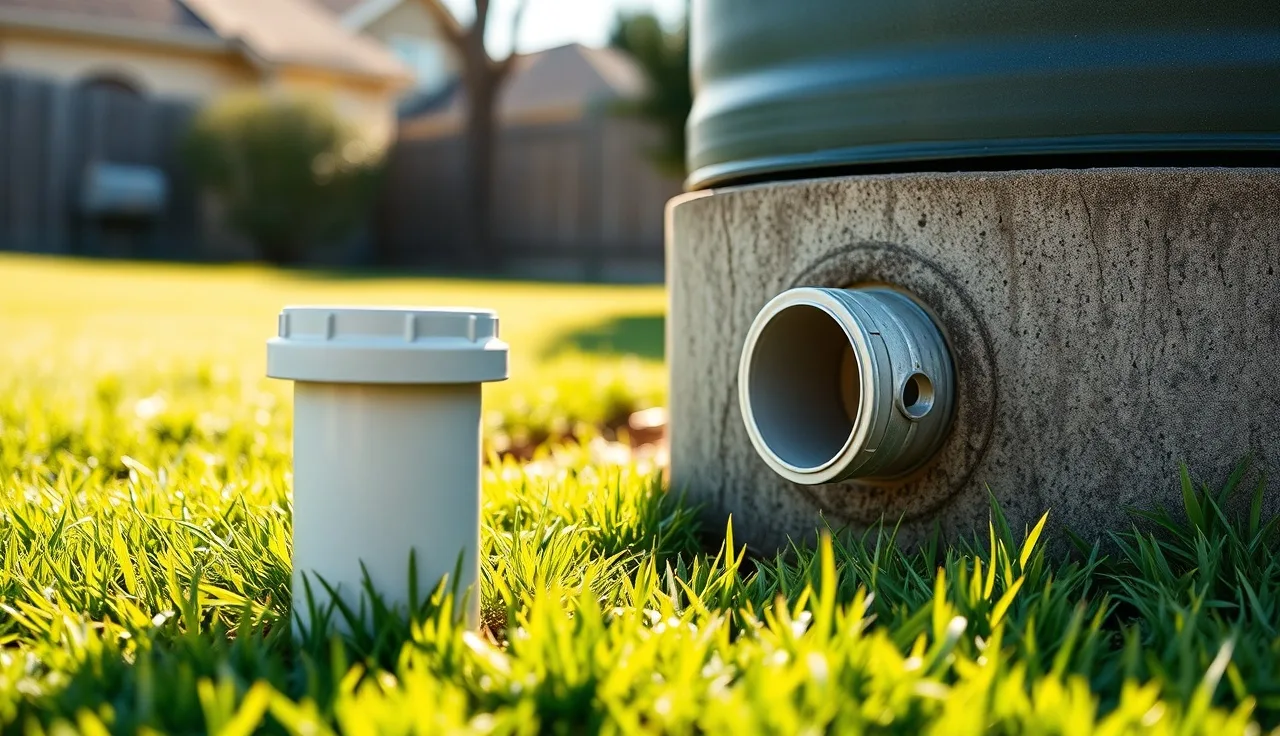
The tank vent is harder to spot. On systems put in over the last 20 to 30 years, there's often a second pipe rising straight above the inlet baffle inside the tank. It comes up through the lid or a riser and ends somewhere in the yard, usually a short pipe with a screened or mushroom-shaped cap. Height above grade runs 6 inches to 24 inches. Some codes want it higher, especially in flood-prone areas [2].
A few designs push tank gas through a carbon filter canister before it hits open air. You see these where lots are tight and neighbors are close, because raw septic gas carries that rotten-egg smell from hydrogen sulfide.
If your home went up before 1970 and has never had septic work, there may be no tank vent at all. Old systems leaned on the roof stack or even loose lids for venting. That's why so many older homes fought basement and crawlspace odors for years.
What are the signs of a blocked or broken vent pipe?
Vent trouble tells on itself in a handful of ways.
Gurgling drains are the classic sign. Flush a toilet or drain a sink, and you hear a low bubbling or sucking from nearby fixtures. That's air trying to enter the drain from below because it can't get in from the vent above. A blocked vent turns moving water into a partial vacuum, and the fixtures pay for it.
Sewer gas inside the house is the next most common complaint. Humans can smell hydrogen sulfide at concentrations as low as 0.5 parts per billion [3], so even a trace slipping past a dried-out trap gets noticed. Smell it near one drain nobody uses much? That's probably a dried trap, not a vent. Smell it all over the house, especially near where the sewer line enters, and the vent is the first suspect.
Slow drains across several fixtures at once point to venting, not a single clog. A clog jams one pipe. A vent problem drags down the whole system.
Toilets that bubble when nothing else is draining, or that flush and then slowly lose water from the bowl, are showing you siphoning from starved air supply. That's a vent problem.
Outdoor odor near the tank vent cap, strong on warm humid days, usually means the cap is gone, the charcoal filter (if you have one) is saturated, or the tank is overfull and needs pumping. A full tank shoves gas out any opening it can find. If pumping isn't recent, check how often to pump your septic tank before you blame the vent.
What causes septic vent pipes to fail or get blocked?
The most common cause is wildlife. Birds, wasps, hornets, and squirrels see an open pipe as prime real estate. An unscreened roof stack fills with nesting in one season, no problem.
Ice is the next big one in cold country. Humid septic gas rises through the pipe and condenses where the pipe meets the cold roof. That moisture freezes and slowly closes the opening, sometimes shut all the way. The University of Minnesota Extension has documented this as a recurring winter odor and drain problem in northern states [4]. Ice blockages usually melt off in spring, which is why plenty of homeowners never figure out what actually happened.
Roots and impact damage cause most yard-level failures. The short outdoor vent pipes get clipped by mowers, buried by shifting soil, or invaded by roots. A cap cracked by a mower deck is easy to walk right past.
Pipe material fails on older systems. Cast-iron vent stacks corrode from the inside out because hydrogen sulfide plus moisture makes sulfuric acid on the pipe walls. A stack that looks fine outside can be eaten hollow inside. This one is slow, and it shows up as odors that stick around even after you've fixed everything else.
Carbon and biofilter caps on the outdoor tank vent wear out. Most makers rate them at one to five years depending on use and tank size. A saturated filter stinks as bad as no filter at all.
What do building codes require for septic vent pipes?
Two rulebooks cover your vent. The plumbing code governs the indoor drain-waste-vent system. The onsite wastewater code, run by your state or county health department, governs the tank vent.
For indoor plumbing, most states have adopted the International Plumbing Code (IPC) or the Uniform Plumbing Code (UPC). The IPC requires vent pipes to end at least 6 inches above the roof surface and at least 10 feet horizontally from any openable window, door, or air intake, or at least 2 feet above the opening if the vent has to sit within that 10-foot span [5]. The point is keeping septic gas away from living space.
Tank vent rules vary a lot by state. Some require a dedicated tank vent. Others treat it as optional as long as the roof stack vents the system well enough. States with tight odor rules, mostly in built-up areas, often want the yard vent raised to 18 to 24 inches above grade or fitted with an odor-control filter.
A few real examples: Florida's Rule 64E-6 requires vent caps on all septic tank openings [2]. North Carolina requires vents on all systems and sets minimum heights above grade. California's onsite regulations require the venting to be checked at transfer inspections in most counties.
Building new or swapping a tank? Check your county health department website. The permit application almost always lists the vent requirements for your jurisdiction, and a state agency page is worth more than any contractor blog.
How do you fix a clogged or damaged septic vent pipe?
Start with the obvious. Get on the roof safely and look down the stack opening. A flashlight or phone camera dropped in a few inches shows a bird nest, wasp nest, or ice most of the time. Clear debris by hand or with a flexible drain snake fed from above. For ice, pour warm water in slowly. Skip boiling water on PVC, it can warp the collar.
For the outdoor tank vent, check the cap first. A missing or broken cap is a five-minute fix. Replacement mushroom-style PVC caps sit on the shelf at any plumbing supply or hardware store for $5 to $20. If the cap holds a carbon filter, ask yourself when it was last changed. Don't know? Change it. Most carbon filter inserts run $15 to $50.
If the outdoor pipe itself is damaged or has sunk below grade, a plumber or septic contractor has to dig it out and replace the section. That runs $200 to $600 depending on depth and access. Just need to extend it higher to clear new landscaping? Usually under $200.
A corroded cast-iron roof stack throwing persistent odors is bigger work. Swapping cast iron for PVC typically costs $500 to $1,500 depending on height and how much wall or ceiling has to open for access [6]. It's standard plumbing, not specialized septic work, so a general plumber handles it.
Cleared the vent and the symptoms won't quit? Next step is a smoke test. A licensed plumber seals the system and pumps colored smoke through it. Any leak or open joint shows up right where you can see it. Smoke tests run $150 to $300 and catch things no visual check ever will. Roll it into a broader septic tank inspection if other components need a look at the same time.
Operators running multiple properties know missed filter changes drive a steady stream of odor callbacks. Tracking vent inspection dates and filter schedules is exactly the kind of recurring task SepticMind's service tools are built to handle.
How much does it cost to repair or replace a septic vent pipe?
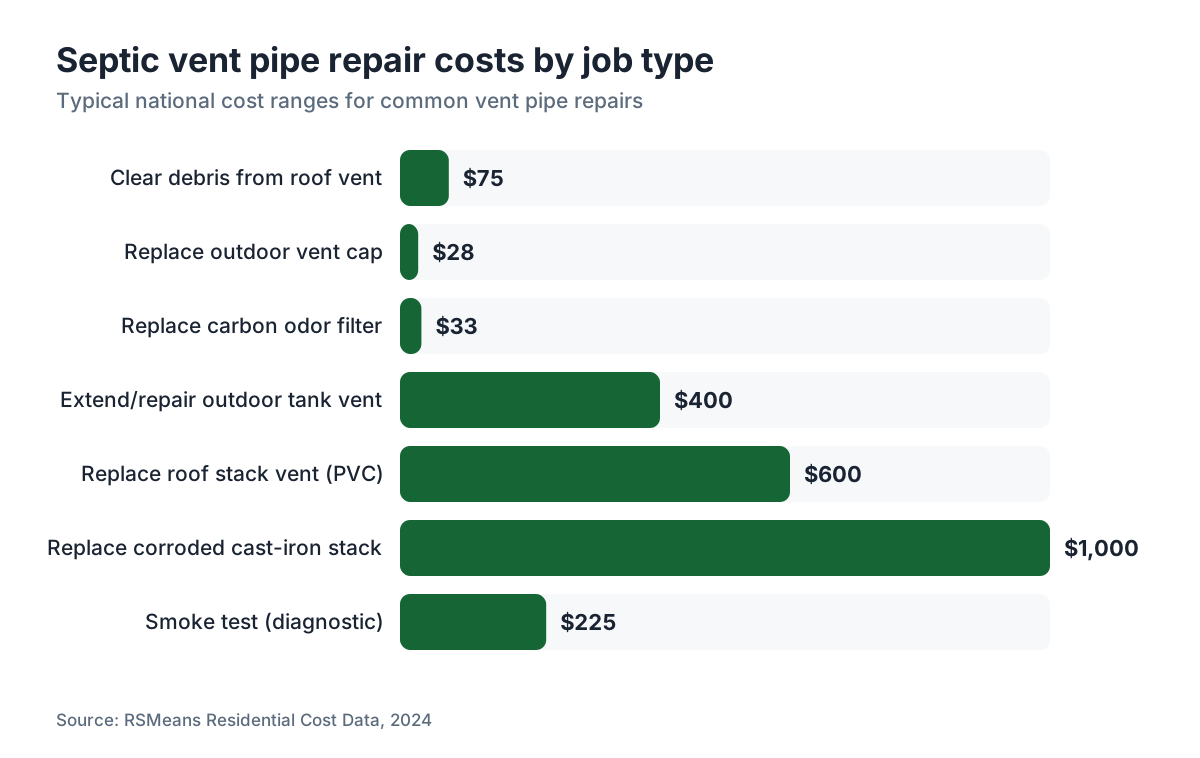
Cost tracks what's actually wrong. Here's the honest range:
| Repair Type | Typical Cost | Notes |
|---|---|---|
| Clear debris from roof vent | $0 to $150 | DIY or one plumber hour |
| Replace outdoor vent cap | $5 to $50 | Almost always DIY |
| Replace carbon odor filter insert | $15 to $50 | DIY, check manufacturer schedule |
| Extend or repair outdoor tank vent pipe | $200 to $600 | Excavation may add cost |
| Replace roof stack vent (PVC) | $300 to $900 | Single-story, accessible |
| Replace corroded cast-iron stack | $500 to $1,500 | Older homes, more labor |
| Smoke test to locate leak | $150 to $300 | Diagnostic only |
| Full indoor DWV revent (AAV installation) | $100 to $350 per fixture | Alternative to roof extension |
These ranges come from national plumbing cost surveys and line up with RSMeans labor data for residential work [6]. Local rates swing them hard. Urban coastal markets run 30 to 50 percent higher than rural midwestern ones.
Here's the one that saves you money: a vent fix is almost always cheaper than a septic tank repair or a drain field replacement. Plenty of homeowners call for expensive system work and turn out to need a vent cleared. Diagnose the vent first.
Can you add an air admittance valve instead of a roof vent?
An air admittance valve (AAV), often called a Studor valve after the best-known brand, is a mechanical check valve that opens to let air in when draining water creates suction. It closes when flow stops, so gas can't escape into the room.
AAVs are handy for venting single fixtures or branch lines that are a pain to tie into the main roof stack, like a kitchen island sink or a bathroom addition far from the plumbing wall. The IPC allows AAVs for branch and individual fixture vents in most cases. They are not a substitute for the main stack that vents the whole system.
Septic systems add a wrinkle. The main stack still has to be open to the atmosphere somewhere. Without a positive-pressure release, the tank can't push out the gas bacteria keep making. AAVs only admit air, they never expel it. So you can add AAVs to simplify interior branch venting, but you can't kill the through-roof vent on a septic system [5].
AAVs wear out too. The rubber seal degrades over 10 to 20 years. A failed AAV either sticks open (gas into the room) or sticks closed (the exact venting problem it was supposed to stop). Good tool, used right. Not a set-it-and-forget-it part.
Is septic vent pipe gas dangerous?
The main worry is hydrogen sulfide (H2S). It's the rotten-egg smell and it's genuinely toxic at high concentrations. OSHA sets the permissible exposure limit at 20 ppm as a ceiling and notes that concentrations above 100 ppm can be immediately dangerous to life and health [3]. Inside a normal home with a working vent, levels near your fixtures sit far below anything harmful. You smell it long before it can hurt you in a typical house.
Methane is the other concern. Odorless, flammable. Septic methane rarely causes house fires or explosions, but it happens in poorly ventilated crawlspaces or basements where gas piles up over time. The risk is real enough that you never check for leaks with an open flame.
Carbon dioxide has no smell but pushes out oxygen. People who climb into septic tanks can suffocate from CO2 buildup. EPA guidance on tank entry is blunt: never enter a tank without atmospheric testing and a safety observer present [7]. This is a job for trained pros, full stop.
For daily life in a well-kept home, a vent problem is mostly about discomfort and moisture damage, not a medical emergency. Still, if you keep smelling sewage gas inside, treat it seriously and fix it soon.
How do you prevent vent pipe problems before they start?
One inspection a year catches most trouble before it gets expensive. Fold it into your roof check: look at the stack termination, confirm the screen or cap is intact, and clear any debris starting to pile up.
For the outdoor tank vent, walk your yard and find the cap (or caps). Most people don't know where theirs is until something goes wrong. Mark it so the mowing crew doesn't clip it. Check the cap in spring and fall.
Got a carbon odor filter on the tank vent? Set a calendar reminder to swap it on the maker's schedule. Most run one to three years. Running one past its life is a top cause of odor calls.
In cold climates, watch late winter for a sudden return of gurgling or odors after a cold snap. That's ice at the top of the stack. Some northern homeowners extend the stack a few inches to cut down on ice bridging.
Keep trees trimmed back from the roof vent. Less leaf debris drops in, and birds are less tempted to move in.
Don't ignore the rest of the system either. Vent odor is sometimes a symptom of an overfull tank, not a vent failure. A tank overdue for pumping makes more gas than any pipe can clear. Staying on a regular septic tank pumping schedule, usually every 3 to 5 years for a family of four [8], takes pressure off the whole venting setup.
Does the type of septic system affect vent pipe design?
Conventional gravity systems use the standard roof stack plus an optional tank vent. This covers most residential systems in the country, and the EPA estimates roughly 21 million U.S. homes run on some form of onsite septic [1].
Pressure distribution and low-pressure pipe (LPP) systems add a pump and a distribution network but don't change venting much. The tank still has to exhaust gas the same way.
Aerobic treatment units (ATUs) are the different animal. They force air into the tank to run aerobic instead of anaerobic digestion. A blower circulates that air, which reshapes the whole gas picture. The compressor inlet and exhaust are part of the venting design and have to be maintained per the manufacturer's specs. ATU makers usually supply proprietary vent parts with the unit [9].
Mound systems, which are drain fields built up over native soil, often run longer effluent lines from tank to mound. Those lines need venting like any drain line. Some mound designs put a vent at the high end of the distribution laterals.
Planning a new install and weighing system types? Venting is one line item in the total. You can get a realistic picture from our writeups on the cost to install a septic system and the cost to put in a septic tank.
For operators running a mix of system types, SepticMind's service tracking lets techs log vent type, filter spec, and last service date next to the rest of the system record. That's the detail you want in hand when you dispatch a crew to a system they haven't touched in a while.
What should you tell your septic contractor about vent problems?
Give symptoms, not diagnoses. A contractor can work with "I hear gurgling from the hall bathroom toilet every time the kitchen sink drains" a lot better than "I think my vent's clogged." The pattern tells an experienced tech where to look.
Say when the symptoms started and what changed around then: a cold snap, a tree trimming, a plumbing repair, or a toilet nobody's used in months (which lets a trap dry out).
If you already looked at the roof vent or the outdoor cap, say what you found. That saves the contractor time and saves you money.
Ask whether they include a vent check in routine service. Good practice is to look at the vent condition during every septic tank pump out. Not every company does it automatically, and the two minutes it takes to check the cap and pipe is worth asking for by name.
Buying a home on septic? Tell the inspector to look at the vent pipe terminations as part of the septic tank inspection. Vent condition is easy to check and gets left off plenty of standard inspection protocols.
Frequently asked questions
Why does my house smell like sewage but only sometimes?
Intermittent sewage odor usually means a partial vent blockage or a trap that dries out seasonally. Warm weather speeds bacterial activity in the tank and raises gas pressure. Wind can push exhaust gas back down toward windows or air intakes near the roof vent. A cap that's only loose part-time from wildlife activity causes on-and-off problems too. Check the roof vent stack first.
How high does a septic vent pipe need to be above the roof?
The International Plumbing Code requires at least 6 inches above the roof surface. If the vent ends within 10 feet horizontally of any openable window, door, or air intake, it must rise at least 2 feet above that opening. Some jurisdictions set higher minimums, so check your local IPC amendment or state plumbing code. Cold-climate installs sometimes add height to fight ice at the tip.
Can a septic vent pipe freeze shut in winter?
Yes. Warm, humid air rising through the vent hits the cold pipe end and condenses. That moisture freezes and slowly closes the opening, sometimes completely. It's well documented in cold northern states. The tell is gurgling drains and sewage odors that show up in February or March, then vanish in spring as the pipe thaws. Extending the stack slightly and insulating where it exits heated space cuts the risk.
What is a septic vent cap and do I need one?
A vent cap sits on the outdoor tank vent pipe to block rain, insects, and debris while still letting gas escape. Most are a simple PVC mushroom shape. Some hold activated carbon inserts that absorb hydrogen sulfide before it reaches the air. Yes, you need one. An open pipe is a direct door for pests and an uncontrolled release point for odor. Caps run $5 to $50 at any plumbing supply store.
Is it normal for a septic vent to smell outside?
A faint odor near the outdoor tank vent now and then is normal, especially on warm days or right after tank activity. A strong, constant rotten-egg smell means the carbon filter (if present) is saturated, the tank is overfull and needs pumping, or the cap is missing or damaged. Odor that carries to a neighbor's property or into living areas is worth fixing promptly.
Can I cap or block my septic vent pipe to stop the smell?
No. Blocking the vent traps methane, hydrogen sulfide, and carbon dioxide inside the system. Pressure builds until it forces gas into the house through drain traps. You'd trade an outdoor odor for an indoor one and add a methane buildup risk in enclosed spaces. The right fix is to address the cause: install or replace a carbon odor filter, or pump an overfull tank.
How often should I replace the carbon filter on my septic vent?
Most activated carbon vent inserts carry a manufacturer rating of one to three years under normal household use. Heavy use, big households, or systems that run warm burn through a filter faster. Quick test: if the outdoor vent smells strong even when the filter looks intact, the carbon is saturated. Set a reminder for the midpoint of the rated life and check it then, rather than waiting for odors to come back.
Do aerobic septic systems have the same vent pipe requirements?
Not exactly. Aerobic treatment units (ATUs) use a blower to force air through the tank, which changes how gases are handled. The compressor inlet and exhaust are built into the unit's venting and must follow the manufacturer's design. ATUs still need venting to manage gas pressure, but the layout differs from conventional gravity systems. Follow the ATU manual and your local health department requirements for ATUs.
What's the difference between a plumbing vent and a septic tank vent?
The plumbing vent (roof stack) is part of the indoor drain-waste-vent system, tying all your fixtures together and running up through the house to exit the roof. The septic tank vent is a separate outdoor pipe at or near the tank, giving gas from the tank a direct way out. Both do the same basic job but are distinct parts. Many systems have both; some older ones have only the roof stack.
Can I install a septic vent pipe myself?
Replacing a vent cap or clearing debris from a roof stack is solidly DIY if you're comfortable on a roof. Extending an outdoor tank vent pipe is manageable if you're handy with PVC glue and fittings. Any work that opens the septic tank, modifies the indoor DWV system, or needs a plumbing permit should go to a licensed plumber or septic contractor. Unpermitted vent work can snag a home sale or inspection later.
How does a vent pipe relate to slow drains and clogs?
A blocked vent creates negative pressure in the drain lines, which slows drainage and causes gurgling. People often mistake this for a clog. The key difference: a clog affects one fixture or branch; a vent problem slows several fixtures at once, especially ones on the same line. If a pro has snaked a drain and it's still slow, and adjacent fixtures gurgle, test the vent before you pay for more invasive work.
What happens if a septic system has no vent pipe at all?
With no venting, gas pressure builds in the tank and drain lines until it overcomes the water seals in fixture traps and pushes into living space. Drains gurgle, odors spread through the house, and in the worst case methane collects in enclosed crawlspaces. Old unvented systems are also harder on drain lines because acidic condensate has no way out. Most building codes after about 1950 required some form of venting.
Will a septic vent pipe problem affect my drain field?
Indirectly, yes. A venting problem doesn't directly harm the drain field, but if a perceived drain-field failure turns out to be a vent issue, the delay lets real drain-field problems go undetected. An overfull tank, which can also cause vent odor, does damage the drain field if left alone. Check the vent, then evaluate the leach field separately if problems persist.
Sources
- U.S. EPA, SepticSmart Program: Approximately 21 million U.S. homes use onsite septic systems; improper gas management is a common cause of odor complaints misattributed to drain field failure
- Florida Department of Health, Onsite Sewage Program (Rule 64E-6): Florida Rule 64E-6 requires vent caps on all septic tank openings
- U.S. Occupational Safety and Health Administration (OSHA), Hydrogen Sulfide Safety and Health Topics: OSHA sets the hydrogen sulfide permissible exposure limit at 20 ppm ceiling; concentrations above 100 ppm are immediately dangerous to life and health; humans can detect H2S at very low concentrations
- International Code Council, International Plumbing Code (IPC): IPC requires vent pipes to terminate at least 6 inches above the roof and at least 10 feet horizontally from any openable window, door, or air intake, or 2 feet above such opening if within that distance; AAVs are permitted for branch and fixture vents but not as the sole system vent
- RSMeans Online, Residential Plumbing Cost Data: Replacing a corroded cast-iron stack with PVC in a residential setting typically costs $500 to $1,500 depending on height and access; residential plumbing vent repair labor ranges used in cost table
- U.S. EPA, Septic Systems (owner guidance and safety): EPA guidance warns against entering a septic tank without atmospheric testing and a safety observer due to CO2 and H2S accumulation risks
- U.S. EPA, How to Care for Your Septic System: EPA recommends pumping a septic tank every 3 to 5 years for a typical household to maintain system function
- U.S. EPA, Types of Septic Systems: Aerobic treatment units use forced-air blowers as part of their treatment process, requiring manufacturer-specific venting configurations distinct from conventional gravity systems
Last updated 2026-07-09