Septic system upkeep: the complete homeowner guide
By the SepticMind Editorial Team
TL;DR
- Septic system upkeep means pumping the tank every 3 to 5 years, inspecting it on a schedule, protecting the drain field from compaction and excess water, and keeping the wrong things out of the drain.
- Do those four things and most systems last 25 to 40 years without a major failure.
- Neglect one, and you're looking at a repair that starts at $3,000.
What does septic system upkeep actually involve?
A septic system is simpler than people think, but it has zero tolerance for neglect. Wastewater leaves your house, enters a buried tank where solids sink and scum floats, and the clarified liquid in the middle flows out to a drain field where soil bacteria finish the job. Every link in that chain needs attention on a schedule.
Upkeep breaks into four jobs: pump the tank before solids overflow into the drain field, inspect the mechanical and structural parts, protect the drain field from anything that disrupts soil absorption, and control what goes down the drain. Most homeowners get the first one roughly right and ignore the other three completely.
The EPA's SepticSmart program lists the four core responsibilities as inspecting and pumping frequently, using water efficiently, disposing of waste properly, and maintaining the drain field [1]. That framing is useful because it reminds you the system is more than a tank. It's a biological treatment chain, and any link can break.
Neglect gets expensive fast. The EPA estimates that failing septic systems cost the average homeowner between $3,000 and $30,000 to repair or replace, and that number climbs the moment a drain field goes [4]. Routine upkeep costs a small fraction of that.
How often should you pump a septic tank?
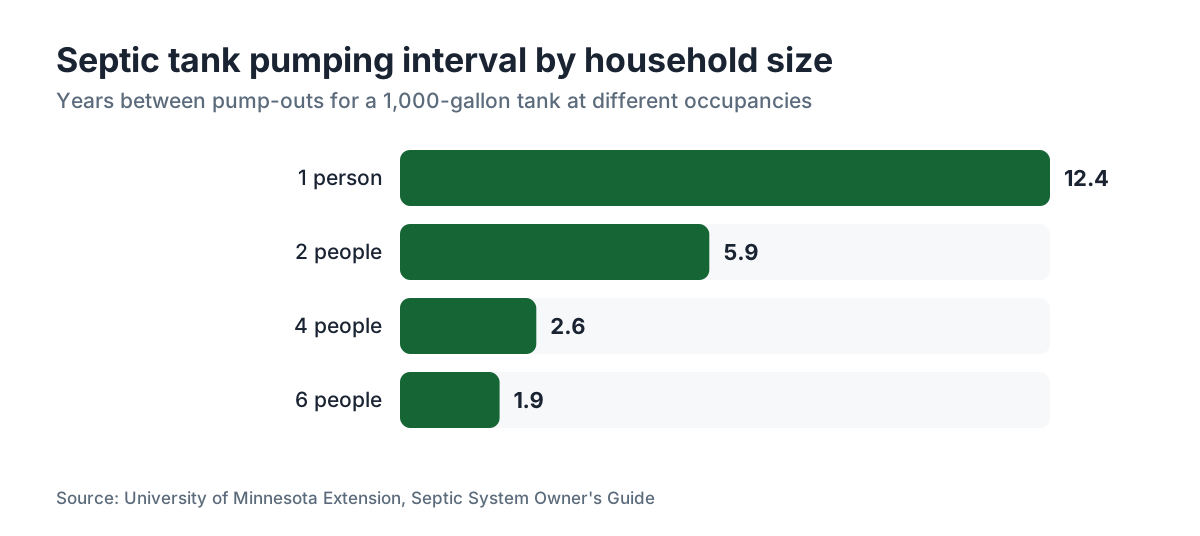
It depends on tank size and household size, and the real numbers vary a lot from the "every three years" rule of thumb most people repeat. A 1,000-gallon tank serving four people needs pumping about every 2.6 years. The same tank serving two people can go nearly 6.
The EPA's general guidance is every three to five years for a typical household [1]. The table below, drawn from University of Minnesota Extension research, shows approximate pumping intervals by tank size and occupancy [2].
| Tank size (gallons) | 1 person | 2 people | 4 people | 6 people |
|---|---|---|---|---|
| 500 | 5.8 yrs | 2.6 yrs | 1.0 yr | 0.7 yr |
| 750 | 9.1 yrs | 4.2 yrs | 1.8 yrs | 1.3 yrs |
| 1,000 | 12.4 yrs | 5.9 yrs | 2.6 yrs | 1.9 yrs |
| 1,250 | 15.6 yrs | 7.5 yrs | 3.4 yrs | 2.6 yrs |
| 1,500 | 18.9 yrs | 9.1 yrs | 4.2 yrs | 3.3 yrs |
| 2,000 | 25.4 yrs | 12.4 yrs | 5.9 yrs | 4.5 yrs |
Those intervals assume no garbage disposal. A disposal can raise the solids load by 50%, which cuts your pumping interval roughly in half [2].
Don't know your tank size? A septic tank inspection will tell you, and the pumper can measure sludge and scum depth to say whether you're on schedule or already overdue. Our full guide on how often to pump a septic tank walks through the math.
What happens during a septic tank pumping and why does it matter?
A pump-out does more than empty the tank. A good technician also inspects the baffles (the inlet and outlet fittings that stop scum from flowing straight through), checks the tank walls for cracks, and looks for high water levels that hint at a failing drain field.
The job takes 20 to 45 minutes on a typical residential tank. The pumper runs a hose to the access lid, breaks up the crust, and vacuums out all three layers: scum, liquid, and sludge. A partial pump-out that leaves the sludge behind isn't a real pump-out. If someone quotes a suspiciously low price and finishes in ten minutes, ask how many gallons of solids came out.
Costs vary by region. Nationally, septic tank pumping runs roughly $250 to $600 for a standard 1,000-to-1,500-gallon residential tank, based on Angi and HomeAdvisor survey data aggregating thousands of jobs (as of 2024). Rural areas with long drive times and states with strict disposal rules land at the top of that range.
For a full walkthrough of what's included, see our guide on septic tank pump out services. If your system hasn't been touched in years, read about septic tank cleaning to understand how a basic pump-out differs from a full clean.
What should a septic system inspection check?
An inspection is not a pump-out, though plenty of homeowners use the words interchangeably. A real inspection looks at the whole system. Here's what the inspector should cover.
Inlet and outlet baffles or tees. Structural condition of the tank (cracks and concrete or steel corrosion, deformation in plastic tanks). The distribution box, if the system has one. The drain field itself, watching for soggy ground, lush green stripes, or odors. And the water level inside the tank relative to the outlet pipe. Liquid sitting above the outlet pipe's invert means the drain field isn't accepting flow.
Systems with effluent pumps, float switches, or aerobic treatment units need those parts checked too. Float switches fail silently. A stuck float can let a pump run dry and burn out the motor.
Most state health codes require an inspection at the point of sale. Massachusetts, under Title 5 (310 CMR 15.000), requires a full inspection within two years before a property transfer [3]. Virginia, New Jersey, and several other states have similar rules. Buying a home on septic? Don't trust the seller's disclosure. Get an independent septic tank inspection from a licensed inspector.
For routine upkeep, monthly homeowner checks (wet spots, odors, slow drains) plus a professional inspection every three to five years, timed with the pump-out, works for most systems.
How do you protect a drain field from damage?
The drain field is the most expensive part of your septic system to fix, and almost everything that destroys it is avoidable. A conventional drain field replacement runs $3,000 to $15,000 depending on size and soil; a mound or advanced treatment system can top $30,000 [4].
Here are the biggest killers, in rough order of how often they cause failures.
- Hydraulic overloading. You're sending more water into the system than the soil can absorb. A family of four using 400 gallons a day on a system designed for 240 will saturate the soil. Spread laundry across the week instead of six loads on Saturday. Fix leaky toilets, which can waste 200 gallons a day without anyone noticing.
- Compaction. Parking a car on the drain field, driving equipment over it, even heavy foot traffic, all crush the soil structure and collapse the absorption zone. Keep vehicles off entirely. That includes during construction and landscaping.
- Root intrusion. Trees and big shrubs planted near the field will eventually push roots into the perforated pipes. Keep all trees at least 30 feet away, and deep-rooted shrubs at least 10 feet.
- Covering the surface. No patios, sheds, or raised beds over the field. The soil needs to breathe. Grass is the best cover there is.
- Solids overflow from the tank. Skip the pumping and solids migrate into the distribution box and pipes, clogging them with biomat that can't be cleaned out without expensive rehab. This is exactly why pumping on schedule matters. It directly protects the field.
See our full guide to the leach field for how drain fields work and what rehabilitation involves.
What should you never flush or pour down a septic drain?
The bacteria inside your tank and drain field do the actual treatment. Anything that kills those bacteria, or that won't break down, hurts the system.
Start with what never goes down the drain. Flushable wipes (they aren't, whatever the box says), feminine hygiene products, condoms, cotton swabs, paper towels, and cat litter. None of it breaks down in the tank. It piles up, fills the tank faster, and can clog the outlet baffle.
Grease and cooking oil. Fat hardens into a layer that's difficult to pump out and can block the outlet over time.
Household chemicals: bleach in large amounts, drain cleaners, paint, paint thinner, solvents, pesticides, and medications. The EPA warns against pouring medications down the drain because of their effect on the tank's microbes and on groundwater [1].
Antibacterial soaps and cleaners in volume. Normal hand soap in normal amounts is fine. Dumping a gallon of bleach cleaner down a drain in one shot is not.
Rule of thumb: if it isn't human waste or toilet paper, it probably doesn't belong in a septic system. Regular toilet paper breaks down well. Thicker or quilted brands break down slower, though they won't cause a sudden problem in most systems.
Garbage disposals get their own note. They aren't banned with septic, but the EPA and most extension programs advise against them, or recommend a larger tank if you use one, because ground food waste builds sludge fast [1] [2].
What's the annual septic upkeep schedule that actually works?
Most maintenance guides hand you a vague checklist. Here's a schedule with real intervals and what to do at each.
Every month:
Check for slow drains, gurgling pipes, or wet patches over the drain field. These are your early warnings. Catching a problem here, before the field floods, is the difference between a $300 pump-out and a $10,000 repair.
Every year:
Locate and check your access lids to be sure they're intact and haven't shifted. Walk the drain field and look for unusually lush grass, depressions, or standing water. Check your water softener settings if you have one; high-salinity discharge is worth monitoring, though most extension programs find softeners have minimal effect on properly sized systems.
Every 1 to 3 years:
Have the tank inspected and the sludge and scum layers measured by a professional. If sludge depth passes one-third of the tank volume, pump it.
Every 3 to 5 years (or per the table above):
Full septic tank pump out and inspection. Have the pumper check the baffles and report on tank condition.
As needed:
An aerobic treatment unit (ATU) needs service more often, usually quarterly or semiannually under your state's operating permit. Most states require a maintenance contract for ATU systems.
Got a pump in the system (effluent or lift pump)? Have it inspected every time the tank is pumped.
Service providers running recurring schedules for many clients can use tools like SepticMind to track service intervals and automate customer reminders, which earns its keep once you're managing dozens of accounts.
How long should a septic system last with proper upkeep?
A well-maintained conventional septic system, meaning a tank plus a gravity drain field in good soil, lasts 25 to 40 years. The drain field is the life-limiting part. A concrete or high-density polyethylene tank that was installed correctly can outlast the field by decades.
Steel tanks are the exception. Steel corrodes. Most steel tanks put in before the 1980s are at or past the end of their service life, and any steel tank deserves a careful look for baffle collapse and wall corrosion.
Drain field life hangs on soil type, loading rate, and whether the tank got pumped consistently. The National Environmental Services Center at West Virginia University notes that field longevity depends heavily on those three factors, and consistent pumping is the one you control [10]. Regular pumping keeps solids out of the field, which is the single biggest lever on how long it survives.
If your system is pushing 20 years, get a full inspection to gauge remaining life before you're stuck with emergency repairs. That inspection can also flag parts, like an aging pump or a cracked distribution box, worth replacing before they fail. See our guides on septic tank repair and septic system repair for what fixes cost at each stage.
What are the signs your septic system needs immediate attention?
Some problems can wait. These can't.
Sewage backup inside the house. If wastewater is coming up through floor drains or toilets, the system is in active failure. Stop using water until a professional finds the cause. It could be a blocked outlet pipe, a full tank, or a failed drain field, and each one needs a different fix.
Strong sewage odors outside near the tank or drain field. Some smell during a pump-out is normal. Persistent outdoor odor means the system is venting where it shouldn't, or effluent is surfacing on the field.
Saturated ground or standing water over the drain field. This is classic field failure. The soil can't accept effluent, so liquid backs up to the surface.
Fast-growing, dark green grass over the field during a drought. Wet weather makes this harder to read, but in a dry spell, a lush green stripe over your field lines means effluent is surfacing.
Any of these calls for a same-week call to a licensed septic pro, not wait-and-see. Catching a field while it's wet but not fully failed can sometimes save you from a full replacement. Once the biomat seals the soil completely, the field is usually gone without serious work.
How much does septic upkeep cost per year on average?
Budgeting for septic upkeep is simple once you amortize it. Here's the math for a typical residential system.
Pumping every three to five years at $250 to $600 works out to roughly $60 to $200 a year, depending on your interval and local pricing. An annual professional inspection, if you do it separately from pumping, runs $100 to $250. Add basic supplies like bacterial additives if you use them, though the evidence for most commercial additives is mixed at best and the EPA doesn't recommend them as a substitute for pumping [1].
Total routine upkeep lands around $100 to $300 a year averaged across the pumping cycle. That sounds steep until you weigh the alternative. Septic tank repair costs $500 to $5,000 for component work, and full septic system repair or drain field replacement runs $3,000 to $30,000 [4].
Budgeting for a new property? See our guides on cost to put in a septic tank and cost to install septic system for what replacement runs in your region.
One honest note on additives. Septic enzyme and bacterial products are a roughly $400 million a year industry in the US. The EPA's position, repeated in SepticSmart materials, is that a properly functioning system already has the bacteria it needs, and no additive has been shown to cut pumping frequency or revive a failing drain field [1]. Save the money. Put it toward the pump-out.
Operators running a service business can track recurring maintenance contracts and per-customer costs in something like SepticMind, since scheduling recurring pump-outs across a big customer base by hand gets messy fast.
Does water softener discharge affect your septic system?
This one comes up constantly, and the answer is more nuanced than either "it's fine" or "it wrecks your system."
The concern has two parts. First, the high salt (sodium chloride) content in softener backwash might harm the drain field's soil structure by breaking down clay particles and cutting permeability. Second, the extra water from backwash cycles adds hydraulic load.
The Water Quality Research Foundation ran a study in 2015 on whether softener discharge affected septic function, and found no statistically significant negative effect on system performance or drain field soils for properly sized systems [5]. University extension programs at Purdue and Minnesota echo that, with one caveat: already marginal or failing systems should keep the added water load down [8].
The practical read: if your system is healthy and correctly sized, a standard water softener is unlikely to cause trouble. If your system is already struggling, cut water inputs wherever you can, softener backwash frequency included.
What upkeep does a septic system need after a major rain event or flood?
Heavy rain and flooding saturate the soil around your drain field, cutting its ability to absorb effluent either temporarily or for good. This is one of the most common causes of short-term backup that homeowners wrongly read as total failure.
During a sustained downpour, cut water use inside the house as far as you can. No laundry. Short showers. The field can't take effluent when the soil around it is already saturated. Backing water up in the tank beats pushing effluent to the surface.
After flooding, don't enter a flooded basement or the area near the septic system until the water recedes and the power is confirmed off. Flood water can carry pathogens if the system has surfaced. The EPA recommends treating any flood water that may have contacted sewage as a contamination risk [1].
Once the ground dries, have the system inspected before you go back to normal use. Flooding can shift tank parts, crack lids, and wash debris into the tank. Check the access covers to be sure they're sealed.
And don't pump the tank while the ground is still flooded. An empty tank surrounded by saturated soil can float up and crack from the pressure. Wait for the water to drop.
If the system backed up during the rain but returns to normal once the ground dries, you may have a marginal drain field that needs attention before the next wet season, not a dead one. Get it evaluated.
New homeowners often first discover they're on septic, and that it has problems, during a long wet stretch. Just bought a house and haven't checked the system? A septic tank inspection is the right first move.
Frequently asked questions
How often should a septic system be pumped?
Most households should pump every 3 to 5 years, but the right interval depends on tank size and how many people live in the home. A 1,000-gallon tank serving four people needs pumping roughly every 2.6 years; the same tank serving two people can go nearly 6. University of Minnesota Extension publishes a table of these intervals based on actual solids accumulation data.
What are the signs of a failing septic system?
The clearest signs are sewage backup inside the house, persistent sewage odors outside near the tank or field, standing water or soggy ground over the drain field, and unusually lush green grass over the field lines during dry weather. Any of these warrant a professional inspection within days. Early failures caught before the field saturates are far cheaper to fix than full replacements.
What should you never put in a septic system?
Never flush wipes (including so-called flushable ones), feminine hygiene products, paper towels, condoms, or cat litter. Never pour grease, cooking oil, paint, solvents, or large amounts of bleach or drain cleaner down any drain. These either don't break down in the tank or kill the bacteria that treat wastewater. The EPA's SepticSmart program specifically calls out medications and harsh chemicals as items to keep out.
Do septic additives actually work?
The EPA doesn't recommend commercial septic additives as a substitute for pumping, and its SepticSmart materials state that a properly functioning system already has the bacteria it needs. No additive has been shown in peer-reviewed research to cut pumping frequency or revive a failing drain field. Save the money and put it toward your scheduled pump-out.
How long does a septic system last?
A well-maintained conventional system (tank plus gravity drain field) typically lasts 25 to 40 years. The drain field is the life-limiting part. A concrete or plastic tank can outlast the field by decades if it's pumped regularly. Steel tanks are the exception and often fail within 20 to 30 years from corrosion. Consistent pumping is the single biggest factor in extending drain field life.
How do you protect a drain field from damage?
Keep vehicles and heavy equipment off the drain field for good, more than now and then. Don't plant trees within 30 feet. Never build structures or paved surfaces over it. Spread water use across the week to avoid hydraulic overloading. Most of all, pump the tank on schedule to keep solids out of the field pipes, which is the number one cause of premature drain field failure.
Can a garbage disposal be used with a septic system?
Yes, but there's a real trade-off. Ground food waste can raise the solids load in the tank by up to 50%, cutting your pumping interval roughly in half according to University of Minnesota Extension research. The EPA advises against garbage disposals with septic systems, or recommends a larger tank to compensate. If you already have one, pump more often to account for it.
How much does septic system upkeep cost per year?
Average a pump-out every 3 to 5 years at $250 to $600, add periodic professional inspections at $100 to $250, and routine septic upkeep costs roughly $100 to $300 a year. Compare that to $3,000 to $30,000 for drain field replacement when a neglected system fails. The math strongly favors paying for maintenance over deferring it.
What septic inspection is required when selling a home?
Requirements vary by state. Massachusetts requires a Title 5 inspection within two years before a property transfer. Virginia, New Jersey, and several other states have similar point-of-sale rules. Even where it isn't legally required, most real estate contracts include a septic inspection contingency. Buyers should always insist on an independent inspection from a licensed inspector rather than a review of the seller's records.
What should you do with your septic system during a flood?
Cut all water use inside the house during a flood to avoid overloading a saturated drain field. Don't pump the tank while the ground is flooded, since hydrostatic pressure can float an empty tank and crack it. Once the water recedes, have the system inspected before normal use. Treat any flood water that may have contacted sewage as a contamination risk and avoid contact.
Does a water softener harm a septic system?
A 2015 Water Quality Research Foundation study found no statistically significant negative effect on septic system performance or drain field soils from water softener discharge in properly sized systems. Most extension programs agree the risk is low for healthy systems. If yours is already marginal, minimize the extra water from backwash cycles, but a functioning system in good soil should handle standard softener use.
How do you find your septic tank for inspection or pumping?
Start with your county health department or permitting office, which should hold your system's installation permit and a rough location diagram. Your home's as-built drawings may show it too. Failing that, follow the sewer pipe from the foundation, usually out through the basement wall or crawl space. Tanks typically sit 10 to 25 feet from the house in the direction the main sewer pipe exits.
Can you do septic maintenance yourself, or do you need a professional?
Homeowners can handle the observational upkeep: checking for wet spots, watching water use, keeping the area clear, and staying aware of what goes down the drain. Pumping needs licensed equipment and proper waste disposal, and in most states a license to haul septage. Inspecting the tank interior means either pumping it first or running a camera. The professional pieces are the pump-out and structural inspection.
What's the difference between septic tank cleaning and pumping?
A standard pump-out removes the liquid and as much of the solids as possible through the access lid. A full cleaning goes further: it usually includes backwashing or jetting to strip stubborn sludge and caked material from tank walls and baffles, and it's the move when a tank hasn't been serviced in years. Cleaning costs more, usually $400 to $800, but restores the tank closer to original capacity.
Sources
- U.S. EPA, SepticSmart program: EPA recommends inspecting and pumping septic systems every 3-5 years, and advises against additives, medications, and harsh chemicals in septic systems
- University of Minnesota Extension, Septic System Owner's Guide: Pumping intervals by tank size and household occupancy; garbage disposals can increase solids load by up to 50%
- Massachusetts Department of Environmental Protection, Title 5 (310 CMR 15.000): Massachusetts requires a Title 5 septic inspection within two years before a property transfer
- U.S. EPA, Onsite Wastewater Treatment Systems Manual (2002): Failing septic systems cost homeowners $3,000 to $30,000 to repair or replace
- Water Quality Research Foundation, Water Softener Septic System Study (2015): No statistically significant negative effect on septic system performance or drain field soils from water softener discharge in properly sized systems
- U.S. EPA, How Your Septic System Works: Description of septic system components: tank, drain field, and biological treatment process
- Purdue University Extension, Septic System Management: Water softeners with properly sized septic systems generally do not cause adverse effects
- National Environmental Services Center (NESC) at West Virginia University, Septic System Operation and Maintenance: Drain field life depends heavily on soil type, loading rate, and consistent tank pumping
Last updated 2026-07-09