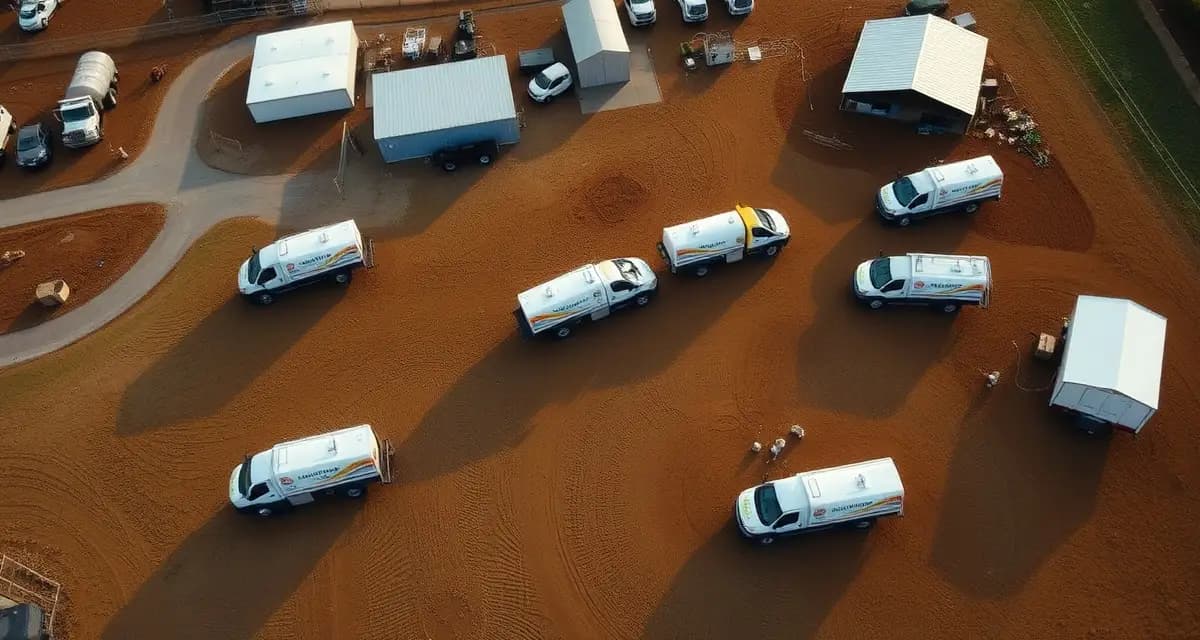
Septic Service for County Fairgrounds and Event Grounds
By the SepticMind Editorial Team
County fairgrounds septic systems see annual peak loads 100 times their normal day-use level during fair week, and a septic failure during a county fair affects thousands of visitors and creates a major health department response. A failing septic system during the county fair is front-page news, immediate health department involvement, and potential fair cancellation -- the kind of event that follows a fairground's management team for years.
TL;DR
- Fairgrounds facilities have distinct wastewater loading patterns that affect septic system sizing, service frequency, and permit requirements.
- Commercial and institutional properties like fairgrounds typically require more frequent pumping than residential systems due to higher daily usage.
- Some fairgrounds operations generate waste streams (grease, chemicals, or high-volume flow) that require pre-treatment before reaching the septic system.
- Service contracts for fairgrounds provide predictable recurring revenue and are easier to manage with a platform that tracks commercial account schedules.
- Health department inspections for fairgrounds properties may require septic system condition documentation as part of facility licensing.
- Septic companies specializing in fairgrounds service build referral networks with property managers, architects, and health inspectors in that niche.
SepticMind's event grounds account type schedules pre-fair service and post-event inspection automatically, ensuring fairgrounds and event grounds are prepared for their peak loads rather than discovering problems during them.
The Fairground Load Pattern
County fairgrounds have one of the most extreme demand curves of any facility type:
Off-season baseline: A county fairground during the 50 weeks it isn't hosting the annual fair has minimal occupancy. A few maintenance staff, occasional small events, and maybe some agricultural activities generate modest daily load. The septic systems are in their rest period.
Pre-fair setup: Fair week begins to approach and traffic picks up moderately as exhibitors, vendors, and setup crews arrive days before opening.
Fair week peak: The county fair itself -- typically 3-10 days -- brings thousands of visitors per day. A county fair in a mid-size rural county might see 5,000-20,000 attendees over fair week. The concession buildings, livestock facilities, restroom buildings, and exhibition halls all operate at maximum capacity simultaneously.
Post-fair reset: After the fair ends, the facility returns to near-zero use while the next 50-week off-season begins.
This extreme annual cycle means the septic system must be fully prepared for one extended peak event per year. The entire year's service strategy centers on that event.
The Pre-Fair Service Window
Pre-fair service should be completed 1-2 weeks before the fair opens, not the day before. Here's why:
Capacity buffer: A fully pumped system going into fair week has maximum capacity. A system serviced on a routine schedule may be 40-60% full going into the fair week peak -- significantly reducing the buffer before overflow risk.
Issue discovery time: Pre-fair inspection may reveal a condition that needs repair before the fair. A pump baffle that's deteriorated, a distribution box that needs realignment, or an access point that doesn't seal properly -- these are things you can address in a 2-week pre-fair window but not in 24 hours before opening day.
Multiple facilities need service simultaneously: A large county fairground has multiple distinct facility types -- main exhibition hall restrooms, livestock barn facilities, concession buildings, midway restrooms, camping area facilities. All of them need pre-fair service, which takes coordination.
Documentation: The fair board or county commissioners who oversee the fairgrounds want documentation that pre-fair maintenance was completed. A dated service report delivered 10 days before fair opening gives them the record they need for their files.
Fairground Facility Types and Service Profiles
A full county fairground typically includes:
Main exhibition hall and show barn restrooms: The highest-traffic restroom facilities during fair week. These serve the largest crowds in the most concentrated periods -- during main stage entertainment, 4-H judging, and evening events.
Livestock barn facilities: Livestock barns have wash-down drains as well as employee and handler restrooms. Animal wash water has organic loading that accelerates tank filling.
Midway and carnival area restroom buildings: Portable toilet rental often supplements fixed facilities in the midway, but fixed restroom buildings in this area see very high use during peak fair hours.
Concession facilities: Food service generates high-BOD grease-laden wastewater. A fairground with 20-30 food vendors operating for a week generates significant food service wastewater load.
Camping area facilities: Many county fairs have camping for 4-H participants, livestock exhibitors, and fair enthusiasts. Camping area septic sees nightly loading from campers.
Office and administration building: Low-intensity daily use from fair office staff throughout the year. Much lower service frequency than the event facilities.
Track each facility type separately with its own pre-fair service schedule and post-fair inspection.
Post-Fair Inspection: The Overlooked Event
Pre-fair service gets the attention it deserves. Post-fair inspection is less commonly scheduled but equally important:
Condition documentation: What condition is the system in after the peak load event? A post-fair inspection within 2 weeks of fair closing documents whether the fair-week loading stressed any system components.
Repair identification: If fair-week loading revealed any system stress -- slow drainage, drainfield saturation, baffle damage -- the post-fair inspection identifies the repair need while there's time to address it before next year's fair.
Service history record: The post-fair inspection establishes the end-of-fair-season condition baseline, giving the fairground management a full year's service record from pre-fair service through post-fair inspection.
Working With Agricultural Fair Associations
County fair management often involves county agricultural extension offices, fair board volunteers, and county commissioners. This institutional structure creates some specific relationship considerations:
Multiple decision-makers: The person who approves service scheduling may be a fair board member; the person who approves payment may be the county treasurer. Know who can authorize different types of decisions.
Volunteer leadership turnover: Fair board leadership changes periodically. When new leadership takes over, they may not know the prior board's service relationships. Staying proactive with annual pre-fair outreach ensures the relationship continues through leadership transitions.
Budget constraints: County fairgrounds often operate on tight budgets. Frame pre-fair service as the investment that prevents a much more expensive emergency -- and potential fair cancellation -- during the fair itself.
Get Started with SepticMind
Fairgrounds facilities need a service provider who understands the specific wastewater challenges of their operations. SepticMind makes it easy to manage commercial service contracts, track inspection schedules, and document service visits for every account in your portfolio. See how it supports commercial account management.
Frequently Asked Questions
How should a county fairground manage its septic system around the annual fair?
The anchor events are pre-fair service 1-2 weeks before fair opening and post-fair inspection within 2 weeks of fair closing. Pre-fair service should include pump-out of all facility systems -- exhibition halls, livestock barns, concession buildings, and camping area facilities -- with a brief condition inspection at each. Post-fair inspection documents condition after fair-week loading and identifies any repair needs to address before the next year's event. Between fairs, off-season service intervals for each facility depend on non-fair-week use: office and administration buildings may need only annual service; facilities used for other events or activities throughout the year may need additional service based on their off-season use level.
What pre-event septic service is recommended before a large outdoor event?
Pre-event service should be completed 7-14 days before event opening for large events like county fairs. The timing window allows enough time to identify and address any issues found during service without being so far in advance that the capacity buffer diminishes before the event begins. All facilities expected to see high use during the event should be fully pumped, not just those that appear to need service. A grease trap at the concession building needs service regardless of how recently it was last done if it will see a week of heavy food service use. Document the pre-event service with a dated report that the fairground management can retain for their event permit files.
Does SepticMind support event-driven pre-service scheduling for fairground accounts?
Yes. SepticMind's event grounds account type stores the fairground's annual fair dates and any other significant events and automatically triggers pre-event service reminders at defined lead times before each event. For county fairs specifically, the pre-fair service reminder goes to the account manager 3-4 weeks before the fair to allow scheduling to be confirmed with the fairground management. Post-fair inspection reminders follow automatically after the fair closing date. Individual facilities within the fairground -- exhibition hall, livestock barn, concession building, camping area -- are tracked separately with their own service schedules and event-driven triggers.
How often should a septic system serving a fairgrounds property be inspected?
Septic systems at fairgrounds properties should be inspected at least annually and pumped more frequently than residential systems, since commercial-scale daily water usage accelerates sludge and grease accumulation. The exact frequency depends on the specific activities at the facility, peak occupancy, any food service or chemical use on-site, and local regulatory requirements. A service provider familiar with fairgrounds operations can recommend an appropriate inspection and pumping schedule based on the system's actual usage profile.
What septic system issues are most common at fairgrounds properties?
The most common septic problems at fairgrounds properties are rapid sludge accumulation from high occupancy, grease trap failure if food service is involved, hydraulic overloading during peak-use periods, and non-biodegradable waste disposal from cleaning or maintenance activities. Regular inspection and a service contract with clear maintenance intervals are the most effective ways to catch these problems before they cause system failure or regulatory violations.
Try These Free Tools
Sources
- National Onsite Wastewater Recycling Association (NOWRA)
- US EPA Office of Wastewater Management
- NSF International
- Water Environment Federation
- National Environmental Services Center (NESC)