How to pass a septic inspection: a homeowner's step-by-step guide
By the SepticMind Editorial Team
TL;DR
- To pass a septic inspection, pump the tank 1 to 2 weeks ahead, confirm the tank has no cracks or leaks, make every lid and riser easy to reach, and check the drain field for surfacing effluent or soggy ground.
- Fix failing baffles or lids before the inspector arrives.
- Most inspections take 2 to 4 hours and cost $200 to $600.
What does a septic inspection actually involve?
A septic inspection is a hands-on examination of every part of your onsite wastewater system: the inlet and outlet pipes, the tank, the distribution box or manifold, and the drain field (also called a leach field). The inspector confirms the system is treating and disposing of wastewater the way it was designed to, without exposing groundwater or people to pathogens.
Most states define two tiers. A basic visual inspection (a Title 5 inspection in Massachusetts, or a real-estate transfer inspection elsewhere) is what you hit during a home sale. A full inspection adds pumping, probing the tank walls, checking baffles, and sometimes a hydraulic load test where water runs through the system to see how it responds. A few states also require dye testing [1].
The inspector almost always wants the tank pumped before or during the visit so the tank walls, inlet and outlet baffles, and bottom are visible without liquid hiding damage. If you haven't scheduled a septic tank pump out yet, do that first. Everything else follows from a clean, empty tank.
Rules change by state and often by county. California's inspection rules differ from Florida's, which differ from Massachusetts Title 5. Confirm what your jurisdiction requires before you assume a national checklist covers you [2].
What do inspectors look for and what triggers a failure?
Inspectors work through the system one component at a time. Here's what they check at each stage, and what turns a note into a failure.
Inlet pipe and baffle. The pipe from the house should enter the tank cleanly: no root intrusion, no offset joints, no cracks. The inlet baffle (the T-shaped fitting that slows incoming flow) must be present and intact. A missing or corroded baffle lets solids short-circuit straight toward the drain field.
Tank walls, lid, and seams. Any crack that lets groundwater in or effluent out is a failure. Concrete tanks 30 years old and up often show spalling or cracking. Fiberglass tanks can delaminate. The inspector probes the walls by hand and sometimes with a rod. Lids must be sound and must not let rain or surface water into the tank [3].
Outlet baffle or effluent filter. The outlet side is where partially treated liquid leaves for the drain field. A broken or missing outlet baffle is one of the most common failures. Without it, floating scum travels out and clogs the drain field within months. Some tanks have an effluent filter cartridge here that needs cleaning every 1 to 3 years.
Liquid level in the tank. If you show up with a freshly pumped tank and the liquid level is already high before any water has run, that points to backflow from a saturated or failing drain field.
Distribution box (D-box). The D-box splits effluent evenly among the drain field lines. Inspectors check that it sits level (a tilted D-box overloads one line), has no cracks, and shows no solids carryover.
Drain field surface and soil. The inspector walks the field looking for soft wet spots, odors, or visible effluent. Surfacing sewage is an automatic failure in every state I'm aware of. They also check whether structures, vehicles, or trees have crept onto the field [2].
Proximity to wells and water features. Many states require minimum setbacks between the drain field and a drinking-water well, usually 50 to 100 feet depending on soil type [1].
How do you prepare your septic system before an inspection?
This is where you have the most control. Do these steps in order.
Step 1: Pump the tank. Schedule a septic tank pumping 1 to 2 weeks before the inspection, not the day before. Pumping the day before can make it harder for the inspector to read normal operating levels. The pumper's report also gives you early warning of tank damage or baffle trouble. EPA recommends pumping every 3 to 5 years for a typical household [4].
Step 2: Locate every component and open it up. The inspector needs to open the tank. If the lid is buried, dig it out. Many older systems have lids 6 to 18 inches down. Installing concrete or plastic risers (the extensions that bring lids up to grade) before the visit makes access easy. Dig down to the D-box too if it isn't already visible.
Step 3: Pull the as-built drawing. Most county health departments keep the original permit and as-built diagram on file. Get it. It shows where the tank, D-box, and field lines sit and what the design called for. If your system has been changed without permits, you want to know that before the inspector does.
Step 4: Keep the water load light for two days. Don't stress-test your system with six loads of laundry and back-to-back dishwasher runs. Normal use is fine. Heavy water loading can saturate a marginal drain field and tip it from a borderline pass to a clear fail.
Step 5: Fix the obvious stuff first. If you already know the outlet baffle is corroded or a riser lid is cracked, fix it before the inspector shows up. These repairs are cheap, usually $50 to $200 in parts plus a service call, and catching them yourself beats reading them on a written failure report [5].
How much does a septic inspection cost?
Cost swings hard by state, system type, and scope. A basic visual inspection for a real-estate deal usually runs $200 to $400. A full inspection with pumping generally lands at $300 to $600 when you bundle the pump-out, and pushes toward $800 to $1,000 in high-cost markets or for large systems (tanks over 1,500 gallons, mound systems, aerobic treatment units) [6].
Buying a home? Pay for the full inspection, not the basic. The extra $150 to $200 to pump and inspect the tank properly is nothing next to a failed drain field that runs $5,000 to $30,000 to replace. Our breakdown of septic tank inspection costs has a state-by-state comparison.
Some states require inspections on a fixed schedule, not only at sale. Massachusetts Title 5 requires inspection every 2 years for systems near wetlands and at every property transfer [2]. New Hampshire requires inspection at transfer and every 5 years for certain types [7]. Know your state's rules before you assume.
Run an inspection business? Scheduling, pre-inspection checklists, and report delivery at scale is where SepticMind helps operators stop losing work to messy scheduling.
What are the most common reasons a septic system fails inspection?
Pulling from state inspection data and industry reports, these are the failures that come up most.
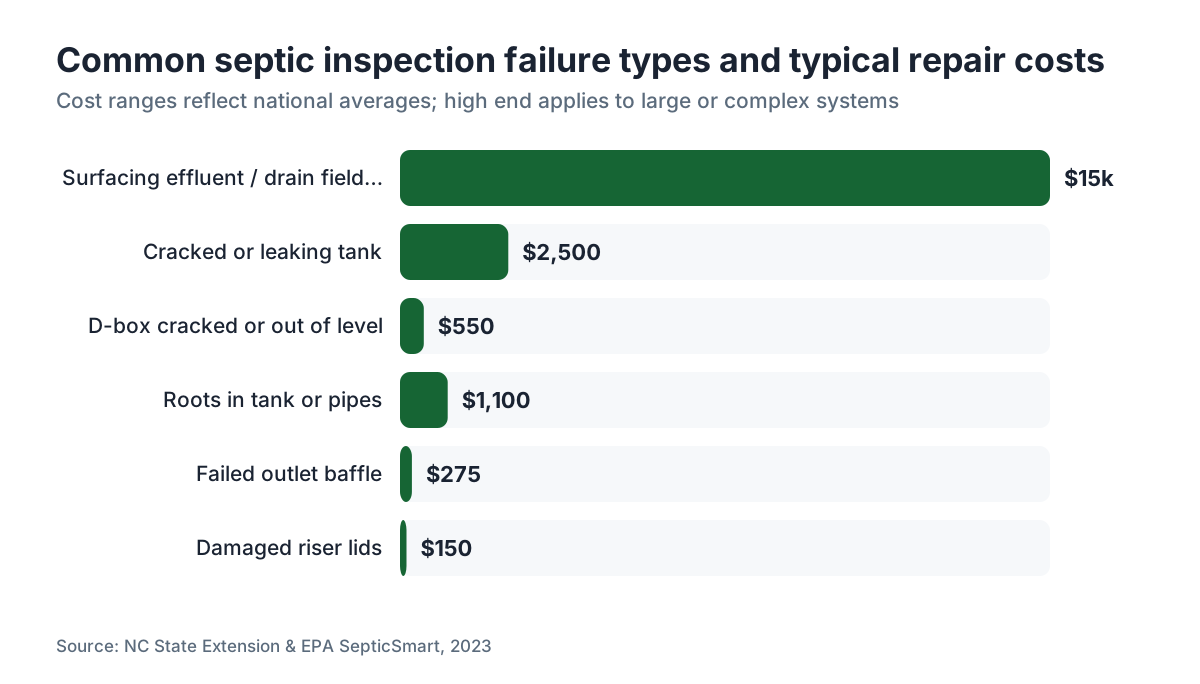
| Failure type | Typical repair cost | Notes |
|---|---|---|
| Surfacing effluent in drain field | $3,000-$30,000 | May require full field replacement |
| Missing or failed outlet baffle | $150-$400 | Quick fix if caught early |
| Cracked or leaking tank | $500-$5,000 | Fiberglass patch vs. full replacement |
| Broken or missing inlet baffle | $150-$400 | Similar to outlet baffle repair |
| Damaged or absent riser lids | $50-$250 | Replace before inspection |
| D-box out of level or cracked | $300-$800 | Often concrete replacement |
| Roots in tank or pipes | $200-$2,000 | Depends on extent |
| System too close to well or water | Varies widely | May require system relocation |
Drain field failure is the big one. It's the most expensive, and it blindsides homeowners because the tank can look fine while the field has been quietly dying for years. The soil around the field pipes gets biologically clogged (a biomat forms) and effluent stops percolating. You might see thick green grass over the field before any water surfaces, because the biomat is fertilizing the plants above it [3].
For anything past a baffle swap, our guides on septic system repair and septic tank repair walk through what the work looks like and what it costs.
Can you fix a failing system before the inspection report is finalized?
Usually, yes. An inspection isn't instant. There's typically a gap between the site visit and the written report landing at the local health department. In that window a homeowner can make repairs and ask for a reinspection.
Here's the move: if the inspector flags a problem on-site, ask straight out what it would take to bring the system into compliance and whether a reinspection is possible before the report is filed. Many inspectors work with owners who are clearly acting in good faith. Some states have formal conditional-pass provisions where the system passes on the condition that specific repairs get done within 30 to 90 days [2].
Surfacing effluent, a collapsed tank, or a drain field at the end of its life can't be papered over. Those need real repairs or replacement. Don't try to hide ponded effluent under fresh landscaping or gravel. Inspectors probe the soil and walk the field looking for exactly that, and getting caught turns a repair into a possible fraud problem in a real-estate deal.
The best insurance is a pre-listing or pre-purchase inspection done 2 to 3 months before your deadline, so you have time to schedule repairs. Septic tank cleaning and a pre-inspection service call cost almost nothing next to a price reduction negotiated under pressure.
What happens if your septic system fails inspection?
A failed inspection doesn't automatically kill a real-estate deal, but it changes the math. Here's how it usually plays out.
The seller can repair or replace the failing component and request reinspection. The buyer can negotiate a price cut to cover the repair. In some states the deal can close with a failed system if money goes into escrow for repairs, though that depends on lender requirements and state law.
For VA and FHA loans, lenders generally will not close on a home with a failed septic inspection. Conventional loans give more room, but the underwriter often wants proof of a working system.
Buyer here? Get your own repair estimates before you accept the seller's numbers. A seller who wants to close fast may lowball the repair scope. A drain field the seller quotes at $5,000 can turn into $15,000 once the contractor sees what's actually in the ground.
For repairs you genuinely need, our articles on septic tank repair and the cost to install septic system lay out real price ranges so you negotiate from a position of knowing the numbers.
How do you pass a septic inspection for a home sale specifically?
A real-estate septic inspection carries weight a routine maintenance check doesn't. The inspector is often hired by a third party (buyer's agent, lender), the report goes into official records, and the stakes are written into the contract.
Get ahead of it as the seller. Order your own inspection 2 to 3 months before you list. If anything fails, you fix it before buyers ever see it. A seller-initiated report showing a passing system is a selling point, not a box to check.
Make sure the tank has been pumped recently. Most real-estate inspection standards require pumping as part of the inspection. If you've done a septic tank emptying in the past 12 to 18 months, check whether that pump-out report satisfies the inspector. Some accept it. Others want fresh pumping no matter what.
Document everything. Keep records of every pump-out, repair, and service call. A binder with pump-out receipts going back 5 to 10 years tells a buyer the system has been maintained and inspectors have seen it regularly. Missing records create uncertainty, and uncertainty costs you money at the table.
Know your local rules. Massachusetts Title 5 has specific pass/fail criteria and a conditional pass category [2]. Florida uses its own DH 4015 form for onsite sewage inspections [8]. Texas runs OSSF (on-site sewage facility) inspection through the county, not the state [9]. The rules differ enough that an hour with a local licensed inspector before the listing goes live pays for itself.
EPA's SepticSmart program puts the case plainly: "Have your system inspected every 3 years by a professional." Systems that get inspected and pumped on schedule almost never throw surprise failures at sale [4].
How often should you have your septic system inspected to avoid problems?
EPA recommends inspecting a septic system at least every 3 years and pumping every 3 to 5 years for a typical household [4]. Bigger households or smaller tanks need service more often. A 1,000-gallon tank serving a family of five needs pumping closer to every 2 years. A 1,500-gallon tank serving two people might stretch to 5 to 7 years.
Systems with mechanical parts, like aerobic treatment units (ATUs) or pump chambers, need inspection more often, sometimes yearly, because motors and float switches fail in ways gravity systems don't [3].
For how often to pump septic tank, the frequency comes down to four things: tank size, household size, how much solid waste enters the tank, and whether you run a garbage disposal (disposals pile on sludge fast and are best avoided on a septic system).
The case for regular inspection over crisis inspection is simple. Catch a failing baffle or early drain field stress and you spend a few hundred dollars. Catch the same problem after the drain field has failed and you spend tens of thousands. Operators tracking recurring schedules across a customer base use software like SepticMind to run the reminder cycle so no customer slips off the list.
What paperwork and records do you need for a septic inspection?
Organized records before the inspector arrives save time and kill the impression that you're hiding something.
The documents that matter: the original system permit and as-built drawing (from your county health department if you don't have a copy), records of every pump-out you can find, any repair permits and inspection reports from past work, and manufacturer specs if the system includes an ATU or a proprietary drain field product.
For a real-estate inspection, the buyer or their agent may pull these records on their own. Having them ready shows the system has been managed properly. Missing records don't prove a problem, but they leave the inspector working with less, which tends to produce a more conservative (stricter) call.
Most county health or environmental departments keep permit records going back decades. A quick call or online records request gets you the original permit and design specs. In some places the as-built shows the exact layout of the field lines, which saves the inspector time and keeps them from missing a component sitting off in an unexpected spot.
For cost to put in a septic tank context: knowing whether your current system was built to modern code (which has changed a lot since the 1970s and 1980s) affects how an inspector judges its remaining life.
Do aerobic, mound, and alternative septic systems get inspected differently?
Yes. The scope gets broader for advanced systems.
Aerobic treatment units (ATUs) have pumps, air compressors, and control panels that must be running right at inspection time. The inspector checks that the motor works, the timer is set correctly, the chlorine or UV disinfection is functional, and the effluent meets state discharge quality standards. In Texas, ATUs must be under a maintenance contract with a licensed provider, and the inspector will ask for proof [9].
Mound systems add a pump chamber and a built-up sand or soil mound above grade. Inspectors check the pump, the dose volume settings, and the mound surface for saturation or blowout. The pump chamber gets pumped and inspected separately from the main tank.
Low-pressure pipe (LPP) systems, drip irrigation systems, and constructed wetland systems each carry their own inspection protocols set by state rules. If you have an alternative system and don't know what type it is or who installed it, start with your county health department. They have the permit.
For homeowners weighing septic tank installation or replacement: modern alternative systems cost more upfront but are required where conventional gravity systems can't pass a soil perc test. Know what you're getting into before the shovel hits the ground.
Frequently asked questions
How long does a septic inspection take?
Most full septic inspections take 2 to 4 hours, including the time to pump the tank. A basic visual inspection without pumping runs 45 to 90 minutes. Systems with mechanical parts (ATUs, mound systems, pump chambers) take longer because the inspector evaluates each component on its own. Budget a half-day to be safe, and plan for the inspector to need access to the whole yard.
Can I be present during a septic inspection?
Yes, and you should be if you own or are buying the property. Being there lets you hear the findings in real time and ask questions before the written report locks in the language. Bring the as-built drawing and pump-out records. If the inspector finds something ambiguous, your maintenance history can add context that affects how the finding gets classified.
What is a conditional pass on a septic inspection?
A conditional pass (also called a conditional approval or pass with conditions) means the system passes subject to specific repairs completed within a set window, usually 30 to 90 days. Massachusetts Title 5 uses a formal conditional pass category. The condition has to be addressed and reinspected before it expires. A lender or buyer may or may not accept a conditional pass in place of a full pass, so confirm with your specific lender.
Will a septic inspection fail if the tank is full?
Not automatically. But a tank at or above normal operating level (above the outlet pipe invert) before any water has run suggests backflow from a saturated drain field, which is a real concern. A tank full simply because it hasn't been pumped in years can still pass once pumped, as long as the components are intact. The inspector notes the sludge and scum levels in the report even when no structural failure exists.
How do I find my septic tank before the inspection?
Start with the county health department; they should have the as-built drawing from the original permit. If that's a dead end, try following the main sewer pipe from the house (it exits the foundation and runs toward the tank), looking for a slight depression or greener grass, or probing with a metal rod 10 to 20 feet from the house. Septic locating services also use electronic gear to pinpoint tanks and field lines.
Do I need a septic inspection if I'm not selling my house?
Not legally in most states, unless ownership transfers or a state-mandated schedule applies (Massachusetts requires reinspection every 2 years near wetlands, for example). But a voluntary inspection every 3 years is the best way to catch problems before they turn expensive. Many homeowners only find out the drain field is failing when sewage backs up into the house, and by then the bill is much higher.
What's the difference between a septic inspection and a septic certification?
A septic certification is a document from a licensed inspector or engineer stating the system meets current standards, often required by a mortgage lender or state agency at point of sale. An inspection is the physical evaluation. The certification is the output of a passing inspection. Terminology varies: Massachusetts calls it a Title 5 Certificate of Compliance; other states call it a clearance letter or a wastewater system evaluation report.
How do I know if my drain field is failing before an inspection?
Warning signs: slow drains across the house (more than one fixture), gurgling in toilets or drains, sewage odor near the field, unusually lush green grass over the field lines (the biomat feeding surface plants), and soft or wet ground over the field in dry weather. Any of these warrants a professional look before a formal inspection, because surfacing effluent is an automatic failure.
Can tree roots cause a septic inspection to fail?
Yes. Roots from trees and large shrubs can invade inlet and outlet pipes, crack the tank, or penetrate drain field pipes. Inspectors check for roots in the tank and in accessible pipe sections. If they find roots, the repair runs from about $200 to hydro-jet a pipe up to several thousand dollars if the tank or field lines are compromised. Keep trees 30 to 50 feet from the drain field; willows, maples, and poplars have the most aggressive roots.
How much notice do I need to give to schedule a septic inspection?
Most inspection companies book 1 to 4 weeks out in normal conditions. In spring (real-estate season) and summer, wait times can stretch to 6 weeks in busy markets. If you're listing a home or working against a contract deadline, schedule the moment you know the date. Pumpers and inspectors can sometimes be bundled, but confirm the pumper separately if they're a different company.
Does a new septic system still need an inspection?
Yes. New systems require a construction inspection and a final inspection by the county health department or a licensed inspector before they go into service. The installer usually arranges this. Keep the permit, inspection records, and as-built drawing from that process. After installation, the first maintenance inspection is usually recommended 1 to 2 years later to confirm the system is running right as it breaks in.
What does an inspector do during a hydraulic load test?
A hydraulic load test runs a calculated volume of water through the system (often 150 to 250 gallons, roughly one day's household use) and then watches how the drain field responds. If the field absorbs the water without surfacing or backing up, it passes. This test is more common for borderline systems or when the inspector wants extra data. It's not universally required but lenders may request it for older systems.
Can I do any part of septic inspection preparation myself?
Yes. Homeowners can dig up and expose tank lids and riser access points, locate and mark the D-box and field area, pull the permit and as-built drawings from the county, assemble pump-out records, and walk the yard for obvious wet spots or odors. What you can't do (in any state) is perform the official inspection, write the report, or certify the system. That takes a licensed inspector or engineer.
Sources
- EPA, Septic Systems (Onsite/Decentralized Systems): Septic system inspection requirements, including dye testing and setback distances from wells
- Massachusetts, Septic Systems (Title 5) program: Massachusetts Title 5 requires inspection at every property transfer and every 2 years for systems near wetlands; conditional pass provisions
- EPA, How to Care for Your Septic System: Inlet and outlet baffle function, biomat formation in drain fields, and mechanical system inspection frequency
- EPA, How to Care for Your Septic System (SepticSmart): EPA recommends inspecting a septic system at least every 3 years and pumping every 3 to 5 years for a typical household; 'Have your system inspected every 3 years by a professional'
- Penn State Extension: Outlet baffle repair costs and common pre-inspection fixes homeowners can address
- University of Minnesota Extension: Full septic inspection including pump-out typically costs $300 to $800 depending on system size and market
- New Hampshire Department of Environmental Services: New Hampshire requires septic inspection at property transfer and on a periodic schedule for certain system types
- Florida Department of Health, Onsite Sewage Program: Florida uses DH 4015 form for onsite sewage system inspection and evaluation
- Texas Commission on Environmental Quality: Texas requires OSSF inspection through the county and ATUs must be under a licensed maintenance contract
- EPA, Septic Systems (Onsite/Decentralized Systems): Approximately 20% of U.S. homes use septic systems; regular inspection and maintenance prevent failures
- NC State Extension: Drain field replacement costs ranging from $3,000 to $30,000 depending on system type and site conditions
Last updated 2026-07-09