Drain field issues: causes, warning signs, and fixes
By the SepticMind Editorial Team
TL;DR
- Drain field problems run from surface ponding and slow drains to full biomat failure.
- The usual causes are hydraulic overload, skipped pumping, and root intrusion.
- Repairs cost $1,500 to $20,000 or more depending on what's broken.
- Caught early, most problems are fixable.
- Left alone, a failed field usually means a full replacement.
What does a drain field actually do, and what parts can fail?
The drain field, also called a leach field or soil absorption system, is the last treatment stage of your septic system. Clarified liquid effluent flows out of the septic tank, moves through a distribution box or manifold, and spreads into a network of perforated pipes buried in gravel-filled trenches. From there the soil does the real work. Bacteria in the top few inches break down pathogens and nutrients before the water reaches groundwater. [1]
The leach field is a set of parts, and each one can fail on its own. The distribution box (d-box) splits flow between trenches. If it settles or cracks, one trench gets flooded while the others sit dry. The perforated pipes crack, collapse under vehicle weight, or plug with roots. The gravel bed drains water away from the pipes, and if solids from the tank push into it, it clogs. Then there's the soil itself. When it gets coated with a dense layer of anaerobic slime, called a biomat, water stops percolating and the system backs up. [2]
Knowing which part failed tells you whether you're looking at a $300 d-box swap or a $15,000 new field. That distinction matters before you call anyone.
What are the warning signs of drain field problems?
Slow drains inside the house are often the first thing homeowners notice, but a full tank or a clogged inlet baffle causes the same thing, so hold off on conclusions. If pumping the tank doesn't fix the sluggishness, the field is the next suspect.
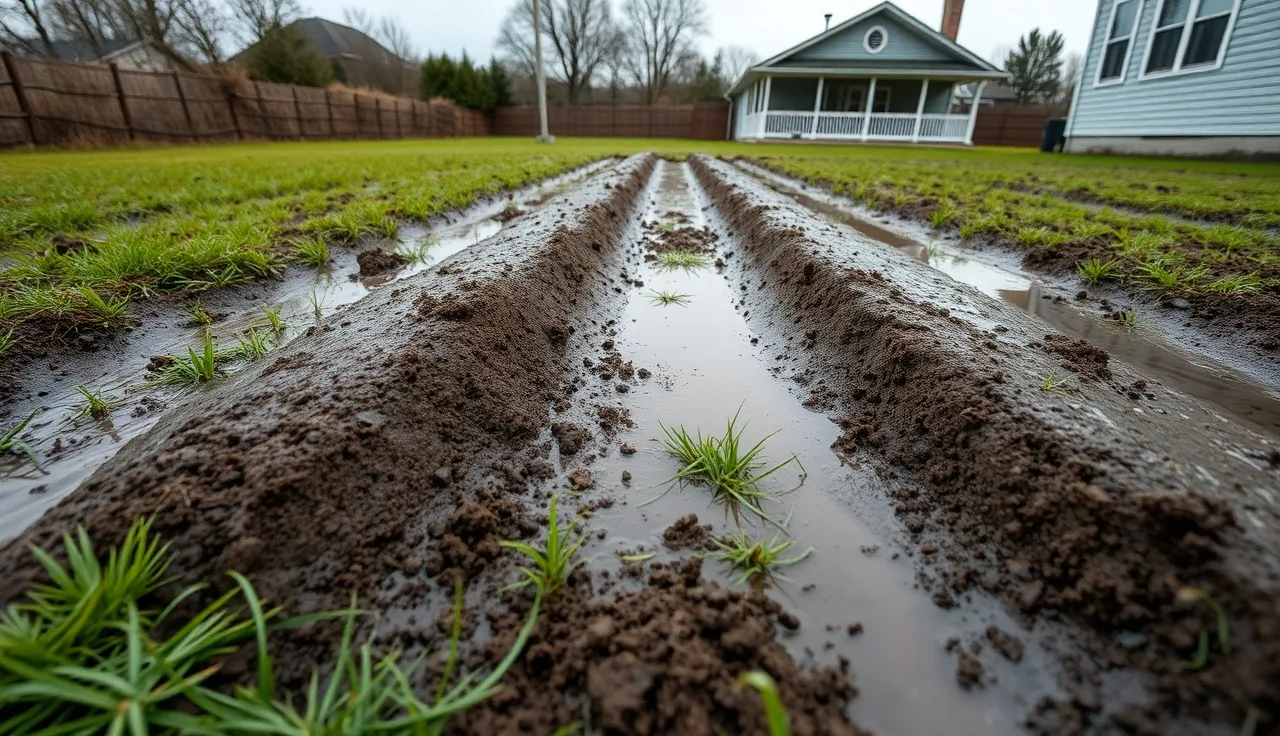
Soggy or spongy ground over the trenches is a clearer sign. You're seeing effluent that can't soak into the soil fast enough, so it surfaces instead. This is called surfacing effluent, and it's a public health problem because untreated wastewater carries pathogens. [3] Some states require you to report surfacing sewage to the local health department.
Sewage odors outside, near the field or in a low spot downhill from it, point to the same surfacing problem or to a cracked pipe venting gas upward. A bright-green stripe of grass in an otherwise ordinary lawn means the same thing. The grass is feeding on effluent that isn't draining away.
Inside, gurgling when a toilet flushes, or water backing up in a ground-floor tub when the washing machine drains, both say the system's hydraulic capacity is maxed out. That could be a field problem, a full tank, or both.
One sign people miss: a septic alarm. Homes with pump chambers usually have a float switch that trips when the chamber fills faster than it empties. A chamber filling too fast almost always means the field isn't taking flow at the rate it was designed for. [4]
What causes drain field failure?
EPA's SepticSmart program names skipping tank pumping as the top cause of drain field failure. [1] When solids build past the scum and sludge layers, they spill into the field as suspended particles and clog the gravel and soil pores. Most tanks need pumping every 3 to 5 years. Letting it ride for a decade is a common road to a dead field. See how often to pump septic tank for a schedule.
Hydraulic overload is the second big one. A field sized for a 3-bedroom house getting the water use of a large family, or a homeowner running 8 loads of laundry in one day, pushes more water into the soil than it can absorb. The soil stays saturated, oxygen runs out, and the biomat thickens. [2]
Biomat is worth understanding on its own. It forms in every soil-based septic system. The question is whether it grows thick enough to shut off infiltration completely. A healthy field carries a thin biomat that actually improves treatment by slowing flow and filtering pathogens. Trouble starts when the biomat grows faster than aerobic bacteria can eat it, which happens under saturated, oxygen-starved conditions.
Tree and shrub roots chase water and nutrients right into pipes and gravel beds. Willows, poplars, and silver maples are the worst offenders. Roots crack pipes or fill them solid. [5]
Soil compaction from vehicles or heavy equipment parked over the field crushes the gravel and pipes and squeezes the pores shut. One incident can kill a working field. Even a riding mower run over the same track for years compacts soil enough to cut percolation.
Chemicals do damage too. Drain cleaners, solvents, paint, or a big slug of bleach kill the bacteria that make treatment work. High concentrations of antibiotics do the same. A normal laundry load of bleach is fine. A gallon dumped at once is not.
Age and soil eventually catch up with any field. A system built 30 or 40 years ago on marginal soil may have simply run out its life, no matter how well you cared for it.
How do you diagnose a drain field problem accurately?
Know what you're dealing with before you spend money. The cheapest and most useful first step is pumping the tank and having the pumper check the inlet and outlet baffles, look at effluent levels, and watch for solids in the outlet line. A tank overflowing solids into the field is a completely different problem from a field failing on its own. See septic tank pump out for what that visit involves.
A basic dye test, where a tech flushes fluorescent dye through the system and watches for it to surface in the yard or in nearby water, is cheap (often $100 to $300) and confirms whether effluent is actually escaping the field. It won't tell you why.
A camera inspection tells you more. A waterproof camera run through the distribution pipes shows root intrusion, pipe collapse, and blockages. Cost runs $200 to $600 depending on system size and local rates. [6]
Per-hole flooding tests, sometimes called perc tests on an existing field, measure how much infiltrative capacity is left. A pro floods individual inspection ports and times how fast the water drops. Compare that to the design rate and you get a rough read on remaining capacity.
For older systems or suspected widespread biomat, a licensed inspector or soil scientist can run a fuller evaluation, including soil probing around the trenches to check for saturation. Some states require a full soil evaluation before they'll permit a repair. A septic tank inspection can include a field evaluation if you ask for it directly.
Operators juggling multiple service calls do better with diagnostic results logged in one place. SepticMind's service operations software lets field techs attach camera footage and inspection notes to a customer's system record, which pays off when the same property comes back two years later with a follow-up issue.
What are the actual repair options for a failing drain field?
The right repair depends entirely on the diagnosis. There's no single answer.
Biomat remediation (rest and aeration). For a field clogged by biomat but with sound pipes and decent soil, resting it (routing wastewater to an alternate trench or cutting water use hard) lets the biomat dry out so aerobic bacteria can break it down. Some contractors add hydrogen peroxide or inject aerobic bacteria into the trenches, though the evidence that additives reliably work is mixed. [7] Resting a field costs almost nothing beyond the inconvenience, but it needs either a spare field or serious conservation.
Terralift or bio-fracturing. Specialized equipment injects compressed air deep in the soil to fracture compacted zones and restore porosity. A biodegradable polymer sometimes goes in with the air to hold the channels open. This runs roughly $1,000 to $3,500 and works best on compaction, not biomat or pipe damage. Results vary a lot. Some homeowners buy another decade. Others see nothing. Nobody has solid long-term success data here.
Pipe jetting and cleaning. If roots or solids have plugged the pipes but the gravel and soil still work, high-pressure jetting clears the blockage for $300 to $800. Root inhibitors can follow, though they need reapplying now and then.
Distribution box repair or replacement. A cracked or tilted d-box costs $300 to $800 to replace and is one of the most overlooked fixes. If one trench is taking all the flow while the rest sit dry, fixing the d-box can restore system capacity without touching the field. [5]
Partial trench replacement. If only one or two trenches are damaged while the others work, replacing or rehabbing those specific trenches costs $2,000 to $7,000 and avoids a full replacement. The bad trenches have to be identifiable and reachable, and most states require a permit.
Full drain field replacement. When the field is past saving, the old trenches get abandoned and new ones go in on previously unused soil. Depending on lot size, soil, and system type (conventional gravity, pressure-dosed, mound, drip irrigation), this runs $3,000 to $20,000 or more. [8] If your lot doesn't have enough suitable land, you may need an engineered alternative, which costs more. A new conventional gravity system on a standard lot usually runs $5,000 to $12,000 installed.
How much does drain field repair or replacement cost?
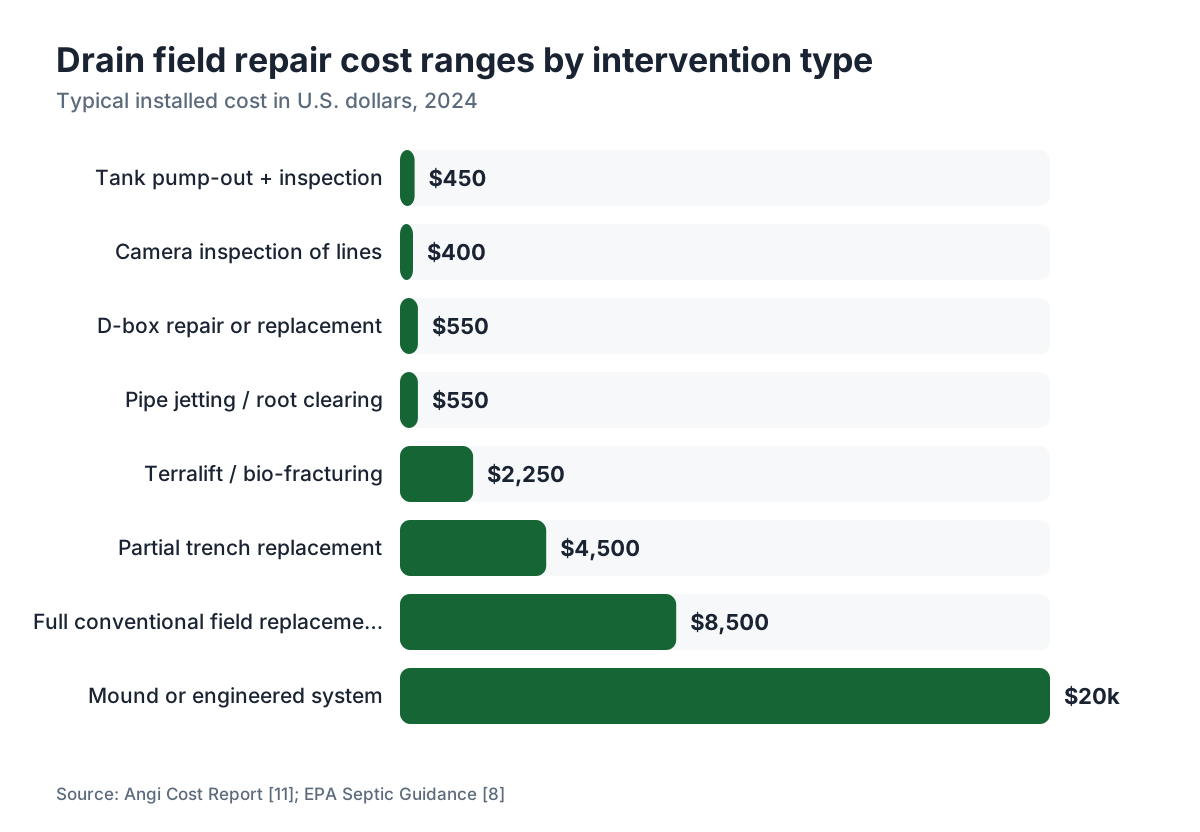
Cost swings hard on what's broken, your soil, local labor rates, and permit fees. The table gives honest ranges for the common jobs.
| Repair type | Typical cost range | Notes |
|---|---|---|
| Tank pump-out + inspection | $300 to $600 | Always the first step |
| Camera inspection of lines | $200 to $600 | Identifies pipe-level issues |
| D-box repair or replacement | $300 to $800 | Often overlooked quick fix |
| Pipe jetting / root clearing | $300 to $800 | Works for blockages, not biomat |
| Terralift / bio-fracturing | $1,000 to $3,500 | Mixed evidence for biomat |
| Partial trench replacement | $2,000 to $7,000 | Per failed trench |
| Full conventional field replacement | $5,000 to $12,000 | Standard soil, standard lot |
| Mound or engineered system | $10,000 to $30,000+ | Poor soil or small lot |
Permit fees add $200 to $1,500 depending on the state and county. [9] Some states require a licensed engineer or soil scientist to sign off on replacement designs, which adds $500 to $2,000. Emergency after-hours calls carry premiums of 50 to 100 percent over standard rates.
For full system numbers, see cost to install septic system. If you're weighing repair against replacement, cost to put in a septic tank breaks out the tank-side costs.
Don't let a contractor skip the diagnosis and jump straight to replacement. A $500 d-box swap has saved many systems that got quoted a $12,000 new field. Get the diagnosis first.
Can you repair a drain field yourself, or do you need a permit?
In nearly every U.S. jurisdiction, any repair that disturbs the soil, replaces pipe, or changes the system layout needs a permit from the local health department or environmental agency. [9] That's not red tape. A failed or badly installed septic system is a direct groundwater contamination risk, and your county needs the system configuration on file for future inspections and property sales.
Unpermitted work can make your home unsellable. Lenders and buyers routinely want proof that septic systems are permitted and in compliance. If a health inspector finds unpermitted work, you may have to dig it up and redo it on your dime.
What you can legally do yourself in most states: conserve water, clear surface vegetation, keep vehicles off the field, add septic-safe bacteria to the tank, and schedule pumping. Pumping itself usually has to go through a licensed pumper who dumps the waste at an approved facility.
For real repairs, hire a licensed septic contractor. Check licensing with your state's environmental or health department. Many states keep public contractor databases. Ask for permit numbers before work starts, and verify them.
How long does a drain field last, and can you extend its life?
A well-designed, properly maintained conventional field should last 20 to 30 years. [10] Some go 40 or 50 years on ideal soil. Others die in 10 from neglect or bad installation. The range is genuinely wide.
The single best thing you can do to stretch field life is pump the tank on schedule. [1] EPA's SepticSmart guidance puts it plainly: "Have your septic system inspected every 1 to 3 years by a qualified professional and pump your septic tank as needed, typically every 3 to 5 years." For a 1,000-gallon tank serving a 4-person household, every 3 to 4 years is usually right. For a bigger tank or a smaller household, every 5 years may do. See how often to pump septic tank for the full breakdown.
Water conservation matters more than most people think. Spreading laundry across the week instead of all Saturday morning smooths out the hydraulic spikes. Fixing a running toilet (which can waste 200 gallons a day) protects the field as much as anything else. [1]
Keep the ground over the field clear of everything but grass. No vegetable gardens (root intrusion and irrigation overload), no trees or shrubs within 30 feet of the trench lines, no parking. Route roof downspouts and surface runoff away from the field.
Flush nothing but human waste and toilet paper. Wipes (even "flushable" ones), feminine products, medications, cooking grease, and food scraps all cause trouble upstream that eventually lands in the field.
Schedule a septic tank inspection every 1 to 3 years. Catching a rising sludge level or a damaged outlet baffle early is far cheaper than a field repair.
What happens if you ignore drain field problems?
Ignore the early signs and you almost always turn a manageable problem into an expensive one. A thin, reversible biomat becomes permanently sealed. A cracked pipe making one trench wet lets solids migrate into the neighboring gravel and soil.
The health stakes are real too. Surfacing sewage carries fecal coliform bacteria, viruses, and nutrients. It can contaminate your well or a neighbor's if the groundwater carries it that way. Some states treat surfacing sewage as a public health emergency and can issue cease-and-desist orders that stop you from using the system until it's fixed. [3]
If you've got a sale pending, a failing field is a material defect that has to be disclosed in most states. Buyers who find an undisclosed field failure after closing have grounds to sue.
Septic service operators often use platforms like SepticMind to track when a system was last serviced and flag overdue accounts before they turn into emergencies.
For what goes wrong in the tank itself before problems reach the field, see septic system repair and septic tank repair.
Are there alternative drain field systems for problem soils?
Conventional gravity trenches work well in sandy or loamy soil with enough depth to groundwater. When those conditions don't hold, engineered alternatives step in, and they cost more.
Mound systems raise the drain field above the native soil on a built fill mound. They're used when the water table is high or the soil is too dense. Installation runs $10,000 to $20,000 and they need an electric pump, which adds long-term maintenance cost. [8]
Pressure-dose systems use a pump to deliver effluent in timed doses instead of continuous flow. That gives the soil time to absorb between doses and can stretch field life on moderately difficult soil. Cost is $5,000 to $15,000.
Drip irrigation systems use effluent that's been treated further (usually by an aerobic treatment unit) and pushed through shallow subsurface drip tubing. They show up in areas with strict rules or tough topography. Cost is $15,000 to $30,000 and up, with heavier ongoing maintenance.
Chamber systems swap gravel for plastic arch chambers, which give more void space for infiltration and resist clogging a bit better than gravel. They're common now as a standard option and cost about the same as gravel systems.
Some jurisdictions allow constructed wetlands or sand filters as extra treatment steps ahead of conventional soil absorption. Those usually get required when the site has specific environmental sensitivity.
Whatever alternative fits your site has to be designed by a licensed professional and permitted through the local authority. If you're starting from scratch, septic tank installation covers the full design process.
What should you do right now if you suspect a drain field problem?
Cut water use immediately. Shorter showers, no laundry, use the system as little as you can. That buys time and may let a stressed field partly recover while you line up service.
Call a licensed septic company and ask for a tank pump-out plus a system inspection. Tell them exactly what you've seen: soggy areas, odors, slow drains, alarm trips. A good pumper checks effluent levels in the tank (high liquid level with a full tank and no outlet blockage usually points to the field), inspects the baffles, and probes the d-box if it can be reached.
Don't panic-buy additives before you have a diagnosis. Most septic additives do little to nothing for a genuinely failing field, and some enzyme products have been found to push more solids into the effluent. [7] The National Environmental Services Center at West Virginia University reviewed the research on septic additives and found no evidence of benefit for failing systems.
Get more than one quote for repair work, especially if someone recommends full replacement. The diagnosis should drive the decision, not the sales pitch. Ask each contractor what specifically failed and why they're recommending a given repair. If they can't explain the failure mechanism, find someone who can.
For tank cleaning and ongoing maintenance scheduling, septic tank cleaning and septic tank pumping walk through what to expect from service visits.
Frequently asked questions
How do I know if my drain field is failing or just my septic tank is full?
Pump the tank first. If a full tank caused the backup, pumping clears the symptoms within hours. If slow drains, soggy ground, or odors stick around after pumping, the field is the problem. A trained pumper also checks the liquid level relative to the outlet baffle. A tank that fills right back to the outlet immediately after pumping points to effluent backing up from a saturated field.
Can a drain field be repaired, or does it always have to be replaced?
Many fields can be repaired without full replacement. A cracked or tilted distribution box, root intrusion in the pipes, or a field stressed by a temporary hydraulic overload are all fixable. Full replacement is needed when the soil has permanently lost infiltrative capacity across most of the field or when pipes are collapsed across several trenches. The only way to know which you've got is a proper diagnosis.
How long does drain field repair take?
A d-box repair takes a few hours. Pipe jetting is usually one service call. Partial or full trench replacement needs excavation, permitting, and soil prep, typically 2 to 5 days of active work once permits clear. Permit timelines vary by jurisdiction from 1 week to several months. Plan for that if you're near a real estate transaction.
What are the most common septic drain field issues by cause?
In rough order of frequency: solids overflow from an under-pumped tank clogging gravel and soil, hydraulic overload from high water use, biomat buildup from saturated conditions, root intrusion from nearby trees, d-box failure causing uneven trench loading, soil compaction from vehicle traffic, and pipe collapse in older systems. Chemical damage and plain old age account for a smaller share.
Will my homeowner's insurance cover a drain field failure?
Standard homeowner's policies almost universally exclude septic failures from wear, age, or neglect. Some policies cover sudden and accidental damage, like a pipe crushed by a falling tree, but gradual failure or maintenance neglect is not covered. A handful of carriers offer septic riders or service line protection add-ons. Read your policy language carefully and ask your agent specifically about underground service lines.
How far from a well does a drain field need to be?
Most state codes require 50 to 100 feet of horizontal separation between a septic drain field and a potable water well, with many states setting 100 feet as the standard. [9] Some states go stricter based on soil type, groundwater depth, or well type. Check your state's onsite wastewater rules directly. EPA recommends 50 feet as a bare minimum, but state regulations usually go further.
Can I plant a garden over my drain field?
No. Vegetable gardens over a drain field are a health risk because root crops can absorb pathogens from effluent, and leafy vegetables touching soil can get contaminated. Beyond food safety, garden watering adds load to ground that already takes effluent. Root intrusion from garden plants can damage pipes too. Grass is the recommended cover. Native grasses and wildflowers without deep taproots are generally fine.
What kills drain field bacteria and how do I avoid it?
Big single doses of bleach, drain cleaners with lye or sulfuric acid, paint and solvents poured down the drain, and high concentrations of antibiotics can all kill the beneficial bacteria in the tank and field. Normal household amounts of antibacterial soap and laundry bleach don't do real harm. The safest rule: if you wouldn't eat it, don't flush it. Take chemicals to a household hazardous waste facility.
Does a failing drain field affect my well water?
Yes, potentially. A field that's surfacing effluent or letting untreated wastewater reach groundwater can contaminate a nearby well with fecal bacteria, nitrates, and viruses. If you have a well within 200 feet of the field and you suspect failure, test your well water for total coliform and nitrates right away. Your county health department can advise on testing and next steps if contamination shows up.
How do septic drain field parts differ between conventional and alternative systems?
A conventional gravity field uses a distribution box, perforated pipes, and a gravel bed. Pressure-dose systems add a pump chamber, control float, and timer-controlled dosing. Mound systems add a built fill layer and a distribution manifold above natural grade. Chamber systems replace gravel with interlocking plastic chambers. Drip systems replace pipes and gravel with emitter tubing plus pre-treatment equipment. Each has its own maintenance needs and failure modes.
Is it safe to use water normally while waiting for drain field repairs?
No. Normal water use on a failing field pushes more effluent into soil that can't take it, speeds up the damage, and risks surfacing sewage. Cut water use to the minimum: short showers, no laundry, fix any leaking toilets or faucets. If the field has fully failed and sewage is surfacing, arrange other accommodations if you can until repairs are done. Some health departments require it.
What permits are required for drain field repair or replacement?
Almost all drain field work beyond minor cleaning requires a permit from the county or local health department. Replacement typically needs a soil evaluation, a system design by a licensed professional, a permit application and fees, an inspection at installation, and a final sign-off. Permit fees range from roughly $200 to $1,500. Timelines from application to approval run from days to months depending on the jurisdiction. Never allow unpermitted repair work.
How do I find a qualified drain field repair contractor?
Start with your state's health department or environmental agency website, which often keeps a searchable database of licensed septic contractors. The National Onsite Wastewater Recycling Association (NOWRA) has a contractor locator. Ask for the license number, verify it, and confirm they pull permits for all work. Get at least two quotes. A contractor who recommends immediate full replacement without a detailed diagnostic inspection is a red flag.
Sources
- U.S. EPA SepticSmart homeowner guidance: Not pumping the septic tank regularly is the leading cause of drain field failure; EPA recommends inspecting every 1-3 years and pumping every 3-5 years; leaky toilets waste 200 gallons per day
- University of Minnesota Extension (extension.umn.edu), Septic Systems program: Biomat formation mechanism and hydraulic overload as causes of soil absorption failure
- U.S. EPA: How Your Septic System Works: Surfacing effluent is a public health issue; untreated wastewater reaching the surface carries pathogens
- U.S. EPA Septic Systems (SepticSmart) program: Pump chamber alarm activation and slow drains as signs of field failure
- North Carolina State University Extension (ces.ncsu.edu), septic system publications: Root intrusion from trees causes pipe cracking and blockage; distribution box failure causes uneven trench loading
- Penn State Extension (extension.psu.edu), septic system resources: Camera inspection of distribution lines identifies root intrusion, pipe collapse, and blockages; diagnostic methods for field evaluation
- National Environmental Services Center, West Virginia University (nesc.wvu.edu), septic additives research: No evidence that commercial septic additives benefit failing systems; some enzyme products increase solids in effluent
- U.S. EPA: Types of Septic Systems: Mound system cost ranges and alternative system types for poor soil conditions
- U.S. EPA Septic Systems: state regulations and contacts: State permitting requirements for drain field repair and replacement; well setback distance requirements
- University of Florida IFAS Extension (edis.ifas.ufl.edu), septic system publications: Conventional drain fields last 20 to 30 years with proper maintenance
- Angi: Cost to Replace a Leach Field: Full drain field replacement costs $5,000 to $20,000+ depending on system type, soil, and region
Last updated 2026-07-09