Septic system specialist: who they are and when you need one
By the SepticMind Editorial Team

TL;DR
- A septic system specialist is a licensed onsite wastewater professional who designs, installs, inspects, repairs, and maintains septic systems.
- They differ from plumbers, who work inside the house.
- You need one for new installations, failed drain fields, real estate inspections, and any repair that requires pulling a permit.
- Expect to pay $100 to $250 per hour for diagnostics or $300 to $600 for a standard inspection.
What is a septic system specialist, exactly?
A septic system specialist is a licensed professional whose entire job is onsite wastewater treatment: the tanks, the pipes, the drain field, and the soil beneath it. That's it. Not the plumbing inside your walls, not the city sewer main, just the private system that handles your household waste from the point it exits your foundation.
The title varies by state. You'll see "onsite wastewater practitioner," "septic installer," "soil evaluator," "wastewater system designer," and "site evaluator" depending on where you live [1]. Some states issue a single combined license. Others split design, installation, and pumping into three separate credentials. What unifies them is that they've passed state-administered testing on soil science, hydraulic loading, system design, and local code, things a general plumber isn't required to know.
The work covers a lot of ground. A specialist might spend Monday running a perc test for a new home site, Tuesday inspecting a system for a real estate sale, Wednesday diagnosing a surfacing drain field, and Thursday pulling a permit and overseeing a mound system install. The common thread is the full system, underground and in the ground, more than the fixtures above it.
Don't confuse them with pumpers. A septic pumping company removes accumulated solids from your tank on a routine schedule, which is its own skilled trade, but pumpers generally aren't licensed to design or repair the system. Some companies employ both. Many don't. Ask exactly which credentials the person doing your work holds.
How does a septic specialist differ from a plumber?
The boundary is usually your foundation wall. A licensed plumber handles the pipes, fixtures, and water supply inside your home. A septic specialist handles everything on the treatment side: the tank, the distribution box, the drain field, and the soil. There's real overlap where your house drain exits the slab, and for smaller repairs near the tank inlet, you may hear both trades claim it. For anything involving the actual septic components, you want the specialist.
Most states prohibit unlicensed persons from installing or repairing onsite wastewater systems, even if they're licensed plumbers [1]. A plumber who replaces a broken baffle inside your tank without the right credential can void your permit history and create a liability problem when you sell. This isn't theoretical. Home sale inspections routinely flag unpermitted septic work.
The two knowledge bases are genuinely different. Plumbers learn pipe sizing, fixture units, pressure, and drainage slope inside the home. Septic specialists learn soil morphology, percolation rates, seasonal high water tables, hydraulic loading rates, and state-specific setback distances from wells, property lines, and buildings. These aren't minor add-ons. They're separate bodies of knowledge that take years to develop.
For a clogged drain that might involve the house line or the septic inlet, start with a plumber to rule out the simple in-home blockage. If the problem is at or beyond the tank, call the specialist.
What licenses and certifications should a septic specialist have?
Licensing is state-by-state, and the variation is large. At minimum, look for a current state-issued onsite wastewater or septic installer license for the type of work being done [1]. Most states also require installers and pumpers to carry a bond and general liability insurance. Ask for proof of both before anyone digs on your property.
Beyond state licensure, two national certifications signal a higher level of professional investment. The National Association of Wastewater Technicians (NAWT) offers examinations for septic inspectors and pumpers [2]. The National Onsite Wastewater Recycling Association (NOWRA) runs its own education and certification programs for system designers and installers [3]. Neither replaces your state license, but holding one suggests the person keeps current with changing technology and practice.
Here's what to actually verify:
- State license number: look it up on your state environmental or health agency's license lookup tool, more than the contractor's word
- License type: installer, designer, and inspector credentials are sometimes separate; confirm the license covers what you're hiring them to do
- Expiration date: licenses lapse, and it happens often
- Insurance: general liability plus, for larger jobs, workers' compensation
- Permit history: ask if they pull permits themselves or expect you to; a legitimate specialist pulls their own
For real estate deals specifically, the inspector should hold either a state-issued inspection credential or a NAWT certification at minimum. Some states, like Massachusetts, have very specific home sale inspection rules that only a licensed Title 5 inspector can satisfy [4].
If a contractor says you don't need a permit for a repair, that's a red flag. Most states require permits for any new installation, any repair involving the tank or distribution system, and any drain field modification [1].
What services does a septic system specialist provide?
The range is broader than most homeowners realize until they need something specific.
System design and permitting. When you're building on a new lot or replacing a failed system, someone has to evaluate your soil, calculate loading, and produce a permitted design. This is often a separate licensed designer or engineer, sometimes the same person who will install it.
Perc tests and soil evaluations. Before any new system can be permitted, the soil's ability to accept liquid has to be measured. A percolation test (perc test) or a soil morphology evaluation (used in most modern states instead of or alongside a perc test) tells the designer what kind of system the site can support [5].
Installation. Digging and installing the tank, distribution system, and drain field according to the permitted design, then getting a final inspection from the local authority.
Inspections. Pre-purchase inspections for real estate, routine inspections on older systems, and compliance inspections required by some counties or municipalities. See our guide on septic tank inspection for what a thorough inspection covers.
Pumping and cleaning. Some specialists do this themselves. Others subcontract it. Either way, proper septic tank pumping is part of routine care every 3 to 5 years for most households [6].
Repair. Replacing broken baffles, fixing distribution boxes, repairing or replacing inlet and outlet pipes, and sealing tank cracks. More on what that costs is at our septic tank repair and septic system repair guides.
Drain field rehabilitation or replacement. The most expensive and consequential service. When a leach field fails, the specialist evaluates whether it can be rested and rehabilitated or must be replaced entirely, which means new soil evaluation and a new permit.
Alternative and advanced systems. Mound systems, drip irrigation systems, aerobic treatment units, and other alternatives to conventional gravity systems require specialists with specific training in that technology.
When do you actually need to call a septic specialist (vs. handling it yourself)?
Some septic tasks are firmly DIY territory. Conserving water, keeping non-biodegradables out of the toilet, and keeping accurate maintenance records don't require a specialist. Scheduling your septic tank pump out through a licensed pumping company is routine. Adding bacterial additives, whatever their actual value (the evidence for commercial additives is weak), doesn't require a license.
Everything else generally does. Here's a practical decision line.
Call a specialist when:
- Drains are slow throughout the house and the problem isn't inside your plumbing
- Sewage odors show up near the tank or drain field
- Wet or unusually green patches appear over the drain field, especially if they don't dry out after a dry spell
- You're buying or selling a home with a septic system
- Your system is more than 20 to 25 years old and has never been formally inspected
- You want to add a bedroom, add a bathroom, or increase the number of occupants
- Any alarm on an advanced treatment unit goes off
- You see effluent surfacing anywhere
The EPA's SepticSmart program puts it plainly: "Have your system inspected by a qualified professional at least every three years" and pumped as the inspector recommends [6]. That's the floor, not the ceiling.
Here's the mistake I see all the time. A homeowner calls a plumber for a slow drain, gets the snake treatment, and assumes it's fixed, only to have the system back up three weeks later because the real problem was a full or failing tank. If a plumber can't find a clear blockage in the house lines, get a specialist involved before spending more money on the wrong fix.
How much does a septic system specialist cost?
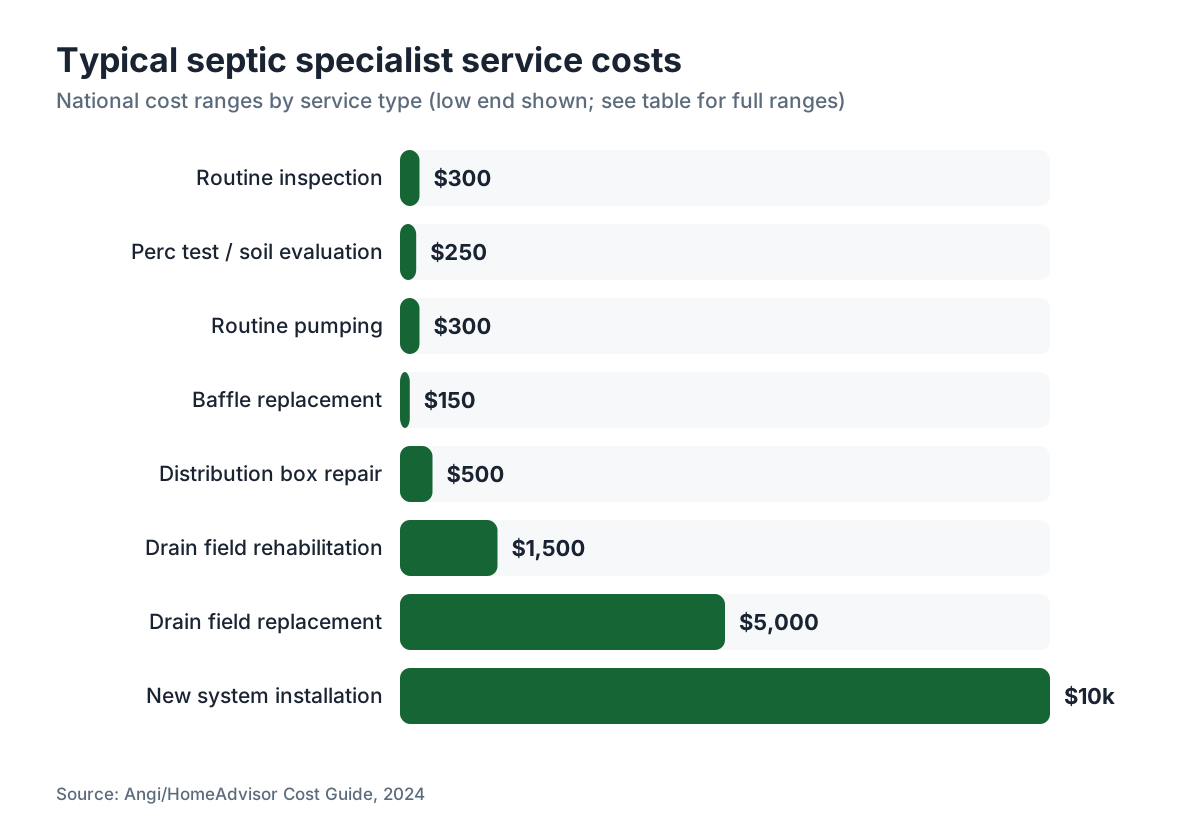
Costs vary enough that any single number is misleading. Here's an honest breakdown by service type, using national ranges from industry surveys and state cost data where available [7].
| Service | Typical Cost Range | Notes |
|---|---|---|
| Routine inspection | $300 to $600 | Varies widely by state and system complexity |
| Real estate / Title 5 inspection (MA) | $400 to $700 | State-mandated format, must be licensed |
| Perc test / soil evaluation | $250 to $1,000 | Depends on site complexity and state requirements |
| Pumping (3-5 year routine) | $300 to $600 | Tank size, access, and local market drive this |
| Baffle replacement | $150 to $500 | Often caught during inspection |
| Distribution box repair or replacement | $500 to $1,500 | Labor plus materials |
| Drain field rehabilitation | $1,500 to $5,000 | Resting, aeration, or hydro-jetting; not always successful |
| Drain field replacement | $5,000 to $25,000+ | Site-dependent; mound or alternative systems cost more |
| New system installation | $10,000 to $30,000+ | Varies by system type, soil, and local labor market |
The wide ranges are real. A drain field replacement in coastal New England or California costs far more than the same job in rural Kentucky, both because of labor markets and because alternative systems (required in many sensitive-area jurisdictions) run two to three times a conventional gravity system.
For new installations, see our detailed breakdowns at cost to put in a septic tank and cost to install septic system.
Diagnostic time, where a specialist comes out to figure out what's wrong, typically runs $100 to $250 per hour. Some charge a flat diagnostic fee of $150 to $400. Get that number in writing before they arrive.
Getting two or three quotes on anything above a routine inspection is normal and smart. Specialists don't typically lowball each other the way general contractors sometimes do, because the permit requirements limit what can be cut. Even so, prices for the same permitted job can vary 20 to 30 percent by company.
How do you find and vet a qualified septic specialist in your area?
Start with your state's licensing agency, not Google. Every state that regulates onsite wastewater (which is all of them, in some form) keeps a searchable database of licensed contractors. Your state health department or environmental agency's website is the right starting point. Search for "[your state] onsite wastewater license lookup" and you'll find it.
From that verified list, narrow by location, then check:
How long have they been licensed? A contractor licensed for 15 years with a clean record is a safer bet than one licensed for 8 months with no history. States usually show the original license date.
Do they pull their own permits? Ask directly. A contractor who expects you to handle the permit process is pushing work onto you that should be theirs.
Can they provide references for the specific type of work? References for routine pumping tell you nothing about their drain field installation quality. Ask for references on jobs that match yours.
Do they offer a written estimate? Any contractor unwilling to put numbers in writing before starting is a problem.
Are they NAWT or NOWRA certified? Not required, but it helps separate specialists who invest in continuing education from those who got their license and stopped learning [2][3].
For operators running a septic service business, managing scheduling, dispatch, job documentation, and inspection reports across dozens of customers a week is where purpose-built software starts to matter. SepticMind is built specifically for septic service operators to handle that operational load, from job scheduling to customer communication, without the generic-field-service workarounds.
Avoid:
- Anyone who quotes a major repair or installation without visiting the site first
- Contractors who suggest skipping the permit to save money (this creates real liability at resale)
- Companies that won't provide proof of current license and insurance in writing
- Pressure to decide immediately or lose a "special price"
Neighborhood recommendations from people who've had real septic work done, more than pumping, are genuinely valuable. A neighbor who had a drain field replaced three years ago and is happy with the outcome is a much stronger signal than an online review.
What happens during a septic system inspection?
A proper inspection is more than opening the lid and peeking in. Here's what a qualified specialist should do during a thorough inspection, based on NAWT standards and state inspection protocols [2][4].
First, they locate all system components, which may mean probing or reviewing permit records if the system is old. Then they expose the tank, which means uncovering the access risers or lids, and inspect:
- Tank condition: structural integrity, inlet and outlet baffles, any cracking or corrosion
- Scum and sludge levels: to determine whether pumping is needed now or can wait
- Effluent quality: what's leaving the tank should look like cloudy water, not raw sewage
- Distribution system: the box or manifold that routes effluent to the drain field
- Drain field surface and soil: any surfacing, saturation, or signs of failure
A basic inspection takes 1.5 to 3 hours depending on system complexity and access. A pump-out during the same visit adds time but also gives the inspector a clear view of the tank interior, so combining them is efficient.
Some inspectors also run a camera down the pipe from house to tank, which adds cost but can catch root intrusion or pipe damage that's otherwise invisible.
For real estate transactions, the report format is often state-mandated. Massachusetts Title 5, for example, requires specific pass/fail criteria and a detailed written report that must be filed with the local board of health [4]. Other states have their own formats. Confirm before hiring that your inspector knows the required format for your jurisdiction.
The full breakdown of what to expect and what questions to ask is at our septic tank inspection guide.
What are the signs your septic system needs a specialist right now?
Some signs give you time to plan. Others mean call today.
Call the same day:
- Sewage backing up into your house drains or toilets
- Effluent visibly surfacing in your yard
- Strong sewage odor inside the house that doesn't clear with ventilation
- Any sewage getting into a well, stream, or surface water
Schedule within a week:
- Slow drains throughout the house that don't clear with drain cleaning
- Gurgling in drains or toilets when you use water elsewhere in the house
- Unusually wet or spongy ground over the drain field
- Lush, bright green grass directly over the drain field when the surrounding lawn is dry
- An alarm light or buzzer on an advanced treatment unit
Schedule within a month:
- The system is overdue for pumping (most households, every 3 to 5 years; see how often to pump septic tank for the full breakdown)
- The system is 20 or more years old without a formal inspection
- You're planning construction, landscaping, or a big change in water use
- You're buying a home and the seller's disclosure shows an old or unknown system
The EPA notes that a well-maintained septic system can last 25 to 30 years, but that lifespan assumes regular pumping and inspection [6]. Systems that skip maintenance tend to fail at the worst possible time, often during heavy rain or when the house is full of guests.
How are alternative and advanced septic systems different, and who installs them?
Conventional gravity systems, the tank-plus-drain-field setup most people picture, work well on suitable sites. A lot of sites aren't suitable, though: high water tables, tight clay soils, small lots, steep slopes, or proximity to wells and surface water. That's where alternative systems come in, and they need specialists with specific extra training.
Common alternative systems:
Mound systems. Used when the soil or water table doesn't allow conventional burial depth. The drain field gets built up above grade using imported sand. More expensive to install ($15,000 to $30,000+ depending on site), requires a blower and controls, and needs more frequent inspection [7].
Aerobic treatment units (ATUs). Add an aeration chamber to the process, producing cleaner effluent that can sometimes be dispersed on smaller lots or via spray irrigation. Require electricity, mechanical maintenance, and usually a maintenance contract with a licensed ATU service provider.
Drip irrigation systems. Distribute highly treated effluent through shallow drip tubing, often on sites with difficult soils or small footprints. Technically demanding to install and maintain.
Constructed wetlands and other innovative systems. Used in sensitive areas, and they typically need both an environmental engineer and an onsite wastewater specialist.
For any of these, confirm your specialist has hands-on experience with that system type, more than a general installer license. Ask how many of that system they've installed and whether they can connect you with those past customers.
Installation costs and system selection details are at septic tank installation.
SepticMind's scheduling and job documentation tools are used by operators running maintenance contracts on ATUs and mound systems, where the service intervals and compliance records are more demanding than conventional system work.
What regulations govern septic specialists and what the EPA recommends
Septic systems fall under a layered regulatory structure. At the federal level, the EPA provides guidance through its SepticSmart program but does not directly regulate onsite wastewater systems. That authority sits with states [6][8]. States set the licensing requirements, design standards, setback rules, and permit processes. Counties and municipalities often layer extra requirements on top of state minimums.
The EPA's SepticSmart program, run through the Office of Water, publishes guidance that states and homeowners reference: "Properly designed, installed, and maintained septic systems last for decades," and the program recommends inspection at least every three years and pumping every three to five years as a baseline [6].
State codes are the binding rules. The National Environmental Services Center at West Virginia University keeps a clearinghouse of state onsite wastewater regulations that's useful for checking your state's specific requirements [9]. Most state codes are based on or referenced to the EPA's Design Manual for Onsite Wastewater Treatment and Disposal Systems, which sets technical standards for soil evaluation, hydraulic loading, and system sizing [8].
For contractors, breaking state licensing or permit rules can mean license revocation, fines, and personal liability if a failed system contaminates a well or surface water. The Clean Water Act's Section 402 NPDES program can apply if septic effluent reaches navigable waters, which carries federal enforcement potential [10].
For homeowners, the practical takeaway is simple: always ask for a permit number before work starts on anything beyond routine pumping. If your contractor can't provide one, or says the job doesn't need one, verify that claim yourself with your local health or environmental office before proceeding.
What questions should you ask before hiring a septic specialist?
The conversation before you hire matters as much as checking the license. Here are the questions worth asking, and what the answers tell you.
"What is your license number and what does it cover?" Any legitimate specialist answers this right away and correctly. You verify it yourself on the state database.
"Will you pull the permits for this job?" Yes is the right answer for any installation or significant repair.
"Have you done this type of work on a site like mine?" Soil conditions, lot size, and water table create real differences in system performance. Experience on similar sites matters.
"What happens if you open it up and find something worse than expected?" Good answer: they document what they find, explain the options, and give you a revised estimate before proceeding. Bad answer: they just fix it and tell you afterward.
"Can you walk me through the inspection report format?" Inspectors who understand their report format well enough to explain it to a layperson understand the work.
"Who will actually do the work?" Some companies quote a senior specialist and show up with a junior crew. Find out who's on site.
"Do you have references for jobs like this one?" Request them and actually call two. Ask about timeline accuracy, communication, and whether the job cost what was quoted.
"What's your warranty on this repair or installation?" Most reputable installers offer at least a one-year workmanship warranty on new installations, and some offer more. For repairs, 90 days to one year is typical.
If a contractor is impatient with these questions, that tells you something too.
Frequently asked questions
Is a septic specialist the same as a plumber?
No. A plumber handles water supply and drainage inside your home. A septic specialist is licensed specifically for onsite wastewater systems: the tank, distribution system, and drain field. Most states prohibit plumbers from installing or repairing septic components without a separate onsite wastewater license. For anything involving the actual septic system, hire the specialist, not the plumber.
How often should I have a septic specialist inspect my system?
The EPA's SepticSmart program recommends inspection at least every three years for conventional systems. Advanced systems with mechanical components (aerobic units, mound systems with pumps) typically need annual inspection. If your system hasn't been formally inspected in over five years, schedule one now regardless of how things look from the surface.
What happens if I hire someone without a septic license?
Unpermitted work can void your system's permit history, create liability at resale, and leave you personally responsible if the system fails and contaminates a neighbor's well or nearby water. Many states impose fines on both the unlicensed contractor and the homeowner who hired them. It's not worth the savings.
How much does a septic system inspection cost for a home sale?
Real estate septic inspections typically cost $300 to $700 depending on your state and system complexity. States with mandated inspection formats (like Massachusetts Title 5) tend toward the higher end because the report has specific legal requirements. Always confirm the inspector is licensed for the format your state requires before booking.
Can a septic specialist fix a failing drain field?
Sometimes, but not always. If the field is clogged from biomat buildup, resting it (taking it offline for 6 to 12 months) or treating it with aeration can sometimes restore partial function. True hydraulic failure from soil saturation or physical damage usually means replacement. A specialist should evaluate the field before recommending an approach, because the wrong fix wastes money.
What is a perc test and does every septic installation need one?
A percolation test measures how fast your soil absorbs water, which determines what size and type of system your lot can support. Most states still require it, though many now prefer a soil morphology evaluation done by a licensed soil scientist alongside or instead of a perc test. Your state's onsite wastewater code will specify which is required for your site.
How long does a septic system last if properly maintained?
The EPA states that properly designed, installed, and maintained septic systems can last decades, with 25 to 30 years as a common benchmark for conventional systems. Drain fields can fail earlier if overloaded, flooded, or not pumped on schedule. Concrete tanks, if structurally sound, can last 40 or more years. Plastic and fiberglass tanks typically last 30-plus years.
Do I need a permit for septic repairs, or just new installations?
Most states require permits for any work beyond routine pumping and minor maintenance: baffle replacement, distribution box repair, any drain field work, and any new installation all typically require a permit. Permit requirements vary by state and sometimes by county. Your specialist should know your local requirements and pull the permit themselves as part of the job.
What is the difference between a septic designer and a septic installer?
A designer evaluates your site (soil, slope, water table, setbacks) and produces the engineered plan and permit application for the system. An installer builds what the designer specified and gets the final inspection sign-off. In many states these are separate licenses, and some contractors hold both. For a new system, confirm you have qualified people in both roles, more than one.
Can I add a bedroom or bathroom without upgrading my septic system?
Maybe, but you need a specialist to assess it first. Septic systems are sized for a specific daily hydraulic load based on bedroom count (typically 110 to 150 gallons per bedroom per day in most state codes). Adding a bedroom or bathroom increases the design flow. If the existing system was sized with no excess capacity, you'll need an upgrade, and a permit is required either way.
What national certifications should a septic specialist have?
The two main national bodies are NAWT (National Association of Wastewater Technicians), which certifies inspectors and pumpers, and NOWRA (National Onsite Wastewater Recycling Association), which supports designers and installers. Neither replaces your state license, but both require ongoing education. Holding one signals a commitment to staying current with standards and technology beyond the minimum.
How do I find a licensed septic specialist near me?
Start with your state health department or environmental agency's license lookup tool, which lists currently licensed onsite wastewater professionals by credential type and location. From there, cross-check with NAWT's member directory or NOWRA's member search. Personal referrals from neighbors who've had real system work done (more than pumping) are also reliable, especially for larger jobs.
What is a septic system maintenance contract and is it worth it?
A maintenance contract with a specialist covers scheduled inspections, pumping, and often priority service for repairs, typically for a fixed annual fee of $150 to $500 depending on system type. For advanced systems like aerobic units or mound systems with pumps, a contract is often required by the permit. For conventional gravity systems, it's optional but useful for avoiding deferred maintenance.
Sources
- EPA, Onsite Wastewater Treatment Systems Manual: State licensing requirements govern who can design, install, and repair onsite wastewater systems; requirements vary by state
- National Association of Wastewater Technicians (NAWT), Certification Programs: NAWT offers national certification for septic inspectors and pumpers as a supplement to state licensure
- National Onsite Wastewater Recycling Association (NOWRA), Education and Certification: NOWRA provides education and certification programs for onsite wastewater system designers and installers
- Massachusetts Department of Environmental Protection, Title 5 Septic System Regulations (310 CMR 15.00): Massachusetts Title 5 requires a state-licensed inspector to conduct and file a specific inspection report format for home sale transactions
- Penn State Extension, Soil and Perc Testing for Septic Systems: Percolation tests and soil morphology evaluations determine soil suitability and system sizing for new onsite wastewater installations
- EPA, SepticSmart Program: EPA SepticSmart recommends inspection at least every three years and pumping every three to five years, and notes properly maintained systems last for decades
- HomeAdvisor / Angi, Septic System Cost Guide (2024): National cost ranges for septic inspections ($300-$600), routine pumping ($300-$600), drain field replacement ($5,000-$25,000+), and new system installation ($10,000-$30,000+)
- EPA, Design Manual: Onsite Wastewater Treatment and Disposal Systems (EPA 625/1-80-012): The EPA Design Manual sets technical standards for soil evaluation, hydraulic loading, and system sizing that state codes reference
- National Environmental Services Center, West Virginia University, State Onsite Wastewater Regulations Clearinghouse: NESC maintains a clearinghouse of state-by-state onsite wastewater regulations for reference by contractors and homeowners
- EPA, Clean Water Act Section 402 NPDES Program: Clean Water Act Section 402 NPDES can apply when septic effluent reaches navigable waters, triggering federal enforcement potential
- University of Minnesota Extension, Septic System Owner's Guide: Typical household septic systems should be pumped every three to five years; advanced systems may need annual inspection and service
- Virginia Cooperative Extension, Septic System Maintenance and Management: Septic system design loading rates are typically 110 to 150 gallons per bedroom per day under most state onsite wastewater codes
Last updated 2026-07-09