Septic system maintenance cost: what you'll actually pay
By the SepticMind Editorial Team
TL;DR
- Most homeowners spend $300 to $600 a year on septic maintenance once you average out pumping every 3 to 5 years, an inspection, and small repairs.
- Aerobic systems cost more, usually $400 to $1,200 a year, because they need quarterly service contracts.
- Neglect costs far more: a failed drain field runs $5,000 to $20,000 to replace.
What does septic system maintenance actually include?
Maintenance is more than pumping. A septic system that gets cared for has four recurring cost buckets: pumping (removing accumulated solids from the tank), inspection (checking baffles, lids, effluent levels, and the drain field), mechanical service (for systems with pumps, aerators, or UV disinfection), and preventive repairs (swapping worn risers, effluent filters, or floats before they quit).
The EPA's SepticSmart program puts it plainly: septic owners should "have your system inspected at least every 3 years by a professional and pump your tank as needed, generally every 3 to 5 years." [1] That schedule is the foundation nearly every cost estimate is built on.
Conventional gravity systems are the cheapest to maintain. They have no moving parts. Pressure-dosed, mound, drip-irrigation, and aerobic treatment unit (ATU) systems each add cost because they have pumps, timers, and sometimes state-mandated service contracts. Knowing your system type before you budget matters more than any average figure you'll read anywhere, including here.
How much does septic pumping cost on average?
Septic tank pumping usually costs $250 to $600 for a standard residential tank (1,000 to 1,500 gallons). Most homeowners land around $300 to $400 in the Midwest and Southeast and $400 to $600 in the Northeast, Mid-Atlantic, and Pacific Coast regions. [2] Tanks over 1,500 gallons add roughly $50 to $100 per additional 500 gallons.
Divided over a 3-to-5-year pump cycle, pumping costs $60 to $200 a year in amortized terms. That makes it the best-value maintenance task in septic ownership, full stop. Skipping a pump cycle to save $350 risks $500 to $1,500 in drain-field repair from solids overflow. Bad trade.
A few things drive pumping prices up fast. Emergency service (nights, weekends, or when the system has backed up into the house) usually adds a $150 to $300 surcharge. Tanks with no riser or access lid that need excavation add $100 to $300. If the pumper has to drive more than 30 miles, expect a travel charge. Our septic tank pumping and septic tank pump out guides break down every line item.
| Tank size | Typical pump cost | Frequency | Annual amortized cost |
|---|---|---|---|
| 750 gal (1-2 people) | $200, $350 | Every 4 to 5 yrs | $40, $88 |
| 1,000 gal (2-3 people) | $275, $450 | Every 3 to 4 yrs | $69, $150 |
| 1,250 gal (3-4 people) | $325, $500 | Every 3 yrs | $108, $167 |
| 1,500 gal (4-5 people) | $375, $600 | Every 3 yrs | $125, $200 |
| 2,000+ gal | $500, $800 | Every 3 to 5 yrs | $100, $267 |
How much does a septic inspection cost, and how often do you need one?
A standard visual inspection costs $100 to $250. A full mechanical inspection, where the tech opens the tank, checks baffles and filters, probes the scum and sludge layers, and looks at the drain field, runs $250 to $500. Real estate inspections, which need a written report and often a dye test or camera, can hit $300 to $650. [2]
The EPA recommends inspections at least every 3 years for systems without mechanical parts, and annually for systems with pumps, floats, or other components. [1][11] Several states put this in writing. Florida, for one, requires permitted aerobic systems to keep a service contract that provides at least two inspections a year. [3]
Here's the pragmatic move: have the inspection done at the same time as pumping. Most pumpers include a basic visual check in the pump price. If you want a written condition report, expect to add $75 to $150 on top of the pump fee. Our septic tank inspection guide walks through exactly what a good inspector should check.
One fact worth pinning down: the EPA states a typical household septic system "should be inspected at least every 3 years," and that "alternative systems with electrical float switches, pumps, or mechanical components should be inspected more often, generally once a year." [1][11]
What does aerobic septic system maintenance cost?
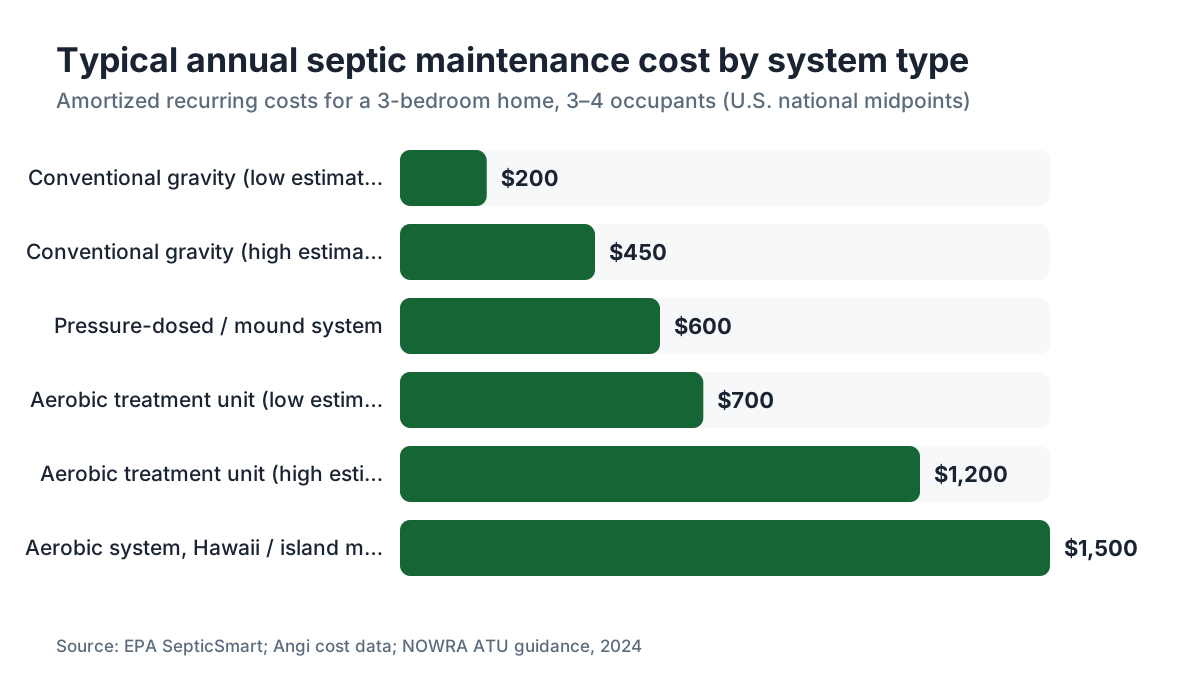
Aerobic treatment units (ATUs) cost a lot more to maintain than conventional systems. Annual maintenance runs $400 to $1,200 a year, depending on your state's rules, the age of your equipment, and whether you're on a service contract or paying per visit. [4]
Here's where the money goes. Most states require a licensed operator to service ATUs quarterly or semi-annually under a written contract. That contract runs $150 to $300 a year in low-cost rural markets and $400 to $700 a year in pricier coastal ones. ATUs also need periodic parts: air compressors or diffusers ($150 to $600 every 5 to 10 years), chlorine tablets or other disinfection media ($30 to $80 a year), and effluent filters ($50 to $150 every 2 to 3 years). If the system discharges to the surface through spray irrigation, state rules often add effluent monitoring and lab fees.
Kauai and other Hawaii county jurisdictions sit at the top of this range. Hawaii's Department of Health requires all individual wastewater systems to meet strict effluent standards, and island contractors carry higher labor and parts costs than mainland crews. [5] Homeowners on Kauai report paying $600 to $1,500 a year for ATU service contracts, with mainland-shipped parts adding delay and cost.
Buying a home with an aerobic system? Budget at least $500 a year for maintenance and ask to see the existing service contract before you close.
What do common septic repairs cost?
Preventive maintenance catches small problems before they turn into big ones. When repairs do come up, here's what you're looking at in 2024 market pricing. [2][6]
| Repair type | Typical cost range |
|---|---|
| Effluent filter replacement | $100, $250 |
| Baffle replacement (inlet or outlet) | $150, $500 |
| Riser/access lid installation | $200, $600 |
| Float switch replacement | $100, $300 |
| Pump replacement (effluent or dosing) | $400, $1,200 |
| Drain field rejuvenation (aeration/hydro-jetting) | $1,000, $3,000 |
| Drain field replacement (partial) | $2,000, $8,000 |
| Drain field replacement (full) | $5,000, $20,000 |
| Tank replacement (concrete, standard size) | $1,500, $5,000 |
The repair that blindsides most homeowners is the drain field. A healthy one lasts 20 to 30 years with proper care. An overloaded or neglected one can fail in under 10. Once biomat (a layer of organic slime) clogs the soil absorption area, you have three options: rest it (divert flow to a spare field if you have one), try remediation with aeration or bacterial treatments (results are hit or miss), or replace it. Full replacement is a $5,000 to $20,000 event, driven by soil, site access, and permit fees.
For when a repair is worth attempting and when it isn't, see our guides on septic system repair and septic tank repair.
What's the total annual cost of owning a septic system?
Run the numbers for a conventional gravity-fed system serving a 3-bedroom home with 3 to 4 people.
Pumping amortized over 3 years: $108 to $167 a year. Inspection every other year, amortized: $50 to $125 a year. Minor preventive repairs spread over 10 years: $50 to $150 a year. Drain field reserve fund (figure $10,000 replacement every 25 years): $400 a year.
Add it up and the realistic annual cost is $608 to $842 a year once you set aside money for eventual drain field work. Skip the reserve and most homeowners spend $200 to $450 a year in the years nothing breaks.
For aerobic systems, layer on the maintenance contract ($300 to $700) and consumables ($100 to $200). That pushes the total to $700 to $1,400 a year, plus reserves.
Municipal sewer usually costs $50 to $150 a month ($600 to $1,800 a year) in service fees alone, before any capital costs. Septic is often cheaper in the near term but carries lumpier risk if you skip maintenance. The University of Minnesota Extension has documented that septic systems are typically more cost-effective for rural properties than sewer extensions, which can run $15,000 to $30,000 per parcel to install. [7]
Planning a new install? The cost to install a septic system and cost to put in a septic tank guides cover the upfront side separately.
Does where you live change your septic maintenance cost significantly?
Yes. Geography is one of the biggest cost drivers there is. Labor rates, state rules, septage disposal fees, and local permit requirements all swing hard from place to place.
In rural parts of the Southeast and Midwest, pumping can run as low as $175 to $250. In coastal Massachusetts, Long Island, or the San Francisco Bay Area, the same service is $450 to $700. Hawaii sits at or above the national ceiling for every service type.
State rules shape costs in ways homeowners rarely see coming. Some states require all pumped septage to be treated at an approved facility, and those tipping fees get passed to you. Massachusetts Title 5 requires a septic inspection before every real estate sale, which adds a $400 to $650 cost that's really a state-mandated maintenance event. [8] Florida aerobic system owners face mandatory service contracts under Chapter 64E-6 of the Florida Administrative Code. [3]
Soil matters too. Clay soils and high water tables shorten drain field life and raise replacement costs. Sandy or loamy soils with good perc rates are gentler on fields and cheaper to remediate. The leach field guide covers how soil type drives drain field performance and longevity.
How can you reduce septic maintenance costs without risking your system?
The best way to cut costs is boring: stick to the pump schedule and don't abuse the system. That's not a slogan. The EPA SepticSmart campaign backs it with data, calling regular pumping the single most important thing an owner can do. [1] Deferred pumping lets solids drift into the drain field, and drain field damage almost always costs more than every pump you skipped, combined.
Beyond the basics, a few moves genuinely save money.
Install a riser if you don't have one. Digging to find the lid adds $100 to $300 to every pump visit. A one-time riser install costs $200 to $600 and pays for itself inside two pump cycles.
Add an effluent filter. It costs $60 to $150 installed and shields the drain field from solids. Clean or replace it every 2 to 3 years.
Space out water use. Running every load of laundry on one day floods the system and can shove unsettled solids into the field. Spreading it over the week is free.
Don't treat additives as a substitute for pumping. The EPA has found no scientific evidence that biological or enzyme additives cut the need for pumping. [1] Keep the $20 to $40 a bottle.
For operators juggling many service accounts, tracking pump histories and scheduling reminders across dozens of properties is where software earns its keep. Tools like SepticMind are built for septic service businesses to manage service intervals, work orders, and customer communication without spreadsheets.
Our guide on how often to pump your septic tank gives you a household-size schedule you can use straight off the page.
Are septic maintenance costs tax-deductible?
For most homeowners, no. Routine septic maintenance is a personal home expense, not a federal income tax deduction. There's no IRS provision covering standard pumping or inspection costs on a primary residence.
There are a few exceptions. If you use part of your home only for business and claim a home office deduction, a proportionate share of maintenance may be deductible under IRS Publication 587. [9] If the work follows a casualty event and you're claiming a casualty loss, some costs may qualify. Rental property owners can deduct septic maintenance as an ordinary business expense on IRS Schedule E.
Some state and local programs offer grants or low-interest loans for septic repair or replacement, especially near sensitive watersheds. USDA Rural Development's Section 504 loan program has funded septic repairs for low-income rural homeowners. [10] Check your state's department of environmental quality or health for local programs. They vary a lot by state and funding cycle.
What happens to costs when a septic system fails?
Failure changes the whole conversation. You're not talking maintenance anymore. You're in emergency repair or full replacement territory.
The signs of failure are soggy ground over the drain field, sewage odors in the yard or inside, slow drains across several fixtures at once, and sewage surfacing near the tank or field. Any of these means call for service now, not wait-and-see.
Emergency pump-outs to relieve pressure on a failing system run $400 to $800 with the surcharge. A camera inspection of the tank and outlet pipe adds $150 to $350. If the drain field is confirmed dead, you're back to the repair table above: $5,000 for a partial replacement, $20,000 or more for a full one on a difficult site.
Some states allow temporary repairs while the owner arranges a permanent fix. Others require immediate correction under a compliance order, especially near shallow groundwater or surface water. Ignore a compliance order from your county health department and fines pile up, typically $100 to $500 per day depending on the jurisdiction.
The septic tank cleaning and septic tank emptying guides cover emergency service calls and how to talk to your pumper when it's urgent.
How do you find a qualified septic service provider and know the price is fair?
Start with your state's licensing board. Most states require septic contractors and pumpers to hold a license, and most publish an online lookup tool. Your county health department is another solid starting point, since they track permitted haulers approved to drop septage at licensed facilities.
Get three quotes before signing a service contract, especially for aerobic maintenance agreements. The spread between the low and high quote in a given market can hit 40 to 60 percent. Ask what each contract includes. Some list quarterly visits and labor. Others bill parts separately and bury trip charges in the fine print.
Red flags: a pumper who says your tank doesn't need pumping after a quick look without opening it, a contractor who pushes additives hard, and anyone who won't put a quote in writing. A good operator measures sludge and scum depths to confirm pumping is actually needed, and documents what they found.
SepticMind's operator platform helps service companies keep clean records on every job, which gives you a question to ask when vetting a provider: do they log sludge depth, document tank condition, and send you a report? The ones who do are worth a slight premium over the ones who don't.
The septic tank installation guide helps too if you're sizing up a contractor for new work alongside a maintenance relationship.
Frequently asked questions
How much does it cost to maintain a septic system per year?
For a conventional gravity system, plan on $200 to $450 a year in actual out-of-pocket costs (pumping amortized plus occasional small repairs). Include a reserve for eventual drain field replacement and the realistic annual cost is $600 to $850. Aerobic systems run higher, typically $700 to $1,400 a year, once you count mandatory service contracts and consumables like chlorine tablets.
How often does a septic tank need to be pumped?
Every 3 to 5 years for a typical household, though the right interval depends on tank size and how many people live there. A 1,000-gallon tank with four occupants should be pumped every 3 years. A 1,500-gallon tank with two occupants might stretch to 5. The EPA recommends professional inspection at least every 3 years and pumping as needed based on sludge depth.
What is the average cost of septic tank pumping?
Most residential pump-outs cost $250 to $600. The national midpoint is around $350 to $400. Prices climb with tank size over 1,500 gallons, no riser requiring excavation, emergency or weekend service, and your regional labor market. Coastal and urban areas typically run $150 to $200 more than rural Midwest or Southeast markets for the same job.
How much does aerobic septic system maintenance cost per year?
Plan on $400 to $1,200 a year. Most states require a licensed service contract for aerobic systems, which alone runs $150 to $700 depending on location. On top of that, budget for chlorine disinfection media ($30 to $80 a year), effluent filter replacement every 2 to 3 years ($50 to $150), and compressor or aerator work every 5 to 10 years ($150 to $600). Hawaii and coastal areas sit at the upper end.
What is the cheapest way to maintain a septic system?
Stick to the pump schedule, install a riser so the lid is accessible, add an effluent filter, and spread water use across the week. These four steps cost under $800 total to set up and prevent the repairs that actually break budgets. Skip additives; the EPA finds no evidence they cut pumping frequency. The cheapest long-term approach is consistent, boring preventive maintenance.
Does septic system maintenance cost more for older systems?
Generally yes. Older concrete tanks are more likely to have cracked baffles, crumbling lids, and offset joints that need repair. Drain fields age out, and a 30-year-old field has a real chance of needing partial rehab or replacement within the next 5 to 10 years. Older systems also often lack risers, adding excavation to every pump visit. Budget an extra $100 to $300 a year for systems over 20 years old.
What septic maintenance tasks can a homeowner do themselves?
You can inspect the ground over the drain field for wet spots, watch for odors, manage household water use, clean or replace an effluent filter if you can safely reach the riser, and add chlorine tablets to an aerobic system's chlorinator. You cannot legally pump your own tank in most states, since septage is a regulated waste. All work inside the tank or on distribution parts should go to a licensed pro.
Are there grants or financial assistance programs for septic maintenance or repair?
Yes, though availability varies a lot. USDA Rural Development's Section 504 program has funded septic repairs for low-income rural homeowners. Some states, including North Carolina, Maryland, and Virginia, run watershed-specific repair grants tied to Chesapeake Bay or shellfish-bed protection. Contact your county health department or state environmental agency for current local programs; federal funding cycles change annually.
How much does it cost to replace a septic drain field?
Partial drain field replacement typically costs $2,000 to $8,000. Full replacement of a failed leach field runs $5,000 to $20,000, with the wide range driven by soil conditions, site access, permit fees, and whether the job needs an engineered alternative like a mound or drip field. Sites with poor soil or high water tables hit the upper end. Replacement cost is the main reason consistent maintenance pays for itself.
How much does a septic inspection cost for a home purchase?
Real estate inspections cost $300 to $650 in most markets. Massachusetts Title 5 inspections, required by state law before any property sale, typically run $400 to $650 and must be done by a licensed inspector. The report documents tank condition, drain field status, and any Title 5 failures that need correction before or after sale. Build this into your closing costs if you're buying a home on septic.
What is the cost difference between conventional and aerobic septic maintenance?
Conventional gravity systems average $200 to $450 a year in recurring costs. Aerobic systems average $400 to $1,200 a year. The gap comes from mandatory service contracts, disinfection consumables, and the more frequent mechanical inspections most state codes require. If your ATU is still under the manufacturer's service warranty, some of those costs may be covered for the first 2 years after installation.
Does septic maintenance cost more in Hawaii or other island locations?
A lot more. Hawaii, and Kauai in particular, has higher labor costs, parts that ship from the mainland, and strict Hawaii Department of Health effluent standards. Aerobic service contracts on Kauai typically run $600 to $1,500 a year versus $300 to $700 on the mainland. Conventional pumping on Oahu or Maui commonly runs $500 to $800 per visit, roughly double the national average.
How do I know if my septic system needs maintenance right now?
Check three things. When was the tank last pumped (over 3 to 5 years, schedule it). Are drains slow throughout the house (more than one fixture). Is the ground over the drain field wet or spongy. Odors near the tank or field are another clear signal. If you can't answer the pumping question because you have no records, that alone is reason enough to call a pumper for an inspection.
Sources
- EPA SepticSmart: Homeowner Information: EPA recommends septic systems be inspected at least every 3 years and pumped every 3 to 5 years; states no scientific evidence supports additive use as a substitute for pumping
- HomeAdvisor / Angi: Septic Tank Pumping and Inspection Cost Guides: Residential septic pump-out costs $250 to $600; inspections cost $100 to $500 depending on type
- Florida Department of Health: Chapter 64E-6, Florida Administrative Code, Onsite Sewage Treatment and Disposal Systems: Florida requires permitted aerobic treatment systems to maintain a service contract with at least two annual inspections
- National Onsite Wastewater Recycling Association (NOWRA): Aerobic treatment unit annual maintenance costs range from $400 to $1,200 depending on system type and location
- Hawaii Department of Health: Wastewater Branch: Hawaii DOH requires individual wastewater systems to meet strict effluent standards; island service costs are significantly above mainland averages
- Virginia Cooperative Extension: Septic System Maintenance publications: Documents typical repair cost ranges for baffles, effluent filters, pumps, and drain field components
- University of Minnesota Extension: Septic Systems: Septic systems are typically more cost-effective for rural properties than municipal sewer extensions, which can cost $15,000 to $30,000 per parcel
- Massachusetts Department of Environmental Protection: Title 5 Septic System Regulations: Massachusetts Title 5 requires a septic inspection before every real estate transaction; inspections typically cost $400 to $650
- IRS Publication 587: Business Use of Your Home: Home office users may deduct a proportionate share of home maintenance costs including septic maintenance under business use rules
- USDA Rural Development: Single Family Housing Programs (Section 504): USDA Section 504 program has funded septic repairs for low-income rural homeowners as an eligible home repair expense
- EPA: How to Care for Your Septic System: EPA states alternative systems with pumps and mechanical components should be inspected annually rather than every three years
Last updated 2026-07-09