Small septic tank: sizes, costs, treatments, and when to upgrade
By the SepticMind Editorial Team
TL;DR
- A small septic tank holds 500 to 1,000 gallons and fits cabins, tiny homes, or 1- to 2-bedroom houses generating under 240 gallons of wastewater a day.
- The tank alone costs $500 to $3,000 installed.
- It needs pumping every 1 to 3 years, faster than a full-size tank, and may require an advanced treatment unit when soil or lot size rules out a conventional drain field.
What counts as a small septic tank, and what are the standard sizes?
Anything under 1,000 gallons of liquid capacity counts as small. The common sizes are 500, 750, and 1,000 gallons. A 500-gallon tank is about the floor for any permitted residential system, and plenty of jurisdictions won't approve anything smaller for a year-round home no matter how few bedrooms it has [1].
The EPA recommends a minimum of 1,000 gallons for a standard single-family home. Many state codes allow 750-gallon tanks for a one-bedroom or studio dwelling, and 500-gallon tanks for vacation cabins used fewer than 90 days a year [12]. Check your state's onsite wastewater code before you buy. These rules are enforceable, and undersizing is one of the most common ways a system fails early.
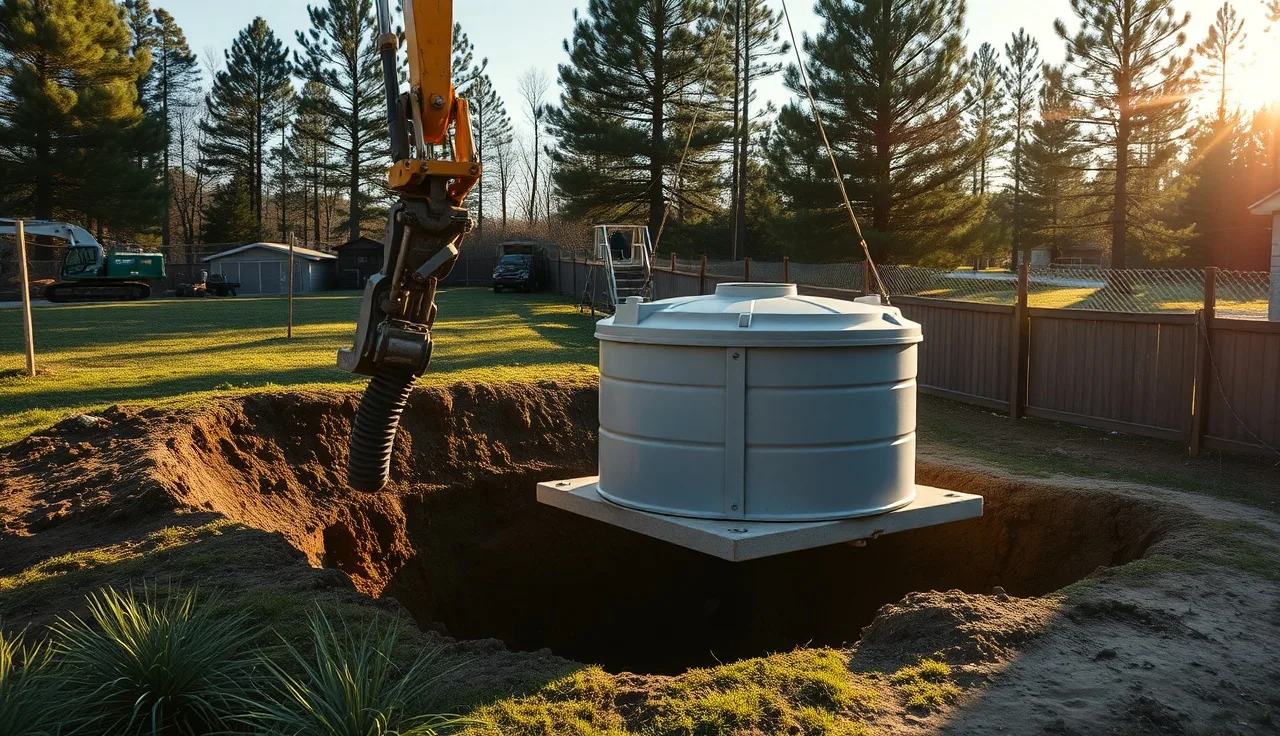
Size also means physical dimensions. A 1,000-gallon precast concrete tank runs roughly 8 feet long, 5 feet wide, and 5 feet deep. A 500-gallon poly or fiberglass tank can be as small as 5 by 4 by 4 feet, which matters on a tight lot or when you're trucking a tank to a remote cabin.
Material changes how long the tank lasts. Precast concrete lasts 40 or more years in neutral soil but corrodes faster in acidic ground. Poly and fiberglass tanks weigh less, deliver easier to remote sites, and don't corrode, though some states restrict them for primary tanks. Pull up your state health department's approved products list before you commit.
Who actually needs a small septic tank?
Small tanks fit a narrow set of situations. A weekend cabin used by two or three people a few months a year makes far less wastewater than a full-time household, so a 500- or 750-gallon tank paired with a modest leach field makes sense on both the engineering and the money. The same logic covers a tiny home, a one-bedroom ADU, or a seasonal rental.
Small tanks show up in commercial spots too. A single-toilet restroom at a farm stand, a park concession building, or a rural office with one or two people. There the tank is sized to fixture count and daily flow, not bedrooms.
Here's what small tanks are bad for: full-time family homes, any dwelling running high water-use appliances daily, or a property where occupancy is likely to grow. A 750-gallon tank on a three-bedroom house used year-round will be in distress inside a year or two. The math is blunt. EPA's rule of thumb is 150 gallons of flow per bedroom per day, so a three-bedroom home making 450 gallons daily fills a 750-gallon tank's working capacity in under two days with no retention time left [12].
Buying land and eyeing a small system to save money upfront? Get a soil evaluation and percolation test first. The drain field, not the tank, usually decides what you can build.
How much does a small septic tank cost to buy and install?
The tank by itself runs roughly $300 to $1,500 depending on size and material. A 500-gallon polyethylene tank costs $300 to $600 at a supply house. A 1,000-gallon precast concrete tank costs $600 to $1,200 before delivery. Delivery adds $100 to $400 depending on distance and access.
Installed cost, meaning tank plus excavation, labor, risers, and connection to the inlet pipe, runs $1,500 to $4,000 for a small tank on its own. That excludes the drain field or any septic system repair, which can add $3,000 to $15,000 depending on soil and local rates. A complete new system (tank plus field) runs $8,000 to $20,000 for a conventional small setup, more if you need an advanced treatment unit [3].
Region drives a lot of this. The rural South and Midwest run cheaper. New England and the Pacific Coast run higher, partly because labor costs more and partly because permitting and inspection are stricter.
One cost people forget: small tanks need more frequent pumping. A 500-gallon tank serving a full-time one-bedroom home needs pumping every 12 to 18 months. At $250 to $500 a pump-out, that's $150 to $500 a year just in pumping, against roughly $100 to $150 a year amortized for a properly sized 1,500-gallon tank pumped every three years. You save on the tank and pay it back at the truck.
Our cost to install a septic system guide breaks this down by region and system type.
How often does a small septic tank need to be pumped?
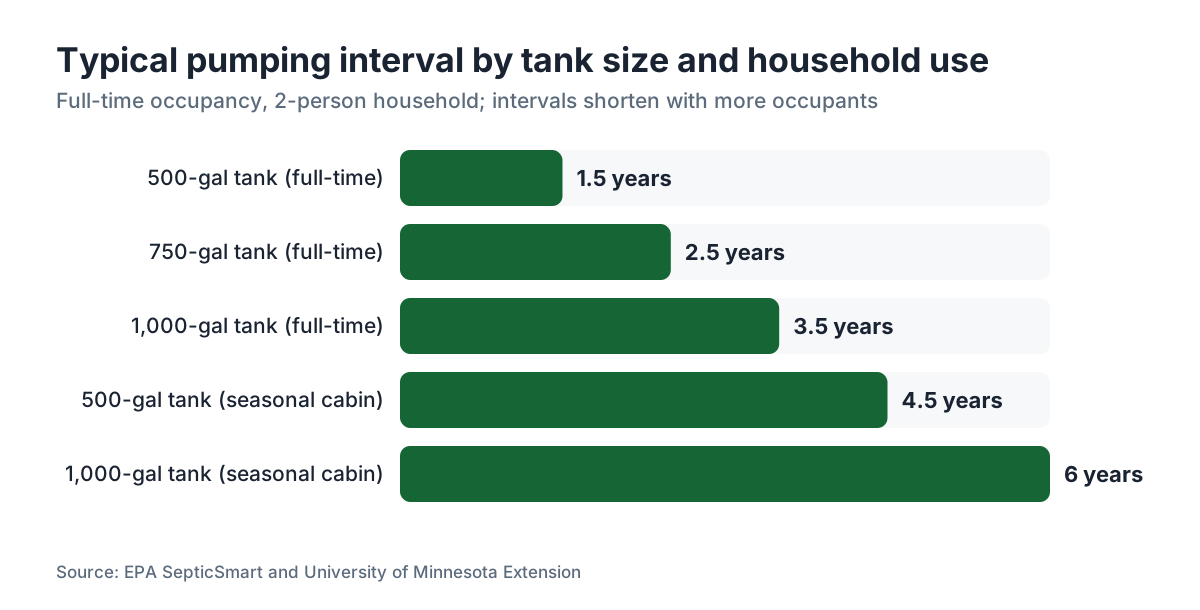
More often than you'd think. EPA's general guidance is every 3 to 5 years for a standard household system [2], but that assumes a properly sized tank. A small tank fills with solids faster relative to its liquid volume, so the real interval is shorter.
A 500-gallon tank serving two full-time residents should be pumped every 1 to 2 years. A 1,000-gallon tank with the same two people can often stretch to 3 years if water use stays modest. The practical test is measurement, not the calendar: have a pumper or inspector check the scum and sludge layers. When combined sludge and scum fill more than a third of the tank's liquid capacity, pump it [2].
Seasonal cabins play by different rules. A cabin used four weekends a year might go five years between pump-outs even with a 500-gallon tank, because the annual load is tiny. Don't skip inspection, though. An unused tank can build up gas, lose an inlet baffle, or take on tree roots, and you only catch that by lifting the lid.
Our how often to pump a septic tank guide walks through a load-based approach.
Skipping pump-outs is the single most common cause of drain field failure in small systems. Solids carry over into the field, clog the soil, and create a repair bill that dwarfs years of pump-out costs. Septic tank pumping is cheap insurance.
What are septic tank treatments, and do they actually work?
Septic tank treatments are powders, tablets, or liquids that claim to add bacteria, enzymes, or other agents to break down solids and prevent backups. Whether they work is genuinely contested. The honest answer: for a healthy system, they probably don't add much. For a stressed or recovering one, some may help at the margins.
The EPA's SepticSmart program puts it plainly: biological additives, meaning bacteria or enzymes, are not needed for a properly functioning septic system [2]. A working tank already holds billions of naturally occurring anaerobic bacteria that digest organic matter. Adding more rarely shifts the population, because the limiting factor is retention time and oxygen conditions, not bacterial count.
Enzyme-only products are shakier still. Enzymes denature (break down) fast in the tank and don't replicate the way bacteria do, so any effect fades quickly.
Chemical treatments are a worse story. Products with quaternary ammonium compounds, formaldehyde, or bleach kill the bacteria your tank runs on and can leach into groundwater. Several states ban certain chemical additives outright. Minnesota prohibits solvents and strong acids in septic systems under state code [4].
There is one real scenario for a biological product: after a heavy antibiotic course, or after someone dumped a lot of bleach cleaner down the drain, the tank's bacteria can take a temporary hit. A reputable bacterial additive (look for NSF/ANSI 40 or 46 certification) can help the microbial community rebuild faster than waiting it out.
For sorting good products from bad, the clearest guidance comes from your state extension service or health department, not the label.
Which septic tank treatment is best, and what should you actually look for?
If you've decided to use a treatment product, here's the filter. First, skip anything listing solvents, strong acids, or chemical biocides on the label. Those hurt your system.
For biological products, look for named bacterial strains (Bacillus species are the most common) and testing under NSF/ANSI Standard 40 or 46, the relevant wastewater standards. NSF publishes a searchable database of certified products [5]. That beats reading Amazon reviews.
The best treatment for a septic tank, in the view of most extension and public health guides, isn't a product at all. It's behavior. Pump on schedule. Don't flush non-biodegradables. Keep fats and grease out of the drain. Don't treat the toilet as a trash can. Those habits do more for a small tank's life than any additive.
If your system is struggling and you're shopping for a product fix, that's usually a sign of a structural problem: a full tank, a failing baffle, root intrusion, or a dying drain field. No additive fixes any of those. Call a licensed pumper for a septic tank inspection before you spend a dime on additives.
On which commercial products rank highest, nobody has good independent comparative data. The closest thing to an evidence-based review is a 1997 EPA report to Congress on septic tank additives, which found no tested additive eliminated the need for regular pumping and several chemical additives caused measurable harm to field soils [6].
What is an advanced treatment system, and when does a small property need one?
An advanced treatment system (also called an advanced treatment unit, ATU, or aerobic treatment unit) is a step up from a conventional septic tank. A conventional tank uses anaerobic bacteria to partially treat wastewater before effluent heads to the drain field. An advanced system adds an aeration or extra treatment stage that produces cleaner effluent, often cutting biochemical oxygen demand (BOD) by 85 to 95% against a conventional tank's 30 to 50% [7].
So, advanced treatment system versus septic tank. The conventional tank is simpler, cheaper, and lower maintenance. The advanced system is more complex, costs more, and needs annual or semi-annual service contracts, but it produces cleaner effluent. You need an advanced system when:
- Your lot has a high water table, thin soil, or poor percolation a conventional field can't handle
- Your jurisdiction requires it because of proximity to a well, lake, or wetland
- You need a smaller drain field footprint on a small lot
- You're replacing a failed conventional system and the original field can't be rehabilitated
Small advanced septic treatment tanks exist. Some ATUs are designed for flows as low as 400 gallons per day, enough for a one-bedroom home or cabin. Brands like Norweco, Jet, and Infiltrator make small-footprint aerobic units, though you should confirm NSF/ANSI 40 certification before buying [5].
The cost premium is real. A small ATU adds $3,000 to $8,000 over a conventional tank, plus $100 to $300 a year for the service contract most states require for ATUs [3]. On a constrained lot, though, an ATU can make a system possible where a conventional one won't pass permit at all.
What are the maintenance rules that keep a small tank from failing early?
Small tanks are unforgiving. The liquid-to-load ratio is tighter, so bad habits a large tank shrugs off for years will wreck a small tank in months. Here's what matters.
Pump on schedule. For small tanks that means every 1 to 2 years under full-time use, not every 3 to 5. Set a calendar reminder and hold to it. A septic tank pump out at $300 to $400 now heads off a $10,000 drain field replacement later.
Watch your water use. A family of four crammed into a one-bedroom cabin with a 750-gallon tank has to think about laundry, shower length, and dishwasher cycles. Spreading laundry across the week instead of five loads on Saturday makes a measurable dent in hydraulic load.
Protect the inlet baffle. The inlet baffle is the T-shaped fitting inside the tank that keeps incoming wastewater from shooting straight to the outlet and carrying scum with it. Baffles on small tanks, especially old concrete ones, crack and drop off. A septic tank inspection at every pump catches this early.
Keep the area over the tank clear. No vehicles, no garden beds, no tree roots. Root intrusion into a small tank can cause structural damage that means full septic tank repair.
Skip the chemical drain cleaners. They kill tank biology. Hot water and a drain snake clear most household clogs without poisoning the system.
Operators running service management software like SepticMind can flag small-tank customers for shorter intervals automatically, so the schedule holds without leaning on homeowner memory.
Read your state's homeowner maintenance guidance too. EPA's SepticSmart resources and most state environmental agency sites publish plain-language checklists for your region [2].
How do you know when a small septic tank is failing?
The signs of a failing small tank match any size tank, they just show up faster because there's less buffer.
Slow drains across the house, more than one fixture, usually mean the tank is full or the outlet is blocked. A single slow drain is normally a pipe clog. House-wide slow drains point at the tank or field.
Wet or spongy ground over the drain field, especially with a sewage smell, means effluent is surfacing. That's a field failure, and it usually starts with a full or failing tank.
Sewage odor inside the house can mean a dry P-trap, a cracked vent pipe, or a full tank forcing sewer gas back through the plumbing. Don't ignore it.
Gurgling in the pipes after a flush suggests the system is pressurized when it shouldn't be.
See any of these? Stop putting water into the system, call a licensed pumper right away, and keep bleach-based products out of the drain meanwhile. A full tank overflowing into a drain field does damage that's expensive to reverse. Septic system repair costs for a field loaded with solids run far higher than catching it at the tank.
Get a camera inspection of the outlet baffle and the first few feet of distribution line before you write off the field. Sometimes what looks like field failure is a crushed outlet pipe, and that's a much cheaper fix.
What permits and regulations govern small septic tank installation?
Every state has an onsite wastewater treatment system code, and most hand enforcement to county or municipal health departments. There's no single federal installation standard, but EPA's Office of Water publishes national guidance that most state codes track closely [2].
For small systems, the permit requirements usually include:
- A soil evaluation and perc test by a licensed soil scientist or engineer before any permit issues
- Minimum setbacks (often 10 feet from property lines, 50 to 100 feet from wells, 25 to 50 feet from surface water) [11]
- Minimum tank size per bedroom count (varies by state, but 750 to 1,000 gallons is a common floor for a year-round single-family home)
- Inspection by the health department during and after installation
- As-built drawings filed with the county
Some states require the installer to hold a license specific to onsite wastewater work, beyond general contracting. Installing a tank without the right permits creates title problems when you sell and can trigger orders to decommission and reinstall on your dime.
For replacement or septic tank cleaning on an existing permitted system, most states don't require a new permit for a like-for-like tank swap, but they do if you increase tank size, change system type, or move the tank. Confirm with your county health department before assuming you're clear.
Good starting points: your state environmental agency's onsite wastewater page, or the National Onsite Wastewater Recycling Association (NOWRA), which keeps state-by-state regulatory summaries [8].
Is a small septic tank worth it, or should you install a larger one from the start?
If you're building new and cost is the only reason to go small, build bigger. Stepping up from a 750-gallon to a 1,000-gallon tank usually costs $200 to $500 more in tank material. The extra excavation and installation cost is close to zero because the hole is barely larger. For those savings you're buying more frequent pump-outs, less buffer against overloading, and a shorter runway before the system shows stress.
The right reasons to install a small tank: the property genuinely makes low flow (cabin, seasonal use, studio ADU), the code minimum allows it, and you've run the pump-frequency math honestly.
Inheriting an existing small tank on a property you're buying? Get a septic tank inspection before closing. A pre-purchase inspection costs $150 to $400 and tells you the tank's condition, the field's condition, and whether the system is legally permitted. Plenty of small tanks on older rural properties predate modern codes and are undersized, unpermitted, or both.
For operators advising clients: SepticMind's service records show which customers have small tanks and surface them for proactive outreach before failures, not after. A well-timed pump-out call to a small-tank customer is almost always a yes.
A small septic tank is no bargain if the use case doesn't fit. Size it honestly to the load, pump it on schedule, and it runs for decades. Size it to save a few hundred dollars on a full-time home and you'll pay it back in emergency pump-outs and early field replacement. See the septic tank installation guide for more on sizing.
Frequently asked questions
What is the smallest legal septic tank size for a house?
Most states set 1,000 gallons as the minimum for a year-round single-family home, though some allow 750 gallons for a one-bedroom dwelling. For seasonal or vacation use, 500-gallon tanks are permitted in many jurisdictions. Minimums come from state or county onsite wastewater codes, not federal law. Always verify with your county health department before buying a tank.
How often should a 500-gallon septic tank be pumped?
For full-time use by one or two people, pump a 500-gallon tank every 12 to 18 months. For seasonal cabin use under 90 days a year, every 3 to 5 years may be enough. The real schedule depends on household size and water use. Have the sludge and scum layers measured at each service to calibrate your specific interval.
Can a small septic tank handle a garbage disposal?
Not well. Garbage disposals add heavy solids load to any tank, and for a small tank that load is proportionally far more damaging. A disposal can raise the solids volume pumped annually by 50% or more. Most septic pros advise against a disposal with any system under 1,000 gallons, and several state codes prohibit them with small systems outright.
What septic tank treatments are safe to use?
Biological treatments with Bacillus species bacteria, certified under NSF/ANSI 40 or 46, are generally considered safe. Avoid anything with solvents, acids, or chemical biocides, which kill tank bacteria and can contaminate groundwater. For a properly functioning system, the EPA says biological additives aren't necessary. The best maintenance is regular pumping and careful water use.
Does a small septic tank need an advanced treatment system?
Not always. You need an advanced treatment unit when soil conditions, lot size, proximity to water, or local rules make a conventional drain field impractical. Small advanced septic treatment tanks exist for flows as low as 400 gallons per day and carry NSF/ANSI 40 certification. They cost more upfront and require annual service contracts, but they make a lot buildable when a conventional system won't pass.
How long does a small septic tank last?
A precast concrete tank in neutral-pH soil typically lasts 40 or more years. Polyethylene and fiberglass tanks last 30 to 40 years with normal use. Corrosive soil or water, vehicle damage, and skipped pumping all shorten tank life. The drain field usually fails first, often after 20 to 30 years, and field failure almost always traces back to an overloaded or under-pumped tank.
Can I install a small septic tank myself?
In most states, no. Installing a septic tank requires a permit, a licensed installer in most jurisdictions, and a health department inspection. DIY installation without permits creates title issues, potential fines, and liability if the system fails and affects neighbors or groundwater. Some states let homeowners install on their own property if they meet licensing rules. Check your state's onsite wastewater code.
What is the difference between a small advanced septic treatment tank and a regular septic tank?
A conventional septic tank uses anaerobic bacteria to partially treat wastewater, cutting BOD by 30 to 50% before effluent reaches the drain field. An advanced treatment unit adds an aeration or extra treatment stage and can cut BOD by 85 to 95%. ATUs produce higher-quality effluent, allow smaller drain fields, and work in tighter soil, but they cost more and need regular professional service.
How much does it cost to replace a small septic tank?
Replacing a small septic tank runs $1,500 to $4,000 for the tank, excavation, and installation. If the drain field also needs replacement, total costs jump to $8,000 to $20,000 for a conventional small system. Advanced treatment systems add $3,000 to $8,000 on top. Regional labor and soil conditions drive most of the variation. Get at least two quotes from licensed installers in your county.
What should I do before buying a property with a small septic tank?
Get a pre-purchase septic inspection by a licensed inspector before closing. It should include pumping the tank, measuring scum and sludge layers, checking baffles, and evaluating the drain field. Ask for permit records from the county health department to confirm the system is legally permitted and appropriately sized. Inspection costs $150 to $400 and can reveal problems that renegotiate the price or trigger required repairs.
Can I use regular household bleach with a small septic tank?
Occasional, diluted bleach from laundry and surface cleaning is unlikely to cause serious harm, since it's heavily diluted by the time it reaches the tank. But pouring undiluted bleach down a drain, using bleach-based bowl cleaners daily, or running bleach-heavy laundry repeatedly can measurably reduce the bacteria in a small tank. Septic-safe or bleach-free cleaners are a reasonable precaution for small systems.
What is the best treatment for a septic tank that smells bad?
Odors inside the house usually point to a dry trap, cracked vent pipe, or full tank, not a treatment deficiency. Odors outside near the drain field usually mean the field is saturated or the tank is overflowing. Get the tank pumped and inspected first. A biological product won't fix a structural odor. If the smell lingers after pumping and a clean inspection, check the vent stack and P-traps.
How do I find out the size of my existing septic tank?
Start with the county health department or assessor's office, which should have permit records showing the installed tank size. If records don't exist, a licensed pumper can estimate size by measuring the tank during a pump-out. Tank lids often have the manufacturer and model stamped on them, which you can cross-reference with manufacturer specs. Knowing your tank size is step one to setting the right pumping schedule.
Sources
- EPA, Septic Systems Overview: Federal overview of septic system types, sizing guidance, and homeowner responsibilities.
- EPA, SepticSmart Program: EPA SepticSmart states biological additives are not needed for properly functioning systems and recommends pumping every 3 to 5 years for standard household systems.
- EPA, Onsite Wastewater Treatment Systems Manual (EPA/625/R-00/008): Advanced treatment systems (ATUs) produce higher-quality effluent than conventional tanks and require annual service contracts; cost premiums for ATUs vs conventional systems.
- Minnesota Pollution Control Agency, Subsurface Sewage Treatment Systems: Minnesota prohibits use of solvents or strong acids in septic systems under state onsite wastewater code.
- NSF, Wastewater Treatment Standards (NSF/ANSI 40 and 46): NSF/ANSI 40 and 46 are the relevant certification standards for onsite wastewater treatment products including ATUs and biological additives.
- EPA, Response to Congress on Use of Septic Tank Additives (EPA 832-R-97-001): 1997 EPA technical review found no additives tested eliminated the need for regular pumping; several chemical additives caused measurable harm to drain field soils.
- EPA, Decentralized Wastewater Program: Advanced treatment units reduce BOD by 85 to 95% compared to conventional septic tanks which achieve 30 to 50% BOD reduction.
- National Onsite Wastewater Recycling Association (NOWRA): NOWRA maintains state-by-state regulatory summaries for onsite wastewater systems including minimum tank sizing and installer licensing requirements.
- University of Minnesota Extension: Extension guidance on septic tank sizing, pumping frequency, and maintenance practices for small systems and seasonal cabins.
- Penn State Extension: Guidance on signs of septic system failure, appropriate pump-out intervals, and safe versus unsafe septic additives.
- CDC, Private Water Wells and Septic Systems: Setback requirements for septic tanks from private wells to protect groundwater quality.
- EPA, How to Care for Your Septic System: EPA recommendation of 150 gallons of daily flow per bedroom for sizing purposes; guidance on maintaining tank biological health.
Last updated 2026-07-09