Small septic system: costs, types, and what actually fits your lot
By the SepticMind Editorial Team
TL;DR
- A small septic system for a 1-3 bedroom home runs $3,000 to $12,000 for a conventional gravity system, or $8,000 to $20,000 for a small aerobic treatment unit.
- Price depends on soil type, lot size, local permit rules, and whether you need a mound or alternative design.
- Texas aerobic systems run $10,000 to $18,000 installed in most markets.
What counts as a small septic system?
A small septic system is one designed for 1 to 3 bedrooms, or a daily flow of 150 to 450 gallons per day. There's no single industry definition, but that's the range most state codes and septic pros treat as small. It's also the range where compact alternative systems start earning their keep if your lot is tight, your soil is poor, or setback rules leave you no room.
Conventional systems at this scale use a 500- to 1,000-gallon tank feeding a gravity drain field (also called a leach field). Aerobic treatment units (ATUs) are the other main option, especially in Texas and other states that allow them on smaller lots with tighter soil.
Small does not mean simple. A 3-bedroom system on clay soil with a shallow water table can cost more and demand more engineering than a 5-bedroom system on sandy loam with 6 feet of usable soil. Size is about daily flow. Complexity is about your site.
What are the main types of small septic systems?
Most small lots end up with one of five system types. Which one fits comes down to soil percolation rate, depth to groundwater, setback distances, and your local health department's approved list.
Conventional gravity system. A septic tank plus a perforated-pipe drain field. Cheapest to install, cheapest to maintain. Works on lots with permeable soil and no restrictive layers in the top 4 feet. This is still the majority of residential systems in rural America [1].
Pressure-dosed system. Same idea, but a pump doses effluent in timed batches instead of letting gravity do the work. Better distribution means you can sometimes use a smaller drain field footprint.
Mound system. When the water table or bedrock sits too shallow, imported sand gets mounded above grade and the drain field goes inside it. More material, more labor, higher cost. It handles sites that would otherwise be unbuildable.
Aerobic treatment unit (ATU). Adds oxygen to the treatment process, producing cleaner effluent that can be surface-sprayed or sent to a smaller absorption area. It's the default answer in East Texas and other areas with clay-heavy soils [2].
Drip irrigation system. Pairs with an ATU to distribute treated effluent through subsurface drip tubing. Best footprint efficiency of the bunch, but it has a pump, filter, and network of tubing that all need maintenance.
For most homeowners on a small lot with marginal soil, the real choice is a mound system versus an ATU with drip or spray distribution. An installer who only sells one of those two may not be showing you the full picture.
How much does a small septic system cost?
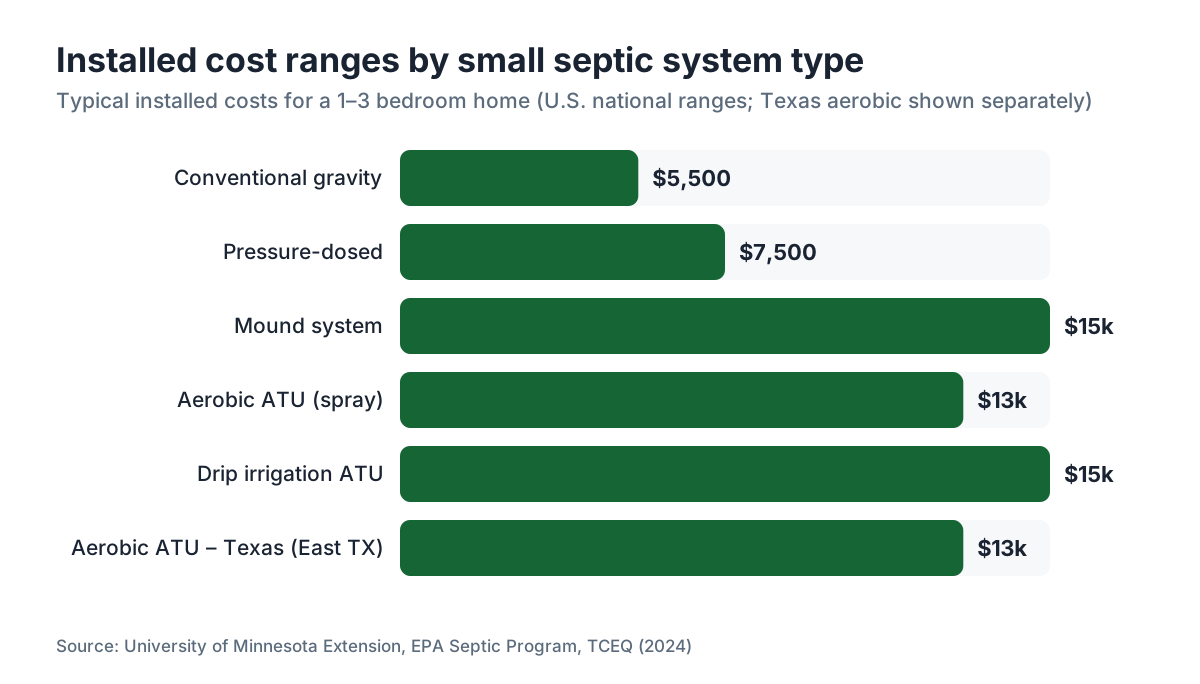
A small septic system costs $3,000 to $20,000 installed, and the type drives the number. Conventional gravity is cheapest at $3,000 to $8,000. Aerobic and drip systems top out around $20,000. Costs break down into design, permitting, installation, and ongoing maintenance. The table below covers realistic national ranges at the 1-3 bedroom scale.
| System type | Installed cost (national range) | Annual maintenance |
|---|---|---|
| Conventional gravity | $3,000 to $8,000 | $150 to $400 (pumping every 3-5 yrs) |
| Pressure-dosed | $5,000 to $10,000 | $200 to $500 |
| Mound system | $10,000 to $20,000 | $300 to $600 |
| Aerobic ATU (spray) | $8,000 to $18,000 | $400 to $900 |
| Drip irrigation ATU | $10,000 to $20,000 | $500 to $1,200 |
These ranges come from state extension data and installer market surveys. Individual quotes can fall outside them in either direction [3][4]. Soil testing, an engineer's report, and permit fees typically add $500 to $2,000 on top of the installed price.
For more on total installed costs, see our guide on cost to install a septic system.
The biggest single variable in these numbers is the local labor market. A rural area with one licensed installer costs more than a suburb with eight competing firms, even with identical soil.
What does a small septic system cost in Texas specifically?
A small aerobic septic system in Texas costs $10,000 to $18,000 installed, higher than the national average for the same home size. Texas regulates on-site sewage facilities (OSSFs) through the Texas Commission on Environmental Quality (TCEQ) under 30 TAC Chapter 285 [2]. That framework hits cost two ways.
First, conventional gravity systems aren't allowed across large parts of Texas because shallow clay soils fail perc tests. Aerobic systems become the permitted option by default.
Second, Texas requires permitted maintenance contracts for aerobic systems. Annual operating cost is mandatory, not optional.
Here's what real Texas pricing looks like, based on publicly reported installer data and TCEQ guidance:
- Central Texas (Austin metro): Aerobic ATU installation runs $12,000 to $18,000. Conventional systems, where permitted, run $5,000 to $9,000.
- East Texas (Tyler, Nacogdoches, Lufkin): Aerobic systems run $10,000 to $16,000 installed, with annual maintenance contracts of $400 to $600.
- South Texas / Hill Country: Similar ATU range, sometimes higher because rocky substrate needs extra excavation.
The Texas premium comes mostly from aerobic systems being the default, and they cost more than a gravity system of the same capacity [2][4].
If you're getting quotes in Texas, ask three questions. Does the bid include the required TCEQ-compliant maintenance contract for year one? Does it cover the spray heads and dosing pump? Does it include the electrical hookup to the control panel? Some low quotes leave one or more of those out.
How does an aerobic septic system work and why is it common on small lots?
An aerobic septic system works on a half-acre lot because it treats effluent so much cleaner that it needs a fraction of the drain field a conventional system would. A conventional tank works anaerobically: bacteria break down solids without oxygen, and the liquid effluent that leaves still carries heavy biological contamination. That effluent needs a lot of soil treatment before it's safe, which is why a conventional system needs a large field.
An ATU adds an air pump to inject oxygen into the treatment chamber. Aerobic bacteria are far more aggressive than anaerobic ones. They produce effluent treated to roughly 20-30 mg/L BOD (biological oxygen demand) compared to 150-200 mg/L from a conventional tank [5]. Cleaner effluent means a smaller absorption area or, in Texas, safe surface-spray discharge.
The tradeoff is mechanical complexity. An ATU has an air compressor, a dosing pump, a chlorination or UV disinfection stage, a control panel with alarms, and spray heads that can clog or freeze.
Maintenance is not optional on an ATU. Texas requires it by law, but even in states that don't, skipping it leads to air pump failure. That collapses the treatment process and sends undertreated effluent to the spray field. It's an environmental violation and a health risk.
Here's the honest comparison. If your lot is large enough for a conventional system with good soil, the conventional system costs less to install and far less to maintain over 20 years. The ATU earns its premium only when the site genuinely demands it.
What size septic tank do you actually need for a small house?
Tank sizing follows daily flow, which most states peg to bedroom count. EPA design guidance and most state codes use 150 gallons per bedroom per day, with a minimum 24-hour detention time in the tank [1].
For a 1-bedroom home: 500 to 750 gallons.
For a 2-bedroom home: 750 to 1,000 gallons.
For a 3-bedroom home: 1,000 gallons minimum, and many states require 1,250.
Most licensed installers push you one size up from the code minimum, and they're right to. A 1,000-gallon tank on a 2-bedroom home gives you buffer when water use runs high (a home office, frequent guests, high-efficiency appliances that backflush). The upgrade costs $200 to $600 more, and the longer pumping interval pays it back.
If you have a garbage disposal, some state codes add 250 gallons to the required capacity because food solids build sludge faster. Check your local rules before assuming the standard size fits.
For ATUs in Texas, the TCEQ minimum is a 500-gallon aerobic tank per bedroom, with a separate settling tank, aeration chamber, and pump/spray chamber. Total system volume runs larger than a conventional setup even though the absorption footprint is smaller [2].
Regular pumping matters more than tank size to how long the system lasts. See our full guide on how often to pump a septic tank.
What soil and site conditions let you use the cheapest option?
A perc test (percolation test) measures how fast your soil absorbs water, in minutes per inch (MPI): how long water takes to drop one inch in a test hole. Most state codes accept 1 to 60 MPI for conventional systems, with 5 to 30 MPI being ideal [3].
Soil that percs faster than 1 MPI is too porous, and effluent can reach groundwater before it's adequately treated. Slower than 60 MPI usually means the soil can't absorb effluent at all. Either extreme pushes you toward an alternative system.
Beyond perc rate, inspectors check:
- Depth to seasonal high water table (most codes want 2 to 4 feet of separation between the bottom of the field and the water table)
- Depth to bedrock or restrictive layers
- Setback distances from wells, property lines, buildings, and surface water (50 to 200 feet depending on jurisdiction)
- Lot size relative to system footprint
Pass on all counts and you're likely looking at a conventional gravity system, the cheapest route. Fail even one and you're paying for an engineered alternative.
A licensed soil scientist, engineer, or sanitarian runs the site evaluation, depending on your state. Fees run $300 to $800. Don't skip it and don't guess based on a neighbor's system. Soil conditions can change hard even within a single lot.
What permits do you need for a small septic system?
Every state requires a permit for new septic installation, and most require one for replacements and major repairs too. There is no federal permit for residential systems. Authority sits with state environmental agencies and county health departments, sometimes both.
In Texas, the OSSF permit goes through your local Authorized Agent, usually the county, which enforces TCEQ rules. Required documents typically include a site evaluation, a design prepared or reviewed by a licensed PE or OSSF designer, and a permit application fee of $100 to $400 [2].
Elsewhere the process looks similar: soil test, system design, permit application, inspection at installation, and final approval before you can cover the system. Timeline from application to permit runs 2 to 8 weeks depending on county workload.
Working without a permit is a genuinely bad idea. It can void your homeowner's insurance for sewage claims, create title problems when you sell, and expose you to fines that often run past the cost of the permit. Some Texas counties assess fines of $1,000 to $2,000 per day for unpermitted systems.
EPA guidance puts the point plainly: "Whether you are connected to a sewer system or use an on-site septic system, you can protect this critical resource by properly maintaining your system." The permit process is how local authorities verify a system meets that standard [6].
SepticMind's operator tools help licensed installers track permit status and inspection schedules across multiple jobs, which matters when a company is pulling permits in several counties at once.
How long does a small septic system last?
A well-built conventional system with an adequate tank, a properly installed drain field, and regular pumping routinely lasts 25 to 40 years. Some systems from the 1970s and 1980s are still running. Some from the 1990s with cheap plastic chambers are already dead.
The drain field is the life-limiting part. Once biomat (a layer of biological material) clogs the soil interface, effluent can't absorb, and you're into septic system repair or replacement. What shortens field life:
- Infrequent pumping, which lets solids carry over from the tank and plug the field
- Hydraulic overloading (more water than the design allows)
- Grease and non-biodegradable solids entering the system
- Tree root intrusion
- Driving vehicles over the field and compacting the soil
Aerobic systems have shorter mechanical lifespans. The air compressor lasts 5 to 10 years ($300 to $700 to replace). The pump runs 7 to 15 years. Spray heads clog and break. The tank and drain components last as long as conventional ones if maintained, but the ATU's electronics and mechanicals need active attention.
Budget $1,500 to $5,000 on ATU component replacements over a 15-year window, on top of annual maintenance contract costs. Fold that into any total cost of ownership comparison.
What maintenance does a small septic system actually need?
A conventional gravity system needs remarkably little if you use it right. An aerobic system needs steady, mandatory attention. Here's the real conventional schedule:
- Pump every 3 to 5 years for a 1,000-gallon tank with 2-3 residents. Every 2 to 3 years for garbage disposal users or households over 4 people [7]. Full breakdown in our septic tank pumping guide.
- Annual visual check of the tank lids, risers, and the field area. Soggy ground, odors, or bright green grass over the field are warning signs.
- Professional inspection every 1 to 3 years in most states.
Aerobic maintenance is heavier:
- Quarterly or semi-annual visits by a licensed technician (required by most states with ATU rules, mandatory in Texas)
- Chlorine or disinfection tablet replacement every 3 to 6 months
- Annual electrical and mechanical inspection of the control panel, air pump, and dosing pump
- Spray head cleaning at least once a year
A septic tank inspection from a licensed inspector costs $100 to $300 and is worth every dollar before you buy a home with an existing system. An inspector can read tank condition, sludge level, and field status in one visit.
EPA's SepticSmart guidance recommends homeowners have their system inspected by a service professional roughly every three years, with pumping frequency set by actual use [6].
Can you install a small septic system yourself to save money?
Some states let a homeowner install their own system on their own property. The number of states where that's both legal and a good idea is very small.
The barriers are real. You have to pass soil tests, submit a design (most states require a licensed engineer or sanitarian to stamp it even if you install it), pull a permit, pass inspections at several stages, and meet the same technical standards a licensed contractor does. Mistakes in pipe bedding, slope, distribution box leveling, and backfill cause premature drain field failure. That's a $5,000 to $15,000 mistake.
Texas requires that OSSF installation be done by a TCEQ-licensed installer, with limited county exemptions for a homeowner's own primary residence [2]. Even where DIY is legal, the permit, inspection, and design requirements shrink the savings well below what they look like on paper.
Where DIY does make sense: routine maintenance, replacing spray heads, adding risers, or doing your own septic tank pump out if you rent or own the equipment. Those tasks don't need a license in most states.
For a new install, get three bids from licensed installers and negotiate on scope, never on skipping steps.
What are the warning signs that a small septic system is failing?
Small systems fail fast because they carry less reserve capacity than larger ones. Watch for these.
Inside the house: slow drains at more than one fixture, gurgling in pipes when you flush, sewage odors from drains, or backup in toilets or the lowest drain.
Outside: wet or soggy ground over the field that doesn't match recent rain, bright green grass in a strip or patch over the field, sewage odors near the tank or field, or visible effluent surfacing on the ground.
For ATU owners: alarm panel lights or sounds, cloudy or smelly spray discharge, or spray heads that aren't running on schedule.
Any of these means an immediate call to a licensed inspector, not wait-and-see. Effluent surfacing on the ground is a public health violation in every state. A failing field that gets hydraulically overloaded can go from recoverable to destroyed in a few months.
See our guides on septic tank repair and septic system repair for what repair options actually exist before you commit to full replacement.
One rule of thumb from experienced installers: if you bought a house more than 5 years ago and have never had the tank pumped, schedule a septic tank cleaning and inspection now. You may find years of life left, or you may catch a problem early enough to fix it cheap.
Frequently asked questions
How much does a small septic system cost for a 2-bedroom house?
A 2-bedroom conventional gravity system runs $4,000 to $8,000 installed in most U.S. markets. An aerobic system for the same home costs $9,000 to $16,000. Add $500 to $2,000 for permits, soil testing, and engineering. Texas tends toward the higher end because aerobic systems are the default across most of the state.
What is the cheapest type of small septic system?
A conventional gravity system is the cheapest at $3,000 to $8,000 installed. It needs permeable soil, adequate depth to groundwater, and enough lot space for a drain field. If your site fails those conditions, you'll need a more expensive alternative. There's no way to cheap your way around a soil limitation.
How much does an aerobic septic system cost in Texas?
Aerobic septic system installation in Texas runs $10,000 to $18,000 for a typical 3-bedroom home, depending on region and installer. East Texas systems tend to run $10,000 to $16,000. Annual maintenance contracts add $400 to $900 per year, which Texas law requires for permitted aerobic systems.
What is the minimum lot size for a small septic system?
There's no universal minimum, but most county health departments in Texas and elsewhere require enough space to meet setbacks: typically 50 feet from a water well, 10 feet from property lines, and 5 to 10 feet from structures. An aerobic spray system can work on a half-acre lot where a conventional drain field wouldn't fit.
Can a small aerobic septic system work in East Texas clay soil?
Yes, that's exactly what aerobic systems are built for. East Texas clay soils fail conventional perc tests, so aerobic ATUs with spray distribution are the standard permitted option there. Aerobic systems in East Texas run $10,000 to $16,000 installed, with mandatory quarterly or semi-annual maintenance.
How often does a small septic tank need to be pumped?
Every 3 to 5 years for a 1,000-gallon tank with 2 to 3 residents under normal use. Households with garbage disposals, more people, or high water use should pump every 2 to 3 years. Skipping pumping lets solids overflow into the drain field, which shortens field life and can mean a $5,000 to $15,000 repair.
How long does it take to install a small septic system?
Physical installation usually takes 1 to 3 days for a conventional system and 2 to 4 days for an aerobic one. The full project timeline is longer: permit approval alone takes 2 to 8 weeks depending on the county. Soil testing and engineering design add another 1 to 3 weeks before you can even submit the permit application.
Does a small septic system require electricity?
Conventional gravity systems don't need it. Aerobic systems do: the air compressor, dosing pump, control panel, and alarm all run on 120V or 240V household current. If power stays out more than 24 hours, most ATUs will alarm and temporarily lose treatment capacity. A generator or battery backup is worth considering in areas with frequent outages.
Can I add a bedroom to my house without upgrading my small septic system?
It depends on your current permitted capacity. Most counties require a septic permit review when you add bedrooms because each bedroom adds to the calculated daily flow. If your existing tank and field have room to spare, you may get approval without hardware changes. If not, an upgrade often runs $3,000 to $8,000 for tank expansion or field addition.
What's the difference between an aerobic septic system and a conventional one for a small property?
A conventional system treats waste anaerobically in a tank, then disperses partially treated effluent through a large drain field. An aerobic system injects oxygen to produce much cleaner effluent, which can be spray-distributed on a far smaller footprint. Aerobic systems cost more to install and maintain but work where conventional systems can't, due to soil or space limits.
How do I know if my small septic system is failing?
Key warning signs are slow drains throughout the home, sewage odors indoors or out, wet or unusually green patches over the field, sewage backup in fixtures, or alarm lights on an ATU panel. Any one of these warrants a licensed inspection immediately. Surfacing effluent is a health code violation and needs same-day response.
Is a mound septic system a good option for a small lot?
A mound works well when you have shallow bedrock or a high water table but enough lateral space for the mound footprint. The mound itself typically runs 20 to 50 feet wide and 60 to 100 feet long, so it's not truly compact. Costs run $10,000 to $20,000. On very tight lots, an ATU with drip irrigation often has a smaller total footprint.
Does Texas require a maintenance contract for aerobic septic systems?
Yes. TCEQ rules under 30 TAC Chapter 285 require owners of aerobic on-site sewage facilities to keep a valid maintenance contract with a licensed provider. Contracts typically cover quarterly inspections, chlorination, and mechanical checks. Annual costs run $400 to $900 in most Texas markets. Operating without a contract is a permit violation.
Sources
- U.S. EPA, Septic Systems (Onsite/Decentralized Systems): Conventional septic systems are the most common type of on-site sewage system; EPA recommends inspection roughly every 3 years and pumping based on use.
- Texas Commission on Environmental Quality, On-Site Sewage Facilities (30 TAC Chapter 285): Texas requires permitted maintenance contracts for aerobic systems; aerobic ATUs are the default permitted option in many counties with clay soils; installation must be by a TCEQ-licensed OSSF installer.
- Penn State Extension, Water and Septic Systems: Percolation rates of 1 to 60 minutes per inch are generally accepted for conventional drain field design; soil evaluation determines system type.
- University of Minnesota Extension, Septic Systems: Installed costs for alternative septic systems including mound and ATU range broadly by soil conditions, labor market, and system size; cost ranges reflect real installer survey data.
- U.S. EPA, Types of Septic Systems: Aerobic treatment units produce higher-quality effluent than conventional septic tanks, suitable for smaller absorption areas or spray distribution.
- U.S. EPA, SepticSmart Program: EPA advises that owners protect water resources by properly maintaining their system, and recommends inspection by a service professional roughly every 3 years.
- U.S. EPA, How to Care for Your Septic System: EPA recommends pumping a septic tank every 3 to 5 years depending on household size, tank size, and use; garbage disposals increase solids load.
- North Carolina State Extension (NC State Extension Publications): Minimum tank sizing guidance of 150 gallons per bedroom per day and minimum 24-hour detention time; most codes require a 1,000-gallon minimum for 3-bedroom homes.
- Texas A&M AgriLife Extension: Aerobic systems are widely used in Texas due to soil conditions; East Texas clay soils frequently require alternative treatment to meet TCEQ standards.
- Oklahoma State University Extension, Septic Tank Maintenance: Drain field life is the primary limiting factor in septic system longevity; premature failure is most commonly caused by infrequent pumping and hydraulic overload.
Last updated 2026-07-09