Septic system installers: how to find, vet, and hire one
By the SepticMind Editorial Team
TL;DR
- A septic system installer designs, permits, and builds your onsite wastewater system.
- Licensing varies by state, but nearly all states require a separate contractor license for septic work, not a general one.
- Costs run $3,000 to $20,000+ depending on system type and soil.
- Hiring an unlicensed installer is the fastest way to a system that fails inspection and kills your home sale.
What does a septic system installer actually do?
A septic system installer takes your property from a bare lot (or a failed old system) to a working onsite wastewater treatment system. That means pulling permits, coordinating soil and percolation tests, designing the system to local code, excavating and setting the tank, and laying out the drain field or alternative treatment components.
The scope changes a lot with system type. A conventional gravity system is simple: tank, distribution box, perforated pipes in gravel trenches. An aerobic treatment unit (ATU) is a different animal. It has a multi-compartment tank, an air pump, a disinfection stage (usually chlorine tablets or UV), and a spray or drip field. Installing one is as much electrical and mechanical work as dirt work.
Most installers also file your permit application with the local health department or environmental agency. In many counties the permit is issued to the licensed installer, not to you. So if you hire an unlicensed guy to save a few thousand, you can end up with an unpermitted system that fails inspection, kills your home sale, and leaves you personally on the hook for groundwater contamination.
Some installers do both design and installation. Others install from a design stamped by a licensed engineer or soil scientist. Know which one you're hiring before you sign anything.
What licenses do septic installers need, and do they vary by state?
They vary a lot. There is no federal license for septic installation. Licensing sits at the state level, and some states hand it further down to counties. The National Onsite Wastewater Recycling Association notes that most states require a dedicated onsite wastewater installer credential separate from a general contractor license [8].
Texas requires an Installer I or Installer II license issued by the Texas Commission on Environmental Quality (TCEQ) under 30 TAC Chapter 30. An Installer II can design and install conventional and aerobic systems; an Installer I is limited to simpler conventional systems [1]. Florida requires an Onsite Sewage Treatment and Disposal System (OSTDS) contractor license through the Department of Health [2]. California handles it county by county, with a state certification layer on top for certain system types.
Aerobic systems often need more. In Texas, an aerobic installer must also hold a separate Maintenance Provider license to service those systems after installation, and the homeowner is required by state rule to keep a maintenance contract in place [1].
Here's how you check. Every state that issues licenses publishes a searchable database. In Texas, use the TCEQ license lookup. In Florida, use the Department of Health OSTDS contractor search. Ask any installer for their license number before they set foot on your property, then verify it yourself. A real installer won't blink at that.
Bonding and insurance are separate questions. A license does not mean the contractor carries general liability or workers' compensation. Ask for a certificate of insurance naming you as additional insured. If a crew member gets hurt on your property and the installer has no workers' comp, that liability can land on you.
How much do septic system installers charge, and what drives the cost?
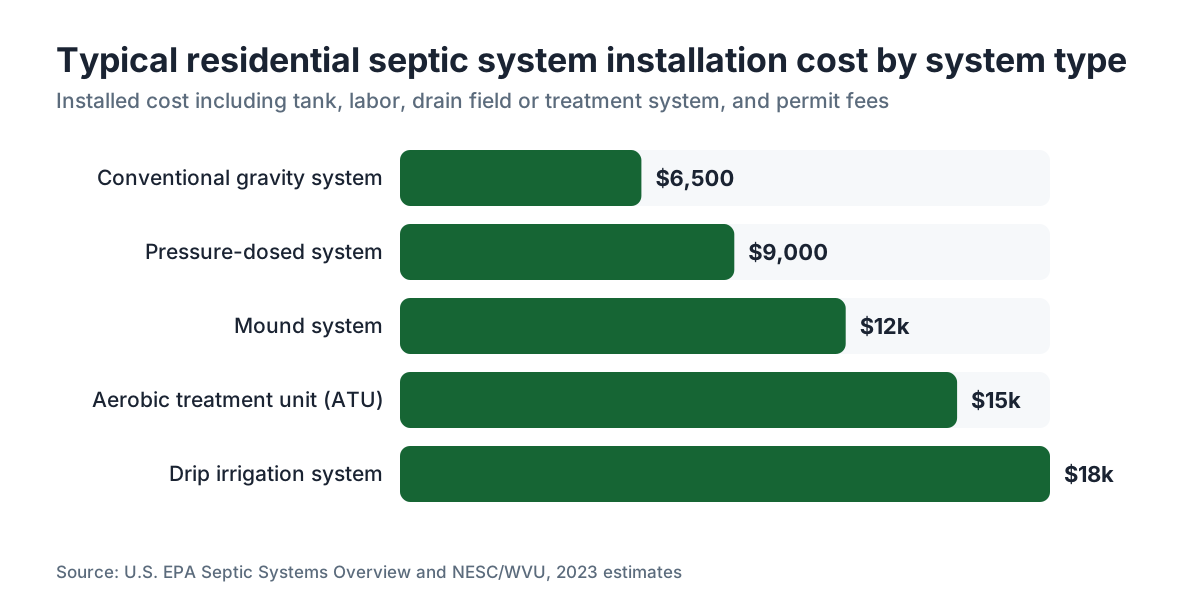
Total installed cost, labor plus materials plus permits, usually lands between $3,000 and $20,000 for a residential property in the U.S. [3]. That range is real. The low end is a simple gravity system in sandy, well-draining soil in a cheap-permit county. The high end is an aerobic unit with drip irrigation on clay soil in a state with steep permit fees and engineered design review.
Here's what actually moves the number.
Soil and site conditions. Heavy clay or a high water table forces engineered alternatives to a standard drain field: mound systems, drip irrigation, or aerobic treatment. Those cost more to install and more to run every year.
System type. A conventional tank plus gravity leach field is the cheapest option. An aerobic system runs $10,000 to $20,000 installed in most markets, partly because the equipment alone costs $5,000 to $10,000 and partly because the install is more labor-intensive [4].
Tank size. A 1,000-gallon concrete tank (the minimum for most 3-bedroom homes) costs less than a 1,500-gallon fiberglass tank with risers and an effluent filter.
Permit fees. These run from under $100 in some rural counties to $1,000 or more where engineered design review is mandatory.
Regional labor rates. Installer labor in rural Texas runs cheaper than in coastal California or the Pacific Northwest.
See the cost to install septic system guide for a deeper breakdown, and the cost to put in a septic tank page for tank costs specifically.
Get at least three written bids. Each one should itemize tank size and material, linear feet of drain field or the type of alternative system, permit fees, soil testing, inspection fees, and what's explicitly excluded (like the electrical hookup for an aerobic system). A bid that just says "install septic system, $8,500" tells you almost nothing.
What is the difference between a septic installer and a septic pumping company?
These are two different trades, and mixing them up costs homeowners money. An installer builds new systems and replaces failed ones. A pumping company (sometimes called a septage hauler) removes accumulated solids from your existing tank on a routine schedule, usually every 3 to 5 years for a household system [5].
Some companies do both. Many do not.
When you call a pumping company about a slow drain, the pumper can tell you if the tank is full or the baffle is broken. What they usually cannot do is legally design or install a replacement drain field. That work belongs to a licensed installer or engineer.
If a pumping company finds a cracked tank, they may refer you to an installer for septic tank repair or full replacement. Larger septic service companies sometimes run both departments under one roof, but always confirm which license the crew doing each job actually holds.
For routine maintenance, see the septic tank pumping and how often to pump septic tank guides.
How do aerobic septic system installers differ from conventional installers?
An aerobic installer needs a broader skill set because the units are mechanically and electrically more complex. They have to understand the whole treatment train: the trash tank (primary settling), the aeration chamber (where aerobic bacteria break down effluent), the clarifier, and the disinfection and pump chamber that doses final effluent to a drip or spray field.
They also work with electrical components (air pumps, float switches, control panels, alarms) and irrigation components (pressure-dosed drip lines or spray heads). That's not typical drain field work.
Many states let manufacturers add another layer. Norweco, Infiltrator, Jet, and other major ATU brands run factory certification programs, and some require their units to be installed by a certified contractor. If an installer isn't certified for the brand they want to sell you, that's a red flag.
Aerobic systems also carry maintenance obligations that conventional systems don't. Texas rule 30 TAC 285 requires a two-year maintenance contract with a licensed Maintenance Provider at the time of installation, renewed annually after that [1]. The installer who sells you the system is often your maintenance provider too, which creates an incentive worth thinking about. Ask what the annual contract costs before you commit to the system.
How common are aerobic septic systems in Texas, and why?
Aerobic systems are the norm across much of central Texas, especially the suburban fringe around Austin and San Antonio and out into the Hill Country. Two things drive that: soil and growth.
The Edwards Plateau and surrounding Hill Country have thin, rocky soils over karst limestone, with very little depth to bedrock or to the Edwards Aquifer recharge zone. That geology makes conventional gravity drain fields nearly impossible in many spots, because there isn't enough soil depth to treat effluent before it reaches groundwater [6]. TCEQ and county rules in these areas require advanced treatment, and aerobic systems are the most common way to satisfy that.
The second driver is people. Central Texas has added hundreds of thousands of residents in areas that will never see municipal sewer. Aerobic systems make otherwise unbuildable lots buildable.
How many aerobic systems are there? Nobody has a single clean number. Industry estimates put Texas well past half a million, likely the largest concentration of any state, but no independent published source pins down the exact figure. The TCEQ tracks permitted systems at the county level [1]. What permit data does show clearly is that in counties like Hays, Comal, Guadalupe, and Caldwell, aerobic systems are the default, not the exception.
Aerobic installers in Texas are licensed by TCEQ and must hold a separate Maintenance Provider license to service systems after installation. If you own property in central Texas and need a new system, assume you'll be quoted an aerobic one unless your lot has unusual soil depth. Get a soil evaluation first to confirm what's actually required.
How do you find a reputable septic system installer in your area?
Start with your state licensing database, not Google. Pull a list of licensed installers in your county, then run each name through Google reviews, Better Business Bureau complaints, and local Facebook groups or Nextdoor. In rural areas, a neighbor who had a system put in last year beats any review platform.
Your county health department or environmental office is the other good source. That office processes installer applications all the time and knows which contractors have a history of failed inspections or code violations. Some will share that informally if you ask.
Questions to ask before you hire:
- What is your license number and what type do you hold? (Verify it.)
- Do you carry general liability and workers' compensation? Can I get a certificate?
- Have you installed on similar soil types and lot sizes near here?
- Who's on-site during installation, and who holds the license?
- What permits will you pull, and will the installation be inspected?
- What does the warranty cover, and for how long?
- If it's an aerobic system, do you offer maintenance contracts, and what do they cost?
That last one matters more than most homeowners realize. The installer who builds your aerobic system is often your maintenance provider for years. If their service is unreliable or overpriced, you're stuck unless you find another licensed provider to take over the contract.
For operators, SepticMind's operations software manages installation jobs, dispatch, and ongoing maintenance contracts in one place, built for septic companies handling both install work and service routes.
For the inspection piece, see the septic tank inspection guide.
What red flags should you watch for when hiring a septic installer?
Unlicensed work is the big one. In rural areas, a guy with a backhoe will offer to "put in a system" for half the price of a licensed installer, and homeowners take the deal. The result is an unpermitted system that fails inspection at sale, or was never sized right for the household, or sits in soil that can't support a drain field. The savings vanish fast.
Other things to watch for:
No itemized bid. If a contractor can't break out the tank, labor, permit, drain field, and equipment, they either don't know their costs or don't want you comparing.
Skipping the soil evaluation. A real installer requires a soil test and perc test before quoting a system type. Quote a conventional system without seeing your soil profile? They're guessing.
Pressure to decide fast. "I have a crew free next week and the price goes up after that" is a sales tactic. Septic scheduling is not that urgent. Take your time.
No mention of permits or inspections. Legitimate installations are always permitted and inspected. If the contractor is vague here, ask straight out who pulls the permit and when the inspection happens.
A lowball bid by a wide margin. Three bids around $12,000 and one at $7,500 deserve hard scrutiny. Ask what's missing from the cheap one.
What happens during a septic system installation, step by step?
The sequence shifts by system type. For a typical residential job, here's the general flow.
1. Site evaluation. A soil scientist or the installer (if licensed) reads your soil profile, checks depth to groundwater and bedrock, and runs a percolation test. This decides what system type is permitted on your lot.
2. Design. The installer or a licensed engineer draws the layout: tank location, drain field or alternative treatment area, and setbacks from property lines, wells, and structures. The EPA's SepticSmart program stresses following local setback rules to protect neighboring wells and surface water [7].
3. Permit application. The installer submits the design and application to the local health department or environmental agency. Approval can take a few days in rural counties or several weeks in tighter jurisdictions.
4. Excavation and tank placement. The crew digs for the tank, sets it, and connects the inlet and outlet to the house plumbing and to the drain field or treatment system.
5. Drain field or alternative system. Conventional: gravel trenches, perforated pipe, distribution components. Aerobic: the ATU equipment goes in, electrical gets run, and the drip or spray field is laid out.
6. Inspection. Before backfilling, the local inspector verifies the installation matches the permitted design. This step is mandatory in nearly every jurisdiction.
7. Backfill and site restoration. Once the inspector signs off, the crew backfills, grades the surface, and the install is done.
8. Startup and training (aerobic only). The installer commissions the system, confirms every mechanical component works, and walks the homeowner through the maintenance requirements, including the mandatory contract.
The full septic tank installation guide covers each phase in more detail.
How long does a septic system installation take?
The physical work takes one to three days for most residential systems. A simple conventional system on an easy lot can be done in a day. An aerobic system with drip irrigation on rough terrain takes two to three days of crew time, sometimes more.
The slow part is permitting. Approval timelines run from same-week in some counties to six to twelve weeks where review processes are heavy or backlogged. In fast-growing parts of Texas, permit queues have stretched to several months during construction booms.
Buying a property that needs a new system? Build the permit timeline into your closing schedule. Plenty of real estate deals have died because the buyer underestimated how long a new-system permit takes.
Weather matters too. Excavation is hard or impossible in frozen ground, and some inspectors won't approve installs in saturated soil. Across most of the South this is a minor concern. In the northern U.S., winter installs sometimes slip to spring.
What warranties and ongoing obligations come with a new septic installation?
Septic warranties aren't standardized. What you get depends on the installer and the equipment manufacturer.
For conventional systems, most installers warranty their workmanship for one year. Some offer two. The tank carries its own manufacturer warranty, usually five to ten years for concrete against structural defects, though claims on a buried tank are rare.
For aerobic systems, the ATU equipment carries a manufacturer warranty, commonly one to two years on parts, with motor and blower components sometimes extended to three to five years if you register the unit. The installer's labor warranty is usually one year.
Beyond the paper warranty, aerobic owners have a legal obligation. Texas 30 TAC 285 requires a maintenance contract and mandates that the system be inspected and serviced by a licensed Maintenance Provider at least four times a year [1]. Spray heads get verified, chlorine levels get checked, effluent quality gets monitored. Let the contract lapse and you're in violation of state rules, and your system warranty may be void.
Conventional systems are simpler: pump the tank every 3 to 5 years depending on household size and use [5]. See the septic tank pump out and septic tank cleaning guides for what that service involves.
SepticMind tracks maintenance schedules, service records, and contract renewals for operators managing multiple customer accounts, which helps companies running mandatory aerobic maintenance in Texas.
Can you install your own septic system without hiring a contractor?
In a small number of states and counties, a homeowner can install their own system on their own property. It's called owner-builder installation. The rules run the gamut: some jurisdictions allow it freely, others make the homeowner pass a written exam or take a training course, and many ban it outright unless the homeowner holds an installer license.
Even where it's legal, doing it yourself carries real risk. The work involves excavation to specific grades (drain fields must slope precisely), correct tank placement and leveling, proper backfill compaction, and system commissioning. Get any of that wrong and you get drain field failure, sewage backups, or groundwater contamination. The EPA's SepticSmart program points to failing systems as a source of ground and surface water contamination, and an improperly installed system is one of the fastest paths to failure [7].
Go the owner-builder route and your local health department still requires a permit and an inspection. You'll likely need a licensed engineer or soil evaluator to sign off on the design. The real savings usually come in lower than homeowners expect once you count equipment rental and the value of your time.
My honest take: for most homeowners, hire a licensed installer. You get a permitted, inspected, warrantied system. The tank and drain field sit in the ground for decades. That's not the place to save $1,500 on labor.
If something goes wrong with an existing system instead of a new one, start with septic system repair to understand what the fix involves.
Frequently asked questions
How do I verify that a septic installer is licensed in my state?
Search your state licensing board's online database. In Texas, use the TCEQ license lookup at tceq.texas.gov. In Florida, use the Department of Health OSTDS contractor search. Ask the installer for their license number before they visit your property, then verify it yourself. Most state databases show license status, issue date, and any disciplinary actions.
How much does a septic system installer charge for labor alone?
Labor typically runs 30 to 50 percent of the total installation cost. On a $10,000 system, expect $3,000 to $5,000 in labor. Rates vary by region and system complexity. Aerobic systems take longer and involve more mechanical work, so labor costs run higher than for a conventional gravity system of the same tank size.
Do aerobic septic system installers in Texas need a special license?
Yes. TCEQ requires an Installer II license to install aerobic treatment units in Texas. To service and maintain those systems after installation, the contractor must also hold a separate Maintenance Provider license under 30 TAC Chapter 30. Many aerobic ATU manufacturers also require factory certification before an installer can legally put in their specific equipment.
How common are aerobic septic systems in Texas compared to other states?
Texas has more aerobic septic systems than any other state, driven by the thin, rocky soils of the Hill Country and rapid suburban growth in areas without municipal sewer. Central Texas counties like Hays, Comal, and Caldwell run aerobic systems as the practical default. Most other states use conventional gravity systems far more often because their soil supports them.
What is the difference between an aerobic septic system and a conventional septic system?
A conventional system uses anaerobic bacteria in a tank to partially treat waste, then disperses effluent through a gravity-fed leach field where soil does the final treatment. An aerobic system adds an air pump to inject oxygen into the treatment chamber, so aerobic bacteria break down waste more thoroughly. Aerobic systems produce higher-quality effluent and work on sites where soil can't adequately treat conventional effluent.
What questions should I ask a septic installer before hiring them?
Ask for their license number and verify it with the state. Ask what insurance they carry and request a certificate. Ask who will be on-site during installation, whether they handle permit filings, what the inspection process is, and exactly what the bid includes and excludes. For aerobic systems, ask what the annual maintenance contract costs before you commit to the system type.
How long does it take to get a septic system installed from start to finish?
Physical installation takes one to three days. Permitting takes anywhere from a few days to several months depending on your county's workload and review requirements. In high-growth areas of Texas, permit queues have run six to twelve weeks or longer during construction booms. Plan around the permit timeline, not the installation timeline, especially if you have a closing date.
Can a general contractor install a septic system, or does it require a specialist?
In most states, a general contractor's license does not cover septic installation. You need a contractor who holds a state-issued onsite wastewater installer license, which is a separate credential. Some general contractors subcontract septic work to licensed installers, which is fine as long as the licensed installer pulls the permit and supervises the work.
What happens if a septic system is installed without a permit?
An unpermitted system is a serious problem. It surfaces during a home sale when a title search or inspection flags it. Many lenders won't finance a property with an unpermitted septic system. You may be required to decommission the unpermitted system and install a compliant one at your expense, even if the original works fine. In some states, the property owner can also face fines.
How do I find aerobic septic system installers in my area of Texas?
Search the TCEQ license lookup for Installer II licensees in your county. The TCEQ website also lists Maintenance Providers by county, which helps because many aerobic installers are also maintenance providers. Local county health departments can sometimes provide lists of active permit applicants, and neighbors in rural subdivisions are often the best source of recent referrals.
What is included in an aerobic septic system maintenance contract?
A typical contract covers quarterly visits, inspection of spray heads or drip emitters, chlorine tablet replacement, air pump and float switch checks, effluent quality verification, and reporting to the state or county as required. In Texas, state rules require at minimum four service visits per year for aerobic systems. Annual contract costs typically run $150 to $400 depending on location and provider.
Does homeowners insurance cover septic system installation or failure?
Standard homeowners policies exclude gradual septic failure and installation costs. Some policies cover sudden and accidental damage, like a tank crushed by a vehicle, but drain field failure from normal use or bad installation is almost universally excluded. A small number of insurers offer septic riders or home warranty products that cover components. Read the exclusions carefully before assuming you have coverage.
How do I know if my lot needs an aerobic system rather than a conventional one?
A soil evaluation decides this. A licensed soil scientist or qualified installer examines the soil profile for depth to bedrock, groundwater level, clay content, and percolation rate. If the perc rate is too slow or the depth to limiting layers is too shallow for a conventional drain field, the health department will require an advanced treatment system. In much of central Texas's Hill Country, this evaluation almost always points to aerobic.
Sources
- Texas Commission on Environmental Quality, On-Site Sewage Facilities (30 TAC Chapter 285): Texas requires Installer I and Installer II licenses for septic installation and a separate Maintenance Provider license for aerobic systems, with a mandatory maintenance contract and at least four service visits per year under 30 TAC Chapter 285.
- Florida Department of Health, Onsite Sewage Treatment and Disposal Systems: Florida requires a dedicated OSTDS contractor license for septic installation, separate from a general contractor license.
- U.S. Environmental Protection Agency, Septic Systems Overview: Residential septic system installation costs vary widely depending on system type, soil conditions, and local permit requirements, generally ranging from a few thousand to over $20,000.
- National Environmental Services Center (NESC), West Virginia University, Aerobic Treatment Units: Aerobic treatment units typically cost more than conventional systems due to equipment costs and installation complexity.
- U.S. Environmental Protection Agency, SepticSmart: How to Care for Your Septic System: EPA recommends pumping a septic tank every three to five years as part of routine maintenance for a typical household system.
- Texas A&M AgriLife Extension, Onsite Wastewater Treatment in Texas: Thin, rocky soils over karst limestone in the Hill Country and Edwards Plateau region limit conventional drain field installation, making aerobic systems common in central Texas.
- U.S. Environmental Protection Agency, SepticSmart Program: The EPA SepticSmart program emphasizes following local setback requirements and proper installation to protect groundwater and surface water from failing septic systems.
- National Onsite Wastewater Recycling Association (NOWRA): Licensing requirements for septic installers vary by state, with most requiring a dedicated onsite wastewater installer credential separate from a general contractor license.
- University of Florida IFAS Extension, Septic Tank Maintenance: Aerobic treatment units require ongoing mechanical maintenance including air pump inspection, disinfection system monitoring, and spray or drip field verification.
Last updated 2026-07-09