Septic system companies: how to find, vet, and hire the right one
By the SepticMind Editorial Team
TL;DR
- Septic companies range from solo pumpers to full-service installers who handle both aerobic and conventional systems.
- Licensing, service scope, and pricing vary widely by state.
- A legitimate company holds a current state contractor or pumper license, carries liability insurance, and hands you a written service report.
- Expect $300 to $600 for pumping, $500 to $3,000 for repairs, and $10,000 to $30,000-plus for a new install.
What do septic system companies actually do?
Septic companies are not all the same business. Some hold a narrow pumper license and only pull tanks. Others carry a full onsite wastewater contractor license that lets them design, install, repair, and inspect every component from the inlet tee to the far end of the drain field. Figure out which type you need before you dial, and you save yourself a stack of wasted phone calls.
The work splits into four buckets. Pumping companies vacuum liquid and solids out of the tank and haul the waste to a licensed disposal facility. Repair companies diagnose and fix broken baffles, cracked tanks, failed distribution boxes, and clogged leach fields. Installation contractors design and build new systems, pull permits, and set up the soil evaluation or perc test. Inspection companies run condition assessments, often for a home sale. Big firms do all four. Small outfits usually pick a lane.
Aerobic septic system companies add another layer. Aerobic treatment units (ATUs) use an air pump to inject oxygen into the treatment chamber, which builds a more aggressive bacterial environment than a conventional anaerobic tank. The treated effluent then gets disinfected, usually with chlorine tablets or UV, before it disperses. That process needs more mechanical upkeep than a conventional system, and most states require the owner to hold a maintenance contract with a certified ATU service provider [11]. If you run an aerobic system, you need a company that services your exact brand of unit, not whichever septic company answers the phone first.
How are septic companies licensed and regulated?
Licensing happens at the state level, and the rules are genuinely fragmented. Some states license pumpers separately from installers. Others issue a single onsite wastewater professional credential that covers everything. A handful hand licensing to county health departments, so requirements shift block by block in rural areas.
The EPA's SepticSmart program sends homeowners to their state environmental or health agency as the first stop for checking credentials [2]. That's the right instinct. In most states the agency is the department of environmental quality, the department of health, or the state board of sanitarian registration.
Check four things before you hire anyone. Ask for the license number and look it up on the issuing agency's website. Confirm they carry general liability insurance and ask for a certificate. For new installs or major repairs, confirm they will pull the required permit. Unpermitted septic work is a real problem: it can void a home's sale, hit the homeowner with fines, and in some states leave the homeowner liable for the contractor's failure to meet code [3].
The National Association of Wastewater Technicians (NAWT) and the National Onsite Wastewater Recycling Association (NOWRA) both keep member directories, and their certified members have passed a national exam on top of state requirements [8][9]. That's no guarantee of quality. It's a real signal.
What does a legitimate septic company charge?
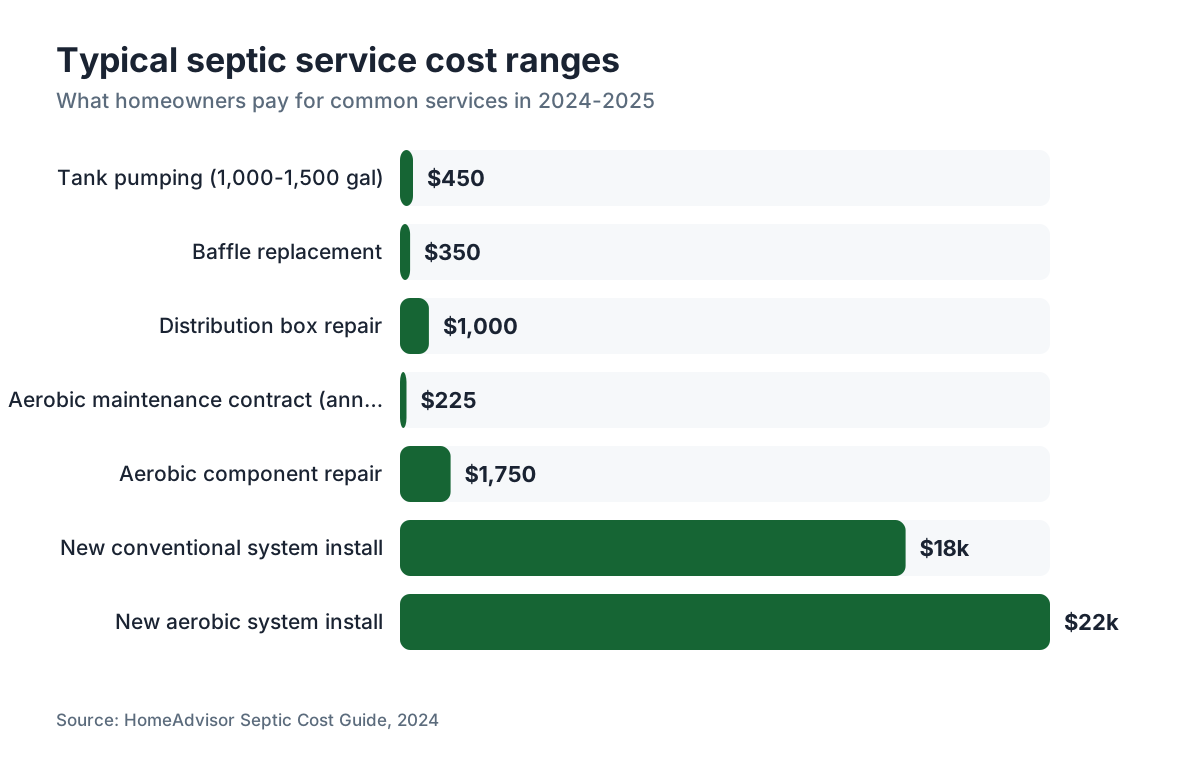
Price rides on tank size, access difficulty, travel distance, and regional labor costs. The ranges below reflect what U.S. homeowners actually pay in 2024 and 2025, drawn from contractor cost surveys and homeowner-reported data. Nobody has a perfectly clean dataset here. These ranges hold up across multiple sources anyway.
| Service | Typical price range | Notes |
|---|---|---|
| Tank pumping (1,000-1,500 gal) | $300-$600 | Add $50-$150 for difficult access |
| Tank pumping (2,000+ gal) | $500-$900 | Commercial or large residential |
| Baffle replacement | $200-$500 | Per baffle, labor included |
| Distribution box repair | $500-$1,500 | Excavation adds cost |
| Drain field jetting/cleaning | $500-$1,500 | Partial restoration only |
| Aerobic system maintenance contract | $150-$300/year | Required by most states for ATUs |
| Full aerobic system repair | $500-$3,000 | Depends on component |
| New conventional system install | $10,000-$25,000 | Varies sharply by soil and site |
| New aerobic system install | $15,000-$30,000+ | Higher mechanical complexity [4] |
For septic tank pumping, the biggest price variable after tank size is how long it's been since the last pump-out. A tank neglected for 10 years holds a hardened sludge layer that takes longer to break up and remove. That can push a standard pump-out into overtime billing.
Get at least three written quotes for any repair or installation. Verbal estimates are worth nothing the second a contractor hits an unexpected condition underground. A good quote spells out what's included, which permit fees are extra, and what happens if the crew uncovers something worse than expected.
How do you find reputable septic system companies near you?
Start with your state's licensing lookup tool. Most state environmental or health agencies keep a public database of licensed onsite wastewater contractors. Searching there first filters out unlicensed operators before you read a single review.
After that, the most reliable signal is word of mouth from neighbors who are also on septic. The guy three houses down who got a clean pump-out two years ago beats any anonymous online review, because reviews are easy to game in a low-volume local service category.
Worth checking online: NOWRA's member finder, NAWT's certified professional directory, and your state's wastewater association (most states have one affiliated with NOWRA) [8][9]. Angi and HomeAdvisor list septic contractors, but they don't verify licenses on their own, so cross-check every name against the state database.
When you call, listen to how they answer basic questions. A good company asks your tank size, the year of your last pump-out, and whether you've had any recent backup symptoms. A company that quotes a flat price without asking anything isn't automatically bad, but note the flag. The best companies keep service records on every tank they touch, and if they've worked your area long enough, they may already have your address on file.
For aerobic septic system repair, ask whether the technician is certified on your specific brand of ATU. Major manufacturers including Norweco, Cromaglass, and Jet run dealer and service networks, and some require factory-trained technicians for warranty work [5].
What questions should you ask before hiring?
Get answers to these before you commit. None of them are trick questions, and a good contractor won't blink.
Are you licensed in this state, and what is your license number? That should take five seconds. If they hedge, stop there.
Do you carry liability insurance, and can you send a certificate before the job? You want this before work starts, not after.
Will you pull the required permit? For pumping, no permit is needed in most jurisdictions. For any repair involving excavation, a tank replacement, or a new drain field, a permit is almost always required [3].
What's in the written service report? After a pump-out, a responsible company notes the tank's liquid level before pumping, the condition of the inlet and outlet baffles, any signs of hydraulic overload or root intrusion, and the sludge and scum depths they measured. That documentation matters for your records and for any future sale.
How do you dispose of the waste? Licensed haulers must deliver septage to an approved treatment facility, and most states require them to document each disposal load [2]. Ask to see it.
For septic system repair or installation work, also ask how long the project takes, which site conditions could change the price, and whether they handle all the permitting or expect you to.
For aerobic companies, ask how many of your specific ATU model they service in a year. A technician who sees 50 Norweco units a year knows that system. Someone who services one or two a year is learning on yours.
What's the difference between a septic pumping company and a septic repair company?
A pumping company vacuums the accumulated solids and liquids out of your tank, hauls the waste legally, and notes any obvious condition issues while the lid is open. That's the whole of a routine septic tank pump out. Some pumping companies stop there and refer you to a repair contractor if they spot a problem.
A repair company has the tools, licenses, and skill to fix what's broken. That might mean replacing a cracked or collapsed baffle, excavating and patching a damaged tank wall, rerouting distribution lines, or rehabilitating a partly failed drain field. Larger full-service firms combine both jobs under one roof, so a single call gets you a pump-out plus an assessment of whether anything needs fixing. Here's more on septic tank repair.
My advice for homeowners is simple. Hire a pumping company that has in-house repair capability, or at least a tight relationship with a repair contractor. If the pumper finds a broken outlet baffle during routine service and fixes it the same day, that beats scheduling a second visit on both convenience and often price.
For aerobic systems, the line between pumping and repair blurs. ATUs need periodic work on the air pump, the chlorinator, and the effluent pump, and that usually falls under the maintenance contract instead of a separate repair call. The technician who visits quarterly or twice a year is your first line of diagnosis on mechanical failures.
How often should a septic company service your system?
The EPA recommends pumping a conventional septic tank every three to five years for an average household [2]. Solid rule of thumb. The real interval depends on tank size, household size, and what goes down the drains. A 1,000-gallon tank serving four people realistically needs pumping closer to every three years. A 1,500-gallon tank serving two can stretch toward five.
For a tighter schedule, see the guidance on how often to pump septic tank. Short version: measure the sludge and scum layers at each pump-out and use those depths to set your next interval instead of guessing.
Aerobic systems demand more frequent attention. Most state rules require an annual or biannual inspection by a certified service provider, and the maintenance contract usually calls for quarterly or semiannual visits [11]. Those visits cover the air pump motor, chlorine tablet replacement, the float switches on the effluent pump, and a check that effluent quality meets the state's minimum standard.
For septic tank cleaning beyond routine pumping, some companies offer a deeper clean that uses high-pressure water to break up hardened sludge on the tank walls. You don't need this every cycle, but on a tank neglected for years it can restore capacity. Don't let anyone sell you an enzyme or bacterial additive as a substitute for pumping. The EPA is clear: no additive eliminates the need for regular pumping [2].
What red flags should you watch for with septic companies?
A few patterns show up over and over in complaints about septic contractors. Know them and you skip learning the hard way.
First is the pressure-sell repair. A pumping technician tells you mid-job that your whole drain field is failing and you need an emergency replacement for $15,000. Could be true. Could be an upsell. Ask for written documentation, photos if possible, and a second opinion from a different licensed company before you authorize any major repair or replacement.
Second is unlicensed work. In states with strong enforcement, unlicensed septic work can land fines on the homeowner, more than the contractor. It can also stall or kill a home sale when a pre-purchase inspection turns up unpermitted work.
Third is the vague or no-show service report. If a company pumps your tank and hands you a receipt with nothing on it but the price, that's a problem. A professional report documents what they found, not only what they charged.
Fourth is specific to aerobic companies. Some contractors sell cheap maintenance contracts, then do a visual glance without testing effluent quality or servicing the mechanical parts. If your state requires effluent testing under the maintenance contract and your contractor never pulls a sample, they aren't complying with the contract or the regulation.
If you run a service business and want to track which customers are overdue, flag complaints, or manage compliance documentation, tools like SepticMind are built for that workflow.
How do septic companies handle aerobic system repairs differently?
Aerobic treatment units carry mechanical parts a conventional system doesn't: an air compressor or blower, a treatment chamber with oxygen diffusers, a disinfection system (chlorine tablet feeder or UV), and a pressurized effluent pump that doses the dispersal field. Any one can fail on its own, and figuring out which one requires a technician who understands how they work together.
Aerobic repair differs from conventional repair in a few practical ways. Parts are brand-specific. A Norweco Singulair blower motor won't swap into a Jet unit. Companies that service one brand usually stock its common parts, which means faster repairs. A generalist may have to order parts and book a second visit.
Disinfection failures are the top-priority repair, because in many aerobic setups the effluent is surface-applied or near-surface. If the chlorinator runs out of tablets or the UV lamp burns out, the system disperses inadequately treated effluent. Most states require the service provider to notify the homeowner, and in some cases the health department, when a disinfection failure isn't fixed inside a set window [11].
Aerobic repairs run higher on average than conventional ones, simply because parts cost more and the labor is more technical. A chlorine tablet feeder replacement runs $200 to $500. An air pump runs $300 to $800 depending on the unit. A full effluent pump swap with float switches runs $600 to $1,500 [4]. When the treatment chamber itself is compromised, full replacement can top $20,000.
What should a septic company do during a home inspection or real estate transaction?
A pre-sale septic inspection is a different animal from a routine maintenance visit. The point is to give a buyer an honest read on the system's condition and remaining life, more than pump the tank. Not every septic company offers this, and the ones that do should follow a structured protocol.
At minimum, a real-estate septic inspection locates and exposes all access points, pumps the tank so someone can see the internal components, checks the inlet and outlet baffles, inspects the distribution box (if reachable), and observes the drain field for surfacing effluent or saturated soil. Some states publish a formal checklist that licensed inspectors must follow. Others leave it largely to the inspector's judgment [3].
For a septic tank inspection, a camera run down the outlet line from tank to distribution box catches cracks or root intrusion that a visual check misses. Not every company offers it, but on older systems it's money well spent.
Understand one limit: a septic inspection is a point-in-time read. A system can pass in April and show failure in September if household water use spikes. Inspectors should document what they found and be plain about what they couldn't access or evaluate. A responsible report notes the estimated tank age, the condition of every component they could see, and any item they couldn't verify.
On the buyer's side, treat an inspection report from a company the seller hired with more scrutiny than one from an independent company you pick yourself.
How do you compare septic system companies on price without getting burned?
Price shopping for septic services has a few traps worth knowing.
For routine pumping, prices compare cleanly because the job is standardized. A company charging $600 for a standard 1,000-gallon pump-out in a market where everyone else charges $350 either has a legitimate reason (remote location, difficult access, a weekend emergency call) or they're overpriced. Grab two or three quotes and the range makes it obvious.
For repairs, comparing quotes is harder because the scope of the problem isn't fixed. Make sure every company quotes the same repair. If one quotes a distribution box replacement and another quotes cleaning the lines feeding that box, you aren't comparing the same work. Ask each company to put its recommended repair in writing before you agree to anything.
For septic tank installation or full system replacement, the range is wide because site conditions vary enormously. A tight lot with high groundwater needs an engineered alternative system that costs far more than a conventional gravity system on a sandy, sloped lot. The cost to install a septic system depends on soil evaluation results, local permit fees, required setbacks, and the type of system the site can support. Any quote that doesn't mention a soil evaluation or perc test should raise a question.
The cost to put in a septic tank as a standalone replacement (existing drain field reused) runs much lower than a full system replacement, typically $3,000 to $10,000. You'll only know whether the existing field is still viable after an inspection.
SepticMind's operator tools include job-costing templates that service companies use to build consistent, itemized quotes, useful context if you're trying to picture what a well-structured proposal looks like.
What regulations govern septic companies and the systems they service?
The main regulatory framework for septic systems in the U.S. is state-level. The federal government sets the baseline through the Clean Water Act, which restricts discharges of pollutants to navigable waters and gives states the authority they use to set their own onsite wastewater standards [7]. But the specific contractor licensing rules, design standards, soil evaluation protocols, and inspection mandates all live in state code.
The EPA's SepticSmart initiative runs public education and urges homeowners to have the system inspected regularly and pumped every three to five years by a professional [2]. That language matters because it confirms the federal agency treats licensed, professional service as the standard.
For aerobic systems, state rules usually go further. Texas, for example, requires homeowners with aerobic systems to hold a maintenance contract with a licensed service provider, with regular inspections that check effluent quality [11]. Florida, Louisiana, and Oklahoma run similar frameworks. These rules exist because aerobic systems disperse treated effluent in ways that can create public health exposure if treatment fails, unlike a conventional system where the effluent stays underground.
For leach field construction and repair, most states require a licensed septic contractor to pull a permit before breaking ground. The permit application usually asks for a site plan, soil evaluation data, and the design of the proposed system. This permitting isn't bureaucratic overhead. It's how regulators check that a failing system isn't getting replaced by another failing system in the same bad soil.
Frequently asked questions
How do I find a licensed septic company in my state?
Go to your state's department of environmental quality, department of health, or board of sanitarian registration and use their contractor license lookup. Most states keep a searchable public database. NOWRA and NAWT also maintain national member directories that link to certified professionals. Always verify the license number directly with the issuing agency before you hire anyone.
Are septic system companies required to be licensed?
In most states, yes. Requirements vary: some states license pumpers and installers under one credential, others issue separate licenses for each activity, and a few delegate licensing to counties. Unpermitted or unlicensed work can expose homeowners to fines and can complicate property sales. Ask for a license number and verify it before any work starts.
What is a fair price for septic tank pumping?
For a standard 1,000 to 1,500 gallon residential tank, expect $300 to $600. Larger tanks, difficult access, or emergency calls push that higher. Price varies by region: rural areas with fewer providers often run higher than competitive suburban markets. Get at least two quotes and ask what's included in the service report.
How often do septic companies need to service an aerobic system?
Most states that allow aerobic treatment units require a maintenance visit at least twice a year, and some require quarterly visits. The technician checks the air pump, replaces chlorine tablets, inspects float switches, and may test effluent quality. Annual or biannual inspections are commonly required by state regulation, and the provider must be certified for that ATU brand.
What does a septic system repair company actually fix?
Repair companies handle broken or worn inlet and outlet baffles, cracked or collapsed tank walls, failed or clogged distribution boxes, damaged effluent lines, and partly failed drain fields. Aerobic repair specialists also fix or replace air pumps, chlorinators, UV lamps, and effluent pumps. Major repairs require a permit in most states, so confirm the company pulls one before work begins.
Can any septic company service an aerobic septic system?
Not reliably. Aerobic treatment units are brand-specific, and parts aren't interchangeable across manufacturers. A technician who services 50 Norweco or Jet units a year knows the system; a generalist may not. Most states require the provider to be certified specifically for ATU maintenance. Ask whether the technician is trained on your exact ATU brand before scheduling a visit.
What should be on a septic service report after pumping?
A complete report documents the tank's liquid level before pumping, estimated sludge and scum depths, the condition of inlet and outlet baffles, any visible cracks or damage, and whether the technician recommends follow-up work. It should also note the date, tank size, and volume removed. This documentation matters for maintenance records and future property transactions.
Do septic companies need to pull permits for repairs?
For pumping, no permit is required in most jurisdictions. For any repair involving excavation, tank replacement, or drain field work, a permit is required in nearly all states. Unpermitted septic repairs are illegal in most states and can create serious problems when you sell. Ask upfront whether the company pulls the required permit, and ask to see it before work begins.
How do I know if a septic company is disposing of waste properly?
Licensed pumpers must deliver septage to an approved treatment facility and document each disposal load in most states. Ask the company for a copy of the disposal record. If a company is unusually cheap and can't produce documentation, that's a red flag. Illegal dumping of septage is a serious environmental violation and carries substantial fines.
How much does aerobic septic system repair cost?
Minor aerobic repairs like replacing a chlorine tablet feeder run $200 to $500. An air pump or blower replacement typically costs $300 to $800 depending on the unit. A full effluent pump replacement with float switches runs $600 to $1,500. Major component failures involving the treatment chamber or dispersal system can exceed $3,000 to $5,000. Get itemized written quotes before you authorize any repair.
What's the difference between a septic inspection for a home sale versus a routine inspection?
A real-estate inspection is a point-in-time condition assessment meant to inform a buyer. It typically includes pumping the tank, inspecting all internal components, checking the distribution box, and evaluating the drain field for signs of failure. A routine maintenance inspection focuses on operational status and service needs. For a home sale, use a company with no financial relationship to the seller whenever possible.
What are the warning signs that a septic company is not reputable?
Key red flags: they can't provide a current license number, they refuse to pull required permits, they quote a major repair without written documentation of the problem, they can't produce a certificate of liability insurance, or they pressure you to authorize expensive work immediately without time for a second opinion. For aerobic systems, a contractor who never tests effluent quality under a maintenance contract isn't fulfilling their obligation.
How long does a septic system installation take?
From permit application to operational system, a new conventional septic install typically takes four to eight weeks, including the soil evaluation, design review, permitting, and construction. Aerobic installs run similar timelines but add time for manufacturer-specific permitting in some states. Delays are common if the county health department has a permitting backlog or if the soil evaluation requires a second perc test.
Can a septic company tell me why my drain field is failing?
A qualified company can identify the symptoms, such as saturated soil, surfacing effluent, or slow drainage, and make a reasonable diagnosis. But the root cause (biomat buildup, hydraulic overload, design deficiency, root intrusion) sometimes requires camera inspection, soil testing, or a licensed designer to confirm. Be skeptical of any company that calls a full drain field failure with nothing but a visual look.
Sources
- U.S. EPA, SepticSmart Program: EPA recommends pumping a conventional septic tank every three to five years, having the system inspected regularly by a professional, and states that no additive eliminates the need for regular pumping.
- U.S. EPA, Septic Systems (How to Care for Your Septic System): EPA guidance states that septic repair and installation work typically requires permits from local or state authorities, and that unpermitted work can create legal and public health problems.
- HomeAdvisor, Septic Tank Installation and Repair Cost Guide: National cost data showing aerobic system installations ranging from $15,000 to $30,000 and conventional systems from $10,000 to $25,000; repair costs for aerobic components from $200 to $3,000 depending on the part.
- Norweco, Inc., Authorized Service Network: ATU manufacturers including Norweco require factory-trained or authorized service technicians for warranty-covered maintenance and repair work.
- U.S. EPA, Summary of the Clean Water Act: The Clean Water Act provides the federal authority framework under which states establish onsite wastewater contractor licensing and system design standards.
- National Association of Wastewater Technicians (NAWT): NAWT maintains a national certification program and directory for septic service professionals who have passed a standardized examination.
- National Onsite Wastewater Recycling Association (NOWRA): NOWRA maintains a member directory and professional development programs for onsite wastewater contractors and inspectors across the U.S.
- Florida Department of Health, Onsite Sewage Program: Florida regulates aerobic treatment unit maintenance contracts and requires certified service providers to conduct regular inspections with effluent quality verification; other states such as Texas run similar frameworks.
Last updated 2026-07-09