Septic system backup: causes, fixes, and what it costs
By the SepticMind Editorial Team
TL;DR
- A septic backup happens when wastewater can't move forward through your tank or drain field and reverses into your home's drains.
- The most common cause is a full tank, fixed by pumping ($250 to $600).
- Drain field failure runs $3,000 to $20,000 to repair or replace.
- Which cause you have changes everything about what you do next, and about what you pay.
What does a septic system backup actually mean?
Wastewater leaves your house by gravity, flows into the septic tank, separates into layers, and the clarified liquid effluent moves out to the drain field (also called a leach field) where soil organisms break it down. A backup happens when something blocks, slows, or overwhelms that flow. The wastewater has nowhere to go but back up the pipes toward the lowest fixture in your house, usually a basement floor drain or a ground-floor toilet.
The backup is a symptom, never the disease. The cause sits somewhere in the chain: your pipes, your tank, the outlet baffle, the distribution box, the drain field, or the pump if you have one. Plunge a toilet all you want. It does nothing if the real problem is a saturated drain field 60 feet from the house.
This is where money gets wasted. Homeowners and even some plumbers treat a septic backup as a plumbing problem and fix the wrong thing. If snaking a drain clears it for good, great. If it comes back within days, you almost certainly have a septic-side issue, and the truck you need is a pump truck, not a plumber's van.
What are the most common causes of a septic backup?
Seven causes account for the large majority of residential septic backups. They're listed roughly by how often they show up, though your situation may not match the average.
1. Overfull tank. Solids build faster than expected, either because the household is bigger than the system was sized for, or because nobody pumped the tank on schedule. The EPA SepticSmart program recommends pumping every 3 to 5 years for a typical household [1]. Once the scum and sludge layers crowd out the liquid zone, solids push into the outlet and clog it.
2. Clogged inlet or outlet baffle. Baffles are the T-shaped fittings inside the tank that direct flow and keep floating scum away from the outlet pipe. Concrete baffles corrode. Plastic ones dislodge. A clogged outlet baffle is one of the fastest routes to a backup.
3. Pipe blockage between house and tank. A broken, root-invaded, or grease-packed lateral line from your house to the tank backs up the whole system. This is the one cause that looks almost identical to a mainline plumbing clog.
4. Saturated or failed drain field. When the drain field soil is biomat-clogged or hydraulically overloaded, effluent can't soak in fast enough. It backs up into the tank, fills it, and reverses into the house. This is the most expensive cause to fix. Leach field failure gets its own detailed treatment separately.
5. High groundwater or saturated soil. After heavy rain or during snowmelt, groundwater can rise to the level of the drain field trenches. A field already sitting in water can't accept effluent. The backup clears on its own as groundwater drops, but recurring episodes tell you the system was set too shallow or the site is genuinely marginal.
6. Pump failure (pressure-dosed or mound systems). If your system uses a pump to dose effluent to the field, a dead pump lets effluent pile up in the pump chamber until it backs into the tank and then the house. The fix is usually a pump replacement ($300 to $1,000 parts and labor).
7. Non-flushables and grease. Wipes (even the "flushable" ones), feminine hygiene products, paper towels, and cooking grease pile up faster than waste breaks down. The EPA calls out flushing wipes and grease as top causes of septic problems [1]. This one usually rides along with a full tank and speeds up the failure.
Here's the honest caveat: nobody has clean national data on the relative frequency of each cause. The closest systematic look comes from state onsite wastewater program inspection records, which keep showing drain field failure and tank neglect as the top two systemic issues [2].
How can you tell where the backup is coming from?
You can narrow the cause down yourself before anyone shows up with a truck, which saves you from paying for the wrong service call.
One fixture backing up while everything else drains fine (say, just the toilet in one bathroom) means the clog is in the branch drain serving that fixture. That's plumbing, not septic.
Multiple fixtures slow or backing up, especially the lowest ones, points at the shared main drain, the lateral to the tank, or the tank and field themselves.
Find your septic tank cleanout. It's a capped pipe, usually near the tank lid or where the lateral leaves the house. If you can safely reach it, the water level tells you a lot. A cleanout full of wastewater means the obstruction is between the cleanout and the tank, or the tank is full. A dry cleanout with slow house drains means the clog sits between the cleanout and the house.
Once the tank lid is off, a trained eye (or a septic tank inspection) reads the liquid level. Water at or above the outlet baffle means the tank is full, the baffle is damaged, or the drain field is compromised. A normal level means the field is probably fine and the trouble is upstream.
Don't open a tank lid yourself unless you know confined space hazards cold. Septic tanks make hydrogen sulfide gas, which is heavier than air and can kill at concentrations above 50 ppm [3]. This is not a place to learn on the job.
What should you do immediately when sewage backs up?
Stop using water in the house. Every flush, every shower, every dishwasher cycle shoves more volume into a system that already can't cope. This is the single most useful thing you can do in the first hour, and it's free.
Skip the chemical drain cleaners. They do nothing for septic-side problems and they kill the bacteria in your tank that you'll want alive once the system is fixed.
Call a licensed septic pumper first, not a plumber, unless you've already confirmed the trouble is inside the house pipes. Tell them the symptoms: which fixtures are affected, how long it's been going on, when the tank was last pumped. Most pumpers can respond, inspect, and pump the same day.
Sewage in living space is a biohazard, full stop. Raw sewage carries pathogens including E. coli, Salmonella, hepatitis A virus, and parasites [4]. Wear nitrile gloves and rubber boots. Keep kids and pets out. Porous materials that took direct contact (carpet, drywall, wood flooring) usually have to go. Clean hard surfaces with a 1:10 bleach-to-water solution after you remove the visible mess.
Photograph everything before you clean. You'll want it for insurance and for the service provider's diagnosis.
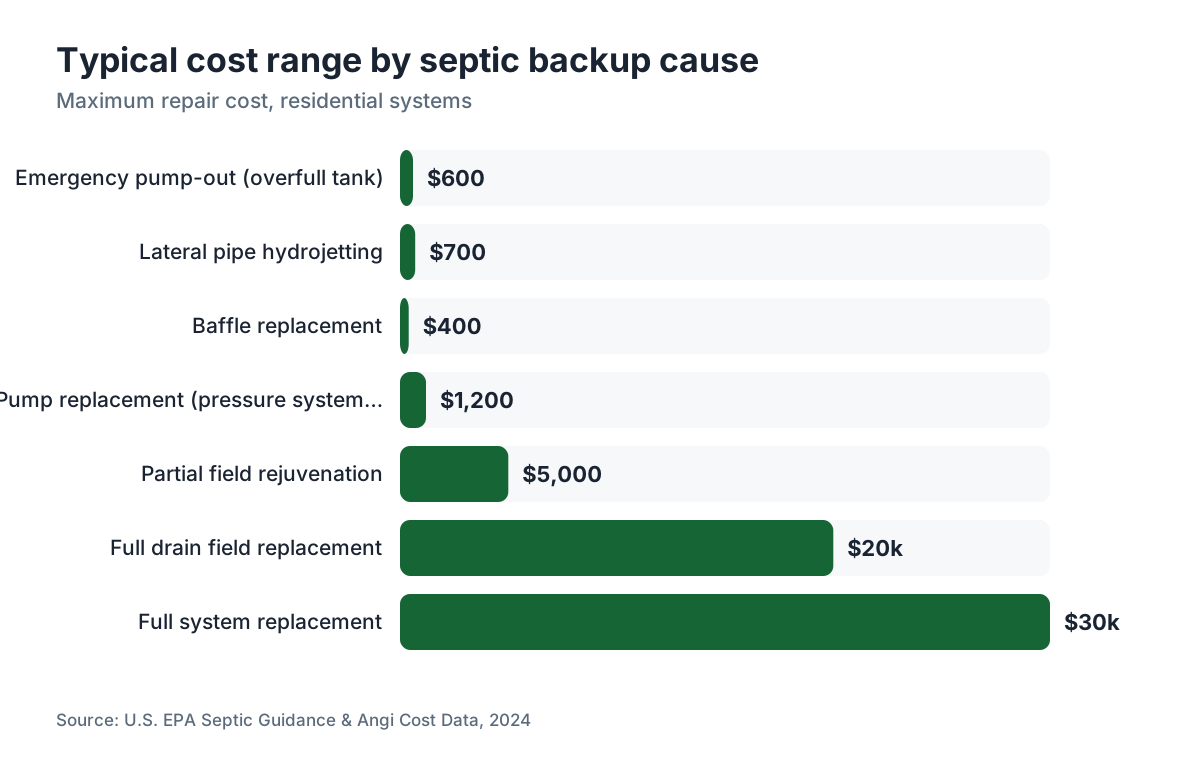
How much does fixing a septic backup cost?
The cost rides entirely on the cause. Here's what you're actually looking at across the common scenarios.
| Cause | Typical fix | Cost range |
|---|---|---|
| Overfull tank | Emergency pump-out | $250 to $600 [5] |
| Clogged lateral pipe | Hydrojetting or mechanical auger | $300 to $700 |
| Damaged inlet/outlet baffle | Baffle replacement | $150 to $400 |
| Pump failure (pressure systems) | Pump replacement | $300 to $1,200 |
| Partial drain field failure | Field rejuvenation / aeration | $1,500 to $5,000 |
| Full drain field replacement | New leach field or mound | $5,000 to $20,000 [6] |
| Full system replacement | New tank + field | $10,000 to $30,000+ [6] |
The ranges are wide because site conditions, soil type, local permit fees, and labor markets swing hard. A drain field replacement in rural North Carolina on flat, sandy soil costs far less than the same job in coastal Massachusetts, where Title 5 rules require licensed engineers, inspections, and big setbacks [7].
Emergency or after-hours service usually adds 50 to 100 percent to the daytime base rate. A backup on a Sunday night costs you either that premium or a night of careful water rationing until Monday. Your call.
Septic backups are sometimes covered under a homeowners "water backup" endorsement, which is a rider you add on, not part of the base policy. Read your policy before you assume anything. Most standard homeowners policies flatly exclude septic system failure [8].
For full repair and replacement pricing, see our guides on septic tank repair and cost to install septic system.
Does the drain field need to be replaced, or can it be saved?
Every homeowner wants this answered before signing off on a $15,000 replacement. The honest answer: sometimes a failed field can be brought back, and sometimes it's done. It depends on why it failed.
Biomat is the usual culprit behind gradual field failure. It's a layer of dark, oxygen-starved microbial growth that builds on the trench walls. Too much water too fast (hydraulic overloading) or too much organic matter (biological overloading) thickens the biomat until it plugs the soil pores. Resting the field sometimes helps: divert flow to a second field if you have one, or cut water use hard, and the biomat can decay and partly restore permeability. This takes months, not days.
Aeration treatments, marketed as "septic field restoration," inject air into the soil to shift the microbial community from anaerobic to aerobic. Aerobic organisms eat biomat. Peer-reviewed work supports that this can extend field life [9], though it's no universal cure. The EPA and most state onsite programs treat it as a legitimate rehab option while making clear that a permanently failed field needs replacement [2].
Some fields are much harder to save. A field that spent years taking raw solids because the tank was never pumped, or a field laid on compacted or clay-heavy soil that never percolated well to begin with, often can't be rescued.
If you can't tell, a septic tank inspection with a dye test or a camera run through the distribution system gives you a realistic prognosis before you commit to replacement.
How do you prevent septic backups from happening again?
Prevention is genuinely cheaper than repair. One drain field replacement costs more than 30 years of diligent tank pumping. That math should decide your habits.
Four things actually move the needle.
Pump on schedule. A 1,000-gallon tank serving four people wants pumping every 3 to 5 years, which is the EPA's standard guidance [1]. Smaller tanks or bigger households need it more often. How often to pump septic tank covers the details. When you get a septic tank pump out, ask the pumper to check the baffles and record the sludge and scum depths so you can track how fast the tank fills.
Watch what goes in. Human waste and toilet paper, nothing else. "Flushable" on a wipe package is a marketing claim, not a promise of septic compatibility. The Water Research Foundation found that so-called flushable wipes do not break down at the same rate as toilet paper in wastewater systems [10].
Conserve water during wet stretches. Three days of heavy rain coming? Run laundry ahead of time and keep showers short. Spreading laundry loads across the week instead of running ten on Saturday spares the system a hydraulic shock it doesn't need.
Protect the drain field. No vehicles, no heavy equipment, no deep-rooted trees on it. Compaction wrecks soil structure. Roots crack pipes. The field needs the soil above it loose and the grass cover shallow-rooted.
For operators running multiple properties, a system like SepticMind tracks pump-out schedules and service history across a whole portfolio, which makes it far easier to catch an overdue tank before it turns into a backup.
Are septic backups a health hazard, and what are the regulations?
Yes, genuinely. Domestic wastewater carries a spread of pathogens: bacterial (E. coli, Salmonella, Campylobacter), viral (norovirus, hepatitis A, rotavirus), and parasitic (Cryptosporidium, Giardia) [4]. Contact with sewage during a backup, especially indoors where it soaks into porous materials, carries real infection risk.
Sewage surfacing on the lawn near a failed drain field is a public health and regulatory problem too. Most states require you to report a surfacing sewage condition to the local health department or environmental agency, and many set mandatory repair timelines. North Carolina, for one, requires surfacing sewage to be repaired within 30 days under 15A NCAC 18A .1961 [11]. California's Regional Water Quality Control Boards run similar failure-to-function reporting requirements [12].
The EPA's regulatory framework for onsite systems comes through guidance under the Clean Water Act and the National Pollutant Discharge Elimination System (NPDES), but day-to-day enforcement lives at the state and county level. The EPA SepticSmart initiative, which runs every September, puts out homeowner education materials that line up with federal guidance [1].
If sewage from your backup has reached groundwater, a stream, or a neighbor's property, you may owe reporting beyond just fixing the system. Call your county health department before you assume it's a purely private repair. That one phone call can keep a repair from turning into an enforcement action.
What's the difference between a septic backup and a mainline plumbing clog?
This is the most common misdiagnosis, and it costs homeowners real money when a plumber spends an hour snaking drains that were never the problem.
A mainline plumbing clog lives inside your house drain pipes, between your fixtures and the point where the lateral leaves the foundation. It's almost always in one section of pipe, and it backs up the fixtures downstream of it. A snake or hydrojetter clears it and it's gone.
A septic-side problem sits outside the house, in the tank or field. Multiple low fixtures back up at once. Drains often run slow for days before an actual backup, where a plumbing clog tends to hit more suddenly. The smell from a septic backup usually reads more organic and pervasive than a localized pipe clog.
The quickest home test: run a lot of water, fill a bathtub, run all the faucets, and watch how long the lower fixtures take to show distress. Flood the system fast and it's likely a septic-side capacity problem. One toilet backing up no matter how much water you run elsewhere points to a localized plumbing issue.
A camera inspection of the lateral pipe from house to tank ($150 to $400) is the fastest definitive test when you genuinely can't tell. It shows root intrusion, pipe breaks, or offset joints, the exact things that cause backups right at the line between "plumbing" and "septic."
When does a septic backup mean the whole system needs replacement?
Not every backup ends in replacement, but some do. Here are the cases where replacement is the real answer, not a contractor upsell.
The drain field is physically failing on soil that was always marginal. The system is past its design life (most conventional systems are designed for 20 to 30 years, though many run longer with care [6]). The field has been fouled with solids from an unpumped tank over many years. When percolation testing shows the soil no longer drains fast enough to support a new conventional field, and alternative systems don't fit the site, full replacement is the path.
Sometimes the system was undersized from day one. A 500-gallon tank serving a five-bedroom house is a failure on a timer, and no amount of pumping changes that math. Buying a home with an undersized system? Work that into the price.
The cost to put in a septic tank and the broader septic tank installation guides walk through what replacement involves for permitting, engineering, and construction. Replacement almost always needs a fresh site evaluation and permit, which adds $500 to $2,000 and weeks to the timeline before a single scoop of dirt moves.
Worth knowing: some states run low-interest loan programs or grants for failing septic replacement, mostly where groundwater quality is at stake. USDA Rural Development offers such help under Section 504 and the Water and Waste Disposal Loan and Grant Program [13]. Your county health department or extension service can point you to what's available near you.
How do service operators diagnose and document a backup correctly?
For a septic operator, a backup call is a diagnostic test and a documentation opportunity at the same time. Get the diagnosis wrong and it costs the customer money and burns trust. Get it right and document it well, and you've protected yourself.
On arrival, sort out household plumbing versus septic-side before you start any work. Pull the tank lid. Record the liquid level, sludge depth, scum depth, and baffle condition. Take photos. If the tank needs pumping, pump it fully, then watch the outlet end for flow coming back from the field side. Effluent returning fast from the field after pumping means the field isn't accepting flow, which points at field failure. A tank that stays empty and refills normally over hours means the field is probably working.
Write up every finding, with timestamps and photos, before you hand the customer a recommendation. This matters legally and practically. A customer holding a written report of tank levels, baffle condition, and field behavior has something real to work with for an insurance claim or a second opinion.
SepticMind is built to make exactly this workflow faster for operators: digital service reports, photo uploads, and customer-facing records with no separate paperwork. For an outfit running several trucks and dozens of calls a week, the gap between paper job tickets and a structured digital record shows up at tax time, in permit disputes, and when a customer calls back six months later asking what you found.
When you quote repairs, split the diagnosis cost from the repair cost in writing. A customer who understands they're paying for a diagnosis, not only a pump-out, rarely disputes the invoice.
What questions should you ask before hiring a septic company for a backup?
Septic companies are not all equal, and a backup is a bad time to find that out. Here's what actually separates the good ones.
Are they state-licensed for septic work? Every state that regulates onsite wastewater (most of them) issues installer and pumper licenses separately. Ask for the license number and check it with your state health department or environmental agency.
Do they carry the right insurance? A company pumping your tank and advising you on your drain field needs errors-and-omissions coverage, not only general liability. Ask specifically for both.
Will they give you a written diagnosis and a written quote before doing any repair beyond the pump-out? Any reputable operator will. A company that won't put the diagnosis in writing is a company to walk away from.
Have they worked on your system type before? Conventional gravity-fed systems, mound systems, aerobic treatment units, and drip-irrigation systems each need different expertise. A pumper who's great on conventional systems may be the wrong person for a pressurized mound.
Don't lean on Google star ratings alone. Ask your county health department whether the company has complaints filed against its license. That's public record in most states and it takes one phone call.
For a septic tank cleaning or septic tank emptying after a backup, the pumper should also tell you the condition of the tank interior and baffles, more than that the tank is empty now. Can't give you that? They weren't paying attention while they worked.
Frequently asked questions
Can heavy rain cause a septic system to back up?
Yes. When groundwater rises during heavy rain, it can saturate the drain field soil until the field can no longer accept effluent. Wastewater then backs up into the tank and into the house. The backup usually clears within a few days as groundwater drops. Recurring rain-related backups mean the system sits too shallow or on a marginal lot, and you may need an engineer to evaluate alternatives.
Is it safe to use the toilet during a septic backup?
No. Adding water during a backup makes it worse. Every flush pushes more volume into a system that already can't handle what it has. Shut off water-using appliances, stop laundry, take no showers, and keep toilet use to nothing until the system is diagnosed and either pumped or repaired. If the backup is severe, use a neighbor's bathroom or a portable toilet until the fix is done.
How long does it take to fix a septic backup?
A simple pump-out for an overfull tank takes two to four hours, and the system works again the same day. A baffle replacement adds a few hours. A drain field repair or replacement means permitting, soil testing, and construction, which typically runs two to eight weeks from diagnosis to completion, depending on your state's permit processing times and contractor availability.
Will homeowners insurance cover a septic system backup?
Standard homeowners policies typically exclude septic system failure. Some insurers offer a "water backup" or "service line" endorsement as an add-on rider, which may cover cleanup for sewage that enters the home but usually won't cover repairing or replacing the septic system itself. Read your specific policy language and call your insurer before you assume coverage. Document everything with photos before any cleanup begins.
What is the black sludge backing up into my shower or tub?
Dark, foul-smelling sludge coming up through your lowest drains is almost certainly wastewater from the septic system reversing flow. It means the tank or drain field is overwhelmed and can't take any more water. Stop all water use immediately and call a licensed septic pumper. The material carries active pathogens and needs to be handled as sewage contamination, not treated as a routine drain clog.
Can I pump my septic tank myself to fix a backup?
No. Pumping a tank needs a vacuum truck built for solid-laden waste, legal disposal at a licensed septage treatment facility, and knowledge of what to look for inside the tank. Scooping or bucketing a tank yourself is useless, creates a contamination hazard, and may break state septic regulations. A professional pump-out ($250 to $600) costs far less than the risk of doing it wrong.
Do septic additives help prevent backups?
The EPA and most state programs don't recommend biological additives, and no peer-reviewed evidence shows they prevent backups or stretch pumping intervals [1]. A working septic tank already holds billions of bacteria introduced naturally through waste. Enzyme and bacterial additives aren't regulated as septic products, and some chemical additives can harm the drain field. Regular pumping is the one intervention with clear evidence behind it.
Why does my septic system back up only when it rains?
Rain-only backups usually mean groundwater is getting into the drain field or the tank and filling capacity before your household wastewater even adds to it. Common causes: a field set too close to the seasonal high water table, cracked tank lids or risers letting surface water in, or a field on naturally poorly-draining soil. A site evaluation by a licensed soil scientist or engineer can tell you whether the system was ever sited correctly.
How do I find my septic tank if I need to have it pumped after a backup?
Start with records from when the home was built or sold: permits, inspection reports, or a site plan from the county health department usually mark tank location. Your county's environmental health office often keeps the original system design on file. Physically, look for a slight depression or green patch in the yard 10 to 20 feet from the house, or probe the soil with a metal rod. A pumping company can also locate the tank with a probe or electronic locator for a small fee.
What is the gurgling sound in my drains, and does it mean a backup is coming?
Gurgling drains, especially when one fixture gurgles as another drains, usually mean air is displacing in a partly blocked drain, or the tank is filling and the system is losing capacity. It's an early warning, not an emergency, but it almost always means you're weeks or months from a full backup. Schedule a tank inspection and pump-out before it becomes a crisis. Catching it at the gurgling stage saves the cleanup bill.
Can tree roots cause a septic backup?
Yes. Root intrusion is one of the most common causes of lateral pipe blockage between the house and the tank. Roots chase moisture and can enter even small cracks or imperfect pipe joints, especially in older clay or concrete pipe. A camera inspection of the lateral confirms it. Hydrojetting clears roots temporarily, but if roots have cracked the pipe, that section usually needs to be dug up and replaced. Willows, maples, and poplars are the worst offenders.
How soon after a backup should the drain field be inspected?
Right after the tank is pumped and the system works again. Don't wait weeks. A septic tank inspection at that point can tell whether the field recovered (effluent flowing correctly out of the tank outlet) or is still failing. If the tank refills to normal level within a day or two and the field takes flow, the backup was likely a tank overload. If it refills and immediately shows outlet saturation, the field needs evaluation.
Are there warning signs of a septic backup I can catch early?
Yes: slow drains across multiple fixtures, gurgling when toilets flush, sewage odors near the drain field or inside the house, unusually green or spongy grass over the field, and high water in the tank cleanout. Any one of these is enough to schedule a pump-out inspection. Two or more together means the system is likely weeks from a backup. Acting at the warning stage costs a few hundred dollars. Waiting costs much more.
Sources
- U.S. EPA, SepticSmart homeowner guidance: EPA recommends pumping a septic tank every 3 to 5 years and identifies flushing wipes and grease as top causes of septic problems
- U.S. EPA, Onsite Wastewater Treatment Systems Manual (EPA/625/R-00/008): State onsite wastewater program inspection records consistently show drain field failure and tank neglect as the top two systemic issues; EPA acknowledges field aeration as a legitimate rehabilitative option but states permanently failed fields need replacement
- U.S. CDC / NIOSH, Hydrogen Sulfide toxicity and confined space hazards: Hydrogen sulfide is lethal at concentrations above 50 ppm; septic tanks produce this gas and represent a confined space hazard
- U.S. EPA, Septic System Owner's Guide, pathogens in domestic wastewater: Domestic wastewater contains bacterial, viral, and parasitic pathogens including E. coli, hepatitis A, and Cryptosporidium
- Angi, Septic Tank Pumping Cost Guide: Typical cost of a septic tank pump-out ranges from $250 to $600 for a standard residential system
- U.S. EPA, A Homeowner's Guide to Septic Systems: Conventional septic systems are designed for 20 to 30 years of operation; full drain field replacement costs $5,000 to $20,000 and full system replacement can reach $30,000+
- Massachusetts Department of Environmental Protection, Title 5 Onsite Sewage Regulations: Massachusetts Title 5 requires licensed engineers, multiple inspections, and significant property setbacks for septic system replacement, adding cost compared to less-regulated states
- Insurance Information Institute, What homeowners insurance covers: Most standard homeowners insurance policies explicitly exclude septic system failure; water backup coverage is typically a separate rider
- Journal of Environmental Engineering (ASCE), Aerobic bioremediation of clogged drainfields: Peer-reviewed evidence supports that soil aeration can shift the microbial community from anaerobic to aerobic and partially restore drain field permeability by consuming biomat
- Water Research Foundation, Flushability of non-woven consumer products: The Water Research Foundation found that so-called flushable wipes do not disintegrate at the same rate as toilet paper in wastewater systems
- North Carolina Administrative Code, 15A NCAC 18A .1961 (onsite wastewater repair): North Carolina requires surfacing sewage conditions to be repaired within a set timeline under state onsite wastewater rules
- California State Water Resources Control Board, Onsite Wastewater Treatment System Policy: California Regional Water Quality Control Boards require reporting and repair of septic system failure-to-function conditions under state wastewater regulations
- USDA Rural Development, Water and Waste Disposal Loan and Grant Program: USDA Rural Development offers low-interest loans and grants for failing septic system replacement in rural areas under Section 504 and related programs
Last updated 2026-07-10