Septic system alarm: what it means and what to do
By the SepticMind Editorial Team
TL;DR
- A septic alarm means the water level in your pump tank or treatment chamber crossed a set threshold, or a component failed.
- The usual triggers are a stuck float switch, a dead pump, or a spike in water use.
- Silence the buzzer, stop non-essential water use, check the breaker, and call your service provider within 24 hours if the condition doesn't clear on its own.
What does a septic system alarm actually mean?
The alarm is your system's only way to warn you before a backup or an illegal discharge happens. Every septic alarm connects to at least one float switch inside a tank, and that float rises or falls with the water level. When the level crosses a set point, the float closes a circuit and a buzzer or light fires on your control panel.
That's the mechanism. The meaning depends on which tank the sensor sits in and which way the level moved.
In a standard pump tank, a high-water alarm means effluent isn't leaving fast enough. The pump failed. The timer on a timed-dose system hasn't cycled. The pump screen clogged. Or the household dumped so much water down the drains in a short window that the tank couldn't keep up.
An aerobic system is a different animal. You may have several alarms watching several compartments, plus the blower motor and the chlorinator. An alarm here could mean the air pump quit, the chlorinator ran dry, or the final chamber is high enough to threaten a surface discharge. Each of those has a different fix, so the specific panel light that's lit tells you almost everything.
Not every alarm is a disaster. A float sometimes gets pinned by a rag, a wad of toilet paper, or a normal buoyancy quirk, and the alarm clears once you free it. But you should never mute the buzzer and walk away. The EPA's SepticSmart program tells homeowners to "have your septic system inspected and pumped regularly" and to act on warning signs, because a failing system can contaminate groundwater and nearby wells [1].
What are the different types of septic alarms and what triggers each one?
Knowing the alarm type keeps you from calling a plumber for an electrician's job, and the reverse.
High-water alarm (most common)
A float set a few inches below the tank's emergency overflow rises until it closes a circuit. Causes, in rough order of frequency: pump failure, clogged pump intake, tripped breaker, a broken float, or heavy household water use. The pump tank or dosing chamber is the usual home for this one.
Low-water alarm
Less common. Some aerobic systems need a minimum level to keep the air diffuser submerged and stop the pump from running dry. A low-water alarm can point to a leak in the tank or a broken inlet baffle diverting flow.
Blower/aerator motor alarm
Aerobic systems use an air pump (often a Hiblow or a similar linear diaphragm pump) to push oxygen into the treatment chamber. If the blower overheats, loses a diaphragm, or trips its thermal overload, the panel logs a fault. Without air, aerobic treatment stops and the tank slides back toward anaerobic conditions within a day or two.
Chlorinator or disinfection alarm
Many states require aerobic systems to disinfect effluent before surface or subsurface dispersal. A chlorinator holds tablets that dissolve as effluent flows past. When the tablet chamber empties, a sensor or a small float drops and trips an alert. This one is almost always simple: add chlorine tablets.
Control panel fault / electrical alarm
Some panels watch power quality, ground faults, or the pump's amp draw. A fault light here usually means a wiring problem, a burned pump motor, or a GFI that tripped inside the panel box.
| Alarm type | Likely cause | Typical DIY fix? | Urgency |
|---|---|---|---|
| High water | Pump failure, clog, breaker | Check breaker only | Call within 24 hrs |
| Low water | Tank leak, inlet failure | No | Call same day |
| Blower/aerator | Motor fault, clogged filter | Check air filter | Call within 24 hrs |
| Chlorinator empty | Out of tablets | Yes, add tablets | Within a few days |
| Control panel fault | Electrical / pump motor | No | Call same day |
Why is the alarm on my aerobic septic system going off?
Aerobic systems carry more sensors watching more parts than a conventional gravity system, so they alarm more often. First move: look at the control panel and find the lit indicator. Most panels split the lights out by high water, blower fault, and disinfection.
A high-water light on an aerobic system is the urgent one. The final clarification chamber or pump vault is filling faster than the spray heads or drip emitters can push it out. Suspects: a clogged pump screen, a blocked or broken spray head, a timer set wrong after a power outage, or days of rain soaking the spray field.
Blower failure comes next. Aerobic treatment lives on constant aeration, and most homes use a small linear diaphragm air pump. These pumps take replaceable diaphragm kits that run roughly $20 to $50 and swap out in about 30 minutes. If the blower is rattling loudly instead of sitting silent, the diaphragm is usually worn, not dead. A burned motor means a new pump, typically $150 to $400 for the pump alone before labor [2].
Chlorinator problems drive a big share of aerobic service calls in states like Texas and Oklahoma, where aerobic units far outnumber those in the Northeast. TCEQ rules for aerobic systems require a chlorine residual in the disinfection zone and mandate annual maintenance contracts in most cases [3]. If your chlorinator alarm is a standalone buzzer separate from the main panel, the tablet chamber is almost certainly empty. Homeowners on a maintenance contract usually have their provider handle refills.
Power outages reset panel timers. After any outage longer than a few hours, confirm the dosing timer is set right. A scrambled timer can run the pump too rarely, letting the level build until the float trips the high-water alarm.
What should you do immediately when the septic alarm goes off?
Step one: silence the buzzer. Every panel has a silence or mute button. That doesn't fix anything, but it lets you think without the noise. The alarm light stays on until the condition clears.
Step two: cut water use now. No laundry, no long showers, no dishwasher. A high-water alarm means you're adding to a tank that's already behind. Give it room to catch up.
Step three: check the breaker. Find the one labeled for the septic pump or aerobic system. If it's tripped, reset it once. If it trips again right away, you likely have a short or a failed motor, so leave it off and call a pro.
Step four: read the control panel. Note every light that's on. Photograph it on your phone before you touch anything. On an aerobic system, listen for the blower (you can usually hear it humming near the control box or the air pump housing).
Step five: call your service provider. Most areas keep emergency on-call septic techs because raw sewage is a health hazard. If the high-water alarm comes with odors, wet spots near the tank, or sewage backing into the house, that's an emergency. Don't wait for Monday.
What not to do: don't pop the tank lid and start poking around without training and gas monitoring. Septic tanks hold hydrogen sulfide, which deadens your sense of smell at high concentrations and can drop a person in seconds. OSHA classifies entry into a septic tank as permit-required confined space work [4].
How does a septic alarm float switch work?
A float switch is a sealed plastic housing with a mercury switch or a magnetic reed switch inside, hanging in the tank on a cord. As effluent rises, the float tilts past a set angle and the switch closes (or opens, depending on the wiring), which completes or breaks the control circuit.
The cord length sets the trigger depth. When a tech installs or services the system, they hang the alarm float at a set depth below the pump-on float (the one that actually starts the pump) and above the inlet pipe. If that float gets wrapped in debris or tangled, it can throw a false alarm or, worse, never trip at all.
Replacing a float switch usually runs $100 to $250 including labor, and the part itself is $15 to $40. Floats wear out, especially in tanks with grease-heavy waste that coats the float body. University of Minnesota Extension notes that float switches are set at specific depths to trip before effluent reaches backup levels, and a failed float is a common source of false alarms [7].
Some newer panels use pressure transducers instead of floats. They read more accurately and have fewer moving parts to jam, but they cost more to replace when they finally do fail.
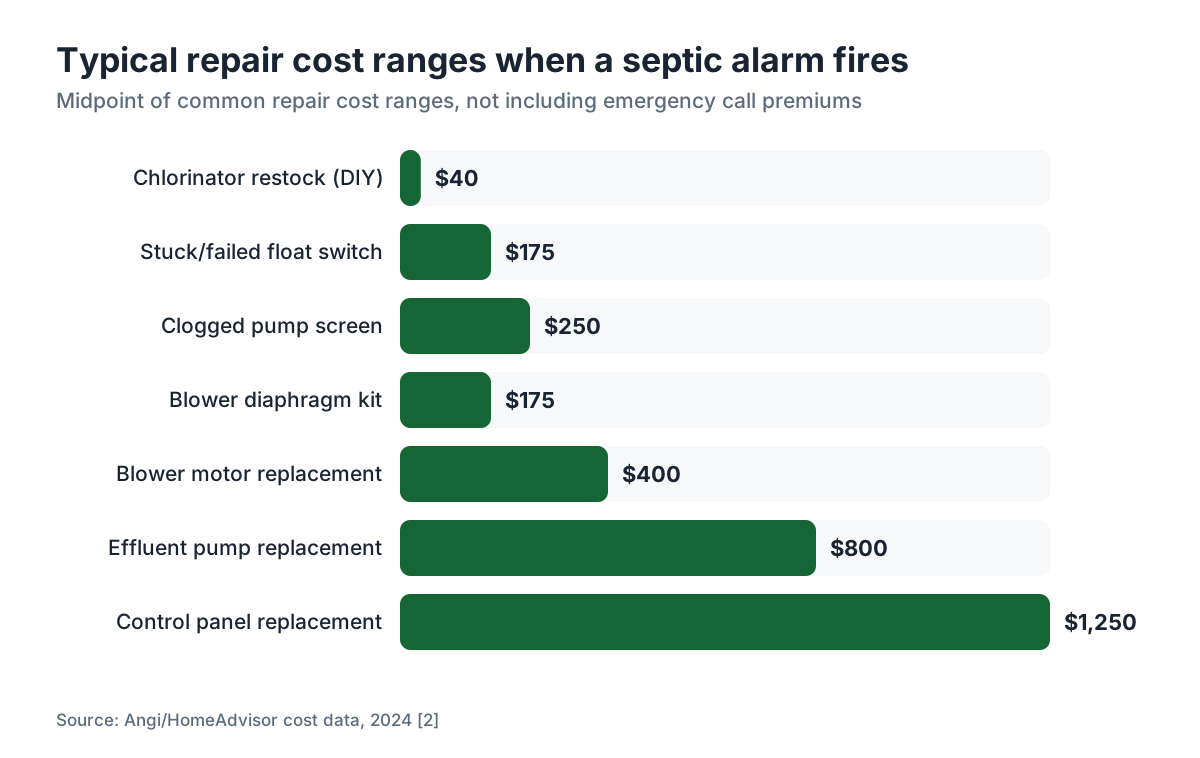
How much does it cost to fix a septic alarm problem?
Cost rides entirely on what tripped the alarm, so these ranges run wide on purpose.
| Problem | Typical repair cost range | Notes |
|---|---|---|
| Tripped breaker reset | $0 (self) or $100-$200 service call | If a motor caused the trip, add motor cost |
| Stuck or failed float switch | $100-$250 | Parts are cheap; labor is the cost |
| Clogged pump screen / intake | $150-$350 | Usually handled during a pump-out |
| Failed effluent pump | $400-$1,200 | Depends on pump size and access |
| Blower/aerator motor | $200-$600 | Diaphragm kit is much cheaper |
| Chlorinator restock (tablets) | $20-$60 DIY | Service call adds $100-$200 |
| Control panel replacement | $500-$2,000 | Wide range by brand and features |
Emergency premiums are real. A standard service call might run $150 to $200, but after-hours or weekend calls routinely double that. An alarm on a Friday night can cost $300 to $400 just to get someone in the driveway, before any parts.
If your system keeps throwing alarms and the root cause is a failing leach field or a failing distribution network, repair costs can climb into the $3,000 to $15,000 range for field rehab or replacement. At that point you're in septic system repair or full replacement territory.
For operators running multiple accounts, tracking which sites have recurring alarm histories cuts down on surprise emergency calls. Software like SepticMind gives service companies a dashboard view of maintenance schedules and alarm histories across their whole customer base, so the repeat-offender accounts don't slip through the cracks.
Can you have a false septic alarm, and how do you tell?
Yes, and false alarms happen more than most homeowners expect.
The usual cause of a false high-water alarm is a float pinned in the raised position by debris, a tangled cord, or a buoyancy swing during a high-flow stretch. After a heavy laundry day or a house full of holiday guests, a healthy system can spike the level high enough to trip the alarm, then recover on its own inside a few hours.
Here's how to read it. If the alarm clears within two to four hours after you cut water use, and there are no other symptoms (no odors, no wet spots, no backup), it was probably a demand spike, not a failure. Write it down anyway. If it repeats within a few weeks, something is wearing out.
A float that alarms when the tank level is actually normal is a bad float, not a bad system. A tech confirms this by comparing the real tank level against the alarm threshold.
Electrical false alarms show up after power surges or lightning. A surge can scramble a panel's logic without hurting the pump. Killing power at the breaker for 30 seconds and restoring it sometimes clears these.
How often should a septic alarm system be inspected and tested?
Most state onsite wastewater codes require aerobic systems to run under a maintenance contract, usually two to four inspections a year. Conventional pump systems carry looser rules, but the pump and float switch should get checked at every septic tank pumping visit.
The EPA's SepticSmart program recommends a professional inspection of a conventional system every three years, with the tank pumped every three to five years depending on household size [1]. Aerobic systems with active spray dispersal need annual inspections at the floor, and many states require them by rule.
During an inspection, a tech should physically lift each float and confirm the panel reacts. They should run the pump on command, check the blower amperage, and confirm chlorine residual in the disinfection zone if the system disinfects.
If you're already thinking about how often to pump septic tank, the pumping visit is the smart time to inspect the pump vault and floats too. The lid is open and the labor overlaps.
Keep a written log of every alarm: date, which light lit, how long before it cleared, and what you did. That log pays off when you sell the house or when a tech needs to spot a pattern.
What do state regulations say about septic system alarms?
Most states that regulate onsite wastewater require both an audible and a visual alarm on any system with a pump. The details differ; the pattern holds.
Texas spells it out in detail. TCEQ's rules under 30 TAC Chapter 285 require aerobic treatment units to carry a visual and audible alarm, a maintenance contract with a licensed company, and chlorination of effluent before surface application [3]. TCEQ also sets minimum chlorine residual levels and requires the maintenance provider to keep records regulators can inspect.
Florida's Department of Health, under Chapter 64E-6 of the Florida Administrative Code, requires performance-based systems to run continuous monitoring and alarm systems, and requires failures to be reported to the county health department [6].
Virginia's Sewage Handling and Disposal Regulations require pump tanks to carry high-water alarms, and the Virginia Department of Health publishes homeowner guidance stating that alarms must stay functional at all times [5].
At the federal level, the EPA doesn't regulate individual septic alarms, but it sets the frame through the Clean Water Act and its SepticSmart guidance. The agency notes that "one in five U.S. homes" relies on a septic system or similar onsite treatment [1], and malfunctioning systems are a documented source of groundwater contamination.
The practical read: if your system has a pump, your state almost certainly requires a working alarm. Disabling or bypassing one is usually a code violation, and in states with mandatory maintenance contracts, a dead alarm can void the contract and trigger an inspection notice.
How do you maintain a septic alarm system to prevent problems?
Prevention beats emergency calls by a wide margin, every time.
Get on a regular septic tank pump out schedule and have the pump and floats inspected at each visit. A septic tank inspection that includes float testing costs little extra and catches dying components before they alarm at the worst possible moment.
Keep the control panel area dry and ventilated. Panels in wet or humid spots corrode faster, and moisture is a leading cause of panel faults and false alarms. If your panel sits outdoors in a hard climate, confirm it carries a proper weather rating.
For aerobic systems, keep a supply of chlorine tablets rated for septic chlorinators on hand. Not all tablets are equal. Pool pucks (trichlor) get used a lot, but some manufacturers call for calcium hypochlorite tabs instead. Check the operation manual. The wrong chemistry won't alarm right away, but it eats the chlorinator housing over time.
Clean the blower air inlet filter every three to six months on aerobic systems. A clogged filter makes the motor work harder, shortens its life, and can trip a thermal overload alarm. The filter is usually a small foam or fiber pad you can reach without tools.
After any outage longer than two hours, check the panel timer settings before assuming all is well. Outages reset programmable timers on many panels, and a timer running on defaults may not match your system's design dose.
Know where your breaker is and label it. In an alarm, resetting or isolating the pump circuit in 30 seconds beats hunting through an unmarked panel.
When should you replace a septic alarm system or control panel?
Most residential control panels last 10 to 20 years with normal maintenance. Float switches wear out sooner, often 5 to 10 years, especially in systems with high grease loads or heavily chlorinated effluent. Penn State Extension puts panel life in that same 10 to 20 year window and floats at roughly 5 to 10 years depending on conditions [8].
Signs the panel itself needs replacing rather than a single part: intermittent false alarms with no traceable cause, visible corrosion or burn marks on the circuit board, several components failing in a short span, or an obsolete panel brand with no replacement parts available.
A basic replacement panel for a conventional pump system runs $300 to $700 for the panel, plus $150 to $400 in install labor. Aerobic panels with multi-function monitoring and timer control can reach $800 to $2,000 before installation [2].
If your system is pushing 20 years and throwing frequent alarms, ask your service provider for a straight answer on whether you're still in repair-and-maintain territory or heading toward full replacement. A septic tank repair at that stage can be good money after bad if the tank or field is also going.
For budgeting a full replacement, the cost to install septic system swings hard by system type and soil, but a conventional system in average conditions runs $5,000 to $15,000, and aerobic systems run $10,000 to $20,000 or more.
Frequently asked questions
Can I silence my septic alarm and wait until morning to call?
Silencing the buzzer is fine, but waiting more than 12 to 24 hours without cutting water use is risky. If the high-water condition rides through the night, you could wake to a backup or an overflow. Cut discretionary water use, check the breaker, and call first thing in the morning at the latest. If sewage is backing into the house, call immediately no matter the hour.
How long can my aerobic septic system run without the blower before it causes a problem?
Aerobic treatment drops off noticeably within 24 to 48 hours without air. The treatment chamber shifts toward anaerobic conditions and effluent quality falls. In states with effluent quality rules for surface spray dispersal, that's a compliance problem more than a performance one. Most states require you to contact your maintenance provider within 24 hours of a blower alarm.
My septic alarm is beeping but the tank isn't full. What's going on?
The likeliest answer is a stuck or bad float switch throwing the alarm while the actual level is normal. A power surge or panel glitch can also fake an alarm. Try cutting the panel breaker for 30 seconds. If the alarm clears and the tank level looks normal on inspection, the float is your suspect. Have a tech verify and replace it if needed.
What chlorine tablets should I use in my aerobic septic system chlorinator?
Most aerobic manufacturers specify either calcium hypochlorite (cal-hypo) or trichlor tablets. Cal-hypo is the more common call because it leaves a more compatible residual and is easier on the chlorinator housing. Check your operation and maintenance manual for the exact spec. Dropping in pool tabs without verifying compatibility can degrade the chlorinator over time, even if it doesn't alarm right away.
Does heavy rain cause a septic alarm to go off?
Yes. Heavy rain can saturate the drain field or spray area and cut the system's ability to disperse effluent. Water can also seep into older tanks through cracked lids or loose risers, raising the level and tripping a high-water alarm. If the alarm fires during or after heavy rain, cut water use and check for surface saturation near the field. Repeated rain-linked alarms point to an infiltration problem worth fixing.
Is a septic alarm required by law?
In most states, yes, for any system with a pump. State onsite wastewater codes generally require audible and visual alarms on pump tanks and aerobic treatment units. Texas TCEQ, Virginia's Department of Health, and Florida's Department of Health all carry explicit alarm requirements. Disabling an alarm can be a code violation and may cost you a real estate inspection.
How do I know if my septic pump has failed or just tripped a breaker?
Go to the electrical panel and find the breaker labeled for the septic pump. If it's tripped, reset it once. If the pump starts and the alarm clears within an hour or two, a temporary electrical hiccup likely caused the trip. If the breaker trips again immediately, or the pump stays silent after a good reset, the motor has probably failed and needs replacement. Don't reset more than once without investigating.
Can a septic alarm go off from too much laundry in one day?
Yes. Running several large loads back to back sends water to the pump tank faster than the pump can dose it out, especially on timed-dose systems. That can spike the level high enough to trip the alarm. The fix is simple: spread laundry across several days. If your system alarms even on moderate laundry use, the pump or dosing schedule may need adjusting.
What's the average cost of a septic alarm service call?
A standard daytime service call runs $150 to $250 in most markets, before parts or repairs. After-hours and weekend emergency calls typically run $300 to $500 for the visit alone. The repair itself swings wide: a stuck float might add $100 to $150 in labor, while a failed pump adds $400 to $1,200 in parts. A maintenance contract often folds alarm response into the service fee.
How do I find my septic system's control panel?
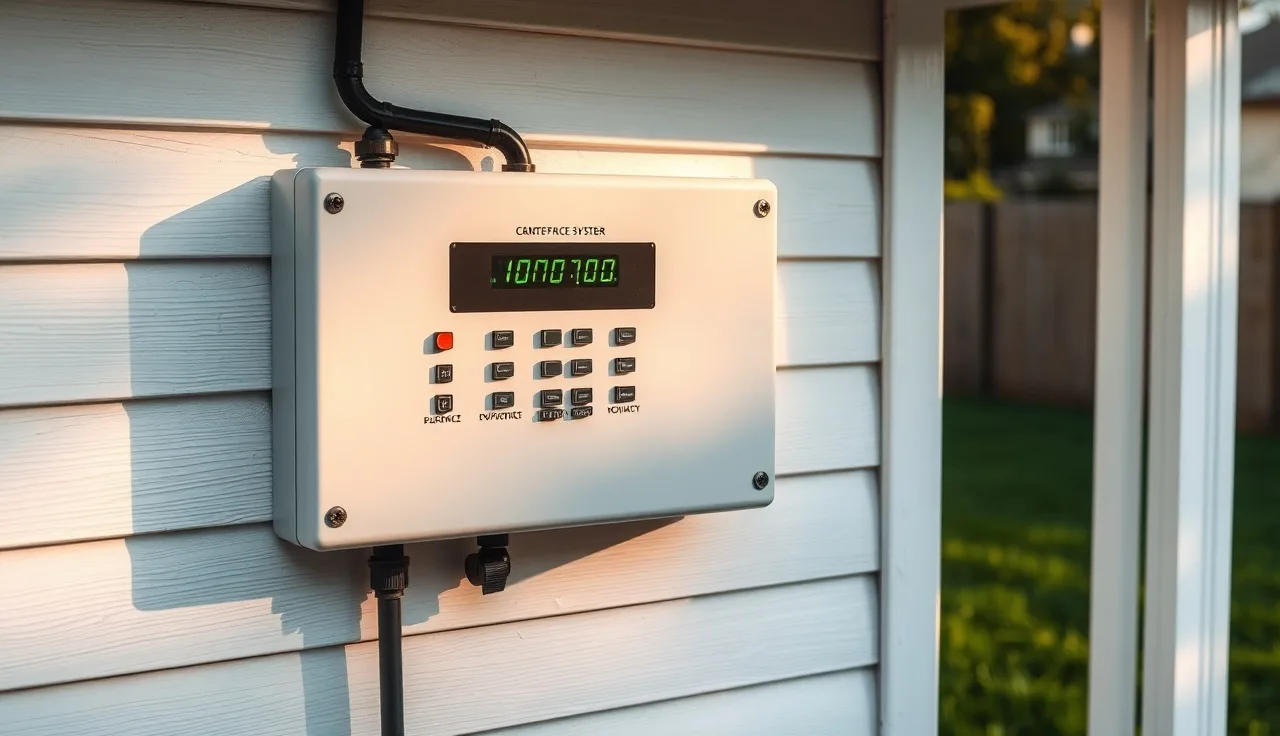
The panel usually mounts on an exterior wall near the electrical service entrance, on a post near the tank, or on the tank lid riser on newer aerobic systems. It's a weatherproof box, often gray or beige, with indicator lights and sometimes a timer dial. Your system's as-built drawing (often on file with the county health or environmental department) shows its location if you can't find it.
How do aerobic septic system maintenance contracts work and do they cover alarms?
Most states with aerobic rules require a maintenance contract with a licensed provider. Contracts typically cover two to four inspections a year, chlorine tablet restocking, blower filter cleaning, and alarm response. Whether repairs are covered depends on the contract: basic ones cover the visit and diagnosis, while premium ones may include parts up to a set dollar limit. Read the terms before you sign.
Should I buy a septic alarm monitoring system that alerts my phone?
If your control panel isn't easily seen or heard, a remote monitoring add-on earns its cost. Devices like NetAlarm connect to your existing panel and send a text or email when an alarm condition hits. They run $150 to $400 installed. For vacation homes or rentals, remote monitoring can stop a minor alarm from turning into a major sewage event before anyone notices.
What happens if I ignore a septic alarm for several days?
Ignore a high-water alarm long enough and you usually get one of two outcomes: the pump tank overflows back into the house through the lowest drain, or effluent surcharges the drain field and surfaces in the yard. Both are health hazards and environmental violations. With aerobic surface spray systems, an untreated overflow can also violate the Clean Water Act. Cleanup after an overflow costs far more than a prompt service call.
Sources
- EPA SepticSmart homeowner guidance: EPA states that one in five U.S. homes relies on a septic system and recommends inspections every three years with pumping every three to five years; also cites malfunctioning systems as a groundwater contamination source.
- HomeAdvisor / Angi septic system cost data: Aerobic blower motor replacement costs $200-$600; control panel replacement runs $500-$2,000 before installation; effluent pump replacement $400-$1,200.
- Texas Commission on Environmental Quality, 30 TAC Chapter 285 (On-Site Sewage Facilities): TCEQ requires aerobic treatment units to have visual and audible alarms, active maintenance contracts, and chlorination of effluent before surface application.
- OSHA permit-required confined spaces standard (29 CFR 1910.146): OSHA classifies septic tank entry as permit-required confined space work due to hydrogen sulfide and other atmospheric hazards.
- Virginia Department of Health, Onsite Sewage and Water homeowner guidance: Virginia's onsite sewage regulations require high-water alarms on pump tanks and mandate that alarms be functional at all times.
- Florida Department of Health, Onsite Sewage Programs (Chapter 64E-6 Florida Administrative Code): Florida requires performance-based treatment systems to have continuous monitoring and alarm systems, with failures reported to the county health department.
- University of Minnesota Extension, Septic Systems: Float switches in pump tanks are set at specific depths to trigger alarms before effluent reaches overflow or backup levels; float failure is a common cause of false alarms.
- Penn State Extension, Septic Systems: Control panels on residential septic systems typically last 10-20 years; float switches have a shorter service life of roughly 5-10 years depending on conditions.
- National Environmental Services Center (NESC), West Virginia University, Small Flows Quarterly: Aerobic treatment effectiveness drops significantly within 24-48 hours of blower failure as the system reverts toward anaerobic conditions.
- EPA, Clean Water Act overview: Surface discharge of inadequately treated septic effluent can constitute a Clean Water Act violation under federal law.
Last updated 2026-07-09