Septic failed inspection: what to do next, step by step
By the SepticMind Editorial Team
TL;DR
- A failed septic inspection means your system has a documented defect that must be fixed before the property can legally transfer or be occupied in most states.
- Repairs range from a $300 pump-out to a $30,000 drain field replacement.
- Your next step depends on what specifically failed: the tank, the drain field, or the distribution system.
- This guide walks through each scenario.
What does it mean when a septic system fails inspection?
A septic inspection failure is not one thing. It's a category that covers dozens of distinct conditions, and the word 'failure' on an inspector's report can mean anything from a cracked lid that costs $75 to replace to a drain field that has hydraulically failed and needs a full replacement at $10,000 to $30,000 or more [1].
The inspector's report will list specific deficiencies, usually tied to your state's onsite wastewater code. Those codes define what constitutes a 'failing' condition versus a 'monitor' or 'maintenance' item. Read the actual language carefully. A system flagged for 'evidence of surfacing effluent' is a hard failure. A system flagged for 'tank needs pumping before assessment can be completed' is not really a failure at all.
Most states require that a septic system pass inspection before a real estate sale closes. Some states (Massachusetts Title 5 is the most well-known example) have detailed pass/fail criteria written directly into regulation [2]. Others leave it to the county health department. Either way, a documented failure triggers a repair-or-replace obligation that doesn't go away by ignoring it.
The EPA's SepticSmart program puts it plainly: a failing system 'can contaminate nearby wells, groundwater, and surface water' and most states treat it as a public health issue, more than a property condition issue [1].
What are the most common reasons a septic system fails inspection?
Inspectors see the same failure modes over and over. Here are the ones that show up most often, roughly in order of how frequently they appear in inspection reports:
Drain field saturation or surfacing effluent. This is the big one. When effluent breaks through the soil surface or backs up into the tank faster than the soil can absorb it, the drain field has hydraulically failed. You'll see wet, odorous, spongy ground over the leach field. This is a hard failure in every state [3].
Tank structural damage. Cracked baffles, corroded steel tanks, collapsed inlet or outlet tees, or a tank that has shifted and broken its connections all qualify. A cracked concrete tank that is leaking raw sewage into surrounding soil is a serious failure. A deteriorated outlet baffle is fixable for a few hundred dollars.
Inadequate tank capacity or missing components. Older systems sometimes have tanks that are undersized for the current house size, or they lack a second compartment or an effluent filter that modern code requires. Some states require bringing these into compliance at sale even if the system is technically functioning.
High water table intrusion. If groundwater is getting into the tank (inflow), the tank fills faster than the household produces wastewater and the drain field gets flooded. This shows up on inspection as an unusually full tank shortly after pumping, or as clear water diluting the effluent.
Distribution system problems. A cracked or offset distribution box, broken distribution lines, or a failed pump in a pressure-dosed system can cause uneven loading of the drain field, killing part of it while leaving the rest underused.
Setback violations. Some inspections check whether the system components are the required distance from wells, property lines, surface water, and the foundation. A system that was installed legally 40 years ago may now be out of compliance because a neighbor drilled a new well closer to your property line. That's a failure even if the system works perfectly.
The leach field is the most expensive component to repair or replace, and it's also the one most likely to be at the root of a serious failure. If you get a pass on everything else but a flag on the drain field, treat it seriously.
How serious is the failure? Understanding pass, monitor, and fail
Most inspection reports use a tiered language. Understanding the tier matters because it determines how fast you have to act and who has authority over that timeline.
Pass: The system meets code requirements as-inspected. You're done.
Conditional pass / monitor: The system has a deficiency that doesn't require immediate repair but must be addressed within a defined timeframe, often 2 years. Common examples include a tank that needs pumping or a baffle that is deteriorating but still functional.
Fail: The system has a condition that requires repair before the property can transfer (in a real estate context) or, in some states, before the home can be legally occupied. Surfacing effluent almost always falls here.
Imminent health hazard: Some states have a separate category for systems that pose immediate public health risk, like raw sewage surfacing near a well or a collapsed system backing up into the house. These require emergency repair orders, sometimes within 24 to 72 hours.
Massachusetts Title 5 (310 CMR 15.000) is the most detailed regulatory example of this tiered approach and is worth reading if your system was inspected under it [2]. Even if you're not in Massachusetts, your state's equivalent code will have similar structure.
If your report says 'failed' but doesn't specify which tier or what the remediation deadline is, call the inspecting engineer or your county health department directly. Get the deadline in writing.
What repairs are typically required after a failed inspection?
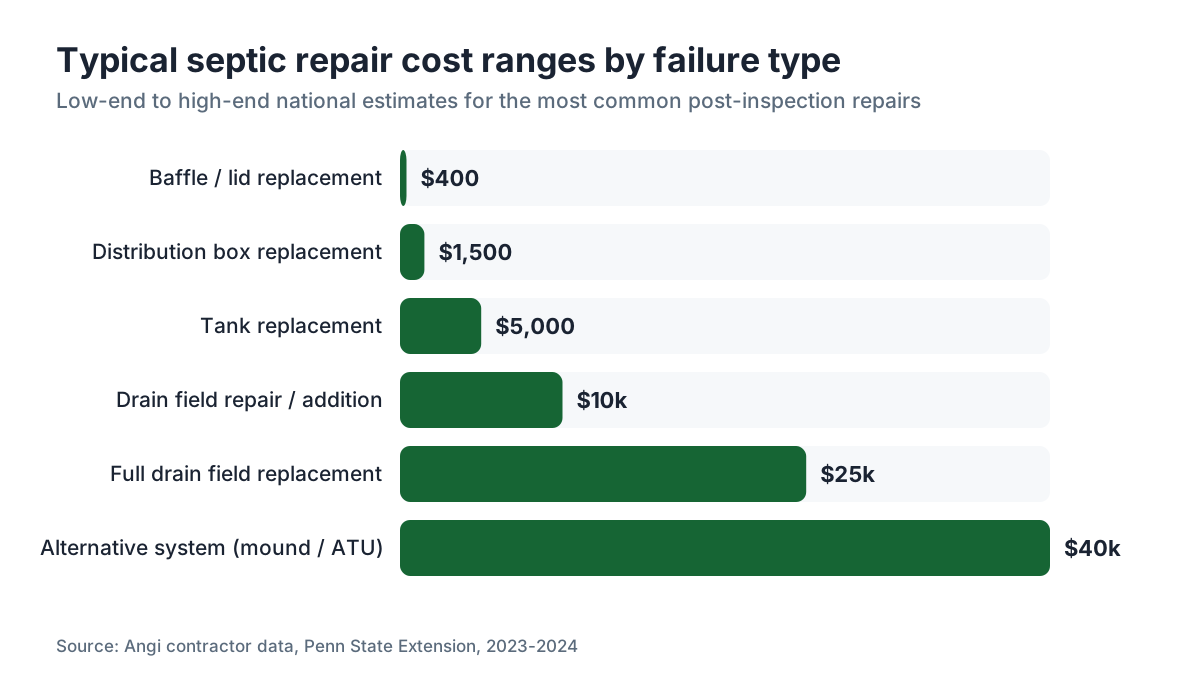
The required repair follows the specific failure mode. There is no one-size answer here, but the table below shows the most common repair types and their rough cost ranges based on national contractor data and state health department guidance [4][5]:
| Failure Type | Common Repair | Estimated Cost Range |
|---|---|---|
| Full tank, needs pumping | Pump-out | $300 to $600 |
| Broken/missing baffle | Replace baffle | $150 to $400 |
| Cracked or deteriorated tank | Tank replacement | $1,500 to $5,000 |
| Failed distribution box | Replace D-box | $500 to $1,500 |
| Broken lateral lines | Repair/replace laterals | $1,000 to $5,000 |
| Saturated drain field, partial | Remediation or addition | $3,000 to $10,000 |
| Full drain field replacement | New drain field | $10,000 to $30,000+ |
| Alternative system (perc fails) | Mound or ATU system | $15,000 to $50,000+ |
These ranges are wide because soil conditions, system size, site access, local permitting fees, and labor costs vary enormously by region. A straightforward septic tank repair in rural Tennessee costs very differently from the same job in suburban New Jersey.
Get at least three bids from licensed onsite wastewater contractors before committing to anything over $2,000. The variance between the highest and lowest bid for drain field work can easily be $10,000 on the same job.
For a full septic system repair involving the drain field, ask each contractor to specify whether they're proposing repair of the existing field, addition of a new field section, or complete replacement. These are three different scopes with very different cost profiles and long-term outcomes.
Who is responsible for fixing a failed septic system?
In a real estate transaction, this is a negotiation point, not a legal given. The default in most states is that the seller must bring the system into compliance before closing, but buyers and sellers can negotiate otherwise [6].
Common arrangements include:
Seller pays for full repair before closing. Clean and simple. The buyer knows they're getting a compliant system.
Seller credits the buyer at closing. The buyer gets a dollar amount off the purchase price (or as cash credit) and handles the repair themselves. This works when the buyer wants to choose their own contractor or plans to make other changes anyway. The risk is that repair costs come in higher than the credit.
Escrow holdback. The closing happens, a portion of the sale proceeds is held in escrow, and the repair is completed within a defined window (often 30 to 90 days) after closing. Some states and some lenders don't allow this for failing systems.
Price reduction. The property sells as-is at a reduced price, the buyer accepts the known defect, and no repair obligation transfers at closing. This requires clear disclosure and often requires the buyer to waive the inspection contingency.
For a home that is not being sold, the responsibility question is simpler: the property owner is responsible. The health department will issue a repair order with a deadline, and non-compliance can result in fines or, in extreme cases, an order to stop using the system.
If you're a buyer who already closed on a property with a known septic failure and the seller didn't disclose it, that's a legal matter. Most states have disclosure laws that require sellers to reveal known material defects [6].
What happens if you don't fix a failed septic system?
Nothing good. The practical and legal consequences stack up fast.
Health department enforcement. Once a failure is on record, the health department can issue a repair order. Ignoring it leads to fines that vary by state but can run $100 to $1,000 per day in some jurisdictions. Continued non-compliance can result in an order to vacate the property.
Environmental liability. Surfacing sewage that reaches a stream or wetland can trigger enforcement under the Clean Water Act, which is a federal matter [7]. The EPA takes this seriously, and so do state environmental agencies.
Well contamination. If you're on a private well and your system is failing, you may be drinking contaminated water right now. The Centers for Disease Control links failing septic systems to bacterial and nitrate contamination of private wells [8]. That's a health risk that doesn't wait for paperwork.
Property value damage. A disclosed, unrepaired septic failure makes a property very difficult to sell. Most mortgage lenders (FHA, VA, and conventional) will not fund a loan on a property with a failing septic system [9]. That effectively limits your buyer pool to cash buyers who will offer less.
The system will get worse. A failing drain field that gets six more months of wastewater loading is harder and more expensive to remediate than one that gets addressed immediately. Biomat buildup in the soil is reversible in some cases, but only if you stop overloading it.
Can you appeal or dispute a failed septic inspection?
Yes, and in some cases it's worth doing. But you need a legitimate technical basis, more than a desire to avoid the cost.
The most common legitimate grounds for dispute:
The inspector used the wrong standards. If your system was inspected under a newer code that has a grandfather exception for older systems, and the inspector didn't apply the exception, that's a valid appeal.
The finding is inaccurate. Inspectors occasionally misread conditions. A wet area near the drain field caused by a broken irrigation line, not by surfacing effluent, is a real example of a misidentified failure. If you can document an alternative explanation, the health department will usually review it.
The system was not operating normally at inspection. A system inspected during an unusually wet period or immediately after a family gathering with high water use may show conditions that don't represent normal operation. Some state codes account for this.
To appeal, contact the local health department or board of health. Bring a licensed engineer or certified inspector who can provide an independent assessment. Most jurisdictions have a formal variance or appeal process.
Don't confuse disputing a finding with delaying a repair. If there's a real problem, disputing it while the system keeps failing just makes things worse and rarely changes the outcome.
How does a failed septic inspection affect a home sale?
A failed inspection almost always stalls or restructures a sale. Here's what typically happens in practice.
The buyer's lender finds out. FHA loans require that the septic system be 'functional and in good repair' as a condition of the loan [9]. VA loans have similar requirements. Conventional lenders often follow suit. If the lender's appraiser notes the failure or the inspection report is in the file, the loan will likely not close until the system is repaired.
The buyer gains the upper hand. A failed inspection triggers the buyer's inspection contingency in most standard purchase agreements, giving them the right to renegotiate price, demand repairs, or walk away entirely. In a buyer's market, they'll press that advantage hard.
Timelines compress in painful ways. A drain field replacement can take 4 to 8 weeks once you factor in permitting, contractor scheduling, and inspection sign-off. If closing is in 30 days, that math doesn't work. Deals fall apart not because the repair is undoable but because the timeline is incompatible with the contract.
The best outcome for a seller is discovering the failure before the property goes on the market. A pre-listing septic tank inspection gives you time to get competing bids, complete the repair, and present the buyer with a clean, permitted, inspected system. That's a much stronger negotiating position than scrambling to repair under contract pressure.
For buyers: if the seller agrees to repair, make sure the contract specifies that the repair must be completed by a licensed contractor, permitted and inspected by the health department, and signed off before closing. A contractor's invoice is not the same as a health department approval.
What should you do first, right after getting the failed report?
Here's the actual sequence that makes the most sense, in order:
- Read the full report, more than the summary. Understand which component failed and what specific condition triggered the failure. This is your repair scope.
- Call the health department. Ask what the repair deadline is, whether an emergency repair order has been issued, and what the permit process looks like for the required repair type. This takes 15 minutes and gives you the information you need to plan.
- If there's a real estate transaction involved, loop in your real estate attorney or agent immediately. Do not wait. Managing the timeline is what saves the deal.
- Get the tank pumped if it hasn't been recently. A septic tank pump out before any repair assessment gives contractors a clear view of the tank condition and rests the drain field temporarily. This costs $300 to $600 and is almost always worth doing [4].
- Get three bids from licensed contractors. Specify the failure in writing to each one. Ask each contractor to walk the site before bidding, not quote over the phone based on the report alone.
- Check your homeowner's insurance. Septic repair is almost never covered by standard policies, but some insurers offer septic riders. It's worth a five-minute call.
Operators managing this workflow for multiple clients can track repair orders, permit deadlines, and contractor status in platforms like SepticMind, which is built for exactly this kind of multi-property operational tracking. For homeowners managing a single property, a simple spreadsheet with the health department deadline and contractor bid dates is enough.
- Do not use more water than necessary until the system is repaired. Every flush of wastewater into a failing system makes the soil condition worse. Reduce laundry loads, shorten showers, and fix any leaking toilets immediately.
Can a failed drain field be repaired, or does it always need replacement?
This is the most expensive question on the table, and the answer is genuinely 'it depends.' There is no universal answer, and anyone who tells you otherwise without looking at your specific site is guessing.
Drain field remediation (sometimes called 'rejuvenation') works in some cases. The most commonly used approaches are:
Resting the field. If the saturation is caused by biomat buildup (a layer of organic material that clogs the soil pores), resting the field entirely for 6 to 12 months while rerouting sewage to a holding tank or temporary system can allow the biomat to dry and decompose. This works better in well-drained, sandy soils than in clay. Nobody has great data on long-term success rates here; the evidence is mostly case-based.
Hydro-jetting or aeration. Some contractors use pressurized water or air injection to break up the biomat and restore percolation. Results are mixed. The American Society of Civil Engineers has noted limited peer-reviewed evidence for long-term effectiveness [3].
Terralift or similar injection systems. These devices inject compressed air and sometimes a polymer into the soil to fracture compacted layers. Again, evidence of long-term effectiveness is limited and site-dependent.
Adding a new field section. If your lot has space, adding a parallel drain field section and alternating use between the two can extend the life of both. This is a real repair, properly permitted, with predictable outcomes.
Full replacement is the right answer when the soil is fundamentally unsuitable (percolation has failed permanently), the system is too small for the house, the entire field is saturated with no recovery potential, or the lot simply lacks room for a repair that complies with current setbacks.
Get a licensed soil scientist or professional engineer to assess the field before you let a contractor steer you toward a $25,000 replacement when a $4,000 addition might solve the problem. That independent assessment costs $500 to $1,500 and is worth every dollar.
See our full guide to the leach field for a deeper look at how drain fields work and when they can be saved.
How much does it cost to fix a failed septic system?
Cost is the question everyone actually wants answered, so here it is without softening it.
Minor repairs (baffles, lids, risers, distribution box): $150 to $2,000. These are the best-case scenarios. If this is what your inspection flagged, count yourself lucky.
Tank replacement: $1,500 to $5,000 for the tank itself, plus $500 to $2,000 for excavation and permitting. A concrete tank replacement in good soil conditions runs around $3,000 to $6,000 all-in in most markets [4][5].
Drain field repair or addition: $3,000 to $12,000. This is the middle range and covers partial remediation, adding a second field section, or replacing damaged lateral lines.
Full drain field replacement: $10,000 to $30,000 for a conventional system in a lot with adequate space and suitable soil. Get permits, soil testing, and three bids before you accept any number in this range.
Alternative or advanced treatment systems: $15,000 to $50,000 or more. If your lot fails a percolation test and can't support a conventional system, you may need a mound system, aerobic treatment unit (ATU), or drip irrigation system. These have higher upfront costs and ongoing maintenance costs [5].
Total replacement (tank plus new field): $20,000 to $50,000 is a realistic range for a complete system replacement with conventional technology in most U.S. markets. That number can go higher in challenging sites or high-cost states.
See our detailed breakdowns on cost to install septic system and cost to put in a septic tank for region-specific detail.
One thing worth knowing: some states and counties have low-interest loan programs or grant programs for homeowners who can't afford mandated septic repairs, particularly in areas where failing systems threaten drinking water sources. The EPA's Clean Water State Revolving Fund has funded some of these programs [7]. Your county health department should know if anything like this exists locally.
How do you prevent a septic system from failing future inspections?
Once you've repaired a failing system and have a clean inspection sign-off, the goal is to not be back here in five years.
Pump on schedule. For most households, that means every 3 to 5 years [1][10]. A household of four with a 1,000-gallon tank needs pumping closer to every 3 years. The EPA's SepticSmart program recommends pumping 'every 3 to 5 years' as the baseline, and that advice is solid. See how often to pump septic tank for a household-size-based breakdown.
Don't overload the system with water. High-efficiency toilets and washing machines cut daily water load substantially. Fix running toilets immediately. A single toilet that runs constantly can add 200 gallons per day to your system.
Keep the drain field clear. No vehicles, no heavy equipment, no tree planting over the field. Root intrusion from trees planted within 30 feet of a drain field is a slow, expensive destroyer of lateral lines.
Watch what goes down the drain. Garbage disposals increase solids load significantly. Grease, flushable wipes (which are not actually flushable), and pharmaceuticals all degrade system performance over time.
Get a septic tank cleaning that includes a baffle check every time you pump. A $50 add-on at pump time can catch a deteriorating baffle before it fails.
Consider keeping a maintenance log. Dates of pumping, any repairs, inspection results, and contractor contacts. If you ever sell the property, that log is a selling point. If something goes wrong, it's your documentation of good faith maintenance.
For service operators managing preventive maintenance schedules across many properties, SepticMind handles routing, reminders, and inspection records in one place.
The gap between a system that lasts 30 years and one that fails at 15 is almost always maintenance. The system itself, properly cared for, is not the weak link. The weak link is neglect.
Frequently asked questions
Can I still live in my house if my septic system fails inspection?
Usually yes, at least initially. A failed inspection result doesn't automatically mean you have to vacate, unless the health department issues an imminent health hazard order for something like sewage backing up into the home or surfacing near a drinking water well. You'll get a repair deadline, typically 30 to 180 days depending on the severity and your state's rules. Contact your county health department to understand your specific timeline and restrictions.
Will homeowner's insurance cover a failed septic repair?
Standard homeowner's insurance policies almost never cover septic repair or replacement. Septic systems are considered a maintenance item, not a sudden, accidental loss. Some insurers offer septic system service agreements or riders as add-ons, but coverage is limited and often excludes drain fields entirely. Call your insurer to ask specifically about what's covered before assuming you have protection. Budget for the repair as an out-of-pocket expense.
How long do I have to fix a failed septic system before the deadline?
It depends on your state and the severity of the failure. A system with surfacing effluent may get a 30-day repair order. A system with a minor deficiency flagged at a real estate sale may get 90 to 180 days. Imminent health hazard conditions can trigger emergency orders requiring action within 24 to 72 hours. Call your county health department immediately after receiving a failure report to get your specific deadline in writing.
Can a home sale close with a failed septic inspection?
Rarely, and only in specific circumstances. FHA, VA, and most conventional mortgage lenders require the septic system to be functional as a loan condition, so a hard failure blocks most financed sales. A cash sale with full disclosure and an as-is price reduction is the most common workaround. Escrow holdbacks after closing are possible in some states but uncommon for hard failures. Your real estate attorney should review the options for your specific state.
What's the difference between a septic inspection and a septic pumping?
A pump-out removes the accumulated sludge and scum from the tank. An inspection evaluates the structural and operational condition of the entire system: tank, baffles, distribution system, and drain field. Many inspectors require a pump-out to be done first so they can see the tank interior clearly. The two services are related but distinct. A pump-out alone does not produce a pass or fail report. An inspection does.
Does a failed septic inspection mean the drain field has to be replaced?
No. Many inspection failures have nothing to do with the drain field. A broken baffle, a cracked tank lid, or a distribution box problem will trigger a failure but costs a few hundred to a few thousand dollars to fix. Even when the drain field is involved, replacement is not always required. Partial remediation, resting the field, or adding a second field section may be code-compliant alternatives. Get an independent soil or engineering assessment before accepting a full replacement quote.
What is a Title 5 septic inspection and why does it matter?
Title 5 (310 CMR 15.000) is Massachusetts state regulation governing onsite sewage disposal. It requires septic inspections at every property transfer and defines specific pass/fail criteria. It's notable because it's one of the most detailed state frameworks in the country and is often cited as a model. If you're in Massachusetts, your inspection was conducted under Title 5. If you're in another state, your local code serves a similar function but may use different criteria and terminology.
How much does a septic repair permit cost?
Permitting costs vary by county and repair type. A simple repair permit (baffle replacement, riser installation) often runs $50 to $200. A new drain field or full system replacement permit typically costs $200 to $1,000 or more, and may require a licensed engineer to stamp the design drawings before submission. Factor permitting into any repair budget. Skipping the permit is a serious mistake: unpermitted septic work can void your title insurance and create problems at your next property sale.
Can I get a second opinion on a failed septic inspection?
Yes. If you believe the inspector's findings are inaccurate or applied the wrong code standard, you can hire an independent licensed inspector or professional engineer to evaluate the system. Bring that second report to the county health department and request a formal review or appeal. You need a legitimate technical basis for the dispute, more than a preference for a different answer. Most jurisdictions have a formal variance or appeals process.
Are there grants or loans available to help pay for septic repairs?
Some states and counties offer low-interest loans or grants for mandated septic repairs, particularly in watersheds where failing systems threaten drinking water sources. The EPA's Clean Water State Revolving Fund has supported some of these local programs. Your county health department or state environmental agency is the best source for what's available in your area. USDA Rural Development also offers loans and grants for septic repairs in eligible rural areas.
How often should a septic system be inspected to avoid surprises?
The EPA recommends a professional septic inspection every 3 years for systems without mechanical components, and annually for systems with pumps, floats, or mechanical components. Inspection at every pump-out is a reasonable minimum. If you're buying a property, always get an independent inspection regardless of when the last one was done. Seller-provided inspection reports from more than 2 years ago should be treated as outdated.
What questions should I ask a contractor before hiring them to fix a failed septic system?
Ask for their state license number and verify it with your state licensing board. Ask whether they will pull the required permit (the answer must be yes). Ask for a written, itemized scope of work that matches the health department's repair order. Ask how long the permitted repair takes from contract signing to final inspection sign-off. Ask for references from similar repair types in the last 12 months. Get at least three bids before signing anything over $2,000.
Does a new septic system come with a warranty?
Contractor workmanship warranties typically run 1 to 2 years. Tank manufacturers often warrant their tanks (concrete or poly) for 5 to 10 years against structural defects. There is no warranty against soil conditions or homeowner misuse, which covers most of the things that actually cause premature failures. Alternative systems with pumps and mechanical components may have manufacturer warranties on those components. Get all warranty terms in writing before the project starts.
Sources
- U.S. EPA, SepticSmart: Protect Your Investment: EPA recommends pumping every 3 to 5 years and states that failing systems can contaminate groundwater and surface water
- Massachusetts DEP, Title 5 Regulations (310 CMR 15.000): Massachusetts Title 5 defines specific pass/fail criteria for septic inspections at property transfer
- National Environmental Services Center (NESC), West Virginia University, Septic System Owner's Manual: Surfacing effluent and drain field hydraulic failure are the most common hard-failure conditions identified in inspection reports
- HomeAdvisor / Angi, Septic System Cost Guide (national contractor data): Septic tank pump-out costs $300 to $600 nationally; tank replacement runs $1,500 to $5,000
- U.S. Department of Housing and Urban Development (HUD), Home Sales Disclosure Requirements: Most states require sellers to disclose known material defects including septic system failures
- U.S. EPA, Clean Water State Revolving Fund: EPA's Clean Water State Revolving Fund has supported state and local loan programs for septic system repairs
- CDC, Private Ground Water Wells and Contamination: CDC links failing septic systems to bacterial and nitrate contamination of private drinking water wells
- U.S. Department of Housing and Urban Development, FHA Single Family Housing Policy Handbook 4000.1: FHA loans require the septic system to be functional and in good repair as a condition of loan approval
- U.S. EPA, Septic System Maintenance: EPA recommends inspecting septic systems every 3 years and pumping every 3 to 5 years for household systems without mechanical components
- USDA Rural Development, Water and Waste Disposal Loan and Grant Program: USDA Rural Development offers loans and grants for water and wastewater infrastructure including septic systems in eligible rural areas
Last updated 2026-07-09