Leach field cleaner: what works, what doesn't, and when to call for help
By the SepticMind Editorial Team
TL;DR
- Most leach field cleaners are bacterial or enzyme additives sold to restore sluggish drain fields.
- The honest answer: biological additives can help a mildly stressed system, but they cannot fix a field clogged with biomat from neglected pumping or hydraulic overload.
- Pumping the tank plus resting the field handles most early failures.
- Replacement runs $3,000 to $20,000, so catching it early pays off.
What is a leach field cleaner, exactly?
A leach field cleaner is any product meant to restore or maintain the soil absorption capacity of a drain field. That broad category covers three different things: concentrated bacterial and enzyme additives (the most common), chemical oxidizers like hydrogen peroxide or nitrate compounds, and mechanical or aeration-based rejuvenation services a contractor performs on-site.
The bottled products at hardware stores are almost all the first kind. They contain dormant bacteria and enzymes picked to break down the organic biomat layer that forms at the soil interface inside a drain field trench. When wastewater saturates that layer faster than it can decompose, the mat thickens, blocks pore space, and the field backs up. That is the scenario these products target.
Chemical oxidizers sit in a murkier space. Hydrogen peroxide was studied in the 1980s and early 1990s as a field restorer. The results were mixed at best, and the EPA's SepticSmart program does not recommend chemical additives for routine maintenance [1]. Nitrate injection is a newer technique done by contractors, not something you pour in yourself.
Knowing which problem you actually have decides whether any cleaner is worth trying. A field failing because of compacted soil, a broken distribution box, or a water table that rose after a wet season will not respond to bacteria in a bottle. No amount of microbiology fixes a structural or hydrological problem.
How does biomat form and why does it matter for drain field cleaning?
Biomat is the villain in most leach field failures, so it earns a few minutes of your attention. When septic tank effluent enters the drain field trenches, it carries fine organic particles and anaerobic bacteria. Those bacteria colonize the gravel and the soil wall at the bottom of the trench, building a dense, dark, gelatinous layer. In a healthy, properly loaded system that layer actually helps. It slows the effluent just enough for pathogens to die off before water reaches groundwater.
The trouble starts when the tank is not pumped on schedule and solids carry over into the field, or when water use in the home consistently beats the field's design capacity. The biomat thickens and turns nearly impermeable. Water ponds in the trenches, backs up into the tank, and eventually surfaces in the yard or backs up into the house.
A University of Minnesota study found biomat development accelerated sharply once effluent BOD (biochemical oxygen demand) passed roughly 200 mg/L at the trench wall, a level easily reached when a tank is overdue for pumping [2]. That is why the single most effective "cleaner" for most early-stage biomat problems is pumping the tank and resting the field.
Resting means diverting flow to a secondary field (if one exists) or cutting water use hard for several weeks so the biomat oxidizes and shrinks in the presence of air. Research from North Carolina State University Extension found that alternating field panels after a pumping event restored hydraulic conductivity in a meaningful share of stressed systems, no chemical or biological additive involved [3].
Biological additives make the most sense as a follow-up after pumping, not a substitute for it. They add high concentrations of the same organisms already living in a healthy system, which can speed biomat breakdown when oxygen and nutrient conditions line up.
Do leach field cleaning products actually work?
This is the question everyone asks and few answer honestly. The research base is thin and often funded by product makers, which should make you skeptical.
The EPA's review of biological and chemical additives concluded: "There is no scientific evidence that biological additives improve the performance of a properly functioning septic system or restore a failing system." [1] That is the federal agency's plain statement on the matter.
Here is the catch. The research the EPA reviewed mostly looked at products used with no other intervention. A properly maintained system that gets a bacterial supplement alongside regular pumping is a different situation than a homeowner dumping a bottle into a neglected, saturated field and hoping for a miracle. Reports from contractors suggest biological additives can help modestly in lightly stressed systems where biomat is early-stage and the tank is being maintained right. Nobody has good controlled-trial data on that specific case.
The closest thing to an independent benchmark comes from NSF International. NSF/ANSI Standard 46 covers septic system additives and tests for harm rather than benefit, meaning a certified product has been shown not to damage the system or pass through to groundwater in harmful concentrations [4]. NSF 46 certification is worth checking for, but it does not mean the product works.
So: if you want to try a biological additive, buy one with NSF 46 certification, pump the tank first, and keep your expectations low. Skip the chemical oxidizers sold online with aggressive claims. The money is almost always better spent on pumping.
What are the main types of leach field cleaners and how do they compare?
Here is a practical comparison of the main product and service categories:
| Type | How it works | DIY or pro | Realistic cost | Evidence level |
|---|---|---|---|---|
| Bacterial/enzyme additive | Introduces microbes to digest biomat | DIY | $15 to $80 per treatment | Weak; no strong trials |
| Hydrogen peroxide | Oxidizes organic matter chemically | DIY (risky) | $20 to $60 | Inconsistent; possible soil damage |
| Nitrate injection | Provides electron acceptor to stimulate aerobic bacteria | Pro only | $200 to $600 per treatment | Moderate; some positive field data |
| Hydro-jetting trenches | High-pressure water clears gravel and trench walls | Pro only | $500 to $1,500 | Helps in some cases; temporary |
| Terralift/aeration | Air injected under pressure to fracture soil and open pores | Pro only | $1,000 to $3,000 | Mixed; better in compacted soils |
| Pumping + field rest | Removes solids load; lets biomat oxidize naturally | Pro pump + DIY rest | $300 to $600 for pumping | Best-supported non-invasive approach |
The aeration services (sometimes sold as Terralift, Bio-Aeration, or similar names) have the most plausible mechanism for real soil restoration, because compacted, anaerobic soil genuinely needs oxygen to support decomposition. Results vary a lot by soil type. Sandy soils respond better than tight clay.
For most homeowners with a system showing early stress (slow drains, occasional wet spots in the yard), rank your moves like this: pump the tank first, rest the field if you can, then consider a bacterial additive as a low-cost supplement. Skip straight to professional aeration or a replacement conversation if the system is actively backing up into the house, or if wet areas are large and stubborn.
How do you use a leach field cleaner product correctly?
Most residential bacterial products come with instructions that boil down to: flush the contents down a toilet or pour them into a cleanout pipe, then avoid heavy water use for 24 to 48 hours. The details matter more than that marketing copy suggests.
Timing is everything. Using an additive right after heavy rain, when the field is already saturated, accomplishes nothing. The bacteria need some oxygen in the soil pores to work. Wait for a dry spell.
Second, pump the tank before treatment if it has been more than three to four years. Sending a bacterial additive through a tank loaded with a foot of sludge means most of it gets trapped before it ever reaches the field. See our guide to septic tank pumping for timing specifics.
Third, cut water use during the treatment window. Every gallon you push through the system dilutes the additive and adds hydraulic load to a field you are trying to rest.
Fourth, do not pour additives directly into the distribution box or inspection ports. It seems logical, but it can introduce contaminants and bypasses the tank's natural filtering. The toilet or tank inlet cleanout is the right entry point.
Fifth, do not combine a bacterial additive with bleach-heavy cleaning products in the same 48-hour window. Bleach kills bacteria indiscriminately. One load of bleach-heavy laundry can knock back the microbial population you just introduced.
Expect weeks, not days. Even under ideal conditions, any improvement shows up as better drainage over weeks. If things are no better after two to three monthly treatments, the system needs a professional inspection, not another bottle.
What signs mean the leach field has problems a cleaner cannot fix?
A cleaner is the wrong tool in several specific situations, and getting this call wrong costs you time and money.
Surface breakout with large wet areas in the yard, especially with odor, usually signals hydraulic failure from a crushed or flooded distribution system, not biomat. A product cannot fix a broken distribution box or crushed lateral pipes. You need a septic system repair inspection.
Sewage backing up into the house means the system is at or past capacity. Pour nothing in. Call a pumper immediately; the tank may be overdue by years. Read more on what a septic tank pump out covers and costs.
Gurgling drains that start after a very heavy rain often point to a high water table temporarily flooding the field, a seasonal thing no additive resolves. It clears when the water table drops. If it doesn't, your drain field may be in the wrong soil classification for your site.
A septic tank inspection that turns up broken or missing baffles, or a missing effluent filter, means raw solids have been reaching the field. That level of biomat loading usually needs professional remediation, not a retail product.
Age matters too. A conventional drain field built for 20 to 30 years of service that has hit or passed that age in fine-particle or clay-heavy soil is probably just spent. The biological approach buys time but rarely reverses structural soil clogging in old fields. At that point the conversation shifts to cost to install a septic system instead of another treatment cycle.
Are leach field cleaners safe for the environment and groundwater?
This is a fair concern, and the regulatory picture is uneven across states.
Biological additives with NSF/ANSI 46 certification have been tested to confirm they do not add harmful pathogens or chemicals to groundwater. The bacterial strains in certified products are naturally occurring, non-pathogenic, and already present in healthy septic systems. That is a real safety assurance [4].
Chemical oxidizers worry me more. Hydrogen peroxide breaks down into water and oxygen harmlessly in theory, but high concentrations can kill the biological population in the soil and tank. A 1992 study in Water Environment Research found high-dose hydrogen peroxide treatments significantly reduced viable bacteria counts in drain field soils and produced inconsistent hydraulic improvement [5]. Some state environmental agencies flat out prohibit hydrogen peroxide-based additives in septic systems. Check your state's onsite wastewater regulations before using any chemical product.
Alabama, for one, prohibits chemical septic additives under its Onsite Sewage Disposal rules [6]. Wisconsin, Minnesota, and several other states require additives to be on an approved list or meet NSF 46 before use. The EPA's SepticSmart program links to state-specific guidance and recommends checking local rules before buying any product [1].
Here is the part people miss. The real groundwater risk is not the additive. It is the failing field itself. Untreated effluent reaching groundwater carries nitrates, pathogens, and pharmaceuticals. A field slowly failing while a homeowner buys time with additives is a bigger groundwater risk than the additive. That is why early professional intervention matters more than which product you pick.
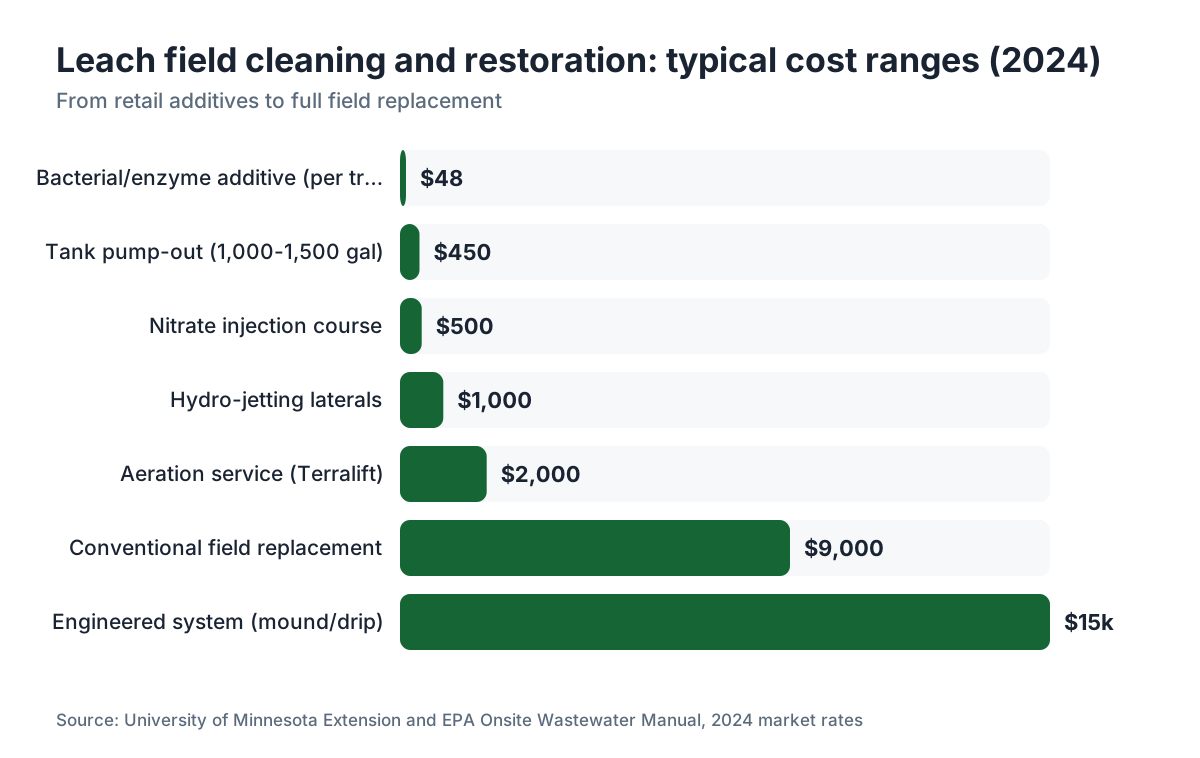
How much does leach field cleaning or restoration cost?
Costs span a wide range depending on what is actually being done.
A retail bacterial additive runs $15 to $80 per treatment. Monthly maintenance products cost $10 to $25 a month. Over a year that is $120 to $300, reasonable insurance if the system is otherwise healthy but real money if you are treating a genuinely failing field with nothing to show for it.
Professional pumping, which should go with any serious remediation effort, costs $300 to $600 for a typical 1,000- to 1,500-gallon tank in most U.S. markets as of 2024, though high cost-of-living areas can hit $800 or more. Our septic tank cleaning article covers that in detail.
Professional field restoration services range from $500 to $3,000 depending on method. Hydro-jetting lateral lines falls in the $500 to $1,500 range. Aeration services (Terralift and similar) run $1,000 to $3,000 for a standard residential field. Nitrate injection, usually done over multiple visits, totals $200 to $800 for a full course.
If the field genuinely needs replacement, conventional drain field replacement runs $3,000 to $15,000 for a standard gravity system. An engineered replacement like a mound system or drip irrigation system can reach $20,000 or more depending on site conditions and local permits. If your tank is also near end of life, checking the cost to put in a septic tank makes sense at that point.
Spending $50 on a good bacterial additive after a proper pump-out is a fine bet. Spending $3,000 on professional aeration for a field that needs replacement is money gone. A camera inspection of the laterals or a professional field evaluation before you commit to expensive remediation is usually worth the $200 to $400 it costs.
How often should you use a leach field cleaner or maintenance additive?
For maintenance-minded homeowners using biological additives on a working system, most manufacturers recommend monthly dosing. That frequency has more to do with marketing than science. A healthy septic system already holds billions of the right bacteria. Adding more each month is unlikely to produce a measurable benefit in a well-maintained system.
The more defensible plan is seasonal or post-disruption dosing: after a heavy antibiotic course by someone in the household (antibiotics pass through and can shift tank biology), after a vacation stretch when the system sat unused and populations may have drifted, or at the start of high-usage seasons like summer when a vacation rental or extra guests drive up water load.
For a system showing mild stress, a heavier schedule of weekly dosing for one month followed by monthly maintenance is what most professional operators suggest when they suggest additives at all.
Pumping frequency matters far more than additive frequency. The EPA SepticSmart program recommends pumping every three to five years for a typical household, though how often to pump a septic tank really depends on tank size and household size. A family of four with a 1,000-gallon tank should pump closer to every three years. Get that right and many homeowners find they have no field problems to treat.
For operators running multiple properties, tracking treatment dates, pumping schedules, and field performance notes in one place saves money over time. This is where a platform like SepticMind helps service companies coordinate inspections, set pumping reminders, and flag accounts where repeated field treatment calls suggest a system needs professional evaluation rather than another bottle.
What should you look for when choosing a leach field cleaner product?
Given the thin evidence base, your selection criteria come down to avoiding harm and squeezing out your modest odds of benefit.
NSF/ANSI 46 certification is the first filter. It does not guarantee the product works, but it does mean an independent body confirmed it is not making things worse and is not adding harmful substances. Products without it are a harder sell.
Look for products that name specific bacterial species on the label, typically strains of Bacillus, Pseudomonas, or similar naturally occurring soil bacteria. Generic "billions of bacteria" claims with no species identification tell you nothing useful.
Avoid anything marketed with aggressive failure-reversal language that promises to end the need for pumping. Pumping is irreplaceable. Any product that claims otherwise is misleading you. The EPA specifically flags claims that additives can substitute for pumping as marketing language with no scientific support [1].
For enzyme-only products (no live bacteria), the rationale is weaker still. Enzymes denature and go inactive fairly quickly in the variable temperature and chemistry of a septic system. Some formulas combine enzymes and bacteria; the bacteria are the active part.
Price is a poor proxy for quality here. A $15 product with NSF 46 certification is a better buy than an $80 product with slick packaging and no independent certification.
If you are an operator recommending maintenance products to customers, the same rules apply. Having one recommendation you can stand behind, one that won't cause harm and sets honest expectations, matters more than finding the product that promises the most. SepticMind's operator portal includes maintenance reminder workflows that help technicians track which customer systems are on a maintenance additive protocol versus which need escalated service.
Can a leach field be cleaned without replacing it?
Yes, in many cases, though "cleaned" means different things depending on the failure mode.
A field stressed by short-term hydraulic overload or a single event, like a house full of guests for two weeks, can often recover with pumping and a rest period alone. No product needed.
A field with moderate biomat buildup, especially one pumped on schedule and less than 15 years old, is the best candidate for biological treatment combined with professional aeration if the additive alone falls short. Several university extension programs note that field rejuvenation success rates run higher in sandy or loamy soils than in tight clay, where physical pore structure is harder to change [3].
A field with broken lateral pipes, tree root intrusion, or soil that has simply reached the end of its biological life after decades of use cannot be cleaned. It needs repair or replacement. See our overview of leach field components to understand what a full replacement involves.
The honest answer is that professional restoration services save some fields homeowners would otherwise replace too early, and they also get sold to homeowners whose fields genuinely need replacement. An independent inspection from a licensed onsite wastewater professional, not from the company selling the restoration service, is the best way to know which situation you are in.
Replacement is not always the worst outcome. A new, properly sized field in good soil will outperform a patched old one for years. The septic tank installation and field replacement process, while disruptive and expensive, is a known quantity with a known lifespan.
Frequently asked questions
Can a leach field cleaner really restore a failing drain field?
Rarely on its own. Biological additives may help a mildly stressed field when combined with proper tank pumping and reduced water use. They cannot fix broken pipes, compacted soil that has reached the end of its useful life, or a field flooded by a high water table. The EPA says there is no scientific evidence that additives restore a failing system. A professional inspection before spending money on repeated treatments is the smarter move.
What is the best leach field cleaner you can buy?
No single product has proven superiority in independent testing. The best approach is to pick any bacterial additive carrying NSF/ANSI Standard 46 certification, meaning it has been tested to cause no harm. Look for products listing specific Bacillus or Pseudomonas strains. Price does not predict performance. Skip chemical oxidizers. And pump the tank first; no additive works well in a tank overloaded with sludge.
How long does it take for a leach field cleaner to work?
If a biological additive is going to help, expect modest improvement in drainage over four to eight weeks of monthly treatment in a lightly stressed system. No product works in hours or days despite the marketing. If you see no change after two to three months of treatment combined with proper pumping and reduced water use, the system needs professional evaluation, not another bottle.
Is hydrogen peroxide safe to use as a leach field cleaner?
Probably not worth the risk. A 1992 study in Water Environment Research found high-dose hydrogen peroxide significantly reduced viable bacteria in drain field soils with inconsistent results. Several states prohibit chemical septic additives outright. High concentrations can kill the biological population your field depends on. Stick to NSF 46-certified bacterial products or professional nitrate-based treatments if you want a chemical approach.
Can I use a leach field cleaner instead of pumping the septic tank?
No. Nothing replaces pumping. Solids that build up in the tank are not dissolved by additives; they carry over into the field and physically clog gravel and soil, which no microbe can undo quickly. The EPA SepticSmart program specifically warns against any product marketed as a substitute for pumping. Pump on schedule (every three to five years for most households) and treat the field as a supplement, not a replacement.
How often should I use a leach field cleaner or maintenance product?
Monthly dosing is what most manufacturers recommend, but the science behind that frequency is thin for a healthy system. A more practical approach is dosing seasonally, after antibiotic use in the household, or after periods of heavy water use. For a stressed system, weekly dosing for one month followed by monthly maintenance is what most contractors suggest. Consistent pumping every three to five years does more than any dosing schedule.
What are the signs that a leach field cleaner won't be enough and I need repairs?
Sewage backing up into the house, large persistent wet areas in the yard with odor, and gurgling drains that do not improve after a pump-out and field rest all point to problems beyond biomat. Broken distribution boxes, crushed lateral pipes, tree root intrusion, and fields that have exceeded their 20- to 30-year design life need repair or replacement, not another treatment cycle. A camera inspection of the laterals gives a definitive answer.
Are leach field cleaners legal in all states?
No. Several states, including Alabama, prohibit chemical septic additives. Others require products to appear on an approved list or meet NSF/ANSI 46 before use. Wisconsin, Minnesota, and other states with strong groundwater protection rules have specific restrictions. Check your state environmental or public health agency's onsite wastewater regulations before buying any product, particularly chemical oxidizers. The EPA SepticSmart site links to state guidance.
Do enzyme-based leach field cleaners work better than bacterial ones?
Bacterial products are generally preferable to enzyme-only products. Enzymes denature and lose activity fairly quickly in the variable temperature and chemistry of a septic system. Live bacteria can reproduce and sustain activity over weeks if conditions support them. Many products combine both; in those cases the bacteria are the more meaningful component. Enzyme-only products are not harmful if NSF 46-certified, but the theoretical advantage of bacteria is stronger.
What is the difference between a leach field cleaner and a septic tank treatment?
Septic tank treatments aim to maintain the bacterial population inside the tank itself, improving liquid treatment before effluent reaches the field. Leach field cleaners target the biomat layer in the drain field trenches. In practice many products claim to do both, since anything poured into the toilet passes through the tank before reaching the field. The distinction matters when a problem is clearly tank-side versus field-side, which a professional inspection can determine.
How much does professional leach field cleaning or restoration cost?
Retail bacterial additives cost $15 to $80 per treatment. Professional services range from $500 to $1,500 for hydro-jetting lateral lines, $1,000 to $3,000 for aeration services like Terralift, and $200 to $800 for a course of nitrate injection. A full drain field replacement costs $3,000 to $15,000 for a conventional system and up to $20,000 or more for engineered alternatives like mound systems. A camera inspection before committing to expensive restoration is usually worth the $200 to $400 it costs.
Can resting the leach field replace using a cleaner?
For many early-failure situations, yes. Resting the field means diverting flow to a secondary panel or sharply cutting household water use for several weeks so air reaches the biomat and it oxidizes naturally. Research from North Carolina State University Extension found field resting after pumping restored hydraulic function in a meaningful share of stressed systems without any additive. It is free, carries no risk of harm, and is the first step professionals recommend.
Will tree roots in the leach field respond to cleaning products?
No. Tree root intrusion is a physical problem that needs mechanical removal or pipe repair. Bacterial additives have no effect on root masses. If roots have crushed or infiltrated lateral pipes, those pipes need to be jetted, repaired, or replaced. Chemical root killers (copper sulfate, foaming herbicides) exist for drain pipes but are separate products with their own risks to soil biology and groundwater, and should be used only under professional guidance.
Sources
- U.S. EPA, SepticSmart Program: Protect Your Investment: The EPA states there is no scientific evidence that biological additives improve the performance of a properly functioning septic system or restore a failing system, and recommends against using them as a substitute for pumping.
- University of Minnesota Extension, Septic System Owner's Guide: Biomat development in drain field trenches accelerates when effluent BOD exceeds roughly 200 mg/L at the trench wall, a level reached when tanks are overdue for pumping.
- North Carolina State University Extension, Onsite Wastewater Systems: Alternating field panels after pumping events restored hydraulic conductivity in a meaningful fraction of stressed drain field systems without chemical or biological additive.
- NSF International, NSF/ANSI Standard 46: Evaluation of Components and Devices Used in Wastewater Treatment Systems: NSF/ANSI 46 certification tests septic additives to confirm they do not introduce harmful pathogens or chemicals; it does not certify that the product improves system performance.
- Water Environment Research, Vol. 64, 1992: Effects of Hydrogen Peroxide on Drain Field Bacteria: High-dose hydrogen peroxide treatments significantly reduced viable bacteria counts in drain field soils and produced inconsistent hydraulic improvement compared to untreated controls.
- Alabama Department of Public Health, Onsite Sewage Disposal Rules (Chapter 420-3-1): Alabama prohibits chemical septic additives under its Onsite Sewage Disposal regulatory rules.
- U.S. EPA, Onsite Wastewater Treatment Systems Manual (EPA/625/R-00/008): The EPA manual covers biomat formation mechanisms and the role of effluent quality and hydraulic loading rate in drain field longevity.
- Minnesota Pollution Control Agency, Septic System Additives: Minnesota requires septic system additives to meet NSF/ANSI 46 or appear on an approved list before sale or use in the state.
- University of Minnesota Extension, Septic System Costs and Maintenance: Conventional drain field replacement costs range from approximately $3,000 to $15,000 and engineered alternatives like mound systems can exceed $20,000 depending on site conditions.
- U.S. EPA SepticSmart, Homeowner Tips: Pumping and Maintenance: The EPA SepticSmart program recommends pumping household septic tanks every three to five years as the single most effective maintenance step.
- Wisconsin Department of Natural Resources, Septic System Additives Guidance: Wisconsin restricts septic system additives and requires compliance with state groundwater protection standards before products can be recommended or sold for use in onsite systems.
Last updated 2026-07-09