Leach field chambers at Lowe's: what to know before you buy
By the SepticMind Editorial Team
TL;DR
- Lowe's sells leach field chambers, mostly Infiltrator brand, in-store and online at roughly $18 to $28 per unit.
- A residential field needs 30 to 100 chambers depending on soil and household size.
- You still need a soil test, a permitted design, and in most states a licensed installer.
- Chambers are convenient for a small repair.
- For a full new system, buy your design first, then shop.
What is a leach field and why do the chambers matter?
A leach field (also called a drain field or absorption field) is the underground network that takes liquid waste, called effluent, after it leaves your septic tank. The effluent trickles down through soil, which filters out pathogens and nutrients before the water reaches groundwater. Lose the field and the whole system has nowhere to send treated wastewater. Failure shows up fast. Sewage backs up indoors, puddles form over the field, or the yard starts to smell.
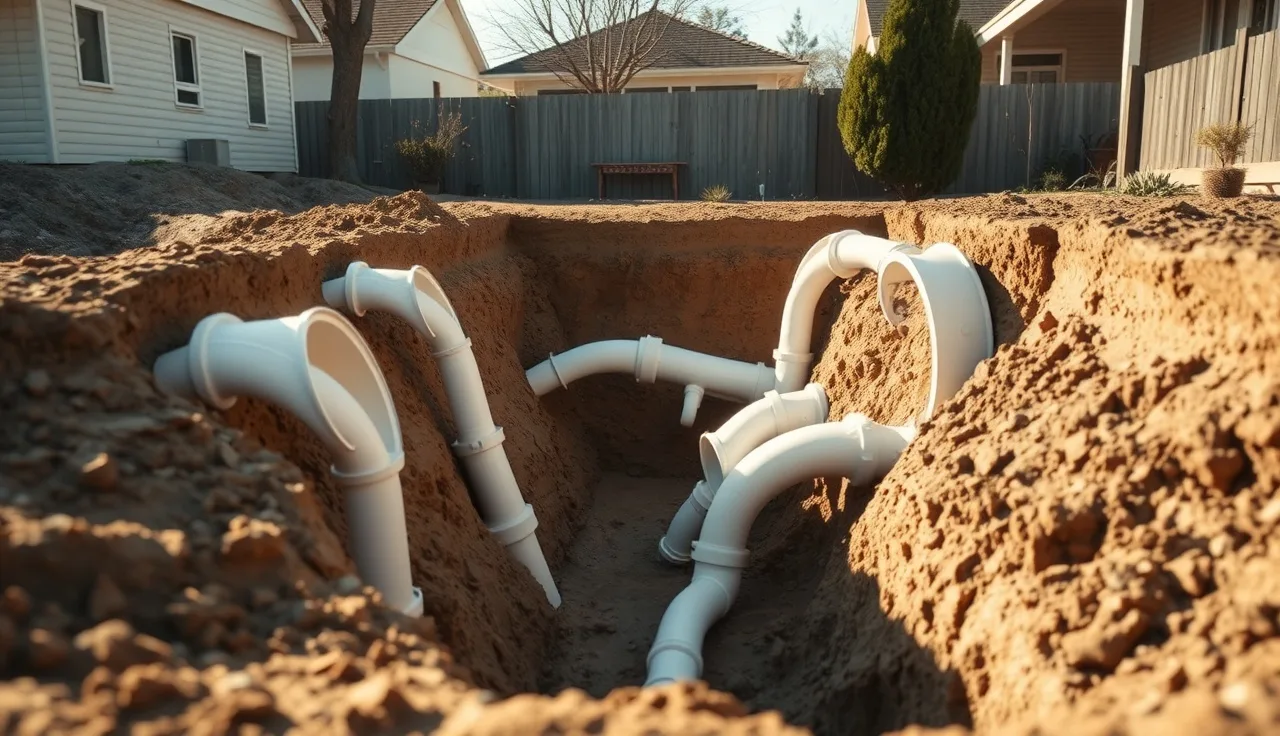
Old leach fields were built with perforated pipe buried in gravel-filled trenches. Chambers took over that job in most new construction and many repairs. A chamber is a hollow, arch-shaped plastic unit, usually high-density polyethylene (HDPE), that snaps together end-to-end inside a trench. Effluent flows into the open bottom of each chamber and contacts native soil directly. No gravel needed. That cuts material and labor cost, and it keeps fine stone particles from clogging the soil surface over time.
The EPA's SepticSmart program describes the drain field as the part of the system that treats wastewater through soil absorption [1]. Get the field sizing wrong, or set the chambers badly, and that treatment stops working. Chambers are not plumbing hardware you grab off a shelf and drop in a hole.
For how the whole system connects, see our article on the leach field.
Does Lowe's actually sell leach field chambers, and which brands?
Yes, Lowe's carries septic chambers, though stock swings hard by store and region. The brand you'll see most is Infiltrator Systems, now part of Advanced Drainage Systems (ADS). Infiltrator's Quick4 series is the common shelf product, available for in-store pickup or ship-to-store in most markets [2].
Infiltrator Quick4 chambers come in a few configurations:
| Model | Typical width | Typical length | Bottom area per unit |
|---|---|---|---|
| Quick4 Standard | 34 in | 53 in | ~7.8 sq ft |
| Quick4 Low Profile | 34 in | 53 in | ~6.5 sq ft |
| Quick4 Plus | 34 in | 53 in | ~8.6 sq ft |
| Quick4 Equalizer 24 | 34 in | 53 in | ~8.6 sq ft |
Pricing at Lowe's has run roughly $15 to $35 per chamber for standard units, though it shifts with resin costs and regional demand. End caps, couplers, and inspection ports sell separately, and you need them for a complete install. Some stores also stock ADS corrugated pipe and fittings that work with chamber systems.
Home Depot carries similar Infiltrator inventory in many markets. For a big job, your local septic supply house will almost always beat big-box pricing on volume and stock the full range of adapters your installer wants. Buying 80 chambers for a single job? Call ahead to confirm what's on the floor. Lowe's does take pallet-quantity orders through its ProDesk for commercial accounts.
How many chambers does a typical residential leach field need?
This is where homeowners trip. Chamber count is not a function of house size alone. It depends on daily wastewater flow (estimated by bedroom count in most codes), your soil's long-term acceptance rate (LTAR), and your state or county's minimum trench and chamber specs.
The sizing math is simple. Divide your estimated daily flow by the soil's LTAR to get the minimum absorption area in square feet, then divide that by the bottom area of your chosen chamber to get the count.
Most codes assume 150 gallons per day per bedroom, so a 3-bedroom house comes to 450 gpd [3]. Say your perc test shows an LTAR of 0.6 gallons per square foot per day, a moderately permeable sandy loam. You need 450 / 0.6 = 750 square feet of absorption area. A Quick4 Standard covers about 7.8 sq ft, so that's roughly 97 chambers, rounded up to fit your trench layout. Fast-draining soils take fewer. Slow clay soils push the number up fast, or make an in-ground chamber field impractical altogether.
Your designer or engineer runs these numbers against your actual perc results, not a generic table. Buying chambers before you have a permitted design is backwards. Get the design, then shop.
For full-system cost context, our cost to install septic system article breaks down what you'll spend end to end.
What do leach field chambers cost at Lowe's versus other sources?
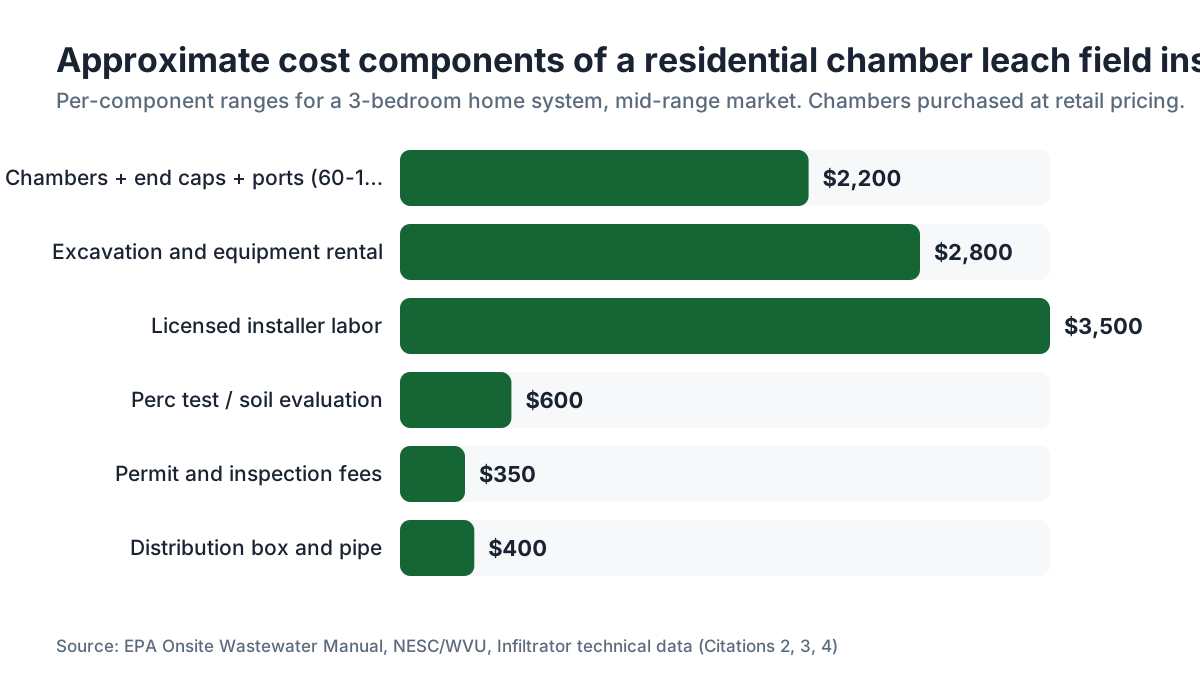
A single Infiltrator Quick4 Standard chamber at Lowe's runs about $18 to $28, depending on market and current pricing. End caps run roughly $8 to $15 each, and you need one at every trench terminus. Inspection port risers and caps add another $15 to $30 per port.
Here's where big-box pricing works and where it doesn't. For a small repair or one failed trench, grabbing 10 to 20 chambers at Lowe's is fine. No minimum order, available same day, easy to return the extras. For a full new system needing 80 to 150 chambers, a septic supply distributor will usually beat Lowe's by $3 to $7 per unit, deliver to the job site, and stock the accessory parts a licensed installer expects.
The chambers are never the big cost. Labor, equipment rental (a mini-excavator for a small job runs $300 to $600 a day), the perc test ($250 to $1,000 depending on state), the permit ($100 to $500 or more), and the inspection fee stack up fast. Infiltrator's installation data says a chamber system saves roughly 40 to 60% of the gravel cost versus traditional pipe-and-stone [2]. That savings goes to the installer, not the homeowner buying chambers at retail.
If you're doing a full septic tank installation at the same time, sourcing through a licensed contractor makes even more sense.
Can a homeowner legally install leach field chambers themselves?
Straight answer: in most states, no. Onsite wastewater installation is regulated at the state level, and most states require a licensed installer, a certified designer, or both. A few states, plus many rural counties in places like Texas and Missouri and parts of the Mountain West, do allow owner-installation with a permit and inspection [4].
The EPA sets no national DIY rule. Authority sits with each state's environmental or health agency. Before you buy a single chamber, go to your state's environmental quality or health department website and look up "onsite wastewater" or "septic system installation." Search your county too, because counties often layer their own rules on top of the state's.
Even where DIY is allowed, you still need:
- A soil morphology or perc test by a licensed evaluator (some states require a licensed soil scientist)
- A permitted design stamped by a licensed engineer or designer
- A permit issued before any excavation
- A final inspection by the county or state before backfilling
Backfilling before inspection is the single most common violation. An inspector who shows up to a buried system may make you dig it back up. That's an expensive lesson.
One practical middle ground: a licensed installer digs and sets the chambers while you handle the unregulated labor (site prep, topsoil, seeding). Work out the split with your installer and your county inspector before you assume anything is allowed.
How do you install Infiltrator chambers correctly?
Setting Infiltrator Quick4 chambers is genuinely simpler than building a gravel trench. Simpler is not the same as forgiving. Here's how a proper install goes, step by step.
Excavate the trenches to the depth in your permitted design. Trench width for Quick4 is typically 36 inches, enough for the chamber plus a few inches of clearance. Depth commonly puts the chamber invert (bottom opening) 6 to 18 inches below native grade, but your design drives that number.
Level the trench bottom with care. Chambers go in level or with a very slight slope, no more than 1/8 inch per foot per Infiltrator's technical specs [2]. A trench that pitches too steeply pools effluent at one end. That end gets overloaded while the rest of the trench sits dry and useless.
Snap the chambers together end-to-end. Each unit has integrated connectors, and joints should be tight. Install end caps at both ends of every trench and on any branch terminations. Put inspection ports at the inlet end, and on longer trenches at the intervals your designer specifies.
Run the distribution pipe from the septic tank outlet (or distribution box) to the inlet of the first chamber. In most designs a distribution box (D-box) splits flow evenly among parallel trenches. The D-box has to be level so flow divides right. A tilted D-box starves some trenches and drowns others, and that's a common cause of early field failure.
Backfill with native soil, no gravel, compacting gently. Do not run heavy equipment over the chambers. Keep at least 6 inches of soil cover over the top. No trees or shrubs over the field. No parking on it.
Call for your final inspection before you cover a single chamber.
What soil conditions make chambers work well, and when don't they?
Chambers work best in permeable, well-drained soil: sandy loams, loamy sands, silt loams with no restricting layer underneath. The open bottom puts effluent right against soil, so in good ground you get efficient treatment and strong infiltration.
Chambers struggle or fail in:
- Heavy clay with LTARs below 0.2 gpd/sq ft, where infiltration is just too slow no matter the chamber design
- Soil with a seasonal high water table within 24 inches of the trench bottom (the minimum in most states; some require 36 inches) [5]
- Soil with bedrock within 4 feet of the surface in many jurisdictions
- Restrictive horizons below the trench (a clay pan or fragipan layer)
In marginal soil, your designer may spec a raised or mound system using imported fill. Chambers can still go inside a mound, though standard in-ground chamber trenches are more common.
Never had a perc test and planning a new system or a repair? Don't buy anything until the result comes back. That test decides more than the chamber count. It decides whether in-ground chambers are even the right technology for your lot.
The EPA's onsite wastewater guidance treats the site and soil evaluation, including measurement of the seasonal high water table, as the foundation of any sound onsite design [1].
What permits and inspections are required for a chamber leach field?
Every state requires a permit for a new leach field or a significant repair to an existing one. Not optional, not a formality. Install without one and you're exposed to fines, mandatory removal, and real trouble when you sell (a buyer's inspector flags unpermitted septic work all the time).
The process usually runs like this:
- Perc test or soil evaluation by a licensed evaluator
- System design submitted to the local health or environmental department
- Permit issued (often 2 to 8 weeks depending on jurisdiction)
- Installation by a licensed installer
- Pre-backfill inspection by the county or state
- Permit closure and as-built drawing filed
Fees swing widely. A perc test might cost $250 in rural Missouri or $900 and up in a competitive mid-Atlantic market. Permit fees run from under $100 in some rural counties to $500 or more where review is heavier [4].
Some states, like North Carolina and Florida, run online portals where you can track permit status and look up approved designers and installers. Others are all paper. Check your state's department of environmental quality or department of health for the exact steps.
For a repair rather than new construction, the permit process is usually faster but no less required. Our guide to septic system repair covers what triggers a repair permit versus a maintenance action.
What are the signs your current leach field is failing?
Catch a field problem early and you have options. Wait for full failure and you get emergency costs and maybe a house you can't live in.
Early warning signs:
- Slow drains across the house (more than one fixture)
- Gurgling from toilets or drains after a flush
- A persistent wet spot or unusually green, lush grass over the field
- Sewage odor outdoors near the field or indoors near drains
- A septic alarm going off (if you have a pump-assisted system)
By the time you see standing effluent on the surface, the field has usually been stressed for months. Common causes: biomat buildup (a thick layer of organic matter and bacteria that clogs the soil interface), hydraulic overloading from too much water use, root intrusion, and compaction from vehicles or heavy equipment driven over the field.
A failed field is not always a death sentence for the whole system. Some failed trenches can be rested and rehabilitated. Others need replacing, using a reserve area if one was designated in the original permit.
Regular septic tank pumping is the single best thing you can do to stretch field life. A tank that isn't pumped on schedule sends solids into the field, and those solids speed up biomat formation. How often you pump depends on household size and tank volume. Our guide on how often to pump septic tank gives the specifics.
Stuck at the inspection stage and unsure whether your field can be saved? A septic tank inspection from a qualified pro should include a field assessment.
How do chambers compare to traditional gravel-and-pipe systems?
The debate is mostly settled in favor of chambers for new construction and most repairs. It helps to know why.
Perforated pipe in gravel has been the standard since the mid-20th century. It works. It also has real drawbacks. Gravel is heavy and expensive to truck in, fine particles migrate over time and cut soil permeability, and repairs mean excavating and regrading gravel beds.
Chambers need no gravel, snap together fast, and create a larger void above the soil surface that buffers surge flows, like the wave after a big load of laundry. The open bottom exposes more soil to effluent than a perforated pipe sitting in stone.
A study in the Journal of Environmental Quality found chamber and gravel systems performed comparably for pathogen reduction when properly sized and installed, with chambers showing an edge in installation speed and long-term upkeep of the infiltrative surface [6].
Many state codes now approve chambers as a standard option for regulated repairs. Some states have gone further, requiring chambers or other approved manufactured products and phasing out site-built gravel systems for new construction.
| Feature | Gravel-and-pipe | Chamber (e.g., Infiltrator Quick4) |
|---|---|---|
| Gravel required | Yes, ~1.5 cu yd per LF | No |
| Installation speed | Slower | Faster |
| Soil surface preserved | Partially | Better |
| Repairability | Harder | Easier |
| Typical cost premium | Baseline | 5 to 15% lower on material + labor |
| Approved in most state codes | Yes | Yes (most states) |
What should operators and contractors know about stocking or specifying chambers?
If you run a septic install or repair business, you already know Infiltrator Quick4 is the default residential chamber. A few operational notes worth keeping in mind.
Lowe's ProDesk accounts earn their keep on small or emergency jobs, the ones where your distributor is closed or short on stock. For regular volume, your regional ADS distributor gives you better pricing, job-site delivery, and the full line, including the Equalizer 36, High Capacity, and gravelless variants that show up on commercial and large residential work.
Spec consistency matters on permitted jobs. Design calls for Quick4 Plus and you drop in Quick4 Standard? Now your chamber count doesn't match the stamped design. Some inspectors check unit model against the submittal. A substitution needs designer approval and sometimes a permit amendment.
For juggling inspection schedules, permit tracking, and service calls across active jobs, software built for septic operators, including SepticMind, cuts the paperwork load on jobs with multiple permit milestones.
For estimating, our cost to put in a septic tank guide has real regional price ranges that work as a sanity check on your own bids.
How long do leach field chambers last, and what maintenance do they need?
The chambers themselves last a long time. Infiltrator rates Quick4 for a 50-year design life under normal conditions [2]. The plastic doesn't corrode, rot, or break down in soil. In that sense chambers outlive the gravel beds they replaced.
The real limit isn't the plastic. It's the soil. Biomat buildup at the chamber-soil interface is what eventually caps a field's capacity, and how fast that biomat grows depends almost entirely on how well the upstream tank is maintained.
Pump the tank every 3 to 5 years (yearly for households with garbage disposals or a lot of people), and you keep solids out of the field and hold the biomat to a manageable thickness. Neglect the tank until it overflows solids into the chambers, and you can load a field beyond recovery in 5 to 10 years. The chambers will be fine. The soil under them will be sealed.
Other rules for a chamber field:
- Never drive vehicles over it
- Divert roof drains and sump pumps away from the field
- Don't plant trees within 30 to 50 feet (willows, maples, and poplars are aggressive root offenders)
- Clean the effluent filter in the tank outlet tee once a year if you have one
For routine tank care that protects your field, see our guides on septic tank cleaning and septic tank pump out.
Frequently asked questions
Can I buy leach field chambers at Lowe's and install them myself?
You can buy them there, yes. Whether you can install them yourself depends entirely on your state. Most states require a licensed installer and a permit for any leach field work. A handful allow owner-installation with a permit and inspection. Check your state's environmental or health department website before buying anything, because installing without a permit can mean fines and mandatory removal.
What brand of septic chambers does Lowe's sell?
Lowe's mostly stocks Infiltrator Systems Quick4 chambers, part of the Advanced Drainage Systems (ADS) family. Availability varies by store and region. End caps, inspection ports, and couplers sell separately. For big jobs needing 50 or more units, call ahead to confirm stock or order through Lowe's ProDesk. It's worth the effort.
How much does one leach field chamber cost at Lowe's?
Infiltrator Quick4 Standard chambers run about $18 to $28 each at Lowe's, depending on market and current pricing. End caps add $8 to $15 each. For a full residential field needing 60 to 100 chambers, your hardware cost for chambers alone might run $1,200 to $3,000 before labor, excavation, permits, and inspection, which usually cost more than the materials.
How many Infiltrator chambers do I need for a 3-bedroom house?
Most codes assume 450 gallons per day of flow for a 3-bedroom house. Divide that by your soil's long-term acceptance rate (LTAR) from a perc test to get your required absorption area in square feet. A Quick4 Standard covers about 7.8 square feet. In average soils you might need 60 to 100 chambers, but your permitted design sets the final number, not a general estimate.
Do leach field chambers need gravel?
No. Chambers like the Infiltrator Quick4 are built to eliminate gravel. The arch shape creates a void above the soil surface, and the open bottom lets effluent contact native soil directly. That actually improves long-term performance by keeping fine gravel particles from migrating into the soil surface and clogging it over time.
What is the difference between Quick4 Standard and Quick4 Plus chambers?
The Quick4 Plus has a larger bottom opening (roughly 8.6 sq ft versus 7.8 for Standard), so you need fewer units to hit the same absorption area. The Plus also carries a higher crush strength rating. Most residential designs run fine on Standard units. Designers spec Plus or Equalizer models for higher-flow or shallower installations.
Can leach field chambers be used in clay soil?
Heavy clay with very low permeability (LTARs below 0.2 gallons per square foot per day) generally can't support an in-ground chamber field, because the soil won't accept effluent fast enough regardless of the design. In those cases a raised-bed or mound system with imported fill is usually required. A perc test or soil morphology evaluation tells you what your soil can handle.
How deep should leach field chambers be buried?
Depth depends on your permitted design and local code, but chambers usually sit with the invert (bottom opening) 6 to 18 inches below native grade. You need at least 6 inches of soil cover over the top of the arch. More importantly, most state codes require 24 to 36 inches of separation between the chamber bottom and the seasonal high water table or bedrock.
What happens if you install a leach field without a permit?
You risk fines from your county or state health department, a mandatory order to remove and properly replace the system, and complications when you sell (title searches and buyer inspections surface unpermitted septic work). In some states, selling a home with an uninspected septic system requires disclosure and can kill the sale or trigger required remediation at closing.
How long do plastic leach field chambers last?
Infiltrator rates Quick4 chambers for a 50-year design life. The HDPE plastic doesn't corrode or degrade in soil under normal conditions. The practical limit on system life is the soil's infiltrative capacity, which depends on how well the upstream tank is maintained. A tank that's never pumped clogs the field long before the chambers themselves fail.
Can leach field chambers be repaired if they crack or break?
Individual chambers can be replaced if they crack or crush, usually from vehicle traffic over the field. You excavate the affected section, pull the damaged unit, and snap in a new one. The bigger question is what caused the damage. Vehicle loading is the usual culprit, and if it's happened once, it's probably stressed the neighboring chambers too.
What is the minimum slope for installing leach field chambers?
Infiltrator's technical guidelines call for level installation or a maximum slope of 1/8 inch per foot. Steeper grades pool effluent at the downhill end of the trench, overloading that section while the uphill end sits underused. On sloped lots, trenches run across the slope (on contour), not down it, to keep the chambers as level as possible.
Does Lowe's sell distribution boxes for septic systems?
Some Lowe's stores carry distribution boxes (D-boxes), though selection is thin compared to a dedicated septic supply house. Infiltrator and other makers offer plastic D-boxes that are lighter and more corrosion-resistant than the old concrete versions. If your local Lowe's doesn't stock the size you need, ADS distributors or septic supply dealers will have a fuller range.
How does a leach field relate to the septic tank?
The tank is stage one: it separates solids from liquid and holds waste long enough for anaerobic digestion to start. The clarified liquid (effluent) flows out to the leach field, the second and final treatment stage. Soil filters pathogens and nutrients from the effluent as it percolates down toward groundwater. Both parts have to work for the system to function.
Sources
- U.S. EPA, SepticSmart Program: EPA describes the drain field as the component that treats wastewater through soil absorption and treats the site and soil evaluation, including seasonal high water table measurement, as the foundation of onsite system design.
- Infiltrator Water Technologies (ADS), Quick4 Technical Specifications: Infiltrator Quick4 chambers are designed for installation level or at a maximum 1/8 inch per foot slope, rated for a 50-year design life, and chamber systems save approximately 40-60% of gravel cost versus traditional pipe-and-stone systems.
- U.S. EPA, Onsite Wastewater Treatment Systems Manual: Standard design flow for residential systems is typically estimated at 150 gallons per day per bedroom, used to size leach field absorption area.
- National Environmental Services Center (NESC), West Virginia University: Onsite wastewater system installation is regulated at the state level; permit fees range from under $100 in some rural counties to $500 or more in states with more intensive review processes.
- U.S. EPA, Onsite Wastewater Treatment Systems Manual: Most state codes require a minimum vertical separation of 24 inches between the bottom of the leach field trench and the seasonal high water table or bedrock.
- Journal of Environmental Quality (Wiley Online Library): Chamber systems and gravel systems performed comparably for pathogen reduction when properly sized and installed, but chamber systems showed an advantage in installation speed and long-term maintenance of infiltrative surface area.
- Advanced Drainage Systems (ADS), Infiltrator Quick4 Product Page: Infiltrator Quick4 Standard chamber has approximately 7.8 sq ft of bottom infiltration area per unit; Quick4 Plus has approximately 8.6 sq ft per unit.
- U.S. EPA, SepticSmart for Homeowners: EPA SepticSmart guidance recommends regular septic tank pumping as essential maintenance to prevent solids from entering and clogging the drain field.
- Florida Department of Environmental Protection, Onsite Sewage Program: Florida requires a permit for all new septic system installations and significant repairs, with inspections required before backfilling.
- Texas Commission on Environmental Quality (TCEQ), On-Site Sewage Facilities: Texas allows owner-installation of onsite sewage facilities in some circumstances with a permit and inspection, illustrating state variation in DIY installation rules.
Last updated 2026-07-09