Leach field cleaning: what actually works and what doesn't
By the SepticMind Editorial Team
TL;DR
- Leach field cleaning breaks up biomat and flushes compacted solids out of the absorption trenches using jetting, aeration, or biological treatments.
- Caught early, it can add years to a field's life.
- It rarely saves one that's already failed.
- Expect $500 to $4,000 depending on method.
- The EPA says regular tank pumping is the single best way to keep a drain field healthy in the first place.
What is leach field cleaning and why does a field need it?
A leach field, also called a drain field or soil absorption system, is a network of perforated pipes buried in gravel-filled trenches. Wastewater flows from your septic tank into those trenches and filters down through the soil. The soil does the real treatment. Bacteria in the top few inches break down pathogens and nutrients before the water reaches groundwater. [1]
Over time a layer called biomat forms where the effluent meets the soil. Biomat is a dense mat of anaerobic bacteria, bacterial byproducts, and fine suspended solids. A thin biomat is normal and even useful because it slows infiltration to a rate the soil can handle. A thick biomat is the enemy. It seals the soil surface, effluent backs up into the pipes, the trenches saturate, and eventually sewage surfaces in your yard or backs up into the house. [1]
Cleaning is the umbrella term for any process that breaks up or removes that biomat and the packed solids in the pipes and distribution box. It also covers clearing roots that have grown into perforated pipe or flushing out mineral scale.
Here's the catch. Cleaning does not restore soil structure that has physically collapsed after decades of hydraulic overloading, and it does not fix a field that was installed in bad soil to start with. Those fields need replacement. So before you spend a dollar on any cleaning service, answer one question: why is the field failing?
What causes a leach field to fail or slow down?
Most leach field trouble traces back to one of four causes, and only some of them respond to cleaning.
Biomat buildup is the most common and the most treatable. It builds fastest when the septic tank is overdue for pumping and solids carry into the field, when the household sends grease or garbage-disposal waste down the drain, or when water use spikes past the system's design load. The EPA's SepticSmart program names infrequent pumping as the leading cause of premature drain field failure. [2]
Soil compaction or saturation is harder to beat. If vehicles drove over the field, if the water table rose during seasonal flooding, or if the native soil was clay-heavy from the start, no cleaning method restores permeability. You're arguing with geology, and geology wins.
Root intrusion from trees or large shrubs shows up in older systems. Roots chase moisture into the perforated pipes and can block flow completely. Jetting clears roots for a while, but they grow back unless you remove the source plant or apply a root-barrier treatment.
System overload floods the field with more volume than it was built for. Too many people in the house, a toilet that runs all day, or a water softener backwashing into the tank all do it. [3] No cleaning fixes overload. You fix the source first.
Knowing the cause before you hire anyone is the whole game. A good contractor cameras the lines and inspects the distribution box before recommending treatment. Anyone who quotes a cleaning job without inspecting the system first is guessing with your money.
What leach field cleaning methods actually work?
Four methods see real-world use, and they differ a lot in cost and outcome.
Hydro-jetting runs a high-pressure water line through the perforated pipes to blast out solids, roots, and biomat. It's the fastest mechanical fix and the default for most contractors. It works well on root intrusion and packed solids. It does nothing for biomat that has soaked into the surrounding soil. Typical cost is $500 to $1,500 depending on field size and trench count. [4]
Terralift and similar aeration tools drive a pneumatic probe into the ground beside each trench to fracture compacted soil, then inject a biological amendment or polystyrene pellets to hold the cracks open. The goal is to restore permeability from outside the pipe rather than inside it. Independent reviews are mixed. Some installers report solid short-term recovery. Long-term data are thin. Costs run $1,000 to $3,000.
Biological and enzymatic treatments get poured or flushed into the system to speed up digestion of the biomat. Products vary wildly in formulation and in what they claim. The honest answer is that peer-reviewed evidence for these products as standalone cures is weak. A University of Minnesota Extension review of the research found no controlled trial showing a bacterial additive can replace or meaningfully substitute for mechanical cleaning or proper maintenance. [5] Some contractors use biological agents as a follow-up to jetting. That's a more defensible use.
Resting and rotating isn't cleaning in the contractor sense, but it's often the most effective move against a biomat problem. If your system has a second field or a reserve area, switching to the fresh field and letting the old one sit dry for 6 to 12 months lets the biomat oxidize and the soil partially recover. Many state codes require a reserve area for exactly this reason. [6]
One thing worth saying flat out: none of these methods comes with a promise that your field will run another 20 years. Any contractor who makes that promise is selling more than the science supports.
How much does leach field cleaning cost?
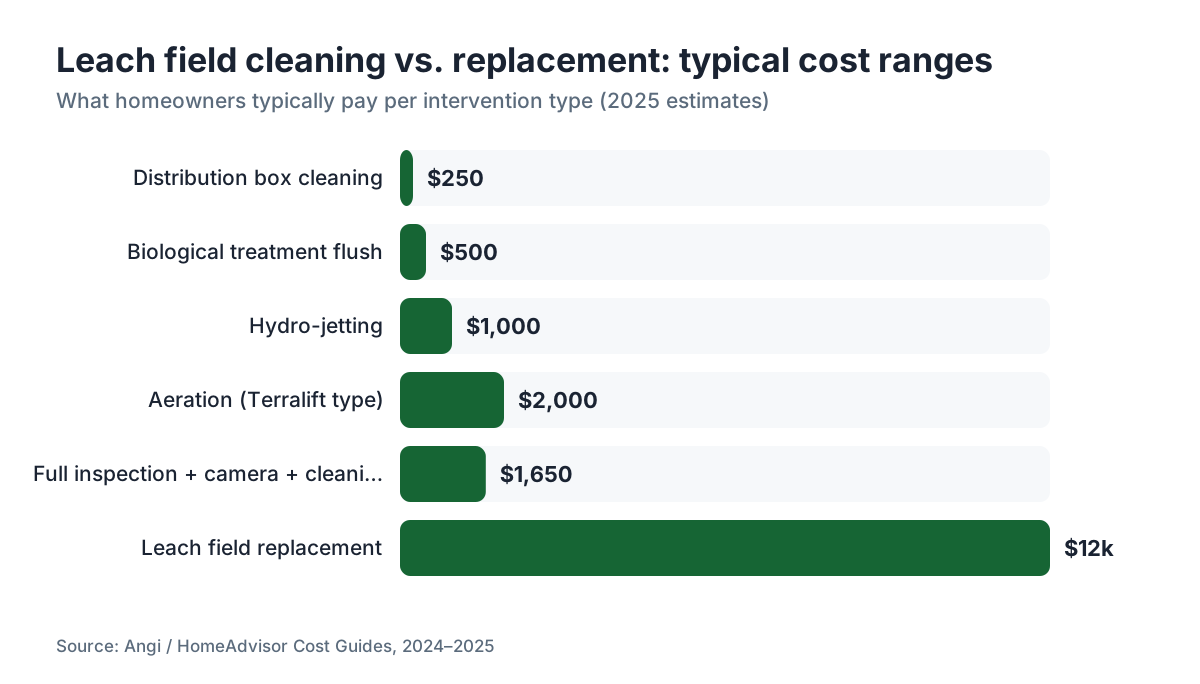
Cost depends on the method, the field size, how hard the access is, and your region. Here's a realistic range table based on typical contractor pricing as of 2025.
| Method | Typical cost range | Best for |
|---|---|---|
| Hydro-jetting | $500 to $1,500 | Root intrusion, solid buildup |
| Distribution box cleaning | $150 to $350 | Clogged inlet/outlet |
| Aeration (Terralift type) | $1,000 to $3,000 | Compacted soil, partial biomat |
| Biological treatment (professional flush) | $200 to $800 | Post-jetting maintenance |
| Full inspection + camera + cleaning | $800 to $2,500 | First diagnosis, unknown cause |
| Leach field replacement | $5,000 to $20,000+ | Fully failed system |
The replacement row is the one that anchors the decision. If cleaning costs $1,500 and buys you two more years, and replacement costs $10,000, cleaning is often worth one shot. If cleaning costs $3,000 and the field is saturated clay that never had adequate perc to begin with, you're setting money on fire. [7]
Get at least two quotes. Ask each contractor what diagnostic they'll run first. Check your state health department's list of licensed installers before you hire. Many states require a certified onsite wastewater professional for anything past simple maintenance. [6]
Can you clean a leach field yourself?
Partly, yes. Fully, no.
You can flush biological treatments through the toilet or pour them into the septic tank cleanout. You can clear brush off the field surface to help evapotranspiration. You can fix a running toilet or cut water use, which is one of the most effective things anyone can do. You can lightly flush a cleanout pipe with a garden hose, though that does close to nothing for a serious biomat problem.
What you can't safely do at home is hydro-jet the distribution pipes, probe the soil with a Terralift tool, or diagnose why the field is failing without a camera. Jetting takes 1,500 to 4,000 PSI, and cracking old perforated pipe makes everything worse. The aeration probe is specialized pneumatic gear. Guessing at the cause wastes the whole effort.
There's a permit angle too. Some states treat any real work on a septic absorption system as a regulated activity. In Massachusetts, Title 5 governs onsite systems and requires a licensed inspector before major repair work. [6] Check your state environmental agency before you hire a contractor who can't show you a license.
The strongest DIY lever is upstream. Keep the tank pumped every 3 to 5 years (how often to pump septic tank has the full breakdown), keep grease out of the drain, and fix leaks fast. Prevention is cheaper than any cleaning service you'll ever buy.
How do you know if cleaning worked or if replacement is the only answer?
The clearest good sign after a cleaning is that standing water or wet spots in the yard clear up within a few days and stay gone. Sluggish drains inside speed back up. The distribution box shows effluent spreading evenly again instead of pooling in one trench.
If the field re-saturates within weeks, the soil is probably compromised past what surface cleaning can reach. A perc test (soil percolation test) run by a licensed site evaluator tells you whether the native soil can still take the hydraulic load. If it can't, replacement or an alternative system is the road ahead.
Some homeowners get 5 to 10 more years from a cleaned field, especially when the failure was caught early and the cause was biomat rather than structural soil collapse. Others pay for cleaning and replace the field six months later anyway. Nobody has good population-level data on cleaning success rates. The closest thing we have is contractor experience, which swings all over the place.
Here's the honest framing. Cleaning is a reasonable first attempt on a system under 25 years old, where the soil passed its original perc test, and where you've pinned down a fixable cause like overloading or a skipped pump-out. On a 40-year-old system in marginal soil, cleaning is usually just postponing the replacement conversation.
What happens during a professional leach field cleaning service?
A thorough job runs through several steps, and knowing them tells you whether a contractor is cutting corners.
First, the contractor locates the distribution box and the inspection ports for each trench. If your system has no inspection ports, a good contractor recommends adding them. They make every future service faster and cheaper. [2]
Next, the tank gets pumped before field work starts. Running clean water, or no water, through the system during jetting changes how far the pressure and cleaning solution reach. See septic tank pump out for what that step involves.
Then the distribution box gets cleaned and inspected. It's common to find a cracked or tilted box that's been feeding effluent unevenly, drowning one trench while the others sat dry. Sometimes fixing the box is all the field needed.
For hydro-jetting, the operator runs a pressurized nozzle through each perforated pipe, working from the far end of the trench back toward the distribution box. Debris flushes back into the tank, which gets pumped again if a lot of solids come out.
For aeration, the technician inserts a probe every few feet along each trench and injects air at high pressure, sometimes with gypsum or organic matter to keep the new channels open.
Last, a camera pass through the pipes confirms they're clear and undamaged. If a camera inspection isn't part of the service, ask why not. Damaged pipe left in place re-fails fast.
Operators juggling multiple service calls, and trying to track inspection findings, scheduling, and follow-up on field restorations, may find a platform like SepticMind keeps job records and customer communication organized across a fleet of techs.
Does cleaning a leach field void any permits or warranties?
Cleaning by a licensed contractor generally does not void an existing system warranty or permit standing. Unpermitted work is a different story, and it can bite you later when you sell the house or file an insurance claim.
In most states, routine maintenance like tank pumping and pipe jetting is exempt from permitting. But if a contractor modifies the distribution system, adds inspection ports, or installs any new material, a permit may be required. [6] The threshold shifts from one jurisdiction to the next.
On the real estate side, many states require a septic inspection at point of sale. If records show the field was "cleaned" but no permitted repair is on file, a buyer's inspector may flag it. Keep every service receipt and every piece of contractor paperwork. That paper trail protects you.
Check your county health department or state environmental agency for the rules where you live. Links to state onsite wastewater programs run through the EPA's SepticSmart resources. [2]
What should you do after leach field cleaning to keep it working?
The field is clean. Here's how to stay out of the same hole two years from now.
Pump the tank on schedule. For four people on a 1,000-gallon tank, that usually means every 3 to 5 years. [3] Solids overflowing into the field are the main driver of biomat. This one habit matters more than any additive or treatment you can buy. Book a septic tank cleaning with every pump-out.
Cut the hydraulic load. Space laundry across the week instead of six loads on Saturday. Fix leaking toilets. A flapper that runs nonstop can dump 200 gallons a day into your system, which is about what a whole extra person adds. [3]
Keep the surface clear and dry. Grass over the field is ideal because the roots stay shallow. Keep trees 20 to 30 feet away. Don't park cars or store heavy equipment on the field. Don't route roof runoff or surface drainage onto it.
Have the distribution box inspected every time you pump. It's a 10-minute add-on that catches uneven loading before it wrecks a trench.
Add risers and access ports if your system doesn't have them. Future pumpings and cleanings get faster and cheaper, and a tech can do a visual check without digging.
For the wider picture of routine upkeep, septic tank pumping covers the full maintenance cycle.
How does leach field cleaning compare to full replacement?
This is the decision most homeowners are really trying to make.
Full leach field replacement costs $5,000 to $20,000 depending on system size, soil, whether engineered fill or a mound system is needed, and local labor rates. In areas with steep permitting costs and difficult soil, replacement runs $25,000 to $40,000. [7] That range for a new system install is broken down further at cost to install septic system.
Cleaning costs $500 to $4,000 and, at best, buys 5 to 15 more years of field life. At worst it buys months, and you spend the replacement money anyway.
The framework I'd use:
- System under 20 years old, original soil passed perc, clear cause like overloading or missed pump-outs: clean first.
- System over 30 years old, clay or failing soil, no single obvious cause: get a licensed site evaluator's opinion before cleaning. The money may go further toward a replacement design.
- Field is saturated and sewage is surfacing: pump the tank now (septic tank pumping), stop all non-essential water, and call a licensed professional. In most jurisdictions this is a public health problem, not a home repair.
A septic system repair assessment from a licensed engineer or certified installer is worth the $200 to $500 it usually costs before you commit to either cleaning or replacement on a system showing serious symptoms. The EPA notes that a "properly designed, installed, and maintained" system can run for decades, while a poorly maintained one often fails in under 25 years. [1]
Service operators making these calls across a customer base can use SepticMind's operations software to track system age, service history, and follow-up scheduling so nothing slips.
Are there alternative systems if leach field cleaning doesn't work?
When a conventional absorption field can't be brought back, engineered alternatives exist. They cost more upfront, and they're built for sites where standard soil absorption fails.
Mound systems put the absorption bed above grade in imported sand fill, which gives effluent enough treatment depth even where the water table is high or the native soil is too dense. They're common in Wisconsin, Minnesota, and other states with tough soil profiles. [8]
Drip irrigation systems spread effluent through small-diameter tubing over a large area at a slow rate the soil can absorb. They need a pump, filters, and more upkeep than a conventional system, but they work on sites that would otherwise need a mound.
Aerobic treatment units (ATUs) treat effluent to a higher standard before it hits the soil, which allows a smaller, more forgiving absorption area. Some states require ATUs on sensitive sites near water bodies or with tight setbacks. [6]
The right alternative depends on your lot size, setbacks, soil evaluation, and local code. A licensed site evaluator or engineer runs a formal site assessment and tells you which options are approved where you live. Find licensed professionals through your state's onsite wastewater or environmental health program.
Frequently asked questions
How often should a leach field be cleaned?
There's no fixed cleaning schedule the way there is for pumping a tank. Most fields never need active cleaning if the tank is pumped every 3 to 5 years and water use stays reasonable. Slow drains, wet spots over the field, or sewage odors are your signal to inspect. Some contractors suggest a preventive jetting every 10 to 15 years on older systems, but the evidence for that specific interval is mostly anecdotal.
Can I use additives or enzymes to clean a leach field myself?
You can flush enzyme or bacterial additives through the toilet, and they won't harm the system. But independent research, including a University of Minnesota Extension review, found no controlled evidence that bacterial additives restore a failing leach field on their own. They may support a healthy system as a supplement to good maintenance. They're no substitute for pumping the tank or fixing the root cause of a failing field.
What are the signs that a leach field needs cleaning or repair?
The common signs are slow drains across the house (more than one fixture), gurgling in the plumbing, sewage odors inside or out, and wet or spongy ground over the drain field. Bright green lush grass over the field in dry weather is another tell: effluent is reaching the root zone. Any of these warrants a professional inspection before the problem grows or turns into a health hazard.
Does hydro-jetting damage old perforated pipe in a leach field?
It can, especially clay tile or old bituminous fiber pipe that's been buried 30-plus years. A good contractor cameras the pipe before jetting to check its condition and dials the pressure to match. Modern PVC perforated pipe handles jetting fine. If the camera shows cracked or collapsed sections, those need repair or replacement before jetting, because high pressure widens existing fractures.
How long does leach field cleaning take?
A straightforward hydro-jetting job on a two- or three-trench system usually takes 2 to 4 hours including setup. Add time for tank pumping before and after. A Terralift-style aeration treatment runs longer because the tech probes every 3 to 4 feet along each trench, so a 400-square-foot field can eat a full day. Camera inspections at start and finish add time, but the diagnostic value is worth it.
Will my homeowner's insurance cover leach field cleaning or replacement?
Standard homeowner's policies usually exclude septic failures from routine wear and deterioration. Some cover sudden accidental damage, like a vehicle crushing the pipes, but not gradual failure. A separate septic rider or a home warranty plan may cover part of the cost. Read the policy language closely: coverage definitions vary a lot between insurers, and 'septic system coverage' in a home warranty often excludes the absorption field.
How do I find a licensed leach field cleaning contractor?
Start with your state's environmental health or onsite wastewater program website, which usually lists licensed installers and service providers. The National Onsite Wastewater Recycling Association (NOWRA) keeps a member directory. Skip any contractor who quotes a cleaning without proposing an inspection first, and ask directly whether they hold the state license required for drain field work where you live, since requirements vary.
Can tree roots cause permanent damage to a leach field?
Yes. Roots that have grown in perforated pipe for years can break joints, crush older clay tile, and compress the gravel bed in the trench. Jetting removes the roots inside the pipe, but it doesn't kill the root system, so they grow back. If the source tree is close enough to keep sending roots, you may need an annual copper sulfate root treatment in the pipes, or removal of the tree, to stop re-blockage.
Is it safe to be in the yard during or after leach field cleaning?
During jetting, keep people and pets away from the work area, because pressurized water and wastewater can surface through cleanout or inspection ports. Once the job is done and the contractor confirms the system drains properly, the field surface is generally safe to walk on. If sewage surfaced before the cleaning, treat that area as contaminated: limit contact, wash hands well, and let the pro advise on any surface cleanup.
What's the difference between cleaning the septic tank and cleaning the leach field?
Septic tank cleaning, also called pumping, removes accumulated solids (sludge and scum) from the tank itself. It has no direct effect on the field pipes or soil. Leach field cleaning targets the pipes, the distribution box, and sometimes the soil in the trenches. The two are linked: an unpumped tank is the leading cause of field problems, so tank pumping is always the first step before any field cleaning.
What permits do I need to clean or repair a leach field?
Requirements vary by state and county. Routine maintenance like tank pumping and pipe jetting is permit-exempt in most jurisdictions. Any change to the absorption area, adding new pipe, altering the distribution box, or installing a replacement field almost always needs a permit from the local health or environmental department. Some states, including Massachusetts under Title 5, require a licensed inspector for any significant repair. Check with your county health department before starting.
How do I know if my leach field has completely failed and can't be cleaned?
A fully failed field usually shows sustained surfacing of sewage that doesn't clear after the tank is pumped, sewage backing into the lowest drains in the house, and a soil evaluation confirming the native soil can no longer absorb effluent at an acceptable rate. A licensed site evaluator can run a percolation test and soil assessment to confirm. If the soil can't pass a perc test, cleaning won't restore function and replacement is the practical answer.
Can a leach field recover on its own if given time to rest?
Sometimes, yes. If the cause was biomat from a stretch of heavy use or a missed pump-out, resting the field for 6 to 12 months while using an alternative or secondary field lets the anaerobic biomat oxidize and partially break down in the presence of air. This works best where the soil itself is structurally sound. It won't work where the native soil has physically collapsed, compacted under vehicle loads, or was never fit for absorption.
Sources
- EPA, How Your Septic System Works: Biomat formation and soil treatment process in conventional septic absorption systems; system lifespan under proper vs. poor maintenance
- EPA SepticSmart Program: Infrequent pumping named as leading cause of premature drain field failure; inspection port recommendations
- EPA, Septic System Maintenance: Recommended pumping frequency of 3 to 5 years for average household; continuous toilet leaks adding significant daily water volume
- Angi, Cost to Clean a Drain Field: Hydro-jetting cost range of $500, $1,500 for leach field pipes
- University of Minnesota Extension, Septic System Owner's Guide: No controlled trial showing bacterial additives can replace mechanical cleaning or proper maintenance
- Massachusetts DEP, Title 5 Onsite Septic Regulations: State licensing requirements for septic repair work and reserve area requirements under Title 5
- Angi, Cost to Replace a Septic System: Leach field replacement cost range of $5,000, $20,000 or more depending on soil and system type
- University of Wisconsin Extension, Mound System Fact Sheet: Mound systems used in Wisconsin, Minnesota, and similar states for sites with high water tables or poor native soil
- EPA, Septic System Care and Maintenance: Properly designed, installed, and maintained systems can function for decades; poorly maintained systems often fail in under 25 years
- National Environmental Services Center (NESC) at West Virginia University, Septic System Fact Sheet: Reserve drain field area requirements and alternative treatment system options for sites with failing absorption fields
Last updated 2026-07-09