How long do septic tanks last? Lifespans by material and use
By the SepticMind Editorial Team
TL;DR
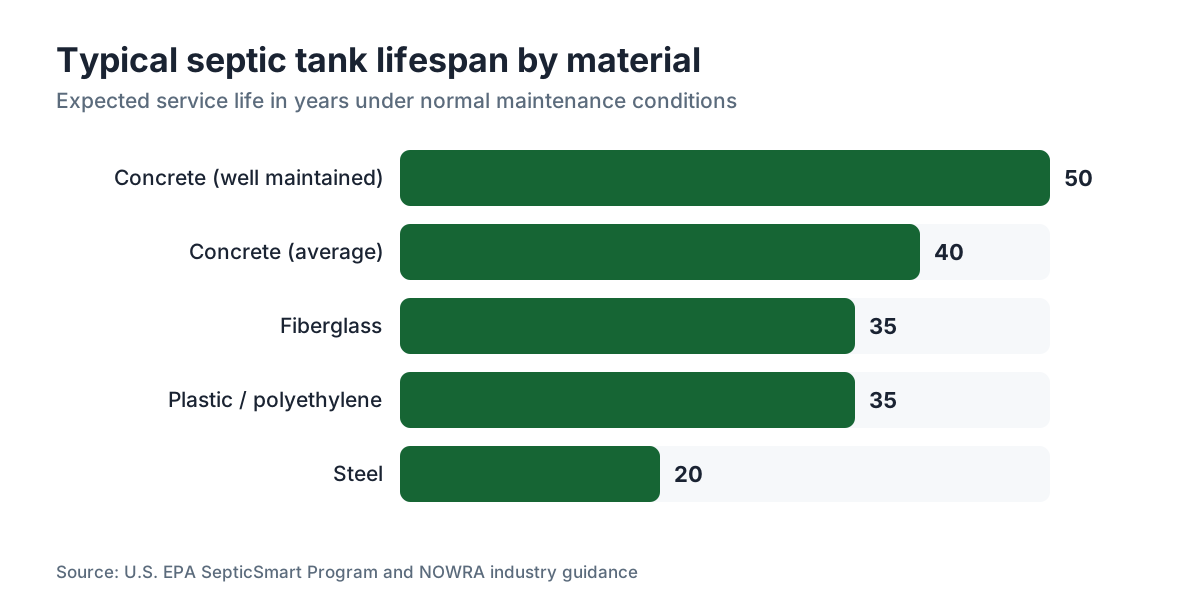
- A concrete septic tank lasts 40 to 50 years with normal use and routine pumping.
- Plastic and fiberglass tanks run 30 to 40 years.
- Steel tanks fail in 15 to 25.
- Poor maintenance, acidic soil, and heavy water loads can cut those numbers nearly in half.
- The drain field almost always fails before the tank does.
How long does a septic tank last on average?
A concrete septic tank lasts 40 to 50 years with normal use, and plenty of well-maintained ones push past 60 without structural failure. That is the short answer. The longer one depends on what the tank is made of.
Concrete makes up the majority of installed tanks in the United States. Plastic (polyethylene) and fiberglass tanks are newer, and manufacturers rate them at 30 to 40 years. Real-world data past 30 years is thin, because most of those installs are that recent [1].
Steel is the outlier. It rusts. Steel tanks were common before the 1970s, and most fail structurally within 20 to 25 years, some in 15 [2]. If your home was built before 1975 and nobody has confirmed the tank material, assume steel until you prove otherwise.
Here is the part people miss. The tank is only one piece. The full system, tank plus drain field plus distribution box, tells a different story. The EPA estimates the average lifespan of a conventional septic system at 25 to 30 years, because drain fields fail well before concrete tanks do [1]. You can have a perfectly sound tank sitting on top of a dead leach field. So when someone asks how long a septic system lasts, the honest answer is often "as long as your leach field holds up."
Nobody keeps a national database tracking individual tank failures by age. The ranges above come from state extension guides, EPA guidance, and decades of installer and pumper reports in trade literature.
What factors most affect how long a septic tank will last?
Material sets the starting point. It does not set the finish line. These are the things that actually move the number.
Soil chemistry and water table. Acidic soils corrode concrete. A pH below 5.5 speeds the breakdown of Portland cement, which is why tanks in parts of the Southeast and Pacific Northwest show corrosion earlier than tanks in the neutral soils of the Midwest [3]. A high water table can float or shift a polyethylene tank if it sits empty or gets pumped down too far. That movement stresses the inlet and outlet pipe connections.
Pumping frequency. This is the single biggest thing you control. Sludge and scum that build too high push solids straight into the drain field. The EPA's SepticSmart program recommends pumping every 3 to 5 years for a typical household [1]. The real interval depends on tank size and how many people live there. A 1,000-gallon tank serving four people should be pumped closer to every 3 years. Run longer and you strain the tank and the field both. See how often to pump septic tank for a size-by-household chart.
What goes down the drain. Non-biodegradables, grease, and heavy garbage disposal use all raise solids loading. Harsh chemical drain cleaners kill the bacteria that break waste down, so more raw solids pile up. Several state extension services flag garbage disposal use as a real factor in early drain field failure [4].
Root intrusion. Roots chase moisture. Give them time and they find tank seams, inlet baffles, and outlet pipes. A hairline crack in a concrete lid is an open door. Keep large trees at least 20 feet from the tank, and put willows and silver maples farther out than that.
Installation quality. A tank set in poorly compacted backfill settles unevenly. Cracked pipes, misaligned baffles, or a lid that never sealed right all cut life short no matter what the tank is made of. That is why a septic tank inspection at purchase or every 3 to 5 years pays off. It catches problems while they are cheap, not after a collapse.
Household size versus tank size. Undersized tanks fail faster, full stop. A 750-gallon tank serving six people works twice as hard as it was built to. Most state codes now set minimum tank size by bedroom count, usually 1,000 gallons for a 3-bedroom home, but older systems were sized under older rules [5].
How long does each type of septic tank last?
Concrete lasts longest, steel shortest, and the material's main enemy tells you why. Here is how the four common tank materials compare against the failure modes that end them.
| Material | Typical Lifespan | Main Failure Mode | Notes |
|---|---|---|---|
| Concrete | 40-50 years | Corrosion, cracking, root intrusion | Most common; can exceed 50 yrs with good conditions |
| Fiberglass | 30-40 years | Joint and inlet/outlet stress, flotation | Lighter; good for high water table sites |
| Plastic (polyethylene) | 30-40 years | Deformation under traffic loads, flotation | Never install under driveways without load-rated lid |
| Steel | 15-25 years | Rust and structural collapse | Largely obsolete; replace if found |
Concrete wins on mass and compression strength. It does not float. It handles vehicle loads when it is properly reinforced. Its weakness is chemistry: hydrogen sulfide gas from anaerobic decomposition reacts with moisture at the waterline to form sulfuric acid, which eats concrete from the inside out. Tanks with good baffles see less gas at the walls, which is one more reason to replace a rotted baffle instead of ignoring it.
Fiberglass handles acidic soils better than concrete and drops into tight access sites more easily. The weak points are the fittings. The shell is stiff and the fittings are cast in, so ground movement stresses those connections. A good installer packs the surround correctly to hold differential settling down.
Polyethylene tanks are the most common new residential install in a lot of markets, because they are cheap and fast to set. They work fine when the site suits them. They do not belong under driveways or in flotation-prone soil unless the installer takes specific steps to anchor them.
Does a new septic tank installation actually last longer than an old one?
A new tank usually starts with better bones, but installation quality decides the outcome. Precast concrete producers now follow ASTM C1227, which sets standards for wall thickness, reinforcement, and watertightness [6]. Most states have adopted minimum rules that reference or mirror that spec. An old tank built before those standards may have thinner walls, lighter rebar, or a weaker cement mix.
Here is the catch. A new tank installed carelessly fails faster than an old tank that got looked after. At the margin, installation quality beats manufacturing quality. If you are buying a home with a recently replaced tank, ask for the permit and inspection records. A tank replaced without permits may have been set wrong, or sized for a smaller household than yours.
For cost context on a new system, the cost to install septic system and cost to put in a septic tank articles have current regional ranges. New concrete tanks commonly run $700 to $2,000 for the tank alone, before excavation, permits, or drain field work.
What are the signs a septic tank is failing or near end of life?
Some signs shout. Others whisper for years before actual failure, which is your window to fix things cheaply.
Slow drains and gurgling pipes at more than one fixture point to a full tank or a blocked outlet. Sewage odors indoors or in the yard near the tank are a reliable early flag. Wet, spongy ground or oddly green grass over the drain field means effluent is surfacing, which is both a health hazard and a sign the field is saturated [1].
Inside the tank, a pumper or inspector looks for cracked walls or floor, a corroded or missing inlet baffle (which lets solids jet into the field), a damaged outlet baffle or tee (which lets floating scum escape), and root intrusion. A concrete tank with surface spalling at the waterline is in the early stage of sulfuric acid corrosion. That is not immediate failure. It is a clock you are now watching.
A steel tank near or past 20 years old should be physically inspected before any real estate transaction. Pumpers have seen steel lids that look solid from above and crumble underfoot. That is a fall-through hazard, and it is more common than most homeowners think.
If you are seeing any of this, septic tank repair covers what is fixable and what warrants full replacement. For the system as a whole, septic system repair handles drain field and distribution box problems that often get blamed on the tank.
How does maintenance affect how long a septic tank lasts?
Routine maintenance is the closest thing to a longevity guarantee a septic tank has. The core tasks are simple.
Pump on schedule. The EPA SepticSmart program states: "Have your septic system inspected by a licensed professional every three years and have your tank pumped by a licensed professional every three to five years." [1] That is the federal guidance, and most state onsite wastewater codes echo it. Skip pumping for 8 or 10 years and you do more than risk a backup. You push partially digested solids into the drain field and clog the soil in ways that are expensive or impossible to reverse.
Inspect the baffles at every pump-out. Inlet and outlet baffles cost $50 to $150 in materials, and they protect parts that cost thousands. Ask your pumper to confirm baffle condition every service.
Keep records. A log of pump dates, sludge depths, and repairs pays off at resale and lets you spot a trend before it turns into a crisis. SepticMind's homeowner tools let you log pump dates and set reminders, which is exactly the kind of low-effort habit that adds years to a system.
Do not drive over the tank. Traffic loads crack lids and compress the soil around the tank, stressing the inlet and outlet connections. Mark the tank location and keep vehicles off it.
Water use matters too. A household sending 150 gallons a day into a 1,000-gallon tank gives solids time to settle and bacteria time to work. Send 400 gallons a day through the same tank and you short-circuit the process. Fix leaking toilets and faucets. A single running toilet can add 200 gallons a day to your system load [4].
How long does a septic tank last in different states or soil types?
There is no national number, and anyone who hands you one without qualifying it is guessing. Regional variation is real and it matters.
In Florida, Louisiana, and coastal Georgia, high water tables and corrosive sandy soils shorten concrete tank life and make flotation a real concern for plastic and fiberglass tanks. Florida's state code (Chapter 64E-6, Florida Administrative Code) sets tank construction requirements that go past the federal baseline [7].
In the arid Southwest, soil chemistry runs alkaline, which is friendly to concrete. Low groundwater lets drain fields work well for decades, so the tank often outlasts the field by years.
New England is its own risk profile: rocky soil that makes replacement hard, cold winters that slow bacterial activity during freezes, and old housing stock with lots of pre-1970 steel tanks still in the ground. Massachusetts runs one of the more detailed state septic codes in the country, Title 5 (310 CMR 15.000), which requires inspection at property transfer and sets tank age and condition standards that trigger required upgrades [8].
So here is the takeaway. Your local county extension service or state environmental agency has more useful guidance than any national average. Most extension services publish guides tied to local soil and climate. The University of Minnesota Extension, for one, has detailed guidance on septic performance in cold climates [4].
If you are buying a home, the septic tank inspection is not optional. It is how you find out which end of the lifespan range you are standing on.
When should you replace a septic tank versus repair it?
Repair wins when the tank structure is sound and the problem is isolated. A cracked baffle, a leaking lid, or a damaged outlet pipe are all fixable without touching the tank itself. Even a small crack in a concrete wall can sometimes be patched with hydraulic cement if the structure is still there.
Replacement wins when the tank has collapsed or is close to it (steel tanks past 20 years often land here), when concrete walls show deep corrosion or spalling that breaks watertightness, when root intrusion has fractured the shell, or when the tank is just too small for the household and there is no practical way to enlarge it.
One middle path gets overlooked: tank lining. A concrete tank with internal corrosion can sometimes be relined with an epoxy or polyurea coating, adding 10 to 20 years. It is not available everywhere and needs a specialist, but it costs less than full replacement and makes sense for a structurally sound tank in a spot where excavation is expensive.
Before you assume replacement, get the tank pumped and inspected. A lot of apparent "tank failures" are actually failed outlet baffles or crushed outlet pipes, problems that cost a few hundred dollars. The septic tank repair guide walks the repair-versus-replace call in detail.
For a full septic tank pump out, budget $300 to $600 in most markets, higher for rural or difficult-access sites. That is trivial next to a $5,000 to $15,000 tank replacement, or the $10,000 to $30,000 a new drain field can run.
How long does the drain field last compared to the tank?
Shorter, almost always. The drain field is the part of a conventional system most likely to decide when the whole thing dies. The EPA puts average system lifespan at 25 to 30 years largely because of drain field failure, not tank failure [1].
Drain fields fail because a biomat, a layer of anaerobic bacteria and waste products, builds up at the soil interface and blocks infiltration. Too much water, solids escaping the tank, and certain soil types all speed that biomat along. A well-run system with sane loading can see a drain field last 25 to 40 years. An overloaded or neglected one can fail in 10.
This is why everything that extends tank life extends field life. They are not separate systems. A tank that goes 10 years between pumpings is feeding solids to a drain field that was never built to handle them.
The leach field article covers failure modes, rehab options, and replacement costs in depth. Drain field replacement is nearly always the most expensive single repair in the septic world.
What do homebuyers need to know about septic tank age and lifespan?
If you are buying a home on septic, put the system on your due diligence list right next to the roof and foundation. Here is the practical checklist.
Find the material and install year. The permit record at the county health department usually has both. If the permit is gone, a pumper who opens the tank can often give an educated read on material and condition.
In states with mandatory inspection at transfer (Massachusetts Title 5 is the most cited example [8]), you get a formal report. In states without that rule, hire an independent inspector anyway. Do not lean on the seller's last pump receipt.
A tank within 5 years of typical end-of-life should be priced into the deal. A 45-year-old concrete tank with no inspection records is not the same asset as a 20-year-old concrete tank with regular pump logs.
Septic systems are not disclosed with the same rigor as structural defects in every state. Ask directly, in writing. A septic tank inspection before closing is cheap insurance against a five-figure surprise in year two.
For a new septic tank installation after purchase, knowing what you are buying before you sign saves a lot of regret.
How can you get the most years out of your septic tank?
The habits that maximize septic tank life are not complicated. They just get ignored until something backs up into the basement.
Pump on schedule. For most households that means every 3 to 5 years. See septic tank pumping for what a proper service includes and what to ask your pumper. At every pump, confirm the baffles are intact and the walls show no new cracking.
Watch your water use. Spread laundry across the week instead of running six loads on Saturday. Fix dripping faucets and running toilets the day you notice them. Every unnecessary gallon competes with the biological process that makes the whole thing work.
Do not flush or drain what does not belong. Wipes (even the "flushable" kind), feminine hygiene products, medications, cooking grease, paint, and solvents all wreck either the bacterial ecosystem or the tank structure. Flushable wipes alone have caused enough field failures that several state agencies have published warnings about them [4].
Protect the ground around the tank. No vehicles, no heavy equipment, no deep-rooted plantings within 20 feet. Grade the area so surface water runs away from the lid.
Keep good records. A simple log of pump dates, observations, and repairs is worth more than it looks. When you hire a new pumper or sell the house, that log tells a story that adds real money to the property.
SepticMind's maintenance tracking tools are built for exactly this, useful whether you own one system or run a service company managing hundreds of customer accounts.
And budget for the eventual replacement instead of getting ambushed by it. A concrete tank installed in 1985 is past 40 now. It might be fine for another decade, or it might need replacement in three years. A septic tank cleaning and inspection this year tells you where you actually stand.
Frequently asked questions
How long does a septic tank last?
Concrete tanks last 40 to 50 years on average, sometimes longer with good maintenance and favorable soil chemistry. Plastic and fiberglass tanks run 30 to 40 years. Steel tanks, common before the 1970s, typically fail within 15 to 25 years from rust. The drain field usually fails before the tank, bringing practical system lifespan to 25 to 30 years per EPA estimates.
How long will a septic tank last if I never pump it?
A tank that is never pumped fails far earlier than its structural lifespan. Sludge builds until solids overflow into the drain field and clog it permanently. A drain field that fails from solids loading often cannot be rehabilitated. You might get 10 to 15 years of function before a very expensive failure, versus 40 to 50 years with routine pumping every 3 to 5 years.
How long should a septic tank last before needing replacement?
A concrete tank should reach 40 years before replacement is seriously on the table, assuming it was installed to code, pumped regularly, and sits in reasonably neutral soil. If the system was neglected, undersized, or in highly acidic soil, expect less. Replacement is usually triggered by structural failure or collapse more than by age alone.
Do plastic septic tanks last as long as concrete ones?
Not quite. Plastic polyethylene tanks run 30 to 40 years versus 40 to 50 for concrete. Plastic handles acidic soils better but is vulnerable to flotation in high water table conditions and can deform under vehicle or heavy soil loads. In the right site with proper installation, a plastic tank performs reliably for its rated life.
How do I know if my septic tank is failing?
The common signs are slow drains throughout the house, gurgling pipes, sewage odors in the yard or near the tank, and wet or unusually green grass over the drain field. Inside the tank, a pumper looks for cracked walls, corroded baffles, and root intrusion. Any of these signs warrant professional inspection before the problem gets worse and more expensive.
How often should a septic tank be pumped to maximize its lifespan?
The EPA recommends pumping every 3 to 5 years for a typical household. The right interval depends on tank size and number of people in the home. A 1,000-gallon tank serving four people should be pumped closer to every 3 years. Pumping on schedule is the single most effective thing you can do to extend both tank and drain field life.
Can a septic tank be repaired instead of replaced?
Yes, for many issues. Cracked baffles, damaged lids, and minor wall cracks are all repairable at modest cost. Severely corroded concrete, collapsed steel tanks, and tanks fractured by root intrusion usually need replacement. An internal epoxy or polyurea lining can add 10 to 20 years to a corroding concrete tank in some cases. Have the tank inspected before assuming replacement is necessary.
Does a septic tank last longer in some states or climates?
Yes. Alkaline soils in the arid Southwest are friendlier to concrete than the acidic soils of the Southeast or Pacific Northwest. Cold climates slow bacterial activity but do not typically shorten tank life if the system is installed properly. Coastal areas with high water tables create flotation and corrosion risks for non-concrete tanks. Your local county extension service or state environmental agency has region-specific guidance.
How long does a septic system last compared to just the tank?
The EPA estimates a conventional septic system lasts 25 to 30 years because the drain field typically fails before the tank. A concrete tank can stay structurally sound at 50 years while the drain field attached to it has been dead for a decade. Maintaining the tank extends field life too, since the biggest cause of early field failure is solids escaping a poorly maintained tank.
What is the lifespan of a steel septic tank?
Steel tanks typically last 15 to 25 years, with many failing earlier from rust. They were common in homes built before the 1970s and are now considered obsolete. A steel tank near or past 20 years old poses a physical collapse risk on top of a sewage risk. If a home has a steel tank, plan the replacement rather than defer it.
Should I replace a septic tank when buying a house?
Not automatically, but inspect it. Get the install year and material from permit records, then hire an inspector to assess condition. A structurally sound tank with good baffles and regular pump history may have 15 or 20 years left. A steel tank past 20 years, or a concrete tank showing active corrosion with no maintenance history, is a negotiating point or a replacement budget line.
Does using a garbage disposal shorten septic tank life?
It raises the solids load entering the tank, so you need more frequent pumping and the drain field faces higher organic loading. Several state extension services cite garbage disposal use as a factor in early drain field failure. It does not directly damage the tank structure, but it stresses the whole system and shortens practical service life if you do not bump up pumping frequency to compensate.
What is the average cost to replace a septic tank?
Tank replacement alone, concrete or plastic, typically runs $1,500 to $5,000 for the tank and installation in most U.S. markets, but that excludes excavation complications, permit fees, and any drain field work triggered by the same project. If the drain field also needs replacement, total costs commonly reach $10,000 to $30,000 depending on system size, soil, and local labor rates.
How do I find out how old my septic tank is?
Start with the county or local health department permit records. Most jurisdictions kept installation permits going back to the 1960s or 1970s. If permits are missing, a licensed pumper can often estimate tank age from construction style, material, and condition during a pump-out. The home's original building permit sometimes lists the septic system with an installation year.
Sources
- U.S. EPA, SepticSmart Program: EPA recommends pumping every 3 to 5 years and inspections every 3 years; estimates average septic system lifespan at 25 to 30 years
- U.S. EPA, Onsite Wastewater Treatment Systems Manual (EPA/625/R-00/008): Steel septic tanks are prone to corrosion and typically fail within 15 to 25 years
- North Carolina State University Extension, Septic System Owner's Guide: Acidic soils accelerate corrosion of concrete septic tanks; soil pH below 5.5 is a risk factor
- University of Minnesota Extension, Septic System Owner's Guide: Garbage disposal use increases solids loading; a running toilet can add 200 gallons per day to system load; flushable wipes cause field failures
- U.S. EPA, Septic System Design and Sizing: Minimum tank size requirements are typically 1,000 gallons for a 3-bedroom home under current state codes
- ASTM International, Standard Specification for Precast Concrete Septic Tanks (ASTM C1227): ASTM C1227 sets standards for wall thickness, reinforcement, and watertightness of precast concrete septic tanks
- Florida Department of Health, Chapter 64E-6 Florida Administrative Code, Standards for Onsite Sewage Treatment and Disposal Systems: Florida Chapter 64E-6 specifies septic tank construction requirements for high water table and corrosive soil conditions
- Massachusetts Department of Environmental Protection, Title 5 (310 CMR 15.000), Standards for the Siting, Construction, Inspection, Upgrade and Expansion of On-Site Sewage Treatment and Disposal Systems: Massachusetts Title 5 requires septic inspection at property transfer and sets tank age and condition standards that can trigger required upgrades
- Penn State Extension, Homeowner's Guide to Septic Systems: Concrete septic tanks can last 40 to 50 years or more with proper maintenance; lifespan varies by installation quality and soil conditions
- Virginia Cooperative Extension, Homeowner's Guide to Septic Systems: Routine pumping every 3 to 5 years is the most effective maintenance practice for extending septic system life
- University of Florida IFAS Extension, Septic Tanks and Drainfields: Drain fields in high water table environments are at elevated risk of failure; plastic tank flotation is a documented installation risk in Florida soils
- National Onsite Wastewater Recycling Association (NOWRA), Septic System Lifespan Data: Industry guidance supports 40-50 year concrete tank lifespan and 30-40 year plastic and fiberglass tank lifespan with normal maintenance
Last updated 2026-07-09