How far down is a septic tank buried?
By the SepticMind Editorial Team
TL;DR
- Most septic tanks are buried with the lid somewhere between 4 inches and 4 feet below grade.
- The 6 to 24 inch range covers most homes.
- Depth depends on local code, frost line, the slope of the inlet pipe, and the tank's own height.
- To find your tank's real depth, locate the access lid and measure from the lid top down to the floor.
How far down is a septic tank, really?
It varies more than most people expect. The lid of a typical septic tank sits anywhere from 4 inches to 4 feet below the soil surface, and both extremes are legal in different states and soils. [1] The common range is 6 to 24 inches below grade. That's what you'll find on most homes built in the last few decades.
The tank bottom sits deeper still. A standard single-compartment concrete tank runs about 5 to 6 feet tall, so if the lid is 12 inches down, the floor is roughly 6 to 7 feet underground. That number matters when a pumper truck figures out how much hose it needs.
Depth is not random. Local codes, frost lines, the elevation of your house's sewer outlet, and the slope of your yard all push the number up or down. A tank in northern Minnesota sits far deeper than one in central Florida, mostly because of freeze protection. [2]
What factors control how deep a septic tank is buried?
Five things set burial depth at install, and they push against each other in ways that catch homeowners off guard.
Frost depth. In cold climates, code requires the inlet pipe (the pipe carrying wastewater from your house to the tank) to sit below the local frost line, often 36 to 60 inches in northern states. [2] The tank follows that pipe elevation, so tanks in Minnesota or Maine are commonly 2 to 4 feet deep.
The slope of the inlet pipe. The pipe from your house drops about 1/4 inch per foot of run to drain by gravity. If the tank is 40 feet out and the house outlet sits 24 inches above grade, that fixed slope decides where the pipe hits the tank. The tank top lands wherever it must to meet that pipe.
Local health code minimums and maximums. Most state onsite wastewater codes set a minimum cover of 6 inches over the tank top and a maximum of 36 or 48 inches, because deeper tanks make access and inspection harder. The EPA's SepticSmart program stresses that accessible lids keep maintenance practical, which is exactly why some jurisdictions cap depth. [1]
Tank wall height. Concrete tanks are commonly 5 to 8 feet tall. Plastic and fiberglass tanks can be shorter. A shorter tank at the same inlet elevation gives you a shallower lid.
Site grading after install. This one gets missed. Plenty of tanks went in at a legal depth, then the homeowner added fill dirt, built a berm, or regraded the yard over the next decade. The tank didn't move. The soil above it did. That's why a neighbor might have an 8-inch lid while yours is 36 inches down.
The table below shows how frost depth, one of the biggest drivers, shifts by region. [2]
How does septic tank depth vary by region?
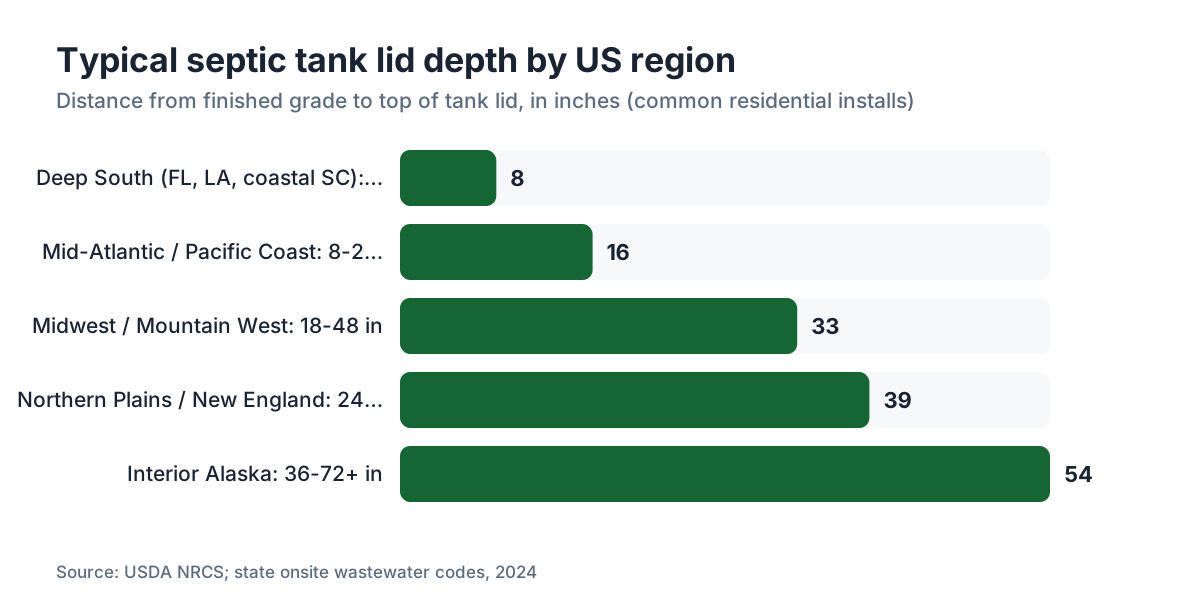
Frost depth is the dominant regional factor, and it swings hard across the country. The table below shows approximate design frost depths and what they usually mean for tank lid depth in residential installs. [2]
| Region | Typical Frost Depth | Common Tank Lid Depth |
|---|---|---|
| Deep South (FL, LA, SC coastal) | 0 to 6 inches | 4 to 12 inches |
| Mid-Atlantic / Pacific Coast | 12 to 24 inches | 8 to 24 inches |
| Midwest / Mountain West | 24 to 48 inches | 18 to 48 inches |
| Northern Plains / New England | 48 to 72 inches | 24 to 54 inches |
| Interior Alaska | 72+ inches | 36 to 72+ inches |
These are ballpark figures. Your county environmental health office or state onsite wastewater code holds the binding number for your area. [1] Don't use a neighbor's tank as your reference. Two lots a mile apart can carry different requirements if one is shaded or sits on a ridge.
States like Minnesota publish detailed onsite sewage treatment rules that spell out minimum cover, pipe burial, and inspection access. Those documents are the authority for homeowners in those states. [4]
How do you find out how deep your own septic tank is?
Start with your records. Most counties require a septic permit, and that permit file usually includes an as-built drawing showing tank location and sometimes elevation. Your county environmental health or planning department holds these; many post them online now. This is the fastest route, and it costs nothing.
If the records are lost or vague, probe. A soil probe or a thin metal rod pushed straight down over the tank hits the concrete lid with a resistance that feels nothing like soil. Once you find the lid edge, mark the rod at grade and measure to the tip for depth. Some people run a plumbing snake through a cleanout to get the tank direction, then probe from there.
Once the lid is open (yours or a pumper's), measuring depth is simple: drop a tape measure through the access port to the floor. A typical 1,000-gallon single-compartment concrete tank runs 5 to 6 feet from inlet to floor, though two-compartment and low-profile tanks can be shallower. [5]
If you're scheduling a septic tank pumping and the tank has never been located, say so when you call. A good pumper will probe and locate as part of the visit, sometimes free, sometimes for a small charge.
For a proper septic tank inspection, the inspector always locates and opens the tank, and the report should record lid depth. Keep that report.
Can a septic tank be too deep?
Yes, and it creates real problems. Past about 48 inches deep, routine maintenance gets noticeably harder. Vacuum trucks carry hose rated for 25 feet or more, so depth alone rarely stops a pump-out, but the extra reach costs money and the operator has less visibility and control. [6]
Deep tanks are also harder to inspect. A septic riser (the vertical extension pipe that brings access up near grade) costs $200 to $500 installed and fixes the depth problem for good, which is why most codes now require risers on new installs and push retrofits on old tanks. [7] If your lid is more than 12 inches down, a riser is worth the money. You'll pay less on every pump-out, inspectors do better work, and you catch a failure before it turns into a mess.
There's a structural angle too. Very deep tanks carry more soil pressure. If a tank wasn't designed for deep burial, that load can crack the walls or lid over time. Plastic tanks in particular carry rated burial depths. Exceed them and you void the manufacturer's specs and invite structural failure. [5]
Some jurisdictions cap maximum burial at 36 or 48 inches specifically over inspection access. If your tank sits deeper, your county may already require a riser at the next pump-out.
Can a septic tank be too shallow?
Shallow burial carries its own hazards. A lid sitting just 4 to 6 inches below the lawn is exposed to surface loading: vehicles, livestock, heavy equipment. Concrete lids crack under that kind of point load. Most codes require at least 6 inches of cover for this exact reason.
In cold climates, a very shallow tank can freeze, especially when the household isn't putting out much warm wastewater. Think of a vacation home sitting empty through January. Frozen tanks stop working and can crack.
Shallow tanks also take more hits from excavation. Landscapers, utility crews, and fence installers strike septic lids and risers every year because nobody checked records first. That kind of damage is a septic tank repair job running from a few hundred dollars for a cracked lid to thousands for a broken inlet baffle.
If you know your tank is shallow, mark it clearly, add a riser with a traffic-rated lid if vehicles ever cross that spot, and make sure anyone doing yard work knows where it sits.
Why does burial depth affect septic tank pumping cost?
A deep tank is more work to pump. The tech has to dig down to the lid when there's no riser, and that eats time and equipment. Digging 12 inches is a shovel job. Digging 36 inches can add an excavation charge on top of the base fee.
A septic tank pump out on a typical 1,000-gallon tank with the lid near grade runs roughly $300 to $600 in most US markets. [7] Add a locate-and-dig fee and that climbs to $450 to $800. If the pumper has to bring a mini-excavator because the lid is 4 feet down and hasn't been touched in 15 years, you could be looking at $800 to $1,500 or more depending on local labor.
The fix is a riser. Once it's in, every future pump-out is the easy version. Most pumpers will set one during the same visit for an added charge. Ask.
How often you pump is a separate question from depth, but they meet at cost. If you're paying a locate fee every 3 years, a $300 riser pays for itself in two cycles. More on timing in our how often to pump septic tank guide.
Does burial depth affect the drain field or leach field?
Tank depth and leach field depth are linked but set independently. The outlet pipe from the tank feeds the distribution box or manifold for the drain field, and that pipe also holds a gravity slope (1/8 to 1/4 inch per foot). So a deep tank generally pushes the drain field pipes deeper too, though trenches usually run 18 to 36 inches from grade to the top of the gravel bed. [8]
Some states cap trench depth because the soil bacteria that treat effluent need oxygen, and oxygen drops as you go deeper. The EPA and university extension guidance recommend keeping the bottom of absorption trenches within 18 to 30 inches of grade in most conditions for this reason. [1]
The depth relationships matter most during design and install. Once a system is in the ground, tank depth and drain field depth are largely locked unless you replace the whole thing. For a homeowner, knowing your tank depth helps explain why some repairs are more or less involved, but you can't easily change these depths after the fact.
If your system is aging and you're weighing a replacement, the full depth and layout picture is part of septic tank installation planning and the cost to install septic system.
How do professionals locate a buried septic tank?
There are several methods, and a good company uses more than one.
Record research comes first. The county permit file usually has a site plan. It's not always accurate, since contractors sometimes install off-spec, but it gives a starting point.
Pipe tracing is next. A camera or an electronic locating transmitter goes into the sewer cleanout and pushes toward the tank. A signal detector above ground follows it, marking the path on the lawn. That gives direction and rough distance; the depth reading comes from signal attenuation, and accuracy varies.
Probing is cheap and reliable once you're in the right area. A steel rod pushed in at 6-inch intervals hits the lid or the tank walls clearly. Experienced pumpers get fast at it.
Ground-penetrating radar (GPR) locates tanks without probing and gives an image of depth and shape. It shows up more in commercial or forensic work than routine residential service, but some inspection companies offer it. It's accurate to roughly plus or minus a few inches on depth.
SepticMind's operator tools include digital record logging, so a service company can pull prior visit data (lid location, depth, riser status) before the truck leaves the yard. That's useful for scheduling and for dodging billing surprises on deep or hard-to-reach tanks.
Once the tank is open, measuring is simple: a tape measure dropped through the port gives interior depth, and measuring from lid top to grade gives cover depth.
What should you do if your septic tank lid is near the surface?
A lid at or just below lawn level is handy for service but carries a few risks worth managing.
Make sure the lid is structurally sound and secured. A failed concrete lid that someone steps through is a serious injury hazard, and collapses do happen. The Consumer Product Safety Commission has documented deaths from septic structure collapses. [10] Look for cracks, crumbling edges, or a lid lifting off its ring. A cracked lid needs replacing before the next pump-out.
Mark shallow tanks clearly if vehicles or heavy equipment ever operate nearby. A riser with a traffic-rated lid (H-10 or H-20 load rating) is the right hardware wherever crossings are possible.
If the lid sits essentially at grade and you can see it, check that the seal between lid and rim isn't broken. A gap there lets surface runoff into the tank. That extra water never went through the house plumbing, so it dilutes the treatment process and can flood the drain field.
For septic tank cleaning, a near-surface lid is a gift: no digging charge, fast access, easy inspection. Just keep the hardware in good shape.
What are the code rules on septic tank burial depth?
There's no single federal depth code for septic tanks. The EPA sets broad guidance and funds state programs, but the actual numbers come from state onsite wastewater regulations and county health codes. [1] So you have to look up your own state's rules.
Still, common patterns run across most state codes:
Minimum cover is almost always 6 inches from the tank top to finished grade, though some states allow 4 inches for tanks with risers. [1]
Maximum cover ranges from 36 to 48 inches in most states. Anything deeper usually needs a variance or a special design.
Inlet and outlet pipe depth follows frost rules, which forces the tank to sit at a matching elevation.
Many states adopted or adapted tank material standards from the NSF/ANSI series and installation geometry from Ten States Standards, a widely cited interstate document for water and wastewater systems. [9]
The Minnesota Pollution Control Agency publishes one of the more detailed state rules (Minnesota Rules, Chapter 7080), setting minimum cover at 6 inches and maximum at 48 inches over tank components, with frost protection requirements for the north of the state. [4] In Minnesota, that document controls. Other states have equivalents.
For the binding rule in your county, call your county environmental health office or pull up your state's onsite wastewater or individual sewage treatment code.
What does burial depth mean for the cost to install a new septic tank?
Deeper install costs more, mostly from excavation. Digging a 5-foot hole for a standard tank is one thing. Digging to 8 or 9 feet, which happens where frost depths are extreme or the site has elevation constraints, means more machine time, more spoil to haul off, and sometimes shoring.
The cost to put in a septic tank runs roughly $3,000 to $10,000 for the tank component of a system, depending on size, material, site conditions, and burial depth. [7] Sites with hard depth requirements (rock ledge, high water table forcing minimum depth, deep frost lines) push toward the top of that range.
If you're planning, ask your installer exactly what burial depth your site needs and what drives it. Knowing whether depth is forced by frost code, site grade, or tank design can open options. A low-profile tank might hit the same capacity at a shallower burial depth, which cuts excavation cost.
Ask about risers at build time too. Adding them during the initial install costs $200 to $400 and saves money on every pump-out after. Retrofitting later costs $300 to $600 because the contractor has to dig back down to the tank top. [7]
Frequently asked questions
How far down is a septic tank lid typically?
The access lid on a residential septic tank usually sits 6 to 24 inches below grade in most of the country. In cold-climate states where frost rules push the inlet pipe deeper, lids at 36 to 48 inches are common. Tanks in the deep South can be as shallow as 4 to 6 inches. Your county permit records hold the actual depth for your system.
How deep is the bottom of a septic tank?
A standard 1,000-gallon concrete tank is roughly 5 to 6 feet tall inside. Add the burial depth of the lid to get the depth to the floor. If the lid is 18 inches below grade and the tank is 5.5 feet tall, the bottom sits about 7 feet underground. Larger tanks and two-compartment designs can go deeper.
Can I drive over my septic tank?
Avoid it unless the tank has a traffic-rated access lid (H-10 or H-20 load rating) and the tank itself was built for traffic loads. Standard residential concrete tanks and most plastic tanks are not rated for vehicles. Driving over them risks cracking the lid, damaging the inlet and outlet baffles, and compacting soil in ways that hurt the drain field.
How do I find my septic tank if I don't know where it is?
Start at your county environmental health office and ask for the septic permit file. It usually includes a site map. If records are missing, a pumper or inspector can trace the sewer pipe from your house cleanout, then probe the soil to find the lid. Ground-penetrating radar is another option. The tank is almost always within 10 to 25 feet of the foundation, along the sewer line direction.
Why would a septic tank be very deep, like 4 feet or more?
A few reasons: the house sewer outlet sits at a low elevation and forces the inlet pipe down; the site has a deep frost line requiring pipes below freezing depth; the yard was regraded or filled after install; or the original installer set the tank deeper than the minimum to match a specific inlet pipe slope. Tanks from the 1970s and earlier are frequently much deeper than modern installs.
Is it worth installing a septic riser if my tank lid is deep?
Almost always yes. A riser brings access up near grade so pumpers and inspectors don't have to dig. Installed cost runs roughly $200 to $600 depending on depth and materials. That charge usually pays for itself within two or three pump cycles through saved digging fees. It also lets you check the lid yourself without any digging.
How does frost depth affect how deep a septic tank is buried?
In cold climates, the inlet pipe from your house to the tank has to sit below the frost line so wastewater doesn't freeze in the pipe. Frost lines range from near zero in Florida to 72 inches or more in northern Minnesota. The tank inlet meets that pipe at its buried elevation, so the tank top lands at a depth that satisfies both pipe slope and frost protection.
What is the minimum depth a septic tank can be buried?
Most state codes set 6 inches of cover (soil over the tank top) as the minimum, though some allow 4 inches with a riser and secure lid in place. There is no single federal minimum; your state's onsite wastewater code is the binding source. Tanks shallower than about 6 inches are exposed to freeze damage in cold climates and physical damage from surface loading.
What is the maximum depth a septic tank can be buried?
Most state codes cap burial at 36 to 48 inches from grade to the tank top, mainly to keep the tank accessible for inspection and pumping. Deeper installs generally need a special permit or design variance. If your tank is deeper than 48 inches, check your local code; many jurisdictions now require a riser retrofit to restore accessible depth.
Does burial depth affect how often I need to pump the tank?
Depth doesn't change how fast a tank fills with solids; that comes down to household size and usage. But deep tanks cost more per pump-out because of digging fees, so some homeowners stretch intervals to dodge the cost, and that leads to system damage. The EPA recommends pumping every 3 to 5 years for most households, regardless of depth.
How do pumpers access a septic tank that is 3 or 4 feet deep?
For a deep tank without a riser, the pumper digs down to the lid (by shovel or machine, depending on depth), opens it, and runs the vacuum hose from the truck into the tank. Hose length is rarely the limit, since most trucks carry 25 or more feet. The digging labor and time drive the added cost. A riser fixes this for good.
Can I find my septic tank depth on my own without calling anyone?
You can start with public records. Many county environmental health offices post septic permit files online, and those often include a site sketch with the tank's position. If you find the lid or a riser cap, measure from the lid top to grade yourself with a tape measure. Measuring internal tank depth means opening the access port, which most homeowners should leave to a pro.
Does septic tank depth affect system performance?
Indirectly. A properly buried tank at any legal depth runs the same biological treatment. But extreme depth can stretch maintenance intervals (through cost), make inspections harder, and in very shallow burial, allow freezing. Drain field depth matters more directly to treatment, since aerobic soil treatment depends on oxygen levels that fall as you go deeper.
What happens if a septic tank is buried too deep over time from adding fill dirt?
The tank itself is usually fine, since concrete tanks are rated for soil overburden. The problem is access. A tank that was once 12 inches deep can end up 36 or 48 inches deep after a decade of landscaping fill. That drives up pumping costs and makes inspections harder. A riser restores near-surface access without disturbing the tank.
Sources
- EPA SepticSmart and Septic Systems program: Accessible lids and regular maintenance keep septic systems working; EPA recommends risers, absorption trench depth guidance, and pump-out intervals of 3 to 5 years.
- Minnesota Pollution Control Agency (Minnesota Rules Chapter 7080, subsurface sewage treatment systems): Minnesota sets minimum cover of 6 inches and maximum of 48 inches over tank components, with frost protection requirements.
- NSF International (NSF/ANSI standards for septic tanks): Plastic and fiberglass tanks have manufacturer-rated burial depth limits; exceeding them risks structural failure.
- National Onsite Wastewater Recycling Association (NOWRA): Deep tanks (more than 48 inches) create access challenges for pumping and inspection; risers are the industry-standard fix.
- Angi: Septic Tank Cost Guide: Septic tank pump-out costs $300 to $600 typically; riser installation $200 to $600; new tank installation $3,000 to $10,000 depending on site.
- University of Minnesota Extension: septic system resources: Drain field absorption trenches are typically 18 to 36 inches deep from grade to top of gravel; gravity slope requirements connect tank and drain field depth.
- Great Lakes-Upper Mississippi River Board, Recommended Standards for Wastewater Facilities (Ten States Standards): Ten States Standards, widely adopted, specifies installation geometry and pipe slope requirements that govern tank burial depth in participating states.
- U.S. Consumer Product Safety Commission (CPSC): CPSC has documented fatalities from collapses of septic tank lids and structures, supporting the need for sound, secured lids.
- Florida Department of Health: onsite sewage programs: Florida's warm climate and shallow water table result in very shallow septic installations, sometimes with minimal cover over tank tops.
Last updated 2026-07-09