How a perc test is done: the complete step-by-step guide
By the SepticMind Editorial Team

TL;DR
- A percolation test measures how fast water drains through soil to decide whether a septic drain field will work.
- A licensed evaluator digs test holes, saturates them over 24 hours, then times how many minutes it takes the water to drop one inch.
- Most counties approve a conventional system when the rate falls between 1 and 60 minutes per inch.
What is a perc test and why does it matter for septic systems?
A perc test, short for percolation test, measures how fast water moves through the soil on a specific piece of land. That rate tells a system designer and your local health department whether the ground can accept the liquid waste a septic system produces every day. Too fast and untreated effluent races past the soil bacteria before it gets clean. Too slow and the drain field backs up, surfacing in your yard or pushing sewage into the house.
The result gets written as a perc rate in minutes per inch (MPI). It describes how many minutes the standing water in a test hole takes to drop one inch. Most state codes set an acceptable window somewhere between 1 MPI and 60 MPI, though the exact cutoffs vary. Virginia, for example, accepts rates up to 90 MPI for certain alternative systems [1].
Without a passing perc test, most counties will not issue a septic permit. That makes the test a gate you have to pass to build a new home on rural land, to replace a failing system, or to subdivide a parcel. If you are buying raw land, the perc rate is one of the first numbers you want in hand.
Who is qualified to do a perc test?
In almost every state, a licensed soil scientist, registered sanitarian, or certified onsite wastewater evaluator has to perform or directly supervise the test. The exact credential depends on where you live. California uses Registered Environmental Health Specialists [2]. North Carolina requires a Licensed Soil Scientist or Registered Environmental Health Specialist through the state health department [3]. Many states also let a licensed professional engineer run the test under a PE endorsement.
A do-it-yourself perc test has no official standing. You can dig holes and time the water drop yourself to get a rough sense of your soil before spending money on permits, but the county will not accept your numbers. The official test has to be witnessed or conducted by the credentialed evaluator, and in many places a county environmental health officer has to be present for at least part of it.
Start with your county or parish environmental health office. They keep lists of approved evaluators and usually have a short application you file before scheduling. The professional's time alone runs $150 to $500, separate from any permit fee [4]. Some counties fold the evaluation fee into the septic permit application, so ask before you pay for the same thing twice.
How do you get a perc test done, start to finish?
Getting a perc test scheduled is more paperwork than most homeowners expect. Here is the usual sequence, though your county may add or reorder steps.
- Contact your county environmental health or planning department. Ask for the septic or onsite wastewater permit application. Many counties make you file this and pay a fee before any testing gets scheduled.
- Hire a licensed soil or site evaluator if your county does not assign one. Some rural counties run the test themselves. Others make you hire a private evaluator who then coordinates with the county.
- The evaluator walks the site for a preliminary look, checking slopes, rock outcrops, wet areas, well locations, and property lines. This visit sometimes happens the same day the holes get dug, sometimes a week earlier.
- Test holes get dug, usually with a backhoe or hand auger, and the presoak phase starts. This is normally done the day before the timed test.
- The evaluator comes back for the timed measurement, often with a county health officer watching.
- Results go to the county. Pass, and you get a site evaluation approval, sometimes called a "perc letter," that lets you apply for a septic permit.
From application to letter in hand, the whole thing usually takes two to six weeks depending on the county's backlog and the weather. Some rural counties book out eight to twelve weeks in summer.
What happens on the day of the test: the exact procedure
The actual procedure follows a protocol set by your state's onsite wastewater code. The EPA's Onsite Wastewater Treatment Systems Manual lays out the general methodology [5], and states adapt it. Here is how a typical test runs.
Hole preparation. The evaluator digs, or has dug, two to four holes per proposed drain field area. Typical holes are 6 to 12 inches across and 24 to 36 inches deep, though your state code may spell out exact dimensions. The bottom and sides get scratched with a sharp tool to strip away any smeared soil that would slow drainage artificially, then about two inches of coarse sand or gravel goes in to protect the bottom from foot traffic.
Presoak phase. Each hole gets filled with at least 12 inches of water and left to drain. That cycle repeats over a minimum 4-hour period, or 24 hours in swelling clay, to simulate saturated ground. The EPA manual recommends soaking the holes the day before the timed test so you read long-term soil behavior instead of the best-case first drain.
Timed measurement. On test day the evaluator fills each hole to a set depth, usually 6 inches of water above the gravel, then reads the water level at regular intervals. Slow soils get read every 30 minutes. Sandy soils get read every 10. The drop over each interval gives the perc rate for that hole.
The rate used for design is the slowest reading after the soil reaches a stable condition, not the first or fastest one. That conservatism keeps the system from failing in wet weather.
Soil profile examination. Most state codes also make the evaluator study a soil boring or pit wall nearby to find the seasonal high water table, any restrictive layers (hardpan, clay, fragipan, rock), and soil texture by USDA class. Those observations go on the site evaluation form right next to the perc rate.
Can a perc test be done in the rain?
Yes, a perc test can be done in the rain, and light rain usually does not disqualify the results. The presoak already simulates saturated ground, so rain during the timed phase is not automatically a problem. Some evaluators actually prefer testing after rain because you see how the soil behaves when wet, which is the realistic worst case for a drain field.
Heavy or sustained rain is a different story. Runoff pouring into the holes between readings adds uncontrolled water and makes accurate timing impossible. Standing surface water can signal a water table sitting higher than the test holes reflect. Most evaluators will reschedule if there is active sheet flow across the test area, or if water is entering the holes from the surface instead of the bottom.
The more practical worry is soil access. Rain-soaked clay near a test area can be too soft for the backhoe to move without rutting the proposed drain field location, and that rutting can affect future site approval. Ask your evaluator what their weather threshold is before scheduling, especially in spring.
One thing rain does not change: the county health officer still has to be present if your jurisdiction requires it, and their schedule does not always flex for a rain delay.
What perc rate passes and what does it mean for your system design?
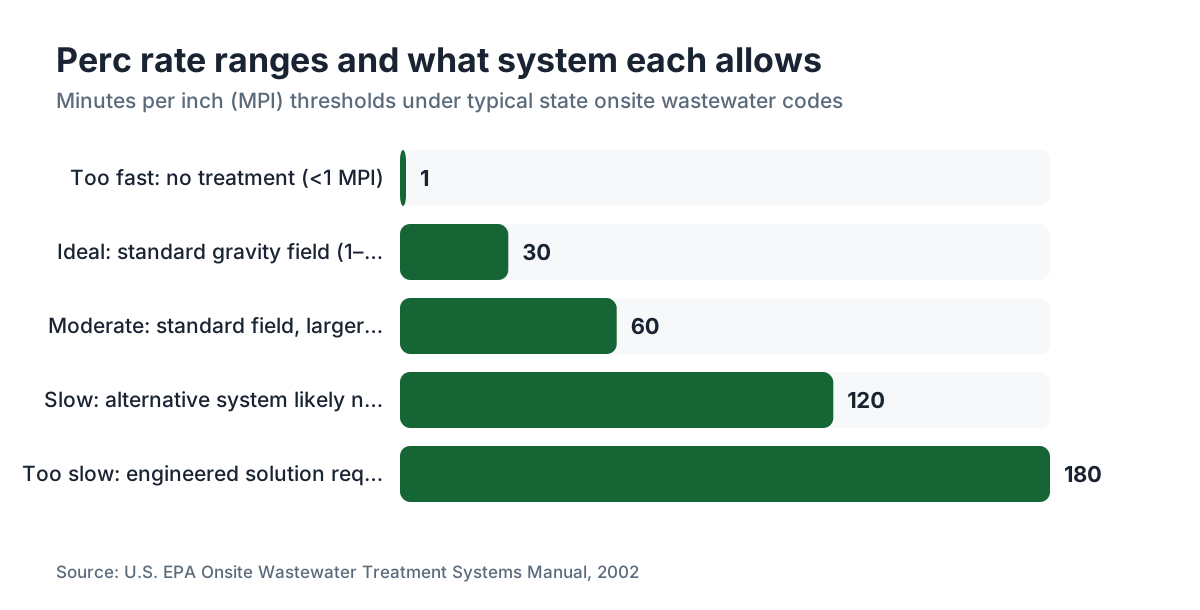
Perc rates and cutoffs vary by state, but the table below shows the thresholds common to most conventional codes. The principle never changes: soil that drains between roughly 1 and 60 MPI can treat effluent with a standard gravity drain field.
| Perc Rate (MPI) | What it means | Typical system allowed |
|---|---|---|
| Less than 1 | Too fast (coarse gravel or fractured rock) | Mound system, drip irrigation, or no permit |
| 1 to 30 | Good drainage | Standard gravity drain field |
| 31 to 60 | Moderate drainage | Standard drain field, may need larger area |
| 61 to 120 | Slow drainage | Alternative or mound system may be required |
| Greater than 120 | Too slow | Site may fail; engineered alternatives needed |
A slower rate needs more square footage of drain field to handle the same daily flow. Most state sizing tables work off the MPI value and the estimated daily flow for the home, typically 150 gallons per bedroom per day under older codes, though some states now use fixture-count methods [5].
A perc rate of 45 MPI will not necessarily get you denied. The designer just specifies more linear feet of trench to make up for it. But if the rate runs slower than 120 MPI and a high seasonal water table sits within 18 to 24 inches of the proposed trench bottom, you are looking at alternative technology: mound systems, drip emitter systems, aerobic treatment units, or at-grade systems. Those cost a lot more to install. See our guide to the cost to install a septic system for a breakdown.
How much does a perc test cost?
Perc test costs swing more than most homeowners expect, because three parties set the fees: the county, the private evaluator, and whoever runs the digging equipment.
County permit or application fee: $50 to $350 in most jurisdictions. A few counties charge nothing separate and roll it into the septic permit cost.
Private evaluator fee: $150 to $500 for a residential lot under two acres, based on state health department fee schedules and industry sources [4]. Larger parcels, multiple proposed sites, or sites needing soil borings on top of perc holes add cost.
Equipment and excavation: If the evaluator does not bring gear and you need an excavator to dig the test holes, add $200 to $600 depending on soil and hole count.
All-in, a perc test for a single-family lot usually runs $300 to $700. Rural counties with few licensed evaluators sometimes see fees pass $1,000 once travel and multi-day scheduling get involved.
Fail the test and you generally pay the full fee again to test an alternate area. That is a real risk on marginal land, so have your evaluator walk the whole parcel before you commit to a test location.
What does a soil profile evaluation add to the perc test?
Modern onsite wastewater codes have shifted toward soil morphology as the main site evaluation method, with the perc test as backup confirmation. Many states now weight the soil profile more heavily than the timed rate, because soil texture and structure predict long-term performance better than a single day of water infiltration [7].
A soil profile examination means digging or augering a pit, usually 4 to 6 feet deep, and describing each soil horizon by color (using the Munsell chart), texture (sand, loam, clay), structure, and the presence of mottles. Mottles are splotches of orange, gray, or blue-gray that mark where the water table rises and falls with the seasons. The depth to mottling estimates the seasonal high water table, which sets the minimum depth for drain field trenches [8]. The EPA's 2002 Onsite Wastewater Treatment Systems Manual notes that "soil morphology provides a time-integrated record of soil saturation" and is therefore a more reliable indicator than short-term infiltration tests [5].
On a lot with highly variable soil (common on filled land, slopes, or sites with clay lenses), the evaluator may need several borings across the proposed footprint. That adds time and sometimes cost, but skipping it is a mistake. A drain field placed across an undetected clay lens will fail, and failure means septic system repair bills that dwarf the price of a thorough site evaluation.
What happens if a perc test fails?
A failed perc test does not automatically mean you cannot build. It means the site cannot support a conventional gravity drain field. You have several ways forward.
Test another area. Most parcels have more than one possible drain field spot. The evaluator may find an alternate area with better soil, and you test there. Some county codes allow two or three attempts before the whole parcel gets declared unsuitable.
Alternative system design. If the soil drains too slowly, a mound system raises the trench above the native soil and uses imported sand as the treatment layer. Aerobic treatment units pretreat the effluent before it hits the soil, cutting the loading rate so marginal soils can handle the flow. Drip irrigation systems spread treated effluent through small-diameter tubing at shallow depths, working around high water tables. These cost more to install (mound systems often run $15,000 to $30,000 against $10,000 to $15,000 for conventional systems) and need more maintenance [4].
Appeal or variance. Some states allow an appeal if you think the test was done wrong or under atypical conditions. It is rare and rarely worth the time unless you have specific evidence of a procedural error.
Sell or reconfigure the parcel. Worst case, land that cannot support any onsite wastewater system cannot legally hold a home in most jurisdictions. That hits value hard.
Operators juggling perc test scheduling and permit tracking across many sites often lean on job management software to keep it straight. SepticMind is built for exactly that kind of work, tracking site evaluations, permit status, and system design notes in one place.
For the cost side of installation after a passing test, see our breakdown of the cost to put in a septic tank.
How long is a perc test result valid?
Perc test approvals do not last forever. Most states set an expiration of two to five years from the date on the site evaluation letter. Virginia sets a five-year validity period for most site evaluations [1]. North Carolina issues approvals that expire after five years if construction has not begun [3]. A few states tie validity to permit issuance instead, so the permit itself expires if construction does not start within a set window.
If your approval lapses, you usually need a new site evaluation, though some counties allow a lighter re-evaluation if the evaluator can confirm nothing about the site changed. Never assume a perc letter from a previous owner is still good. Check the date and confirm with the county before you spend a dollar on system design or construction.
Seasonal timing matters too. Most state codes ban testing when the soil is frozen, which in northern states closes the window from roughly December through March. If you are buying land and want to build by next summer, book the test in early spring. Miss that window and you can push your start date back a full year.
Does a perc test tell you everything about whether a septic system will work?
No. A perc test is one data point in a bigger site assessment, and treating it as the whole picture is a mistake that ends in expensive failures.
The test measures infiltration rate at the time and spot tested. It says nothing about seasonal swings in the water table, how close the table gets to the surface in the wettest months, impermeable layers below the test depth, or the pull of neighboring land use on groundwater flow. That is why the soil profile, the topography assessment, and the review of well locations and setbacks all belong to a complete site evaluation. None of them are optional add-ons.
A septic tank inspection on an existing system adds another layer of data if you are evaluating property that already has a system installed. The perc test tells you about the soil. The inspection tells you about the installed components.
The EPA's SepticSmart program tells homeowners to understand both the soil conditions and the system components, because "your septic system treats your household's wastewater" and site-specific factors decide whether that treatment actually happens [6]. One test alone cannot confirm it.
Thinking ahead, how a perc test relates to long-term system health ties into decisions about how often to pump a septic tank and keeping the leach field in good shape.
How to prepare your land for a perc test
A short list of things will make the test go smoothly and protect the proposed drain field from getting damaged before the system is even designed.
Do not drive heavy equipment across the proposed drain field. Compaction from vehicle traffic drops permeability and can turn a borderline-passing site into a failing one. Mark the area and keep it off-limits once you schedule the test.
Mow or clear brush enough for the evaluator to walk the ground, but leave the topsoil alone. Stripping topsoil, even briefly, changes drainage patterns and can contaminate the results.
Locate your well and any neighbors' wells before test day. The evaluator needs those distances to confirm setback compliance. In most states, the minimum setback from a well to any part of the drain field runs 50 to 100 feet [5]. A plat or survey speeds this up.
If you have done any fill work on the property, say so upfront. Imported fill behaves differently from native soil and may not be acceptable for drain field construction even if it perc-tests fine.
Line up someone to run a backhoe, or confirm your evaluator is bringing digging equipment. Showing up with no way to dig the holes wastes everyone's day and usually costs a rescheduling fee.
After a passing test, do not disturb the test area. Many counties require the drain field to go roughly where the test happened, because the approval is site-specific, not parcel-wide.
Frequently asked questions
How long does a perc test take from start to finish?
The presoak phase alone takes at least 4 hours, and most state codes require an overnight soak before the timed test. Count on two days on-site total. Add the time to schedule the evaluator and get county sign-off, and the full process from application to approval letter usually takes two to six weeks, longer in busy counties.
Can a homeowner do their own perc test?
You can dig holes and time the water drop yourself to get a rough read before spending money, but it has no official value. Counties require a state-licensed evaluator, often with a county health officer present, for the results to count. A DIY test is useful for ruling out obviously bad land before you pay for the real thing.
Can you do a perc test in the rain?
Light rain is generally fine since the presoak already simulates wet conditions. Heavy rain that sends surface runoff into the holes or raises the water table artificially can skew results and may push the evaluator to reschedule. Rain-softened soil can also block backhoe access. Ask your evaluator for their specific weather policy.
What perc rate is needed to pass for a standard septic system?
Most states require a perc rate between 1 and 60 minutes per inch (MPI) for a conventional gravity drain field. Some states extend the upper limit to 90 or 120 MPI when alternative designs are used. Rates below 1 MPI point to overly coarse soil. Rates above 120 MPI point to clay that drains too slowly for standard treatment.
How much does a perc test cost?
Most residential perc tests cost $300 to $700 all-in, covering the county application fee ($50 to $350), the private evaluator's fee ($150 to $500), and excavation if the evaluator does not bring equipment. High-demand rural areas or large parcels needing multiple test locations can push the total past $1,000.
How do I get a perc test done on land I want to buy?
Contact the county environmental health office and ask for the onsite wastewater permit application. Hire a licensed soil evaluator or request the county assign one. File the application, pay the fee, and schedule the test. Make it a contingency in your purchase contract so you can back out if the land fails. The process takes two to six weeks in most counties.
What happens if my land fails a perc test?
You can test an alternate area of the parcel, design an alternative system (mound, aerobic treatment unit, drip irrigation) suited to slow-draining soil, file an appeal if you believe the test had errors, or accept that the land may not support a permitted home. Alternative systems cost more to install and require annual maintenance contracts in most states.
How many test holes are required for a perc test?
Most state codes require two to four holes per proposed drain field area. The number depends on site size, soil variability, and your specific state or county code. If soil conditions vary a lot across the proposed field, the evaluator may add holes to capture the range. All holes are usually tested, and the slowest stable rate is used for design.
How long is a perc test approval valid?
Most states set validity at two to five years. Virginia and North Carolina, for example, allow five years before the site evaluation letter expires. If you do not pull a septic permit and begin construction before the letter expires, you generally need a new evaluation. Always verify the date on any approval letter before designing or building.
Does a perc test replace a soil profile evaluation?
No, and in many states the soil profile is now the primary evaluation. A perc test measures one-day infiltration rate. A soil profile reveals seasonal water table depth, restrictive layers, and long-term drainage behavior. Most state codes require both. Skipping the soil profile to save money is a common mistake that leads to systems built in unsuitable soil.
When is the best time of year to do a perc test?
Spring, after the ground thaws but before the county's summer backlog builds, is generally ideal in northern states. Some states require testing during the wettest season to capture the true seasonal high water table. Most codes ban testing when soil is frozen. Check your state's specific seasonal requirements before scheduling.
Can a perc test be done on a lot that already has a septic system?
Yes. Perc tests on lots with existing systems are done to size a replacement drain field, to evaluate an alternate location when the original has failed, or as part of a system upgrade permit. The procedure is the same. You just need to locate and avoid the existing system components during excavation.
Does the perc test location have to match where the drain field will actually go?
Generally yes. A site evaluation approval is tied to the specific tested area, not the whole parcel. You cannot test in one corner of a lot and then install the drain field 200 feet away unless you test that second location too. Some counties allow minor adjustments during design, but a large move usually requires a new test.
Sources
- Virginia Department of Health, Onsite Sewage Regulations (12VAC5-610): Virginia sets a five-year validity period for site evaluations and accepts perc rates up to 90 MPI for certain alternative systems
- North Carolina Department of Health and Human Services, Environmental Health: North Carolina requires a Licensed Soil Scientist or Registered Environmental Health Specialist and sets a five-year expiration on site approvals
- National Onsite Wastewater Recycling Association (NOWRA), Industry Resources: Typical private evaluator fees run $150 to $500 for residential lots; alternative mound systems commonly cost $15,000 to $30,000 installed
- U.S. EPA, Onsite Wastewater Treatment Systems Manual (EPA/625/R-00/008): The EPA manual describes presoak protocols, soil morphology as a time-integrated saturation record, minimum 50-to-100-foot well setbacks, and 150 gallons per bedroom per day design flow
- U.S. EPA, SepticSmart Program: EPA SepticSmart states that a septic system treats household wastewater and that site-specific soil conditions determine treatment effectiveness
- University of Minnesota Extension: Soil texture and structure predict long-term drain field performance and are used alongside perc rates in modern site evaluations
- Penn State Extension: Mottling depth in soil profiles is used to estimate seasonal high water table and minimum trench depth requirements
- Texas Commission on Environmental Quality (TCEQ), On-Site Sewage Facilities: State environmental agencies set specific perc rate thresholds and require licensed evaluators for official site assessments
- Oregon Department of Environmental Quality: Oregon requires soil morphology evaluation alongside percolation testing and specifies procedures for seasonal testing windows
Last updated 2026-07-09