How Does a Septic System Work? A Plain-Language Guide
By the SepticMind Editorial Team
More than 21 million US homes have a septic system, yet most homeowners cannot explain how it works. That gap matters, homeowners who understand how septic systems function are more compliant with septic system maintenance checklist practices and less likely to cause damage through things they flush or pour down the drain. Companies that educate customers increase service agreement enrollment by 34%, which is a practical reason to use this kind of content in your customer communications.
TL;DR
- More than 21 million US homes have a septic system, yet most homeowners cannot explain how it works, which directly affects their maintenance compliance.
- A conventional septic system management system has three main components: the septic tank, distribution box, and drainfield (leach field).
- Inside the tank, waste separates into three layers: scum on top, clarified effluent in the middle, and sludge on the bottom.
- The drainfield is where final treatment happens; the soil acts as a biological filter removing pathogens before treated water reaches groundwater.
- Regular pumping every 3-5 years removes accumulated sludge before it reaches the outlet baffle and clogs the drainfield.
- Companies that educate customers increase service agreement enrollment by 34%, making homeowner education content a practical business tool.
This guide explains the mechanics of a conventional septic system in plain language, the kind you can share with customers, embed in your website, or use as the foundation of a homeowner education packet.
The Basic Flow: From Drain to Soil
When water goes down any drain in your home (toilet, sink, shower, dishwasher, laundry) it travels through your household plumbing into the main sewer line. That line leads out of the house and underground to your septic tank.
Everything that leaves your home through the drains ends up in that tank. From there, the septic system's job is to separate, process, and safely disperse the wastewater before it ever reaches a waterway or underground drinking water supply.
The Main Components of a Conventional Septic System
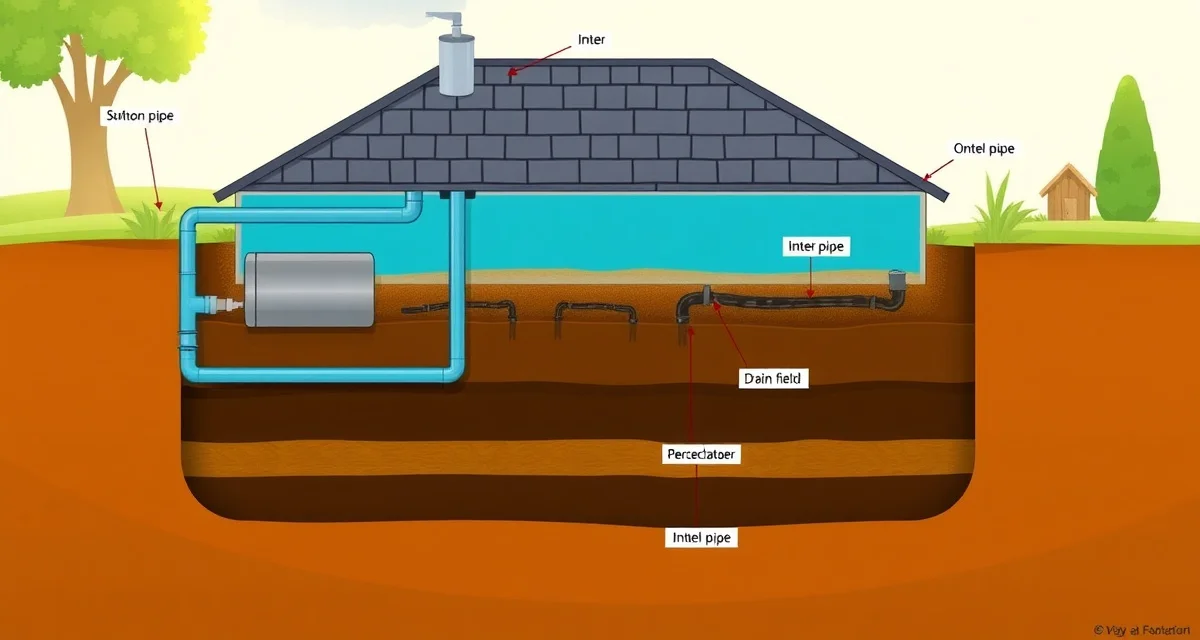
A standard gravity-fed septic system has three main parts: the septic tank, the distribution box, and the drainfield (also called the leach field or soil absorption field). Each has a specific role.
The septic tank is a buried, watertight container (typically made of concrete, fiberglass, or polyethylene) that holds 750 to 1,500 gallons or more depending on the home's size. Inside the tank, wastewater separates naturally into three layers:
- Scum floats on top: fats, oils, grease, and paper that hasn't yet broken down
- Effluent is the liquid middle layer, partially treated wastewater
- Sludge sinks to the bottom: heavy solids and bacterial waste
Bacteria living naturally in the tank decompose the organic matter in the scum and sludge layers, partially treating the wastewater. This process is ongoing, the bacteria do the work continuously, but they need time and the right conditions.
The tank has inlet and outlet baffles (typically T-shaped pipes or concrete walls with openings) that control which layer of liquid moves in and out. The inlet baffle directs incoming wastewater downward so it doesn't disturb the settled sludge. The outlet baffle allows only the middle effluent layer to leave the tank, preventing solids from moving into the drainfield.
The distribution box (D-box) receives the effluent from the tank and distributes it equally across the drainfield pipes. Not every system has a separate D-box (in some designs, distribution is handled directly from the tank) but it's a common component in conventional systems.
The drainfield is a network of perforated pipes buried in gravel-filled trenches beneath the soil. Effluent drains from the pipes into the surrounding soil, where it undergoes final treatment. The soil acts as a biological filter, beneficial bacteria in the soil remove remaining pathogens, nutrients are absorbed by plant roots, and the treated water gradually percolates down to the groundwater table.
The drainfield is arguably the most important part of the system. If it fails, the whole system fails.
Why Solids Need to Be Pumped Out
The bacterial breakdown inside the tank is thorough but not complete. Sludge and scum accumulate over time because not everything decomposes fully. As the accumulated layers grow, the tank has less capacity for effluent, and less residence time for the biological treatment process to work.
When sludge or scum levels get high enough, solids start escaping through the outlet baffle into the drainfield. Solids clog the drainfield pipes and the surrounding soil. Clogged drainfields fail, and drainfield replacement costs thousands of dollars.
Regular pumping (typically every 3-5 years for a family home) removes the accumulated solids before they reach the outlet. It's the most important maintenance action a homeowner can take.
What Can Damage a Septic System
This is the part customers most need to understand, and most don't know until they've already caused a problem.
Flushing or draining things that don't belong in the system:
- "Flushable" wipes (they don't break down like toilet paper)
- Paper towels, feminine hygiene products, condoms
- Medications (they kill the beneficial bacteria)
- Bleach and harsh chemical cleaners in large quantities
- Cooking grease and oil
- Paint, solvents, and automotive fluids
Doing too much water at once. Running multiple washing machine loads back to back, doing the dishes while showering while the laundry runs, all of this pushes large volumes of water through the system faster than it can process. Spread heavy water use across the day.
Planting trees near the system. Tree roots are drawn to the water and nutrients in drainfield pipes. They infiltrate the pipes and destroy them. Keep deep-rooted trees and shrubs well away from the drainfield.
Driving or parking over the system. The weight of vehicles compacts the soil in the drainfield, reducing its ability to absorb water.
Covering the drainfield with impervious materials. Concrete, asphalt, or structures built over the drainfield prevent the necessary evaporation and plant uptake that help the system function.
Get Started with SepticMind
Homeowners who understand how their septic system works are better service customers, more compliant with maintenance schedules, and less likely to cause damage through avoidable misuse. SepticMind makes it easy to share educational content with your customers and connect it to your service reminder workflow. See how customer education supports your maintenance program.
Frequently Asked Questions
What are the main components of a conventional septic system?
A conventional septic system has three main components: the septic tank, the distribution box, and the drainfield. The septic tank is a buried watertight container that holds wastewater while naturally occurring bacteria partially break down organic matter. Inside the tank, solids settle to the bottom as sludge, grease and light materials float as scum, and clarified liquid in the middle (called effluent) flows out. The distribution box receives effluent from the tank and distributes it evenly across the drainfield pipes. The drainfield is a network of perforated pipes buried in gravel trenches where effluent is filtered through the soil and returned safely to the groundwater. Baffles in the tank control flow to prevent solids from escaping into the drainfield.
How does waste move through a septic system from the house to the drainfield?
All household wastewater flows through the home's plumbing to the main sewer line, which runs underground to the septic tank inlet. Inside the tank, gravity separates waste into layers: solids sink to the bottom as sludge, grease and lightweight materials float as scum, and clarified liquid sits in the middle as effluent. The inlet baffle directs incoming flow downward to avoid disturbing settled sludge, and the outlet baffle allows only the effluent layer to exit. Effluent flows by gravity to the distribution box, which divides it equally among the drainfield's perforated pipes. From the pipes, effluent seeps into the surrounding soil, which filters and treats it through biological action before the water returns to the groundwater table.
What can damage a septic system that homeowners should never flush or pour down drains?
Non-biodegradable items are the most common cause of avoidable septic problems: "flushable" wipes, paper towels, feminine hygiene products, and other materials that don't break down in the tank clog pipes and accumulate in the tank faster than pumping cycles can address. Household chemicals like bleach, harsh drain cleaners, and solvents in large quantities kill the beneficial bacteria inside the tank that process waste, without those bacteria, the system stops working properly. Fats, oils, and cooking grease congeal in the tank and pipes. Medications and antibiotics also disrupt bacterial populations. Homeowners should also avoid planting trees or shrubs near the drainfield, driving vehicles over the system, or building any structure on top of the drainfield area.
What happens if the outlet baffle in a septic tank fails?
When the outlet baffle fails, sludge and scum that should stay in the tank begin flowing into the distribution box and drainfield pipes. Solids clog the gravel and surrounding soil pores in the drainfield, starting a process called biomat formation. Once biomat has formed across a significant portion of the drainfield, the system can no longer process effluent and hydraulic failure follows. Outlet baffle inspection at every pump-out catches this problem before it reaches the drainfield.
What should homeowners never flush or pour down drains on a septic system?
Homeowners should avoid flushing wipes (including those labeled flushable), paper towels, feminine hygiene products, medications, and any non-biodegradable material. Down the drain, large quantities of bleach, harsh chemical drain cleaners, cooking grease, paint, and solvents all disrupt or damage the system. Medications and antibiotics kill the beneficial bacteria that make biological treatment work. These items either accumulate in the tank faster than normal pumping cycles address, or they destroy the biological ecosystem the system depends on.
Try These Free Tools
Sources
- National Onsite Wastewater Recycling Association (NOWRA)
- US EPA Office of Wastewater Management
- NSF International
- Water Environment Federation
- National Environmental Services Center (NESC)