Septic tank care: the complete homeowner's guide
By the SepticMind Editorial Team
TL;DR
- Septic tank care means pumping every 3 to 5 years (more often for small tanks or big households), watching what goes down your drains, keeping the drain field free of traffic and excess water, and catching warning signs early.
- The EPA estimates about 20% of U.S.
- homes run on septic, and most failures trace to neglect, not age.
Why septic tank care matters more than most homeowners realize
About one in five American homes treats its own sewage on-site [1]. That's roughly 26 million septic systems, and the EPA has found that a poorly maintained system is one of the leading sources of groundwater contamination in areas without municipal sewer service [1]. This isn't abstract. A failing system can contaminate a well, flood a yard with sewage, and cost $10,000 to $50,000 to replace. Regular pumping costs a few hundred dollars.
Most failures aren't sudden. They build over years of ignoring the system, flushing things that don't break down, letting water pour into a soggy drain field, or never pumping the tank. Homeowners who avoid the expensive repairs almost always share one habit: they treat the septic system like equipment on a schedule, not a magic box that handles itself.
The baseline list is short. You don't need exotic additives or expensive service contracts. You need a pumping schedule, some awareness of what goes down your drains, and eyes on a few early warning signs. For most systems, that's the whole job.
How does a septic system actually work?
A conventional septic system has two main parts: the tank and the drain field (also called a leach field or absorption field). Wastewater from every toilet, sink, shower, and appliance flows into the tank, where it separates by gravity. Heavy solids settle to the bottom as sludge. Grease and lighter material float to the top as scum. The liquid in the middle, called effluent, flows out through an outlet baffle into the drain field [2].
The drain field is a network of perforated pipes buried in gravel-filled trenches. Effluent seeps into the surrounding soil, which filters out pathogens, nutrients, and other contaminants before the water reaches groundwater. A healthy drain field is the quiet hero of the system. Protect it, and the whole system runs for decades. Damage it, and no amount of tank maintenance saves you.
The tank needs periodic pumping because sludge builds at the bottom over time. Once sludge and scum together fill too much of the tank's volume, solids start escaping into the drain field. Clogged drain field pipes don't unclog easily. That's how a $300 pump-out turns into a $15,000 drain field replacement.
Some homes have extra parts: a pump chamber that pushes effluent to an elevated drain field, a distribution box that splits flow between field sections, or an aerobic treatment unit (ATU) that adds oxygen to speed up bacterial breakdown. If you have one of these, your maintenance list grows. Check your permit or your state's onsite wastewater program for your specific system type.
How often should you pump your septic tank?
The EPA SepticSmart program recommends pumping every 3 to 5 years for a typical household [1]. That range packs a lot of variables inside it.
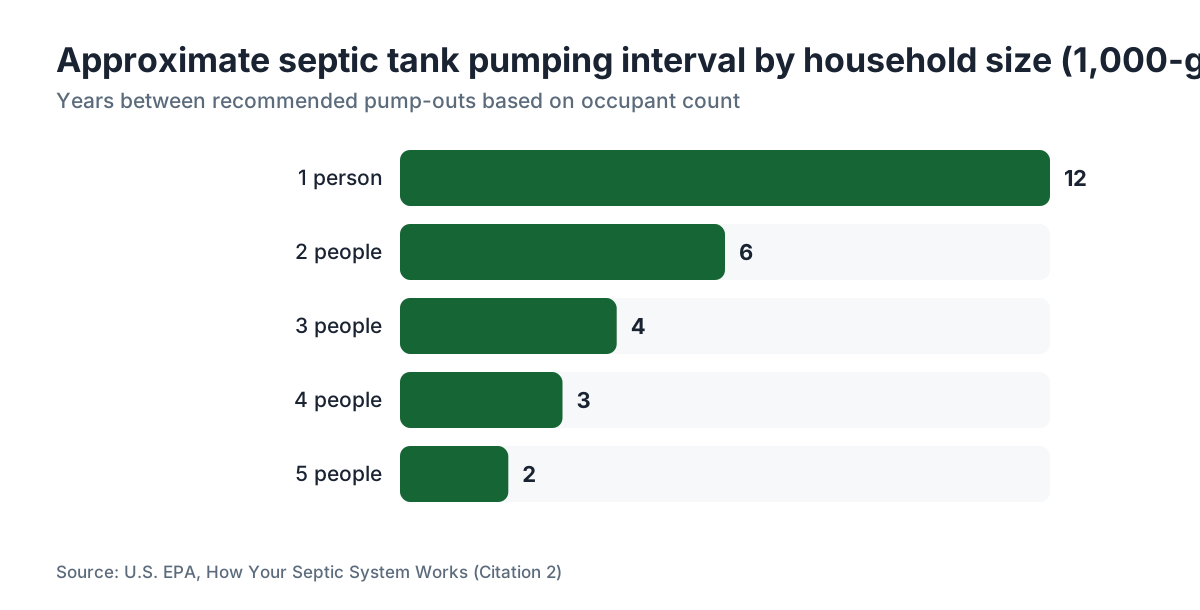
The two factors that matter most are tank size and how many people live in the house. A 1,000-gallon tank serving a family of five fills faster than a 1,500-gallon tank serving two people. The table below, adapted from EPA guidance, shows approximate pumping intervals based on those two variables [2].
| Household size | 1,000-gal tank | 1,250-gal tank | 1,500-gal tank |
|---|---|---|---|
| 1 person | ~12 years | ~16 years | ~19 years |
| 2 people | ~6 years | ~8 years | ~10 years |
| 3 people | ~4 years | ~5 years | ~7 years |
| 4 people | ~3 years | ~4 years | ~5 years |
| 5 people | ~2 years | ~3 years | ~4 years |
These are estimates, not guarantees. A garbage disposal adds a lot more solids, so drop your interval by at least a year if you run one regularly. Frequent visitors or an in-law suite bump up the count. If you inherited a house and have no idea when the tank was last pumped, get it done now and use that date as your baseline.
For more on pumping schedules and what happens during a pump-out, see our guides on how often to pump septic tank and septic tank pump out.
One more thing: some states set pumping and inspection intervals by law. North Carolina, for example, requires ATU systems to be inspected at least annually [3]. Check your state's onsite wastewater program, because ignoring a mandatory schedule can void your operating permit.
What should and shouldn't go into your septic tank?
The bacteria in your tank do the real work. They break down organic solids and keep sludge from piling up too fast. Anything that kills those bacteria, clogs the outlet baffle, or refuses to break down is a threat.
Things that should never go down any drain or toilet in a septic home:
Wipes. Even the ones labeled "flushable" don't break down fast enough in a septic tank. The Federal Trade Commission has taken action against manufacturers over misleading flushable claims, and wastewater crews keep pulling these wipes out intact years after they were flushed [4]. Paper towels, feminine hygiene products, cotton swabs, and dental floss belong in the trash.
Household chemicals and cleaners. A splash of bleach from cleaning a toilet won't kill your system, but heavy regular use of drain cleaners, antibacterial soaps, or disinfectants can cut bacterial activity enough to speed up sludge buildup. The Minnesota Pollution Control Agency warns against pouring paint, solvents, pesticides, or large amounts of cleaning products down the drain [5].
Grease and fats. They float and build the scum layer faster than anything else. Don't pour cooking grease down the sink. Let it solidify and throw it out.
Medications. They don't break down well and can contaminate groundwater. Return them to a pharmacy take-back program.
Garbage disposals get their own note. They're legal and common, but they're hard on a septic system. Food solids added this way can roughly double the sludge accumulation rate by some extension estimates, which means you'll pump more often [6]. If you have one, use it sparingly or think about removing it.
What's fine to use: most regular dish soap, toilet paper labeled septic-safe (or any single-ply), standard laundry detergent in normal amounts. The system handles the organic waste from a normal household without trouble, as long as you're not actively attacking it with chemicals or filling it with inorganic solids.
How do you protect your drain field from damage?
The drain field is the priciest part of the system to replace and the part most easily ruined by decisions made at the surface. A leach field replacement usually runs $5,000 to $20,000 depending on soil conditions, size, and local labor. Protecting it costs almost nothing.
Keep vehicles and heavy equipment off it. Soil compaction crushes the pore spaces that effluent needs to move through. Even a riding lawnmower driven over the field again and again can compact soil enough to cut absorption. Parking a car on it once is usually fine. Parking there repeatedly is not.
Don't plant trees or deep-rooted shrubs anywhere near the drain field. Roots follow moisture and will find perforated pipes. Oak, willow, and maple are the worst offenders. Grass is the right cover. It soaks up moisture and nutrients without threatening pipes.
Manage surface water. Gutters and downspouts should drain away from the drain field, not toward it. If the soil over your field is already saturated from rain, extra runoff means effluent has nowhere to go. Soggy drain fields are the most common reason for slow drains and sewage backup.
Spread laundry loads across the week instead of running six loads in one day. A high-efficiency washing machine uses 15 to 30 gallons per load compared to 40 to 45 for older models, so an upgrade can pay off [6]. Flooding the system with water in a short window doesn't give the tank time to separate solids and pushes half-treated effluent into the field.
And know where your drain field is. Get the as-built diagram from your county health department if you don't have it. Know where to walk, where not to dig, and where to look for early signs of trouble.
What are the warning signs of a failing septic system?
Most failing systems warn you before they turn into emergencies. Catching these early can be the difference between a repair and a replacement.
Slow drains throughout the house, in more than one fixture. A single slow drain is usually a clog in that drain's line. If several fixtures drain slowly, the tank or the outlet to the drain field may be the problem.
Gurgling sounds in drains and toilets. Air moving through a partly blocked system makes that noise. It's not normal.
Sewage odors inside the house or in the yard. A system that's working right is odorless. Indoor odors often mean a dry P-trap or a venting issue. Outdoor odors right over the tank or drain field suggest the system is overwhelmed or failing.
Wet or unusually green grass over the drain field, especially in dry weather. Effluent surfacing means the soil can't absorb what's coming in. You may see patches of grass that look lush and dark green in a pattern that traces your drain field trenches.
Sewage backup in toilets or lowest-level drains. This is the end-stage warning. If sewage is backing up, the system is full or blocked and you need a septic tank repair or septic system repair professional right away.
Well water tests showing elevated nitrates or coliform bacteria. If you're on a private well, annual testing is standard practice. Spikes in nitrates or bacteria can point to a nearby failing septic system, including your own [1].
See any of these signs? Don't wait. Get an inspection before spending money on repairs, because the problem could be anywhere in the system and the fix depends entirely on what's actually wrong. See our guide on septic tank inspection for what that process involves.
Do septic additives actually help?
This is one of the most common questions septic owners ask, and the honest answer is: probably not, and some hurt. The EPA's position on biological additives (bacteria and enzyme products) is that there's no scientific evidence they improve performance or reduce pumping frequency in a normally functioning system [1]. A healthy tank already holds billions of bacteria. Adding more changes nothing meaningful.
Chemical additives are a different story, and not a better one. Solvents and chemical treatments marketed to "break down" grease or sludge can damage tank components and push contaminants into the drain field. Several states have banned specific chemical additives outright.
The one case where a bacterial additive might make a marginal difference is after a heavy antibiotic course has disrupted the tank's bacterial population, or after significant chemical dumping. Even then, the tank rebuilds its bacteria on its own within weeks.
Save the money you'd spend on additives and put it toward pumping. That's the only intervention with solid evidence behind it.
What does septic tank care cost over time?
Budgeting for septic maintenance is straightforward once you have the baseline numbers. The variable is how long you go between pump-outs and whether you catch small problems before they cascade.
Routine pumping runs $300 to $600 in most U.S. markets, though rural areas and markets with few pumpers can push toward $700 or $800 [7]. Pump every 3 years and that's roughly $100 to $200 a year. Cheap insurance.
An inspection, if done separately from pumping, usually adds $100 to $300 for a basic visual check of components. Some inspectors offer a combination pump-and-inspect for a slight premium. Buying a house with a septic system? Pay for a full inspection, no matter the cost.
Repairs are where costs jump. A new inlet or outlet baffle: $150 to $300. Replacing a pump in a pump chamber: $500 to $1,500. A distribution box replacement: $500 to $1,500. Full drain field replacement: $5,000 to $20,000 or more.
For septic tank cleaning (pumping plus washing the tank walls and inspecting baffles), expect to pay $100 to $200 more than a basic pump-out. It's worth doing every other pump cycle or so.
The math is simple. Twenty years of routine pumping at $400 every 4 years comes to $2,000. One drain field replacement is $10,000 minimum. Maintenance wins every time.
For installation costs if you're building or replacing, see our articles on cost to put in a septic tank and cost to install septic system.
What records and inspections should you keep?
A maintenance log isn't bureaucratic overkill. It's the difference between knowing your system's condition and guessing.
At a minimum, keep records of every pump-out: the date, the pumper's company and contact info, how full the tank was, and any notes on baffles or visible components. If the pumper found anything odd, write that down too.
Keep the original permit and as-built diagram (also called a site plan or sketch) showing where the tank and drain field sit. County health departments hold these for permitted systems, but your own copy saves time during a sale or an emergency.
If your system requires periodic inspections by regulation, keep those reports. Some states require the inspector to file results with the county, but your own copies protect you.
For homes running an ATU or other advanced treatment system, the maintenance contract with a certified operator is often required by the operating permit. Missing a required inspection isn't only a problem when the system fails. It can be a compliance violation in itself.
Septic service companies that run organized operations increasingly track this data digitally. Operators using platforms like SepticMind can pull service history for any address in seconds, which helps with scheduling and with documenting compliance for state reporting.
When you sell the house, buyers will ask for service records. A documented maintenance history is a selling point, and it can keep the buyer's inspector from flagging the system as a liability.
How do seasonal changes affect your septic system?
Most homeowners don't think about their septic system by season, but a few situations call for it.
Winter. In cold climates, frozen ground can slow or stop biological activity in the tank. The main risk is a frozen inlet or outlet pipe when the system sits unused during a cold stretch, like at a vacation property. One practical step: if the place will be empty for weeks in winter, have the tank pumped before you leave. An empty tank is less likely to have problems than a partly full one with active biological material that might freeze in extreme cold.
Spring. This is when you'll most often see surfacing effluent or slow drains, because the soil is already saturated from snowmelt and can't absorb the normal load. If you're seeing wet spots over the drain field in spring, note whether they dry up in a week or two. Temporary saturation resolves itself. Persistent wet spots don't.
Summer. High water use from guests, irrigation, and more laundry can stress the system. This is when spreading out laundry loads matters most. Watch for compaction too if you're parking on or near the drain field for summer gatherings.
Fall. A good time to schedule your pump-out if you're due, before the ground freezes. Easier access for the pumper, and you head into winter with a tank that has room to spare.
What's the right inspection schedule and how do you find a qualified inspector?
For a conventional gravity system, inspecting at every pump-out is the minimum. That means a licensed pumper physically looks at the inlet and outlet baffles, checks the water level in the tank, and notes cracks, root intrusion, or component issues while the tank is open. That's not an add-on. Any reputable pumper does this as part of the service.
A more thorough inspection, sometimes required during a home sale, involves a camera pass through the inlet line and outlet, a look at the distribution box, probing the drain field, and measuring sludge depth with a sludge judge before pumping. This level of detail costs more but tells you the real condition of the system, more than the tank.
For advanced systems (ATUs, drip irrigation, mound systems), your state's operating permit usually sets inspection frequency and requires a certified inspector. The National Onsite Wastewater Recycling Association (NOWRA) maintains a directory of certified inspectors [8].
Finding a qualified pumper is simpler. Your state health department or environmental agency keeps a list of licensed septage haulers. Licensing rules vary by state. In Florida, for example, septage pumpers must hold a Septic Tank Contractor license from the Department of Health [9]. Ask any company you hire whether they're licensed in your state and whether their staff has had formal training.
For a detailed walkthrough of a professional inspection, see our septic tank inspection guide. And if you need to schedule a pump-out, our septic tank pumping article covers what to expect.
What are the rules and regulations around septic maintenance?
Septic systems in the U.S. are regulated mainly at the state and county level, not federally, though the EPA sets baseline guidance and runs programs like SepticSmart [1]. Your obligations depend on where you live.
At minimum, nearly every state requires that you pump and maintain the system, that repairs be done by a licensed contractor, and that new systems or major repairs go through permitting. Some states go further.
North Carolina requires owners of ATU systems to hold a valid maintenance contract with a certified operator and to have the system inspected at least annually, with results reported to the county [3]. Washington State requires inspections at property transfer in many counties. Other states write mandatory pumping intervals into health code.
Falling out of compliance isn't only a fine risk. If a system fails and it turns out you ignored maintenance requirements, your homeowner's insurance may not cover the resulting damage. And in a sale, an uninspected, unserviced system can kill the deal or hand the buyer a strong hand in price negotiation.
The single best source for your specific obligations is your county environmental health department. Call them. They know the local rules, can pull your permit, and can tell you whether your system type has specific maintenance mandates. Most are genuinely helpful when a homeowner calls proactively rather than in crisis.
The EPA's SepticSmart initiative, launched in 2011, provides educational materials for homeowners and dedicates a week each September to system awareness. The program's core guidance states: "Have your system inspected every three years by a professional and pump your tank as necessary, generally every three to five years." [1]
Frequently asked questions
How do I find my septic tank to check on it?
Start with your county health department's records. Permitted systems have an as-built diagram showing the tank location relative to the house. If no record exists, a septic pumper or inspector can probe the yard or use a soil probe to find the tank. Many tanks have a lid within a foot or two of the surface, though some have riser extensions that bring the access port up to ground level.
Can you use bleach and cleaning products if you're on a septic system?
Normal household use is fine. A toilet bowl cleaner used weekly or a capful of bleach in the laundry doesn't kill enough bacteria to harm a working tank. Problems come from repeated pouring of large amounts of disinfectants, drain cleaners, or solvents straight down drains. If you're regularly using industrial-strength cleaners, dial it back. Standard products at normal doses are not a real threat.
What happens if you never pump your septic tank?
Sludge and scum build until they reach the outlet baffle. At that point, solids escape into the drain field and clog the soil pores that make the whole system work. Once the drain field fails, you're typically looking at $5,000 to $20,000 in replacement costs. The tank can also crack under pressure or from corrosion if it's never opened and inspected. Skipping pump-outs is the single most common cause of premature failure.
Is toilet paper safe for septic systems?
Yes, standard single-ply toilet paper breaks down well in a septic tank. Products labeled "septic-safe" meet basic dissolving standards, but most regular toilet paper is fine too. What's not fine: paper towels, "flushable" wipes, facial tissue, and any thick multi-ply product that disintegrates slowly. To be conservative, single-ply or septic-labeled paper gives you the most margin.
How long does a septic system last?
A well-maintained conventional system with a concrete or fiberglass tank and a properly installed drain field typically lasts 25 to 40 years. Some last longer. The tank often outlives the drain field. Drain field lifespan depends heavily on soil type, usage, and whether the system was ever overloaded with solids. Systems that were never pumped routinely fail within 15 to 20 years. Maintenance is the dominant variable.
Do I need to use septic-safe products for laundry and dish soap?
You don't need specialty products. Standard liquid laundry detergents and dish soaps are fine. Avoid powdered laundry detergents in large quantities, because the clay-based fillers can contribute to clogging. Antibacterial soap used daily in normal amounts won't crash your system, but it's a reason to skip heavy-duty antibacterial products in every wash. Phosphate-free detergents are better for the environment downstream.
Can tree roots really damage a septic system?
Yes, and it's more common than people expect. Roots from willow, oak, maple, and poplar can grow dozens of feet toward moisture. A perforated drain field pipe with steady effluent flowing through it is an ideal target. Root intrusion cracks pipes, cuts flow, and eventually forces pipe replacement. Keep all large trees and deep-rooted shrubs at least 30 to 50 feet from the drain field as a practical rule.
What's the difference between septic tank pumping and septic tank cleaning?
Pumping removes the liquid, sludge, and scum from the tank. Cleaning adds a step: the tank is rinsed with water and the walls are scrubbed or pressure-washed before the wash water is pumped out. Cleaning is more thorough and lets the pumper inspect the tank walls and baffles for cracks or deterioration. It costs $100 to $200 more than a basic pump-out. Worth doing occasionally, though not necessarily every cycle.
How much water usage is too much for a septic system?
Systems are sized by number of bedrooms, which roughly proxies for occupant count and water use. A 3-bedroom home typically has a tank and drain field sized for 300 to 450 gallons per day. Trouble starts when a household consistently exceeds that, through large gatherings, a leaking toilet (which can waste 200 gallons a day unnoticed), or back-to-back laundry loads. Fix leaking fixtures and spread high-water activities across days.
Should you get a septic inspection when buying a house?
Absolutely, and make it a condition of purchase. A general home inspector usually doesn't look at the septic system in depth. Hire a licensed septic inspector separately. They'll pump the tank (or require it be pumped), check sludge levels, inspect baffles, run water through the system, and probe the drain field. The cost is typically $300 to $600. Discovering a failing drain field after purchase rather than before can cost tens of thousands.
Can a septic tank freeze in winter?
The tank itself rarely freezes, because biological activity makes some heat and the tank sits below the frost line. The real risk is the inlet pipe from the house to the tank, especially if it's shallow or the system sits unused for weeks in a cold spell, like at a vacation home. Insulating the pipe and keeping some water flowing through the system cuts the risk. Leaving a property vacant through winter? Consult a pumper before you go.
What permits do you need for septic work?
Any new installation or significant repair requires a permit from the county health or environmental department in nearly every state. That includes replacing a tank, adding a new drain field, or converting a system type. Routine pumping and minor repairs like baffle replacement generally don't require a permit. Your county can tell you exactly what triggers permitting. Always hire licensed contractors for permitted work; unpermitted septic work can create legal problems at sale.
How do you know if your drain field is failing?
The clearest signs are slow drains throughout the house paired with wet or soggy areas over the drain field that persist even in dry weather, and sewage odors outside. You might see unusually green or lush grass in a pattern that follows your field trenches. A pumper or inspector can probe the field and measure how fast water absorbs. If the field is failing, expect a professional assessment before you choose between repair options and replacement.
Sources
- U.S. EPA, SepticSmart Program: EPA recommends pumping every 3 to 5 years; approximately 20% of U.S. homes use onsite septic systems; poorly maintained systems are a leading source of groundwater contamination; biological additives lack scientific evidence of benefit.
- U.S. EPA, How Your Septic System Works: Description of tank separation process, effluent flow to drain field, and pumping frequency table by household size and tank volume.
- North Carolina Department of Health and Human Services, On-Site Water Protection: North Carolina requires ATU systems to be inspected at least annually and maintained under a certified operator contract.
- Federal Trade Commission, Enforcement Actions on Flushable Wipes: FTC has taken action against manufacturers making misleading flushable claims; wipes do not break down adequately for septic systems.
- Minnesota Pollution Control Agency: MPCA advises against pouring paint, solvents, pesticides, or large amounts of cleaning products into septic systems.
- University of Minnesota Extension, Onsite Sewage Treatment Program: Garbage disposals can significantly increase sludge accumulation; high-efficiency washers use 15 to 30 gallons per load versus 40 to 45 for older models.
- HomeAdvisor / Angi, Septic Tank Pumping Cost Guide: Routine septic tank pumping costs $300 to $600 in most U.S. markets.
- National Onsite Wastewater Recycling Association (NOWRA), Inspector Directory: NOWRA maintains a directory of certified onsite wastewater inspectors.
- Florida Department of Health, Onsite Sewage Programs: Florida requires septage pumpers to hold a Septic Tank Contractor license from the Department of Health.
- U.S. EPA, SepticSmart Week Program Overview: EPA SepticSmart program launched in 2011 and states its core recommendation: inspect every three years and pump as necessary, generally every three to five years.
Last updated 2026-07-09