Septic system professionals: who does what and when to call
By the SepticMind Editorial Team
TL;DR
- Septic work splits across five roles: pumpers, installers, engineers, inspectors, and repair specialists.
- Most states license each one separately.
- Hire the wrong one and you get a polite referral instead of a fix.
- This guide covers what each does, which credentials to check, what they charge, and when a single job needs two of them at once.
What types of septic professionals exist and what does each one actually do?
Septic work breaks into five roles. They overlap a little, but in most states they are legally distinct, and calling the wrong one gets you a referral instead of a repair.
Here are the five categories you will run into:
Pumping and cleaning contractors handle routine septic tank pumping and septic tank cleaning. They vacuum out sludge and scum, look the tank over, and flag anything wrong. You will hire this person more than any other, because most systems need pumping every 3 to 5 years [1].
Licensed septic installers (also called onsite wastewater contractors) dig, set, and connect new systems. They work from an engineered plan, pull the installation permit, and get the finished system inspected before backfilling. Some are also licensed for major repairs.
Soil scientists and licensed engineers design systems. Before a new install or a big repair, someone has to evaluate the soil's perc rate, the water table depth, and the lot constraints. In most states that is a licensed professional engineer (PE) or a state-certified soil evaluator. They produce the site plan that tells the installer where to dig and what kind of system to build [2].
Inspectors evaluate systems for real estate deals, pre-purchase due diligence, or routine condition checks. Some states require a licensed home inspector with a septic endorsement. Others let a certified pumper write the report. Quality swings hard depending on who shows up.
Repair specialists sit between installer and engineer. A cracked baffle or a dead pump is a straightforward fix a licensed installer can do. Drain field failures and full replacements usually need a fresh soil evaluation and a new design before anyone picks up a shovel.
Some contractors hold several licenses and move between roles. Ask which hat they are wearing on your job, and confirm the license type covers that work in your state.
What licenses and certifications should a septic professional have?
Licensing runs state by state with no federal standard. The EPA does not license septic contractors. It defers to states and tribes under the Clean Water Act and runs its SepticSmart outreach program, which advises that homeowners should confirm a service provider is licensed or certified in their state [3].
A few national credentials carry real weight:
- NAWT Certified Inspector: The National Association of Wastewater Technicians certifies pumpers and inspectors through a proctored exam. Many state regulations accept NAWT certification as a baseline qualification [4].
- NEHA Registered Environmental Health Specialist (REHS): Relevant when a sanitarian or health department official evaluates your system.
- PE with onsite wastewater specialty: A licensed professional engineer is required by law to sign off on system designs in most states.
State-level licenses to ask about: septic installer license, septage hauler license (transport and disposal of pumped waste), soil evaluator certification, and in some states a separate maintenance provider license for alternative systems like aerobic treatment units.
Always ask for the license number and verify it on your state health or environmental agency's online lookup. Most states publish active license lists. No license number, no job.
Insurance matters as much as licensing. Anyone working on your property should carry general liability and workers' compensation. Ask for a certificate of insurance that names you as the certificate holder, not a verbal promise. Septic work means heavy equipment, open excavation, and buried utilities close by. Things go wrong.
For a real estate deal, some states require an inspection by a specific license class. Check your state's onsite wastewater rules, or ask your real estate attorney which credential makes a pre-sale inspection valid in your county [2].
What does each type of septic professional charge?
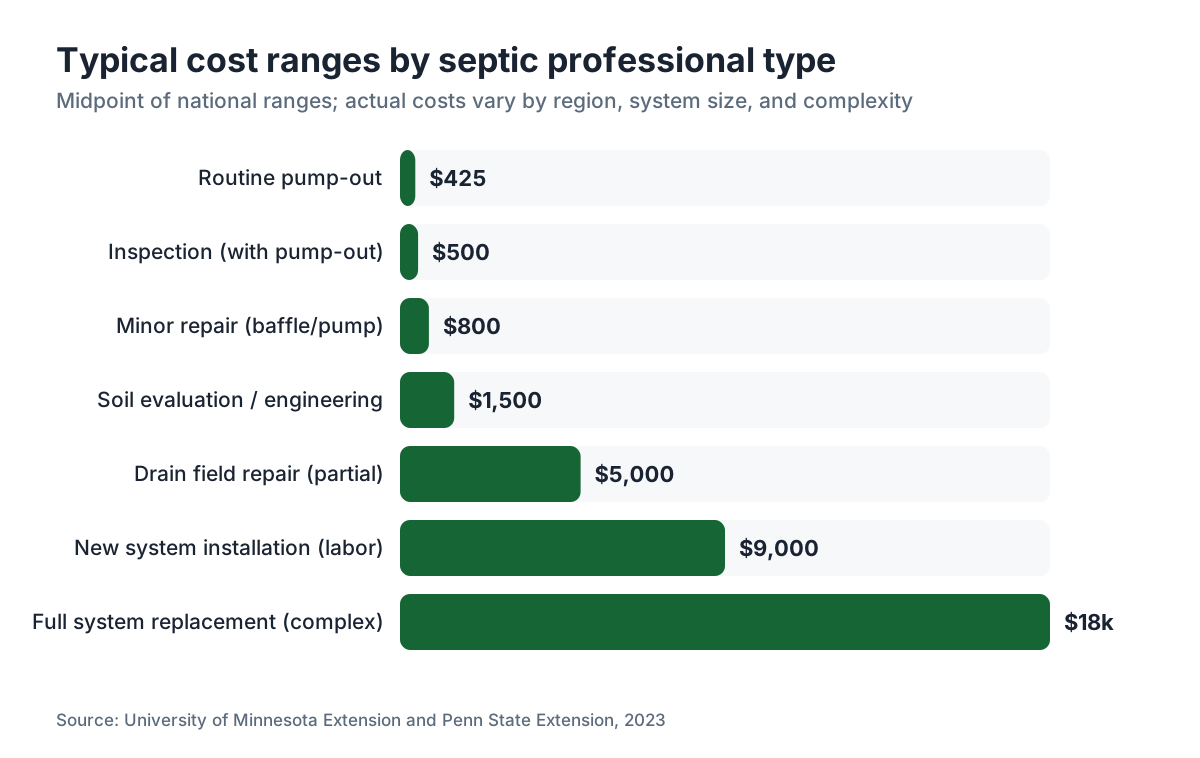
Prices move with region, system size, and how deep the service goes. The ranges below come from contractor pricing surveys and state extension data. Your local market may run higher or lower.
| Professional type | Typical cost range | What drives the price |
|---|---|---|
| Pumper (routine pump-out) | $250 to $600 | Tank size, access difficulty, travel [5] |
| Pumper (inspection added) | $300 to $750 | Includes written condition report |
| Septic installer (new system) | $3,000 to $15,000+ labor only | System type, soil conditions, depth |
| Engineer / soil evaluator | $500 to $2,500 | Site complexity, report detail |
| Inspector (real estate) | $200 to $600 | Scope: visual vs. load test vs. full dig-up |
| Repair specialist (minor) | $150 to $1,500 | Baffle swap, riser install, pump replacement |
| Repair specialist (field repair) | $1,500 to $20,000+ | Area of failure, soil type, permit fees |
The wide range on drain field repair is real, not a hedge. A partial field repair in well-drained sandy loam costs a fraction of a full replacement in heavy clay that needs an engineered mound [6].
For full installation numbers, see our breakdown: cost to install a septic system.
Get at least three quotes on any job over $1,000. On the big ones, ask each contractor to itemize equipment rental, labor, materials, and permit fees separately. That lets you compare like for like, and it catches the low bidder who left permit costs out to look cheap.
How do you find and vet a reputable septic contractor?
Word of mouth from neighbors on the same kind of system beats any online review. Someone two streets over with a 1,500-gallon conventional tank can tell you more about a pumper's reliability than a five-star page ever will.
A few sources produce real leads:
- Your state health department's licensed contractor list. Most publish a searchable database.
- The National Onsite Wastewater Recycling Association (NOWRA) member directory at nowra.org.
- NAWT's certified technician locator.
- County extension office recommendations, especially in rural areas.
Ask these five questions before you book:
- What is your license number, and what license type covers this work?
- Do you carry general liability and workers' comp? Can you send a certificate?
- Have you worked on this system type (conventional, mound, aerobic, drip) before?
- Do you pull the permit, or is that on me? (Good contractors always pull their own.)
- What does your quote leave out? (Permits, hauling fees, and backfill are the common surprises.)
Walk away from any contractor who offers to skip the permit to save you money. Unpermitted work voids warranties, snarls property sales, and can trigger a forced removal and redo on your dime [2]. The permit protects you as much as the environment.
For repair work specifically, septic system repair goes deeper on which repair jobs need which license tier.
Do you need a septic engineer, or can the installer design the system?
It depends on your state and how tricky the site is. Some states let licensed installers design and build simple conventional systems on easy lots. Others require a PE or certified designer to stamp every plan before a permit issues.
Rough rule of thumb: if your lot has any of these, you almost certainly need a licensed engineer or soil scientist, more than an installer:
- Seasonal high water table within 24 inches of the surface
- Steep slopes (typically over 15 to 20 percent)
- A small lot that forces a non-standard system type
- A prior system failure or a failed perc test
- A mound, drip, aerobic, or other alternative system type
Soil evaluation is the step where cutting corners does the most long-term damage. A system designed without proper percolation testing lands either oversized and overpriced, or undersized and failing inside a few years. North Carolina State University Extension puts soil evaluation and perc testing at the foundation of correct system sizing; skip them and you get a system that is too big or too small [9].
If an installer says they don't need a soil test because they have "done a lot of work in this area," get a second opinion. Soil changes lot to lot, and no amount of local experience beats actual measurements on your parcel.
The engineer's fee, usually $500 to $2,500, is a sliver of a $10,000 to $30,000 install. Of every professional on this list, this is the one you least want to skip.
What does a septic inspector actually check, and how thorough should the inspection be?
A septic tank inspection runs anywhere from a 10-minute look to a multi-hour job with pumping, dye testing, and field probing. For a real estate deal, you want the long version.
A complete inspection covers:
- Tank pump-out and visual check of baffles, inlet and outlet, tank walls, and lids
- Water level in the tank before pumping (a high level can point to a field problem)
- The distribution box or manifold
- A probe or visual check of the drain field for standing water or surfacing effluent
- Pump and float test on systems with a pump chamber
- A written report with photos and a plain opinion on system condition
What basic inspections usually skip: excavating to expose the distribution box, hydraulic load testing (running water to stress the system), and a camera run down the outlet pipe. These cost more and tell you more.
NAWT recommends a full-service inspection with a pump-out for a home purchase, not a visual check alone [4]. A seller who refuses to allow a pump-out during a pre-sale inspection is a red flag.
A standard inspection with pump-out runs $200 to $600, more for a large system or hard access. That is cheap insurance on a $400,000 house sitting over a drain field that might be dying.
How often should different septic professionals visit your property?
Most homeowners only think about septic pros when something smells off or an agent asks for an inspection report. That reactive habit costs more over time.
Here is a schedule that works:
Every 3 to 5 years: Have a licensed pumper pump and inspect the tank. The EPA recommends pumping every 3 to 5 years for a typical household [1]. The real interval tracks household size and tank volume. A 1,000-gallon tank serving four people fills faster than a 1,500-gallon tank serving two. See how often to pump a septic tank for a size-based approach.
When you buy or sell: A professional inspection, ideally with a pump-out, belongs in the contract as a purchase contingency.
When something changes: Slow drains, gurgling, wet spots over the field, or sewage odors in the house all earn a call to a pumper or repair specialist before the problem grows. Early work on a leach field issue usually costs far less than a full replacement.
When you add load: A new bedroom, a garbage disposal, or a home business that spikes water use can blow past your system's original sizing assumptions. A pumper or engineer can tell you whether it still keeps up.
For alternative systems: Aerobic treatment units, drip systems, and mounds often carry maintenance contracts with licensed providers, sometimes quarterly or annual, as a condition of the operating permit [2]. Check your permit paperwork.
SepticMind's scheduling tools help service operators run recurring pump-out routes and fire off homeowner reminders on their own. Useful if you manage several properties or just want a prompt instead of trusting your memory.
What are the warning signs you need a professional immediately?
Some symptoms can wait a week for a scheduled visit. Some cannot.
Call today if you see any of these:
- Sewage backing up into the lowest drains in the house. The tank is full, the outlet is blocked, or the field has failed.
- Bright green, spongy grass over the drain field with a sewage smell. That is surfacing effluent, a public health problem and an environmental violation in every state.
- Pooling liquid in the yard with a foul odor, after rain or without it.
- Gurgling from several fixtures at once, especially with slow drainage all over the house.
- A wet or sunken spot near the tank itself, which can mean the tank is failing structurally.
These are not maintenance items. They are failures that can foul groundwater, push raw sewage back into your home, and land you in legal trouble. The EPA notes that failing septic systems rank among the top sources of surface and groundwater contamination in areas without municipal sewer [3].
For what happens on a repair call, see septic tank repair and septic system repair.
How do septic professionals differ for alternative systems versus conventional ones?
A conventional gravity-fed system with a concrete tank and a gravel-and-pipe field is what most pumpers see every day. Alternative systems, meaning anything that does not run purely on gravity and passive soil treatment, need more specialized hands.
The common alternative systems and the differences they create:
Aerobic Treatment Units (ATUs): These use an air pump, and often chlorination, to treat effluent harder before it disperses. They need regular service, usually three to four times a year, from a provider licensed specifically for ATU work in your state. A pumper without ATU certification is the wrong person for this [10].
Mound systems: Engineered above-grade systems for sites with high water tables or poor soil. Installation needs an engineer's design and an installer with mound experience. Pumping the tank is the same as any conventional system, but the mound itself needs periodic checks for erosion and grass cover.
Drip irrigation systems: A pump, a timer, and a network of small-diameter drip lines spread effluent across the field. Clogged emitters, pump failures, and filter maintenance all need a technician who knows the specific brand.
Pressure-dosed systems: A pump chamber dosing the field in timed batches. Pump and float maintenance matters, and it takes a contractor comfortable with electrical parts in a wet environment.
Not sure what you have? Your county health department has the permit on file. It names the system type and any required maintenance agreement.
What should a written contract with a septic professional include?
Verbal deals are common in the trades and cause disputes just as often. Any job past a routine pump-out should have a written contract. Insist on all of this:
- Scope of work: Exactly what gets done, which components are included, and what the contractor does if they find more problems mid-job.
- Permit responsibility: Who pulls the permit, who pays the fees, who schedules inspections.
- Materials spec: Brand and model of every component going in (tanks, pumps, distribution boxes). Vague specs let contractors swap in cheaper parts.
- Warranty: Labor warranty plus any manufacturer warranty on components. A reasonable labor warranty on a new install is one to two years. Get it in writing.
- Payment schedule: Never pay more than 10 to 30 percent upfront on a large job. Tie final payment to passing the final inspection.
- Disposal: Where the pumped septage goes. Licensed haulers must dispose at approved sites. Ask for the site name and confirm it is permitted.
- Timeline: Start date, expected finish, and what happens if weather or permit delays push it.
For new installs, check the line items in cost to put in a septic tank so you know what is reasonable before you sign.
Operators who want to standardize their own customer agreements and job records can look at platforms like SepticMind, built for septic service businesses, with job workflow tools alongside scheduling.
How do you verify a septic professional is disposing of waste legally?
Septage, the material pumped from your tank, is regulated as a pollutant under 40 CFR Part 503, the EPA's biosolids rule. It has to be treated or disposed of at a permitted facility. Illegal dumping is a federal and state violation, and it happens often enough that the EPA maintains enforcement guidance on it [7].
You are not on the hook for what your pumper does with the waste after they drive off, but you can take a few reasonable steps:
- Ask for the name of the receiving facility or land application site. A legitimate pumper answers without hesitating.
- Ask for the septage hauler permit or license number. Most states require a separate hauler permit on top of an installation or service license.
- On large jobs, ask for a disposal receipt or manifest. Commercial facilities hand these out routinely.
If a pumper quotes you 40 to 50 percent below everyone else, illegal disposal is one likely reason. Disposal fees at legitimate facilities run $30 to $100 per load or more depending on region. That cost has to come from somewhere.
States that have adopted electronic manifesting for septage make this easy to verify. Search your state environmental agency's website to see whether it runs a hauler manifest system.
How does the septic professional relationship change if you are a service operator?
Run a septic service business and the landscape flips. Your relationships are not with contractors you hire but with licensing boards, municipal permit offices, equipment suppliers, and the customers you serve.
A few things that matter at the business level:
License reciprocity: Most states do not offer reciprocal licensing for septic contractors. Work across state lines and you likely need a separate license in each state. Check every state's onsite wastewater program.
Continuing education: Many states require continuing education hours for renewal. NAWT, NOWRA, and state health departments offer approved courses [4].
Subcontracting: Subcontract engineering or specialized repair and the work still needs to be permitted under the right license. Confirm your subcontractor holds the correct license for the task, more than a general contractor's license.
Record-keeping: Good service records protect you and build value. Accurate pump logs, inspection reports, and service histories are your evidence of professional conduct if a complaint ever lands. They are also exactly what a homeowner needs at closing.
NOWRA publishes model state regulations and tracks legislative changes to contractor licensing. Their site at nowra.org is worth a bookmark if you operate in more than one state [8].
Frequently asked questions
What is the difference between a septic pumper and a septic inspector?
A pumper removes sludge and scum and does a visual check during the process. An inspector runs a structured evaluation of the whole system, including tank condition, distribution box, and drain field, and writes a formal report. Some pumpers are also certified inspectors and do both. For a real estate deal, ask specifically for an inspection report, more than a pump-out.
Do I need a permit to have my septic tank pumped?
No. Routine pumping needs no permit. Permits cover installation, repair, or modification of the system itself. Your pumper needs a septage hauler license to transport the waste, but that is their credential, not a permit you pull. If a pumper claims you need a permit just for a routine pump-out, that is wrong.
How do I find out if my septic contractor is licensed in my state?
Search your state health department or environmental agency website for a licensed contractor lookup tool. Most states publish a searchable database of active installer, pumper, and hauler licenses. Ask the contractor for their license number before you search. That speeds it up and confirms they can produce one on the spot.
Can one company handle septic design, installation, and inspections?
Some larger firms hold multiple licenses and cover all three. Weigh the conflict of interest: a company that designs, builds, and inspects its own work may not catch or disclose its own mistakes. For a major install, an independent third-party inspection is reasonable. For routine pump-and-inspect work, a single licensed provider is fine.
What questions should I ask before hiring a septic professional?
Ask for the license number and confirm it covers the specific work. Ask for a certificate of insurance showing general liability and workers' comp. Ask who pulls the permit and whether it is in the quote. Ask where pumped waste goes. For installs, ask how many of that system type they have built. Reluctance on any of these is a bad sign.
How much does a septic engineer or soil evaluator charge?
Expect $500 to $2,500 for a site evaluation and system design, depending on lot complexity, local permit requirements, and how many revisions it takes. High water tables, steep slopes, and alternative system requirements push toward the top. The engineer's fee runs about 5 to 15 percent of the total install cost and is a poor place to cut corners.
What happens if a septic contractor does unpermitted work on my property?
Unpermitted septic work can bring a stop-work order, a required excavation to expose and inspect the work, fines, and an order to redo it with a permit. It also complicates sales, since title searches and disclosure laws in most states require disclosing known unpermitted work. You may share liability even if the contractor proposed skipping the permit.
Do aerobic septic systems require a different professional than conventional systems?
Yes. Aerobic treatment units need service technicians licensed specifically for ATU maintenance in most states, and they typically need servicing three to four times a year under the operating permit. A pumper without ATU certification is not qualified for this. Check your permit paperwork for the required maintenance schedule and the license class of provider allowed.
Is NAWT certification a good indicator of quality for a septic inspector?
NAWT certification is a solid baseline. It requires passing a proctored exam covering system types, inspection procedures, and report writing, and many state regulations accept it as a qualifying credential. It does not guarantee any one inspector's skill, but it confirms they passed a standardized test. Pair it with reference checks and a sample report if you can.
How often should a septic professional service an alternative system like a mound or drip system?
Most alternative systems need annual or quarterly maintenance under their operating permit. Mounds need a yearly check of cover vegetation, pump performance, and the distribution system. Drip systems and ATUs typically need quarterly service including filter cleaning, chlorine replenishment, and pump checks. Missing required visits can trigger permit violations.
Can a homeowner do any septic work themselves?
In some states, a homeowner can legally pump their own tank or make minor repairs on their primary residence with a homeowner permit. In practice, pumping needs a licensed vacuum truck and a legal disposal site, which most homeowners lack. Opening lids for a visual check, adding an access riser, or swapping an effluent filter are within reach for handy owners. Anything touching the drain field or tank structure should involve a licensed professional.
What is the difference between a septic system inspection and a perc test?
A perc test (percolation test) measures how fast water moves through your soil and happens before a new system is designed or a replacement is planned. It is part of the site evaluation, usually done by a soil scientist or engineer. A septic inspection evaluates the condition of an existing installed system. Different services, different stages of a system's life.
How long does it take to get a septic installation permit?
Permit timelines run from a few days to several months, depending on the county, the permitting office's workload, and whether the application needs a hearing. Rural counties with small health departments often move slower. Plan for four to twelve weeks as a rough range. Submitting a complete application with all soil evaluation reports and design documents upfront cuts the back-and-forth.
Sources
- EPA SepticSmart: Septic System Maintenance: EPA recommends pumping a septic tank every 3 to 5 years for a typical household
- EPA: Onsite Wastewater Treatment Systems (OWTS) Policy and Guidance: Permits are required for installation and significant repair; alternative systems often require maintenance contracts under operating permit conditions
- EPA SepticSmart Program: EPA SepticSmart states homeowners should ensure service providers are properly licensed, and failing septic systems are a top cause of surface and groundwater contamination
- National Association of Wastewater Technicians (NAWT): NAWT certifies inspectors and pumpers through a proctored exam; recommends full-service inspection including pump-out for real estate transactions
- University of Minnesota Extension: Septic System Costs and Maintenance: Typical septic tank pump-out costs range from $250 to $600 depending on tank size, access, and region
- Penn State Extension: Septic System Repair and Replacement Costs: Drain field repair costs range widely from around $1,500 for partial repairs to over $20,000 for full replacement in difficult soils
- EPA 40 CFR Part 503: Standards for the Use or Disposal of Sewage Sludge: Septage is regulated under 40 CFR Part 503 and must be treated or disposed of at a permitted facility; illegal dumping is a federal violation
- National Onsite Wastewater Recycling Association (NOWRA): NOWRA publishes model state regulations and tracks legislative changes affecting contractor licensing
- North Carolina State University Extension: Septic System Owner's Guide: Soil evaluation and percolation testing are foundational to proper system sizing; skipping these steps leads to oversized or undersized systems
- USDA Rural Development: Onsite Wastewater Systems: Alternative system types including mound, drip, and aerobic systems require specialized installer and maintenance technician qualifications
Last updated 2026-07-09