Clearstream aerobic septic system: how it works, costs, and maintenance
By the SepticMind Editorial Team
TL;DR
- A Clearstream aerobic septic system is a brand of aerobic treatment unit (ATU) that pumps air into sewage to grow bacteria that break down waste far more thoroughly than a plain septic tank.
- Installed cost runs $8,000 to $15,000.
- Most states require a quarterly service contract, chlorine or UV disinfection, and an annual inspection to keep the permit valid.
What is a Clearstream aerobic septic system and how does it work?
A Clearstream aerobic septic system is a packaged aerobic treatment unit made by Clearstream Wastewater Systems, a Texas company. It sits in your yard like a conventional tank but does something different: it pumps air into the sewage around the clock so oxygen-loving (aerobic) bacteria can chew through organic waste.
A conventional septic tank leans on anaerobic bacteria. Those work slowly and leave effluent still loaded with pathogens and nutrients. Aerobic systems push treatment much further. The EPA's SepticSmart program says aerobic treatment units "treat wastewater to a higher quality" than conventional systems, which is exactly why they show up on lots that can't pass a perc test or that sit near sensitive water. [1]
The Clearstream process runs through four stages. Wastewater hits a trash tank (pre-treatment chamber) first, where solids settle out, much like the first compartment of a conventional tank. Partially clarified liquid then flows into the aeration chamber, where an air pump runs 24 hours a day and stirs up the turbulence that feeds the bacteria. Treated effluent moves to a clarifier, where leftover suspended solids drop back down. A chlorine tablet feeder or UV unit disinfects the effluent last, before it leaves the system.
When everything runs right, the effluent meets secondary and sometimes tertiary treatment standards. Depending on your state permit, that treated water can be surface-sprayed onto a lawn through spray irrigation, sent to a smaller drip field, or fed to a conventional drain field. That flexibility is the main reason homeowners land on an aerobic system for lots that a simple leach field couldn't support. [2]
What makes Clearstream different from other aerobic treatment units?
Several companies build NSF/ANSI 40-certified aerobic treatment units: Norweco, Jet, Bio-Microbics, and Hoot among them. Clearstream competes in the same market. A few things set its design apart.
Clearstream uses a single-tank, multi-compartment fiberglass or polyethylene vessel instead of a string of separate tanks. That cuts excavation cost because the contractor digs one hole. The air pump assembly sits in its own riser or external housing, so a tech can service it without pulling the whole lid. Clearstream also sells a modular design: buy a unit sized for a two-bedroom home and add capacity modules later, which matters on rural properties that grow.
The units carry NSF International Standard 40 certification for residential ATUs. That standard requires effluent to hit a biochemical oxygen demand (BOD) of 30 mg/L or less and total suspended solids (TSS) of 30 mg/L or less on a 30-day average. [3] Confirm that baseline before you compare ATUs, because some older or uncertified units won't hit it reliably.
One honest limitation. Clearstream is a regional brand, strongest in Texas, Oklahoma, and neighboring southern states. In the Northeast or Pacific Northwest, factory-trained techs and replacement parts get harder to find. Ask your county health department or a local installer about that before you commit.
How much does a Clearstream aerobic septic system cost to install?
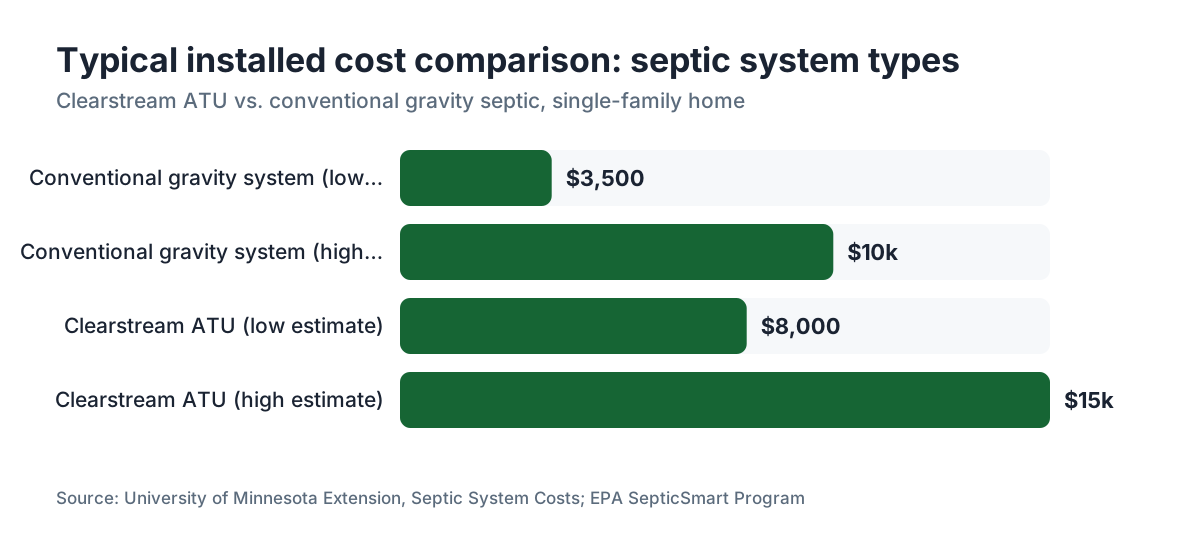
Installed cost for a Clearstream ATU usually lands between $8,000 and $15,000 for a standard single-family home. I've seen quotes hit $20,000 where excavation is expensive, permit fees are steep, or the site needs spray irrigation with a large pump tank. The unit itself runs roughly $3,000 to $6,000 wholesale depending on capacity. The rest is labor, permitting, site work, and the spray or drip components.
Here's how the line items break down.
| Cost component | Typical range |
|---|---|
| ATU unit (3-compartment, 500 GPD) | $3,000, $5,500 |
| Permitting and soil testing | $500, $1,500 |
| Excavation and tank installation | $1,500, $3,500 |
| Spray irrigation / drain field | $1,500, $4,000 |
| Electrical hookup for air pump | $300, $800 |
| Initial chlorine tablet kit | $50, $150 |
| Total installed | $7,850, $15,450 |
A conventional gravity septic system on a good lot runs $3,500 to $10,000 depending on tank size and drain field length. [4] You pay a premium for an ATU. But on lots where a conventional system is banned, there's no cheaper legal option.
For a wider look at what drives total project cost, the cost to install septic system guide breaks down each item. The cost to put in a septic tank page helps if you're comparing just the tank.
What are the ongoing maintenance costs and requirements?
This is where aerobic systems get expensive in ways buyers don't always price in. A conventional tank you can mostly ignore between pumpings. An ATU needs active, recurring maintenance or it stops treating.
Most states that permit ATUs require a maintenance contract with a licensed service provider. Texas mandates at least four service visits per year for an aerobic system under 30 TAC Chapter 285. [5] Each visit runs $75 to $150, so annual contract fees land at $300 to $600. Some providers bundle quarterly visits into a flat $400 to $700 a year that covers parts and chlorine.
Chlorine tablets need refilling every four to eight weeks depending on water use. A bucket costs $20 to $50 and lasts most households two to three months. Some newer Clearstream setups use UV disinfection, which drops the chlorine cost but adds a UV lamp swap every 12 months (roughly $80 to $150).
The air pump runs nonstop and fails more than anything else. A replacement blower or diaphragm pump costs $150 to $400, and most homeowners can swap a simple diaphragm pump themselves if the access riser is clear. A tech visit to do it adds $75 to $150 in labor.
The settling chamber and trash tank still fill with solids. Most ATUs need a septic tank pump out every two to three years instead of the three-to-five-year cycle common with conventional tanks, because aeration keeps solids suspended that would otherwise settle for good. Budget $300 to $600 per pumping depending on your region. [6]
Add it up. Expect $600 to $1,200 a year in normal maintenance: service contract, consumables, and a prorated share of pump and lamp replacements. That's the honest number most installers keep out of the sales pitch.
What are the aerobic septic system design requirements for a Clearstream installation?
Aerobic septic system design runs on your state's onsite wastewater rules, not on Clearstream's brochure. The manufacturer's specs set a floor. Your state and county can require more.
The core design inputs are daily flow rate (gallons per day, based on bedroom or fixture count), soil conditions, setbacks from property lines and water features, and the kind of effluent dispersal allowed. Clearstream units are rated in gallons per day. Common residential sizes are 400 GPD (2-3 bedrooms), 500 GPD (3-4 bedrooms), and 750 GPD (larger homes or small commercial sites).
Setbacks vary by state but commonly include 50 feet from a water well, 10 feet from a property line, 10 feet from a building foundation, and 25 to 100 feet from a surface waterway. Texas's 30 TAC Chapter 285 sets specific distances for spray heads on top of tank setbacks, because the treated water leaves the ground and becomes airborne mist. [5]
Soil evaluation still matters with an ATU because you still need a dispersal field. Many ATU permits require a soil profile analysis or a site evaluation report from a licensed soil scientist or engineer. On a site with failing soil or high groundwater, a drip irrigation system (subsurface emitters) may replace spray heads.
Electrical service is a hard requirement. The air compressor runs continuously at 60 to 120 watts depending on model. [10] The system also needs a control panel with an audible and visual alarm so you know when the pump dies or the clarifier floods. Most jurisdictions want a dedicated 20-amp circuit.
Sourcing a Clearstream for new construction? Your installer should pull the permit, submit the manufacturer's specs and NSF 40 certification to the county, and get site-specific sizing approval before ordering the tank. Don't let anyone skip that.
What are the pros and cons of a Clearstream aerobic system compared to conventional septic?
The honest case for an aerobic system like Clearstream comes down to one thing: it lets you build or live on a lot where a conventional system is banned. Everything else is a trade-off.
Where aerobic wins. Treatment quality is genuinely better. NSF 40-certified ATUs produce effluent with BOD and TSS under 30 mg/L each, versus the 150-250 mg/L BOD that typically leaves a conventional tank. [3] That gap matters a lot near wells, surface water, or the coast. Aerobic systems can also use smaller drain fields or spray heads instead of long trenches, which saves space on tight lots.
Where conventional wins. A conventional tank has no moving parts, no electric bill, no mandatory contract, and a simpler failure mode. If your lot allows one, it costs less upfront and far less per year. Conventional systems handle intermittent use (vacation homes, rentals) better too, because aerobic bacteria die off when the system sits idle, and the microbial population takes weeks to come back.
The failure risk. An aerobic system can fail loudly. The alarm sounds, spray heads push undertreated water onto the lawn, or the air pump burns out silently overnight and goes unnoticed for weeks. Conventional tanks fail slowly and usually warn you first with slow drains and wet spots. Neither is fun, but the ATU can create a public health violation faster. [1]
If you run a service company juggling ATU customers, tools that track service visits and alarm events, like the scheduling features in SepticMind, help you stay ahead of problems before the state inspector shows up.
See the septic system repair guide for what happens when either type breaks down.
How do you maintain a Clearstream aerobic system day-to-day?
Most of the day-to-day work is simple. It only pays off if you actually do it.
Check the chlorine tablet feeder every four to six weeks. The feeder is usually a white PVC tube in the last chamber or in a riser near the spray pump. If the tablets are gone or down to a white paste, refill right away. Running without disinfection can violate your operating permit and creates a pathogen risk if spray heads are throwing water on the yard.
Listen for the air pump. It runs constantly with a steady low hum. If the hum stops, or the alarm light or buzzer trips, check the pump first. Diaphragm-type pumps are DIY-replaceable in about 20 minutes with a $150 to $250 part from any ATU supplier. Don't let a dead pump sit for days. Aerobic bacteria die within 24 to 48 hours of losing oxygen, and the system slides back to anaerobic treatment that takes weeks to recover.
Keep the spray heads clear. Grass grows over them. Shrubs crowd in. A blocked head backs pressure into the pump and shortens its life. Walk the spray field monthly through the growing season and clear debris.
What goes down the drain matters more with an ATU than with a conventional tank. Antibacterial soaps, bleach-heavy cleaners, and big doses of household disinfectants kill aerobic bacteria. Normal amounts of dish soap and shampoo are fine. Garbage disposals pile on solids and shorten the pump interval. Most ATU installers steer you away from one, or spec an oversized unit if you insist.
Schedule the septic tank pumping for your trash tank every two to three years instead of waiting for backup signs. The how often to pump septic tank article covers what pushes that interval shorter or longer for your household.
What state permits and regulations apply to Clearstream aerobic systems?
Aerobic treatment units are regulated at the state level, and rules differ a lot from state to state. There's no single federal ATU permit, though the EPA's SepticSmart program sets educational benchmarks and pushes states toward regular inspection and pumping requirements. [1]
Texas has some of the most detailed ATU rules in the country. The Texas Commission on Environmental Quality (TCEQ) runs aerobic systems under 30 TAC Chapter 285, which covers permitting, approved manufacturer lists, contractor licensing, and mandatory quarterly inspections. Clearstream systems sit on the TCEQ approved unit list. [5]
In most states the process goes like this. The homeowner or installer applies to the county sanitarian or health department for an onsite sewage facility permit. The application includes a site plan, soil data, and the NSF 40 certification for the model. The county issues an installation permit, a licensed installer puts the system in, and a final inspection clears it for operation. An operating permit (sometimes called a maintenance permit) is then issued annually or every two years, conditional on an active maintenance contract and a passing inspection.
Some states, including Florida and Virginia, have specific rules for spray irrigation setbacks and require the spray field to be posted with a notice that reclaimed water is in use. [8] Others ban surface spray outright and require subsurface drip. Check with your county health department before you spec a Clearstream model, because the dispersal method allowed on your site decides which configuration you can buy.
Buying a home with an existing Clearstream system? Ask the seller for the current operating permit, the maintenance contract, and the last inspection report. A lapsed permit is a red flag. The septic tank inspection guide walks through what an inspector checks and what paperwork should exist.
What are the most common Clearstream aerobic system problems and how are they fixed?
Problems cluster around a few components, and most have simple fixes if you catch them early.
Air pump failure is the most common call. Diaphragm pumps have a rubber diaphragm that fatigues over two to four years of nonstop running. [7] Signs: the alarm sounds, no bubbles in the aeration chamber when you open the lid, and effluent that looks cloudy or smells strong. Fix: replace the diaphragm or the whole pump. Budget $150 to $400 for the part.
Chlorinator clogging or malfunction. The PVC tablet feeder collects calcium scale, or tablet fragments jam the flow ports. Clean it once a year with a dilute acid solution (pool cleaner works). If the float valve in the feeder fails, the system can over-chlorinate (killing bacteria) or under-chlorinate (creating a pathogen risk). Replace the feeder assembly every five to seven years as preventive maintenance.
High solids carryover to the spray field. If the clarifier isn't settling solids, spray heads clog and the spray pump works harder than it should. Causes: overloading the system (a house full of guests for weeks), someone dumping grease or non-flushables, or a failing baffle in the clarifier. Solution: pump the unit, inspect the baffles, and figure out what changed in the household. See the septic tank repair page for baffle repair specifics.
Spray head and pump failure. The effluent pump that pushes treated water to the spray heads is a submersible pump in the last chamber, running periodically on a timer. When it fails, treated water backs up and the high-water alarm trips. Replacement pumps cost $200 to $450. A licensed tech should handle this one, since it means working inside the tank.
Odor complaints. A properly running ATU barely smells, because aerobic oxidation makes carbon dioxide and water instead of hydrogen sulfide. Persistent odor usually means the air pump is undersized, partly failed, or the system is overloaded. A strong sewage smell at the spray heads points to an empty or failed chlorinator.
How long does a Clearstream aerobic system last?
The fiberglass or polyethylene tank body is basically permanent if it's installed right and never sees vehicle traffic or soil heave. Clearstream tanks, like most fiberglass ATU vessels, should go 30 to 50 years without structural failure under normal conditions.
The mechanical parts are another story. Air pumps: two to five years each, depending on model and run conditions. Submersible spray pumps: five to ten years. Control panels: ten to fifteen years before the electronics get flaky. UV lamps, if you run them instead of chlorine, get replaced every 12 months.
The biggest longevity lever you control is the service contract. Systems that get quarterly visits catch failing pumps and clogged diffusers before they turn into treatment failures. Systems ignored for years grow biomat in the spray field, lose their aerobic cultures, and burn out pumps that cascade into a much larger bill. The EPA notes that "properly designed, installed, and maintained" systems can run for decades. The keyword is maintained. [1]
Buying a home with a Clearstream over ten years old? Budget $800 to $1,500 for an inspection plus a likely pump and control panel check. The septic tank cleaning and septic tank emptying guides cover what a thorough service visit should include.
Is a Clearstream aerobic system right for your property?
It depends on your soil, your lot, your budget, and your willingness to maintain the thing.
If your soil passes a perc test and the lot fits a conventional drain field, a conventional system is almost always the smarter money. Lower upfront cost, lower annual cost, simpler failure modes.
If your lot fails a perc test, sits in a floodplain, has a high water table, or hugs a lake or coastal water where the county demands advanced treatment, an ATU like Clearstream may be your only permitted option. In that case Clearstream is a reasonable pick if you're in its dealer service area (mostly the South-Central US), the county approves the model, and you commit to the maintenance contract.
Get one thing straight before you sign anything. Call two or three licensed ATU maintenance contractors near you and ask what they charge for quarterly service on a Clearstream unit, whether they stock parts, and how fast they respond to an alarm call. If you can't get good answers, that tells you what life with the system will feel like.
For operators running multiple ATU properties, tracking service dates, alarm histories, and permit renewals across a customer base is a real headache on a spreadsheet. SepticMind is built for septic service companies that manage exactly this kind of scheduled, compliance-sensitive work.
For new construction comparisons, the septic tank installation guide is worth reading alongside this one.
Frequently asked questions
Does a Clearstream aerobic system need electricity?
Yes, continuously. The air compressor runs 24 hours a day, drawing 60 to 120 watts depending on model. There's also a control panel with alarm circuits and, if you have spray irrigation, a timer-driven effluent pump. A power outage lasting more than a few hours starts killing the aerobic bacteria culture. Many ATU owners keep a generator or at least a manual restart procedure to restore aeration after long outages.
How often does a Clearstream aerobic system need to be pumped?
The trash tank and clarifier chambers usually need pumping every two to three years, sooner with heavy use or a garbage disposal. That's shorter than the three-to-five-year cycle for conventional tanks because aeration keeps more solids in suspension. Your quarterly service technician should measure sludge depth each visit and schedule a pump-out before solids reach the effluent outlet. Budget $300 to $600 per pumping depending on region.
Can a Clearstream aerobic system be installed in all 50 states?
The equipment can ship anywhere, but your state and county health department has to approve the specific model. Clearstream's strongest dealer and regulatory history is in Texas, Oklahoma, Louisiana, and neighboring southern states. In states with different approved-unit lists or thin service contractor coverage, permits and warranty service get harder. Always confirm local approval before ordering.
What chlorine tablets do you use in a Clearstream system?
Most Clearstream systems use standard 3-inch trichloro-s-triazinetrione (trichlor) tablets, the same type sold for swimming pools, loaded into the system's tablet feeder. They dissolve slowly and hold a residual chlorine level in the effluent. Some manufacturers specify a brand, so check your owner's manual. Tablets run $20 to $50 per bucket and last two to three months for an average household.
What happens if the alarm goes off on a Clearstream aerobic system?
An alarm usually means the air pump failed, the high-water float tripped (effluent level too high), or a power interruption reset the system. Check the air pump first: listen for the hum and look for bubbles in the aeration chamber. If it's dead, call your service contractor or replace the diaphragm if you're comfortable. Don't silence the alarm and ignore it. The system reverts to anaerobic treatment within 24 to 48 hours.
Can you use a garbage disposal with a Clearstream aerobic system?
Most ATU manufacturers and installers advise against it. A garbage disposal jacks up the organic solids load, shortening the pump-out interval and straining aeration capacity. If you already have one, use it sparingly and pump more often. Some Clearstream installers approve one only if you size up to the next larger model. Composting food waste or scraping plates into the trash is a better move.
How do you restart a Clearstream aerobic system after a long vacation or period of non-use?
When a home sits empty for more than a few weeks, the aerobic bacteria culture can die off from lack of food and oxygen (if power was cut). To restart: restore power, confirm the air pump runs, check and refill chlorine tablets, and run water into the system for several days. Full biological activity takes two to four weeks to rebuild. During that window the effluent is lower quality, so limit spray irrigation if you can.
What is the difference between a Clearstream aerobic system and a conventional septic tank?
A conventional tank uses gravity and anaerobic bacteria to settle and partly digest solids, releasing effluent with high pathogen and nutrient levels into a drain field. A Clearstream ATU adds continuous aeration, growing aerobic bacteria that consume organic matter far more efficiently, plus a disinfection stage. The result is cleaner effluent, smaller dispersal areas, and the option of surface spray irrigation, at two to three times the upfront cost and much higher annual maintenance.
Do Clearstream aerobic systems smell bad?
A properly maintained, functioning Clearstream ATU should barely smell. Aerobic digestion oxidizes hydrogen sulfide (the rotten-egg smell) instead of releasing it. Strong sewage odors near the tank or spray heads usually point to a failing or dead air pump, an empty chlorinator, or overloading from a big household event. Persistent odor warrants a service visit, more than a chlorine refill.
How do I find a licensed Clearstream installer or service contractor?
Start with your county health department or state environmental agency, which keep lists of licensed onsite wastewater installers and ATU maintenance contractors. Clearstream's parent company also runs a dealer locator. In Texas, TCEQ licenses maintenance providers under 30 TAC Chapter 285. Always verify a contractor is licensed specifically for aerobic systems in your state, more than conventional septic, since the systems need different training and tools.
What NSF certification should a Clearstream aerobic system have?
Look for NSF/ANSI Standard 40 certification, which requires the unit to hit effluent with BOD of 30 mg/L or less and TSS of 30 mg/L or less on a 30-day average. Some higher-end configurations also carry NSF 245 certification for nitrogen reduction. The NSF certificate number should be on the unit's nameplate and listed in NSF's online product certification database. Many state permits require NSF 40 as a condition of approval.
Is a Clearstream aerobic system a good choice for a vacation home or seasonal property?
It's a poor fit for seasonal use. Aerobic bacteria need a steady food supply (wastewater) and continuous aeration to survive. Long stretches of non-use kill the culture, and restarting takes weeks. Conventional systems tolerate dormancy better. If site conditions force an ATU on a seasonal property, plan a deliberate restart each season and consider leaving power on to keep the aeration going even when the home is empty.
What does a Clearstream aerobic system inspection involve?
A quarterly service inspection typically covers: checking air pump output and the diffuser, measuring sludge depth in the trash tank and clarifier, testing effluent chlorine residual (target 1 to 3 mg/L free chlorine before dispersal), inspecting spray heads and the spray pump, reviewing the control panel alarm log, and completing the state-required maintenance report. The report usually gets filed with the county health department to keep the operating permit current. Missing records can trigger a permit violation.
Sources
- U.S. EPA, SepticSmart Program: Aerobic treatment units treat wastewater to a higher quality than conventional systems; properly maintained systems can function for decades.
- U.S. EPA, Onsite Wastewater Treatment Systems Manual: Aerobic ATUs can support spray irrigation and smaller dispersal fields, enabling development on sites where conventional drain fields are prohibited.
- NSF International, NSF/ANSI Standard 40: Residential Wastewater Treatment Systems: NSF 40 requires ATUs to achieve effluent BOD of 30 mg/L or less and TSS of 30 mg/L or less on a 30-day average.
- University of Minnesota Extension, Septic System Costs: Conventional gravity septic systems typically cost $3,500 to $10,000 installed depending on tank size and drain field requirements.
- Texas Commission on Environmental Quality, 30 TAC Chapter 285: On-Site Sewage Facilities: Texas requires at minimum four maintenance inspections per year for aerobic systems and sets specific setback distances for spray heads and ATU tanks.
- U.S. EPA, SepticSmart: Homeowner's Guide to Septic Systems: ATUs typically require pump-outs more frequently than conventional tanks due to the higher solids in suspension from aeration.
- University of Florida IFAS Extension, Aerobic Treatment Units: Air pump diaphragm failure is the most common mechanical problem in ATUs and typically occurs every two to four years of continuous operation.
- Virginia Department of Health, Alternative Onsite Sewage Systems Regulations: Virginia requires specific setbacks and posted notices for surface spray dispersal from ATUs.
- Texas A&M AgriLife Extension, Aerobic Septic Systems: Aerobic systems use 60 to 120 watts of electricity continuously for the air compressor and require a dedicated circuit with an alarm panel.
Last updated 2026-07-09