Clogged drain field: causes, signs, and how to fix it
By the SepticMind Editorial Team
TL;DR
- A clogged drain field happens when the soil around your leach lines gets blocked by biomat buildup, compaction, or solids overflow from a neglected tank.
- Early signs are slow drains, soggy yard patches, and sewage odors.
- Fixes run from a few hundred dollars for jetting to $30,000 or more for full replacement.
- Most failures are preventable with pumping every 3 to 5 years.
What is a drain field and how does it work?
A drain field (also called a leach field or soil absorption system) is the last treatment stage of a conventional septic system. Liquid effluent flows from the septic tank into a distribution box, then out through a network of perforated pipes buried in gravel-filled trenches. The effluent seeps into the surrounding soil, which filters pathogens and nutrients before the water reaches groundwater. [1]
The soil does the real work. Bacteria in the upper soil layers break down organic matter, and the pore spaces filter particles. A healthy system needs that soil to stay porous, oxygen-rich, and uncompacted. Break any of those conditions and the field clogs.
Most residential drain fields use gravity to move flow. Pressure-dosed systems (common on lots with poor perc or irregular terrain) use a pump to push timed doses through the lines, which tends to be gentler on the soil and stretches system life. Both types can clog. They just do it differently and for somewhat different reasons.
If you want the broader picture of what sits upstream of the drain field, the leach field article covers the full soil-side system in detail.
How big is a septic drain field?
Size depends on three things: the number of bedrooms (a proxy for daily wastewater flow), the soil percolation rate, and your state or county code. The EPA estimates a typical single-family home generates 50 to 100 gallons per person per day, and design codes size the field to handle peak flow. [1]
A rough rule used by many state codes: figure 400 to 600 square feet of trench bottom area per bedroom for average-percolating soils (a perc rate around 30 to 60 minutes per inch). So a three-bedroom house commonly needs 1,200 to 1,800 square feet of effective trench area. [12]
Here's a practical size table based on typical design standards:
| House size | Estimated daily flow | Typical trench area (average soil) |
|---|---|---|
| 2-bedroom | 200 to 300 gpd | 800 to 1,200 sq ft |
| 3-bedroom | 300 to 450 gpd | 1,200 to 1,800 sq ft |
| 4-bedroom | 400 to 600 gpd | 1,600 to 2,400 sq ft |
| 5-bedroom | 500 to 750 gpd | 2,000 to 3,000 sq ft |
Those numbers are ballpark. Fast-draining sandy soils need less area. Tight clay soils need more, and some jurisdictions require a mound or alternative system when perc rates run too slow for conventional trenches. Your original permit (on file with the county health department) has the as-built design dimensions. Track that document down before you hire anyone to diagnose a problem.
So when people ask how big a septic drain field is, the honest answer is typically 1,000 to 3,000 square feet for a standard house, but your site conditions and local code govern everything. [12]
What causes a clogged drain field?
Biomat is the single most common culprit. Biomat is a dense, dark layer of anaerobic bacteria and organic slime that forms at the soil-gravel interface wherever effluent contacts soil. Every septic system grows some biomat, and in a healthy system it improves treatment by slowing flow and stretching contact time. The trouble starts when the mat grows thicker than the soil can accommodate, sealing off absorption entirely. [11]
What feeds excess biomat?
- Solids overflow from an unpumped or failing septic tank. When the sludge or scum layers get too deep, solids pass the outlet baffle and travel straight to the field. This is the fastest way to wreck a leach field. [3]
- Hydraulic overload. Too much water in too short a time (a leaking toilet, a water softener backwashing daily, a big household) saturates the soil before it can drain, pushing the biomat deeper into the profile where oxygen can't reach it.
- Grease and fats. Cooking grease moves right through a tank and coats the gravel and soil pores with a film water can't get through.
- Garbage disposal use. The EPA's SepticSmart program cautions that garbage disposals increase the solids load entering the system and can reduce drain field life. [4]
- Non-biodegradable solids. Wipes (including ones labeled "flushable"), feminine hygiene products, and paper towels don't break down and pile up in the lines.
- Root intrusion. Tree and shrub roots follow moisture gradients right into perforated pipes, cracking them and blocking flow.
- Soil compaction. Parking cars, storing equipment, or heavy foot traffic over the field crushes soil pores and can crack pipes. Most codes ban any structures or vehicles over the drain field for this reason. [2]
- Age. Drain fields have a finite life. EPA design guidance suggests a well-maintained conventional system lasts 20 to 30 years. Some go 40-plus with exceptional care. Others fail in 10 under abuse. [1]
What are the warning signs of a clogged septic drain field?
The signs escalate in a predictable sequence. Catch them early and you have options. Catch them late and you're looking at full replacement.
Earliest signs:
- Slow-draining sinks, tubs, or toilets, especially when several fixtures are slow at once. One slow drain is usually a pipe clog. All of them slowing together points to the system.
- A gurgling sound from drains or toilets, often loudest when the washer drains.
Mid-stage signs:
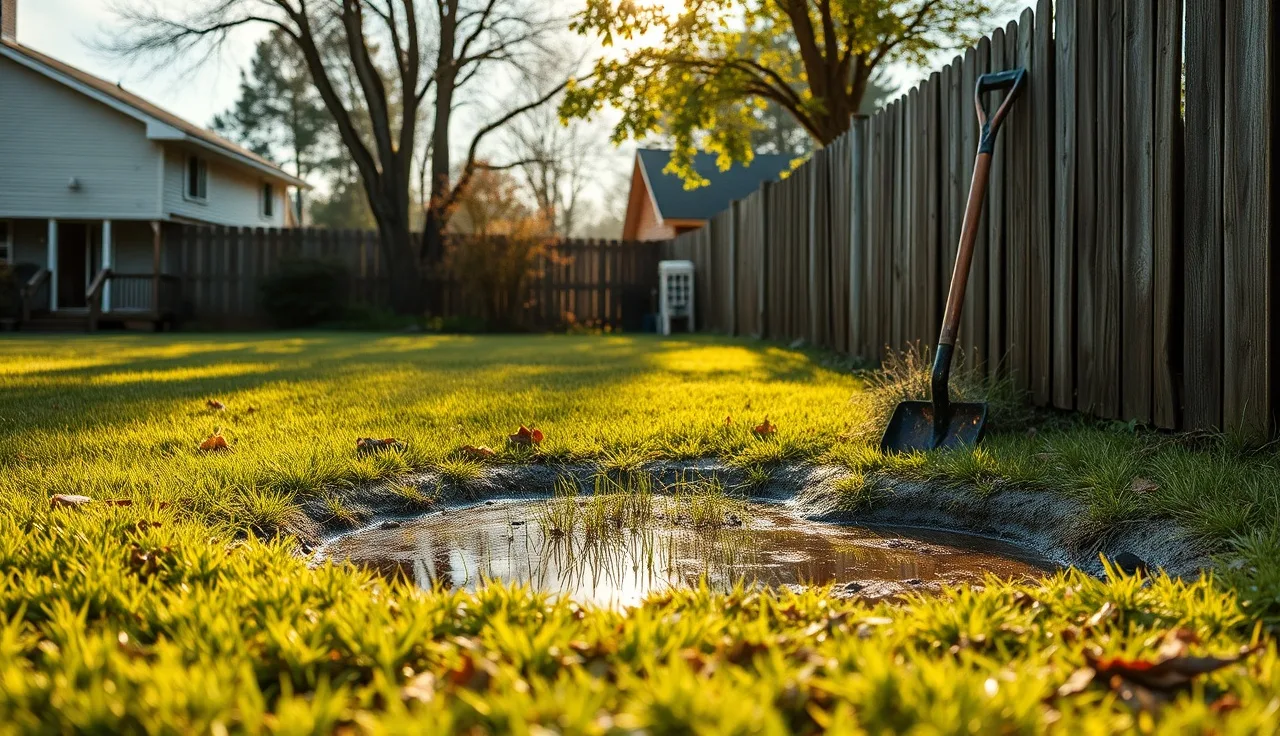
- Wet, spongy ground over the drain field, even in dry weather. A strip of unusually green, lush grass means effluent is surfacing.
- A persistent sewage odor outdoors near the field, or indoors.
- Sewage backing up into the lowest fixtures (ground-floor toilets and tub drains go first).
Late-stage (emergency):
- Standing water or surfacing sewage over the field. At this point you have a public health hazard, and most state codes require you to stop using the system until it's repaired. [5]
- Sewage backing up into the house.
One thing homeowners miss: a flooded drain field during heavy rain doesn't automatically mean the field is clogged. Saturated soil temporarily can't accept effluent. If the wet patch dries out after the rain and drains return to normal, that's a drainage or high-water-table issue, not necessarily biomat. If it stays wet or gets worse over time, you have a clog. [1]
A septic tank inspection can confirm whether the problem sits in the tank or the field. It's the right first step before spending money on field work.
How do you diagnose whether the drain field is truly clogged?
Don't guess. A proper diagnosis tells you whether you're dealing with a tank problem (cheaper) or a field problem (expensive), and it pins down whether the clog is in the distribution box, the lateral lines, or the soil itself.
Step 1: Pump the septic tank and inspect it. Check sludge and scum depths. If solids are up to or past the outlet baffle, the tank has been overloaded and solids may have reached the field. Pumping runs $300 to $600 and is the right starting point for any drain field complaint. See septic tank pumping.
Step 2: Inspect the distribution box. The D-box splits flow to each lateral. If it's full of effluent and not draining, the field is backing up. If one outlet is blocked or the box has settled unevenly, one lateral takes all the flow while the others sit dry, burning out one zone while the rest go unused.
Step 3: Camera or dye test the laterals. A sewer camera run through the lateral pipes shows root intrusion, pipe collapses, and solid buildup. A dye test (flushing a non-toxic tracer dye and watching for it at the surface) confirms whether effluent is surfacing. Most licensed septic inspectors carry both tools.
Step 4: Perc or soil evaluation. If the pipes look clear but the field still won't drain, the biomat has penetrated deep enough that the soil itself is the problem. At that point a licensed soil scientist or engineer can judge whether the original design was adequate and what remediation options exist. [2]
If you run multiple properties or service calls, this diagnostic workflow maps well to the job-tracking tools in platforms like SepticMind, which lets operators log camera footage, inspection notes, and service history in one place.
Can a clogged drain field be fixed, or does it always need replacement?
This is the question homeowners most want answered, and the honest answer is: it depends on how far gone the biomat is and whether the original system was sized right.
Fixes that sometimes work:
Rest and recovery. Cut or eliminate water flow to the field for 3 to 6 months and aerobic bacteria can sometimes eat the biomat and restore some permeability. Hard to pull off in a full-time residence, workable for a vacation property. The EPA notes that temporarily resting a drain field is a legitimate remediation strategy for early-stage biomat. [1]
Hydro-jetting. High-pressure water clears debris, soft biomat, and root intrusion from lateral pipes. It works best when the clog is in the pipes rather than the soil, and it's a maintenance measure, not a last-resort cure. Costs run $200 to $800 depending on the number of laterals and access. [6]
Aeration or bio-remediation additives. Several products inject oxygen or beneficial bacteria into the soil to consume the biomat. The evidence is mixed. The EPA has been consistent that biological additives (enzyme products, yeast, bacteria packets) sold for septic systems have not been proven to eliminate the need for pumping or to restore a failed field. [4] Some contractors offer aeration systems (Terralift, AirJection) that fracture compacted soil and inject air. These have anecdotal support and some positive contractor reports, but peer-reviewed evidence stays limited. Nobody has good data on long-term success rates in a controlled study.
D-box redistribution. If only one or two laterals are clogged and the others are fine, a licensed contractor can rebalance the distribution box to route flow to the healthy zones while the damaged ones rest. Cheap, and worth trying before any invasive work.
Partial replacement. Replace just the failed lateral(s) instead of the whole field. This works when the damage is localized.
Full replacement. When the soil is saturated with biomat across the whole field, or the original system was undersized for the soil, replacement is the only real answer. That means a new perc test, new design, new permit, new installation. Costs range from $5,000 for a basic replacement in good soil to $30,000 or more for a mound system or engineered alternative on a difficult lot. [7]
For the full financial picture on repair and replacement, see the cost to install septic system article.
How much does it cost to fix a clogged drain field?
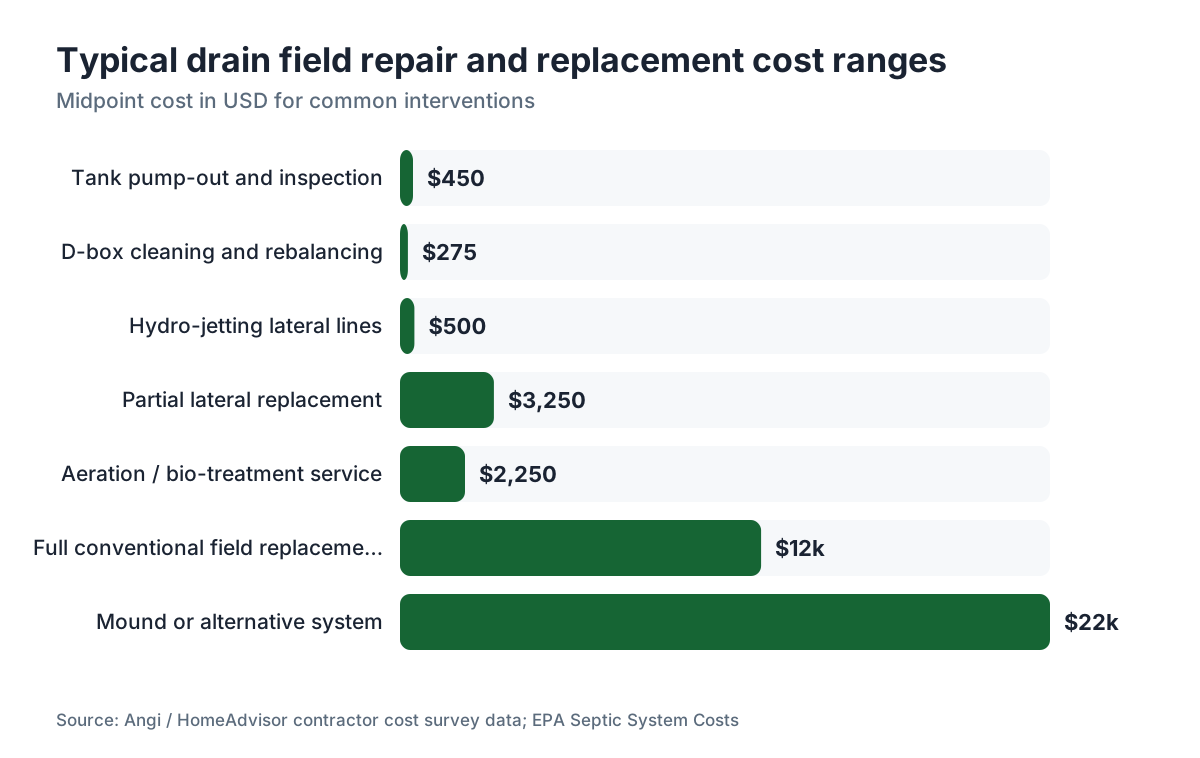
Costs vary enormously depending on what's actually wrong, where you live, and your soil. Here's a realistic breakdown:
| Repair type | Typical cost range | When it applies |
|---|---|---|
| Tank pump-out and inspection | $300 to $600 | Always the first step |
| D-box cleaning and rebalancing | $150 to $400 | Uneven distribution |
| Hydro-jetting lateral lines | $200 to $800 | Pipe-level clogs, roots |
| Partial lateral replacement | $1,500 to $5,000 | One or two failed lines |
| Aeration/bio-treatment service | $1,000 to $3,500 | Early-to-mid biomat |
| Full drain field replacement | $5,000 to $20,000 | Conventional systems |
| Mound or alternative system | $15,000 to $30,000+ | Poor soil, limited space |
Those ranges come from contractor cost surveys and EPA guidance. [7][8] The wide spread reflects real variation in labor markets (rural vs. suburban), soil, system size, and permit fees, which alone can run $500 to $2,000 depending on the county.
Here's what catches homeowners off guard: you often need a fresh perc test (usually $300 to $800) and engineered design ($500 to $2,000) before you can pull a permit for replacement. Those costs sit on top of the installation. [2]
Weighing repair against replace? The math generally favors replacement when the field is more than 20 years old, the system was undersized, and repair estimates top 40 to 50 percent of replacement cost. A newer system with localized damage usually justifies a targeted repair first.
What should you never flush or pour down the drain if you're on septic?
The drain field pays for everything that goes into the system. A few categories do outsized damage.
The EPA's SepticSmart guidelines list these as items that should never enter a septic system: wipes of any kind (including "flushable" wipes), feminine hygiene products, cotton swabs, dental floss, cigarette butts, paper towels, diapers, and condoms. [4] None of it breaks down. It builds up in the tank and eventually pushes into the field.
Chemical drain cleaners are a particular problem. A single bottle of lye-based drain cleaner can wipe out the bacterial community in the tank that processes solids. Without that community, raw solids pass through faster. Antibacterial soaps and household disinfectants in normal amounts generally don't cause lasting harm, but a steady diet of heavy disinfectant use adds up.
Don't flush medications. They don't hurt the drain field mechanically, but they pass through the soil into groundwater and surface water. The FDA and EPA both recommend drug take-back programs instead. [9]
Cooking grease is the most underrated threat. A cup of grease down the kitchen drain seems harmless, but grease solidifies in the pipes and the tank, and the fraction that reaches the field coats gravel and soil pores with a film water can't get through. Garbage disposals make it worse by adding ground food solids that raise BOD (biochemical oxygen demand) loading on the system. [4]
Water use matters too. One large load of laundry dumps 40 to 55 gallons into the system at once. Spread laundry across the week instead of doing it all on Saturday and you genuinely help the field. [1]
How do you prevent a clogged drain field?
Prevention comes down to two things: keep solids in the tank where they belong, and protect the soil from compaction and hydraulic overload.
Pump the tank on schedule. For a household of four with a 1,000-gallon tank, that's every 3 to 5 years. Bigger households pump more often. Smaller households with larger tanks can stretch it. The EPA's recommended pumping frequency guidance uses tank size and household size to set a specific interval. [3] If you're unsure how to think about your schedule, the how often to pump septic tank article walks through the math.
Inspect the tank at every pump-out. A good pumper checks the baffles and the outlet condition. Inlet and outlet baffles should be intact. A broken outlet baffle lets scum float straight into the distribution line. Baffle replacement costs $150 to $300, trivially cheap against field damage. See septic tank repair.
Protect the field physically. Mark the boundaries and enforce a no-drive, no-dig, no-plant (trees or shrubs) zone over the whole drain field and a few feet past it. Shallow-rooted grass or wildflowers are fine. [2]
Conserve water, especially in wet seasons. A high water table in winter and spring already limits the soil's ability to accept effluent. Piling on full laundry days, long showers, and extra flushes in those months is the fastest route to surfacing effluent.
Don't use additives as a substitute for pumping. The EPA states plainly: "Additives, including yeast, bacteria, and enzymes, are not a substitute for regular pumping and may harm the system." [4] You'll see these products marketed hard. Save the money.
Route surface water away from the field. Downspouts, sump pump discharge, and driveway runoff should drain away from the drain field. Extra water from any source saturates the soil and stops the field from accepting effluent. [1]
For operators managing schedules across many properties, platforms like SepticMind can automate pumping reminders and track field condition notes across the customer base, which helps catch at-risk systems before they fail.
Does homeowners insurance cover a failed drain field?
Usually no. Standard homeowners policies exclude damage to underground systems from wear, deterioration, or neglect, and drain field failure almost always lands in at least one of those buckets. [10]
Some policies cover sudden and accidental damage. If a contractor punctures a lateral during excavation, there may be coverage. But gradual biomat buildup and age-related failure, which describes the vast majority of drain field claims, are specifically excluded.
A handful of insurers offer septic system riders or endorsements for an extra premium. If you have an older system or one with known issues, it's worth calling your agent to ask. Some home warranty plans (separate from homeowners insurance) cover septic component repair or replacement, though they usually cap per incident in the $500 to $1,500 range, which doesn't go far against a full field replacement. [10]
Treat the drain field like a capital asset. Set aside $500 to $1,000 a year into a repair fund if your field is more than 15 years old. A field that fails without a buffer can mean $15,000 to $30,000 out of pocket in 60 to 90 days, the typical stretch between first symptoms and a health department order to repair.
When should you call a professional instead of trying to fix it yourself?
If you're seeing any mid-stage or late-stage signs (surfacing effluent, sewage backing into the house, standing water over the field), cut water use in the house as much as you can and call a licensed septic contractor. In most states, drain field work requires a licensed installer or engineer and a permit. DIY field work without a permit can bring fines and void any warranty on future permitted work. [5]
At the early-warning stage (slow drains, mild odors, occasional gurgling), the right first call is still a professional for a tank inspection and pump-out. A $400 pump-out that catches a full tank before solids reach the field is one of the best returns in home maintenance. See septic tank pump out for what that service involves.
What you can legitimately do yourself: conserve water, stop flushing problem items, redirect surface water away from the field, and keep vehicles and heavy equipment off it. Those are real interventions that change outcomes. Everything below grade needs a licensed pro.
Replacing the whole system? Get at least three bids from licensed installers and ask each one to show you their perc test results and design calculations. Any contractor who quotes a number before running a perc test on a system that previously failed is guessing. A properly designed replacement starts with a fresh soil evaluation. [2]
For related repair considerations, the septic system repair guide covers what a full system intervention usually involves.
Frequently asked questions
How do I know if my drain field is clogged or just saturated from rain?
Soil saturated from heavy rain looks like a clogged field but recovers within a day or two after the rain stops and drains return to normal. A clogged field stays wet, gets worse over weeks or months, and often throws off sewage odors. If your yard is wet only during and right after storms and otherwise drains fine, a high water table is the likelier culprit. Persistent wetness points to a real clog.
Can I use additives like RidX to unclog my drain field?
No. The EPA states that biological additives, including enzyme and bacterial products, have not been proven to restore a clogged drain field or replace the need for pumping. These products are marketed hard, but the evidence for their effectiveness on established biomat is weak. Put the money toward a proper inspection and pump-out instead. A clogged field needs a mechanical or engineering solution, not a bottle of bacteria.
How long does a septic drain field last?
A properly designed and regularly maintained drain field typically lasts 20 to 30 years, and some well-cared-for systems reach 40 or more. Systems that never get pumped, take solids overflow, or get compacted by vehicle traffic routinely fail in 10 to 15 years. The single biggest factor is whether solids overflow from the tank ever reaches the field, which is entirely controllable with regular pumping.
How big is a septic drain field for a 3-bedroom house?
For a three-bedroom house on average-percolating soil (around 30 to 60 minutes per inch), most state codes require 1,200 to 1,800 square feet of trench bottom area. The actual footprint on the ground is larger because trenches sit spaced apart. Sandy soil needs less. Clay soil needs more, or a different system type entirely. Your county health department has the as-built design on file for your specific property.
What is the black slime in my drain field?
That is biomat: a layer of anaerobic bacteria and organic material that forms where effluent meets soil. Every septic system grows some biomat, and a thin layer is normal and even helpful. The problem is when it grows thick enough to seal off soil pores and stop drainage. Biomat thickens fastest when solids overflow from an unpumped tank or when the field is hydraulically overloaded by too much water use.
Can tree roots clog a drain field?
Yes. Tree and shrub roots hunt for moisture and can enter perforated drain pipes, cracking them and blocking flow. Willow, poplar, elm, and maple are the worst offenders. Most codes require keeping all trees and large shrubs at least 10 to 20 feet from drain field boundaries, with some species needing more. If a camera inspection confirms root intrusion, hydro-jetting clears it short-term, but the tree usually needs to come out to prevent it coming back.
Does a garbage disposal affect the drain field?
It does, and the effect is negative. Garbage disposals raise the volume of food solids entering the tank, increasing the biochemical oxygen demand and filling the tank faster. The EPA's SepticSmart program cautions that disposals can reduce drain field life. If you have a disposal and use it regularly, pump your tank at least 25 to 30 percent more often than you otherwise would.
What permits do I need to replace a clogged drain field?
Most states require a permit from the county or local health department before you install or replace a drain field. Permitting typically needs a fresh perc test, a site plan, and a design by a licensed engineer or certified installer. Work done without a permit can bring fines, mandatory removal, and trouble selling the property. Verify requirements with your county health department before any contractor breaks ground.
How much does a full drain field replacement cost?
Full replacement runs about $5,000 to $20,000 for a conventional gravity system in accessible soil with normal permit fees. A mound system or engineered alternative on difficult soil runs $15,000 to $30,000 or more. Add $300 to $800 for perc testing and $500 to $2,000 for engineering and design if required. Labor markets and soil create most of the variation, so get at least three bids from licensed contractors in your area.
Is it safe to be in my house if the drain field is failing?
For a partially failing field, short-term occupancy is generally fine if you minimize water use. For a completely failed field with sewage backing up inside or pooling in the yard, you have a sanitation hazard and should treat it urgently. Exposed sewage carries pathogens including E. coli and hepatitis A. Call a licensed contractor right away and restrict access to the affected area until it's repaired and cleaned.
Can I put a deck, driveway, or shed over my drain field?
No. Any impermeable surface over a drain field blocks evapotranspiration, which the field relies on. Structural loads from decks, sheds, or driveways compact soil and can crush perforated pipes. Most state codes explicitly prohibit buildings, hardscape, and vehicle traffic over the drain field area. Keep the surface as shallow-rooted grass or native groundcover and mark the boundaries so contractors and landscapers stay clear.
How do I find where my drain field is located?
Start with the as-built drawing on file at your county health or environmental department. Many counties post these online now. If that's unavailable, follow the direction of the pipe leaving the septic tank outlet. A metal probe rod can trace buried lines without digging, or a licensed septic inspector can locate the field with a camera or locating beacon run through the pipes. Knowing where the field sits before you landscape or dig is worth the effort.
How often should I pump my septic tank to protect the drain field?
The EPA recommends most households pump every 3 to 5 years, but the right interval depends on tank size and household size. A family of four using a 1,000-gallon tank typically needs pumping every 3 to 4 years. Larger tanks or smaller households can sometimes go 5 to 7 years. The field suffers when solids overflow the tank, so pumping on schedule is the single most cost-effective way to extend field life. See the how often to pump septic tank guide.
Will a clogged drain field fix itself over time?
Occasionally, yes, if the clog is early-stage and you rest the field completely for several months while aerobic bacteria consume the biomat. But that requires zero or near-zero effluent input, which is hard in an occupied home. A thick, established biomat almost never self-resolves without intervention. Hoping it clears while you keep using water normally virtually guarantees it gets worse. Get a professional assessment as soon as you notice symptoms.
Sources
- EPA, How Your Septic System Works: Typical single-family home generates 50 to 100 gallons per person per day; drain field soil filters pathogens; resting a field is a legitimate early-stage remediation strategy
- EPA, Onsite Wastewater Treatment Systems Manual (EPA/625/R-00/008): Design sizing of drain fields by soil perc rate and daily flow; prohibition on vehicles and structures over drain fields; perc testing requirements for replacement permits
- EPA, Septic System Maintenance (SepticSmart): Typical pumping frequency 3 to 5 years based on tank size and household size; solids overflow from an unpumped tank damages the drain field
- EPA, SepticSmart: What Not to Put Down the Drain: Garbage disposals reduce drain field life; biological additives not proven to restore failing fields or replace pumping; list of items never to flush
- CDC, Onsite Wastewater Treatment Systems: Surfacing sewage constitutes a public health hazard; state permits required for drain field work
- National Environmental Services Center (NESC), West Virginia University, Septic System Owner's Guide: Hydro-jetting cost range and effectiveness for lateral pipe clogs and root intrusion
- HomeAdvisor / Angi, Septic System Replacement Cost Guide: Full drain field replacement costs $5,000 to $20,000 conventional; mound systems $15,000 to $30,000 or more
- EPA, Septic System Costs and Financing: Cost ranges for septic system inspection, repair, and replacement
- FDA, How to Dispose of Unused Medicines: Medications should not be flushed; use drug take-back programs
- Insurance Information Institute, Homeowners Insurance Exclusions: Standard homeowners policies exclude gradual wear and underground system deterioration; septic riders available from some insurers
- University of Minnesota Extension, Septic System Owner's Guide: Biomat formation, causes of drain field failure, and prevention through pumping and water conservation
- North Carolina State University Extension, Septic System Sizing: Sizing tables for drain fields by bedroom count and soil perc rate; 400 to 600 sq ft per bedroom for average soils
Last updated 2026-07-09