Septic system permits: what they cost, how long they take, and how to get one
By the SepticMind Editorial Team

TL;DR
- Every new septic system and most major repairs need a permit from your county or state health department.
- Fees run about $150 to over $1,500 depending on the state and system type.
- The process involves a site evaluation, soil testing, a design review, and at least one field inspection.
- Skip the permit and you risk fines, forced removal, and a dead home sale.
What is a septic system permit and who requires it?
A septic system permit is written authorization from a local or state regulator to install, repair, or modify an onsite wastewater treatment system. In plain terms, it's the government's sign-off that your soil, lot size, and design meet the minimum standards to keep sewage out of groundwater and off your neighbor's property.
Almost every state requires one. Legal authority flows from state onsite wastewater codes down to county health departments, which do the actual permitting across most of the country. A few states run permits through environmental quality agencies instead. Either way, the county is usually your first call [1].
The EPA's SepticSmart program frames permitting as a protection for drinking water: "Properly designed, installed, and maintained septic systems are cost-effective methods for treating wastewater," and local permitting is how states make sure that design and installation actually happen [2]. That's why regulators take violations seriously. A failed septic system doesn't just inconvenience the homeowner. It can foul private wells and surface water for an entire neighborhood.
New construction always needs a permit. Most states also require them for full system replacements, drain field expansions, and tank swaps. Minor repairs like replacing a pump, a riser, or an effluent filter are sometimes exempt, though rules vary by county. When in doubt, call your county health department before you dig.
What types of septic work require a permit?
Short answer: anything that changes the size, location, or treatment capacity of a system almost certainly needs a permit. Here's how most state codes break it down.
New installation. Every new septic system requires a permit. No exceptions anywhere in the United States.
System replacement. If the old system failed and you're putting in a new one, that's a new-installation permit.
Drain field repair or expansion. Adding square footage to your leach field or relocating it triggers a permit in virtually every jurisdiction. Drain fields are the most regulated component because that's where final treatment happens.
Tank replacement. Many counties require a permit to swap out the septic tank, especially if you're upsizing. Some treat it as a minor alteration with a simpler permit.
Alternative system conversions. Converting from a conventional gravity system to a mound, drip irrigation, or aerobic treatment unit (ATU) always requires a full design review and permit [3].
Home additions. Adding a bedroom or bathroom increases wastewater flow. Many states require you to verify your existing system can handle the extra load before they'll issue a building permit for the addition. If it can't, you need a septic upgrade permit too.
Typically exempt (check your county): replacing a pump in an existing pump chamber, cleaning a grease trap, replacing effluent filters, or fixing an access riser. But "typically" is doing a lot of work in that sentence. Call your health department before you assume.
Who issues septic permits and which agency do you contact?
In most states, county health departments or environmental health offices handle onsite wastewater permits. In a handful of states, the state environmental agency takes a more direct role. The National Onsite Wastewater Recycling Association (NOWRA) keeps a state-by-state regulatory directory worth bookmarking if you work across state lines [4].
For homeowners, start with your county health department's environmental health division. Search "[your county] environmental health onsite wastewater permit" and you'll usually land on the right page in one click. The office tells you which permit type you need, what materials to prepare, and the current processing time.
Your licensed installer or engineer often pulls the permit for you. That's standard for new installations. The contractor knows the local code, has relationships with the inspectors, and files permit applications all the time. On simple jobs, many homeowners let the contractor handle it start to finish. On complex or large systems, you may want a licensed civil or environmental engineer to stamp the design before it goes to the health department.
One thing to verify: in many jurisdictions, only a licensed onsite wastewater professional can sign the application. A homeowner can own the project but can't always be the applicant of record. Ask the health department about this before you assume you can handle the paperwork yourself.
What does the septic permit application process look like, step by step?
The process runs longer than most homeowners expect, especially on land that's never had a septic evaluation. Plan for weeks, not days, unless your county is unusually fast.
Step 1: Site evaluation and soil testing. Before any application, a qualified soil scientist or health department evaluator visits to assess whether your soil can treat wastewater. This usually means a percolation test ("perc test") or, more often now, a soil morphology evaluation. The evaluator digs test holes to read soil texture, color, and structure. Perc tests measure how fast water moves through the soil. Both have minimum and maximum acceptable ranges [5].
Step 2: System design. Based on the soil results and your home's size, a designer (often the installer, sometimes a licensed engineer) draws a site plan showing tank location, drain field dimensions, and setbacks from wells, property lines, and water features.
Step 3: Permit application submission. You or your contractor submit the application with the site plan, soil report, property survey, and fee. Most counties accept paper applications. A growing number have online portals.
Step 4: Plan review. The health department checks the design against code. This takes a few business days in rural counties with light workloads, or four to eight weeks in busy suburban ones. Request a change and the clock resets.
Step 5: Permit issuance. Once approved, you get a permit spelling out the approved design, materials, and conditions. Installation must match the permit exactly. Deviating from the approved design without authorization is a violation.
Step 6: Installation and inspections. The inspector visits at one or more defined stages. Most require an inspection before backfilling to verify depth, materials, and layout. Some require a final inspection after backfill [6].
Step 7: Final approval or certificate of completion. After the inspector signs off, the permit closes out. Keep this document. You'll need it when you sell the house or apply for future permits.
How much does a septic permit cost?
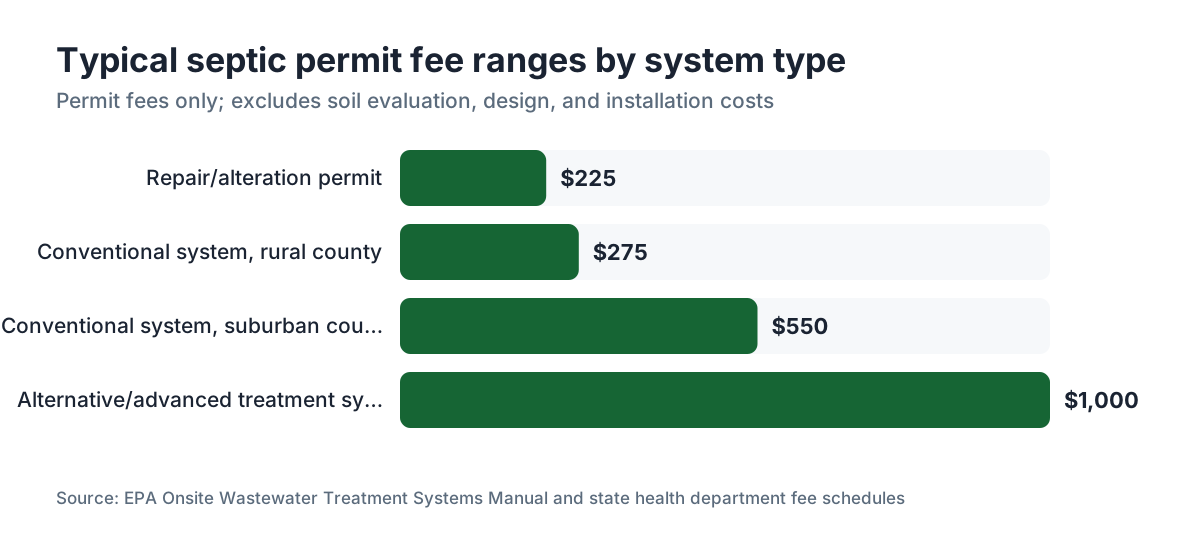
Permit fees swing widely by state and county. Based on state health department fee schedules, here's the honest range:
| System type / jurisdiction size | Typical permit fee range |
|---|---|
| Simple conventional system, rural county | $150, $400 |
| Conventional system, suburban county | $300, $800 |
| Alternative/advanced treatment system | $500, $1,500+ |
| Repair or alteration permit | $75, $400 |
| Perc test / soil evaluation fee (separate) | $200, $600 |
These are permit fees only. They don't include the soil evaluation, engineer fees, contractor fees, or septic tank installation costs. Total project cost for a new system, permits and installation included, typically runs $3,000 to $15,000 or more depending on system type and local labor rates [7].
Some counties charge a flat fee. Others charge by bedroom count or by design flow rate in gallons per day. A few states cap permit fees by statute; others leave it entirely to county discretion, which is why fees in two adjacent counties can differ by a factor of three.
Budget the soil evaluation fee separately. The evaluator may be a county employee or a private consultant you hire. If the county does it, the fee is often bundled into the permit cost. Hire a private consultant and you'll add $200 to $600.
For the full picture of what you'll spend beyond the permit itself, see our breakdown of the cost to install a septic system.
How long does it take to get a septic permit?
This is where homeowners get blindsided. The permit timeline has nothing to do with how fast you want to break ground.
Soil evaluations can often only happen in certain seasons. Some states require wet-season evaluations because clay soils look different in dry summer, and the "limiting layer" that sets drain field depth is only visible when groundwater is at its seasonal high. Miss the window and you wait until next year. That's a real constraint in states like Wisconsin, Minnesota, and much of the Northeast [8].
Once the soil work is done, plan review adds two to eight weeks in most counties. A rural health department with one evaluator on staff can sometimes turn a review around in three to five business days. Suburban counties handling hundreds of applications a month may take six to ten weeks. A few dense counties in California and the Northeast regularly take three to five months.
Start to finish, no soil problems and a straightforward design, budget six to twelve weeks from first call to permit in hand. For complex sites, alternative systems, or slow county offices, five to nine months is realistic.
Start the process before you need it. Buying a home and planning an addition, or watching an aging system you'll eventually replace? Get the soil evaluation done now, while you have time to spare.
What soil tests are required before a permit is issued?
The soil evaluation is the technical foundation of every septic permit. Regulators need three things: what's in the soil, how fast water moves through it, and how deep you can put a drain field before hitting groundwater or a restrictive layer.
Most states now prefer soil morphology evaluations over perc tests. A soil scientist or licensed evaluator digs test pits, usually 18 to 36 inches deep (sometimes deeper), and reads soil structure, texture, color, and mottling. Mottling (gray or orange streaks) shows the soil saturates periodically, which tells the evaluator how close seasonal high groundwater gets to the surface [5].
Percolation tests, where water is poured into a hole and the drop rate is timed in minutes per inch, are still required in some states. Acceptable perc rates typically run 1 to 60 minutes per inch, depending on the state code. Slower than 60 minutes per inch usually means the site fails a conventional system and you need an alternative design. Faster than 1 minute per inch (very sandy or gravelly soil) can also be a problem, because treatment happens too fast.
Some states require both a perc test and a soil morphology evaluation. The results have to meet state code minimums for the specific system type you're proposing. If the site fails, you may be able to propose an alternative system like a mound or drip design built for poor soils, but those need extra engineering and higher permit fees.
What are the setback requirements for a septic system permit?
Setbacks are minimum horizontal distances your septic components must keep from specific features. They vary by state and sometimes by county, but here are the most common values across U.S. state codes [3]:
| Feature | Typical setback from septic tank | Typical setback from drain field |
|---|---|---|
| Private drinking water well | 50 ft | 100 ft |
| Public water supply well | 100 ft | 100 to 150 ft |
| Property line | 5 to 10 ft | 10 to 25 ft |
| Foundation / building | 5 to 10 ft | 10 to 20 ft |
| Surface water (stream, pond) | 25 to 50 ft | 50 to 100 ft |
| Wetlands | 25 to 50 ft | 50 to 100 ft |
These are typical values. Your state may demand larger setbacks, especially for alternative systems or in environmentally sensitive areas. The permit review checks every setback against your site plan, which is one reason a detailed property survey is almost always required.
On a small lot, setbacks can make system placement geometrically hard or flat-out impossible for a conventional system. That's when engineers look at alternative systems with smaller footprints, or, in rare cases, a variance application. A variance is a formal request for an exception to a setback rule, granted only when the applicant proves the reduction won't raise the risk. Approvals are uncommon. Don't count on one.
What happens if you build a septic system without a permit?
Short version: it goes badly.
Most state onsite wastewater codes carry civil penalties from $100 to $25,000 per day for operating an unpermitted system. Virginia's regulations, for one, let the Virginia Department of Health seek civil penalties and injunctive relief for unpermitted installations [9]. Similar authority exists in every state. A few states treat willful violations as criminal misdemeanors.
Beyond fines, regulators can order you to dig up and remove the unpermitted system at your own expense. You pay twice: once to install it illegally, and again to rip it out and do it right. The health department may also slap a stop-work order on your entire property.
The real-estate hit is the one that stings most homeowners. When you sell, a buyer's inspector or lender will look for permit records. An unpermitted system can kill a sale, force a price cut, or require escrow holdbacks until the system is permitted retroactively (if your state even allows it). Title companies increasingly flag unpermitted systems as title defects.
Retroactive permitting, where it exists, usually means a full inspection, possibly excavation to verify components, and payment of both the original permit fee and a penalty. It's never cheaper than doing it right the first time.
If you bought a house and found an unpermitted system, talk to a real estate attorney about disclosure liability and to your county health department about a path to legalization, before the problem surfaces at resale.
Do you need a permit to repair an existing septic system?
It depends on the scope, and this is where a lot of homeowners guess wrong.
Minor repairs are usually permit-exempt. Replacing a pump, cleaning a filter, fixing a broken pipe inside the tank, patching a riser, or pumping the tank (see septic tank pumping) generally don't need a permit. These are maintenance jobs that don't change capacity or layout.
Major repairs almost always need one. Replacing a failed drain field, adding a new distribution box, repairing collapsed leach lines, or any work that alters the footprint or design typically triggers the same process as a new installation: soil evaluation, design review, and inspections [6].
Tank replacement is the gray area. Some counties treat it as a simple alteration with a lightweight process. Others require a full site evaluation to confirm the replacement tank is sized right. Call before you order the tank.
For a septic system repair that touches the drain field, build permit cost and timeline into the project from day one. Finding out mid-job that you need a permit you don't have stops the work and creates liability.
Operators running service fleets across multiple counties gain from tracking permit rules by jurisdiction. Tools like SepticMind help service companies keep permit status records and flag jobs that need regulatory coordination before crews hit the site.
How do septic permits interact with home sales and real estate transactions?
The septic system is one of the few parts of a home with its own regulatory paper trail, and buyers (and their lenders) increasingly know to look for it.
Most states require sellers to disclose known septic defects, and some go further. Massachusetts requires a Title 5 inspection within two years of a sale (or within six months if the system failed). If the system fails, the seller has to bring it into compliance before or shortly after closing [10]. New Hampshire and parts of New Jersey also mandate pre-sale inspections.
Even in states without that mandate, FHA and VA loans require evidence the septic system works and is sized correctly. Conventional lenders often want the same. A septic tank inspection that turns up an unpermitted system, or one that doesn't match the permit record, can freeze a closing.
For sellers: pull your permit records before you list. Your county health department can give you a copy if you lost yours. Know the permit date, the approved system type, and the number of bedrooms the system was permitted for. If your home has more bedrooms than the permit allows, fix that proactively.
For buyers: ask for permit documentation during due diligence, on top of the inspection. A working system that was never permitted is still an unpermitted system, and it becomes your problem the moment you close.
What are the rules for permits in different states, and where do I find my state's code?
There's no federal septic permit law. The Clean Water Act gives the EPA authority over water quality, and the EPA publishes guidance through programs like SepticSmart, but permitting authority sits with the states and flows down to counties [2].
Every state has an onsite wastewater or individual sewage disposal code. Finding it takes about two minutes:
- Search "[state name] onsite wastewater regulations" or "[state name] individual sewage disposal system code".
- Look for a result from your state health department or environmental agency (.gov domain).
- That page links the administrative code and often a homeowner guide.
A few state-level starting points: the California State Water Resources Control Board regulates onsite systems statewide [11]; Florida's Department of Health publishes its onsite sewage program guidance; Texas regulations are administered by the Texas Commission on Environmental Quality (TCEQ) [12]; and Minnesota's Department of Health keeps detailed soil and site evaluation guidance [8].
If your county layers local ordinances on top of state code (common in states like North Carolina and Virginia), the county health department page is where you find those. Local rules can only be stricter than state minimums, never more permissive.
SepticMind's jurisdiction database tracks regulatory contacts and permit requirements across hundreds of counties, which helps service operators who work across county lines keep jobs compliant without researching from scratch every time.
How do I find a licensed septic designer or installer to help with permitting?
Start with your state's licensing board. Every state that requires permits also licenses the people who design and install systems. The license types vary: some states license "onsite wastewater system installers"; others license "soil evaluators" and "designers" separately. Your county health department can usually tell you which license type to look for and may keep a list of locally approved contractors.
The National Association of Wastewater Technicians (NAWT) and NOWRA both keep member directories searchable by state [4]. They aren't exhaustive, but they're a reasonable place to start finding experienced pros.
When you interview contractors, ask directly:
- Are you licensed in this county and state?
- Have you installed this system type before?
- Will you pull the permit, or am I responsible for that?
- How many inspections does the county typically require for this job?
A contractor who can't answer those fluently is a contractor to avoid.
For complex sites or large systems, hiring an independent licensed civil or environmental engineer to design the system before you bring in an installer is money well spent. The engineer's sealed design gives the health department more confidence in the review, often speeds approval, and gives you independent verification that the design is code-compliant no matter who installs it.
Frequently asked questions
How much does a septic permit cost on average?
Septic permit fees run from about $150 for simple rural installations to over $1,500 for complex alternative systems in suburban counties. The permit fee is separate from the soil evaluation ($200 to $600) and the installation cost. Some counties charge flat fees; others charge by bedroom count or design flow rate. Call your county health department for the current fee schedule.
How long does it take to get a septic system permit?
Plan for six to twelve weeks from first contact to permit in hand for a straightforward conventional system. Complex sites, alternative designs, or busy county offices can stretch it to five to nine months. Soil evaluations in some states only happen during specific seasons, which can add a full year of waiting if you miss the window.
Can I install a septic system myself without a permit?
Not legally in any U.S. state. Every new septic system requires a permit, and most states require a licensed contractor to do the installation. Some states let homeowners install a system on their own primary residence with a permit, but that's the exception, and even then the design must be approved and inspected. Installing without a permit risks fines, forced removal, and serious resale problems.
Do I need a permit to pump or clean my septic tank?
No. Routine pumping, cleaning, and filter replacement are maintenance and are permit-exempt in all 50 states. A permit is only required when you change, repair, or install components that affect system capacity or layout. See our guide to septic tank pumping for what routine maintenance involves.
What happens if my property fails the perc test?
A failed perc test doesn't necessarily mean you can't build. It means a conventional gravity system won't work on that soil. You may be able to propose an alternative like a mound system, drip-irrigation system, or aerobic treatment unit built for poor-draining soils. Alternative systems cost more and take a more complex permit, but they work where conventional systems can't.
Do I need a new septic permit to add a bedroom to my house?
Possibly. Most state codes size septic systems by bedroom count because bedrooms drive design wastewater flow. If your existing system is permitted and sized for more bedrooms than you have, adding one may not require a septic permit. If it's sized exactly for your current bedroom count, adding one typically requires a septic evaluation and possibly an upgrade permit before the building department will issue a building permit.
What documents do I need for a septic permit application?
Most counties require a completed application form, a property survey or plat showing lot dimensions and setbacks, a soil evaluation report or perc test results, a system design or site plan drawn to scale, and the permit fee. Some counties want extra documentation for alternative systems, including engineer-stamped drawings or manufacturer specs for proprietary treatment units.
How long is a septic permit valid?
Most septic permits are valid one to three years from the date of issuance, with installation and final inspection required inside that window. If your project stalls and the permit expires, you typically reapply and pay the fee again. Some counties allow one renewal; others require a full new application. Check the expiration date before you schedule installation.
Is a septic inspection required at the time of a home sale?
It depends on the state. Massachusetts requires a Title 5 inspection within two years of any property transfer. New Hampshire and parts of New Jersey have similar rules. Most other states don't mandate pre-sale inspections, but FHA and VA lenders typically require evidence of a functioning system. Even when it isn't legally required, a pre-sale inspection is a smart move for both buyer and seller.
What is a septic system variance and when can I apply for one?
A variance is a formal regulatory exception that lets a setback or design requirement be reduced in a specific case. Variances are granted when strict compliance is physically impossible and the applicant proves the exception won't raise health or environmental risk. They're uncommon, not guaranteed, and require a separate application with supporting technical documentation. Don't design a system around a variance you don't yet have.
Can I find out if a house already has a septic permit on file?
Yes. Your county health department's environmental health division keeps permit records for every permitted onsite system in the county. Records may be searchable online through the county's GIS or environmental health portal, or you can request them in person or by mail. The record shows the permit date, system type, approved capacity, and inspection history.
What's the difference between a septic permit and a perc test?
A perc test (percolation test) is one type of soil evaluation that measures how fast water drains through soil. It's a technical assessment, not a permit. The perc results go into the permit application to show regulators the soil can support the proposed system. Many states now use soil morphology evaluations instead of, or in addition to, perc tests.
Do alternative septic systems like aerobic units require different permits?
Yes. Aerobic treatment units, mound systems, drip-irrigation systems, and other alternative technologies require permits, but the process is usually more involved than for conventional gravity systems. Many states require engineer-stamped designs, manufacturer approval documentation, and ongoing operation and maintenance agreements. Annual or biannual inspection permits for alternative systems are common and add ongoing cost.
Sources
- EPA SepticSmart Program, Homeowner Information: County health departments are the primary permitting authority for onsite wastewater systems in most states
- EPA SepticSmart, 'Properly designed, installed, and maintained septic systems are cost-effective methods for treating wastewater': EPA SepticSmart program describes permitting as essential to ensuring proper septic design and installation
- EPA, Onsite Wastewater Treatment Systems Manual (EPA/625/R-00/008): Federal guidance on setback requirements and permit conditions for onsite wastewater systems including alternative technology types
- National Onsite Wastewater Recycling Association (NOWRA), State Regulatory Information: NOWRA maintains state-by-state regulatory directories and member directories for licensed onsite wastewater professionals
- CDC, Onsite Sewage Systems (Septic Systems) Overview: Inspections at defined stages of installation, including pre-backfill inspection, are standard components of the permit process
- HomeAdvisor / Angi, Septic System Installation Cost Report: Total septic system installation costs including permits typically range from $3,000 to $15,000 or more depending on system type
- Minnesota Department of Health, Subsurface Sewage Treatment Systems: Minnesota requires detailed soil and site evaluation, with seasonal high groundwater as a limiting factor for drain field depth
- Virginia Department of Health, Sewage Handling and Disposal Regulations (12VAC5-610): Virginia regulations allow civil penalties and injunctive relief for unpermitted septic system installations
- Massachusetts Department of Environmental Protection, Title 5 (310 CMR 15.000) Overview: Massachusetts requires a Title 5 inspection within two years of a property sale; failed systems must be brought into compliance
- California State Water Resources Control Board, Onsite Wastewater Treatment Systems Policy: California State Water Resources Control Board regulates onsite wastewater systems statewide under the OWTS Policy
- Texas Commission on Environmental Quality (TCEQ), On-Site Sewage Facilities Program: Texas TCEQ administers the On-Site Sewage Facilities program setting permit and installation requirements for septic systems statewide
Last updated 2026-07-09