Septic system problems: causes, symptoms, and what to do
By the SepticMind Editorial Team
TL;DR
- The most common septic problems are slow drains, sewage odors, gurgling pipes, soggy patches over the drain field, and backups into the house.
- Most trace to four causes: an overdue pump-out, a failing drain field, a damaged tank, or a dead pump or aerator in an aerobic unit.
- Costs run from about $300 for a pump-out to $20,000-plus for a new drain field.
What are the most common septic system problems?
Septic problems announce themselves before they turn into disasters. The trick is matching the symptom to the failure, because the fix for a full tank is nothing like the fix for a dying drain field.
Here are the signs homeowners report most often, roughly in order of how frequently they come up:
- Slow or gurgling drains throughout the house (more than one fixture)
- Sewage odors indoors or in the yard
- Wet, spongy, or unusually green grass directly over the drain field or tank
- Sewage backing up into toilets, tubs, or floor drains
- An alarm light or buzzer on an aerobic treatment unit (ATU)
- Standing water or seeping liquid near the tank lid or distribution box
One sluggish toilet usually means a clog in that toilet's line. When several fixtures back up at once, the problem sits downstream, in the tank or beyond. That single distinction saves a lot of wrong guesses.
The EPA's SepticSmart program lists "wet areas or lush vegetation over the septic system" and "sewage surfacing in the yard" among the clearest signs of a failing system [1]. Those are the symptoms that pull in regulators, because surface sewage is a public health issue, not a household nuisance.
What causes a septic system to fail?
Most failures have a traceable origin. The EPA estimates about one in five U.S. households relies on an onsite sewage system, and the agency names improper maintenance as the leading cause of premature failure [1]. That makes sense once you see how the system works.
A conventional septic system does two jobs. The tank separates solids from liquid. The drain field pushes that liquid (effluent) into the soil. When either part quits, the system backs up or surfaces.
Infrequent pumping. Sludge and scum build up in every tank. Let the sludge layer get too thick and solids start riding the effluent into the drain field, where they plug the soil pores in the trenches. Once that happens, no amount of pumping fully reverses the damage. The EPA and most state extension services recommend pumping every 3 to 5 years for a typical household [1][2].
Hydraulic overload. Push too much water in too fast and the drain field stays saturated. Think a big weekend gathering, a running toilet left for weeks, or a water softener dumping into the tank. Saturated soil can't take more liquid, so effluent backs up or surfaces.
Flushing the wrong things. Wipes (even the "flushable" ones), feminine hygiene products, medications, bleach, and cooking grease all damage either the tank's bacteria or the field itself. Antibacterial soaps in large quantities kill the anaerobic bacteria that break down waste.
Root intrusion and physical damage. Tree roots hunt moisture. They find it in septic pipes and tanks. A root mat inside a distribution pipe chokes flow to the drain field. Drive over the tank or field with a loaded truck and you crush pipes and compact soil.
Age. Concrete tanks crack. Baffles corrode and collapse. Steel tanks, common in homes built before the 1970s, rust through. Older systems were built to looser standards than current code. A system installed in 1965 has earned its retirement. See our guide to septic system repair for what's fixable versus what needs replacing.
How do you know if your drain field is failing?
The drain field (also called the leach field or soil absorption system) is both the hardest-working and the priciest part to replace. Catch its failure early and you might spend $500 instead of $15,000.
Signs the field is in trouble:
- Sewage surfacing over the trench lines, often with a gray or black sheen
- Grass above the trenches greener and taller than the rest of the lawn (nutrients feeding it from below)
- A steady sewage smell outdoors, strongest over the field
- Every drain in the house is slow even after a recent pump-out
- A septic tank inspection shows effluent backing up into the outlet pipe from the field
Biomat is the term for what actually kills most drain fields. It's a layer of anaerobic bacteria, bacterial byproducts, and fine solids that builds on the soil surface inside the trench. A thin biomat helps filter effluent. A thick one seals the trench floor and walls so liquid can't move into the surrounding soil [3].
NC State University Extension puts it plainly: "most drain field failures are due to overloading with solids or hydraulic overloading rather than any inherent problem with the soil" [3]. That's good news, because it means most failures are avoidable.
Before you assume the worst, have a licensed inspector camera the outlet line and check the distribution box. Sometimes a crushed pipe or a flooded D-box is the whole problem, not the field. Our leach field guide walks through diagnosis and repair in detail.
What are common aerobic septic system problems?
Aerobic treatment units (ATUs) have more moving parts than conventional systems. They pump air into the treatment chamber to feed aerobic bacteria, which process waste more thoroughly than the anaerobic bacteria in a standard tank. That extra treatment is why ATUs get approved where conventional systems can't go, but every added part is another thing that can break.
Troubleshooting almost always starts with the alarm. Every ATU is supposed to have an audible or visual alarm that trips when something runs out of spec. Common triggers:
| Alarm condition | Likely cause | Typical fix |
|---|---|---|
| Air pump (compressor) failure | Motor burned out, clogged air filter | Replace compressor ($100-$400 parts) |
| High water level | Pump failure, clogged effluent filter | Replace pump or clear filter |
| Low chlorine | Tablet feeder empty | Refill chlorinator ($10-$30) |
| Timer fault | Timer board failure | Replace timer ($50-$150) |
| Spray head clogged | Mineral buildup or debris | Clean or replace head ($20-$80) |
Compressor failure is the single most common ATU problem. The air compressor runs 24 hours a day, every day. Most decent compressors last 2 to 5 years before they quit [4]. When the compressor dies, the aerobic bacteria in the treatment chamber start dying off within hours. The system slides back to anaerobic processing, treatment quality drops, and the chlorinator can't make up the difference. Leave a dead compressor for more than a day or two and expect odor plus effluent that fails compliance reaching the spray zone.
Chlorinator problems are the second most common complaint. Most states that permit ATUs require chlorination before dispersal. Run out of tablets or crack the feeder and you're out of compliance with your operating permit. Texas, which has more ATUs than nearly any other state, requires maintenance contracts and inspections every four months under 30 TAC Chapter 285 [5].
Spray head failures show up as wet spots in odd places (a head knocked sideways) or dry zones the pattern never reaches. Spray heads are cheap and easy to forget.
One underrated ATU problem is biosolid buildup in the aeration chamber. Even with good aeration, sludge settles. ATUs need pumping like any tank, usually every 2 to 3 years instead of 3 to 5, because aerobic systems break waste into a finer sludge that doesn't compact as tightly.
Why does my septic system smell?
Sewage odor gets homeowners on the phone faster than anything else, and it can start in several different places.
Indoor odors, a rotten-egg or sewer-gas smell drifting up from drains or toilets, usually point to one of three things: a dried-out P-trap (pour water down a rarely used drain to reseal it), a failed wax ring under a toilet, or sewer gas pushed back through the plumbing because the tank is full or vented badly. If the smell hits only one bathroom and the tank was recently pumped, check the P-trap before you call anyone.
Outdoor odors near the tank or lid mean the lid isn't sealed, a cracked baffle is venting gas upward, or the tank genuinely needs pumping. Odors right over the drain field mean effluent is surfacing, which is a failure.
Here's an oddity people report right after a pump-out: temporary odor for a day or two. That's normal. Pumping disturbs the bacterial community, and the tank smells more than usual while it rebuilds. It passes.
Sewer gas holds hydrogen sulfide and methane. At high concentrations both are dangerous, but in a normal residential septic setup the levels are almost never high enough to hurt you physically. The smell, though, will drive you out of the house if it lingers.
Can heavy rain cause septic system problems?
Yes, and it catches people off guard because rain seems to have nothing to do with a buried waste system.
The drain field needs the surrounding soil dry enough to accept effluent. After heavy rain, clay-heavy soils saturate first. The field can't disperse liquid faster than the house sends it, so effluent backs up toward the tank and then into the house. You might see slow drains or backups that clear on their own within a day or two once the soil dries.
If this happens after every moderate rain, the field may be undersized for your soil's percolation rate, or the soil has changed (clay heave, compaction from vehicles). A percolation test run in wet conditions gives the truest read on whether the field is big enough.
High groundwater is a cousin of the same problem. If the seasonal high water table rises to within 12 to 18 inches of the trench bottom, most state codes say the system wasn't compliant to begin with [6]. Systems put in decades ago sometimes predate those rules.
Floodwater over the tank or field carries risk in the other direction. Pathogens from floodwater can enter a cracked tank or open lid and bring in contaminants the system was never built to treat. After any flooding that covers the septic components, get the system inspected before you go back to normal use.
How much do septic system repairs cost?
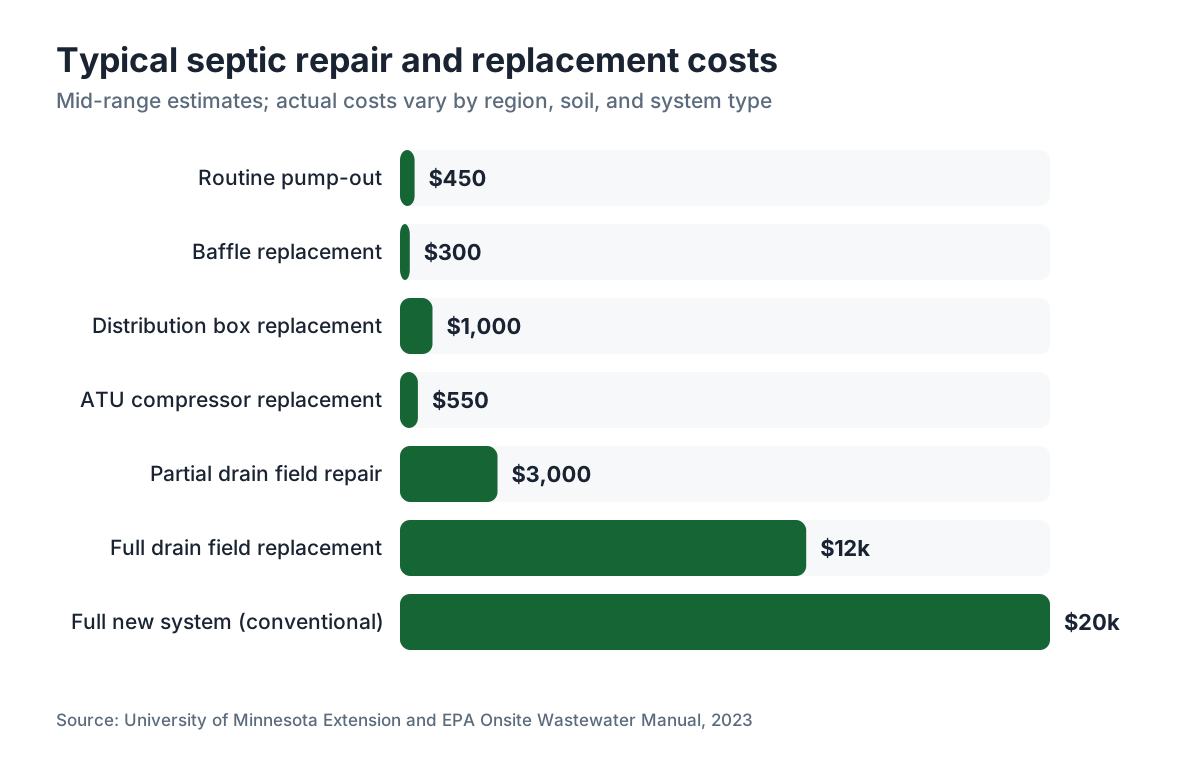
Cost swings more than almost any other home repair, because it rides on what failed, your soil type, local labor rates, and whether permits are required. Here's an honest range built from commonly cited industry and state cost data:
| Repair type | Typical cost range | Notes |
|---|---|---|
| Pump-out (routine) | $300-$600 | Every 3-5 years; see septic tank pumping |
| Pump-out (emergency, after backup) | $400-$900 | After-hours or weekend rates apply |
| Baffle replacement | $100-$500 | Labor-intensive on concrete tanks |
| Effluent filter install/clean | $100-$250 | Worth doing at every pump-out |
| Distribution box replacement | $500-$1,500 | Includes excavation |
| Drain field repair (partial) | $1,000-$5,000 | Depends on how many trenches |
| Drain field replacement (full) | $5,000-$20,000+ | Site conditions dominate cost |
| Concrete tank repair (cracks) | $500-$2,500 | Epoxy or liner; not always durable |
| Tank replacement | $3,000-$8,000 | Polyethylene or new concrete |
| ATU compressor replacement | $300-$800 installed | Parts are $100-$400; labor varies |
| New full system (conventional) | $10,000-$30,000 | See cost to install septic system |
The biggest cost driver by far is whether the drain field needs replacing. Everything else on that list is a rounding error next to a new field in difficult soil. If a contractor tells you the field is done, pay for a second opinion and a soil evaluation before you commit [7].
For budgeting: a pump-out every 3 to 5 years at $400 average works out to roughly $80 to $130 a year. That's cheap insurance against a $15,000 drain field.
SepticMind's operator platform lets service companies track pump-out histories and flag systems overdue for service, which cuts down on the emergency calls that hit homeowners hardest.
What septic problems can you fix yourself versus when should you call a pro?
Honest answer: the DIY list is short.
Reasonable DIY:
- Resealing a dry P-trap (run water down the drain)
- Swapping a toilet wax ring if you've done basic plumbing
- Refilling the chlorine tablet dispenser in an ATU you own and understand
- Locating your tank lid and clearing grass or debris off the access covers
- Cutting water use during a high-groundwater event
Call a licensed professional:
- Anything that means opening the tank (hydrogen sulfide in an enclosed tank has killed people; OSHA treats these as permit-required confined spaces [8])
- Pump-outs, always
- Any electrical part in an ATU (pumps, timers, alarms)
- Drain field diagnosis and repair
- Adding risers to grade (permits often required)
- Any repair your state code classifies as regulated work, which in most states is nearly everything past the building drain
The confined-space hazard is real, not theoretical. OSHA's guidance on hydrogen sulfide notes that concentrations above 100 ppm, easily reached inside a septic tank, cause rapid loss of consciousness [8]. Rescuers who climbed in without proper gear to save a victim have died too. Don't open the tank yourself.
For the full rundown of repair options and prices, see our guide to septic tank repair.
How do septic problems differ by system type?
Not every septic system is a tank-and-drain-field combo. Knowing your type tells you which failures to watch for.
Conventional gravity system. The most common. Tank takes waste, gravity carries effluent to the field. Failure modes: full tank, failing field, cracked baffles, root intrusion. Low complexity, low maintenance.
Pressure distribution system. A pump sends effluent to the field in timed doses instead of a steady trickle. The pump is a failure point (figure 7 to 15 years of pump life), and the pump chamber gets pumped separately from the tank. The payoff is more even spread across the field, which stretches its life.
Aerobic treatment unit (ATU). Covered in detail above. Higher maintenance cost, cleaner effluent, required in many areas with poor soil or high water tables. A typical annual maintenance contract runs $150 to $400 a year [4].
Mound system. Used where the water table or bedrock sits close to the surface. The field is built above grade, so the system always includes a pump chamber and dose pumps. A pump failure strands effluent in the tank. Mounds also need careful cover management: keep vehicles off, keep burrowing animals out.
Chamber and drip irrigation systems. Chamber systems swap gravel trenches for plastic arch chambers, which add storage volume and shrug off some hydraulic overload. Subsurface drip systems deliver effluent through small tubing and emitters; clogged emitters and tubing are the main headache.
Not sure what type you have? Your county health department or environmental agency should have the permit on file.
What does a septic inspection look for?
A proper septic inspection is your best early warning. Buying a home with a septic system? An inspection is non-negotiable. Been in the house a while and never had one? Schedule one now.
A licensed inspector will usually:
- Find and expose the tank access lids (sometimes the first time anyone has opened them in years)
- Check liquid levels inside the tank: normal sits at the outlet pipe; above it means the field isn't accepting effluent
- Inspect the inlet and outlet baffles for rot
- Measure sludge and scum thickness (if sludge is within 12 inches of the outlet, it's time to pump)
- Check the distribution box for equal flow to all laterals
- Look for surface effluent over the drain field
- On ATUs, check the compressor, alarm, and chlorinator
A basic visual inspection runs $100 to $300. A full inspection with load testing (running water to stress the system) and a camera pass on the outlet line runs $300 to $600. Real estate deals sometimes require a more involved Title 5 inspection (Massachusetts) or the equivalent state protocol, which includes pumping [9].
For everything a good inspection covers and what to do with the results, our septic tank inspection guide goes step by step.
How can you prevent septic system problems?
Prevention costs a fraction of repair. The EPA's SepticSmart guidance boils down to four habits [1]:
- Pump on schedule. The EPA recommends every 3 to 5 years; your inspector can tighten or loosen that based on actual sludge measurements. See how often to pump septic tank for the math.
- Protect the drain field. Don't drive over it. Don't plant trees near it (roots travel 20 to 30 feet toward moisture). Don't aim roof drains or surface water at it.
- Watch what you flush. Short version: if it didn't come out of your body and it isn't toilet paper, it doesn't go down the drain. No wipes, no medication, no grease, no harsh chemicals in bulk.
- Spread water use out. Run the dishwasher at night instead of during the morning shower rush. Fix a running toilet the day you notice it. A single running toilet can dump 200 gallons a day into the system [2], more than most tanks are sized to take from one source.
People ask about septic additives, the enzyme and bacteria products on the hardware store shelf. Honest answer: the science is mixed. Penn State Extension reviewed the research and found no consistent evidence that additives improve performance or extend system life [2]. They won't hurt in normal doses, but they're no substitute for pumping.
For operators running many systems, scheduling pump-outs before customers call with a backup is the highest-value service you can sell. Tracking service intervals and firing off reminders is exactly what a platform like SepticMind is built for.
When does a septic problem become a health or legal emergency?
Some failures jump from inconvenience to regulatory trouble fast.
Surface sewage, untreated or partly treated wastewater visible on the ground, is a reportable condition in most states. It's a public health nuisance, and depending on how close it sits to a waterway, it can trigger Clean Water Act enforcement. Your county health department or state environmental agency can order you to stop using the system until it's fixed.
Skip maintenance on an ATU in a state that requires service contracts (Texas, Oklahoma, and many others) and you can face fines and even forced abandonment. Texas 30 TAC Chapter 285 spells out that ATU owners must keep a service contract with a licensed maintenance provider [5].
Selling the house? A failing system is a material defect you have to disclose in most states. Hiding a known septic failure has ended in lawsuits long after closing.
Groundwater contamination is the worst case. Pathogens and nitrates from a failing system can reach a drinking water well. The CDC has documented waterborne disease outbreaks traced to failing onsite sewage systems [10]. If a private well sits within 100 feet of a septic system, annual testing for coliform bacteria and nitrates is cheap next to the alternative.
If the system is past saving and you're starting fresh, our guide to the cost to put in a septic tank breaks down installation pricing by component and region.
Frequently asked questions
How do I know if my septic tank is full or if the drain field is failing?
A full tank and a failing field share symptoms, slow drains and backups, but they react differently to pumping. If a pump-out fixes things for a few years, the tank was the issue. If drains are still slow a week after pumping, or sewage is surfacing in the yard, the field is the likely culprit. A licensed inspector can measure liquid levels in the tank and check the outlet pipe for backflow from the field.
Can a septic system fix itself?
Partly, sometimes. A system overloaded during heavy rain may recover once the soil dries out. A lightly biomat-affected field can recover if you cut water use hard for weeks or months and pump the tank. But a mechanically damaged component, a cracked tank, a collapsed pipe, a dead ATU compressor, won't heal on its own. When in doubt, get a professional diagnosis instead of waiting.
What should I do if sewage is backing up into my house right now?
Stop using all water in the house immediately. Don't flush, run the dishwasher, or shower. Call a licensed pumper or septic company for emergency service. A pump-out usually relieves the immediate backup. Once the emergency passes, schedule a full inspection to find the underlying cause, because backups rarely happen without a reason, and that reason will cause the next one if you leave it.
How often does an aerobic septic system need maintenance?
Most ATUs need professional inspection every four to six months, typically required by your state operating permit. Check or replace the compressor every 2 to 5 years. Chlorine tablets need refilling every one to three months depending on use. The tank itself needs pumping every 2 to 3 years, more often than a conventional tank because aerobic systems make finer sludge that piles up differently.
Why does my septic smell after it was just pumped?
Temporary odor for 24 to 72 hours after a pump-out is normal. Pumping hauls out the active bacteria along with the sludge, so the tank is basically starting over, and early fermentation makes more odorous gas than a mature, stable tank. If the smell hangs on past a few days or shows up indoors, check that the access lids are sealed and that the plumbing vents on the roof aren't blocked.
Can too much rain damage my septic system?
Rain itself doesn't damage the system, but saturated soil stops the drain field from absorbing effluent. If your soil is clay-heavy or the water table rises seasonally, you may see slow drains or brief backups during and after heavy rain. Repeated rain-related trouble suggests the field is undersized, sited badly, or the soil has changed. A percolation test run in wet conditions gives the most accurate picture.
What can I flush if I have a septic system?
Human waste and toilet paper only. Everything else, including wipes labeled flushable, paper towels, feminine hygiene products, condoms, cotton balls, and dental floss, goes in the trash. In the kitchen, keep grease, coffee grounds, and food scraps out of the drain. Garbage disposals add a lot of solids to your tank and shorten pump-out intervals; if you have one, use it sparingly.
How long does a septic drain field last?
A well-maintained drain field usually lasts 20 to 30 years, sometimes longer. Early failure typically traces to infrequent tank pumping (letting solids reach the field), hydraulic overloading, root intrusion, or vehicle traffic over the field. Fields on sandy or loamy soils tend to outlast those in heavy clay. There's no set replacement schedule; condition-based inspection tells you more than age alone.
Is it safe to be in the yard if my septic system is failing?
Avoid contact with any surfacing sewage. Raw or partly treated wastewater carries pathogens including bacteria, viruses, and parasites. Keep children and pets away from wet areas over the drain field. If sewage reaches the surface, treat it as a health hazard: don't walk through it, don't let it touch garden produce, and contact your local health department to report it and get guidance on required repairs.
Do septic additives and enzymes actually help?
The evidence is weak. Penn State Extension reviewed available research and found no consistent evidence that commercial bacterial or enzyme additives improve septic performance or reduce pump-out frequency. Your tank already holds billions of naturally occurring bacteria that are well suited to the job. Additives won't hurt in normal doses, but they're no substitute for pumping and they won't rescue a mechanically failing system.
What's the difference between a septic system alarm and an actual emergency?
ATU alarms signal that something is outside normal operating parameters, but not every alarm is an immediate emergency. A low-chlorine alarm (just needs a tablet refill) is very different from a high-water alarm (the pump may have failed). Check your system's manual for the alarm code. Silence the buzzer if it's driving you crazy, but don't ignore the condition behind it. Call your maintenance provider within 24 hours for anything beyond a known minor issue like an empty chlorinator.
How do I find a septic system problem before it becomes a major failure?
Schedule a professional inspection every one to three years, or at every pump-out. Have the inspector measure sludge depth and check the outlet baffle. Watch your yard for unusually green or wet patches over the drain field. Notice when several drains in the house go slow at once. The earlier you catch a developing biomat or a cracked baffle, the cheaper the fix. Catching a field in early failure often means a repair instead of a replacement.
Can I build a deck or plant a garden over my septic system?
No structures of any kind over the tank or drain field. Decks and sheds block access for pumping and inspection, and local code usually bans them. Planting a garden over the drain field is also a bad idea: root damage to the field, possible contact with pathogens in the soil, and the plain fact that edible plants shouldn't grow in effluent-irrigated soil. Grass or shallow-rooted groundcover is the right cover for a drain field.
Sources
- U.S. EPA, SepticSmart program: Improper maintenance is the leading cause of premature system failure; one in five U.S. households relies on onsite sewage systems; wet areas, lush vegetation, and surfacing sewage listed as key failure indicators
- Penn State Extension, Septic System Additives and Pumping Frequency: Recommended pump-out interval of 3 to 5 years; no consistent evidence that additives improve performance; running toilet can add roughly 200 gallons per day
- NC State University Extension, Soil Absorption Systems: Most drain field failures are due to overloading with solids or hydraulic overloading rather than any inherent problem with the soil; biomat mechanism described
- Texas A&M AgriLife Extension, Aerobic Septic Systems: ATU compressor life typically 2 to 5 years; annual maintenance contract cost range $150 to $400 per year
- Texas Commission on Environmental Quality, 30 TAC Chapter 285: Texas requires ATU owners to maintain a service contract with a licensed provider; inspections required every 4 months under state regulations
- U.S. EPA, Onsite Wastewater Treatment Systems Manual: Minimum separation distance of 12 to 18 inches between seasonal high groundwater table and drain trench bottom is a standard code requirement
- University of Minnesota Extension, Septic System Costs and Decisions: Drain field replacement costs $5,000 to $20,000 or more depending on site conditions; second opinion recommended before committing to replacement
- OSHA, Hydrogen Sulfide Hazards in Construction: Hydrogen sulfide concentrations above 100 ppm cause rapid unconsciousness; septic tanks classified as permit-required confined spaces; rescuers without proper equipment have died
- Massachusetts Department of Environmental Protection, Title 5 Inspection Program: Massachusetts Title 5 inspection protocol for real estate transactions requires pumping and full evaluation of septic components
- CDC, Waterborne Disease and Outbreaks Surveillance: Waterborne disease outbreaks have been traced to failing onsite sewage systems contaminating drinking water wells
- U.S. EPA, How Your Septic System Works: Description of conventional gravity-fed septic system operation including tank separation and drain field soil absorption
Last updated 2026-07-09