Perc test in Wisconsin: rules, costs, and what to expect
By the SepticMind Editorial Team

TL;DR
- A Wisconsin perc test (officially a soil and site evaluation) costs $250 to $1,500, must be done by a state-licensed soil tester, and is required before any new septic permit.
- The rules live in Wisconsin Administrative Code COMM 83.
- Sandy loam passes easily.
- Dense clay or a high water table usually pushes you into a mound or holding-tank design instead of a conventional drain field.
What is a perc test and why does Wisconsin call it something different?
Most people say "perc test" out of habit, but Wisconsin doesn't use that term in its rules. The state calls it a "soil and site evaluation," and the difference is real. A traditional percolation test only measures how fast water drains through a small hole. Wisconsin's process goes further: a licensed soil tester reads the whole site, including soil texture, structure, color, mottling (those rust or gray streaks that signal seasonal high water), and depth to bedrock or groundwater. The point is to figure out how the soil treats wastewater over decades, not whether it drains fast on a single afternoon.
Wisconsin Administrative Code COMM 83 governs the whole process. [1] It sets minimum soil depths, restricts placement near wells and water bodies, and defines which soil types can support which system designs. The logic holds up. Sandy soil that drains an inch in two minutes might feel like a win, but effluent races through too fast to kill pathogens. Clay drains slowly and can treat wastewater better, yet it needs a pressure-dosed or mound system so it doesn't stay saturated. Neither extreme is automatically good or bad. The evaluation figures out what the site actually needs.
For anyone buying raw land or adding a building in a rural area, this evaluation is the gate. No county issues a septic permit without a completed soil and site evaluation on file. [2]
Who can legally do a perc test in Wisconsin?
Only a soil tester licensed by the Wisconsin Department of Safety and Professional Services (DSPS) can run the official soil and site evaluation. [3] You can't do it yourself. A general contractor or excavator can't do it either unless they hold that specific license. Soil testers pass a state exam, complete continuing education, and carry professional liability coverage.
The county sanitarian usually reviews or witnesses parts of the evaluation too. Some counties bolt their own forms and scheduling rules on top of the state code. Brown County, for example, wants the soil tester to submit results straight to the county Environmental Services office before any permit application moves. Dane County runs evaluations through its Land and Water Resources Department. So you deal with two layers: DSPS licensing for the tester, and county approval for the permit.
Call your county sanitarian or land and water department first. Ask who they accept evaluations from and whether the county schedules any part of the work. Then hire a licensed soil tester from the state directory at dsps.wi.gov. Do it in that order. Some counties have local quirks about documentation that a tester unfamiliar with the county will miss, and a missed detail turns into a delay.
How much does a perc test cost in Wisconsin?
Expect $250 to $1,500 for a soil and site evaluation in Wisconsin, with most residential lots landing between $400 and $800. [4] The spread comes from lot size, terrain, the number of soil borings, travel distance, and how many testers compete in your area. Northern counties with few licensed testers run higher. Dane and Milwaukee County, with more competition, run lower.
The evaluation fee is separate from county permit fees, which typically run $150 to $500. [2] If the evaluation turns up a hard site that needs a mound, pressure-dose, or alternative system, you may also pay for engineering work on top.
Here's a surprise that catches people: if your evaluation goes stale before you pull a permit, you may pay for a repeat. Wisconsin evaluations don't expire automatically under COMM 83, but counties can set their own validity windows, and site conditions can shift enough that a sanitarian asks for fresh data. Pull your permit within a reasonable window after the evaluation.
For what the full install runs, see our guide to cost to install septic system.
What happens during a Wisconsin soil and site evaluation?
The evaluation takes two to four hours for a typical residential lot, longer on big or complicated parcels. Here's the day.
The tester starts by reading the site: setbacks from wells, property lines, buildings, waterways, and any easements. Wisconsin requires minimum horizontal setbacks from wells (50 feet for conventional systems, more in some cases), from navigable waterways (75 feet in most cases), and from property lines (typically 10 feet). [1]
Then the soil work. The tester digs or augers borings, usually two to four for a standard lot. Each boring goes down at least five feet, sometimes more, depending on what shows up. They read texture and structure at each layer, record color with a Munsell color chart to keep the reading standard, note any mottling or gleying that flags a seasonal high water table, and measure depth to restrictive layers like bedrock, fragipan, or saturated soil.
Percolation holes get dug sometimes, but COMM 83 doesn't always require them if the soil is already well characterized. When the tester uses them, they pre-saturate the holes, then measure the drop in water level over a set time to get the rate in minutes per inch.
All of it lands on official evaluation forms and goes to the county. The sanitarian reviews the data and, using COMM 83 soil requirements, decides what type of system the site can support.
What soil types pass or fail a Wisconsin perc test?
Wisconsin doesn't run a simple pass/fail. Soil data decides which system type is allowed. That distinction matters: very few sites are truly undevelopable. Most just need a more engineered solution.
Conventional in-ground systems (gravity-fed drain fields) need soil with a percolation rate between 1 and 60 minutes per inch and at least three feet of suitable soil above any restrictive layer. [1] Sandy loam and loam in that range are the sweet spot.
Soils that drain faster than 1 minute per inch (very coarse sand or gravel) don't hold effluent long enough to treat it. They usually need extra media treatment, like a sand filter, before the effluent reaches native soil. [9]
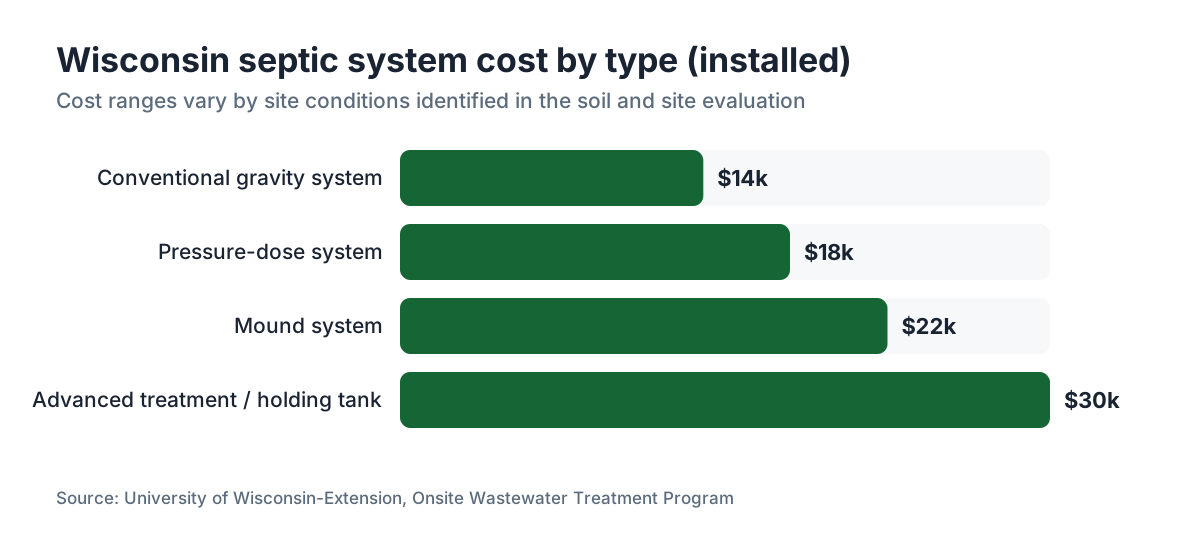
Soils slower than 60 minutes per inch, or sites with a seasonal high water table within two feet of the surface, usually need a mound or pressure-dose system. A mound raises the drain field above the natural surface to build the required separation between the distribution pipes and the high water table or restrictive layer. These cost a lot more to install, typically $15,000 to $30,000 against $8,000 to $20,000 for a conventional system. [4]
Bedrock within five feet of the surface is the ugliest case. Counties in the karst regions of southwestern Wisconsin (the Driftless Area) deal with shallow limestone bedrock all the time. Those sites often need holding tanks or advanced treatment units, and permits can come with strict conditions.
| Soil Condition | Perc Rate | Typical System Allowed |
|---|---|---|
| Coarse sand / gravel | < 1 min/inch | Sand filter or media filter required |
| Sandy loam to silt loam | 1 to 60 min/inch | Conventional gravity drain field |
| Clay loam, slow-draining | > 60 min/inch | Mound or pressure-dose system |
| Seasonal high water table within 2 ft | Varies | Mound or elevated system required |
| Bedrock within 5 ft | N/A | Holding tank or advanced treatment |
For how a drain field works with the soil around it, our leach field guide covers the mechanics.
How long does the perc test process take from start to permit?
Plan for three to eight weeks from your first call to a soil tester to a county-issued permit. It stretches longer in busy seasons or in counties with long review queues.
The wait to schedule a licensed tester is usually one to three weeks in spring and summer, which is peak land-transaction season. The evaluation itself takes a half-day on site. Submitting results and getting sanitarian review adds another one to three weeks depending on county workload. Dane County posts current turnaround times on its website and has run four to six weeks during peak periods.
If the county wants more data, or the site needs engineered plans, add time. A mound design from a licensed engineer can take two to four more weeks.
One thing slows the whole process for no good reason: waiting until the last minute before a land closing. Get the evaluation done before you're under contract if you can, or write a contingency into the purchase agreement that leaves time for a satisfactory result. A rough evaluation doesn't make the land worthless, but it changes what developing the site costs, and that's exactly what you want to know before you sign.
What are the Wisconsin setback and separation requirements for septic systems?
Wisconsin COMM 83 sets statewide minimum setbacks. Counties can go stricter but never below the state floor. [1] The numbers people ask about most:
- Private well to soil absorption system: 50 feet horizontal (more in some bedrock or karst situations)
- Public or community well: 100 feet
- Navigable waterway or lake: 75 feet to any part of the system
- Property line: 10 feet to any component
- Building foundation: 10 feet
- Swimming pool or other drainage structure: 10 feet
The other measurement that matters is the vertical separation between the bottom of the distribution pipes and a restrictive layer (high water, bedrock, impervious soil): three feet for conventional systems. That single number is why a shallow water table causes so much trouble in glacial Wisconsin soils.
Some shoreland counties, especially near lakes in the Northwoods, apply Wisconsin Shoreland Zoning standards on top, which can push setbacks from the ordinary high-water mark to 75 feet or more depending on lot type. [5]
If your lot is small and you're trying to fit a house, well, and septic system on it, the setback math gets tight fast. A tester who works small lots can tell you quickly whether the geometry works before you spend money on a full evaluation.
Can a Wisconsin perc test fail, and what happens next?
The evaluation doesn't technically "fail" in most cases. It identifies constraints. The county sanitarian takes those constraints and decides which system designs the site allows.
A truly undevelopable site is rare but real. It happens when the lot is so small no setbacks can be met, or when every corner has bedrock within two feet and there's no spot for even a holding tank without breaking a setback. In those cases the county won't issue a permit for a new system.
More often, a hard evaluation just means a pricier system. A mound instead of a gravity field adds $5,000 to $15,000 to the install. An engineered pressure-dose system might come with an annual maintenance contract on top.
Think the tester's findings are wrong? You can hire a second licensed tester for an independent evaluation and submit that to the county. Counties do see conflicting evaluations now and then, and the sanitarian weighs both sets of data.
Existing properties with failing systems follow a slightly different path. The county often requires an evaluation of the current system and available area before approving a repair design. Our septic system repair guide covers that route.
Do I need a perc test for a Wisconsin property with an existing septic system?
For most sales involving an existing home with a working septic system, you don't need a new soil and site evaluation. What you do need, and what buyers keep overlooking, is a septic tank inspection and a look at the system's permit records.
Wisconsin counties keep septic permit records, and most sanitarians will tell you whether a system was permitted, what type it is, and what design capacity it got approved for. Permits and as-built drawings are public records in Wisconsin. If you're buying, pull them. A system installed without a permit, or expanded beyond its permitted design, is a liability you inherit.
If the existing system is failing or near the end of its life, or if you're adding a bedroom or a new building footprint, a soil evaluation may be required for the replacement or addition. A conventional system installed 30 years ago may have used every square foot of available drain-field area on the lot, which leaves no room for a replacement field. That shows up in records and site inspections, not by staring at the yard.
Pumping the tank before a sale is standard practice and protects everyone. See our septic tank pump out and septic tank pumping guides for what that involves.
How do Wisconsin perc test rules compare to EPA guidance?
The EPA's SepticSmart program treats soil evaluation as a standard pre-construction step for any onsite system and puts it plainly: "the health of your septic system depends on the soil in your yard." [6] Wisconsin's COMM 83 framework matches that guidance and then goes further, requiring a licensed professional and a structured soil morphology analysis instead of a simple water-drop test.
The EPA has long held that percolation tests alone are weak predictors of long-term performance. Its 2002 design manual on onsite wastewater treatment says soil morphology (color, mottling, texture, and structure) gives more reliable information about seasonal water conditions than a single-day perc test. [7] Wisconsin's shift to a full soil and site evaluation follows that science.
The practical upshot for homeowners: Wisconsin's process is more rigorous than many neighboring states, which makes it more predictive. A system designed to COMM 83, installed by a licensed contractor, and maintained well tends to last 20 to 30 years without major trouble. EPA SepticSmart guidance recommends inspections every one to three years and pumping every three to five years to keep it there. [6]
Operators managing accounts across multiple Wisconsin counties can track evaluation records, permit deadlines, and maintenance schedules in software built for the job. SepticMind is one such tool, made to keep service operators on top of regulatory timelines across different county jurisdictions.
If your focus is maintenance after install, knowing how often to pump septic tank is the single highest-value thing you can track.
How do I find a licensed soil tester in Wisconsin?
The Wisconsin Department of Safety and Professional Services (DSPS) keeps the official license lookup for soil testers. [3] Go to dsps.wi.gov, use the credential search, and filter for "Soil Tester" as the credential type. You can search by county or ZIP and confirm the license is active.
As of the most recent licensing data, Wisconsin has several hundred licensed soil testers statewide, but they're spread unevenly. Dense counties like Dane, Milwaukee, Waukesha, and Brown have plenty of options. Rural counties in the north and west sometimes have only a handful of active testers, which drives up both cost and wait time.
When you call a tester, ask:
- How many evaluations have you done in this specific county?
- Do you know the local sanitarian's documentation preferences?
- What do you charge, and does that include the county permit application or just the evaluation?
- What's your current scheduling wait?
A tester who knows your county's sanitarian personally is worth a small premium. That informal relationship smooths the review and catches documentation issues before they turn into delays.
For the cost of designing and installing a system after the evaluation comes back, our septic tank installation and cost to put in a septic tank guides break down what you'll spend.
What records should I keep after a Wisconsin perc test?
Keep everything. That sounds obvious, but most homeowners don't, and it costs them later.
The soil tester gives you a copy of the official evaluation forms. Keep those. The county issues a permit with an associated system design. Keep that too, including any as-built drawings submitted after installation. When you sell, the buyer's attorney will ask for these records, and scrambling to get duplicates from a county that may store them in paper archives eats time you won't have at closing.
If you own the property, ask the county for a copy of the permit file, including any inspection reports from the install. Wisconsin counties are required to keep these records, but access varies. Some have digitized everything. Others are still working through paper files from the 1980s and 1990s.
For ongoing maintenance, record your septic tank pumping dates, the volume pumped, and any notes from the pumper about tank condition. The EPA and most county sanitarians recommend a home file with all of it. A three-ring binder works fine. If you want something more structured, SepticMind offers homeowner-facing tools for tracking system history.
Good records also protect you if a neighbor claims your system is causing problems. Evaluation data, permit history, and maintenance logs are the proof that your system was designed and maintained right.
Frequently asked questions
How much does a perc test cost in Wisconsin?
Most Wisconsin soil and site evaluations run $400 to $800 for a standard residential lot, within a full range of $250 to $1,500 depending on lot complexity, travel distance, and local competition. That fee covers the evaluation only. County permit fees add another $150 to $500. Complex sites that need engineered designs cost more on top of that.
Who is allowed to do a perc test in Wisconsin?
Only a Wisconsin DSPS-licensed soil tester can legally perform the official soil and site evaluation required for a septic permit. Verify active licenses at dsps.wi.gov using the credential search. Homeowners, excavators, and contractors without that specific license cannot conduct the official evaluation, even with relevant experience.
How long does a Wisconsin perc test take?
The on-site evaluation takes two to four hours for a typical residential lot. From scheduling a tester to county approval, expect three to eight weeks total, longer during spring and summer peak season. Complex sites that need mound engineering can add another two to four weeks to the county review.
What happens if my property fails a perc test in Wisconsin?
Most difficult evaluations don't produce a hard failure. They limit your design options. Slow-draining or high-water-table sites usually need a mound or pressure-dose system instead of a conventional drain field. Truly undevelopable sites, where no setbacks can be met or conditions are extreme, are uncommon. You can hire a second licensed tester for an independent evaluation if you disagree with the findings.
Does a perc test expire in Wisconsin?
COMM 83 sets no automatic expiration on soil evaluations, but individual counties can require updated data if conditions change or too much time passes before you pull a permit. As a practical matter, pull your permit within one to two years of the evaluation to avoid questions from the county sanitarian about whether the data is still current.
What Wisconsin administrative code governs perc tests and septic systems?
Wisconsin Administrative Code COMM 83 governs private onsite wastewater treatment systems, including soil and site evaluation requirements, setback distances, soil suitability standards, and system design rules. Individual counties can adopt stricter requirements but cannot go below the state minimums in COMM 83.
How close to a well does a septic system have to be in Wisconsin?
The COMM 83 statewide minimum is 50 feet of horizontal separation between a private well and a soil absorption system. Community or public wells require 100 feet. Situations involving bedrock, karst geology, or sandy soils may require greater separation. Your county sanitarian can tell you if local rules are stricter.
Do I need a perc test to buy land in Wisconsin?
You don't legally need one to close on a land purchase, but you should get one before closing or include a contingency clause. An evaluation that turns up a high water table or shallow bedrock can raise your future development costs a lot. Finding that out after you own the land is far more painful than delaying a closing.
Can I do my own perc test in Wisconsin for my own property?
No. A self-conducted percolation test doesn't meet Wisconsin's requirements for a septic permit. The state requires a licensed soil tester to conduct and certify the official soil and site evaluation. You can be present and ask questions, but the tester must run it and sign the results.
What soil types are best for passing a Wisconsin perc test?
Sandy loam, loam, and silt loam with percolation rates between 1 and 60 minutes per inch suit conventional drain fields best under COMM 83. They drain fast enough to disperse effluent but slow enough to treat it. Very sandy soils drain too fast; clay soils drain too slowly. Both need alternative designs, not an outright rejection.
How deep do soil borings go during a Wisconsin soil evaluation?
COMM 83 requires borings to go at least five feet below the proposed system depth, or deeper if the tester needs the full soil profile. In practice most residential borings reach five to seven feet. The goal is to document every distinct soil layer and identify restrictive conditions like bedrock, fragipan, or a seasonal water table.
Does Wisconsin require a perc test for a septic system replacement?
It depends on the county and situation. Replacing a failed system in-kind on the same footprint sometimes uses existing permit records. Adding bedrooms, expanding the structure, or relocating the system to a new area of the lot often requires a new soil evaluation. Contact your county sanitarian first; they'll tell you what data they need before approving a replacement design.
What is a mound system and when does Wisconsin require one?
A mound system raises the drain field above the natural soil surface to build separation between the effluent distribution pipes and a high water table or restrictive layer. Wisconsin requires one when native soil doesn't provide the minimum three feet of suitable soil above a restrictive layer. Mounds cost $15,000 to $30,000 to install, against $8,000 to $20,000 for conventional systems.
Sources
- Wisconsin Legislature, Administrative Code COMM 83 (Private Onsite Wastewater Treatment Systems): COMM 83 governs soil and site evaluations, setback distances (50 ft from private wells, 75 ft from navigable waterways, 10 ft from property lines), and minimum three-foot separation requirement for conventional systems in Wisconsin
- Wisconsin Department of Natural Resources, Septic Systems / Private Sewage Systems: Wisconsin counties require a completed soil and site evaluation before issuing a septic system permit; county permit fees typically range from $150 to $500
- Wisconsin Department of Safety and Professional Services, Credential Lookup: DSPS licenses soil testers in Wisconsin; license status can be verified through the online credential search tool
- University of Wisconsin-Extension, Onsite Wastewater Treatment Program: Wisconsin soil and site evaluations cost $250, $1,500 for residential lots; mound systems cost $15,000, $30,000 to install compared to $8,000, $20,000 for conventional systems
- Wisconsin Department of Natural Resources, Shoreland Zoning: Wisconsin shoreland zoning standards can require septic system setbacks of 75 feet or more from the ordinary high-water mark of navigable lakes and streams
- U.S. Environmental Protection Agency, SepticSmart Program: EPA SepticSmart states 'the health of your septic system depends on the soil in your yard' and recommends inspections every one to three years and pumping every three to five years
- U.S. EPA, Onsite Wastewater Treatment Systems Manual (EPA/625/R-00/008, 2002): EPA's 2002 design manual notes that soil morphology (color, mottling, texture, structure) provides more reliable information about seasonal water conditions than a single-day percolation test alone
- Wisconsin Department of Safety and Professional Services, Plumbing and Onsite Wastewater Program: DSPS oversees licensing for soil testers and administers the regulatory framework for private onsite wastewater treatment system permitting in Wisconsin
- University of Wisconsin-Extension, Understanding Soil Evaluations for Septic Systems: Very coarse sand with percolation rates faster than 1 minute per inch does not provide adequate wastewater treatment and typically requires a media filter or additional treatment before soil absorption
- Wisconsin Department of Natural Resources, Private Sewage System Owner Information: Wisconsin counties are required to maintain septic system permit records including evaluation forms, design drawings, and installation inspection reports
Last updated 2026-07-10