Perc test in Wilbraham MA: what to expect and what it costs
By the SepticMind Editorial Team

TL;DR
- A perc test in Wilbraham, MA measures whether your soil absorbs septic effluent fast enough to support a new system.
- The town runs on Massachusetts Title 5 rules through the Wilbraham Board of Health.
- Testing runs $500 to $1,500, takes one or two site visits, and a licensed Soil Evaluator has to perform it.
- A failed test usually means an alternative system, not a dead lot.
What is a perc test and why does Wilbraham require one?
A percolation test measures how fast water moves through your soil. You dig a hole, fill it with water, let it pre-soak, then time how many minutes it takes for the water level to drop one inch. That rate, expressed in minutes per inch (MPI), tells a designer how large your leach field has to be and whether a conventional system will even work.
Wilbraham requires the test any time you install a new septic system, replace a failed one on a lot that hasn't been evaluated recently, or add bedrooms that would raise the system's daily design flow. The legal authority comes from Massachusetts Title 5, 310 CMR 15.000, which governs all on-site sewage systems in the Commonwealth [1]. Local control lives with the Wilbraham Board of Health, which can layer extra requirements on top of the state minimums.
The test matters because western Hampden County sits on a real mix of soils. Sandy glacial outwash in some spots, heavy glacial till in others, and pockets of high groundwater near wetlands along the Chicopee River watershed. A lot that looks buildable can fail if the subsoil is tight silty clay or if the seasonal high groundwater sits too close to the surface. Knowing before you build saves tens of thousands of dollars.
Who can perform a perc test in Wilbraham?
Massachusetts requires a licensed Soil Evaluator to run the percolation test and the soil morphology evaluation that goes with it [5]. A Soil Evaluator is a professional, often a civil engineer or sanitarian, certified through the state's DEP training and exam process. Not every septic contractor holds this credential, so confirm it before you hire.
A representative of the Wilbraham Board of Health has to be present during the test. This isn't optional. If you schedule the test without notifying the Board, or the witness doesn't show, the results are invalid under 310 CMR 15.017 [1]. Call the Board of Health office at Wilbraham Town Hall early, because their availability can add days or weeks to your timeline depending on the season.
Most homeowners hire a licensed site engineer or septic designer who holds the Soil Evaluator credential. That person handles the Board of Health scheduling, runs the test, reads the results, and (if the test passes) produces the system design. Bundling all of that through one firm is usually cheaper and faster than hiring each piece separately.
How does the perc test process work in Wilbraham, step by step?
The evaluation has two parts that happen on the same site visit, or sometimes two: a soil profile exam and the percolation test itself.
First, the evaluator digs test holes, usually with a backhoe, to read the soil profile. They're looking at texture, structure, color, mottling (rust or gray streaks that flag seasonal saturation), and the depth to any restrictive layer or bedrock. This fixes the Estimated Seasonal High Groundwater (ESHGW) and the depth to any impervious layer. Massachusetts requires at least four feet of naturally occurring pervious soil below the bottom of the leach field [1], so if bedrock or hardpan shows up too soon, you have a problem before the water even goes in the hole.
Next come the perc holes. The evaluator digs them to the depth of the proposed leach field, saturates them the day before (some do a same-day presoak if conditions allow), then runs the timed test. Under Title 5, the measured rate has to be 60 MPI or faster for a conventional system [1]. A rate between 60 and 90 MPI can still support a system with adjustments. Slower than 90 MPI usually means alternative technology.
The site visit runs two to four hours depending on lot size and how many holes the evaluator needs. Results get written up and submitted to the Board of Health, which then issues a Disposal Works Construction Permit if everything checks out [8].
What does a perc test cost in Wilbraham, MA?
Expect $500 to $1,500 for the perc test and soil evaluation together in the Wilbraham area. That range reflects real variation. A straightforward residential lot with easy excavator access and clean soil lands at the low end. A complicated lot with multiple test holes, tight equipment access, or a second visit because of Board of Health scheduling pushes toward the high end.
That fee usually covers the evaluator's time, the report, and coordination with the Board of Health. It doesn't typically cover excavator rental or the operator's time if you arrange that separately. Some firms bill the backhoe work as its own line item, adding $300 to $600.
If the perc test is part of a full system design package (test plus engineered plan), the total often runs $2,500 to $5,000 or more depending on system complexity. The design alone can run $1,500 to $3,500 for a conventional system in Massachusetts. See our guide on cost to install septic system for the full project picture.
Permit fees through the Wilbraham Board of Health are separate. Local permit fees in Massachusetts towns for a Disposal Works Construction Permit typically run $100 to $300, but confirm the current schedule directly with the Board.
What perc rates pass or fail under Massachusetts Title 5?
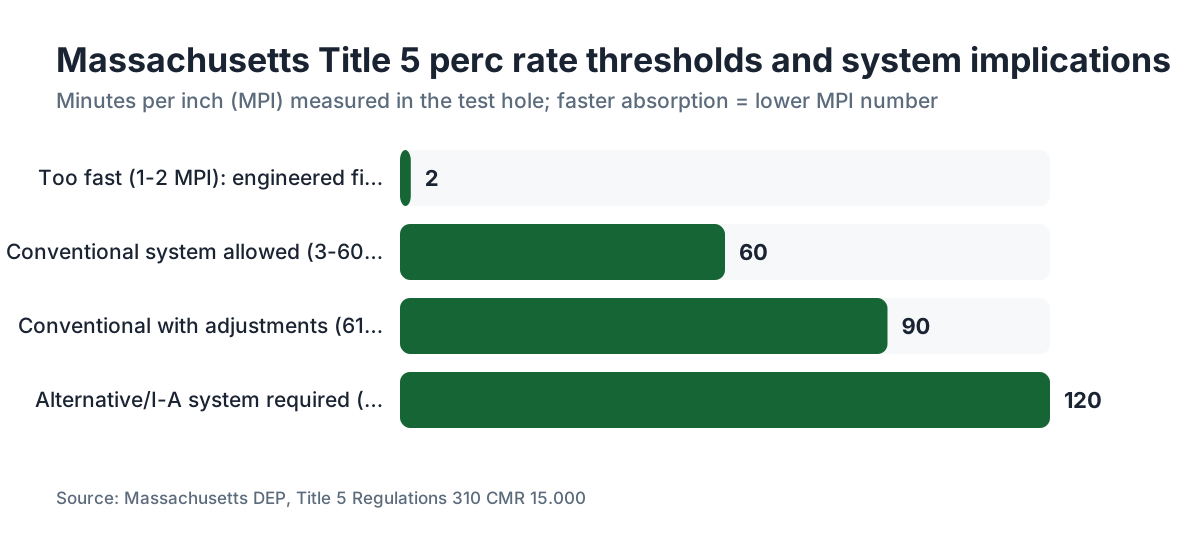
Title 5 sets specific rate thresholds that decide what kind of system you can build. Here's how the numbers map out:
| Perc Rate (MPI) | What It Means for Your System |
|---|---|
| 1 to 2 | Too fast (possible gravel or fractured rock), may need mounding or engineered fill |
| 3 to 60 | Conventional system permitted |
| 61 to 90 | Conventional system possible with design adjustments |
| Slower than 90 | Alternative or innovative system required |
| No measurable perc | Failed, alternative system or special variance needed |
The rate also drives sizing. Soil that perc's at 30 MPI needs a bigger leach field than soil at 5 MPI. Massachusetts uses a loading rate table in 310 CMR 15.242 to turn perc rates into required square footage per bedroom [1]. A four-bedroom home in soil perc'ing at 20 MPI needs roughly 440 square feet of effective leach area under the default calculation. That number grows fast as the soil tightens.
Groundwater separation is a separate pass/fail line. Even if your soil perc's perfectly, you can't install a standard leach field if seasonal high groundwater sits within four feet of the proposed field bottom [1]. This trips up plenty of Wilbraham properties near wetland buffers or in low ground.
What happens if your property fails the perc test in Wilbraham?
A failed perc test is not the end of the road. It means a gravity-fed conventional leach field won't work, but Massachusetts has a well-worn path for alternative systems.
The common answer is a Presby EnviroSeptic, a Bioclere, or a Geomat system, all approved under Title 5's innovative/alternative (I/A) technology provisions [2]. These systems treat effluent to a higher standard before it reaches the soil, so they can work in tighter soils or closer to groundwater than a conventional field. They cost more, typically $15,000 to $30,000 installed versus $8,000 to $15,000 for a conventional system, and most require an ongoing maintenance contract.
Engineered fill is another route. If your native soil fails but you have the lot space and setbacks, you can sometimes import clean sand, build a raised leach area, and retest. The state calls this a mound system [9]. It adds cost but can save a lot that would otherwise be dead.
Full failure with no workable alternative is rare but real. It usually means the lot can't support an on-site system, and you either connect to municipal sewer (if it's available and close enough) or the parcel stays unbuildable for a house. In those cases, the perc test fee is a cheap lesson compared to buying the land first.
The Wilbraham Board of Health can grant variances for some Title 5 requirements, but variances need solid engineering justification and the Board can deny them [1].
When is the best time to schedule a perc test in Wilbraham?
Timing matters. Title 5 requires the soil evaluation to happen when the soil is not frozen and not excessively dry, because both conditions give misleading results [1]. In practice, Wilbraham soil is testable roughly April through October.
Spring testing (April into early June) has one big edge: seasonal high groundwater is at or near its peak, so you get an honest read on the worst-case water table. Pass in April and you can trust the design. Fall testing works too, but if groundwater is running low, the evaluator may have to make a conservative adjustment to estimate the true seasonal high.
Scheduling is often the bottleneck, not the test. The Board of Health inspector has to witness the test, and their calendar depends on how many other projects are queued. Contact the Board before you lock dates with your evaluator. Some busy summers see three to four week waits for an inspection slot.
Buying a property contingent on a passing perc test? Build at least six to eight weeks into your contingency period for scheduling, the test, the writeup, and any back-and-forth with the Board.
What are Wilbraham's local septic rules beyond the state minimum?
Wilbraham runs on Massachusetts Title 5 as the floor, but local Boards of Health have authority under MGL Chapter 111, Section 31 to adopt stricter local regulations [3]. Wilbraham has historically applied standard Title 5 requirements without heavy extra layers, but rules change, and the only way to know current local requirements is to call the Wilbraham Board of Health directly.
A few things to confirm locally: whether the town has overlay districts near the Chicopee River or water supply areas that tighten setbacks or groundwater separation, and whether they require a specific application form or a local fee schedule beyond the state permit.
For properties near Sodom Mountain or in the hillier eastern parts of town, ledge (shallow bedrock) is a real concern. The evaluator notes ledge depth in the soil profile, and any ledge shallower than the required soil separation from the leach field bottom triggers either a variance request or a redesign.
The EPA's SepticSmart program frames the reason behind all of this plainly: "A properly functioning septic system treats and disposes of household wastewater in a manner that adequately protects human health and the environment" [4]. That's why Wilbraham, like every Massachusetts town, demands these evaluations before permitting a new system.
How does a perc test connect to the full septic system design?
The perc test result is the foundation of your system design. Without it, a licensed engineer can't size the leach field, pick the system type, or produce the plan required to pull a Disposal Works Construction Permit.
Once the test passes and the soil evaluation report is done, your designer uses the perc rate and soil morphology data to calculate required leach area, tank size, and setbacks from property lines, wells, wetlands, and buildings. Massachusetts minimums for most of those setbacks live in 310 CMR 15.211 through 15.221 [1].
For new construction in Wilbraham, the sequence runs: perc test and soil evaluation, system design by a licensed engineer, plan submission to the Board of Health, permit issuance, installation by a licensed septic installer, and final inspection by the Board before the system gets covered [8]. Each step gates the next. You can't skip the test and design from assumptions. The Board won't issue the permit.
Already on a system that needs repair rather than new installation? The perc test may not be required. Existing systems follow a different permitting path. See our overview of septic system repair for how that process differs.
For operators running multiple projects across Hampden County, software like SepticMind can track permit status, test dates, and Board of Health correspondence across jobs, closing the scheduling gaps that blow up timelines.
How long is a perc test valid in Massachusetts?
Under Title 5, a soil evaluation and percolation test is valid for two years from the date it was conducted [1]. If you don't pull a permit and start construction inside that window, you test again.
This catches people who test a lot, hit a construction delay or a financing snag, then come back three years later assuming the old results still hold. They don't. Soil conditions, groundwater levels, and sometimes the regulations themselves change. The two-year clock is hard.
One wrinkle: if the Board of Health issues a Disposal Works Construction Permit based on the test, the permit has its own validity period (typically two years, sometimes extendable). Line up financing and contractors so you're not racing the permit expiration on top of the test expiration.
For properties where a perc test was done during a prior failed sale or an old development proposal, always check the date on the soil evaluation report. Results older than two years are informational only. You'll still need a fresh test before the Board issues a permit.
Should you buy a Wilbraham property before the perc test results come in?
No. Full stop. Make your purchase contingent on a passing perc test if the property needs a new septic system.
A lot in Wilbraham without municipal sewer access has essentially zero residential value if it can't support an on-site system. The perc test is the single most important due diligence item for undeveloped or unsewered property. Even if the seller hands you old test results, verify their age and confirm they meet current standards before you waive the contingency.
For lots with a failed system, a perc test tells you what replacement will cost. A conventional system might run $15,000 to $25,000 installed. An alternative system, forced because the lot failed the perc test, can run $30,000 to $50,000 or more. That's a negotiating point, not a surprise after closing. Our guide on cost to put in a septic tank breaks down those installed costs.
Real estate agents sometimes push back on perc test contingencies because they slow deals. Ignore that pressure. A $500 to $1,500 test is trivial next to buying an unbuildable or badly constrained lot.
Buying a home with an existing operating septic system? A perc test isn't typically required for the sale, but a septic tank inspection absolutely is. Those are different things.
What should you do after a successful perc test in Wilbraham?
A passing result is the green light, not the finish line. Here's what comes next.
Make sure your evaluator submits the soil evaluation report to the Wilbraham Board of Health in the required format. That triggers the formal record the Board needs to process your permit application.
Move promptly to system design. Your two-year validity window starts on the test date, not on the day you decide to act. On a tight timeline (a new home with a construction loan, say), get the design underway within weeks, not months.
Once you have an approved design, get bids from at least two licensed septic installers. Installer pricing in western Massachusetts swings more than you'd expect. Confirm the installer holds a current Massachusetts Disposal Works Installer (DWI) license, because the Board of Health will check.
After the system is installed and passes final inspection, the Board issues a Certificate of Compliance. Keep that document. It's required for any future sale, and Massachusetts buyers (or their lenders) will ask for it [6]. The leach field is the piece that most affects long-term performance, so pay attention to how it's installed and marked.
Then plan on regular maintenance. Septic tank pumping every three to five years is the standard recommendation [10], and Massachusetts Title 5 effectively mandates periodic inspection for most systems anyway [1]. For how often your household size warrants pumping, our guide on how often to pump septic tank has a sizing table. SepticMind helps operators in Hampden County schedule and document these service visits.
Frequently asked questions
How do I schedule a perc test in Wilbraham, MA?
Contact a licensed Massachusetts Soil Evaluator first to arrange the test, then notify the Wilbraham Board of Health so they can send a witness. Both have to agree on a date before anything is locked in. The Board of Health office is at Wilbraham Town Hall. Expect a one to three week lead time minimum, longer in spring and summer when scheduling demand peaks.
Can I do my own perc test in Wilbraham?
No. Massachusetts law requires a licensed Soil Evaluator to run the percolation test and soil morphology evaluation. A Board of Health representative also has to be present. Results from an unlicensed party aren't accepted. Hiring your own evaluator is fine, as long as they hold the proper state credential. There's no DIY pathway for a test that carries legal weight.
What happens if my Wilbraham property fails the perc test?
A failed test means a conventional leach field won't work, but you have options. Massachusetts approves a range of innovative and alternative (I/A) septic systems built for difficult soils. Mound systems with engineered fill are another path. Full lot failure with no feasible alternative is possible but uncommon. Your evaluator should walk you through the realistic options based on the actual results and soil profile.
How long does a perc test take in Wilbraham?
The site work for a standard residential test takes two to four hours. Some evaluators require a pre-soak the day before the timed test, which means two site visits. Add scheduling time with the Board of Health inspector, and the full process from first call to written results usually runs one to three weeks. Rushed timelines are possible but tend to cost more.
Does a perc test expire in Massachusetts?
Yes. A soil evaluation and percolation test is valid for two years from the date it was performed under 310 CMR 15.000. If you don't obtain a permit and begin construction inside that window, you need a new test. Old results from a prior owner or a sale that fell through are only usable if they're less than two years old and meet current standards.
What is the passing perc rate under Massachusetts Title 5?
A rate of 60 minutes per inch (MPI) or faster supports a conventional septic system. Rates between 60 and 90 MPI may work with design adjustments. Anything slower than 90 MPI requires an alternative or innovative system. Rates below 2 MPI (too fast) can also trigger special design requirements because water moves through too quickly for adequate treatment.
How much does a full septic system cost in Wilbraham after passing a perc test?
A conventional system in western Massachusetts typically costs $15,000 to $30,000 installed, covering tank, distribution system, and leach field. An alternative system for a marginal site runs $25,000 to $50,000 or more. Add engineering and permitting ($2,500 to $5,000) on top. Ledge, poor access, or high groundwater can push costs higher. Get two or three bids from licensed installers.
Do I need a perc test to sell my home in Wilbraham?
Not typically. A perc test is required for new system installation, not for selling a home with an existing system. For a sale, Massachusetts requires a Title 5 inspection of the existing system, usually within two years of the sale, or three years if the system has been pumped annually. That's a different process from a perc test. Confirm current requirements with the Board of Health and your real estate attorney.
Does Wilbraham have its own septic regulations beyond Title 5?
Wilbraham follows Massachusetts Title 5 (310 CMR 15.000) as its baseline. Local Boards of Health can adopt stricter standards under MGL Chapter 111, Section 31. Wilbraham applies standard Title 5 requirements, but always confirm current local rules with the Board of Health directly, especially for properties near water resources where additional setbacks may apply.
Can I build a house on a Wilbraham lot without public sewer if it fails the perc test?
Possibly, but it's harder and more expensive. A failed perc test doesn't automatically make a lot unbuildable. You can explore alternative system technologies approved under Massachusetts Title 5's innovative/alternative provisions, or engineered mound systems. If no feasible design can meet setbacks and soil requirements, the lot is effectively unbuildable for a house without a sewer connection. A licensed evaluator and engineer should assess your specific site.
Who witnesses a perc test in Wilbraham?
A representative from the Wilbraham Board of Health has to be present during the percolation test and soil evaluation. Without that witness, the results aren't valid under 310 CMR 15.017. You or your contractor can't simply run the test and submit results. Coordinate the date with both your Soil Evaluator and the Board before you move any equipment to the site.
What soil types in Wilbraham tend to fail the perc test?
Heavy glacial till with high silt or clay content is the most common culprit in western Hampden County. It absorbs water slowly, producing MPI readings well above 60. Areas with shallow bedrock (especially the hillier eastern parts of town near Sodom Mountain) fail on depth-to-restriction grounds even if the surface soil perc's fine. Low ground near wetlands may fail on seasonal high groundwater depth.
Is a perc test the same as a Title 5 inspection?
No, these are entirely different. A perc test evaluates raw soil's ability to absorb water, done before installing a new system. A Title 5 inspection evaluates an existing system's current condition and is typically required for home sales. A perc test involves digging test holes and timing water absorption. A Title 5 inspection involves pumping, probing, and flow-testing an installed system.
Sources
- Massachusetts DEP, Title 5 Regulations 310 CMR 15.000: Governs soil evaluation requirements, percolation test standards (60 MPI threshold), groundwater separation (4 feet), two-year test validity, witness requirement, and system design calculations for Massachusetts on-site septic systems
- Massachusetts DEP, Innovative/Alternative Septic System Technology: Massachusetts approves alternative and innovative septic system technologies for sites that fail conventional perc test requirements
- Massachusetts General Laws Chapter 111 Section 31, Local Board of Health Authority: Local Boards of Health in Massachusetts may adopt regulations more stringent than state minimums for on-site septic and public health purposes
- U.S. EPA SepticSmart Program: EPA states that a properly functioning septic system protects human health and the environment, providing the rationale for percolation testing requirements
- Massachusetts DEP, Soil Evaluator Certification: Massachusetts requires a licensed Soil Evaluator to conduct percolation tests and soil morphology evaluations for septic system siting
- Massachusetts DEP, Title 5 Frequently Asked Questions: Provides guidance on Title 5 inspection requirements for home sales and how they differ from perc tests for new system installations
- UMass Extension, On-Site Septic Systems in Massachusetts: University of Massachusetts Extension provides guidance on soil types in western Massachusetts and their typical percolation characteristics relevant to Hampden County
- Massachusetts DEP, Disposal Works Construction Permit Process: Outlines the required sequence from perc test through system design, permit application, installation, and Certificate of Compliance issuance
- Massachusetts DEP, Mound and Pressure Dose Septic Systems: Mound systems using engineered fill are an approved alternative for lots where native soils fail percolation requirements under Title 5
- U.S. EPA, How to Care for Your Septic System: EPA guidance on typical septic system pumping intervals (every three to five years) and the importance of regular inspection and maintenance
Last updated 2026-07-10