Effluent filter installation: what it costs and how it works
By the SepticMind Editorial Team
TL;DR
- An effluent filter screens solids out of the liquid leaving your septic tank before they reach the drain field.
- Installation runs $150 to $400 with a pro, or $30 to $80 in parts if you do it yourself.
- Most homeowners can install one in under an hour.
- Cleaning it every 1 to 3 years is the only ongoing task, and skipping that is one of the fastest ways to wreck a drain field.
What does an effluent filter actually do?
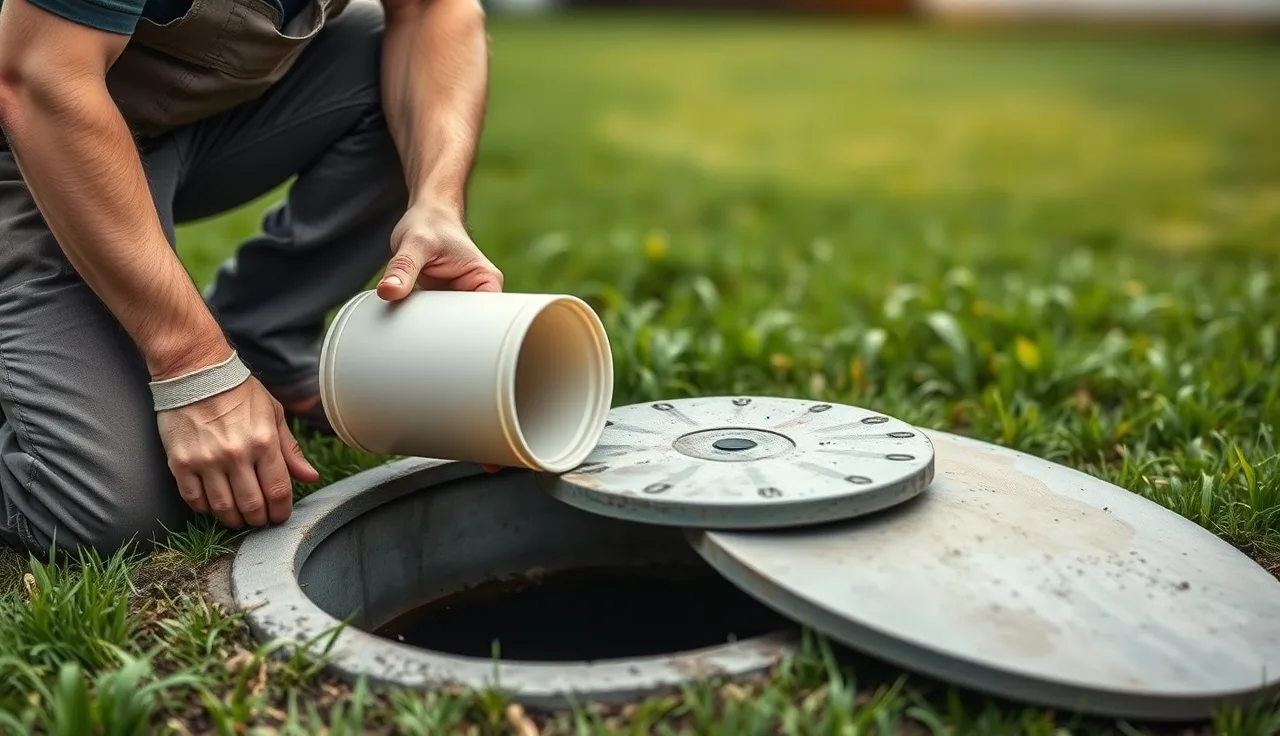
An effluent filter catches the solids that slip past your tank's normal settling process before they reach the drain field. It sits inside the outlet baffle, right where treated liquid flows out toward the soil. Suspended solids, lint, hair, and fine particles get trapped at the screen instead of clogging the pores in your gravel and soil.
Think of the tank as three layers. Grease and light solids float on top as scum. Heavy solids sink to the bottom as sludge. The middle layer, called effluent, is the liquid that flows out. In a healthy tank that layer looks relatively clear, but it still carries particles small enough to pass through a standard outlet baffle. The filter adds a second screen between that liquid and your drain field [1].
Here is why it matters. Drain field repair or replacement runs $5,000 to $30,000 depending on soil, acreage, and local permit fees [2]. A filter that costs $30 in parts and gets rinsed every couple of years protects that investment for almost nothing. The EPA's SepticSmart program lists effluent filters among the cheapest maintenance upgrades a homeowner can make [1].
What types of effluent filters are available?
Three filter designs cover almost every residential job, and they all do the same thing with slightly different geometry. For most homes, a standard cylindrical sleeve filter from a known brand is the right pick.
Cylindrical sleeve filters are the common ones. A perforated plastic cylinder slides into the outlet tee. Effluent has to pass through the slots in the cylinder wall, which typically run from 1/16 inch to 1/32 inch. Orenco, Polylok, and Zabel are all stocked at septic supply houses and big-box stores. Tighter slots catch more solids but clog faster.
Tubular sock filters wrap a mesh sock around a perforated core. They cost less but wear out sooner, and rinsing them without tearing the mesh is a pain. You see these in budget kits.
Bio-filter cartridges add a media layer that grows biofilm to digest some solids as effluent passes through. They run $80 to $200 and show up mostly in advanced treatment systems, not standard tanks.
The Zabel A1800 and Polylok PL-68 come up constantly in installer discussions and both have a long track record. A 1/16-inch slot (about 1.6 mm) is a sensible middle ground for a typical family of four [3][12].
| Filter type | Typical part cost | Cleaning frequency | Best for |
|---|---|---|---|
| Cylindrical sleeve | $20 to $60 | 1 to 3 years | Standard residential tanks |
| Tubular sock | $15 to $35 | 1 to 2 years | Budget installs, temporary use |
| Bio-filter cartridge | $80 to $200 | 1 to 2 years | Advanced treatment systems |
| Alarm-equipped filter | $60 to $120 | 1 to 3 years | Remote or infrequently checked systems |
How much does effluent filter installation cost?
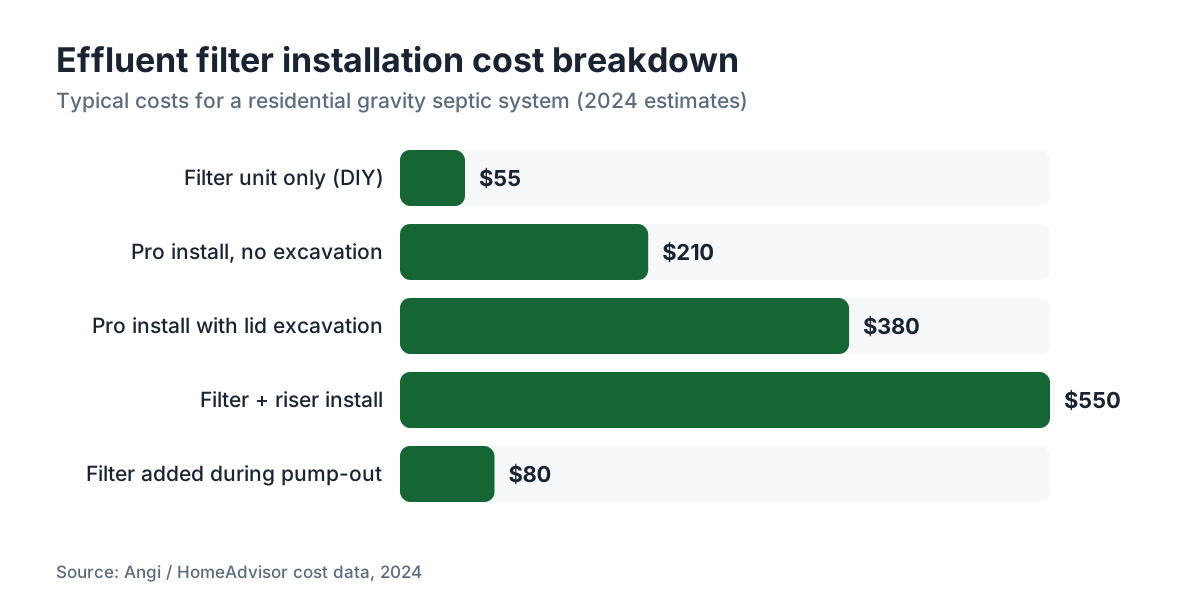
Professional installation runs $150 to $400, with most homeowners paying $175 to $250 when the tank is already accessible and no other work is needed [4]. That covers the filter unit ($30 to $80 for a standard sleeve) plus about an hour of labor at typical septic contractor rates.
If the lid has to be located and dug up, add $100 to $300 depending on depth and soil. Tanks buried more than 18 inches usually need a riser to make future access sane, and that runs $200 to $600 including the riser, lid, and labor [4]. Most installers will suggest doing the riser at the same time as the filter. Take that advice. Digging up the lid every year to rinse a filter gets old and expensive fast.
DIY is a real option for most homeowners. The filter costs $30 to $80 at a plumbing supply or online, and the install is usually 20 to 45 minutes with nothing fancier than a bucket and a hose. The main risk is not knowing what you are looking at inside the tank, since some older tanks have damaged baffles or odd outlet configurations that change which filter fits.
Already have a contractor on site for a septic tank pump out or septic tank cleaning? Ask about adding a filter on the same visit. You usually pay only for the part, not another service call, which drops the total to $50 to $120.
Effluent filter installation is cheap next to almost any other septic upgrade. That is exactly why most state extension services and the EPA name it the first step before you spend money chasing drain field problems [1][2].
Do I need a permit to install an effluent filter?
In most states, adding a filter to an existing tank needs no separate permit, because it counts as routine maintenance rather than a system alteration. But the rules vary, and some states are stricter, so make one phone call before you dig.
California requires new systems and major repairs to meet the current county environmental health code, and some counties require effluent filters on any tank permitted after a set year [5]. Florida's Rule 64E-6 requires effluent filters on all new or replaced systems [6]. Virginia's sewage handling regulations recommend filters but stop short of mandating them on existing tanks.
Call your county health department or environmental services office before you start. Ask specifically whether adding a filter to an existing tank triggers a permit or inspection. The answer is usually no. You want that confirmed before a neighbor or an inspector brings it up later.
For new installations, check your state's onsite wastewater rules. The EPA keeps a directory of state programs that points you to the right agency [1]. In a state that requires filters on new systems, any licensed installer should include one by default, and you should see it on the plan before you sign off.
How do you install an effluent filter step by step?
This walkthrough assumes a standard concrete or fiberglass tank with a sanitary tee or outlet baffle that accepts a sleeve-style filter. Confirm your outlet setup before you buy, because some older tanks have cast concrete baffles instead of removable tees, and those need a retrofit housing.
Step 1: Locate and open the outlet end of the tank. The outlet sits on the side closest to the drain field. On a two-compartment tank, it is on the second compartment. Lift the lid carefully. Concrete lids weigh 50 to 150 pounds. Have a helper or use a pry bar with a stable fulcrum.
Step 2: Identify the outlet baffle or tee. Look for a PVC tee or concrete baffle at the outlet pipe. The tee has a downward-pointing section that reaches 12 to 18 inches into the tank liquid. That is where the filter goes.
Step 3: Measure the outlet tee inner diameter. Most residential systems use 4-inch pipe, but 3-inch and 6-inch outlets exist. Buy the matching filter size. Most sleeve filters come with a handle that extends above the liquid for easy retrieval.
Step 4: Insert the filter into the tee. Slide the filter body down until it seats firmly. The handle should reach up past the liquid level, ideally past the top of the tee, so you can grab it without reaching into the effluent.
Step 5: Verify orientation. Effluent should enter through the filter slots and exit through the center core toward the drain field. If the filter is reversible, confirm which end faces in per the manufacturer's instructions.
Step 6: Replace the lid and write it down. Note the brand, slot size, and install date. Set a calendar reminder to clean it in 12 to 18 months for the first service, since you do not yet know your household's loading rate.
One practical note. Do not install a filter right before leaving a vacation home for the season without an alarm. If the filter clogs while you are gone, sewage can back up into the house. Some filters include a built-in alarm port for exactly this [3].
If your outlet baffle is damaged or missing, repair or replace it before installing a filter. A cracked or absent baffle means scum is already reaching the outlet, which is a bigger problem than the filter can fix. Our guide on septic tank repair covers what that fix involves.
Can you retrofit an effluent filter on an older tank?
Yes, with a few caveats. Tanks built in the 1980s and earlier often have cast concrete outlet baffles instead of removable sanitary tees, and you cannot slide a sleeve filter into a concrete baffle the way you can into a PVC tee.
The fix is an effluent filter housing, sometimes called a baffle adapter. It is a PVC unit that mounts to the outlet pipe or seals inside the existing baffle opening, creating a socket that accepts a standard filter cartridge. Orenco's BaffleFilter line and similar units from Polylok handle most retrofits. The housing adds $40 to $90 to the part cost and usually needs a licensed plumber or septic installer to seat the seal correctly [3].
Access is the other complication. Many concrete tanks from the 1960s and 1970s have small, single-piece lids that sit flush with the ground and have no risers. If that lid has not been opened in a decade, soil and root intrusion may have partly cemented it in place. A contractor can usually deal with it, but budget for a possible broken seal or damaged lid ring.
If the outlet baffle is gone entirely, which is common in tanks over 30 years old, you need a new outlet tee before a filter makes sense. That repair is worth doing. A missing baffle lets the scum layer flow out of the tank, which is one of the main causes of premature drain field failure [7].
Dealing with an older system and wondering what is actually in the ground? A septic tank inspection before the filter install is a smart move. You may find issues that reshuffle the priority order of your repairs.
How often should you clean an effluent filter?
Clean it every 1 to 3 years, ideally at the same visit as septic tank pumping [1][7]. The right interval depends on household size, garbage disposal use, and whether anyone flushes wipes or burns through personal care products.
Two adults, no garbage disposal, careful flushing habits? You might go three years between cleanings with no backup. A family of five with a garbage disposal, a teenager who flushes wipes, and a dog bathed weekly might clog the filter in 12 to 18 months.
The first cleaning tells you the most. Pull the filter at 12 months, hold it over a bucket, and rinse it back into the tank opening with a garden hose. How much comes off gives you a baseline. Nearly clean? Stretch to 18 to 24 months. Heavily loaded? Stick with 12.
Some filters include an alarm port that trips a sensor when effluent backs up above a set level, meaning the filter is clogging. These cost $20 to $60 more than a basic filter and earn their keep on vacation homes, rentals, or any tank nobody watches.
Cleaning takes 10 to 15 minutes with a garden hose and a bucket. Rinse the filter back into the open tank so the solids stay in the system instead of on the lawn. Most contractors rinse filters as part of every septic tank pump out, which is a sensible routine [7].
What happens if you do not clean the effluent filter?
A neglected filter does not fail quietly. It backs up into your house.
When a filter loads up with solids, effluent has nowhere to go and the liquid level in the tank climbs. On a gravity system, that backpressure eventually pushes sewage up the inlet pipe: slow drains, gurgling toilets, and finally sewage in the lowest fixture. This is not hypothetical. It is the most common complaint that prompts emergency septic calls on systems that have filters.
The fix is just cleaning the filter, and flow returns to normal within hours. The backup is miserable but generally does not damage the system the way a failed drain field does.
If a filter has been clogged a long time and effluent has been backing up on and off, check the outlet side of the housing for solids that may have bypassed the edge. A heavily clogged filter can occasionally force solids past the seal when the pressure differential gets high enough.
If your alarm fires, do not silence it and walk away. Clean the filter within 24 to 48 hours. The alarm exists because the system is under stress [3].
Operators juggling multiple properties lose track of filter cleaning dates and load observations without a structured system. SepticMind's service tracking tools handle this, letting technicians log filter condition and schedule the next service automatically.
Is DIY installation safe, or should you hire a pro?
DIY is safe for most homeowners in most situations. The filter has no electrical parts, no chemicals, and no mechanical complexity. The real risk is not electrocution or structural damage. It is buying the wrong size, mixing up which end of the tank is the outlet, or missing a damaged baffle that makes the whole install pointless.
Hire a pro if any of these apply: you do not know where your tank is or which end is the outlet, your tank is more than 24 inches deep (do not lean into a confined space alone), you have an older tank with an unusual or damaged baffle, or you are already fighting a backup or odor that points to something else being wrong.
The confined space danger is real. Septic tanks produce hydrogen sulfide and methane. A healthy tank vents these gases fine, but you should never put your head below grade into an open tank. Keep your face above ground, work fast, and have someone with you. If a strong rotten-egg smell rises out of the open tank, back off and let it air out before you continue. OSHA treats septic tank access as a permit-required confined space entry for professional workers for exactly this reason [8].
For a straightforward install on an accessible tank, DIY saves $100 to $250 and is a legitimate choice. The job is simpler than swapping a toilet flapper.
Which effluent filter brands and products are worth buying?
A handful of brands run the residential market, and each has years of field data behind it.
Orenco Systems is the name licensed installers mention most. Their filters show up in both standard tanks and advanced treatment systems, and the BaffleFilter line handles retrofits cleanly. You buy Orenco through septic supply distributors more than big-box stores, but online ordering is easy.
Polylok makes the PL-68 and PL-525, both widely stocked at plumbing supply houses. The PL-525 is a longer filter for tanks with deeper baffles. These are solid, affordable units that most contractors have hands-on experience with.
Zabel (now part of Infiltrator Water Technologies) makes the A1800 series. These are popular across the Southeast and Mid-Atlantic and rinse clean without tools [12].
For alarm-equipped filters, Orenco's AdvanTex housing and the Polylok alarm adapter are both reliable. The alarm wires into a standard septic alarm panel or a standalone float alarm.
Skip no-name filters with unclear slot specs or unclear materials. The filter body lives submerged in sewage for years. It needs UV-stabilized PVC or similar. A filter that degrades inside the tank creates its own debris problem.
Price should not be the only thing driving your choice. A $25 knockoff that fails in 18 months and forces a tank excavation to retrieve costs far more than a $55 name-brand unit.
Building or replacing a whole system? The filter should show up as a line item in your installer's quote. If it is not there, ask why. Most state codes now expect it, and your leach field will thank you for it years from now.
How does an effluent filter affect the rest of your septic system?
The downstream effects are almost all good. The drain field, your most expensive component to repair or replace, receives cleaner effluent. Cleaner effluent means less biomat forms at the soil interface, and less biomat means a longer drain field life.
EPA SepticSmart guidance calls protecting the drain field from solids the single most effective maintenance action a homeowner can take, and an effluent filter is a direct way to do it [1]. Research on septic systems in North Carolina found that biomat clogging was the primary mechanism of drain field failure, and that higher suspended solids loading sped that clogging up considerably [9].
The filter adds one small task: cleaning it on schedule. Install a filter and then forget about it for five years, and you may end up with a backup, which is worse for your day than having no filter at all. A filter does not make the system maintenance-free. It trades a catastrophic drain field failure for a routine rinse job.
The tank itself does not change. The filter does not alter how the tank works, does not touch the inlet side, and does not affect pumping schedules. You still pump on the regular interval, typically every 3 to 5 years for a standard residential system [10]. Knowing how often to pump septic tank for your household size and tank volume matters with or without a filter.
For operators running scheduled maintenance programs, the filter becomes a natural checkpoint at every pump visit. Log condition at cleaning, the date, and technician notes. SepticMind's maintenance logs capture exactly this kind of asset-level data across a full service territory.
What do state codes and EPA guidance say about effluent filters?
Filters have moved from optional to expected or required across many jurisdictions over the past two decades. The regulatory picture keeps tightening toward mandatory filters on new systems.
EPA SepticSmart guidance recommends effluent filters as a best practice for protecting drain fields and extending system life [1]. The EPA does not set mandatory standards for individual septic components (states and counties hold that authority), but its guidance shapes state rulemaking and extension recommendations nationwide.
Florida is the clearest example of mandatory state policy. Florida Administrative Code Rule 64E-6 requires effluent filters on all new or repaired septic systems, sets minimum slot size requirements, and specifies that filters must be accessible for cleaning [6].
California handles onsite wastewater county by county under its state water board policy, but many coastal counties require filters on new systems, especially in sensitive watershed areas [5].
North Carolina's onsite wastewater rules, updated in 2012, require effluent filters on all systems permitted after the effective date and strongly recommend retrofitting existing systems during pump-outs [11].
If your tank went in within the last 10 to 15 years and has no filter, there is a decent chance your installer was supposed to include one.
Planning a new system? The septic tank installation contract should list the filter as a specified component with brand and slot size noted. Same goes for cost to install septic system budgeting. A filter is a minor line item in a $15,000 to $30,000 system, but getting it in writing beats finding out later it was skipped [2].
Frequently asked questions
Can I install an effluent filter myself without a license?
In most states, yes. Adding a filter to an existing tank counts as routine maintenance, not a system alteration, so it needs no license or permit. Check with your county health department first, since a few jurisdictions require a licensed installer for any work inside the tank. The physical install is simple: the filter slides into the outlet tee and takes 20 to 45 minutes.
How do I know if my septic tank already has an effluent filter?
Open the outlet end (the side closer to the drain field) and look inside the outlet tee or baffle. If there is a plastic cylinder with a handle sticking up through the liquid, you have a filter. If the tee is empty or you see only a concrete baffle with no insert, you do not. Your installer or the county permit records for the system may also document whether one went in.
What size effluent filter do I need for my tank?
Most residential systems use 4-inch pipe, so a 4-inch filter fits. Measure the inner diameter of your outlet tee before buying. Some older systems use 3-inch pipe, and some large residential or commercial systems use 6-inch. Length matters too: standard filters run 12 to 18 inches, but deeper tees need a longer unit. Check the depth before ordering.
How long does effluent filter installation take?
On an accessible tank with a PVC outlet tee, 20 to 45 minutes. That covers opening the lid, measuring the tee, sliding in the filter, and replacing the lid. If the lid needs excavation, the tee needs replacement, or a retrofit housing is required for an older concrete baffle, add 1 to 3 hours. A contractor doing it alongside a pump-out adds almost no extra time.
Will an effluent filter reduce how often I need to pump my tank?
No. The filter does not slow sludge or scum buildup inside the tank, so your pumping schedule stays the same, typically every 3 to 5 years depending on tank size and occupancy. The filter only protects the outlet side. Pump on your regular schedule regardless of how clean the filter looks at cleaning time.
What happens to the solids I rinse off the filter?
Rinse the filter back into the open tank, not onto the lawn or into a floor drain. The solids belong in the tank, where they settle and come out at the next pump-out. Rinsing onto the ground creates a local contamination problem and wastes the treatment the tank already did. Use a garden hose over the open access port and direct the rinse water down into the tank.
Can an effluent filter cause sewage backup in my house?
Yes, if you do not clean it on schedule. A fully clogged filter stops effluent from leaving the tank, raising the liquid level until it backs up into the house through the lowest fixtures. This is the most common complaint tied to filter neglect. The fix is simple: clean the filter and the backup clears within hours. Install an alarm-equipped filter if you want early warning before it gets there.
Do I need an effluent filter if I already have a garbage disposal?
A filter matters even more with a garbage disposal. Disposals send fine food particles into the tank that are small enough to pass through a standard outlet baffle and load the drain field with organic solids. Many septic pros advise against garbage disposals on septic systems for this reason, but if you have one and want to keep it, an effluent filter is a sensible safeguard.
How do I choose between a 1/16-inch and 1/32-inch slot filter?
A 1/16-inch slot (about 1.6 mm) is the standard pick for most residential tanks. It catches a meaningful share of suspended solids without clogging too fast. A 1/32-inch slot catches more but needs cleaning more often, sometimes yearly. Go with 1/16 inch unless you are in an area with very high groundwater sensitivity or a local code that specifies a tighter slot.
Is an effluent filter worth the cost for an older septic system?
Almost always, assuming the tank and drain field still work. If the drain field is already compromised, fix that first. But for a working system that is simply aging, a $30 to $80 filter that adds years of drain field life is one of the highest-return maintenance moves you can make. EPA SepticSmart specifically recommends filters as a cost-effective upgrade for existing systems.
What is the difference between an effluent filter and a septic tank baffle?
The baffle (or sanitary tee) is a structural part of the tank that separates the inlet and outlet zones and keeps scum from flowing straight out. The effluent filter is an add-on insert that adds a second layer of screening inside the outlet baffle. They work together: the baffle does the coarse separation, the filter catches what the baffle misses. You want both, not one or the other.
Can I add an effluent filter to a tank with a damaged outlet baffle?
Repair or replace the baffle first. A damaged baffle means the scum layer may already be reaching the outlet, and a filter sitting in a compromised housing will not seal right. Have the baffle replaced (usually a simple PVC tee repair), then install the filter. Doing both in the same service visit is efficient and makes sure the filter actually does its job.
How much does effluent filter cleaning cost when done by a professional?
Most contractors clean the filter as part of a standard pump-out at no extra charge, or for $25 to $50 as a standalone service call. If you pay a separate service call just to clean a filter, you are covering $100 to $200 in travel and labor for a 10-minute job. Schedule cleaning to line up with a pump-out or any other planned tank access to keep the cost near zero.
Does an effluent filter affect a septic system inspection or sale of a home?
It generally helps. Home inspectors and septic inspectors note whether a filter is present as part of a standard report. A missing filter on an otherwise working system is a minor finding, but in some states it can trigger a repair requirement before a sale closes. Installing and documenting a filter before listing removes that variable. See the septic tank inspection guide for what inspectors check.
Sources
- EPA SepticSmart homeowner guidance: EPA SepticSmart recommends effluent filters as a cost-effective upgrade for protecting drain fields and extending septic system life.
- EPA: Onsite Wastewater Treatment Systems: Drain field repair or replacement costs vary widely by region and soil conditions, ranging from several thousand to over twenty thousand dollars.
- Orenco Systems product documentation: Orenco effluent filter products include alarm-equipped models and BaffleFilter retrofit housings for concrete baffles.
- Angi septic service cost data: Professional effluent filter installation typically costs $150 to $400 including parts and labor; septic riser installation adds $200 to $600.
- California State Water Resources Control Board: Onsite Wastewater Treatment Systems Policy: California state and county codes govern onsite wastewater treatment system components including effluent filtration requirements in sensitive areas.
- Florida Department of Health: Onsite Sewage Program Rule 64E-6: Florida Administrative Code Rule 64E-6 requires effluent filters on all new and repaired septic systems, with minimum slot size specifications.
- Penn State Extension: Septic System Maintenance: Effluent filters should be cleaned every 1 to 3 years, ideally at the same time as septic tank pumping; missing outlet baffles are a leading cause of drain field failure.
- OSHA: Confined Spaces: OSHA classifies septic tank access as a permit-required confined space entry due to hydrogen sulfide and methane hazards.
- NC State Extension: Septic Systems: North Carolina research identified biomat clogging driven by suspended solids loading as the primary mechanism of drain field failure in residential systems.
- EPA SepticSmart: Pumping Frequency Guidance: EPA recommends pumping a standard residential septic tank every 3 to 5 years depending on tank size and household occupancy.
- North Carolina Department of Environmental Quality: Onsite Wastewater: North Carolina onsite wastewater rules updated in 2012 require effluent filters on all newly permitted systems and recommend retrofit on existing systems.
- Infiltrator Water Technologies (Zabel A1800 product line): Zabel A1800 series effluent filters are widely used in residential septic systems and are designed for easy cleaning without tools.
Last updated 2026-07-10