Grey water leach field: what it is, when it's legal, and how to build one
By the SepticMind Editorial Team
TL;DR
- A grey water leach field (also called a grey water drain field) sends water from sinks, showers, and laundry into soil, keeping it out of your toilet waste stream.
- It's legal in many states under specific permits, has to meet minimum soil and setback standards, and costs roughly $500 to $5,000 depending on size and local rules.
- Misuse causes clogged soil, odors, and fines.
What exactly is a grey water leach field?
Grey water is the wastewater that leaves your home from every fixture except the toilet. Sinks, showers, tubs, and washing machines all make it. A grey water leach field (sometimes called a grey water drain field) is a shallow underground distribution system that takes that water and lets the soil treat and absorb it before it can reach groundwater.
The difference from a standard septic leach field matters a lot. A conventional leach field gets effluent from a septic tank, which has already settled out solids and gone through some anaerobic digestion. A dedicated grey water system gets water that still carries soap residue, skin cells, hair, lint, food particles from handwashing, and varying amounts of pathogens depending on whether diapers or heavily soiled items went through the same wash.
Grey water lacks the heavy biological oxygen demand of black water (toilet waste). So in theory it can be treated more simply, in shallower soil, closer to the surface, using less land. That's the appeal. The risk is that people underestimate what's actually in it.
Pathogens are the real concern. Fecal coliform bacteria show up in grey water from handwashing and laundry, even when no toilet drains to the system [1]. Giardia and Cryptosporidium have turned up in laundry water from households with young kids. The EPA's 2002 Onsite Wastewater Treatment Systems Manual states grey water "may contain pathogens" and says it needs treatment before land application in most cases [2].
A grey water leach field is not a shortcut around wastewater rules. It's a parallel system with its own rules, and those rules swing wildly from state to state.
Is a grey water leach field legal in my state?
Legality is the first thing to settle, and the answer depends almost entirely on your state's onsite wastewater code, not federal law. The federal Safe Drinking Water Act and Clean Water Act set floors, but they don't regulate individual household grey water reuse directly. That authority sits with state environmental or health agencies, and many hand it down to county departments [3].
Here's the rough landscape as of 2025:
| State tier | What it means | Example states |
|---|---|---|
| Permissive with permit | Dedicated grey water systems allowed; permit and inspection required | Arizona, California, New Mexico, Montana, Hawaii |
| Permissive for simple systems | Laundry-to-landscape or simple gravity systems allowed without a permit under certain flows | California (< 250 gpd from laundry only), Arizona (< 400 gpd) |
| Silent or ambiguous | No specific grey water rule; falls under general wastewater code; approval case-by-case | Many southeastern and midwestern states |
| Restrictive | All household wastewater must go to approved septic or sewer; grey water separation prohibited or not permitted | Some northeastern states; check your county |
California's grey water rules under Title 22 and the California Plumbing Code Chapter 16 are among the most detailed in the country. Laundry-to-landscape systems under 250 gallons per day, installed by the homeowner, need no permit. Anything over that, or any system that disperses treated grey water through a leach field, needs a permit and has to meet setback and soil requirements [4].
Arizona Administrative Code Title 18, Chapter 9 permits grey water for subsurface irrigation up to 400 gallons per day without a permit, as long as you keep specific setbacks: 2 feet from property lines, 100 feet from surface water, and 100 feet from wells [5].
If your state isn't on a known permissive list, call your county health department or environmental services office before you dig. Installing an unpermitted system in a restrictive state can mean forced removal at your expense plus fines.
How is a grey water leach field different from a regular septic drain field?
The parts look similar: perforated pipe, gravel or gravel-less chambers, soil cover. The design standards are where they part ways.
A conventional septic drain field is sized off daily sewage flow from all fixtures, perc test results, and a soil loading rate measured in gallons per day per square foot. Trenches usually run 18 to 36 inches deep. The effluent coming from the tank has already had 24 to 48 hours of settling and anaerobic treatment, so its biochemical oxygen demand (BOD) is well below raw sewage.
A grey water leach field built for grey water usually runs shallower, often 6 to 12 inches below the surface, because the aerobic zone in the top foot of soil is far more biologically active than the deeper anaerobic zones. Shallow placement also lets the system lean on evapotranspiration instead of pure percolation, which adds real capacity in warm climates.
Sizing differs too. Many state codes size a dedicated grey water system at 50 to 75 percent of the flow a full septic system would need, because black water (roughly 30 to 40 percent of household sewage) is left out. Some codes still demand full septic-equivalent sizing to stay conservative.
Here's a difference that bites people: grey water systems can clog faster than conventional fields if high-soap or lint-heavy flows hit the trenches with no pretreatment. Surfactants in laundry detergent break down slowly and can kill the soil microbes that digest organic matter [6]. That's why most codes allowing dedicated grey water leach fields also require at least a settling or surge tank to buffer flows, and some require a coarse filter.
The leach field article on this site covers conventional drain field mechanics in depth if you want the baseline for comparison.
What are the soil and setback requirements for a grey water drain field?
Even in permissive states, grey water drain fields have to clear minimum soil and setback standards. This isn't paperwork for its own sake. Badly placed systems contaminate wells and waterways, and that's the whole reason the numbers exist.
Soil requirements vary by state but usually include:
- A minimum depth to seasonal high groundwater (often 12 to 24 inches from the bottom of the trench to groundwater, versus 24 to 36 inches for a conventional septic field)
- A percolation rate within a set range, commonly 1 to 60 minutes per inch. Soil that drains too fast won't treat the water; soil that drains too slow (over 60 mpi) saturates and fails
- A minimum depth of usable soil above bedrock, usually 18 to 24 inches
Setbacks protect drinking water and keep the peace with neighbors. Common minimums for grey water leach fields (these vary widely, always verify locally):
| Feature | Typical minimum setback |
|---|---|
| Private drinking water well | 50 to 100 feet |
| Public water supply well | 100 to 200 feet |
| Surface water (stream, pond, lake) | 50 to 100 feet |
| Property line | 2 to 10 feet |
| Building foundation | 5 to 10 feet |
| Irrigation ditch or drainage channel | 10 to 50 feet |
Arizona's code, cited above, sets a 100-foot minimum from surface water and wells. California's plumbing code sets 5 feet from property lines for a permitted subsurface grey water system [4].
Climate matters too. A shallow grey water leach field can freeze in a cold winter. Some states in colder climates require a bypass to the main septic tank for winter months, or they set minimum burial depths that rule out the shallow-trench approach entirely.
What pretreatment does grey water need before it enters the leach field?
Dump raw grey water straight into distribution pipes and you'll have a clogged field within a few years. Most state codes and every honest engineer will tell you the same thing. Pretreatment pulls out the solids, lint, grease, and hair that would otherwise seal off the soil interface.
How much pretreatment you need depends on system size and local code. Here's the practical breakdown.
Simple gravity systems (laundry-to-landscape under permit-exempt thresholds) often need only a mulch basin or surge tank with a basic screen. These work for a single washing machine or one bathroom's laundry output. The volume is low enough that soil handles the rest.
Dedicated grey water leach fields serving a whole house usually need a two-compartment settling tank at minimum. Think of it as a smaller septic tank sized for grey water flow alone, sometimes called a grey water interceptor. It gives solids time to settle and fats a chance to float before effluent moves to the field.
Higher-end systems add a filter stage: a textile filter, a peat or sand filter, or a constructed wetland cell ahead of the leach field. These improve effluent quality a lot and stretch the life of the soil absorption field, at the cost of more money up front and more maintenance.
Laundry water is its own problem. Lint from synthetic fabrics doesn't biodegrade, and it packs into soil pores. A washing machine lint trap on the drain line is cheap insurance (around $20 to $50) and genuinely helps. Low-surfactant, biodegradable detergents cut the load on the soil. Borax and sodium-based detergents generally treat grey water systems better than phosphate-heavy or enzyme-heavy formulas, though the research on specific formulas isn't deep enough to name a single winner.
Operators who inspect or design these systems should know SepticMind's workflow tools include job tracking and inspection checklists built for alternative systems, more than conventional septic, so you can document pretreatment components and flag them for future service visits.
How do you size and design a grey water leach field?
Sizing a grey water drain field comes down to three moves: estimate daily grey water flow, run a perc test or soil evaluation, then apply your state's loading rate to find the trench area you need.
Step 1: Estimate grey water flow
The EPA's rule of thumb is that grey water makes up about 50 to 80 percent of residential wastewater [2]. Total household water use commonly runs 50 to 100 gallons per person per day, depending on fixture efficiency. A three-person household might make 75 to 180 gallons of grey water a day.
Some state codes size by fixture instead of by occupant:
| Source | Estimated grey water flow |
|---|---|
| Bathroom lavatory | 2 to 5 gpd per person |
| Shower/tub | 15 to 25 gpd per person |
| Kitchen sink | 5 to 12 gpd per person |
| Washing machine | 25 to 40 gallons per load |
Step 2: Perc test or soil profile
A licensed soil evaluator or sanitarian runs the perc test or a soil morphology assessment. The perc rate in minutes per inch (mpi) translates to a soil loading rate in gallons per day per square foot of trench bottom. Faster soils take more flow per unit area, up to a point.
Step 3: Calculate trench area
Say your soil perc rate calls for a loading rate of 0.5 gpd/sq ft and your daily grey water flow is 120 gpd. You need 240 square feet of trench bottom area. With 18-inch-wide trenches, that's about 160 linear feet of trench.
Step 4: Layout
Trenches usually run 18 to 36 inches wide and 6 to 12 inches deep for shallow grey water systems, with 6 to 10 feet of undisturbed soil between parallel trenches. A distribution box or header pipe keeps flow roughly equal across each trench.
The leach field article covers conventional drain field mechanics, materials, chambers, and gravel alternatives in more depth. The cost to install septic system article shows where a grey water system fits in a total project budget.
What does a grey water leach field cost to install?
Cost swings more here than almost anywhere else in this topic. It depends on system size, pretreatment level, local permit fees, soil conditions, and whether you hire a contractor or do permitted owner-builder work.
Here's an honest range:
| System type | Installed cost range | What's included |
|---|---|---|
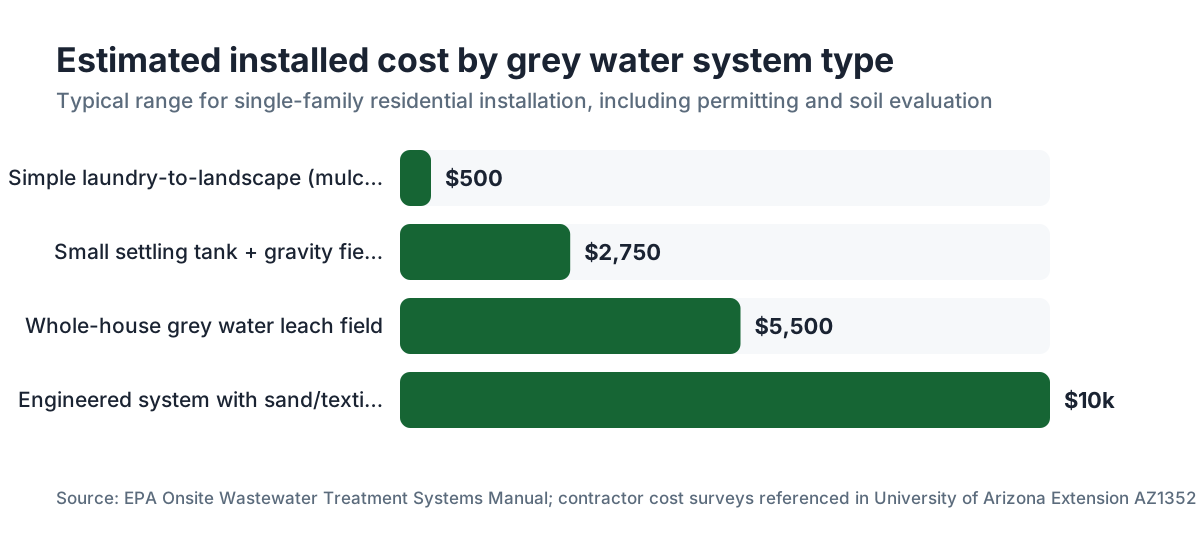
| Simple laundry-to-landscape (mulch basin, no permit in some states) | $200 to $800 | Pipe, mulch, basic digging, lint filter |
| Small grey water settling tank + gravity field (1 to 2 bathrooms) | $1,500 to $4,000 | Tank, distribution pipe, gravel or chambers, permitting |
| Whole-house grey water leach field with pretreatment | $3,000 to $8,000 | Two-compartment tank, filter, full trench system, permit, inspection |
| Engineered system with advanced pretreatment (sand or textile filter + field) | $6,000 to $15,000+ | Filter unit, tank, field, engineering drawings, inspections |
Permit fees alone run $100 to $800 depending on your county. A perc test or soil evaluation by a licensed evaluator typically costs $200 to $600. Those costs stick even when the rest of the install is simple.
Owner-builder installs are allowed in many permissive states for simpler systems, which can cut labor by 40 to 60 percent. You still need the permit, the soil evaluation, and an inspection before burial. Skipping the inspection to save time is a false economy. If it fails inspection later, you dig it back up.
Compare this to a new conventional septic system, which typically runs $3,000 to $15,000 or more depending on size and soil. See cost to install septic system for a full breakdown. A dedicated grey water system as a supplement (not a replacement) for a struggling conventional drain field is sometimes the right call, but a septic system repair evaluation should come first.
Can a grey water leach field replace a septic system?
No. This is a hard no in nearly every jurisdiction in the United States.
A grey water leach field handles only the grey water fraction. Toilet waste, which carries the highest concentrations of pathogens, nitrates, and biochemical oxygen demand, has to go to a permitted septic tank and drain field or a municipal sewer connection. Full stop.
Some people try to route all household wastewater to a grey water system. That's illegal in every state I'm aware of, and it creates a real public health hazard. The soil in a standard grey water field isn't sized, designed, or inspected for black water loading. The field will fail much faster than expected and can contaminate groundwater on the way down [1].
What a grey water drain field can legitimately do is take load off an existing septic system. If your septic is failing because the drain field gets too much water, a properly permitted grey water system can divert shower, sink, and laundry flows to a separate field, pulling 50 to 70 percent of the hydraulic load off the original field. Sometimes that's cheaper than full septic system repair or drain field replacement.
This still needs permits for the new grey water system, and your original septic tank and field stay in service for black water. If the original tank is compromised, see septic tank repair before you add any diversion. Bolting a grey water system onto a failing tank just gives you two problems instead of one.
Building from scratch and deciding whether to size up a septic system or run a grey water system alongside it? Run the numbers on both paths with your local installer. The cost to put in a septic tank article helps frame that conversation.
How do you maintain a grey water leach field?
Grey water leach fields fail for two reasons above all others: grease and soap buildup, and the owner forgetting the system exists. Stay on schedule and maintenance is genuinely simple.
For any system with a settling tank:
Pump the grey water settling tank every 1 to 3 years, depending on household size and grey water volume. In some households the solids and scum layer build up faster than in a conventional septic tank, especially with many loads of laundry a week, because of lint and soap scum. Neglecting this pump-out is the single most common cause of grey water field failure [6].
For the field itself:
Walk the surface over the trenches each season. Wet areas or odors mean the field is taking more water than it can absorb, or the distribution is uneven. Mark your cleanout and inspection port locations so they stay accessible.
For the plumbing feeding the system:
Clean the lint filter on the washing machine drain at least quarterly. Clean any inline screens or filters in the distribution system yearly. Check the distribution box or flow dividers yearly to confirm even distribution.
What not to put into a grey water system:
No diapers, no diaper rinse water, no water from washing clothes soiled with human waste, no paint or chemical rinses, no bleach beyond incidental laundry amounts, no water softener brine if you can avoid it. These either carry pathogens beyond what grey water assumes or chemically wreck the soil's ability to treat and absorb water.
SepticMind's scheduling and reminder tools help service operators stay on top of grey water tank pump-out intervals alongside conventional septic tank pumping routes, since the timing differs by system. Operators running both types on the same route like having the difference flagged automatically.
For general septic tank maintenance that applies to the grey water settling tank, the how often to pump septic tank guide covers pumping intervals and the factors that move them.
What are the signs that a grey water leach field is failing?
The signs look almost identical to a failing conventional drain field, which tracks, because the failure mechanism is the same: the soil can't take the water fast enough.
Surface ponding. Water sitting on top of the soil over the trenches or across the field, especially after showers or laundry. This is the clearest sign.
Odors. Sulfurous or sewage-like smells at ground level above the field, or inside near drains. Grey water has a distinct soap-and-organic-matter smell even without fecal contamination, but strong odors usually mean effluent is surfacing or the field has gone anaerobic.
Slow drains. When the field can't take water, backpressure builds and drains slow down. This mimics a plumbing clog, so rule that out first.
Lush growth. A suspiciously green, fast-growing strip of grass or plants right over the trench lines. Some growth is expected. A darker green stripe usually means the field is wet.
Wet spots away from the field. Water can travel sideways through preferential flow paths and surface well outside the field boundary.
Seeing surfacing? Stop the water flow to the system now, divert grey water to the conventional septic system temporarily if you have one, and call a licensed inspector. Keep loading a failing field and you speed up biomat formation, turning a recoverable situation into a full field replacement.
For a septic tank inspection protocol that covers how licensed evaluators assess both conventional and alternative systems, the inspection article has solid baseline content.
Are there health and environmental risks to grey water leach fields?
Yes, and they deserve a straight answer rather than a shrug.
Pathogen risk is real. A 2015 study in the journal Water Research found grey water from households with young children carried fecal indicator bacteria at concentrations above levels considered safe for unrestricted irrigation [7]. The risk is lower than with black water but not zero, and it shifts with household makeup, the health of residents, and the source (kitchen sink water vs. shower vs. laundry).
The EPA's position, from the Onsite Wastewater Treatment Systems Manual, is that grey water "should not be considered free from pathogens" and that "treatment equivalent to secondary treatment" may be appropriate before land application depending on end use [2]. Subsurface application through a well-designed leach field gives real treatment through soil filtration, adsorption, and microbial action, which is why it beats surface spray or flood irrigation of grey water.
Groundwater contamination is possible if setbacks get ignored or the system gets overloaded. Nitrates from grey water run lower than from black water, but surfactants, boron from detergents, and sodium can build up in soil over time and hurt soil structure and nearby plants [6].
Sodium is worth calling out on its own. High-sodium grey water (from softened water or sodium-based cleaners) disperses clay particles in soil, cutting permeability over years. It's a slow failure mode that's easy to miss until the field shows obvious saturation.
Proximity to vegetable gardens is a legitimate concern. Most extension guidance and state codes ban subsurface grey water systems upgradient of food-producing gardens, particularly root vegetables, where soil contact with produce is likely [3].
Done right, with proper pretreatment, setbacks, and maintenance, a grey water leach field is safe and makes environmental sense. Done casually, it's a contamination problem waiting to surface.
What's the permitting process for a grey water system?
The permitting process shifts by state and county, but the general path stays consistent enough to lay out.
Start with a phone call. Ask your county health department or environmental services agency whether the county has adopted a grey water code, whether it follows the state code, and whether there are local amendments. Some counties in permissive states run stricter local rules.
For a full grey water leach field (as opposed to a simple permit-exempt laundry system):
- Site evaluation: A licensed soil evaluator, sanitarian, or professional engineer runs a perc test and soil profile. Some states require a registered environmental health specialist to sign off. Cost: $200 to $600.
- System design: Depending on the state, a licensed engineer or installer may need to prepare the design. For simple systems, standardized detail sheets from the health department may be enough.
- Permit application: Submit design documents, a site plan showing setbacks, and the permit fee ($100 to $800 in most jurisdictions).
- Review and approval: Review times run from 1 week to 3 months depending on agency workload and system complexity.
- Installation: Work usually has to be done by a licensed installer. If owner-builder is allowed, notify the agency before you start.
- Inspection before burial: An inspector visits before backfill to verify setbacks, trench dimensions, pipe placement, and pretreatment components.
- Final approval and record: A copy of the approved permit and as-built drawing goes on file with the county. Keep your own copy with the house records.
Skip any of these steps and you create title problems when you sell. Unpermitted septic and grey water systems routinely surface during septic tank inspection at point-of-sale, and many lenders require correction before closing.
Frequently asked questions
Can I install a grey water system myself without a permit?
It depends on your state and system size. California and Arizona both have permit-exempt paths for simple laundry-to-landscape systems under specific flow thresholds (250 gpd in California, 400 gpd in Arizona). Any system with buried distribution pipes for more than a single laundry source usually needs a permit in most states. Unpermitted work risks fines and mandatory removal, and it creates problems when you sell your home.
How many gallons per day can a grey water leach field handle?
Soil type, trench area, and state code decide that, not a single universal number. A well-designed field in loamy soil with a perc rate of 20 to 30 mpi might handle 0.4 to 0.6 gallons per day per square foot of trench bottom. A 200-square-foot field would handle 80 to 120 gpd. Sandy soils take more; clay soils take less or may not qualify at all.
Will a grey water leach field save water or money?
On a well, a grey water system doesn't save water. It just routes treated water back to soil near your home. On city water with metered sewer bills, diverting grey water to an onsite field can cut your sewer charge if you're billed by volume. The savings rarely offset installation cost within a few years, so water reuse or septic load reduction is usually the real motivation, not direct cost savings.
Can kitchen sink water go to a grey water drain field?
Most codes that distinguish grey water types treat kitchen sink water as higher risk, since it carries food particles, grease, and higher BOD loads than bathroom sink or shower water. Some codes ban kitchen sink water from grey water systems entirely and route it to the septic tank. Others allow it with proper pretreatment. Check your specific state code before you design the system to include kitchen drainage.
What's the difference between a grey water system and a laundry-to-landscape system?
Laundry-to-landscape (L2L) is a specific, simplified type of grey water reuse where washing machine discharge goes straight to mulch basins around trees or shrubs by gravity, with no buried perforated pipe leach field. It's the simplest and most widely permit-exempt form. A grey water leach field is a more engineered subsurface absorption system that can handle multiple sources, needs a settling tank, and has to meet setback and soil standards.
How long does a grey water leach field last?
With proper pretreatment and regular pumping of the settling tank, a grey water leach field can last 15 to 30 years, similar to a conventional drain field. Without pretreatment, or with high-sodium or high-soap loading, biomat formation and soil clogging can cause failure in as few as 3 to 7 years. The biggest longevity factor is consistent pumping of the settling tank on a 1 to 3 year schedule.
Does a grey water system affect my septic tank?
A dedicated grey water system that properly diverts grey water bypasses the septic tank entirely for those flows, cutting the hydraulic load on the tank and drain field. That's a benefit if your septic is hydraulically stressed. But if there's any cross-connection, or the grey water system overflows to the septic system, you're adding untreated water to the tank and disrupting the settling process. Good design keeps these flows fully separate.
What soils are not suitable for a grey water leach field?
Soils with a perc rate slower than 60 minutes per inch (heavy clay) are generally out because they can't absorb water fast enough. Very fast soils (under 1 mpi, coarse gravel or sand) are also a problem because water moves through too quickly for adequate treatment before reaching groundwater. Sites with less than 18 inches of usable material above bedrock or seasonal high groundwater also typically disqualify.
Can you use grey water from a hot tub or swimming pool backwash for a leach field?
No. Hot tub water carries high concentrations of chlorine, bromine, and treatment chemicals that kill soil microbes and damage the biological treatment layer in the field. Swimming pool backwash is similarly chlorinated and dumps large volumes that can hydraulically overwhelm a small field. These sources have to go to a sanitary sewer or be managed another way.
Does softened water damage a grey water leach field?
Yes, over time. Water softeners use a sodium chloride or potassium chloride ion exchange process. Sodium-laden water applied to soil makes clay particles disperse and swell, cutting permeability. Long-term application of softened water through a grey water field degrades soil structure and shortens field life. Some codes explicitly ban water softener discharge to grey water systems. Potassium chloride softeners cause less damage than sodium chloride.
Do I need a separate grey water tank or can I just use a tee off my septic tank?
A dedicated grey water settling tank is the code-required approach in nearly every jurisdiction that permits grey water leach fields. Teeing off the inlet of your existing septic tank makes a mixed-waste system that gains nothing from grey water separation and may violate your septic permit. The grey water tank is typically 250 to 500 gallons for a single-family home, much smaller and cheaper than a full septic tank.
What inspections are required during installation?
Most jurisdictions require at least a pre-burial inspection where the inspector verifies trench dimensions, setback distances, pipe placement, and tank installation before you backfill. Some require a final inspection and flow test after backfill. Keep photos of every stage. If an inspector can't make the site visit before you need to backfill, they may issue a waiver, but get that in writing before you cover anything up.
Is grey water reuse legal during a drought emergency?
In some states, drought emergency declarations temporarily relax grey water rules to encourage reuse. California has done this multiple times, temporarily expanding permit-exempt thresholds during drought declarations. The rules change fast and vary by emergency order. During any declared drought, check directly with your state water resources or environmental health agency for current temporary rules rather than trusting information that may be months old.
Sources
- EPA, Onsite Wastewater Treatment Systems Manual (EPA/625/R-00/008): Grey water may contain pathogens including fecal coliform bacteria and requires treatment before land application
- EPA, Onsite Wastewater Treatment Systems Manual (EPA/625/R-00/008): Grey water constitutes approximately 50 to 80 percent of residential wastewater and should not be considered free from pathogens
- EPA SepticSmart Program: State and local agencies have authority to regulate onsite wastewater systems including grey water reuse
- California Department of Housing and Community Development, California Plumbing Code Chapter 16 (Grey Water Systems): California allows laundry-to-landscape systems under 250 gpd without a permit; systems above that threshold or involving leach fields require a permit and must meet setback requirements
- Arizona Department of Environmental Quality, Arizona Administrative Code Title 18 Chapter 9: Arizona permits grey water use for subsurface irrigation up to 400 gpd without a permit provided setbacks from wells (100 ft), surface water (100 ft), and property lines (2 ft) are met
- University of Arizona Cooperative Extension, Using Grey Water in the Home Landscape (Publication AZ1352): Surfactants in laundry detergent and sodium buildup from grey water can degrade soil structure and reduce permeability over time; regular tank pumping is the primary maintenance requirement
- Water Research (journal), Elsevier: peer-reviewed research on pathogens in grey water reuse: Grey water from households with young children contained fecal indicator bacteria concentrations exceeding levels considered safe for unrestricted irrigation
- NSF International, NSF/ANSI 350 Standard for Onsite Residential and Commercial Water Reuse Treatment Systems: NSF/ANSI 350 sets treatment performance standards for onsite grey water reuse systems
- New Mexico Environment Department, Liquid Waste Program, Grey Water Reuse Rules: New Mexico allows residential grey water systems with permits and requires minimum setbacks from water supplies
- University of California Division of Agriculture and Natural Resources, Grey Water Guidelines (Publication 8396): Sodium from softened water and high-surfactant detergents poses long-term risk to soil permeability in grey water drain fields
- Water Environment Federation, Residential Grey Water Reuse: Grey water makes up roughly 65 percent of total household wastewater flow across studies of single-family homes
- EPA, SepticSmart Week Educational Materials: Proper maintenance of onsite wastewater systems including grey water systems protects groundwater and public health
Last updated 2026-07-09