Effluent filters at Lowe's: what to buy, what to skip, and how to install one
By the SepticMind Editorial Team
TL;DR
- Lowe's stocks a small selection of effluent filters, usually Orenco or generic PVC sleeve units in 4-inch sizes, priced about $20 to $80.
- They work fine for standard concrete tanks.
- If your tank has a non-standard outlet baffle, order from a septic supplier instead.
- The install takes under 30 minutes and needs no special tools.
What is an effluent filter and why does your septic tank need one?
An effluent filter is a slotted or mesh cartridge that sits inside the outlet baffle of your septic tank. Liquid leaving the tank (that's the effluent) has to pass through it before it reaches your leach field. The filter catches what the baffles miss: floating grease, toilet paper scraps, and suspended particles that would otherwise ride out to the drain field trenches.
Skip the filter and those solids go straight to the field. They mat the biofilm on the gravel, plug the perforations in the distribution pipes, and eventually push the soil past its hydraulic capacity. That failure hurts. Replacing a drain field runs $3,000 to $15,000 depending on your soil and local labor rates, so a $50 filter that heads it off is one of the best deals in home maintenance.
The EPA's SepticSmart program recommends effluent filters as a low-cost way to extend drain field life [1]. Many state codes now require them on new installations. California's onsite wastewater regulations, for one, call for effluent filters on new or replaced systems, and dozens of other states carry similar language [2].
The filter needs cleaning, usually every 1 to 3 years or whenever you pump the tank. That's the only real trade-off.
Does Lowe's actually sell effluent filters?
Yes, but the selection is thin. Most Lowe's stores carry one or two SKUs in the plumbing or septic aisle, usually a 4-inch PVC cartridge filter, sometimes branded Orenco, sometimes a store-brand or generic unit. Stock swings hard by region. Stores in the Southeast and rural South tend to keep more septic-specific products than urban locations do.
The Orenco Biotube is the model you're most likely to spot at a big-box store. It's a real product that licensed installers use across the country, and it holds up in standard concrete and fiberglass tanks [3]. The generic sleeve filters (labeled "septic outlet filter" or "riser filter") are simpler and cheaper, around $20 to $35, but they catch fewer small particles.
The Lowe's website often beats the physical shelf on selection, listing 4-inch and 6-inch cartridge sizes plus extension handles for deep tanks. If you're in-store and the shelf is bare, check online and order for pickup.
One thing to watch. The filter has to match your outlet baffle diameter. Most residential tanks run 4-inch outlet pipes, but older tanks and some pump-equipped systems use 6-inch. Measure before you buy.
How much do effluent filters cost at Lowe's versus other sources?
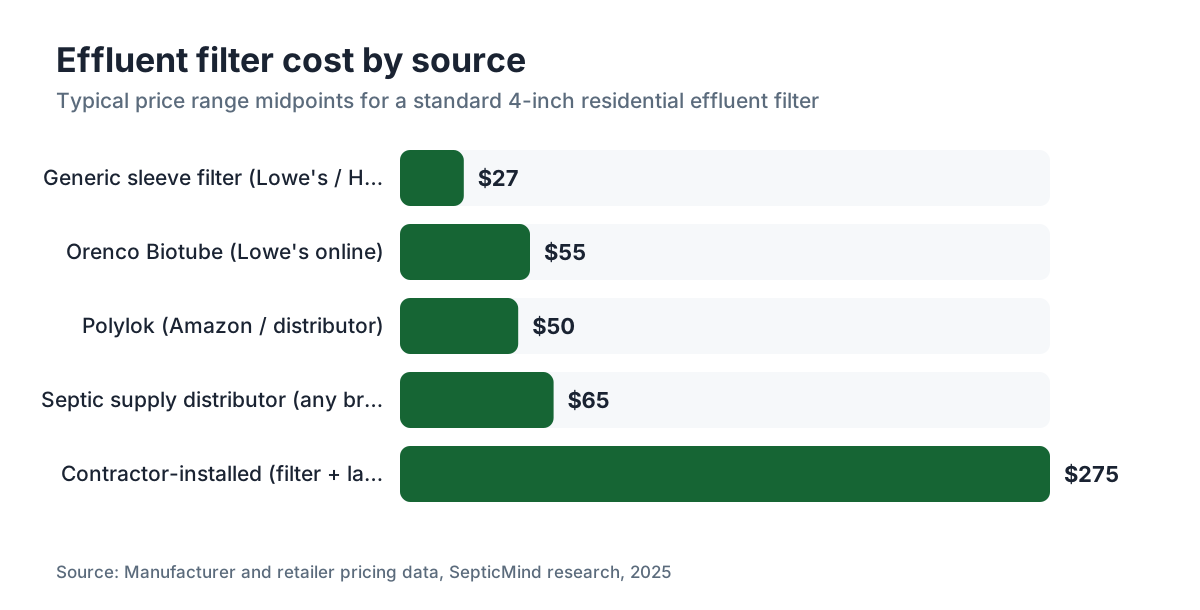
Lowe's effluent filters run about $20 to $80 depending on size and brand. Here's how that lines up against other sources:
| Source | Typical price range | Notes |
|---|---|---|
| Lowe's (in-store) | $20 to $80 | Limited SKUs, 4-inch most common |
| Home Depot | $25 to $75 | Similar selection, varies by region |
| Amazon | $18 to $120 | Widest selection, includes 6-inch |
| Septic supply distributor | $30 to $90 | Professional grade, more options |
| Licensed septic contractor (installed) | $150 to $400 | Includes labor and new baffle if needed |
If you're doing the install yourself and your tank has a standard 4-inch outlet, Lowe's pricing holds up fine. You're not paying a markup for extras you don't need. Need a 6-inch unit, an extension handle for a deep tank, or a specific brand your local health department demands? Call a septic supply house. They carry more options, and the counter staff usually knows which filters local inspectors sign off on.
Contractor prices look steep, but they often cover replacing the outlet baffle itself, which is common in older tanks where the original sanitary tee has rotted out. If your baffle is crumbling, the filter job becomes a small septic tank repair, more than a parts swap.
Which effluent filter models are available at Lowe's and which is the best one?
The Orenco Biotube Junior is the filter Lowe's stocks most often, and it's one of the better residential options you can buy. It uses a woven polypropylene sleeve over a rigid core, holds effluent quality around 80 mg/L TSS (total suspended solids) under typical residential loading, and the handle lets you pull and clean it without dunking your arm in the tank [3].
The generic sleeve filters at $20 to $30 are simpler: a perforated PVC tube with a cap and handle. They do cut solids reaching the field, but they clog faster in high-solids tanks and the slot sizes vary more. Fine for a light-use system like a vacation cabin or a property you pump often. For a full-time family home, the woven filter earns the extra $20.
Some stores carry Polylok filters too, popular through the Mid-Atlantic. The Polylok is a solid alternative to the Orenco at about the same price [9]. Either one beats the cheap sleeve types in real residential use.
Skip the cheapest generic option. The dollar difference is small, the install labor is identical, and a clogged filter sends solids to your drain field. That's the wrong place to save money.
How do you install an effluent filter yourself?
Installing a filter in an existing tank is a quick job as long as your outlet baffle already works. Here's the process:
- Find and open the outlet end of your tank. Most rectangular concrete tanks have two lids. The outlet baffle sits at the end farther from the house.
- Check what's already there. If there's a sanitary tee (a T-shaped PVC fitting) or a baffled opening, the filter slides into the downward leg of that tee. If it's only a concrete baffle wall with no pipe, you need a retrofit tee first.
- Measure the inside diameter of the outlet pipe. Standard is 4 inches. Larger than that, and you need a 6-inch filter or an adapter.
- Thread the filter cartridge into the tee. Orenco and Polylok units use a threaded housing, and hand-tight is enough. The handle should reach up near the tank lid so you can grab it at cleaning time.
- Check the installed depth. The bottom of the filter should sit at least 6 inches above the tank floor so it doesn't pull sludge straight up. Most filters are sized right for standard tanks, but confirm it.
- Replace the lid and mark the spot if it's buried.
Total time: 20 to 40 minutes. No glue, no solvents, no tools beyond a screwdriver or a lid hook. If you find the outlet baffle missing or damaged, stop and call a contractor. A filter on a collapsed baffle won't help and can make things worse.
After that, pull the filter every 1 to 3 years (or at each septic tank pumping visit) and hose it off back into the tank before the pump truck leaves. Never rinse it onto the yard or down a drain.
What size effluent filter do you need for your septic tank?
Two measurements settle it: the outlet pipe diameter and the tank depth.
Outlet pipe diameter is almost always 4 inches in residential tanks built after the 1980s. Older tanks might run a 6-inch cast iron or clay pipe, or the original concrete baffle may have no pipe at all. When in doubt, bring a tape measure to the tank.
Tank depth decides whether you need a standard filter or an extended-body version. Most residential concrete tanks sit 4 to 5 feet deep at the outlet end, and standard Orenco and Polylok filters fit that range. Deeper tanks (some commercial tanks or old cesspools converted to septic run 6 to 8 feet) need an extended model or an extension handle. Without it, you can't reach the filter to clean it unless you dangle into the opening, which you should never do.
On tanks with pump chambers, the filter usually goes in the baffle between the main compartment and the pump chamber, not at the pump itself. It protects the pump from solids. Check your system diagram or call your local health department if you're not sure where yours belongs.
Lowe's usually stocks only standard 4-inch filters. Anything else, order online or hit a septic supply distributor.
How often does an effluent filter need to be cleaned?
Clean it every 1 to 3 years, or at every septic tank pump out. That's the guidance from filter makers and state extension programs [5]. Most homeowners sync filter cleaning with tank pumping, which makes sense because the pump truck operator can handle it during the same visit.
A clogged filter backs liquid up into the tank, which can cause slow drains or even a sewage backup into the house. That backup is actually the filter doing its job, stopping solids before they reach the field, but it means the filter is overdue. If drains are sluggish across several fixtures and you pumped the tank recently, a blocked filter is the first thing to check.
Heavy-use households clog faster. More people, a garbage disposal that gets used hard, frequent guests. A family of four running a disposal daily might need a yearly cleaning. A two-person retirement household on a well-kept system can often go the full 3 years without trouble.
For how often to pump septic tank numbers by household size and tank volume, the EPA and most state health departments publish tables. The general rule is every 3 to 5 years for a 1,000-gallon tank serving four people [1].
Can you install an effluent filter without a septic contractor?
In most states, yes. Adding a filter to an existing baffle counts as maintenance, not a structural change, so it usually needs no permit and no licensed contractor. Penn State Extension confirms that filter installation is a maintenance activity in most states, though it advises checking local rules first [8]. Some jurisdictions treat any modification to a septic system as permitted work, so make the call before you start.
What you generally can't do as a homeowner is anything that alters the structure, installs a new pump, or replaces a baffle. Those are permitted alterations. If the filter install turns up a bad outlet tee or baffle, you've crossed into septic system repair territory, and that may need a contractor.
The real risk of a DIY install isn't legal. It's physical. Septic tanks give off hydrogen sulfide and methane. Never put your head into an open tank, never work alone, and don't stand over the opening breathing the vapor. Work fast, keep your face to the side, and get the lid back on the moment you're done.
If you're doing a septic tank inspection at the same time, check the inlet baffle, look for cracks in the concrete near the waterline, and note the scum and sludge depth. That data helps when you schedule the next pumping.
What if Lowe's doesn't have the right filter for your system?
This happens often. Lowe's carries maybe two or three SKUs, all sized for the most common tank setups. If your system has any of these traits, you'll need to source a filter elsewhere:
- Outlet pipe larger than 4 inches
- Tank depth over 6 feet
- A plastic (HDPE or fiberglass) tank with a proprietary baffle fitting
- A jurisdiction that mandates a specific filter brand (a few Florida and California counties do)
- An advanced treatment unit (ATU) with filter requirements written into its operating permit
For any of those, a regional septic supply distributor is the right call. They stock Orenco, Polylok, Zabel, and other brands in multiple sizes, and they can tell you what local inspectors accept. Many ship straight to your door.
Some septic service operators track filter types across every customer tank so they can load the right parts before each visit. If you run a service operation and want to get off paper for that, tools like SepticMind can track filter types and service intervals across your whole customer base.
For homeowners, the simplest path when Lowe's comes up short: call your county health department, ask what filter is permitted for your tank type, then order that exact model from a distributor.
Does adding an effluent filter affect your septic system warranty or inspection?
For most existing systems, no. Adding a filter voids no warranty, because residential septic systems generally aren't warrantied the way appliances are. The tank itself might carry a manufacturer warranty against cracking (usually 1 to 3 years on new installs), but a filter install doesn't touch that.
For a septic tank inspection, a working filter reads as a positive finding. Real estate deals in some states now require a functional effluent filter to pass. Florida is one example. Local health ordinances in some counties there count a missing or failed filter as a deficiency in a point-of-sale inspection [7].
On new installations, the filter is part of the permitted design in many states, so an inspector checks it alongside the tank and field at final sign-off. Planning a new system? Read your state's onsite wastewater code before you finalize the design. Many state environmental agencies publish these codes online. The NSF/ANSI 46 standard covers the performance certification most state codes reference for filter approval [4].
If your system went in without a filter and you're adding one now, there's rarely anyone to notify. Keep the receipt and note the install date for your records.
Are there alternatives to an effluent filter that work better?
For most homeowners, the effluent filter is the practical, affordable answer. Two other approaches are worth knowing.
The first is an outlet baffle with an integrated filter, which builds the structural baffle and the filtration into one plastic fitting. These show up a lot on fiberglass tanks. They perform about like add-on cartridge filters and clean the same way. If your tank has one and it's in good shape, you don't need to stack a separate filter on top.
The second is secondary treatment, like an aerobic treatment unit (ATU) or a sand filter. These put out cleaner effluent than any cartridge filter, often 10 mg/L TSS or better against the 40 to 80 mg/L a passive filter delivers [10]. But they cost $5,000 to $20,000 to install and require ongoing maintenance contracts in most states. They're the right answer when local rules demand advanced treatment, or when a failing drain field needs replacing and the only permitted fix is higher-quality effluent. For a working standard system, they're overkill.
For most homeowners with a standard concrete or fiberglass tank and a healthy drain field, a good cartridge filter from Lowe's or a septic supplier is the right tool. No need to make it complicated.
Frequently asked questions
Does Lowe's sell Orenco effluent filters?
Some Lowe's stores stock Orenco Biotube Junior filters, usually the 4-inch version, but availability swings a lot by location. The Lowe's website often has better stock than the physical shelf. If your local store comes up empty, Home Depot, Amazon, or a regional septic supply distributor are reliable backups. Always confirm the size matches your outlet pipe diameter before ordering.
What size effluent filter fits a standard residential septic tank?
Most residential tanks built after the mid-1980s use a 4-inch outlet pipe, so a 4-inch filter is the standard fit. Older tanks and commercial tanks may use 6-inch outlets. Measure the inside diameter of your outlet pipe before buying. Standard-length filters work for tanks up to about 5 to 6 feet deep. Deeper tanks need an extended-handle model.
How long does it take to install an effluent filter?
For a tank with a good outlet tee or sanitary tee, the install takes 20 to 40 minutes. You open the outlet lid, slide the filter cartridge into the tee, thread it hand-tight, confirm the handle reaches near the lid opening, and replace the lid. No glue, no special tools. If the outlet baffle needs replacing first, add another hour and a contractor.
Can a clogged effluent filter cause a septic backup in the house?
Yes. When the filter clogs with solids, liquid backs up in the tank because it can't exit fast enough. If household water use outpaces what the blocked outlet can process, sewage can push back toward the house through floor drains or low fixtures. Slow drains across several fixtures after a recent pump-out is the most common sign of a clogged filter.
Do I need a permit to add an effluent filter to my existing septic tank?
In most states, adding a filter to an existing baffle is maintenance and needs no permit. But rules vary by county and state, and some jurisdictions treat any tank modification as permitted work. Before you start, call your local health or environmental department and ask. It's a quick call that can save you a fine or a failed inspection if you're selling the home.
How much does a plumber or septic company charge to install an effluent filter?
Contractor-installed filters usually cost $150 to $400, including labor and the filter. If the outlet baffle needs replacing at the same time, expect $250 to $600 or more. Scheduling the install during a routine pumping visit often cuts the labor cost, since the contractor is already on-site and the tank is open and pumped.
What happens if you don't have an effluent filter on your septic tank?
Without a filter, solids, grease, and suspended particles pass freely from the tank into the drain field. Over time they clog the biomat on gravel or soil and cut absorption capacity. This is a leading cause of drain field failure, and field replacement runs $3,000 to $15,000 or more. A $20 to $80 filter that takes 30 minutes to install is the cheapest insurance you can buy for your drain field.
Is an effluent filter the same as a septic tank filter or outlet filter?
Yes. Effluent filter, septic tank filter, outlet filter, and riser filter all name the same device: a cartridge that fits into the tank's outlet baffle and catches solids before they reach the drain field. The terminology shifts by region and maker, but the product is the same. Searching at Lowe's or online, any of those terms returns the same category.
How do you clean an effluent filter without making a mess?
Pull the cartridge out slowly to cut down on dripping. Hold it over the tank opening and spray it with a garden hose, rinsing solids back into the tank. Do it before the pump truck leaves so the solids get hauled out with the rest of the tank. Never rinse the filter onto the yard, into a storm drain, or near surface water. Wear gloves and eye protection, because the spray carries pathogens.
Will an effluent filter void my septic tank warranty?
Almost certainly not. Residential septic tank warranties, where they exist, cover structural defects in the tank, not changes to the baffle or outlet fittings. Adding a filter is a maintenance upgrade, not a structural change. If your tank is new and under warranty and you're unsure, read the warranty document or call the manufacturer before installing to confirm.
Can I use an effluent filter with a garbage disposal?
Yes, and it's a good idea. Garbage disposals add fine food particle solids to the tank, which raises the risk of solids reaching the drain field. A woven-cartridge filter like the Orenco Biotube suits disposal households better than a plain perforated sleeve. Expect to clean it more often, maybe yearly rather than every 2 to 3 years.
What is the best effluent filter brand?
Orenco Systems (the Biotube line) and Polylok are the two brands licensed installers use most in the U.S. Both perform well in residential systems. The Orenco Biotube has a longer track record and often gets named in state extension recommendations. Polylok tends to cost a little less. Either beats unbranded generic sleeve filters, which have less consistent slot sizing and clog faster.
Does an effluent filter affect how often I need to pump my septic tank?
Indirectly, yes. A filter holds more solids in the tank, so sludge and scum build up slightly faster than they would without one. In practice the effect is small for most households and doesn't move the pump interval much. The EPA's general guideline, pumping every 3 to 5 years for a 1,000-gallon tank serving a family of four, still holds. The filter's bigger payoff is protecting the drain field, not changing pump frequency.
Sources
- EPA SepticSmart Program: EPA SepticSmart recommends effluent filters as a cost-effective upgrade for existing septic systems and provides general pump frequency guidance (every 3-5 years for a 1,000-gallon tank serving 4 people).
- California State Water Resources Control Board, onsite wastewater treatment program: California's onsite wastewater regulations require effluent filters on new or replaced septic systems.
- Orenco Systems, Biotube Effluent Filter product documentation: Orenco Biotube filters produce effluent at approximately 80 mg/L TSS under typical residential loading and are designed for standard residential tank depths.
- NSF International, NSF/ANSI Standard 46 (Components and Devices for Onsite Wastewater Treatment Systems): NSF/ANSI 46 is the performance certification standard most state codes reference for effluent filter approval.
- University of Minnesota Extension, Septic System Owner's Guide: University of Minnesota Extension recommends cleaning effluent filters every 1 to 3 years or at each pump-out, and confirms that garbage disposal use increases filter clogging rates.
- Florida Department of Health, Onsite Sewage Program: Florida local health ordinances in some counties count a missing or failed effluent filter as a deficiency in a point-of-sale septic inspection.
- Penn State Extension, Septic System Maintenance: Penn State Extension confirms that effluent filters are a maintenance activity in most states and do not typically require a permit, but advises checking local regulations.
- Polylok Inc., effluent filter technical specifications: Polylok effluent filters are available in 4-inch and 6-inch sizes and are used as an alternative to Orenco products in Mid-Atlantic states.
- North Carolina State University Cooperative Extension, Residential Septic Systems: NC State Extension documents that aerobic treatment units (ATUs) produce effluent at 10 mg/L TSS or better compared to 40-80 mg/L from standard passive cartridge filters, at significantly higher installation cost.
Last updated 2026-07-10